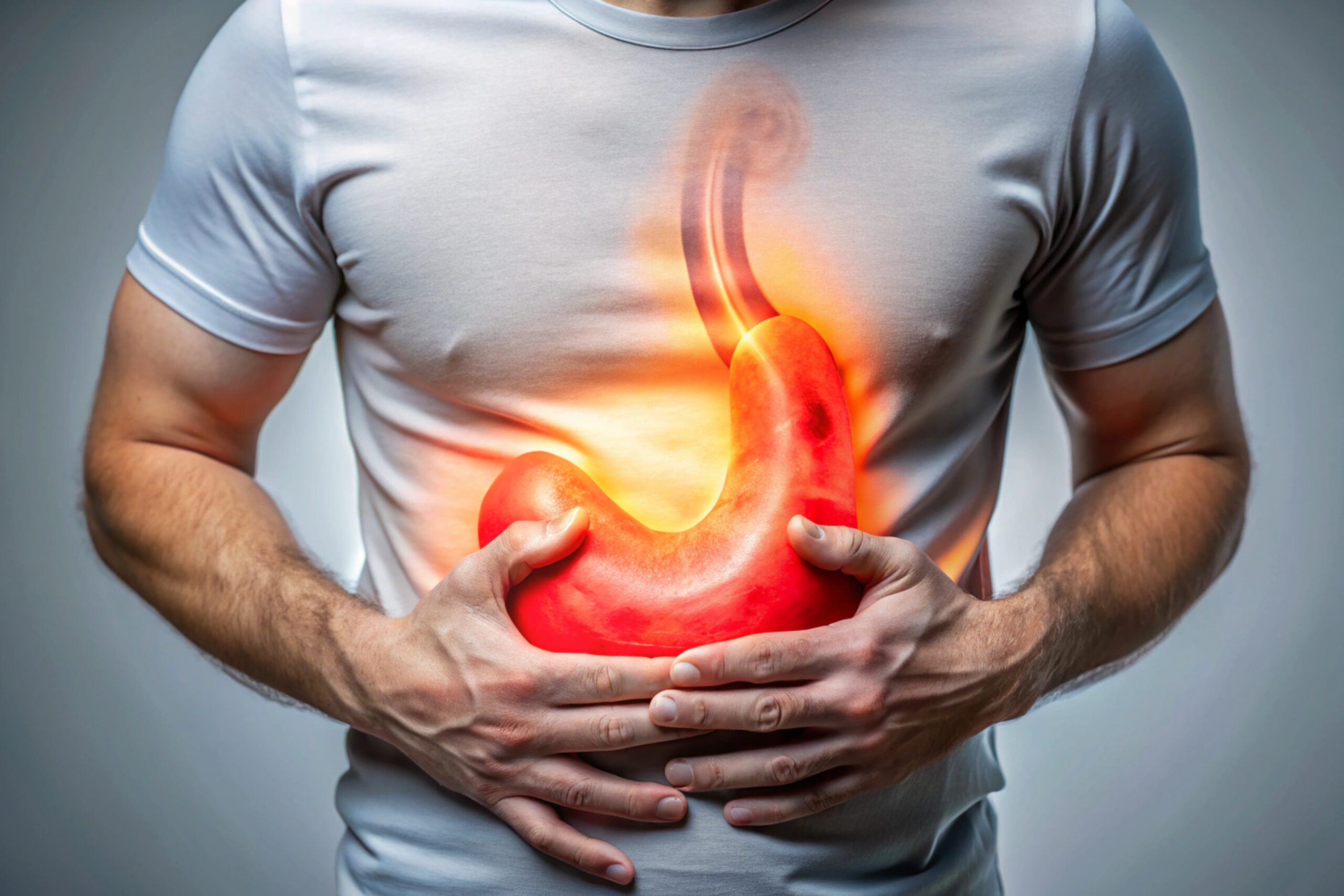
Many people ask the same question when they have stomach pain after using cannabis: can cannabis cause a stomach ulcer? It is a fair question. Weed can affect the body in many ways, and some of those effects involve the stomach and digestive system. A person may feel nausea, cramping, bloating, heartburn, or pain in the upper belly. Because these symptoms can feel serious, it is easy to assume that cannabis is causing an ulcer. But symptoms alone do not tell the full story.
A stomach ulcer is a sore that forms in the lining of the stomach. It is one type of peptic ulcer disease. Ulcers can cause burning pain, discomfort after eating, nausea, and other digestive problems. These symptoms can overlap with many other stomach issues, including acid reflux, gastritis, indigestion, and vomiting problems linked to heavy cannabis use. That overlap is one reason why there is so much confusion. Many people notice stomach symptoms after using weed and quickly connect the two. In some cases, the timing may make the link seem obvious. Still, a symptom that appears after cannabis use does not always mean cannabis is the true cause.
This article looks closely at that question. It explains what the current evidence shows, what doctors know for sure, and where the science is still not complete. It also helps readers understand the difference between a real stomach ulcer and other stomach problems that may feel similar. That matters because the right treatment depends on the right diagnosis. If someone assumes they have an ulcer when they do not, they may ignore the real problem. If someone assumes their pain is only a side effect of weed, they may delay care for an ulcer or another serious condition.
One important fact needs to be clear from the start. The main proven causes of stomach ulcers are not cannabis. In most cases, stomach ulcers are linked to infection with Helicobacter pylori, often called H. pylori, or to regular use of nonsteroidal anti-inflammatory drugs, also called NSAIDs. These are common pain medicines such as ibuprofen, naproxen, and aspirin. These causes are well established in medical research. They damage the stomach lining or weaken its natural defenses, which allows sores to form. This is different from the case for cannabis. At this time, cannabis is not considered one of the main direct causes of stomach ulcers in the way H. pylori and NSAID use are.
That said, the topic is not as simple as saying cannabis has no effect on the stomach. Cannabis can affect digestion. It can change how the stomach feels and how it moves. In some people, especially with frequent or heavy use, cannabis may be linked with nausea, vomiting, abdominal pain, or delayed emptying of the stomach. Some people may also develop cannabinoid hyperemesis syndrome, a condition that can cause repeated vomiting and stomach distress. These problems may not be ulcers, but they can still be painful and serious. They can also make it harder for a person to understand what is happening in their body.
Another reason this topic matters is that people do not all use cannabis in the same way. Some smoke it. Some vape it. Some use edibles. Some use it once in a while, while others use it every day. Some use it for recreation, while others use it to manage pain, stress, sleep problems, or other symptoms. Because of these differences, people may not all have the same stomach response. At the same time, many users may also have other risk factors that affect the stomach, such as smoking tobacco, drinking alcohol, taking NSAIDs often, eating irregular meals, or living with ongoing stress. All of these factors can blur the picture and make it harder to know what is causing the pain.
This guide is designed to make the evidence easier to understand. It does not rely on fear, myths, or guesswork. Instead, it explains what is known, what is uncertain, and what readers should watch for. It will look at whether cannabis can directly cause stomach ulcers, whether it may make an existing ulcer worse, and why weed-related stomach symptoms are often confused with ulcer pain. It will also explain how stomach ulcers are usually diagnosed, what warning signs need medical attention, and where cannabis fits into the larger picture of digestive health.
The goal is simple: to give clear, practical information. People with stomach pain need facts, not confusion. By the end of this article, readers should better understand that cannabis is not one of the main proven causes of stomach ulcers, but it can still play a role in stomach symptoms that should not be ignored. Most of all, readers should understand that lasting stomach pain deserves proper medical attention, because the cause may be an ulcer, another digestive problem, or something that needs treatment right away.
What Is a Stomach Ulcer?
A stomach ulcer is an open sore that forms in the lining of the stomach. It happens when the protective layer inside the stomach becomes damaged. When that layer gets weak, stomach acid can harm the tissue underneath it. Over time, this damage can create a sore, which is called an ulcer.
Many people use the term “stomach ulcer” to describe any ulcer in the upper digestive tract, but that is not always exact. A true stomach ulcer forms inside the stomach. Some ulcers form in the first part of the small intestine, called the duodenum. These are called duodenal ulcers. Both types are part of a larger group called peptic ulcers.
Understanding this difference is helpful because the location of the ulcer can affect symptoms, treatment, and how doctors describe the condition. Even so, the basic problem is similar in both cases. The lining of the digestive tract is no longer protected well enough from acid and digestive juices.
Stomach Ulcer vs. Peptic Ulcer
A peptic ulcer is the general medical term. It refers to any ulcer that forms in areas of the digestive tract exposed to stomach acid. This usually means the stomach or the upper part of the small intestine.
A stomach ulcer is one type of peptic ulcer. It is also called a gastric ulcer. A duodenal ulcer is another type of peptic ulcer, but it forms just beyond the stomach.
This difference matters because some people think all ulcers are stomach ulcers, but that is not true. If a person says they have an ulcer, the ulcer may be in the stomach or in the duodenum. The symptoms can feel similar, which is why people often mix them up. A doctor usually needs testing to confirm the exact type.
How a Stomach Ulcer Forms
The inside of the stomach has a special lining that helps protect it from acid. This protection is very important because the stomach uses acid and digestive juices to break down food. Without a strong protective barrier, the stomach could damage itself.
The body normally keeps a balance between harmful forces and protective forces. Harmful forces include stomach acid and digestive enzymes. Protective forces include mucus, blood flow, and natural repair processes in the lining of the stomach.
A stomach ulcer forms when this balance is disturbed. If the stomach lining becomes weaker, or if harmful factors become stronger, the tissue can become inflamed and damaged. At first, the damage may seem mild. But if the problem continues, the area can wear down and turn into an open sore.
This is why ulcers do not appear out of nowhere. They usually develop over time as the stomach lining loses its ability to protect itself. In many cases, the ulcer keeps getting worse until the cause is treated.
Common Symptoms of a Stomach Ulcer
The most common symptom of a stomach ulcer is a burning or gnawing pain in the upper belly. Many people feel this pain between the chest and the belly button. The pain may come and go, or it may last for longer periods.
Some people notice that the pain gets worse after eating. Others may feel discomfort when their stomach is empty. This can vary from person to person. The pain is not always severe. In some cases, it starts as a dull ache or a feeling of irritation in the stomach.
Bloating is another common symptom. A person may feel full very quickly while eating. They may also feel pressure, heaviness, or swelling in the upper stomach area. This can make normal meals feel uncomfortable.
Nausea can also happen. Some people feel mildly sick to their stomach, while others may feel stronger discomfort. In some cases, there may be vomiting, though that is not always present.
Indigestion is also common. A person may feel burning, belching, sour stomach, or general stomach upset. Because these symptoms are common in many digestive problems, some people do not realize an ulcer may be involved.
Symptoms Can Differ From Person to Person
Not everyone with a stomach ulcer has the same symptoms. Some people have clear stomach pain, while others have only mild discomfort. Some may feel full after eating a small amount. Others may notice nausea more than pain.
In some cases, a person may have very few symptoms at first. This can make ulcers hard to notice early. A person may think they only have stress, gas, or simple indigestion. Because of this, ulcers may go untreated for a long time.
There are also cases where symptoms suddenly become more serious. An ulcer can bleed or cause other complications. When this happens, the signs may include vomiting blood, black stools, weakness, or sharp stomach pain. These are serious warning signs and need medical attention right away.
Why Ulcer Symptoms Can Be Confusing
One reason stomach ulcers are often misunderstood is that their symptoms overlap with many other digestive problems. Heartburn, acid reflux, gastritis, indigestion, and even gallbladder problems can feel similar. A person may think they have an ulcer when they do not. Or they may have an ulcer and assume it is only an upset stomach.
This is why symptoms alone cannot always give a clear answer. Pain in the upper belly is an important clue, but it is not enough to confirm a stomach ulcer by itself. Doctors may need to ask about symptoms, review medicine use, test for infection, or use procedures like endoscopy to find the real cause.
Why It Helps to Understand the Basics
Learning what a stomach ulcer is can help people make sense of their symptoms. It also helps clear up common confusion. A stomach ulcer is not just random stomach pain. It is a real sore in the stomach lining caused by damage to the stomach’s natural protection.
It also helps to know that “stomach ulcer” and “peptic ulcer” are related but not identical terms. A stomach ulcer is one kind of peptic ulcer. Knowing this makes it easier to understand medical articles, doctor visits, and test results.
Most of all, understanding the basics can help people know when symptoms may need proper medical care instead of guesswork or self-treatment.
A stomach ulcer is an open sore in the lining of the stomach. It is one type of peptic ulcer, which is the broader term for ulcers in the stomach or upper small intestine. These ulcers form when the stomach’s protective lining becomes damaged and acid begins to injure the tissue underneath. Common symptoms include burning stomach pain, bloating, nausea, and indigestion, but symptoms can vary from person to person. Because ulcer symptoms can look like other digestive problems, it is important not to assume the cause without proper evaluation.
What Usually Causes Stomach Ulcers?
Stomach ulcers usually do not happen for random reasons. In most cases, doctors look first at two well-known causes. The first is an infection with a bacterium called Helicobacter pylori, often shortened to H. pylori. The second is regular use of nonsteroidal anti-inflammatory drugs, or NSAIDs, such as ibuprofen, naproxen, and aspirin. These are the two causes most often linked to peptic ulcers, including ulcers in the stomach.
A stomach ulcer forms when the stomach’s protective lining is damaged and acid is able to irritate the tissue underneath. The stomach normally has ways to protect itself from its own acid. It makes mucus and other protective substances that help shield the lining. When that defense system is weakened, the lining can break down. Over time, a sore can form, and that sore is called an ulcer.
H. pylori infection
H. pylori is one of the most common causes of stomach ulcers. This bacterium can live in the stomach lining for a long time. Many people have it and do not know it, because it does not always cause symptoms right away. But in some people, it damages the protective layer of the stomach or duodenum and causes inflammation. That makes it easier for stomach acid to injure the tissue and form an ulcer.
One reason H. pylori is important is that an ulcer may keep coming back if the infection is not treated. Pain relief medicine alone may help symptoms for a short time, but it does not remove the real cause. When doctors suspect an ulcer, they often test for H. pylori because treating the infection can help the ulcer heal and reduce the chance that it will return.
It is also helpful for readers to know that H. pylori does not mean someone did something wrong. It is a medical infection, not a sign of poor habits or weak health. The key point is that this bacterium is one of the first things doctors consider because it is a major, proven cause of ulcers.
NSAID pain relievers
The other major cause of stomach ulcers is regular use of NSAIDs. These medicines include common pain relievers such as ibuprofen, naproxen, and aspirin. Many people use them for headaches, back pain, arthritis, joint pain, or menstrual cramps. They are easy to buy, so people sometimes forget that frequent use can be hard on the stomach.
NSAIDs can lower the stomach’s natural defenses. They reduce substances that help protect the stomach lining, which means acid can do more damage. This is why someone who takes these medicines often, or in high doses, may develop irritation, bleeding, or an ulcer. The risk can be higher in older adults and in people who already have a history of ulcers.
This matters because many people focus on food, stress, or cannabis when their stomach hurts, but a pain reliever they take often may be the bigger issue. A person may not even think of aspirin or ibuprofen as a possible cause. That is why a full medicine history is such an important part of ulcer care. Doctors need to know what a person takes often, even if it is an over-the-counter drug.
Smoking, alcohol, and other factors that can raise risk
Smoking is not usually listed as the main root cause in the same way as H. pylori or NSAIDs, but it can raise the risk of ulcers and may make healing harder. Stomach ulcers are more common in people who smoke, and smoking may increase ulcer risk, especially in people who also have H. pylori. It can also make treatment less effective in some cases.
Alcohol is more complicated. It is not usually presented as one of the two main causes of stomach ulcers, but heavy alcohol use can irritate and erode the stomach’s protective lining. It can also increase stomach acid and worsen inflammation. That means alcohol may make symptoms worse and may add stress to an already irritated stomach, even if it is not the main cause of the ulcer itself.
Age can matter too. The risk of stomach ulcers goes up as people get older. Older adults are also more likely to use NSAIDs often, which can further raise the chance of stomach injury. In real life, risk often comes from a mix of factors instead of only one. For example, an older adult who smokes and takes ibuprofen regularly may face more risk than someone with only one of those factors.
What stress and spicy food really do
Many people still believe that stress and spicy food directly cause stomach ulcers. That idea has been around for a long time, but modern medical guidance points elsewhere. The strongest proven causes are H. pylori infection and NSAID use. Stress and spicy foods are not usually treated as the main cause of an ulcer.
That said, stress and spicy foods can still matter in a different way. They may make symptoms feel worse. A person with an ulcer, acid irritation, or indigestion may notice more pain, burning, or stomach upset when under stress or after eating certain foods. So while these factors may not be the true cause of the ulcer, they can still affect how bad a person feels day to day.
This difference is important. A factor that worsens symptoms is not always the same as a factor that causes the disease. People often mix those two ideas together. Someone may eat spicy food, feel burning pain, and assume the food caused an ulcer. In reality, the ulcer may already have been there because of H. pylori or regular NSAID use.
Why the real cause matters
Knowing the real cause of a stomach ulcer matters because treatment depends on it. If the ulcer is linked to H. pylori, the infection needs to be treated. If the ulcer is linked to NSAIDs, the person may need to stop or change those medicines, if possible, while also treating the ulcer. If someone only tries to manage the pain without fixing the cause, the problem can continue or return.
This is also why it is risky to guess. Many stomach problems can feel alike. Indigestion, gastritis, reflux, and ulcers can all cause burning, nausea, or upper stomach pain. A person may blame one thing, such as coffee, stress, or cannabis, when the real cause is an infection or a medicine they use often. Clear diagnosis matters because ulcers can sometimes lead to bleeding or other serious problems if ignored.
The clearest, most proven causes of stomach ulcers are H. pylori infection and regular use of NSAID pain relievers. These are the first causes doctors usually check because they are strongly linked to ulcer formation. Smoking, heavy alcohol use, and older age can raise risk or make healing harder, but they are not usually the main cause in the same way. Stress and spicy food may make symptoms worse, but they are not the usual root cause of an ulcer.
Can Cannabis Cause Stomach Ulcers Directly?
Many people ask this question because stomach pain after using cannabis can feel serious. Some people notice burning pain, nausea, bloating, or vomiting and start to wonder if weed caused an ulcer. This is understandable. Stomach symptoms can be uncomfortable and sometimes hard to explain. But when we look at the medical evidence, the answer is not as simple as yes or no.
Right now, there is not strong proof that cannabis directly causes stomach ulcers in the same clear way that H. pylori infection or regular use of NSAID pain relievers can. Those two causes are still the main reasons most stomach ulcers happen. Cannabis does affect the digestive system, but the evidence does not clearly show that it is a common direct cause of ulcers in the stomach lining.
What “Directly Causes” Means
To understand this topic, it helps to define what “directly causes” means. A direct cause is something that clearly damages the stomach lining or strongly raises the chance that an ulcer will form. For example, H. pylori bacteria can weaken the stomach’s protective lining and lead to ulcers. NSAIDs, such as ibuprofen or naproxen, can reduce the stomach’s natural protection and make injury more likely. These links are well known and widely accepted.
Cannabis is different. Researchers have looked at how cannabis affects the gut, stomach acid, and pain signals. Some findings suggest cannabis can change how the stomach works. It may affect appetite, nausea, vomiting, and how quickly the stomach empties. But that is not the same as proving that cannabis itself creates an ulcer in the stomach lining. A person can have stomach symptoms after using cannabis without having a true ulcer.
This difference matters because many people use the word “ulcer” to describe any strong stomach pain. In real medical terms, an ulcer is an open sore in the stomach or upper small intestine. Pain alone does not confirm that an ulcer is present.
What the Evidence Shows So Far
So far, the research does not clearly show that cannabis is a leading cause of stomach ulcers. There is no strong body of evidence showing that typical cannabis use regularly creates ulcers in healthy people. That is why most doctors do not list cannabis as one of the main direct causes of peptic ulcers.
However, that does not mean cannabis has no effect at all. Some studies and hospital reports suggest that heavy or long-term cannabis use may be linked to digestive problems and, in some cases, ulcer-related complications. This kind of link is important, but it is not the same as proving cause and effect.
A link means two things are seen together more often. It does not always mean one caused the other. For example, a person who uses cannabis often may also have other risk factors. They may smoke tobacco, drink alcohol, eat poorly, delay medical care, or use pain medicines that raise ulcer risk. These factors can make it harder to know what role cannabis is really playing.
That is why researchers must be careful. If a study finds that some cannabis users have more ulcer problems, that does not automatically prove cannabis caused the ulcer in the first place.
Why the Research Is Still Limited
One reason this question is hard to answer is that cannabis research still has limits. Different studies look at different kinds of users. Some focus on smoking, while others include edibles or mixed use. Some studies depend on self-reporting, which means people report their own symptoms and habits. This can make the results less exact.
Another challenge is that cannabis products are not all the same. They can differ in strength, ingredients, and method of use. A person using a low-dose product once in a while is very different from a person using high-potency cannabis every day for years. These differences make it hard to apply one research finding to everyone.
Researchers also need to separate ulcer symptoms from other digestive conditions. Cannabis can cause nausea, stomach discomfort, or vomiting in some users. Heavy long-term use has also been linked to cannabinoid hyperemesis syndrome, which can cause repeated vomiting and belly pain. These symptoms may feel severe, but they do not always mean an ulcer is present.
Because of these limits, the current evidence is best described as incomplete. It raises questions, but it does not prove that cannabis is a common direct cause of stomach ulcers.
Can Heavy Use Still Be a Problem?
Even if cannabis is not a proven direct cause of ulcers, heavy use may still be a concern for some people. Chronic cannabis use may affect digestion in ways that make stomach issues feel worse or make recovery more difficult. For example, repeated vomiting can irritate the digestive tract. Ongoing stomach discomfort may also delay a person from getting tested for a real ulcer or another condition.
There is also concern that some users may ignore warning signs because they assume the pain will pass. This can be risky. If a person has a real ulcer and keeps delaying care, the ulcer could get worse. In more serious cases, ulcers can bleed or lead to other complications.
So, while the evidence does not clearly say cannabis directly causes ulcers, it also does not mean heavy use is harmless for the stomach. The safer conclusion is that cannabis may play an indirect role in some people, especially when other digestive risks are already present.
Why Symptoms Can Be Misleading
One big reason this topic causes confusion is that stomach symptoms overlap. A person with an ulcer may have burning pain, nausea, bloating, or loss of appetite. A person using cannabis may also have nausea, stomach discomfort, or vomiting without having an ulcer at all. These symptoms can feel similar, but the causes may be very different.
This is why it is important not to guess based on symptoms alone. Stomach pain after cannabis use does not prove an ulcer. At the same time, it should not be ignored if it keeps happening. The only way to know what is going on is proper medical evaluation, especially if the symptoms are strong, repeated, or getting worse.
Cannabis is not currently recognized as a main direct cause of stomach ulcers. The strongest known causes of ulcers are still H. pylori infection and regular use of NSAID pain relievers. Research does suggest that heavy or chronic cannabis use may be linked with some digestive problems and possibly ulcer-related complications, but that is not the same as clear proof of direct causation. In simple terms, cannabis may affect the stomach, but the current evidence does not show that it commonly creates ulcers on its own. That is why ongoing stomach pain should be checked carefully instead of being blamed on weed without proper testing.
Why Do Some People Think Weed Causes Ulcers?
Many people believe weed causes stomach ulcers because the symptoms can look very similar. A person may use cannabis and then feel stomach pain, nausea, burning, bloating, or even vomiting. Since these are also common signs of stomach problems, it is easy to assume that weed caused an ulcer. In many cases, though, the real answer is more complex.
A stomach ulcer is an open sore in the lining of the stomach or upper small intestine. It does not happen just because the stomach feels upset for a short time. An ulcer usually develops over time when the stomach lining is damaged. This is why it is important to separate true ulcers from other stomach issues that may happen after cannabis use.
Stomach Pain Can Feel Like Ulcer Pain
One reason people make this connection is that stomach pain after cannabis use can feel serious. Some people describe a dull ache. Others feel burning, cramping, or pressure in the upper belly. These symptoms can be scary, especially if they happen more than once.
Ulcer pain is often described in similar ways. It may feel like burning or gnawing pain in the stomach area. Because the feeling overlaps, many people assume they have an ulcer when they may actually have another digestive problem. Pain alone does not tell the full story. The stomach can react badly for many reasons, and not all of them involve an ulcer.
Nausea and Vomiting Add to the Confusion
Cannabis can affect nausea in different ways. Some people use it because they think it helps settle the stomach. Others have the opposite experience and feel more nauseated after using it. In some cases, frequent or heavy cannabis use can lead to repeated vomiting.
This matters because nausea and vomiting are also linked with stomach ulcers. When people throw up after using weed, they may think the cannabis has damaged the stomach lining. But vomiting does not always mean there is an ulcer. It can also happen because the body is reacting to cannabis itself, the dose was too strong, the product was not tolerated well, or another stomach condition is present.
This is one reason confusion is common. The symptoms may look like ulcer symptoms, but the cause may be something very different.
Cannabis Can Change How the Stomach Feels
Cannabis interacts with systems in the body that help control digestion. This means it may affect how the stomach feels and how food moves through the digestive tract. Some people notice bloating, fullness, or discomfort after using weed. Others feel that their stomach empties more slowly, which can leave them feeling heavy or uneasy.
When the stomach feels off in these ways, a person may start searching online for answers. If they see that ulcers can also cause stomach discomfort, they may quickly link the two. This is understandable, but it can lead to wrong assumptions. Feeling bloated or uncomfortable after using cannabis is not the same as having an ulcer.
People Often Confuse Ulcers With Other Digestive Problems
Another big reason for the confusion is that many stomach problems share the same symptoms. Gastritis, acid reflux, indigestion, and stomach irritation can all cause pain or burning in the upper abdomen. These symptoms may get worse after eating, at night, or after certain habits such as smoking or drinking alcohol.
If someone already has acid reflux or gastritis, cannabis use may seem like the cause when it really just happens around the same time. It is also possible that the person has a stomach issue that was already there before cannabis entered the picture. Without medical testing, it is very hard to know the real cause from symptoms alone.
This is why many people end up saying weed caused an ulcer when what they actually had was heartburn, irritation, or another digestive issue.
Heavy Use Can Raise More Questions
The belief becomes even stronger when symptoms happen in people who use cannabis often. If a person uses weed every day and has ongoing stomach pain, it may seem logical to blame the cannabis. In some heavy users, long-term use has been linked with digestive problems, including repeated nausea and vomiting. This can make people think the drug must also be causing ulcers.
Still, a pattern does not always prove a direct cause. A person can use cannabis heavily and also have other risk factors for ulcers, such as taking pain relievers often, smoking tobacco, drinking alcohol, or having an H. pylori infection. When several factors exist at the same time, it becomes harder to know what is actually driving the problem.
Online Searches and Personal Stories Shape Beliefs
Many people first learn about health topics through search engines, social media, or personal stories. If someone reads posts saying weed caused another person’s stomach ulcer, that idea can stick. But personal stories do not always show the full medical picture. The person may not have had testing. They may have had gastritis instead of an ulcer. They may also have had another risk factor that was not mentioned.
Because the symptoms are easy to confuse, personal stories can spread a simple answer to a problem that is not simple at all. That does not mean the symptoms are not real. It only means the label may be wrong.
Why Proper Diagnosis Matters
The biggest problem with assuming weed causes ulcers is that it may stop people from looking for the true cause. A real stomach ulcer may need testing and treatment. If the problem is H. pylori, that infection must be treated. If the issue is frequent use of NSAID pain medicine, that habit may need to change. If the problem is not an ulcer at all, the person may need a different kind of care.
That is why doctors do not diagnose ulcers based only on stomach pain after cannabis use. They look at the full picture, including symptoms, health history, medicine use, and sometimes tests.
People think weed causes ulcers because cannabis can cause stomach symptoms that feel a lot like ulcer symptoms. Pain, nausea, bloating, and vomiting can all create confusion. On top of that, many digestive problems share the same warning signs, so it is easy to blame cannabis when the real issue may be something else. The key point is simple: feeling stomach pain after using weed does not automatically mean there is an ulcer. A proper diagnosis is the only clear way to know what is really happening.
Can Smoking Weed Make an Existing Ulcer Worse?
Many people ask whether smoking weed can make an existing stomach ulcer worse. This is an important question because a person may already have ulcer pain, nausea, or stomach burning and wonder if cannabis use is adding to the problem. The clear answer is that cannabis is not a proven common cause of stomach ulcers, but that does not mean it is harmless for someone who already has one. In some cases, smoking weed may make symptoms harder to manage, may affect how the stomach works, and may make it harder to notice when an ulcer is getting worse.
Why This Question Matters
A stomach ulcer is an open sore in the lining of the stomach or upper small intestine. When that sore is present, the area is already irritated and sensitive. Because of this, anything that changes stomach function, increases discomfort, or delays proper care can become a problem. People with ulcers often deal with pain, nausea, bloating, loss of appetite, and a burning feeling in the upper belly. These symptoms can come and go, which can make it hard to know what is helping and what is making things worse.
Some people use cannabis because they believe it helps with pain, stress, or nausea. Others use it for sleep or appetite. But when a person already has an ulcer, symptom relief in one moment does not always mean the body is healing well. That is why it is important to look at the full picture and not just how someone feels right after using weed.
Smoking and Stomach Symptoms
Smoking weed may affect the stomach in ways that matter to someone with an ulcer. Cannabis acts on the body’s endocannabinoid system, which plays a role in pain, digestion, appetite, and nausea. Because of this, cannabis can change how the stomach feels and works. In some people, it may lower nausea for a short time. In others, it may cause more stomach discomfort, especially with regular or heavy use.
A person with an ulcer may notice more stomach pain after smoking, or they may feel bloated, unsettled, or sick to their stomach. This does not always mean the cannabis is damaging the ulcer directly. It may mean that the stomach is reacting badly, that digestion is being affected, or that the body is having trouble handling both the ulcer and the cannabis at the same time.
Smoking itself may also play a role. In general, smoking can be hard on the digestive system. Even when the smoke comes from cannabis and not tobacco, inhaling smoke may still affect the body in ways that are not ideal for healing. People who smoke regularly may also have other habits that raise ulcer risk, such as poor eating patterns, alcohol use, or delay in seeking treatment.
Can Cannabis Affect Healing?
One reason people worry about cannabis and ulcers is the question of healing. If someone already has an ulcer, the goal is not just to reduce pain. The goal is to allow the stomach lining to recover. This usually means treating the real cause, such as H. pylori infection or frequent use of NSAIDs like ibuprofen. It also means avoiding things that may keep the stomach irritated.
At this time, research does not clearly prove that smoking weed directly stops an ulcer from healing in most people. Still, some studies and clinical concerns suggest that heavy cannabis use may be linked with slower recovery or more ulcer-related problems in some cases. The evidence is limited, and more research is needed, but there is enough concern to say that regular heavy use may not be a good idea for a person with an active ulcer.
This matters because a person may feel temporary relief after using cannabis and assume the ulcer is improving. But pain relief is not the same as healing. An ulcer can still grow, bleed, or become more serious even if symptoms seem less strong for a while.
When Symptoms Become Confusing
One major problem with smoking weed during an ulcer is that it can make symptoms harder to read. Ulcer symptoms already overlap with many other digestive issues. Cannabis can also cause nausea, stomach discomfort, appetite changes, or vomiting in some users. This overlap can create confusion.
For example, a person may have upper stomach pain from an ulcer but think it is only a reaction to weed. Another person may develop repeated vomiting from heavy cannabis use and not realize that an ulcer could also be present. A person may also ignore worsening symptoms because they believe cannabis is helping them manage it at home.
This confusion can delay diagnosis and treatment. That delay can be risky because some ulcers become serious. An untreated ulcer can bleed. In severe cases, it can lead to black stools, vomiting blood, sudden sharp pain, weakness, or dizziness. These warning signs should never be ignored.
Heavy Use and Ongoing Irritation
Occasional cannabis use and heavy long-term use are not the same. A person who smokes heavily over time may face more digestive problems than someone who uses it rarely. Heavy cannabis use has been linked in some people to repeated nausea and vomiting, especially in cannabinoid hyperemesis syndrome. Frequent vomiting can place stress on the digestive system and make it harder for the body to recover.
Heavy use may also affect daily routines that matter for ulcer healing. A person might skip meals, eat poorly, forget medicines, or put off doctor visits. These things do not mean cannabis directly causes the ulcer to worsen, but they can still make recovery harder. In real life, health problems are not always caused by one single factor. Sometimes a substance affects healing by changing behavior, symptoms, and body function all at once.
What Someone With an Ulcer Should Keep in Mind
A person with a diagnosed or suspected ulcer should be careful about smoking weed, especially if symptoms are active. If smoking seems to make pain, nausea, or stomach upset worse, that is an important sign. If symptoms keep coming back, the person should not rely on cannabis alone to manage the problem. Ulcers need proper care, and the real cause has to be treated.
It is also wise to pay attention to how often cannabis is being used. A person who uses it daily and has ongoing stomach symptoms should tell a doctor the truth about that use. This helps the doctor look at the full picture and decide whether the symptoms come from an ulcer, gastritis, reflux, cannabinoid hyperemesis syndrome, or another digestive issue.
Smoking weed is not a proven common direct cause of stomach ulcers, but it may still make an existing ulcer harder to manage. It can affect stomach symptoms, make pain and nausea harder to understand, and may interfere with healing or proper treatment in some people. The biggest concern is not always direct damage to the ulcer itself. The bigger concern is that cannabis use may confuse symptoms, delay care, or add digestive stress when the stomach already needs time to heal. For someone with an ulcer, the safest step is to focus on medical treatment, watch symptoms closely, and not assume that temporary relief means the problem is getting better.
Cannabis, Acid, and the Stomach: What the Research Says
To understand whether cannabis can cause or worsen stomach ulcers, it helps to look at how cannabis interacts with the stomach. This topic is not simple. Cannabis does not work in just one way inside the body. It affects the brain, the nerves, the digestive tract, and the signals that control pain, hunger, nausea, and stomach movement. Because of that, researchers have studied whether cannabis changes stomach acid, whether it slows digestion, and whether it affects how the stomach lining protects itself.
The short answer is that the research is still developing. At this point, cannabis is not known as one of the main causes of stomach ulcers. The strongest known causes of stomach ulcers are still Helicobacter pylori infection and regular use of nonsteroidal anti-inflammatory drugs, also called NSAIDs. Still, cannabis may affect the stomach in ways that matter, especially in people who already have digestive problems.
How Cannabis Affects the Digestive System
Cannabis works through compounds called cannabinoids. The two best-known cannabinoids are THC and CBD. These compounds interact with the body’s endocannabinoid system. This system helps control many functions, including appetite, pain, mood, nausea, and digestion.
The digestive system has cannabinoid receptors in different areas, including the stomach and intestines. When cannabinoids act on these receptors, they may change how the stomach behaves. In some cases, they may reduce nausea or change the way pain feels. In other cases, they may slow the movement of food through the stomach or change how the stomach sends signals to the brain.
This is one reason why cannabis can seem helpful to some people with stomach discomfort, while it may make symptoms worse in others. The effects are not always the same from person to person. The amount used, how often it is used, the form of cannabis, and the person’s health all matter.
Does Cannabis Increase Stomach Acid?
Many people ask whether cannabis raises stomach acid and leads to ulcers. Right now, there is no strong proof that cannabis is a common cause of too much stomach acid in the way many people fear. In fact, some research has suggested that cannabinoids may lower acid production in certain settings. This means the connection is not as simple as saying cannabis always increases acid.
Even so, lower acid in a research setting does not mean cannabis protects the stomach or prevents ulcers in real life. The body is more complex than a lab model. A person may still have stomach pain, burning, nausea, or irritation even if acid is not the main problem. Also, stomach symptoms can come from poor digestion, inflammation, vomiting, or another condition that feels similar to acid-related pain.
So, while cannabis is not strongly linked to causing ulcers by simply raising stomach acid, that does not mean it has no effect on the stomach. It may still affect comfort, digestion, and symptom patterns.
Cannabis and Stomach Movement
One of the more important ways cannabis may affect the stomach is by changing how fast the stomach empties. This is called gastric emptying. When the stomach empties more slowly, food stays there longer. This can lead to feelings of fullness, bloating, nausea, pressure, or stomach pain.
For some people, this slower movement may feel like an ulcer. A person may say they feel burning, heaviness, or cramping in the upper belly. But these symptoms do not always mean there is an open sore in the stomach lining. Sometimes the issue is delayed digestion rather than an ulcer.
This matters because many people try to guess the cause of their symptoms based on feeling alone. That can be misleading. Cannabis-related stomach symptoms may copy the signs of other digestive problems. That is one reason why proper diagnosis matters.
Can Cannabis Affect the Stomach Lining?
The stomach has a protective lining that helps defend it from acid and digestive fluids. Ulcers form when that protection breaks down and the tissue gets damaged. Researchers are still studying whether cannabis has any direct effect on this protective barrier.
At this time, cannabis is not considered a proven direct cause of damage to the stomach lining in the same way as H. pylori or NSAIDs. That said, some studies have raised concerns that heavy cannabis use may be linked with slower healing or worse outcomes in some digestive conditions. This does not prove that cannabis creates ulcers on its own. It does suggest that cannabis may not be harmless for every person with stomach problems.
There are also indirect ways cannabis use may affect the stomach lining. For example, a person who uses cannabis heavily may delay getting medical care, may not recognize serious symptoms early, or may have repeated vomiting. These patterns can place more stress on the digestive system.
Why the Research Is Mixed
One reason the evidence is hard to interpret is that cannabis research has many limits. Different studies use different groups of people, different amounts of cannabis, and different methods of use. Some look at smoking, while others include edibles or general cannabis use without much detail. Some studies focus on stomach symptoms, while others focus on hospital records or ulcer complications.
Another problem is that many people who use cannabis may also have other risk factors for stomach problems. They may smoke tobacco, drink alcohol, use pain medicines, have poor eating habits, or have other medical issues. These factors can make it hard to tell what role cannabis is really playing.
Because of this, researchers can say there may be a link in some cases, but they often cannot say cannabis directly caused the problem. That is an important difference. A link does not always mean cause and effect.
What This Means for People With Ulcer Symptoms
If you have upper stomach pain, burning, nausea, bloating, or vomiting after using cannabis, it is important not to jump to conclusions. The symptoms may be related to the way cannabis affects digestion, but they may also point to gastritis, reflux, an ulcer, or another digestive issue.
If you already have a stomach ulcer, regular cannabis use may make it harder to understand what your body is telling you. It may change pain signals, affect appetite, or add nausea and vomiting. That can confuse the picture. It may also make it harder to tell whether treatment is working.
For that reason, ongoing stomach symptoms should be checked by a doctor instead of being blamed on cannabis alone or ignored as a minor side effect.
The research on cannabis, acid, and the stomach is still growing. Cannabis is not one of the main proven causes of stomach ulcers, and there is no clear proof that it causes ulcers simply by increasing stomach acid. Still, cannabis can affect the stomach in real ways. It may change digestion, slow stomach emptying, alter pain signals, and add symptoms that feel a lot like ulcer pain. Some research also suggests that heavy or long-term use may be linked with worse digestive outcomes in some people.
Can Edibles, Vaping, or Smoking Affect the Stomach Differently?
Cannabis can enter the body in different ways, and that matters when people think about stomach symptoms. Some people smoke it. Some vape it. Others use edibles such as gummies, baked goods, chocolates, or drinks. These forms do not affect the body in exactly the same way. They can differ in how fast they work, how long they last, and how they may affect the stomach and digestion. Still, it is important to keep one main point clear: none of these forms is known as a common direct cause of stomach ulcers.
That means smoking cannabis, vaping cannabis, or eating cannabis products is not the same thing as having a proven ulcer risk like taking NSAIDs often or having an H. pylori infection. Even so, some people may notice stomach pain, nausea, bloating, or vomiting after using cannabis. When that happens, the form of cannabis may help explain why the symptoms feel different.
Smoking Cannabis and the Stomach
Smoking cannabis sends chemicals into the body quickly through the lungs. Because it acts fast, some people feel effects within minutes. This quick action can change how a person feels in the stomach, even if it does not create an ulcer.
For some users, smoking cannabis may reduce nausea for a short time. For others, it may lead to stomach discomfort, dry mouth, hunger, or a strange heavy feeling in the abdomen. Some people may also smoke cannabis together with tobacco, nicotine, or alcohol use. That can make it harder to tell what is really causing the stomach problem. Tobacco smoking, for example, is already linked with poorer digestive health and can make ulcer healing harder. So if a person smokes both tobacco and cannabis, the stomach symptoms may not come from cannabis alone.
Smoking may also affect eating habits. A person may eat greasy, spicy, or heavy foods after using cannabis, especially if they feel very hungry. Those foods may trigger heartburn, indigestion, or stomach pain. In that case, the real problem may be the food choice or acid reflux, not an ulcer caused by cannabis smoke.
This is why smoking cannabis can sometimes seem tied to stomach pain even when the pain is really coming from something else.
Vaping Cannabis and Digestive Symptoms
Vaping cannabis is often seen as different from smoking because there is no burning plant material in the same way. Some people believe this makes vaping easier on the body. But easier does not always mean symptom-free.
Vaping still delivers cannabis compounds quickly. A person may still feel nausea, dizziness, stomach unease, or appetite changes. Some users may swallow small amounts of vapor-related residue or feel throat irritation that seems connected to the upper stomach. In some cases, coughing from vaping can also make the chest and upper belly feel sore. That soreness may be mistaken for stomach pain.
Another issue is that vaping products are not all the same. The ingredients can vary, and some products may contain added substances. That makes it harder to predict how a person’s body, including the digestive system, will respond. Even so, there is no strong proof that vaping cannabis directly causes stomach ulcers in most people.
It is more accurate to say that vaping may trigger or worsen stomach-related symptoms in some users, especially if they are sensitive to cannabis or use high-strength products.
Edibles and Why They May Feel Harder on the Stomach
Edibles affect the body in a very different way. Instead of going through the lungs, they go through the digestive system first. That is one reason they may feel more connected to stomach problems.
After a person eats an edible, the body takes longer to absorb it. The effects also tend to last longer. Because of this slower process, some people may eat too much before they realize the product is working. A higher dose can raise the chance of nausea, vomiting, anxiety, or stomach discomfort.
Edibles may also include sugar, oils, chocolate, dairy, or other ingredients that upset the stomach. If a person feels sick after an edible, the problem may come from the cannabis, the dose, the food ingredients, or a mix of all three. This can make it hard to know the true cause of the symptoms.
Some users also report bloating, cramping, or a heavy feeling in the stomach after edibles. This does not mean they have an ulcer. It may simply reflect that the product moved through the digestive system slowly or irritated the stomach in a temporary way.
For people who already have reflux, gastritis, or a sensitive stomach, edibles may feel worse than smoking or vaping because the stomach is directly involved in processing the product.
Why the Same Person May React Differently to Each Form
One person may smoke cannabis and feel fine, but feel sick after an edible. Another person may vape and get nausea but have no trouble with other forms. This can happen because each method changes the timing, strength, and route of absorption.
Dose also matters a great deal. A small amount may not cause any stomach symptoms, while a large amount may trigger nausea or vomiting. Frequency matters too. Heavy or repeated use may be more likely to upset the digestive system than occasional use.
A person’s health history also plays a role. Someone with acid reflux, gastritis, IBS, or a past ulcer may notice more stomach problems than someone without those issues. This is why cannabis affects people differently and why a single stomach symptom does not prove an ulcer is present.
Form Matters, but It Does Not Change the Main Answer
Smoking, vaping, and edibles can affect the stomach in different ways. Smoking and vaping act faster and may be linked with nausea, appetite changes, or discomfort that feels like upper stomach pain. Edibles move through the digestive system and may be more likely to cause bloating, cramping, nausea, or delayed stomach discomfort. But these effects are not the same as proven ulcer formation.
Cannabis in any form is not a well-established direct cause of stomach ulcers. Still, some forms may trigger symptoms that feel similar to an ulcer, especially in people with sensitive digestion or in those who use large amounts.
The way cannabis is used can change how stomach symptoms appear. Edibles may be more likely to cause digestive discomfort because they go through the stomach and gut. Smoking and vaping may lead to fast-onset symptoms that can still feel strong, even if they do not involve a true ulcer. When stomach pain keeps coming back, gets worse, or comes with vomiting, black stools, or weight loss, it should not be blamed on cannabis alone. It should be checked by a medical professional to find the real cause.
Symptoms That May Look Like an Ulcer but Are Not
Many people feel stomach pain after using cannabis and worry that they have a stomach ulcer. That concern is understandable. Ulcers can cause burning pain, nausea, and a heavy or sore feeling in the upper belly. At the same time, many other digestive problems can cause almost the same symptoms. This is why stomach pain after weed does not always mean there is an ulcer.
It is important to understand the difference because the cause changes the next step. An ulcer may need testing, treatment for H. pylori, or medicine to lower stomach acid. Another problem, such as reflux or cannabis-related vomiting, may need a different kind of care. Looking at the pattern of symptoms can help, but only a medical evaluation can confirm what is really going on.
Reflux Can Feel Like an Ulcer
Acid reflux is one of the most common problems confused with an ulcer. Reflux happens when stomach acid moves up into the esophagus. This can cause burning in the chest, a sour taste in the mouth, throat irritation, burping, and upper stomach discomfort. Some people feel the pain in the middle of the upper belly and assume it must be an ulcer.
The pain from reflux often gets worse after large meals, when lying down, or after eating certain foods. In some people, smoking or vaping may also make symptoms feel worse because it can irritate the throat and upper digestive tract. Reflux can feel sharp, hot, or burning, which is why many people mistake it for ulcer pain.
The key difference is that reflux often comes with heartburn, regurgitation, or a bitter taste in the mouth. An ulcer is more likely to cause a gnawing or burning pain deeper in the stomach area. Even so, these symptoms can overlap. A person may be very sure they have an ulcer when the real issue is acid reflux.
Gastritis May Cause Similar Pain
Gastritis is another condition that is often mistaken for an ulcer. Gastritis means inflammation of the stomach lining. It can cause upper stomach pain, nausea, bloating, vomiting, and a feeling of fullness after eating only a small amount. Some people also feel burning in the stomach, just like they might with an ulcer.
Gastritis can happen for many reasons. It may be linked to alcohol use, infection, long-term use of pain relievers like ibuprofen, stress on the body from illness, or irritation from certain substances. In some cases, cannabis users may notice nausea or stomach discomfort and assume the drug caused an ulcer, when the real issue is irritation or inflammation in the stomach lining.
A person with gastritis may feel worse after eating spicy, acidic, greasy, or heavy foods. The discomfort may come and go. Ulcer pain can also come and go, which makes the two hard to tell apart without testing. This is one reason self-diagnosis can be misleading.
Indigestion Can Cause Upper Belly Pain
Simple indigestion, also called dyspepsia, is another common reason for stomach discomfort. Indigestion is not the same thing as an ulcer, but it can feel very similar. It may cause fullness, pressure, bloating, burping, mild nausea, and discomfort in the upper abdomen. Some people describe it as a dull ache. Others describe it as a burning feeling.
Indigestion can happen after eating too much, eating too fast, or having foods that are rich, fatty, spicy, or acidic. It may also happen when a person is anxious or stressed. Some people notice indigestion after cannabis use because cannabis can affect appetite, food choices, and how the stomach moves food along. This can make the stomach feel heavy, slow, or unsettled.
Unlike an ulcer, indigestion often improves when eating habits improve or when a person avoids foods that trigger symptoms. Still, repeated indigestion should not be ignored, especially if the pain keeps coming back or becomes more severe.
Cannabinoid Hyperemesis Syndrome Can Be Mistaken for Ulcer Trouble
One of the most important conditions to know about is cannabinoid hyperemesis syndrome, often called CHS. This condition can happen in people who use cannabis often, especially over a long period of time. CHS can cause repeated nausea, vomiting, stomach pain, and a strong urge to take hot showers or baths because heat may bring temporary relief.
A person with CHS may think they have an ulcer because the pain can be intense and the vomiting can be severe. The stomach may feel sore, raw, and irritated after repeated vomiting. This can make the problem feel even more like ulcer disease.
The difference is that CHS usually follows a pattern of long-term cannabis use and repeated vomiting episodes. An ulcer does not usually cause relief from hot showers, and it does not always come with repeated vomiting attacks. Because CHS can become serious, especially when it leads to dehydration, it should not be brushed aside as simple stomach upset.
Food Irritation and Sensitivity Can Mimic Ulcer Symptoms
Sometimes the stomach pain is not from an ulcer or a disease process at all. It may be a reaction to food. After cannabis use, some people eat more than usual or choose foods that are greasy, spicy, sugary, or highly processed. These foods can irritate the stomach, worsen reflux, or cause bloating and cramping.
For example, eating a large heavy meal late at night may lead to upper stomach pain, pressure, belching, and nausea. A person might wake up with discomfort and assume they have an ulcer. In reality, the symptoms may come from overeating, acid irritation, or poor digestion.
Food sensitivities can also play a role. Dairy, caffeine, spicy foods, acidic drinks, and fried foods may trigger symptoms in some people. When these foods are eaten after cannabis use, it can be easy to blame the cannabis alone. The real picture may involve both the cannabis and what was eaten afterward.
Medication-Related Stomach Pain Can Be the Real Cause
Some stomach pain that seems linked to cannabis may actually be caused by medicine. This is especially important because one of the most common true causes of stomach ulcers is regular use of NSAIDs, such as ibuprofen, naproxen, or aspirin. These drugs can irritate the stomach lining and raise the risk of ulcers and bleeding.
A person may use cannabis and also take pain medicine for headaches, body pain, injury, or period cramps. If stomach pain develops, the cannabis may get the blame first, even though the pain medicine is the more likely cause of stomach injury.
Other medicines and supplements can also upset the stomach. Some antibiotics, iron tablets, steroids, and certain supplements may cause nausea, irritation, or belly pain. This is why it matters to look at the full picture and not focus only on cannabis use.
Overlap Makes Self-Diagnosis Hard
The biggest reason these conditions are confused is that the symptoms overlap so much. Upper stomach pain, nausea, bloating, burning, vomiting, and loss of appetite can happen with ulcers, reflux, gastritis, indigestion, CHS, food irritation, and medication-related stomach problems. One symptom alone does not point to one clear cause.
The timing of symptoms may offer clues. Pain after heavy meals may suggest indigestion or reflux. Burning with sour taste may point more toward reflux. Repeated vomiting with long-term cannabis use may raise concern for CHS. Pain medicine use may point toward gastritis or ulcer risk. Still, these clues are not enough to make a firm diagnosis at home.
This is why ongoing stomach pain should be taken seriously. When symptoms keep returning, get worse, or come with warning signs, it is important to get checked by a healthcare professional.
When Symptoms May Be More Serious
Some symptoms should never be ignored. Vomiting blood, black or tarry stools, sudden severe abdominal pain, fainting, weakness, trouble keeping fluids down, or unexplained weight loss can be signs of bleeding or another serious digestive problem. These symptoms need medical care right away.
Even without those emergency signs, a person should seek care if stomach pain keeps coming back, gets worse over time, or affects eating and daily life. The longer a true ulcer goes untreated, the greater the chance of complications.
Many symptoms that seem like a stomach ulcer may actually come from something else. Reflux can cause burning pain. Gastritis can inflame the stomach lining. Indigestion can cause pressure and fullness. Cannabinoid hyperemesis syndrome can lead to repeated vomiting and belly pain. Food irritation and certain medicines can also upset the stomach and mimic ulcer symptoms. Because these problems can look so similar, stomach pain after cannabis use does not automatically mean there is an ulcer. The safest step is to pay attention to the pattern, watch for red-flag symptoms, and seek medical care when the pain is severe, repeated, or hard to explain.
How Doctors Diagnose a Stomach Ulcer
Finding out if a person has a stomach ulcer takes more than guessing based on symptoms. Many stomach problems can feel the same at first. A person may have burning pain, nausea, bloating, or loss of appetite and assume it is an ulcer. But those signs can also happen with acid reflux, gastritis, indigestion, or other digestive problems. That is why doctors use a careful step-by-step process to make the right diagnosis.
Doctors Start With Symptoms and Medical History
The first step is usually a conversation about symptoms. A doctor will ask where the pain is felt, when it started, how often it happens, and whether it gets worse after eating or when the stomach is empty. Some people with stomach ulcers say the pain feels burning or gnawing. Others feel pressure, fullness, or discomfort in the upper belly.
The doctor will also ask if the person has nausea, vomiting, bloating, burping, black stools, or weight loss. These details matter because they help show how serious the problem may be. For example, black stools or vomiting blood may suggest bleeding in the digestive tract, which needs fast medical care.
Medical history is also very important. A doctor may ask whether the person uses pain medicines like ibuprofen, aspirin, or naproxen. These drugs are called NSAIDs, and they are one of the main causes of stomach ulcers. The doctor may also ask about past ulcers, stomach infections, smoking, alcohol use, and other health problems. If a person uses cannabis and has stomach pain, the doctor may ask about that too, especially if there is vomiting or repeated nausea. This does not mean cannabis caused an ulcer, but it may still help explain the full picture.
Why Symptoms Alone Are Not Enough
Many people want a quick answer based only on how they feel. The problem is that ulcer symptoms are not always clear. Some ulcers cause strong pain, but others cause mild discomfort or no pain at all. At the same time, a person can have pain that feels serious and still not have an ulcer.
This is why self-diagnosing can be risky. A person may think they have an ulcer when they actually have reflux, gastritis, gallbladder problems, or another condition. The opposite can also happen. A person may ignore symptoms, thinking it is only an upset stomach, when there is an ulcer that needs treatment.
Doctors use testing because symptoms alone cannot show the exact cause. A good diagnosis depends on matching symptoms with exam findings and test results.
Testing for H. pylori
One of the most important parts of diagnosing a stomach ulcer is checking for a bacteria called H. pylori. This bacteria is a common cause of ulcers. If a person has an ulcer and also has H. pylori, treating the infection is a key part of healing.
Doctors can test for H. pylori in a few ways. One common way is a breath test. In this test, the person drinks a special liquid and then breathes into a bag. If H. pylori is present, the test can often detect it. Another way is a stool test, which checks a sample for signs of the bacteria. In some cases, blood tests may be used, though they are less useful for showing a current active infection.
Testing for H. pylori helps doctors move past guesswork. It shows whether a major known cause of ulcers is present, and that can guide treatment in a direct way.
Blood and Stool Tests Can Provide More Clues
Doctors may also use blood or stool tests to look for other signs of trouble. Blood tests can help show whether a person has anemia, which can happen if an ulcer has been bleeding slowly over time. A person with anemia may feel tired, weak, or short of breath.
Stool tests can also help detect hidden blood in the stool. Sometimes bleeding is not easy to see with the eye. A stool test can help reveal it. This matters because bleeding ulcers can become dangerous if they are not treated.
These tests do not always prove that an ulcer is present, but they can support the diagnosis and help show how serious the problem may be.
Endoscopy Gives the Clearest Answer
One of the most important tests for diagnosing a stomach ulcer is an upper endoscopy. This is a procedure in which a doctor uses a thin, flexible tube with a tiny camera on the end. The tube is gently passed through the mouth and into the stomach and upper small intestine.
This test lets the doctor look directly at the lining of the digestive tract. If there is an ulcer, the doctor can often see it clearly. Endoscopy can also help the doctor check the size, location, and appearance of the ulcer. This matters because some ulcers may bleed, and others may need closer follow-up.
During an endoscopy, the doctor may also take a small tissue sample, called a biopsy. This can help test for H. pylori or rule out other causes of stomach problems. A biopsy does not mean cancer is expected. It is often just part of a careful check, especially when the ulcer is in the stomach.
Endoscopy is helpful because it gives more direct proof than symptoms alone. It is often the clearest way to know whether a person truly has an ulcer.
Imaging and Other Tests
In some situations, doctors may use other tests if needed. For example, imaging may be used when symptoms suggest another problem in the belly. These tests are not always the first choice for an ulcer, but they may help rule out other causes of pain.
The choice of test depends on the person’s age, symptoms, health history, and warning signs. A younger person with mild symptoms may not need the same testing as an older adult with weight loss, bleeding, or severe pain. Doctors choose tests based on what will give the most useful and safest answer.
When Diagnosis Should Happen Quickly
Some symptoms mean a person should not wait. Vomiting blood, black or tar-like stools, sudden sharp stomach pain, fainting, or trouble keeping food down can point to a serious problem. These signs may mean there is bleeding or another complication. In these cases, fast medical care is important.
A doctor’s goal is not only to find out whether there is an ulcer. It is also to see whether the ulcer has caused harm and whether urgent treatment is needed.
Doctors diagnose a stomach ulcer by looking at the full picture, not just one symptom. They start with a medical history and a review of symptoms, then use testing to find the cause. This often includes checking for H. pylori, using blood or stool tests, and in many cases doing an endoscopy to look directly at the stomach lining. Because many stomach problems can feel the same, self-diagnosing is not reliable. A proper diagnosis helps a person get the right treatment and avoid serious complications.
When Stomach Pain After Cannabis Use Needs Medical Attention
Stomach pain after cannabis use does not always mean something serious is wrong. In many cases, the pain may come from indigestion, acid reflux, irritation in the stomach, or repeated vomiting. Some people may also have stomach discomfort from eating too much, eating greasy food, or using other drugs at the same time. Even so, there are times when stomach pain should not be ignored.
This is important because ulcers and other stomach problems can become dangerous if they are left untreated. A person may first notice mild pain, nausea, or a burning feeling, then later develop bleeding or a hole in the stomach lining. In other cases, the pain may not come from an ulcer at all. It may come from gastritis, severe dehydration, gallbladder disease, pancreatitis, or cannabinoid hyperemesis syndrome. Since many stomach problems can look alike at first, it is important to know when it is time to seek medical care.
Ongoing or Repeated Stomach Pain
A short period of stomach discomfort may go away on its own. For example, a person might feel mild nausea or stomach upset after using cannabis and then feel normal again by the next day. But if the pain keeps coming back, this should be taken more seriously.
Pain that returns again and again may point to a health problem that needs testing. A true ulcer often causes burning or aching pain in the upper stomach. Some people notice it more when the stomach is empty. Others feel worse after eating. If the pain keeps showing up for days or weeks, it is no longer something a person should guess about at home.
Repeated stomach pain matters because the cause may slowly get worse over time. A person may think the pain is only related to weed use, when the real cause could be an ulcer, stomach lining irritation, acid-related disease, or another digestive problem. If the pain does not fully go away or keeps returning after cannabis use, it is wise to speak with a doctor.
Vomiting That Does Not Stop
Vomiting is one of the clearest signs that medical attention may be needed. Some people may vomit once and then recover. That alone does not always mean there is an emergency. But repeated vomiting is different.
When vomiting continues, the body begins to lose water and important salts. This can lead to dehydration, weakness, dizziness, and trouble keeping down food or fluids. In people who use cannabis often, repeated vomiting can also be linked to cannabinoid hyperemesis syndrome, a condition that causes severe nausea, belly pain, and cycles of vomiting. This condition can become serious if it is not recognized.
Vomiting also matters because it can happen with ulcer problems. A person with a bad ulcer may vomit because the stomach is irritated, inflamed, or bleeding. If vomiting continues for many hours, happens many times in a day, or makes it impossible to drink water, medical care should not be delayed.
Vomiting Blood or Material That Looks Like Coffee Grounds
One of the most serious warning signs is vomiting blood. Sometimes the blood is bright red. Other times it looks dark brown or black and may look like coffee grounds. Either form can point to bleeding in the stomach or upper digestive tract.
Bleeding is never something to watch and wait on at home. A bleeding ulcer can become dangerous fast. Even if the amount of blood seems small, the source may still be serious. A person may also feel weak, pale, shaky, or short of breath.
If someone vomits blood after stomach pain, they need urgent medical care. It does not matter whether they recently used cannabis or not. The focus should be on getting checked right away.
Black or Tarry Stools
The color of stool can provide an important clue. Black, sticky, or tar-like stools may be a sign of digested blood coming from the stomach or upper part of the digestive tract. This can happen with a bleeding ulcer.
Some foods and medicines can also darken stool, so black stool does not always mean bleeding. Still, when black stools happen along with stomach pain, nausea, weakness, or vomiting, the chance of internal bleeding becomes more concerning.
A person should not try to guess the cause on their own if this happens. Medical care is important, especially if the stool looks very dark and unusual or if the person feels faint or sick at the same time.
Sudden Severe Abdominal Pain
A serious stomach problem can sometimes cause a very strong pain that starts quickly. This is different from mild cramps or brief discomfort. Severe pain may feel sharp, stabbing, or constant. It may make it hard to stand up straight, walk, or take a deep breath.
Sudden severe pain can be a sign of a major ulcer complication, such as a perforation. A perforation means there is a hole in the stomach or intestinal wall. This is a medical emergency. It can lead to infection inside the abdomen and can become life-threatening without fast treatment.
Severe pain can also point to other urgent problems that are not ulcers, such as gallbladder disease or pancreatitis. Either way, pain this strong should not be ignored.
Fainting, Dizziness, or Severe Weakness
A person with serious stomach problems may not only feel pain. They may also feel faint, very weak, or lightheaded. This can happen when the body loses fluids from vomiting. It can also happen when a person is bleeding inside and losing blood.
These symptoms matter because they may show that the body is under stress. If someone feels dizzy when standing, cannot think clearly, or seems close to passing out, they need prompt care. This is even more urgent if stomach pain or vomiting is also present.
Sometimes people believe they are only dehydrated or tired. But when these symptoms happen together, it is safer to treat them as possible warning signs of something more serious.
Unexplained Weight Loss or Loss of Appetite
A person who keeps losing weight without trying should not ignore it. The same is true for someone who loses interest in food because eating causes pain, nausea, or fear of vomiting. Over time, these changes can weaken the body and point to a lasting digestive problem.
An ulcer may make eating uncomfortable, which can lower appetite. Other stomach conditions can do the same. Weight loss does not always mean an emergency today, but it does mean the body is not doing well over time. It should be checked by a medical professional.
This is especially important if the weight loss comes with repeated pain, vomiting, or black stools. When several warning signs appear together, the need for medical care becomes stronger.
Why It Is Risky to Self-Diagnose
Many people try to explain stomach pain by linking it to the most recent thing they used or ate. If a person used cannabis and then felt stomach pain, they may assume the cannabis caused an ulcer. But symptoms alone cannot prove that.
Stomach ulcers, gastritis, reflux, food poisoning, and cannabinoid hyperemesis syndrome can all cause pain, nausea, or vomiting. Some of these problems are mild. Others are dangerous. Without proper testing, it is hard to know which one is present.
This is why self-diagnosing can be risky. A person may delay care because they think the pain is normal, temporary, or just a side effect of weed. In some cases, that delay can allow bleeding, dehydration, or another complication to get worse.
Stomach pain after cannabis use is not always a medical emergency, but some warning signs should never be ignored. Repeated pain, ongoing vomiting, vomiting blood, black stools, sudden severe abdominal pain, fainting, severe weakness, and unexplained weight loss all need attention. These signs may point to an ulcer, bleeding, dehydration, or another serious digestive problem.
The safest approach is simple. If stomach pain is severe, keeps coming back, or comes with red-flag symptoms, get medical care instead of guessing at the cause. Quick treatment can help find the real problem early and lower the risk of serious complications.
Treatment for Stomach Ulcers and Where Cannabis Fits In
Treating a stomach ulcer starts with finding the real cause. This matters because an ulcer is not treated the same way in every case. Some ulcers happen because of a bacterial infection called H. pylori. Others happen because a person uses nonsteroidal anti-inflammatory drugs, also called NSAIDs, for a long time. These drugs include ibuprofen, aspirin, and naproxen. In some cases, a person may have more than one risk factor at the same time. That is why proper treatment begins with a medical checkup, not a guess.
How stomach ulcers are usually treated
Doctors often treat stomach ulcers by helping the stomach lining heal and by removing the cause of the problem. One common part of treatment is medicine that lowers stomach acid. This gives the sore area in the stomach time to recover. When there is less acid, the ulcer is less irritated, and pain may improve as healing begins.
A doctor may prescribe a proton pump inhibitor, often called a PPI. This type of medicine lowers acid strongly and is often used for several weeks. Another type of medicine, called an H2 blocker, may also be used in some cases. These drugs do not cure every cause of an ulcer by themselves, but they help create the right conditions for healing.
Some people are also given medicines that protect the stomach lining. These may be used when the ulcer needs extra support during healing. The exact treatment plan depends on the person’s symptoms, health history, and the cause of the ulcer.
Treating ulcers caused by H. pylori
If testing shows that H. pylori is present, treatment usually includes antibiotics along with acid-reducing medicine. This is because the infection must be cleared, not just the pain. If the bacteria stay in the body, the ulcer may return even if the person feels better for a while.
It is important to take the full course of medicine exactly as directed. Stopping early can make treatment less effective. After treatment, some people need follow-up testing to make sure the infection is gone. This step is important because an ulcer may not fully heal if the bacteria remain.
What happens if NSAIDs are the cause
If NSAIDs are causing or worsening the ulcer, a doctor may tell the person to stop using them or use them less often. This can be a key part of healing. If the stomach lining keeps getting irritated by these medicines, the ulcer may stay active or get worse.
Some people need NSAIDs for pain or other health problems, so they should not stop them without medical advice. A doctor may suggest a different pain plan or may add medicine to protect the stomach. The goal is to lower further damage while still treating the person’s other health needs.
What healing can look like
Stomach ulcers do not heal overnight. Even when treatment works well, healing can take time. Some people feel better in days, but the full healing process often takes several weeks. The person may notice less burning pain, less nausea, and better comfort after eating. Still, feeling better does not always mean the ulcer is fully healed.
That is why it is important to keep taking medicine for the full time advised by a doctor. Skipping doses, stopping early, or going back to irritants too soon may slow recovery. Follow-up care may also be needed, especially if symptoms continue or return.
Lifestyle changes that may support recovery
Medicine is the main treatment for a true stomach ulcer, but daily habits can also affect healing. A person may be told to avoid smoking, limit alcohol, and stay away from foods or drinks that seem to make pain worse. These steps do not replace treatment, but they may help reduce irritation while the stomach recovers.
It can also help to avoid using more than one stomach-irritating product at the same time. For example, taking NSAIDs while also drinking heavily or smoking may put more stress on the stomach. Paying attention to these habits can make healing easier and may lower the chance of future problems.
Where cannabis fits into the picture
Cannabis is not a standard treatment for stomach ulcers. This is an important point. Some people use cannabis because they believe it helps with pain, nausea, stress, or appetite. Those effects may make a person feel better for a short time, but that does not mean the ulcer itself is healing.
A stomach ulcer needs proper treatment based on its cause. Cannabis does not kill H. pylori. It does not replace antibiotics. It also does not replace acid-reducing medicine in standard ulcer care. This means a person should not rely on cannabis alone if they think they may have an ulcer.
Can cannabis make treatment harder?
In some cases, cannabis may make the picture less clear. For example, it may change how a person feels pain or nausea. This can make it harder to judge whether the ulcer is getting better or worse. A person may feel some relief and think the problem is under control, even when the stomach lining is still damaged.
Heavy or frequent cannabis use may also be linked with digestive symptoms in some people. These can include nausea, vomiting, stomach discomfort, or changes in appetite. When that happens, it may be harder to tell whether symptoms are coming from the ulcer, from cannabis use, or from another digestive problem. This is one reason medical advice matters.
Should someone stop using cannabis during ulcer treatment?
There is no one answer that fits every person, but it is smart to speak with a doctor if cannabis is part of the picture. If cannabis seems to trigger stomach pain, nausea, or vomiting, stopping or reducing use may help the doctor better understand what is going on. It may also lower the chance of extra stomach problems during healing.
A person should be honest about cannabis use during medical care. This helps the doctor make a better diagnosis and choose the safest plan. It is better to share this information early than to leave out something that may affect symptoms or recovery.
When symptoms need urgent care
Not all ulcer symptoms are mild. Some warning signs need fast medical attention. Vomiting blood, black stools, sudden severe stomach pain, weakness, fainting, and trouble keeping food down can point to a serious problem. These symptoms may mean bleeding or another complication.
Cannabis should never be used as a substitute for urgent care in these cases. Delaying treatment can make the situation more dangerous. Severe symptoms should be taken seriously right away.
Treatment for a stomach ulcer depends on the cause. If H. pylori is present, the infection must be treated. If NSAIDs are the problem, those medicines may need to be stopped or changed. Acid-reducing drugs help the stomach heal, and daily habits can also support recovery. Cannabis is not a standard ulcer treatment and should not replace medical care. It may ease some symptoms in some people, but it does not cure the main causes of ulcers. The safest step is to get the right diagnosis and follow a treatment plan that is based on the real source of the problem.
Conclusion
Cannabis is often blamed for many stomach problems, but the full picture is more complex. Based on current evidence, cannabis is not known as one of the main direct causes of stomach ulcers. When doctors look at what usually causes a true stomach ulcer, the most common causes are still H. pylori infection and regular use of NSAID pain medicines such as ibuprofen, naproxen, and aspirin. These causes have much stronger medical support than cannabis. That is an important point because many people assume that if they have stomach pain after using weed, then weed must have caused an ulcer. In many cases, that is not what is happening.
At the same time, cannabis is not completely separate from digestive health. It can affect the stomach and gut in ways that may confuse people. Some users have nausea, vomiting, belly pain, bloating, or changes in appetite after using cannabis. In heavy or long-term use, some people may develop repeated vomiting and stomach pain that can look serious. These symptoms may feel a lot like ulcer symptoms, even when there is no ulcer. Because of this, it is easy to mistake one problem for another. This is one reason why the question “Can weed cause stomach ulcers?” is so common online.
Another important point is that cannabis may still play a role in how stomach symptoms are felt or managed. Even if it does not directly cause most ulcers, it may still make it harder to understand what is wrong. A person may try to manage stomach pain on their own and delay seeing a doctor. In some cases, heavy use may also affect normal stomach function. Some research has raised questions about whether long-term cannabis use could be linked with slower healing or more problems in people who already have stomach or digestive issues. But this does not mean cannabis has been proven to directly create ulcers in the way that H. pylori or NSAIDs do. The research is still limited, and that matters.
It is also helpful to remember that not all stomach pain means an ulcer. Many other conditions can cause similar symptoms. Gastritis, acid reflux, indigestion, food irritation, medication side effects, and cannabinoid hyperemesis syndrome can all cause discomfort in the upper belly. Some of these problems may begin or get worse around the same time a person is using cannabis. That timing can make weed seem like the main cause, even when another condition is behind the pain. This is why self-diagnosis can be risky. A person may think they have an ulcer when they do not, or they may ignore a real ulcer because they assume it is only a reaction to cannabis.
That is why proper diagnosis matters so much. If a person has repeated stomach pain, nausea, vomiting, black stools, vomiting blood, sudden strong belly pain, fainting, or unexplained weight loss, they should get medical care. These signs should not be ignored. Ulcers can sometimes lead to bleeding or other serious problems. A doctor may need to test for H. pylori, review medicine use, look at symptoms closely, or do an endoscopy. These steps help find the real cause instead of guessing.
Treatment also depends on the true cause. If the problem is a stomach ulcer, care usually focuses on lowering stomach acid, treating H. pylori if it is present, and stopping medicines that may be harming the stomach lining. Cannabis is not a standard medical treatment for stomach ulcers. It should not be used as a replacement for proper ulcer care. Even if someone feels short-term relief after using cannabis, that does not mean the ulcer is healing. Relief of symptoms and treatment of the cause are not always the same thing.
The clearest takeaway is this: cannabis is not a well-established main cause of stomach ulcers, but it can still affect digestive symptoms and may make stomach problems harder to understand. People should not assume that every stomach problem after cannabis use is an ulcer, but they also should not ignore warning signs. The safest approach is to look at the full picture, including symptoms, medicine use, possible infection, and medical history. When stomach pain keeps coming back or becomes severe, the best next step is medical evaluation. That is the most reliable way to know whether the issue is an ulcer, another digestive condition, or a cannabis-related problem that only looks like one.
Research Citations
Joundi, H., Pereira, K. N., Haneef, G., Bhandari, R., Malik, J., Shah, R. P., Sejdiu, A., & Mathialagan, K. (2021). Cannabis use disorders lead to hospitalizations for peptic ulcer disease: Insights from a nationwide inpatient sample analysis. Cureus, 13(6), e15405. DOI: 10.7759/cureus.15405
Adejumo, A. C., Labonte, P., & Bukong, T. N. (2023). Relationship between recreational cannabis use and Helicobacter pylori infection. Cannabis and Cannabinoid Research, 8(3), 537–546. DOI: 10.1089/can.2021.0139
Di Carlo, G., & Izzo, A. A. (2003). Cannabinoids for gastrointestinal diseases: Potential therapeutic applications. Expert Opinion on Investigational Drugs, 12(1), 39–49. DOI: 10.1517/13543784.12.1.39
Izzo, A. A., & Coutts, A. A. (2005). Cannabinoids and the digestive tract. Handbook of Experimental Pharmacology, 168, 573–598. DOI: 10.1007/3-540-26573-2_19
Dembiński, A., Warzecha, Z., Ceranowicz, P., Dembiński, M., Cieszkowski, J., Pawlik, W. W., Konturek, S. J., Tomaszewska, R., Hładki, W., & Konturek, P. C. (2006). Cannabinoids in acute gastric damage and pancreatitis. Journal of Physiology and Pharmacology, 57(Suppl. 5), 137–154.
Shujaa, N., Zadori, Z. S., Rónai, A. Z., Barna, I., Mergl, Z., Mozes, M. M., & Gyires, K. (2009). Analysis of the effect of neuropeptides and cannabinoids in gastric mucosal defense initiated centrally in the rat. Journal of Physiology and Pharmacology, 60(Suppl. 7), 93–100.
Gyires, K., Rónai, A. Z., Zádori, Z. S., Tóth, V. E., Németh, J., Szekeres, M., & Hunyady, L. (2014). Angiotensin II induced activation of central AT1 receptors exerts endocannabinoid mediated gastroprotective effect in rats. Molecular and Cellular Endocrinology, 382(2), 971–978. DOI: 10.1016/j.mce.2013.10.002
Wallace, J. L., Flannigan, K. L., McKnight, W., Wang, L., Ferraz, J. G. P., & Tuitt, D. (2013). Pro resolution, protective and anti nociceptive effects of a cannabis extract in the rat gastrointestinal tract. Journal of Physiology and Pharmacology, 64(2), 167–175.
Salaga, M., Zatorski, H., Zielińska, M., Mosińska, P., Timmermans, J.-P., Kordek, R., Storr, M., & Fichna, J. (2017). Highly selective CB2 receptor agonist A836339 has gastroprotective effect on experimentally induced gastric ulcers in mice. Naunyn-Schmiedeberg’s Archives of Pharmacology, 390(10), 1015–1027. DOI: 10.1007/s00210-017-1402-3
Elgohary, R., Abdelsalam, R. M., Abdel-Salam, O. M. E., Khattab, M. M., Salem, N. A., El-Khyat, Z. A., & Morsy, F. A. (2021). Protective effect of cannabinoids on gastric mucosal lesions induced by water immersion restrain stress in rats. Iranian Journal of Basic Medical Sciences, 24(9), 1182–1189. DOI: 10.22038/ijbms.2021.54338.12213
Sousa de Sá, P. G., Rocha, J. G. de S., Silva, J. M. dos S., Souza, N. A. C. de, Araújo, T. C. de L., Santos, V. L. dos A., Menezes, P. M. N., Palheta Junior, R. C., Silva, F. S., & Rolim, L. A. (2026). Cannabis sativa L. roots extract modulates gastrointestinal motility and ameliorates ethanol induced gastric ulcers in animal models. Frontiers in Pharmacology, 17, 1743428. DOI: 10.3389/fphar.2026.1743428
Questions and Answers
Q1: Can weed directly cause a stomach ulcer?
No. Cannabis is not listed as a common direct cause of stomach ulcers. The most common causes are H. pylori infection and long-term use of NSAID pain medicines such as ibuprofen, aspirin, and naproxen.
Q2: What usually causes a stomach ulcer instead of weed?
The main causes are H. pylori bacteria and NSAID medicines. Less common causes include certain other medicines, rare infections, and conditions that raise stomach acid too much.
Q3: Can smoking weed make stomach pain feel worse?
Yes, it can in some people. Even if weed does not cause the ulcer itself, it may worsen nausea, vomiting, or stomach discomfort, which can make ulcer-like symptoms feel more intense.
Q4: Can heavy weed use lead to serious stomach problems?
Yes. Heavy or long-term cannabis use has been linked to cannabinoid hyperemesis syndrome, a condition that causes repeated nausea and vomiting. That is different from a stomach ulcer, but the symptoms can be severe and confusing.
Q5: Can vomiting from weed cause damage to the stomach?
Repeated vomiting can irritate the digestive tract and make stomach symptoms worse, even if it does not create a classic peptic ulcer by itself. Ongoing vomiting is a reason to get medical care.
Q6: Can weed hide the symptoms of a stomach ulcer?
It might. Because cannabis can change how pain, nausea, and appetite feel, it may make it harder for some people to notice how serious their stomach problem is. That is one reason not to rely on it as a treatment for unexplained stomach pain.
Q7: What warning signs matter most with ulcer symptoms?
Get medical help right away for vomiting blood, black stools, sudden severe belly pain, fainting, or weakness. These can be warning signs of bleeding or another serious digestive problem.
Q8: Does medical cannabis treat stomach ulcers?
There is no strong evidence that cannabis treats or heals stomach ulcers. Ulcer treatment usually focuses on removing the cause, such as treating H. pylori or stopping harmful NSAIDs, and using medicines that lower stomach acid.
Q9: Should weed use stop if a stomach ulcer is suspected?
Speaking with a doctor is the safest step, and it is best not to assume weed is harmless in this situation. If cannabis is causing nausea or vomiting, stopping may help doctors figure out whether the problem is an ulcer, cannabis-related vomiting, or something else.
Q10: What should happen if weed seems to be causing a stomach problem?
Do not guess. Medical care is important, especially if the pain keeps coming back, NSAIDs are used often, or there is nausea, vomiting, black stools, or weight loss. The real cause may be an ulcer, gastritis, or cannabinoid hyperemesis syndrome, and the treatment is different for each one.