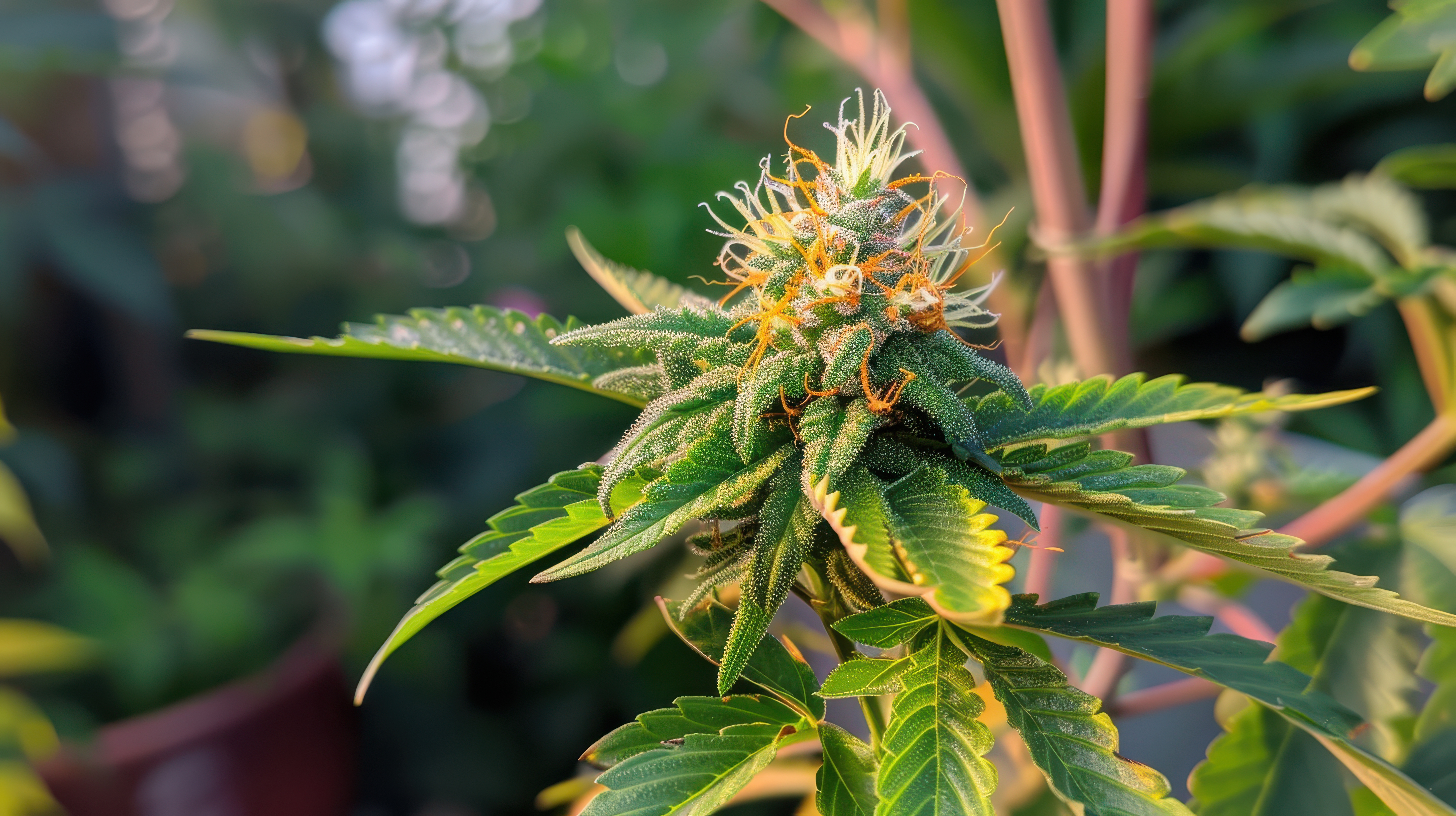


Seeing cannabis leaves turn yellow around six weeks into flowering can be confusing. At this stage, the plant is well into flower production, and its needs are changing. Some yellow leaves may be part of the plant’s normal aging process. In other cases, yellowing can be a sign that the plant is under stress. The key is to look at the whole plant instead of judging the problem from one yellow leaf.
The loss of green color in a leaf is often called chlorosis. Leaves look green because they contain chlorophyll. Chlorophyll helps plants capture light and use it to make energy. When a leaf begins to lose chlorophyll, its color may change from dark green to pale green and then to yellow. This change can happen for several reasons, including natural aging, poor nutrient uptake, root problems, water stress, heat, pests, or disease.
Timing is important when trying to understand yellow leaves during flowering. Six weeks into flowering may be close to the later part of the flowering cycle for some plants, while other plants may still have several weeks of development remaining. Because cannabis varieties can mature at different rates, yellowing at week six does not always mean the same thing. A slow color change in a few older leaves may be very different from sudden yellowing across the entire plant.
Natural leaf aging is one possible reason for yellow leaves during later flowering. As a plant gets older, some of its oldest leaves may become less useful. The plant may move certain nutrients from these older leaves to other areas that are still developing. When this happens, older leaves may slowly become pale or yellow before eventually drying and falling away. This process can occur without indicating a serious health problem.
However, not all yellowing should be treated as normal. The speed and pattern of the color change can provide useful clues. If many leaves turn yellow within a short period, the plant may be reacting to stress. The location of the yellow leaves is also important. Yellowing that starts near the bottom of the plant can have different causes from yellowing that appears mainly on the newest leaves or at the top of the plant.
Other symptoms should also be considered. For example, yellow leaves that also have brown spots may point to a different problem than leaves that are evenly pale. Leaves with dry edges, curled tips, holes, webbing, or unusual marks may suggest environmental stress or pest activity. Drooping leaves can sometimes be connected to water or root conditions. Looking at several symptoms together usually gives a clearer picture than looking at color alone.
Nutrient-related problems are another possible cause of yellow leaves. Plants need several nutrients to maintain healthy leaves and complete normal growth. When certain nutrients are not available to the plant, leaf color may change. In some cases, the growing medium may contain enough nutrients, but the roots may have trouble taking them up. This means that yellow leaves do not always prove that the plant simply needs more fertilizer.
Root conditions can have a major effect on the leaves above the soil. Healthy roots help the plant absorb water and nutrients. When roots remain too wet, become damaged, or experience other forms of stress, nutrient and water movement through the plant can be affected. The first visible signs may appear in the leaves, even though the main problem is happening below the surface.
Watering stress can create similar symptoms. Both too much water and too little water may affect leaf health. A plant with stressed roots may become droopy, pale, or yellow. Because watering problems can sometimes look like nutrient problems, it is important to consider the recent condition of the growing medium and the plant as a whole.
Environmental conditions can also affect leaf color. Strong heat, intense light exposure, poor air movement, or other stressful conditions may damage plant tissue. Symptoms caused by environmental stress may be more obvious on leaves closest to the source of the problem. For example, discoloration that appears mostly near the top of the plant may deserve a different investigation from yellowing that begins with old leaves near the bottom.
Pests and disease should also be considered when yellowing appears with unusual marks. Small insects can damage leaf tissue by feeding on the plant. Some pests leave pale dots, patches, or other visible signs. Certain plant diseases can also cause yellow or damaged areas. Checking the leaves carefully, including their undersides, can help reveal signs that may otherwise be easy to miss.
One of the most important things to remember is that a yellow leaf is a symptom, not a complete diagnosis. Several different problems can cause leaves to look similar. Making several major changes at the same time can make it even harder to understand what caused the yellowing in the first place.
Instead, it is useful to study where the yellowing begins, how quickly it spreads, and what other symptoms appear with it. A few older leaves slowly fading late in flowering may not have the same meaning as widespread yellowing combined with spots, wilting, or damaged new growth.
Understanding these differences makes it easier to judge whether yellow leaves six weeks into flowering are part of normal plant development or a sign that something needs attention. The following sections examine the most common causes in greater detail, including natural fading, nutrient problems, root conditions, watering stress, environmental problems, pests, and disease.
Is It Normal for Cannabis Leaves to Turn Yellow in Week 6 of Flowering?
Yellow leaves during week 6 of flowering can be normal in some cannabis plants, but they can also be a sign of stress. The key is to look at where the yellowing starts, how quickly it spreads, and whether other symptoms appear at the same time. A few older leaves slowly turning yellow may not be a serious concern. However, rapid yellowing across much of the plant can suggest that something is affecting normal plant health.
Week 6 is often considered a middle-to-late stage of flowering, depending on the plant’s genetics. Some cannabis varieties finish flowering sooner, while others need several more weeks. Because of this, yellow leaves at week 6 cannot be judged by timing alone. The overall appearance of the plant provides better clues.
Understanding Normal Late-Flower Leaf Fading
Cannabis leaves contain chlorophyll, which gives them their green color. Chlorophyll also helps the plant absorb light. As a plant moves through its life cycle, older leaves may slowly lose chlorophyll. When this happens, the leaves change from dark green to light green and then yellow.
This process is often called natural fading or senescence. Senescence is a normal aging process in plant tissue. During later stages of development, a plant may move stored nutrients from older leaves to other parts of the plant. Older fan leaves are often the first ones to show this change.
Normal fading usually happens slowly. It may begin with a few older leaves near the lower parts of the plant. These leaves may gradually become pale before turning fully yellow. Over time, some of them may dry out and fall away.
The expected flowering time of the plant is important when deciding whether yellowing is normal. For example, a plant that is close to the end of its natural flowering period may show more yellow leaves than a plant that still has several weeks left. Genetics can strongly affect when this process starts.
Leaf fading can also vary from one plant to another, even when plants are grown under similar conditions. For this reason, a grower should avoid assuming that every yellow leaf means something is wrong.
When Yellowing May Be a Warning Sign
Yellowing becomes more concerning when it appears suddenly or spreads quickly. A plant that changes from mostly green to heavily yellow within a short period may be experiencing stress rather than simple aging.
The location of the yellow leaves can provide useful information. If only a few older leaves near the bottom are affected, natural aging may be one possible explanation. If the newest leaves at the top are turning yellow, another cause may be involved.
Other symptoms should also be considered. Yellowing combined with brown spots, burnt-looking edges, curling, wilting, or dry leaf tissue may point to a health problem. Leaves that look weak, twisted, or unusually small may also suggest that the plant is under stress.
It is also important to notice whether the yellowing is even or uneven. A leaf that becomes evenly pale is different from a leaf that stays green along the veins while the tissue between the veins turns yellow. Yellow tips and margins can also suggest a different cause from whole-leaf yellowing.
The speed of the change matters as well. Natural aging usually develops over time. Severe stress can produce much faster changes. Watching the plant over several days can make it easier to see whether the problem is stable or getting worse.
Natural Fade vs. Plant Stress
The main challenge is telling normal late-flower fading apart from a problem that needs attention. No single symptom can always provide a clear answer. Instead, several signs should be considered together.
Natural fading usually affects older leaves first. The change tends to be gradual, and the rest of the plant may continue to look healthy. There may be no major drooping, spotting, curling, or unusual damage.
Plant stress often produces a different pattern. Yellowing may spread quickly, affect many parts of the plant, or appear along with other symptoms. The plant may also look weak or show changes in leaf shape and texture.
Several conditions can cause stress-related yellowing. These can include problems with nutrient availability, water around the roots, root health, environmental conditions, pests, or plant disease. Some of these problems can look very similar at first.
This is why it is not helpful to diagnose a cannabis plant based only on the fact that the leaves are yellow. The pattern gives much more useful information.
For example, older leaves turning yellow from the bottom upward may have a different cause from pale new leaves at the top. Yellow tissue between green veins may point toward a different issue than yellow and brown leaf edges. Bleached upper leaves may also suggest a different kind of stress than lower-leaf fading.
Week 6 by itself is not enough to decide whether yellowing is normal. Some plants may be approaching the end of flowering, while others may still be in an active stage of development. Understanding the expected flowering period helps provide useful context.
Why Week 6 Does Not Always Mean the Same Thing
Cannabis plants do not all follow the exact same flowering schedule. Some varieties have shorter flowering periods, while others naturally take longer. Environmental conditions can also affect the speed of plant development.
This means that “week 6” is only a general point on a calendar. It does not tell the full story of what is happening inside the plant.
A plant with an expected flowering period of around seven or eight weeks may naturally show more signs of aging in week 6. A plant that normally flowers for ten weeks or longer may still have considerable development ahead. In that case, widespread yellowing may deserve closer attention.
Looking at the whole plant is therefore more useful than focusing only on the week number. Check whether the yellowing is limited to old leaves or spreading into healthy areas. Notice whether leaves are still firm or becoming dry and damaged. Also watch for spots, unusual patterns, or changes in new growth.
Keeping track of these details can make it easier to understand whether the plant is simply aging or showing signs of stress.
Yellow cannabis leaves during week 6 of flowering can be normal, especially when the change develops slowly and mainly affects older leaves. Natural aging causes chlorophyll levels to fall, which can make leaves fade from green to yellow as the plant moves later into its life cycle.
However, not all yellowing should be considered normal. Fast-spreading discoloration, yellow new growth, brown spots, curling, wilting, or damaged leaf edges can suggest that the plant is dealing with stress. The location and pattern of the yellowing are often more useful than the flowering week alone.
Why Are the Lower Leaves Turning Yellow During Flowering?
Yellowing that starts on the lower leaves is one of the most common changes seen during the flowering stage of a cannabis plant. In many cases, the oldest leaves are the first to lose their green color. This can happen as part of the plant’s normal life cycle, but it can also point to stress or a nutrient problem.
The key is to look at the whole pattern. A few older leaves slowly turning yellow may not be a serious concern. However, yellowing that moves quickly upward through the plant may show that something is wrong. Leaf position, color, speed of change, and other symptoms can all help explain what is happening.
Why Older Leaves Often Change Color First
Lower leaves are usually some of the oldest leaves on the plant. They developed earlier in the plant’s life and have already spent a long time helping with photosynthesis. As the plant moves deeper into flowering, its needs and growth pattern change.
Plants can move certain nutrients from older leaves to newer plant tissue. These nutrients are called mobile nutrients because the plant can move them from one area to another. When this happens, older leaves may begin losing chlorophyll.
Chlorophyll is the green pigment that allows leaves to collect light energy. When chlorophyll breaks down, the leaf changes from dark green to pale green and then yellow. This process may start near the bottom of the plant because older leaves are often used as nutrient reserves.
Natural aging usually happens slowly. One or two lower leaves may become pale while most of the plant remains healthy and green. The leaf may eventually become fully yellow, dry out, and fall from the plant.
The timing of this process can vary. Cannabis varieties do not all mature at the same rate. Some plants have shorter flowering periods, while others remain in flower much longer. For this reason, yellow leaves during week six should not automatically be treated as either normal or abnormal. The rest of the plant must also be considered.
Nitrogen and Older Leaf Yellowing
Nitrogen plays an important role in leaf growth and chlorophyll production. It helps plants produce proteins and other compounds that support normal growth. Because nitrogen can move through the plant, signs linked with low nitrogen availability often appear first on older leaves.
A common pattern is an even loss of green color. The oldest leaves may become pale green before turning yellow. Over time, the yellowing may move toward leaves higher on the plant.
However, yellow lower leaves do not always mean that the plant lacks nitrogen. Several different problems can create a similar appearance. Root stress, watering problems, poor nutrient uptake, or natural leaf aging can all cause older leaves to lose color.
This is why it is important not to diagnose the plant from color alone. If the entire lower part of the plant becomes yellow very quickly, there may be a larger problem affecting nutrient movement or root health. If only a small number of old leaves change slowly while the rest of the plant looks healthy, the change may be related to normal aging.
Other symptoms can provide useful clues. Weak stems, widespread pale growth, or rapid loss of older leaves may suggest a broader problem. In contrast, healthy flowers and stable upper growth may point toward a more natural decline in older foliage.
How Fast Is the Yellowing Spreading?
The speed of the color change is one of the most useful signs to watch. A plant that loses one old leaf over several days is different from a plant that develops many yellow leaves within a short period.
Slow yellowing is more likely to be connected with natural aging when the rest of the plant remains healthy. During the later stages of flowering, plants may gradually use stored resources from older foliage. This can cause a controlled decline in the lowest leaves.
Fast yellowing deserves more attention. If several leaves become yellow at the same time or the yellowing quickly moves upward, the plant may be under stress. Possible causes can include problems with roots, water, nutrient availability, temperature, or other growing conditions.
It helps to observe the plant over time instead of reacting to a single yellow leaf. Changes that happen over several days can reveal whether the problem is stable or getting worse.
The location of new yellow leaves is also important. If yellowing remains limited to the oldest leaves, the cause may involve normal aging or a mobile nutrient. If new leaves or upper leaves start changing color, a different type of stress may be involved.
It is also useful to look for other changes at the same time. Leaves that are yellow but otherwise smooth may point to a different issue than yellow leaves with brown spots, burnt edges, curling, or wilting.
Should Yellow Leaves Fall Off?
Older leaves may eventually fall from the plant after they become fully yellow. Once a leaf has lost most of its chlorophyll and is no longer functioning well, the plant may stop supporting it.
A small amount of natural leaf loss can happen as flowering progresses. The plant is moving through the later stages of its life cycle, and some older foliage may no longer play a major role.
However, heavy leaf loss should not automatically be considered normal. If many leaves are turning yellow and dropping in a short period, the plant may be experiencing significant stress. This is especially important when leaf loss spreads beyond the lowest part of the plant.
Leaves that are dying because of stress may also show other signs. They may develop dry areas, brown edges, spots, or unusual curling. The plant may look weak or wilted. These symptoms can help separate normal aging from a problem that needs closer attention.
A yellow leaf will usually not return to its original green color once much of its chlorophyll has been lost. For this reason, the most useful sign is often what happens next. If the yellowing stops and healthy leaves remain stable, the condition may not be getting worse. If new leaves continue to become yellow, the underlying cause is probably still affecting the plant.
Lower cannabis leaves often turn yellow first because they are the oldest leaves on the plant. During flowering, the plant may move mobile nutrients from older foliage into other tissues. As chlorophyll breaks down, these leaves can change from green to yellow and eventually fall away.
Nitrogen is closely connected with green leaf color, so reduced nitrogen availability can also cause older leaves to yellow. Still, yellow lower leaves alone are not enough to prove that nitrogen is the cause. Root stress, watering problems, poor nutrient uptake, and natural aging can produce similar symptoms.
Can Nutrient Problems Cause Yellow Leaves Six Weeks Into Flowering?
Nutrient problems are one possible reason cannabis leaves turn yellow during the sixth week of flowering. At this stage, the plant is using a large amount of energy to support flower development. Its nutrient needs are also different from those during early growth. Because of this, leaves may begin to show changes when the plant cannot get enough of certain nutrients or cannot absorb them well.
However, yellow leaves do not always mean that the plant needs more fertilizer. Natural aging, root problems, watering issues, heat stress, and other conditions can produce similar symptoms. The position of the yellow leaves and the pattern of color change can provide useful clues.
Nitrogen-Related Yellowing
Nitrogen plays an important role in healthy green plant growth. It is a major part of chlorophyll, which gives leaves their green color and helps plants use light for photosynthesis.
When a plant has limited access to nitrogen, older leaves often begin to turn pale green and then yellow. This usually happens because nitrogen is considered a mobile nutrient. The plant can move some of the nitrogen stored in older leaves to newer parts of the plant.
As a result, nitrogen-related yellowing often begins near the lower part of the plant. The color change may spread upward over time if the problem continues. Older leaves may become completely yellow and eventually dry out or fall from the plant.
Some yellowing of older leaves can also happen naturally as flowering moves toward its final stages. This makes nitrogen problems harder to identify by color alone. A plant that is naturally aging may slowly lose green color in its oldest leaves without showing other serious signs of stress.
The speed of the yellowing is important. A slow change affecting a few older leaves is different from rapid yellowing that affects much of the plant in a short period. Looking at the whole plant gives a clearer picture than looking at one yellow leaf.
Magnesium-Related Chlorosis
Magnesium is another nutrient connected to leaf color because it is an important part of chlorophyll. When magnesium is not available to the plant, the yellowing pattern can look different from a simple nitrogen-related fade.
A common sign associated with magnesium problems is interveinal chlorosis. This means the tissue between the veins begins to turn yellow while the veins stay greener for a longer time. The leaf may develop a striped or marbled appearance.
Magnesium is also a mobile nutrient, so symptoms often become visible on older leaves before they appear on newer growth. As the problem becomes more severe, yellow areas may spread and small brown or dry patches may develop.
It is important to remember that visible magnesium-like symptoms do not always mean there is too little magnesium in the growing medium. Root stress and unsuitable root-zone conditions can also prevent a plant from taking up nutrients that are already present.
For this reason, adding more nutrients simply because a leaf looks yellow can sometimes make the situation more complicated. The condition of the roots, growing medium, watering pattern, and other symptoms should also be considered.
Potassium-Related Leaf Damage
Potassium supports many plant functions, including water movement and normal tissue development. During flowering, plants continue to depend on potassium for healthy growth.
Problems related to potassium often produce symptoms near the edges of older leaves. The leaf margins may become pale or yellow before developing brown, dry, or damaged areas. Tips can also appear burnt or unhealthy.
As the condition progresses, the affected leaf may look dry around the edges while the center remains greener for some time. This pattern is different from the more even yellowing often connected with nitrogen.
However, damaged leaf edges can have several possible causes. Heat stress, excessive nutrient levels, root problems, and environmental stress can create similar symptoms. This is why leaf appearance should be treated as one clue rather than a complete diagnosis.
A grower should compare several leaves from different parts of the plant. If the same pattern appears mainly on older leaves and continues to spread, a nutrient-related cause may deserve closer attention.
Iron and Other Less Common Causes
Iron problems can also cause yellow leaves, but the pattern is usually different. Iron is not very mobile inside the plant. Because of this, symptoms often appear first in young leaves near the top rather than in older leaves near the bottom.
New growth may become pale yellow while some of the veins remain greener. This difference in location can help separate possible iron-related symptoms from nitrogen or magnesium problems.
Other nutrients can also affect leaf color and health. Sulfur, manganese, and several micronutrients are involved in normal plant growth. Problems involving these nutrients are less common, but they may produce yellowing, spots, weak growth, or unusual changes in new leaves.
The age of the affected leaves can therefore be an important diagnostic clue. Yellow lower leaves usually point toward a different group of possible causes than yellow new growth at the top.
Why Symptoms Can Overlap
One of the biggest challenges with yellow leaves is that many plant problems look similar. A leaf does not provide a label showing exactly what is wrong. Different nutrient issues can produce yellowing, brown spots, curling, dry edges, or slow growth.
Several problems can also happen at the same time. For example, stressed roots may have trouble absorbing several nutrients. The plant may then show symptoms that appear to involve nitrogen, magnesium, and other nutrients even when those nutrients are present in the growing medium.
Watering problems can also affect nutrient uptake. Roots that stay under stress may not work normally. Heat and other environmental conditions can add more symptoms and make diagnosis harder.
This is why it is useful to study the pattern carefully. Notice whether yellowing begins on old leaves or new leaves. Look at whether the veins remain green, whether the leaf edges are damaged, and whether brown spots are developing. Also consider how quickly the symptoms are spreading.
Nutrient problems can contribute to yellow cannabis leaves six weeks into flowering, but yellowing alone does not prove that a nutrient is missing. Nitrogen-related symptoms often begin with general yellowing of older leaves. Magnesium problems may cause yellow tissue between greener veins, while potassium issues can produce yellow or damaged leaf edges. Iron-related symptoms are more likely to appear in younger growth.
Can a pH Problem Make Cannabis Leaves Turn Yellow During Flowering?
A pH problem can be one reason cannabis leaves turn yellow during flowering. However, yellow leaves do not prove that pH is the cause. Many forms of plant stress can create similar signs. Nutrient shortages, damaged roots, poor watering conditions, heat, and natural leaf aging can all cause changes in leaf color.
The term pH describes how acidic or alkaline a substance is. In plant growth, pH matters because it affects the chemical form of nutrients around the roots. A nutrient may be present in the growing medium, but the plant may still have trouble taking it in if root conditions are not suitable.
This is one reason a plant can look deficient even when nutrients have already been supplied. Instead of immediately adding more fertilizer, it is important to look at the whole plant and consider what is happening around the roots.
How Root Conditions Affect Nutrient Uptake
Healthy roots do more than hold a plant in place. They absorb water and mineral nutrients that the plant needs for normal growth. These materials move from the roots into stems, leaves, and flowers.
The chemical conditions around the roots affect this process. When those conditions move too far away from what the plant can tolerate, some nutrients become harder for the roots to absorb. The plant may then show signs that look like a nutrient shortage.
Yellowing is one possible sign. Depending on which nutrient is affected, the yellow color may begin on older leaves, younger leaves, or between the veins. Some leaves may also develop brown spots, pale edges, or dry sections.
Root health also affects nutrient uptake. Roots need suitable moisture and enough oxygen. A growing medium that remains waterlogged for too long can reduce the amount of air available around the roots. Damaged roots may then become less effective at taking up water and minerals.
This means pH should not be viewed as a separate issue from root health. Watering conditions, drainage, temperature, and the condition of the growing medium can all influence how well roots work.
Why pH Problems Can Look Like Deficiencies
A pH-related nutrient uptake problem can be confusing because it often resembles a true nutrient deficiency. The leaves may appear pale or yellow even though nutrients are already present around the roots.
Growers often use the term “nutrient lockout” to describe this situation. In simple terms, the plant has access to nutrients in its environment, but it cannot use some of them efficiently.
Different nutrients behave differently under changing root conditions. Because of this, several symptoms can appear at the same time. One section of the plant may become pale while another develops spots or damaged edges.
This can make visual diagnosis difficult.
For example, yellow lower leaves are often associated with problems involving nutrients that can move from older growth into newer growth. Yellowing between green veins may point toward a different nutritional issue. Pale young growth can suggest still another problem.
However, leaf appearance alone cannot always identify the exact cause. Two plants with different root problems may show similar yellow leaves. A stressed plant may also experience more than one issue at the same time.
This is why it is useful to look beyond color. Consider when the yellowing began, where it started, how quickly it is spreading, and whether the plant is also drooping, curling, spotting, or developing damaged leaf edges.
Checking the Root Zone Before Assuming Nutrients Are Missing
When yellowing appears during flowering, the condition of the root zone deserves attention before assuming the plant simply needs more nutrients.
Begin by considering recent changes. Think about whether watering habits have changed, whether the growing medium has been staying wet for longer than usual, or whether the plant has recently been exposed to unusual environmental stress. Sudden changes can sometimes explain why symptoms appeared.
The condition of the growing medium is also important. Compacted or constantly saturated material can reduce air around the roots. Very dry conditions can create a different type of stress. Either situation can interfere with normal root function.
It is also helpful to consider whether several nutrient-like symptoms appeared at once. A simple shortage of one nutrient may produce a fairly recognizable pattern. Root-zone problems, in contrast, can sometimes affect the availability of several nutrients and create a mixed group of symptoms.
Avoid making many major changes at the same time. If watering, nutrients, lighting, and other conditions are all changed together, it becomes difficult to know which factor was actually causing the problem.
It is also important to understand that damaged leaves may not become completely green again after the underlying stress improves. Old yellow tissue can remain discolored. For this reason, changes in newer growth and the speed at which symptoms spread can be more useful than waiting for every damaged leaf to recover.
Why Adding More Nutrients Is Not Always the Answer
Yellow leaves often lead people to assume that a plant needs more fertilizer. Sometimes that may be true, but adding more nutrients without identifying the cause can make a root-zone problem more complicated.
If nutrients are already present but the plant cannot absorb them properly, supplying even more does not necessarily solve the underlying issue. Excess mineral buildup may place additional stress on the roots and can create new symptoms that overlap with the original problem.
A better approach is to treat yellowing as a clue rather than a diagnosis.
Look at the location of the affected leaves. Examine the pattern of yellowing. Check whether leaves are drooping, curling, developing spots, or becoming dry around the edges. Consider the condition of the roots and growing medium as well as recent changes in the plant’s environment.
These observations provide a more complete picture of what may be happening.
A pH problem can contribute to yellow cannabis leaves during flowering because root-zone chemistry affects how easily a plant can absorb nutrients. In some cases, nutrients may already be present while the roots are unable to use them efficiently. This can produce symptoms that resemble a normal nutrient deficiency.
However, yellow leaves alone cannot confirm a pH problem. Watering stress, poor root health, nutrient imbalance, environmental stress, and natural leaf aging can produce similar signs.
For that reason, diagnosis should focus on the entire plant rather than one yellow leaf. The location of the discoloration, the way it spreads, other leaf symptoms, and the condition of the root zone can all provide useful clues. Identifying the likely cause before making major changes reduces the chance of creating additional stress and makes plant-health problems easier to understand.
Can Overwatering or Underwatering Cause Yellow Leaves in Flowering?
Water problems are a common reason cannabis leaves turn yellow during flowering. Both too much water and too little water can place stress on the plant. The symptoms may look similar to nutrient problems, which can make the cause hard to identify at first. This is why it is important to look at the condition of the growing medium, the leaves, and the roots before making major changes.
Water is essential because it helps move nutrients through the plant. It also supports many basic plant functions. However, roots need both water and oxygen. If the roots stay too wet for too long, they may not get enough oxygen. If they become too dry, they may not be able to take in enough water and nutrients. Either situation can lead to yellowing leaves.
Signs Associated With Too Much Water
Overwatering does not always mean giving a plant a large amount of water once. It often means the growing medium stays wet for too long and does not have enough time to dry. This can happen when water is added too often, when drainage is poor, or when the root area holds too much moisture.
One common sign of excess water is drooping. The leaves may hang downward even though the growing medium is still wet. This can be confusing because underwatered plants may also droop. The difference is that an overwatered plant is sitting in moist or saturated material, while an underwatered plant is usually surrounded by dry material.
Yellowing may begin on older leaves and then become more widespread if the wet conditions continue. The plant may also appear weak or slow to develop. Leaves may feel heavy rather than dry and brittle.
Constantly wet conditions can reduce the amount of oxygen available to the roots. Healthy roots use oxygen for normal biological processes. When oxygen becomes limited, root function can weaken. The roots may then struggle to absorb water and nutrients even though both are present around them.
Long periods of excessive moisture can also create conditions that favor root disease. When roots become damaged, the plant may show several symptoms at the same time, including yellow leaves, drooping, slow growth, and poor overall health.
Signs Associated With Too Little Water
Underwatering happens when the root area becomes too dry for the plant to take in enough moisture. Plants lose water through their leaves, so they depend on the roots to replace that moisture.
A plant that does not receive enough water may begin to wilt. Leaves can hang downward and may feel thin, soft, or dry. If the problem continues, leaf edges may become dry or brittle. Older leaves may begin turning yellow as the plant struggles to support all of its foliage.
Dry conditions can become more noticeable during flowering because the plant still needs water to support normal growth and plant functions. Warm temperatures and dry air can also increase water loss from the leaves.
The growing medium can provide an important clue. If it feels very dry while the plant is drooping, a lack of water may be part of the problem. Repeated cycles of severe drying can place ongoing stress on the roots. This stress may reduce the plant’s ability to absorb nutrients and maintain healthy green leaves.
It is also important to remember that wilted leaves do not automatically mean the plant needs more water. The moisture level around the roots should be checked because both excess and lack of water can produce a drooping appearance.
How Root Stress Leads to Yellowing
Roots are responsible for more than simply holding a plant in place. They absorb water and dissolved minerals that are needed throughout the plant. Healthy roots also require oxygen.
When roots are stressed, nutrient movement can become less efficient. The leaves may then develop symptoms that look like a nutrient deficiency. This is one reason yellow leaves do not always mean that more nutrients are needed.
For example, a growing medium may contain enough minerals, but damaged or oxygen-starved roots may have trouble absorbing them. Adding more nutrients may not solve the main problem if poor root conditions are responsible for the yellowing.
Root stress can also affect water movement. If the roots cannot function normally, the plant may have trouble maintaining the right amount of moisture in its tissues. Leaves may droop, lose color, or develop dry areas.
The pattern of yellowing can provide clues, but it should be considered together with other symptoms. Yellow lower leaves, widespread drooping, and constantly wet soil suggest a different problem from yellow leaves combined with very dry soil and brittle foliage.
Separating Watering Problems From Nutrient Problems
Watering problems and nutrient problems can look very similar. Both may cause yellow leaves, slow growth, weak foliage, and changes in leaf color. For this reason, it is useful to check moisture conditions before assuming the plant has a nutrient shortage.
Start by observing the growing medium and the plant together. If the growing medium remains wet for a long period and the leaves continue to droop, excess moisture may be affecting the roots. If the growing medium becomes very dry and the plant wilts, a lack of water may be involved.
The speed of the symptoms can also help. A plant that suddenly wilts after the root area becomes extremely dry may be reacting to a water shortage. A plant that slowly becomes yellow and weak while the growing medium stays wet may be suffering from poor root conditions.
Leaf appearance can provide more information. Some nutrient problems produce distinct patterns, such as yellow tissue between green veins or damaged leaf edges. Water stress often causes more general symptoms such as drooping, widespread yellowing, and loss of plant strength.
It is also helpful to consider recent changes. A change in watering frequency, drainage, temperature, or growing medium can affect how quickly the root area becomes wet or dry. Looking at these conditions can make diagnosis more accurate.
Avoid changing several things at the same time. If water, nutrients, and other growing conditions are all changed together, it becomes difficult to know which factor caused the original problem. Careful observation is usually more useful than reacting quickly to a single yellow leaf.
Both overwatering and underwatering can cause cannabis leaves to turn yellow during flowering. Too much water can keep oxygen away from the roots and weaken their ability to absorb nutrients. Too little water can cause wilting, dry leaves, and stress that also affects nutrient movement.
The best way to tell the difference is to look at the moisture around the roots along with the condition of the leaves. Constantly wet growing material, heavy drooping leaves, and slow growth may point to excess water. Very dry material, wilting, and brittle foliage may suggest a lack of water.
Yellow leaves should not be treated as proof of a nutrient problem on their own. Healthy roots depend on balanced moisture and enough oxygen. By checking root-zone moisture and looking at the full pattern of symptoms, it becomes easier to understand whether water stress is contributing to yellow leaves during flowering.
Can Too Much Light or Heat Cause Yellow Leaves in Week 6?
Too much light or heat can cause cannabis leaves to turn yellow during the sixth week of flowering. These problems are often confused with nutrient deficiencies because the symptoms can look similar. However, light and heat stress usually follow certain patterns. Paying attention to where the yellowing appears and what the leaves look like can help separate environmental stress from other causes.
During flowering, the plant may be more sensitive to changes in its environment. The upper parts of the plant are usually exposed to the strongest light and the highest temperatures. If these areas begin to fade, curl, or dry while lower leaves remain healthier, the environment may be part of the problem.
Light Stress During Flowering
Light is needed for photosynthesis, but very intense light can place stress on plant tissue. When the upper leaves receive more light than they can handle, their green color may begin to fade. In stronger cases, the leaves may look pale yellow, almost white, or washed out.
Light stress is usually most noticeable near the top of the plant. This is one important clue. A nutrient problem may begin on older leaves near the bottom or affect several parts of the plant. Light stress, on the other hand, often appears first on leaves and flowers that are closest to the strongest source of light.
The affected leaves may also point upward, curl at the edges, or feel drier than normal. Some leaves may stay fairly firm while losing their green color. This can make light stress look different from watering problems, which often cause the whole plant to droop.
It is also important to understand that a leaf that has already been badly bleached may not return to its original dark green color. The goal when assessing the problem is to watch whether new damage continues to appear. If the discoloration stops spreading after the source of stress is corrected, this may support the idea that excessive light was involved.
Light stress should not be diagnosed from color alone. Other conditions, including root problems and nutrient imbalance, may also cause pale leaves. The location of the symptoms is often the most useful clue.
Heat Stress and Leaf Appearance
Excessive heat can also cause yellow leaves during flowering. Heat affects how a plant manages water. As temperatures rise, leaves lose moisture more quickly. If the plant cannot replace that moisture fast enough, the leaves may begin to curl, dry, or develop damaged edges.
Heat-stressed leaves often have a different appearance from leaves that are simply fading with age. The edges may curl upward or inward. Tips may become dry or brown. Some leaves may feel thin or crispy. In more severe cases, parts of the plant may wilt even when moisture is available around the roots.
Heat stress can also make other problems worse. A plant that is already having difficulty taking up water or nutrients may show stronger symptoms when temperatures rise. This is one reason environmental problems sometimes appear to be nutrient deficiencies.
It is also possible for heat and strong light to occur at the same time. Areas closest to an intense light source may receive both more light and more heat. When this happens, upper leaves may show several symptoms together, such as pale color, curled edges, and dry tips.
Air movement and general growing conditions also affect how plants respond to heat. Poor airflow can allow hot air to remain around the leaves. Sudden environmental changes may also increase stress because plants usually respond better to stable conditions than to repeated swings.
Why Problems May Appear Later in Flowering
Light or heat problems do not always appear early in the plant’s life. They may become more obvious later in flowering because the structure of the plant changes over time.
As flowering develops, upper branches may become closer to the main light source. Leaves that were once in a comfortable position may later receive stronger exposure. This can happen gradually, so the problem may not be obvious until discoloration begins.
The plant’s needs and ability to deal with stress can also change as it matures. During flowering, energy is directed toward reproductive growth. Older leaves may already be losing some color naturally. When environmental stress is added, the yellowing can become more noticeable.
This is why week six can be confusing. Some yellowing may be linked to normal aging, while other yellowing may be caused by stress. The timing alone does not provide a clear answer.
A useful clue is whether the symptoms are concentrated in one area. If the highest leaves are pale or damaged while shaded lower leaves remain green, light or heat should be considered. If yellowing begins mostly on older lower leaves and slowly moves upward, another cause may be more likely.
How to Recognize Environmental Stress
The best way to identify possible light or heat stress is to look at the whole plant rather than one yellow leaf. Compare the top, middle, and lower parts of the plant. Notice whether the damage is strongest in exposed areas.
Also look for several symptoms at the same time. Pale upper leaves, dry edges, curling, bleaching, or unusually fast moisture loss can point toward environmental stress. In contrast, evenly yellow lower leaves may suggest natural aging or a nutrient-related issue.
Recent changes are also important. If the plant began showing symptoms after a major change in light exposure, room conditions, or airflow, that information may help explain the problem. Making several changes at once can make diagnosis harder, so careful observation is useful.
Environmental stress can sometimes be reduced by keeping conditions stable and preventing excessive exposure. However, major changes should be made carefully because sudden shifts can create additional stress. The main goal is to identify the likely cause before trying to correct several possible problems at the same time.
Too much light or heat can cause cannabis leaves to turn yellow during the sixth week of flowering. Light stress often appears near the top of the plant, where leaves may become pale, yellow, or bleached. Heat stress can cause yellowing along with curling, dry edges, wilting, or crispy tissue.
These problems may become more noticeable later in flowering because the plant’s upper growth can become more exposed and because older leaves may already be starting to fade naturally. The location of the symptoms is one of the best clues. Damage that is strongest near the upper canopy may point toward light or heat stress, while yellowing that begins on lower leaves may have another cause.
Careful observation is more useful than reacting to one symptom. By checking where the yellowing begins, how quickly it spreads, and whether curling or drying appears with it, growers can better understand whether environmental stress may be contributing to the problem.
Could Pests or Disease Be Causing the Yellowing?
Yellow leaves during the sixth week of flowering are often linked to nutrient movement, watering problems, or normal aging. However, pests and plant diseases can also cause leaves to lose their green color. These problems may be harder to identify because the first signs can look similar to a nutrient deficiency. A plant may develop pale areas, yellow spots, brown marks, weak leaves, or slow growth.
The key is to look at the pattern of damage instead of focusing only on the color yellow. Pest damage often appears in small, uneven areas. Disease may cause spots, patches, damaged tissue, or unusual changes in the stems and leaves. Root problems caused by disease can create more general yellowing across the plant.
Careful inspection can help separate these problems from normal late-flowering changes. It is especially important to pay attention when yellowing develops quickly or appears together with spots, webbing, damaged tissue, or unusual leaf shapes.
Yellow Spots vs. Uniform Yellow Leaves
The way yellowing appears can provide useful clues about its cause. Uniform yellowing means that most or all of a leaf slowly changes from green to pale green and then yellow. This type of change is often linked to plant aging, nutrient movement, or problems that affect the whole plant.
Pest damage usually looks less even. Instead of the entire leaf becoming yellow at the same rate, you may see many small pale dots or irregular marks. These marks can appear where insects have damaged individual plant cells while feeding.
For example, very small feeding pests may leave tiny light-colored dots across the surface of a leaf. At first, these marks can be easy to miss. As the damage increases, the affected leaf may appear faded or dusty from a distance.
Other pests can leave larger yellow areas, small holes, curled edges, or distorted growth. Some insects feed mainly on newer growth, while others are more common on older leaves. This is why the location of the damage matters.
Disease can also create uneven patterns. Fungal or bacterial problems may cause round spots, dark centers, yellow borders, or areas of dead tissue. A leaf with clearly defined spots is different from a leaf that slowly fades from green to yellow without marks.
When looking at yellow leaves, compare several of them. If the same pattern appears on many leaves, it may indicate a wider problem. If only a few leaves have random spots or physical damage, pests or localized disease may be more likely.
Inspecting Both Sides of Leaves
A proper leaf inspection should include both the upper and lower surfaces. Many small pests spend much of their time underneath leaves because this area is protected from direct light and environmental changes.
The upper surface may show the damage, while the pest itself remains hidden underneath. This can make an infestation easy to overlook.
Look closely for tiny insects, small moving dots, eggs, web-like material, unusual residue, or clusters around leaf veins. Some pests are extremely small, so signs of feeding may be easier to notice than the insects themselves.
Webbing is an especially important clue because some mites produce fine strands around leaves and stems when their numbers increase. Sticky residue can also suggest certain insects that feed on plant fluids.
Leaf undersides should also be checked for patches that look dusty, fuzzy, or powdery. These signs may point to fungal growth rather than insects.
Inspect several areas of the plant instead of checking only one leaf. Look near yellow leaves, healthy leaves, new growth, and areas deep inside the plant canopy. A problem may begin in one location before spreading.
Good lighting makes inspection easier. Turning the leaf gently allows you to see both surfaces without damaging it. The goal is to notice patterns and signs that would not be visible during a quick look from a distance.
Root and Foliar Disease
Not all disease problems begin on the leaves. Some start around the roots and later cause visible changes above the growing medium.
Healthy roots are important because they absorb water and nutrients. When roots become damaged by disease or long periods of poor conditions, they may not work as well. The plant can then show symptoms that resemble nutrient deficiency, including yellow leaves, drooping, weak growth, and poor overall health.
This is one reason root problems can be confusing. The growing medium may contain enough nutrients, yet the plant can still appear deficient because the roots are unable to absorb them normally.
Root-related problems may affect large parts of the plant rather than producing a few isolated spots. Yellowing may spread, growth may slow, and leaves may lose their normal firmness.
Foliar diseases affect leaves more directly. These diseases may create spots, discoloration, powdery material, damaged edges, or areas where the tissue becomes brown and dry.
High humidity and limited air movement can make some leaf diseases easier to spread. Dense plant growth can also create small areas where moisture stays trapped around leaves.
It is important to remember that not every brown or yellow spot means disease. Physical damage, nutrient problems, water stress, and heat can create similar symptoms. The pattern, speed of spread, and presence of visible fungal material or other unusual signs can help with identification.
Why Early Identification Matters
Early identification is important because pests and disease can spread from a small area to a much larger part of the plant. Some pests reproduce quickly, while fungal problems can spread through spores.
A few damaged leaves may not seem serious at first. However, if the cause continues, the number of affected leaves can increase.
Regular inspection makes it easier to notice changes before they become severe. When yellowing appears, check whether it is limited to older leaves or whether it is affecting healthy leaves in different areas. Look for spots, insects, webbing, residue, unusual growth, or signs of damaged tissue.
It is also useful to avoid making several major changes at the same time. For example, treating a suspected nutrient problem while also changing watering habits and environmental conditions can make the real cause harder to identify.
If a pest or disease is suspected, the first goal should be confirming what type of problem is present. Different pests and diseases require different responses. Using the wrong treatment may add more stress to an already weakened plant.
Removing heavily damaged or dead plant material can also help with general plant cleanliness when done carefully. Dead tissue can hold moisture and may provide conditions where some problems become worse. Keeping the growing area clean and watching nearby plants can help reveal whether the issue is spreading.
Pests and disease can cause cannabis leaves to turn yellow during flowering, but the pattern is often different from normal leaf fading. Uniform yellowing is more commonly linked to whole-plant factors, while pests and foliar diseases often create spots, speckling, damaged areas, webbing, or unusual residue.
Inspect both sides of the leaves because many small pests remain hidden underneath them. Also consider root health, since root disease can reduce the plant’s ability to absorb water and nutrients and may cause widespread yellowing.
How Can You Tell What Is Causing Yellow Cannabis Leaves?
Yellow cannabis leaves can have many different causes. Some are part of normal plant aging, while others may point to stress, poor root health, environmental problems, or nutrient issues. Because several problems can create similar symptoms, it is important to look at the whole plant instead of focusing on one yellow leaf.
A useful way to find the cause is to study where the yellowing starts, what pattern it follows, how quickly it spreads, and whether other symptoms appear at the same time. These clues can help you narrow down the possible cause and avoid making unnecessary changes.
Start With Where the Yellowing Appears
The location of yellow leaves is one of the first things to check. Different problems often affect different parts of the plant.
If yellowing begins on the lower and older leaves, the plant may be moving mobile nutrients from older growth to newer growth. This can happen naturally as flowering advances. It may also be linked to problems involving nutrients such as nitrogen or magnesium. Older leaves are often affected first because the plant can move some nutrients from these leaves to other areas.
Yellowing that begins at the top of the plant may suggest a different cause. Upper leaves are more exposed to strong light and heat. If leaves near the top become pale, yellow, or bleached while lower leaves remain healthy, environmental stress may be involved.
Yellowing that affects new growth can also provide important clues. Young leaves turning yellow while older leaves stay green may point to a problem with nutrients that do not move easily within the plant. Root-zone conditions can also reduce the plant’s ability to take up certain nutrients.
If nearly the whole plant begins turning yellow at the same time, the problem may be more general. Watering stress, damaged roots, major environmental changes, or poor nutrient uptake can sometimes affect large parts of the plant.
Look at the Pattern
The pattern of yellowing is just as important as its location. A leaf that turns evenly yellow gives different information from one that develops yellow patches, brown edges, or green veins.
Uniform yellowing means most of the leaf changes from green to pale green or yellow at roughly the same rate. This type of change often appears on older leaves when chlorophyll levels decrease.
Interveinal yellowing looks different. In this pattern, the tissue between the veins becomes yellow while the veins stay greener. This pattern is often connected with certain nutrient problems, although it should not be used as the only sign for making a diagnosis.
Yellowing along the edges of leaves may suggest another type of stress. The margins may later become brown, dry, or crisp. Leaf-edge damage may appear when the plant is experiencing nutrient imbalance, root stress, heat, or other environmental problems.
Brown spots mixed with yellow areas are also worth examining closely. Spots can result from several causes, including root problems, nutrient-related stress, pests, or disease. The size, shape, and location of the spots can help provide more information.
Bleaching is another pattern to watch for. Bleached leaves may appear very pale yellow, almost white. When this is concentrated near the highest parts of the plant, strong light exposure may be a possible cause.
Check for Other Symptoms
Yellow color alone does not always reveal the cause. Other symptoms can make the situation easier to understand.
Curling leaves may suggest heat, light stress, watering issues, or other forms of plant stress. Leaves that curl upward at the edges often look different from leaves that curl downward, so the direction of the curl can also be useful.
Drooping is another important sign. A plant that has yellow leaves and drooping growth may be experiencing a problem involving water or root health. Both overly wet and overly dry conditions can cause leaves to droop, so checking the growing medium can help explain what is happening.
Dry or crispy leaf tissue may suggest that the affected area has been damaged for some time. Once plant tissue becomes brown and dry, it usually does not return to healthy green tissue.
Slow growth can also appear with yellow leaves. During flowering, the plant’s growth pattern changes naturally, but a sudden decline in plant health may suggest that the roots or environment are under stress.
Pest damage can create small yellow dots, patches, or irregular marks. Some pests feed directly on leaf tissue, creating a speckled appearance rather than smooth, even yellowing. Looking closely at the upper and lower surfaces of leaves may reveal feeding damage or other signs.
Consider How Quickly the Problem Developed
The speed of the yellowing can tell you a great deal. Gradual yellowing over time is different from a major color change that appears within a short period.
Slow yellowing of older leaves may be part of normal aging, especially later in flowering. A few lower leaves becoming yellow over several days may not be a serious concern if the rest of the plant remains healthy.
Rapid yellowing across many leaves deserves closer attention. If large parts of the plant change color within a short time, it may indicate that the plant is experiencing stronger stress. Sudden changes in watering, temperature, root conditions, or nutrient availability can sometimes cause fast symptoms.
It is useful to compare the plant’s appearance from one day to the next. Photos can help show whether yellowing is stable, spreading slowly, or moving quickly through the plant.
Avoid Diagnosing From One Leaf
One of the most common mistakes is trying to diagnose the entire plant from a single damaged leaf. Individual leaves can become yellow for many reasons. They may be old, shaded, physically damaged, or naturally nearing the end of their life.
Instead, look for repeated patterns across several leaves. Ask whether the affected leaves are mostly old or new. Check whether the yellowing appears on one side of the plant or throughout the whole plant. Look for spots, curling, dryness, or pest damage.
It is also useful to consider recent changes. A sudden change in temperature, watering, light exposure, or root conditions may help explain new symptoms. Looking at the plant’s recent history can provide useful context that leaf color alone cannot give.
Avoid changing several things at the same time. If many changes are made at once, it becomes harder to know which problem was responsible or whether the plant is improving.
Finding the cause of yellow cannabis leaves requires careful observation. Start by checking where the yellowing appears, such as on lower leaves, upper leaves, new growth, or the entire plant. Next, study the pattern. Uniform yellowing, green veins, damaged edges, brown spots, and bleaching can point toward different types of stress.
Other symptoms such as curling, drooping, dry tissue, slow growth, or pest damage can provide additional clues. The speed of the problem also matters. Gradual yellowing may be related to normal aging, while rapid changes may suggest stronger stress.
Most importantly, do not judge the plant from one leaf alone. Look at the whole plant, compare several leaves, and consider recent changes in its environment. Careful observation makes it easier to narrow down the possible cause and avoid unnecessary corrections.
What Should You Do When Leaves Start Turning Yellow in Week 6?
Yellow leaves during the sixth week of flowering can be worrying, but the best response is not to make several changes at once. Yellowing is a symptom, not a diagnosis. It can be linked to natural aging, root stress, watering problems, nutrient availability, heat, light exposure, pests, or disease. Because many of these problems can look similar, the first goal should be to understand what changed and where the symptoms started.
A careful approach makes it easier to identify the cause. Look at the whole plant instead of focusing on one yellow leaf. Notice whether the yellowing is limited to older lower leaves or is also affecting new growth. Check whether leaves are simply becoming pale or whether they also have spots, curling, dry edges, or other damage. These details can help separate normal late-flower changes from a more serious plant health issue.
Diagnose Before Changing Several Things
When yellowing appears, avoid changing many parts of plant care at the same time. If watering, nutrients, lighting, and environmental conditions are all changed together, it becomes difficult to know what caused the problem or what helped.
Start by studying the pattern of yellowing. If only a few older leaves near the bottom are slowly losing color, the change may be part of normal aging. Plants naturally move some resources away from older leaves as they mature. However, if yellowing spreads quickly through large parts of the plant, it deserves closer attention.
The location of the symptoms also provides useful clues. Yellowing that begins on older leaves may point to a different problem from yellowing that starts on young leaves. Pale leaves near the top of the plant can also have different causes from lower-leaf yellowing. Brown spots, damaged edges, drooping, or curling provide extra information.
The goal is not to identify a problem from one symptom alone. Instead, compare several signs and consider the plant’s recent history.
Review Recent Changes
One of the easiest ways to investigate yellow leaves is to think about what has changed recently. Plants often respond to changes in their environment, root zone, or care routine.
Consider whether watering has become more frequent or less frequent. Growing media that remain wet for long periods can place stress on roots because roots also need access to oxygen. On the other hand, a plant that repeatedly becomes too dry may wilt and struggle to move water and nutrients through its tissues.
Environmental changes should also be considered. Higher temperatures, changes in airflow, or stronger light exposure may affect leaf appearance. Symptoms caused by environmental stress are sometimes concentrated in certain parts of the plant, especially areas exposed to the greatest heat or light.
Recent changes in plant nutrition may also be important. Yellowing does not always mean the plant simply needs more nutrients. The root environment can affect how well nutrients are absorbed. This means nutrients may be present even when the plant shows symptoms that resemble a deficiency.
Looking at recent changes provides context. If the plant looked healthy before a major change and symptoms appeared soon afterward, that change may deserve closer examination.
Watch the Newest Symptoms
Once leaves have become strongly yellow or damaged, they may not return to their earlier appearance. For this reason, old damaged leaves are not always the best way to judge whether the plant’s condition is improving.
Instead, watch what happens next.
Pay attention to leaves that are still healthy and to areas where symptoms have recently started. If the yellowing slows down or stops spreading, the situation may be becoming more stable. If new areas continue to turn yellow quickly, the underlying stress may still be present.
It can also help to notice whether other symptoms are becoming more severe. Increasing wilting, spotting, curling, or drying can suggest that the issue is progressing. A plant that remains otherwise stable may be experiencing a more gradual change related to maturity.
Tracking symptoms over time is more useful than repeatedly reacting to individual leaves. Plant problems often develop in patterns, and those patterns can reveal more than a single inspection.
Avoid Overcorrecting
Overcorrection can turn a minor plant health issue into a more complicated one. For example, assuming every yellow leaf means a nutrient shortage can lead to unnecessary changes. If the real problem is related to roots, watering, or the environment, adding more inputs may not solve it.
The same principle applies to other adjustments. Large and sudden changes can place additional stress on a plant that is already struggling. A steady approach makes it easier to see whether the original problem is improving.
This is especially important during flowering because plants naturally change as they mature. Older foliage may lose some of its green color as the plant moves through the later stages of its life cycle. Trying to force every aging leaf to remain dark green can lead to unnecessary intervention.
It is also important not to remove every yellow leaf simply because its color has changed. Leaf condition should be considered along with the health of the rest of the plant. A leaf that is badly damaged, diseased, or affected by pests is different from an older leaf that is slowly fading.
The safest diagnostic approach is to identify the likely source of stress before taking major corrective action. Observe the location of the yellowing, the speed of the change, and any additional symptoms. Then compare those signs with recent changes in watering, root conditions, environmental conditions, and overall plant health.
When cannabis leaves start turning yellow around week six of flowering, the most important first step is careful observation. Yellowing can be part of normal plant aging, but it can also be linked to watering stress, root problems, nutrient availability, environmental conditions, pests, or disease.
Avoid changing several things at once. Instead, look at where the yellowing begins, how quickly it spreads, and whether other symptoms appear. Review any recent changes in plant care or environmental conditions and watch newer leaves to see whether the problem continues.
Remember that damaged leaves may not become green again even when the underlying stress has improved. The better measure is whether new symptoms stop appearing and whether the rest of the plant remains stable. By diagnosing the cause before making major changes, it is easier to avoid unnecessary corrections and understand whether the yellowing is a normal part of flowering or a sign that the plant is under stress.
How Can Yellow Leaves During Flowering Be Prevented?
Yellow leaves during flowering cannot always be prevented. Some leaf fading is a normal part of plant aging, especially as a plant gets closer to the end of its natural life cycle. However, sudden or widespread yellowing may point to stress. The best way to reduce this risk is to keep growing conditions steady and watch for early changes. Good observation is often more useful than making many changes at the same time.
Maintain Consistent Root Conditions
Healthy roots are important because they take in water and nutrients. When root conditions change too much, the plant may have trouble using the resources available to it. This can lead to yellow leaves, drooping, slow growth, or other signs of stress.
One common problem is a growing medium that stays wet for too long. Roots need both moisture and oxygen. If the root area remains waterlogged, oxygen levels can fall. This may reduce root function and make the plant look as if it has a nutrient shortage.
The opposite problem can also cause stress. If the growing medium becomes extremely dry, the plant may not have enough water to support normal leaf function. Repeated swings between very wet and very dry conditions can place extra stress on the root system.
Consistency is therefore important. The goal is not to react to every small change in leaf color. Instead, growers should observe how quickly the growing medium changes and whether the plant shows clear signs of stress. Sudden changes in watering habits, growing media, or other root conditions can make it harder to identify the true cause of yellowing.
Root health should also be considered before assuming that a yellow plant simply needs more fertilizer. When roots are stressed, adding more nutrients may not solve the problem. In some cases, it can make plant stress worse.
Monitor the Plant Throughout Flowering
Regular observation can make yellowing easier to understand. A leaf that turns yellow overnight may suggest a different problem from a leaf that slowly loses color over several weeks.
Checking the plant often also helps establish what is normal for that individual plant. Some plants naturally develop lighter lower leaves as they mature. Others remain green for much longer. Without regular observation, it can be difficult to know whether a change happened slowly or suddenly.
Look at the entire plant rather than focusing on one damaged leaf. One old yellow leaf near the bottom may not mean there is a serious problem. However, dozens of leaves changing color within a short period deserve closer attention.
It is also useful to notice whether other symptoms appear at the same time. Yellowing combined with curling, brown spots, dry edges, unusual drooping, or visible pest damage may provide more information about the possible cause.
Keeping conditions stable also makes diagnosis easier. When several things are changed at once, it becomes difficult to know which change helped or made the problem worse. Careful monitoring allows problems to be identified before they become severe.
Watch Leaf Position and Color
The location of yellow leaves can provide useful clues. Older leaves near the bottom of a plant may naturally fade first. This can happen because plants move some mobile nutrients from older tissue to areas where they are still needed.
Yellowing near the top of the plant may suggest a different type of stress. For example, unusually pale leaves near a strong light source may indicate environmental stress rather than normal aging.
New growth should also be checked. When the youngest leaves begin turning yellow while older leaves remain greener, the pattern may point to a different issue than yellowing that begins at the bottom.
The exact pattern matters as well. A leaf that becomes evenly pale is different from one with green veins and yellow tissue between them. Yellow edges, brown spots, burnt-looking tips, and irregular patches can also provide important clues.
Growers should avoid diagnosing a plant from color alone. Several problems can produce similar symptoms. Leaf position, pattern, speed of change, and other signs should all be considered together.
Keep Environmental Conditions Stable
Plants generally respond better to steady conditions than to sudden changes. Large shifts in temperature, moisture, air movement, or light exposure can create stress.
Heat can increase water loss from leaves and may cause them to curl, dry, or develop damaged edges. Strong light can also affect the upper part of a plant when exposure becomes excessive. These symptoms may sometimes be mistaken for nutrient problems.
Poor air movement can create other concerns, especially when dense plant growth holds moisture for long periods. High humidity around foliage can encourage some plant diseases. Dry air, on the other hand, can increase water loss.
The key is stability. Sudden environmental changes can place stress on a flowering plant even when each individual condition seems acceptable on its own.
When yellowing appears, growers should think about what changed recently. A sudden increase in heat, a change in watering habits, or another environmental shift may provide an important clue.
Know the Expected Flowering Pattern
Not every plant follows the same flowering schedule. Genetics can affect how long flowering lasts and when natural leaf fading begins.
A plant that normally flowers for a longer period may still be in an active stage at week six. Another plant with a shorter natural life cycle may already be moving toward maturity. Because of this, the number of weeks alone cannot determine whether yellow leaves are normal.
Natural aging usually develops gradually. Older leaves may become lighter, turn yellow, and eventually fall away. This is different from sudden yellowing that spreads quickly across the entire plant.
Understanding the expected life cycle helps prevent unnecessary reactions. Trying to correct normal aging as if it were a serious deficiency can create new problems. At the same time, assuming every yellow leaf is natural could allow a real stress problem to continue.
The safest approach is to look at the whole pattern. Consider the plant’s stage of development, the location of affected leaves, how quickly the color is changing, and whether other symptoms are present.
Preventing yellow leaves during flowering is mostly about maintaining steady plant health and recognizing problems early. Healthy root conditions, regular observation, stable environmental conditions, and careful attention to leaf patterns can make unusual yellowing easier to identify.
Some yellowing is a normal part of plant aging and cannot or should not be prevented. The main concern is rapid, widespread, or unusual yellowing that appears with other signs of stress. Instead of reacting to a single yellow leaf, examine the entire plant and look for patterns.
Avoid making many corrections at once. Sudden changes can create additional stress and make diagnosis more difficult. By keeping conditions consistent and watching how the plant changes over time, it becomes easier to separate normal flowering-related fading from a plant-health problem that needs attention.
Conclusion: Understanding Yellow Leaves Six Weeks Into Flowering
Cannabis leaves turning yellow six weeks into flowering can mean several different things. In some cases, the change is part of the plant’s natural aging process. In other cases, yellow leaves can be a sign that the plant is under stress. The key is to avoid judging the plant from one yellow leaf alone. Instead, look at where the yellowing starts, how quickly it spreads, and whether other symptoms appear at the same time.
As cannabis moves through the flowering stage, older leaves may begin to lose some of their green color. This often happens because the plant is changing how it uses and moves nutrients. Older fan leaves may slowly turn pale green, then yellow, before drying and falling away. This type of fading is more common as the plant gets closer to the end of its natural life cycle. However, not every cannabis plant follows the same schedule. Some varieties flower for a shorter period, while others need more time. For that reason, yellow leaves during week six may be normal for one plant but may happen too early for another.
The speed of the color change is one of the most useful clues. A few lower leaves that slowly become yellow are usually less concerning than large sections of the plant turning yellow within a short period. Rapid yellowing may point to a problem with nutrient availability, watering, roots, temperature, light, pests, or disease. Yellow leaves that also show brown spots, burnt edges, curling, severe drooping, or unusual damage should be examined more closely.
The location of the yellow leaves also matters. When older leaves near the bottom of the plant turn yellow first, the cause may be different from yellowing that begins on new growth. Some nutrients can move from older leaves to newer parts of the plant. If the plant is unable to get enough of one of these nutrients, older leaves may show symptoms first. On the other hand, yellowing that mainly affects fresh growth can point toward a different nutrient or root-zone problem. Looking at the location of the symptoms can help narrow down the possible causes.
It is also important to remember that a plant can show deficiency-like symptoms even when nutrients are present. Root conditions affect how well a plant can take up water and minerals. If conditions around the roots are poor, the plant may have trouble using what is already available. This is why adding more nutrients is not always the right response to yellow leaves. Adding more without understanding the cause may create a second problem and make the symptoms harder to understand.
Watering problems can also cause yellow leaves during flowering. Roots need both moisture and oxygen. Growing media that remain too wet for long periods can reduce the amount of oxygen available to the roots. This can weaken normal root function and affect nutrient uptake. On the other hand, a plant that becomes too dry can also become stressed. Leaves may wilt, lose color, or develop dry areas. Checking the general condition of the growing medium can provide useful information when trying to understand yellowing.
Environmental stress should also be considered. Strong heat or intense light can affect the leaves closest to the top of the plant. These leaves may become pale, yellow, dry, or curled. If the yellowing is mainly found in the upper canopy instead of the lower leaves, environmental conditions may deserve closer attention. Plants can also become more sensitive to stress as they develop, so a condition that caused no obvious problem earlier may become more noticeable later.
Pests and disease can produce another type of yellowing. Damage from insects often appears as small dots, uneven patches, or unusual marks rather than a smooth yellow fade across the whole leaf. Some pests may also leave webbing, eggs, residue, or visible damage on the undersides of leaves. Diseases can cause spots, dead tissue, wilting, or other changes. These symptoms should not be confused with normal aging.
When yellow leaves appear, one of the most useful steps is to observe the entire plant before making major changes. Check whether the yellowing begins at the bottom or top. Look at whether the veins stay green while the tissue between them turns yellow. Notice whether leaf tips or edges are damaged. Check for spots, curling, drooping, pests, or unusual growth. It can also help to think about what changed shortly before the symptoms appeared, such as watering habits, temperature, light exposure, or root conditions.
Avoid changing several things at the same time. If many conditions are changed together, it becomes difficult to know which one caused the original problem and which change helped or made it worse. A damaged yellow leaf may not become fully green again even after the source of stress has been corrected. For that reason, the condition of newer leaves and the rate of continued yellowing can provide better information than expecting older damaged leaves to recover.
Preventing serious yellowing depends largely on consistency. Stable root conditions, careful watering, regular plant checks, and a suitable environment can reduce many common stresses. Watching the plant throughout flowering also makes it easier to notice small changes before they become widespread. Comparing older leaves with new growth can help reveal whether the plant is simply aging or showing signs of a larger problem.
In the end, cannabis leaves turning yellow six weeks into flowering should be treated as a symptom rather than a diagnosis. Natural aging, nutrient availability, root health, watering stress, heat, light, pests, and disease can all produce yellow foliage. The pattern, location, speed, and other visible symptoms provide the strongest clues. Gradual fading of a few older leaves may be part of normal flowering, while fast or severe yellowing deserves closer attention. By observing the whole plant and identifying the likely cause before making changes, it becomes much easier to understand what the yellow leaves are showing and to avoid unnecessary corrections.
Research Citation
Bevan, L., Jones, M., & Zheng, Y. (2021). Optimisation of nitrogen, phosphorus, and potassium for soilless production of Cannabis sativa in the flowering stage using response surface analysis. Frontiers in Plant Science, 12, 764103. https://doi.org/10.3389/fpls.2021.764103
Cockson, P., Landis, H., Smith, T., Hicks, K., & Whipker, B. E. (2019). Characterization of nutrient disorders of Cannabis sativa. Applied Sciences, 9(20), 4432. https://doi.org/10.3390/app9204432
Llewellyn, D., Golem, S., Jones, A. M. P., & Zheng, Y. (2023). Foliar symptomology, nutrient content, yield, and secondary metabolite variability of cannabis grown hydroponically with different single-element nutrient deficiencies. Plants, 12(3), 422. https://doi.org/10.3390/plants12030422
Massuela, D. C., Munz, S., Hartung, J., Nkebiwe, P. M., & Graeff-Hönninger, S. (2023). Cannabis Hunger Games: Nutrient stress induction in flowering stage—Impact of organic and mineral fertilizer levels on biomass, cannabidiol (CBD) yield and nutrient use efficiency. Frontiers in Plant Science, 14, 1233232. https://doi.org/10.3389/fpls.2023.1233232
Saloner, A., & Bernstein, N. (2020). Response of medical cannabis (Cannabis sativa L.) to nitrogen supply under long photoperiod. Frontiers in Plant Science, 11, 572293. https://doi.org/10.3389/fpls.2020.572293
Saloner, A., & Bernstein, N. (2021). Nitrogen supply affects cannabinoid and terpenoid profile in medical cannabis (Cannabis sativa L.). Industrial Crops and Products, 167, 113516. https://doi.org/10.1016/j.indcrop.2021.113516
Saloner, A., & Bernstein, N. (2022). Effect of potassium (K) supply on cannabinoids, terpenoids and plant function in medical cannabis. Agronomy, 12(5), 1242. https://doi.org/10.3390/agronomy12051242
Saloner, A., Sacks, M. M., & Bernstein, N. (2019). Response of medical cannabis (Cannabis sativa L.) genotypes to K supply under long photoperiod. Frontiers in Plant Science, 10, 1369. https://doi.org/10.3389/fpls.2019.01369
Shiponi, S., & Bernstein, N. (2021). The highs and lows of P supply in medical cannabis: Effects on cannabinoids, the ionome, and morpho-physiology. Frontiers in Plant Science, 12, 657323. https://doi.org/10.3389/fpls.2021.657323
Westmoreland, F. M., & Bugbee, B. (2022). Sustainable cannabis nutrition: Elevated root-zone phosphorus significantly increases leachate P and does not improve yield or quality. Frontiers in Plant Science, 13, 1015652. https://doi.org/10.3389/fpls.2022.1015652
Questions and Answers
Q1: Is it normal for leaves to turn yellow 6 weeks into flowering?
Some yellowing can be normal late in flowering because the plant redirects stored nutrients from older leaves toward flowers. Heavy, fast, or widespread yellowing may point to stress or a nutrient problem.
Q2: Why are the lower leaves turning yellow during week 6 of flowering?
Lower leaves often yellow first because they are older and receive less light. The plant may also move mobile nutrients, such as nitrogen, out of older leaves as flowering progresses.
Q3: Can nitrogen deficiency cause yellow leaves during flowering?
Yes. Nitrogen deficiency often causes older leaves to become pale green and then yellow. However, some reduction in nitrogen use is expected as a plant moves deeper into flowering.
Q4: Can overwatering cause yellow leaves during flowering?
Yes. Constantly wet growing media can reduce oxygen around the roots and interfere with nutrient uptake. Yellow leaves may appear along with drooping, slow growth, or generally unhealthy-looking foliage.
Q5: Can incorrect pH cause yellowing leaves 6 weeks into flowering?
Yes. An unsuitable root-zone pH can make certain nutrients less available even when those nutrients are present. This can create symptoms that look similar to a nutrient deficiency.
Q6: What nutrient deficiencies can cause yellow leaves during flowering?
Nitrogen, magnesium, potassium, iron, and other nutrient problems can contribute to yellowing. The location and pattern of discoloration can help distinguish one issue from another.
Q7: Why are leaves turning yellow between the veins during flowering?
Yellowing between green veins is often called interveinal chlorosis. It can be associated with magnesium or iron problems, although root health, pH, and other environmental stresses can produce similar symptoms.
Q8: Should yellow leaves be removed during week 6 of flowering?
Leaves that are completely dead or easily detach may be removed, but healthy or partly green leaves still contribute to photosynthesis. Removing too much foliage at once can add unnecessary stress.
Q9: How can I tell normal late-flowering yellowing from a serious problem?
Normal yellowing usually develops gradually and often begins with older leaves. A possible problem is more likely when yellowing spreads rapidly, affects newer growth, appears with spots or damaged edges, or is accompanied by major drooping and poor plant health.
Q10: Can yellow leaves become green again during flowering?
A leaf that has lost a large amount of chlorophyll may not become fully green again. The more useful sign is whether new symptoms stop spreading and the remaining healthy foliage continues functioning normally.