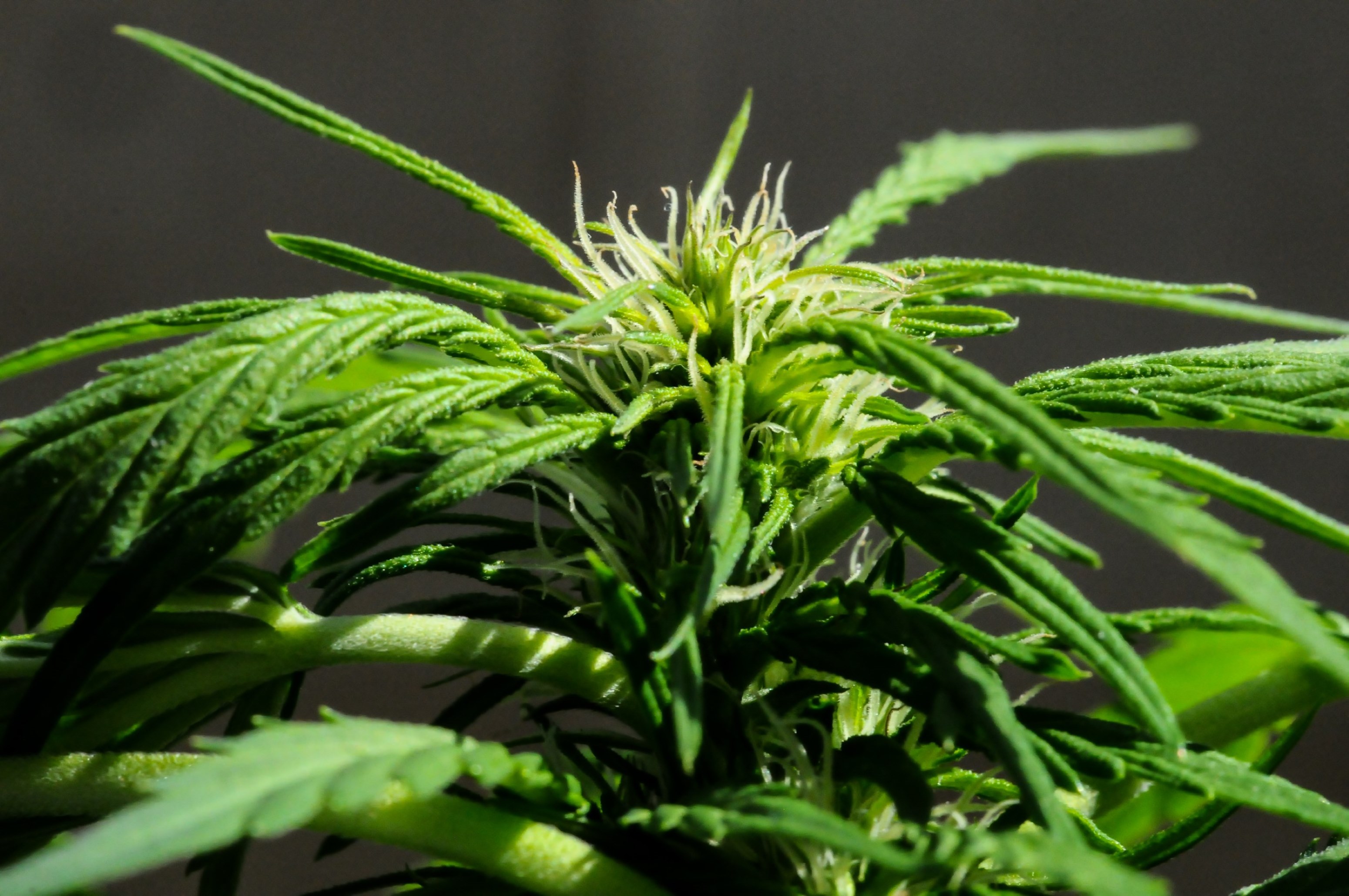


Cannabis plant anatomy is the study of the structures that make up a cannabis plant and the jobs those structures perform. Like many flowering plants, cannabis has roots, stems, branches, leaves, and flowers. Each part has a clear purpose. Some parts collect water and nutrients, while others capture light, move sugars, support growth, or help the plant reproduce. Understanding these parts makes it easier to see how the whole plant works as one connected system.
The roots form the underground part of the cannabis plant. They hold the plant in place and help it stay upright as it grows taller and heavier. Roots also absorb water, oxygen, and mineral nutrients from the soil or another growing medium. These materials are needed for nearly every process inside the plant. A healthy root system can spread outward and downward, giving the plant access to more water and nutrients. Fine root hairs increase the surface area available for absorption. Although roots are hidden from view, their condition has a major effect on the stems, leaves, and flowers above the soil.
Above the roots is the main stem. The stem acts as both a support structure and a transport pathway. It holds branches, leaves, and flowers above the ground, where they can receive light and air. Inside the stem are tissues that carry water and nutrients upward from the roots. Other tissues move sugars made by the leaves to areas where energy is needed. These areas may include new shoots, developing roots, and reproductive structures. As the plant grows, the stem usually becomes thicker and stronger so it can support more weight.
Branches grow outward from the main stem. They increase the plant’s size and provide more places for leaves and flowers to develop. The points where branches and leaves connect to the stem are called nodes. The sections of stem between the nodes are called internodes. Nodes are important parts of cannabis anatomy because new branches and reproductive structures often appear there. The distance between nodes can also affect the overall shape of the plant. Shorter spaces may create a compact plant, while longer spaces may create a more open structure.
Cannabis leaves are among the plant’s most recognizable features. Many have a hand-like shape made up of several narrow leaflets with toothed edges. Large leaves that grow from stems and branches are often called fan leaves. Their broad surfaces collect light for photosynthesis. During this process, the plant uses light, water, and carbon dioxide to produce sugars. These sugars provide energy and building materials for growth. Leaves also contain small openings called stomata. Stomata allow gases to move in and out of the leaf and help control water loss.
Not all cannabis leaves are the same. Smaller leaves found within or close to female flower clusters are often called sugar leaves. They are usually smaller than fan leaves and may have a thick coating of resin-producing structures. Fan leaves mainly support light collection and energy production. Sugar leaves also perform photosynthesis, but their close position around flowers gives them an additional protective role. Knowing the difference between these leaf types helps readers understand how leaf location relates to plant function.
The flowers are the reproductive parts of the plant. Male and female cannabis plants usually produce different flower structures. Female plants develop flowers with bracts, stigmas, ovules, and many glandular trichomes. A group of female flowers growing closely together is often called a cola. The dense structure commonly called a cannabis bud is not a single flower. It is a cluster made up of many small flowers, leaves, and supporting tissues.
Bracts are small modified leaves that surround the female reproductive parts. Hair-like stigmas extend from the flowers and help receive pollen. If pollination occurs, the ovule may develop into a seed. Trichomes are tiny structures that appear on the surfaces of bracts, sugar leaves, and other plant parts. Some trichomes produce and store resin containing cannabinoids, terpenes, and other natural plant compounds. They may also help defend delicate flower tissues from insects, strong sunlight, and water loss.
Male cannabis plants form pollen-producing flowers instead of dense female flower clusters. These flowers contain pollen sacs, which develop near the nodes and later open to release pollen. The pollen may travel through the air and reach the stigmas of a female plant. This begins the process that can lead to seed production. In some cases, a plant may develop both male and female reproductive structures. This type of plant is commonly described as hermaphroditic.
Cannabis anatomy changes throughout the life cycle. A new plant begins when a seed germinates and produces a small root. The seedling then develops cotyledons, followed by its first true leaves. During vegetative growth, the root system expands, the stem becomes stronger, and new branches and fan leaves appear. During flowering, reproductive structures form and become easier to identify. Female plants may produce bracts, stigmas, sugar leaves, trichomes, and flower clusters. Male plants may produce groups of pollen sacs.
Learning cannabis anatomy is useful because it gives clear names to the plant’s visible and hidden parts. It also explains how those parts depend on one another. Roots cannot support strong growth without leaves producing energy. Leaves cannot function well without roots supplying water. Flowers depend on stems and branches for support and transport. By studying roots, stems, leaves, nodes, flowers, and reproductive structures, readers can gain a complete understanding of how the cannabis plant grows, survives, and reproduces.
What Are the Main Parts of a Cannabis Plant?
A cannabis plant is made up of several connected parts. Each part has a specific job that helps the plant grow, stay healthy, and reproduce. Some parts are found below the soil, while others grow above it. The main parts include the roots, stem, branches, nodes, leaves, flowers, and reproductive structures.
Understanding these parts makes it easier to see how a cannabis plant works as a complete living system. The roots absorb water and nutrients. The stem carries these materials through the plant. The leaves collect light and produce energy. The flowers support reproduction. Smaller structures, such as trichomes, bracts, stigmas, and pollen sacs, also play important roles.
Male and female cannabis plants have many of the same basic parts during early growth. Both can develop roots, stems, branches, and leaves. Their main differences become easier to see when reproductive structures begin to form.
The Root System
The root system is the part of the cannabis plant that grows below the surface of the soil or growing material. It begins to develop when a seed germinates. The first root that comes out of the seed is called the taproot. It usually grows downward and becomes the main starting point for the rest of the root system.
Smaller roots grow outward from the taproot. These are often called lateral roots. They spread through the soil and help the plant reach water and nutrients. Very small root hairs grow along these roots. Root hairs increase the surface area of the root system, which allows the plant to absorb more water and dissolved minerals.
The roots also hold the plant in place. As the plant grows taller and heavier, it needs a strong root system to keep it stable. Healthy roots support healthy growth above the soil. When roots are damaged or unable to absorb enough water, the rest of the plant may grow slowly or show signs of stress.
The Main Stem
The main stem grows upward from the root system and forms the central support of the plant. It connects the roots to the leaves, branches, and flowers. The stem must be strong enough to hold the weight of the plant as it develops.
Inside the stem are tissues that transport water, minerals, sugars, and other materials. Water and nutrients move upward from the roots to the leaves and flowers. Sugars made by the leaves move to parts of the plant that need energy for growth.
The stem becomes thicker and stronger as the plant matures. A young plant may have a thin and soft stem, while an older plant usually develops a firmer structure. This added strength helps support larger leaves, longer branches, and flower clusters.
The main stem also serves as the base for new branches. These branches grow outward and create more space for leaves and reproductive structures.
Branches, Nodes, and Internodes
Branches grow from specific points along the main stem. They carry leaves and may later support flowers. A cannabis plant can develop many side branches, depending on its genetics, stage of growth, and environment.
The points where branches and leaves connect to the stem are called nodes. Nodes are important areas of plant growth. New leaves, branches, and reproductive structures may form at these points.
The spaces between nodes are called internodes. Internodal length can affect the shape of the plant. Shorter spaces between nodes may create a more compact plant. Longer spaces can make the plant appear taller and more open.
Nodes are also useful when examining the sex of a cannabis plant. Early male or female reproductive structures often appear near these areas. For this reason, nodes are an important part of cannabis anatomy.
Fan Leaves
Fan leaves are the large, well-known leaves commonly linked with the appearance of cannabis. They usually have several narrow leaflets that spread outward from one central point. The edges of the leaflets are often sharply toothed.
The main function of fan leaves is photosynthesis. During photosynthesis, the leaves use light, water, and carbon dioxide to produce sugars. These sugars provide energy for the plant’s growth and development.
Fan leaves also contain small openings called stomata. These openings help control gas exchange. Carbon dioxide enters through the stomata, while oxygen and water vapor move out.
Because fan leaves are large, they can collect a great amount of light. They are especially important during vegetative growth, when the plant is producing new stems, branches, and leaves. Changes in the color, shape, or position of fan leaves may also provide clues about the plant’s condition.
Sugar Leaves
Sugar leaves are smaller than fan leaves and grow close to or within female flower clusters. They are called sugar leaves because they often appear to be covered with tiny, sparkling crystals. These crystals are actually glandular trichomes.
Sugar leaves can still carry out photosynthesis, but their location and structure make them different from fan leaves. Fan leaves mainly extend away from the flowers and collect light. Sugar leaves grow among the flowers and help surround the reproductive parts.
Sugar leaves often contain more visible resin glands than fan leaves. This is because they develop close to the flower structures where trichomes are usually most concentrated.
Flowers and Colas
The flowers are the reproductive parts of the cannabis plant. On female plants, many small flowers grow close together and form dense clusters. These clusters are often called buds, although each bud is made up of several connected flower structures.
A larger group of flowers growing together is called a cola. The main cola usually develops near the top of the central stem. Smaller colas can also form on side branches.
Female flowers contain several small anatomical structures. These include bracts, stigmas, ovules, and trichomes. Each structure has a different role in reproduction or protection.
Male cannabis plants do not usually produce the same dense flower clusters as female plants. Instead, they develop groups of pollen sacs. These sacs release pollen, which can fertilize female flowers.
Bracts, Stigmas, and Ovules
Bracts are small, modified leaf structures found within female flowers. They surround and protect the reproductive parts of the plant. Bracts often have a teardrop shape and may be covered with many glandular trichomes.
Stigmas are thin, hair-like structures that extend from the female flower. Their main job is to receive pollen. They may appear light-colored when they first emerge and can become darker as the flower matures.
Inside the protected flower structure is the ovule. After successful pollination and fertilization, the ovule can develop into a seed. This process allows the plant to reproduce and pass genetic material to the next generation.
These structures are small, but they are central to female cannabis reproduction.
Trichomes
Trichomes are tiny structures found on the surfaces of several parts of the plant. They are especially noticeable on female flowers and sugar leaves. Some trichomes look like small hairs, while others have round glandular heads.
Glandular trichomes produce and store resin. This resin contains plant compounds such as cannabinoids and terpenes. Terpenes help create the plant’s scent, while cannabinoids are a group of chemicals produced by cannabis.
Trichomes may also help protect the plant. Their sticky surface and strong aroma may discourage some insects and animals. They can also provide a level of protection against environmental stress.
Although trichomes are very small, they are among the most recognized structures in cannabis flower anatomy.
Male Pollen Sacs and Female Flower Structures
Male and female cannabis plants share the same main vegetative structures. Both begin with roots, stems, nodes, branches, and leaves. The clearest differences appear when the plants begin producing reproductive parts.
Male plants develop pollen sacs. These are small, rounded structures that usually form near the nodes. As they mature, the sacs open and release pollen into the air.
Female plants develop bracts and stigmas near the nodes. If pollen reaches a stigma, it may lead to fertilization and seed development. Without pollination, female flowers may continue developing their flower clusters and resin-producing trichomes.
Some cannabis plants can develop both male and female reproductive structures. These plants are often described as hermaphroditic. This means pollen sacs or pollen-producing structures may appear on a plant that also has female flowers.
Vegetative and Reproductive Structures
Cannabis anatomy can be divided into two broad groups: vegetative structures and reproductive structures.
Vegetative structures support the plant’s daily growth and survival. These include the roots, stem, branches, nodes, and leaves. They help the plant absorb water, collect light, make energy, transport materials, and remain upright.
Reproductive structures allow the plant to produce pollen, flowers, and seeds. Female reproductive structures include bracts, stigmas, and ovules. Male reproductive structures include pollen sacs.
Both groups are connected. Reproductive growth depends on the water, nutrients, and sugars supplied by vegetative structures. At the same time, reproductive structures allow the plant to continue its life cycle by producing the next generation.
The main parts of a cannabis plant include the roots, stem, branches, nodes, internodes, fan leaves, sugar leaves, flowers, and reproductive structures. Each part has a clear function. Roots absorb water and nutrients, while the main stem transports these materials and supports the plant. Branches create more space for leaves and flowers, and nodes serve as important growth points.
Fan leaves collect light and produce sugars through photosynthesis. Sugar leaves grow close to female flowers and often contain many trichomes. Female flowers include bracts, stigmas, ovules, and resin-producing trichomes. Male plants develop pollen sacs instead of dense female flower clusters.
Together, these structures allow the cannabis plant to grow, create energy, protect itself, and reproduce. Learning the basic anatomy provides a strong foundation for understanding the more detailed functions of roots, stems, leaves, and flowers.
Cannabis Roots and Their Role in Plant Health
Cannabis roots form the underground foundation of the plant. Although roots are hidden beneath the soil or growing medium, they control many important processes. They hold the plant in place, absorb water, take in mineral nutrients, store energy, and support steady growth above the surface. A cannabis plant cannot develop strong stems, healthy leaves, or well-formed flowers without a working root system.
The root system begins to develop as soon as a cannabis seed germinates. As the plant grows, the roots spread through the growing medium and create a wide network. This network helps the plant reach water and nutrients in different areas. It also supports the plant as it becomes taller and heavier.
Healthy roots are usually firm and light in color. They need a suitable balance of water, oxygen, warmth, and nutrients. When the root system is damaged or unable to work correctly, the rest of the plant may show signs of stress. Leaves may lose color, growth may slow, and stems may become weak. This happens because roots supply the materials needed by every other part of the plant.
The Taproot and Secondary Roots
The first root to emerge from a germinating cannabis seed is called the taproot. It usually grows downward into the growing medium. The taproot acts as the main starting point for the plant’s root system. It helps secure the young seedling and creates a path for further root growth.
As the taproot grows, smaller roots begin to form along its sides. These are often called lateral roots or secondary roots. Instead of growing straight down, many of these roots spread outward. Their wider reach allows the plant to explore a larger area for water, oxygen, and nutrients.
Even smaller roots develop from the secondary roots. Over time, this creates a branching underground network. The structure may look similar to an upside-down tree. The taproot acts like the main trunk, while the secondary roots and smaller roots act like branches.
Fine root hairs also form near the tips and surfaces of young roots. Root hairs are very small and may be difficult to see without magnification. They increase the total surface area of the root system. This larger surface area helps the plant absorb more water and dissolved nutrients from the growing medium.
Root tips are important areas of active growth. New cells form near the tips, allowing the roots to move into fresh parts of the soil or growing medium. A protective structure called the root cap covers the end of each growing root. The root cap helps protect the softer cells as the root pushes past particles and other materials.
The shape and size of the root system can depend on available space. In open ground, roots may spread widely and grow deeper. In a container, the roots are limited by the size and shape of the pot. Once roots reach the sides or bottom, they may begin to circle around the container. This can reduce access to fresh areas of the growing medium.
Water and Nutrient Absorption
One of the main jobs of cannabis roots is to absorb water. Water enters mainly through the fine roots and root hairs. It then moves into the plant’s internal transport system. From there, water travels upward through the stem and branches until it reaches the leaves and flowers.
Water is needed for many plant processes. It helps plant cells stay firm, supports photosynthesis, carries nutrients, and helps control temperature. When a plant does not receive enough water, its leaves and stems may droop because the cells are no longer full and firm.
Roots also absorb mineral nutrients that are dissolved in water. These nutrients include nitrogen, phosphorus, potassium, calcium, magnesium, sulfur, and several smaller trace elements. Each nutrient supports different parts of plant growth. Some help form leaves and stems, while others support roots, flowers, enzymes, and internal chemical processes.
Roots cannot take in nutrients efficiently unless the conditions around them are suitable. The growing medium must contain enough moisture, but it must also contain oxygen. Roots use oxygen during respiration. Respiration is the process that releases usable energy from stored sugars.
When a growing medium remains too wet for too long, the spaces around the roots may fill with water. This leaves less room for oxygen. Without enough oxygen, root activity can slow, and damaged tissue may begin to break down. Harmful microorganisms may also become more active under wet, low-oxygen conditions.
The chemical condition of the root area also affects nutrient absorption. Even when nutrients are present, roots may not be able to absorb them if the environment is unsuitable. This can lead to signs that look like a nutrient shortage, even though the nutrients are already in the growing medium.
Roots do not work alone. They interact with bacteria, fungi, and other microscopic organisms. Some of these organisms help break down organic matter and release nutrients into forms that roots can absorb. Certain fungi may also form close relationships with plant roots. These fungi can extend into the surrounding area and help the plant reach water and minerals.
Root Anchorage and Storage
Cannabis roots act as an anchor. They hold the plant in place and help prevent it from falling over. This support becomes more important as the plant grows taller, forms more branches, and develops heavier flower clusters.
The taproot provides strong downward support, while the lateral roots spread outward and help stabilize the plant from different directions. A wide root system can help the plant resist movement caused by wind, rain, or the weight of its own growth.
Roots also store carbohydrates and other materials. Carbohydrates are sugars produced mainly by the leaves during photosynthesis. The plant sends some of these sugars down through the stem to the root system. Roots use part of this energy for growth, repair, and nutrient absorption. They may also store some of it for later use.
This creates a two-way relationship between the roots and the leaves. Roots send water and minerals upward, while leaves send sugars downward. Each part depends on the other. If the leaves cannot produce enough sugar, root growth may slow. If the roots cannot supply enough water and nutrients, the leaves cannot perform photosynthesis well.
A strong root system often supports stronger growth above the surface. Roots that can reach a large area may provide a more steady supply of water and nutrients. This can help the plant produce thicker stems, more branches, and a larger leaf area.
However, root size alone does not guarantee plant health. The roots must also remain active and undamaged. Roots affected by poor drainage, extreme temperatures, physical injury, disease, or low oxygen may not support the plant correctly.
Cannabis roots are essential to the plant’s structure, nutrition, and survival. The root system begins with a taproot that grows downward after germination. Secondary roots, fine roots, and root hairs then spread through the growing medium and increase the area available for absorption.
The roots take in water, oxygen, and dissolved mineral nutrients. These materials move upward through the plant and support the growth of stems, leaves, branches, and flowers. At the same time, the roots receive sugars produced by the leaves. They use and store this energy for growth and other important processes.
Roots also anchor the plant and help support its weight. A healthy underground system gives the cannabis plant a strong base for development above the surface. For this reason, understanding root anatomy is an important part of understanding the cannabis plant as a complete living system.
The Main Stem, Branches, Nodes, and Internodes
The main stem, branches, nodes, and internodes form the basic frame of a cannabis plant. These parts hold the leaves and flowers in place while also helping water, nutrients, and sugars move through the plant. Together, they allow the plant to grow upward and outward. They also help the plant reach light, support its weight, and form new areas of growth.
Although these structures may look simple from the outside, each one has a clear role. The main stem acts as the central support. Branches spread from the stem and create more space for leaves and flowers. Nodes mark the points where new structures can grow. Internodes are the sections of stem between those points. Learning how these parts work makes it easier to understand the shape, growth, and development of the cannabis plant.
The Main Stem
The main stem is the central upright structure of the cannabis plant. It begins to form soon after the seed germinates. As the young seedling grows, the stem lifts the first leaves above the growing medium. It continues to grow taller as the plant produces more leaves, branches, and nodes.
One of the main jobs of the stem is to support the weight of the plant. A mature cannabis plant may carry many large fan leaves, side branches, and flower clusters. The stem must be strong enough to keep these structures upright. It also helps the plant resist movement caused by wind, rain, or contact with nearby objects.
The main stem connects the root system to the parts of the plant above the ground. Water and dissolved nutrients enter through the roots and move upward through tissues inside the stem. Sugars made by the leaves also travel through the stem to other areas of the plant. These sugars provide energy for root growth, new leaves, branches, and developing flowers.
The stem usually becomes wider and stronger as the plant matures. Young stems are often soft, green, and flexible. Over time, they may become firmer and more woody. This change helps the plant support greater weight. The lower section of the stem often becomes thicker than the upper section because it must carry the weight of everything above it.
The stem also places leaves in positions where they can receive light. As the stem grows upward, it produces new nodes. Leaves and branches then develop at these points. This organized pattern helps prevent all the leaves from growing in one crowded area.
Branches and New Growth
Branches grow outward from the main stem. Their main purpose is to provide more space for leaves and reproductive structures. Without branches, most of the plant’s leaves and flowers would need to grow along one central stem. Branching allows the plant to spread out and use a larger area.
Most branches begin at nodes. At each node, a small growing point may develop into a side branch. As the branch grows, it forms its own nodes, leaves, and smaller branches. This creates a repeated pattern throughout the plant.
Branches help improve light exposure because they move leaves away from the main stem. Leaves that are spread across several branches have a better chance of receiving light than leaves packed closely together. Since leaves use light during photosynthesis, branch placement has a direct effect on how the plant captures energy.
Branches also support flower sites on mature female plants. Flowers often form along branches near the nodes. Larger branches can carry several flower clusters, while smaller branches may support fewer structures. The strength and position of each branch affect how well it can hold this weight.
At the tip of the main stem and at the end of each branch is an area of active growth. This area is often called a growing tip or shoot tip. It contains young plant cells that divide quickly. These cells produce new stem tissue, leaves, and nodes.
New growth is usually softer and lighter in color than older growth. As it develops, the tissues expand and become stronger. The leaves unfold, the stem section becomes longer, and another node forms. This process repeats as the plant continues to grow.
The main growing tip often has a strong effect on the overall shape of the plant. It usually grows upward toward light. Side branches may also turn upward as they become longer. This gives the plant a layered form, with the main stem in the center and branches spreading around it.
Nodes and Internodes
A node is a point on the stem where one or more plant structures connect or begin to grow. Leaves, branches, and early reproductive structures commonly appear at nodes. Nodes can be found on the main stem and on side branches.
Nodes are easy to identify because they often appear as slightly raised or thicker areas along the stem. A leaf stem, also called a petiole, connects a leaf to the plant at the node. A side branch may also begin beside the leaf. During later growth stages, male or female reproductive structures may form in the same area.
Nodes are important because they show where the plant is producing new growth. A young seedling has only a small number of nodes. As it grows, more nodes appear along the main stem. Branches then develop their own series of nodes.
An internode is the section of stem between two nodes. It does not include the nodes themselves. The length of each internode helps determine the shape and height of the plant.
Short internodes place the nodes close together. This can create a compact plant with dense leaf and branch growth. Long internodes create more space between nodes, giving the plant a taller and more open shape. Internodal length may vary because of genetics, plant age, light exposure, and environmental conditions.
The internodes near the bottom of the plant may not be the same length as those near the top. Growth can change as the plant matures. Newer internodes near active growing tips may first appear short, then become longer as the cells expand.
Nodes and internodes work together to organize the plant. Nodes create the points where leaves and branches form, while internodes create the space between those structures. This pattern helps the plant spread its leaves, avoid overcrowding, and build a stable frame.
Nodes are also important when identifying the sex of a cannabis plant. Early reproductive structures often appear where a branch meets the main stem. Female plants may develop small bracts with fine stigmas, while male plants may form small pollen sacs. These structures are discussed in more detail in later sections, but their location shows why nodes are important parts of cannabis anatomy.
How These Structures Shape the Plant
The main stem, branches, nodes, and internodes determine the plant’s overall form. A strong central stem creates the main vertical line of growth. Branches add width and provide more sites for leaves and flowers. Nodes control where new structures appear, while internodes control how far apart they are placed.
A plant with many branches and short internodes may appear dense and bushy. A plant with fewer branches and longer internodes may look taller and more open. These differences can be influenced by the plant’s natural genetics and growing environment.
The position of branches also affects balance. Branches growing on different sides of the main stem help spread the plant’s weight. This reduces pressure on one area and helps the plant stay upright. As flowers develop, strong branches become even more important because flower clusters can add significant weight.
The frame of the plant also supports transport. Water and nutrients move from the roots through the main stem and into the branches. Sugars produced in the leaves travel back through the branches and stem to areas that need energy. This means the plant’s outer shape and inner transport system are closely connected.
The main stem, branches, nodes, and internodes form the supporting framework of a cannabis plant. The main stem holds the plant upright and connects the roots to the leaves and flowers. Branches spread growth across a wider area and support additional leaves and flower sites.
Nodes are the points where leaves, branches, and reproductive structures can develop. Internodes are the sections of stem between those points. The length and number of internodes help determine whether the plant grows in a compact or open shape.
How the Cannabis Stem Transports Water and Sugars
The cannabis stem does more than hold the plant upright. It also serves as the main transport route between the roots, leaves, branches, and flowers. Inside the stem are special tissues that move water, mineral nutrients, sugars, and other materials throughout the plant. This internal transport system allows each part of the cannabis plant to receive what it needs for growth and survival.
A healthy stem connects the root system below the soil with the leaves and growing points above it. Water and minerals enter through the roots and move upward through the stem. At the same time, sugars made in the leaves are carried to parts of the plant that need energy. These processes happen through two main types of vascular tissue called xylem and phloem.
The Plant’s Vascular System
The vascular system is a network of transport tissues found inside the roots, main stem, branches, and leaf veins. It works in a way that is similar to a system of connected tubes. These tissues allow materials to move from one part of the plant to another instead of remaining in one place.
The vascular system begins in the roots. After the roots absorb water and dissolved minerals from the growing medium, these materials enter the transport tissues. They then move upward through the main stem and into smaller branches. From the branches, water and nutrients travel into the leaves and developing flowers.
The vascular tissues are arranged in bundles inside the stem. As the cannabis plant becomes larger, these bundles continue to develop. They support new leaves, branches, and flower sites. A young stem may be soft and flexible, while an older stem usually becomes thicker and stronger.
The transport system must remain connected throughout the plant. Damage to the main stem or a major branch can interrupt the movement of water and sugars. When this happens, the tissues above the damaged area may receive fewer resources. This shows why the stem is both a support structure and a vital transport pathway.
Xylem Tissue
Xylem is the vascular tissue that mainly carries water and dissolved mineral nutrients upward from the roots. These materials travel through the main stem before reaching the branches, leaves, and flowers. Xylem movement is mostly one-way, from the lower parts of the plant toward the upper parts.
Water enters the roots through tiny root hairs. It then moves through root tissues and reaches the xylem. Once inside the xylem, water is pulled upward through the plant. One major force behind this movement is transpiration.
Transpiration happens when water leaves the plant as vapor through small openings in the leaves called stomata. As water escapes from the leaves, more water is pulled upward from the stem. This creates a continuous flow from the roots to the leaves.
The movement of water is important for several reasons. Water helps plant cells remain firm, which supports leaves and young stems. It is also needed for photosynthesis, the process that allows leaves to produce sugars from light, carbon dioxide, and water.
Mineral nutrients also move through the xylem. These minerals are dissolved in water before the roots absorb them. Once inside the plant, they are carried to areas where they are used to build cells, support chemical reactions, and maintain normal growth.
Xylem tissue also helps strengthen the stem. As the plant matures, some xylem cells develop firm walls. These strong tissues help the main stem and branches support the weight of leaves and flower clusters.
Phloem Tissue
Phloem is the tissue that transports sugars and other organic materials made by the plant. Most of these sugars are produced in the leaves during photosynthesis. After they are made, they must be delivered to other parts of the plant.
Unlike xylem, phloem can move materials in different directions. Sugars may travel downward to the roots, upward toward new growth, or sideways into branches and flowers. The direction depends on which parts of the plant need energy and building materials.
Mature leaves are often called sugar sources because they produce more sugar than they use. Roots, young leaves, developing branches, and flowers are often called sinks because they use or store these sugars. Phloem connects the sources with the sinks.
Sugars transported through the phloem support many plant functions. They provide energy for cell division, root growth, tissue repair, and flower development. They are also used to produce cellulose, which forms part of the walls around plant cells.
Some sugars are sent to the roots and stored for later use. Others are moved to the growing tips of branches, where new leaves and stems are forming. During flowering, a greater share of the plant’s resources may be directed toward reproductive structures.
The phloem sits close to the outer part of the stem. Because of its position, serious damage to the stem’s outer tissues can affect sugar transport. If phloem movement is reduced, roots and developing tissues may receive less energy.
Structural Support
The cannabis stem must support the weight of the entire above-ground plant. This includes branches, fan leaves, sugar leaves, and flowers. As the plant grows taller and wider, its stem needs to become stronger.
Young cannabis stems contain soft tissues that allow them to bend. This flexibility helps protect the plant from light movement caused by wind or contact. As the plant matures, the stem becomes thicker and develops stronger internal tissues.
Cellulose is one material that helps create strong plant cell walls. Older stems may also develop more lignin, a firm substance that adds strength and stiffness. These materials allow stems and branches to carry heavier growth.
Nodes are important areas of support because branches and leaves emerge from them. The tissues around a node must connect the main stem to each side branch. This connection allows water and sugars to move into the branch while also helping hold it in place.
Large flower clusters can place extra pressure on branches. The stem and branch tissues must be strong enough to keep these structures raised toward available light. Weak or damaged stems may bend, split, or fail to support the plant properly.
The stem also changes in response to normal growth. As new leaves and branches form, the plant increases the width and strength of its transport tissues. This allows more water, nutrients, and sugars to move through the plant.
The cannabis stem is both a support structure and a transport center. Inside the stem, xylem carries water and dissolved mineral nutrients upward from the roots. Phloem distributes sugars made in the leaves to roots, growing shoots, branches, and flowers.
These vascular tissues connect every major part of the plant. They allow the roots to supply water to the leaves and allow the leaves to supply energy to the roots and new growth. At the same time, strong stem tissues help the plant remain upright and support developing branches and flower clusters. Without a working stem and vascular system, the cannabis plant could not move resources, maintain its structure, or continue healthy growth.
Cannabis Leaf Anatomy and Photosynthesis
Cannabis leaves are among the most recognizable parts of the plant. They are usually green and have several narrow leaflets with pointed tips and jagged edges. However, cannabis leaves do more than give the plant its familiar appearance. They collect light, exchange gases, release water vapor, and produce the energy needed for growth.
A healthy cannabis plant depends on its leaves during nearly every stage of development. The sugars made inside the leaves support the roots, stems, branches, and flowers. Leaves can also show signs of stress when the plant does not receive the right amount of water, light, air, or nutrients.
Understanding leaf anatomy makes it easier to see how the cannabis plant functions as a complete living system.
The Structure of a Cannabis Leaf
A mature cannabis leaf often has several separate sections called leaflets. These leaflets spread outward from one central point, creating a shape similar to an open hand. This type of leaf is known as a palmate leaf.
The number of leaflets can vary. Young plants may begin with leaves that have only one or three leaflets. As the plant matures, new leaves may develop five, seven, nine, or more leaflets. The exact number can be affected by genetics, plant age, health, and growing conditions.
Each leaflet is long and narrow, with a pointed end. The edges usually have small, sharp teeth. These are known as serrated edges. Serrations increase the length of the leaf edge and may help water move away from the leaf surface.
The leaf connects to the stem through a thin structure called the petiole. The petiole supports the leaf and holds it away from the stem. This position helps the leaf receive more light and air.
Inside the petiole are small transport tissues. These tissues carry water and minerals into the leaf. They also carry sugars away from the leaf to other parts of the plant.
Veins can be seen running through each leaflet. A larger central vein extends from the base to the tip. Smaller veins branch outward from it. These veins provide support and move water, nutrients, and sugars through the leaf.
Leaf Surfaces and Stomata
Cannabis leaves have an upper surface and a lower surface. The upper surface is usually exposed to more light. It often has a thin, waxy layer called the cuticle. The cuticle helps protect the leaf and reduces water loss.
The lower surface contains many tiny openings called stomata. A single opening is called a stoma. Stomata are too small to see clearly without magnification, but they play an important role in plant survival.
Each stoma is controlled by two guard cells. These cells open and close the pore based on the plant’s needs and the surrounding conditions. When the stomata open, carbon dioxide enters the leaf. The plant uses this gas during photosynthesis.
Oxygen also leaves through the stomata. Oxygen is produced as part of photosynthesis and is released into the air.
Water vapor escapes through these openings as well. This process is called transpiration. Transpiration helps move water upward from the roots through the stem and into the leaves. It can also help cool the plant.
However, too much water loss can cause leaves to wilt. During hot or dry conditions, the guard cells may close the stomata to help the plant save water. When this happens, less carbon dioxide enters the leaf, which may slow photosynthesis.
The plant must balance gas exchange with water control. It needs open stomata to take in carbon dioxide, but it must also avoid losing too much water.
How Photosynthesis Works
Photosynthesis is the process that allows plants to turn light energy into chemical energy. Most photosynthesis takes place inside the leaves.
Cannabis leaves contain a green pigment called chlorophyll. Chlorophyll is found inside small structures called chloroplasts. It absorbs light, especially red and blue parts of the light spectrum.
During photosynthesis, the plant uses light, water, and carbon dioxide. Water enters through the roots and travels upward through the xylem tissue. Carbon dioxide enters through the stomata. Light reaches the chlorophyll inside the leaf cells.
The plant uses these materials to make simple sugars. These sugars provide energy and building material for growth. Oxygen is produced during the process and released through the stomata.
The sugars made in the leaves do not stay in one place. They move through phloem tissue to areas that need energy. Growing roots use these sugars. New stems and branches also depend on them. During flowering, developing flowers receive a large share of the plant’s stored and newly produced energy.
Leaves are often described as the plant’s solar panels because they capture light. However, they are also chemical factories. They take basic materials from the environment and turn them into food that the plant can use.
The Role of Chlorophyll and Other Pigments
Chlorophyll gives most cannabis leaves their green color. Healthy leaves usually contain enough chlorophyll to absorb light and support steady photosynthesis.
There are different types of chlorophyll, but chlorophyll a and chlorophyll b are the most important in many green plants. They absorb slightly different wavelengths of light. This allows the plant to use a wider range of available light.
Cannabis leaves may also contain other pigments. Carotenoids can create yellow or orange colors. Anthocyanins may produce red, purple, or blue shades. These pigments may become easier to see when chlorophyll levels decline or when certain genetic traits are present.
Leaf color can therefore vary between plants. Some varieties naturally produce darker green leaves, while others may show purple or reddish tones. Color alone does not always show whether a plant is healthy or unhealthy.
Still, sudden color changes may indicate that something has affected normal leaf function. A clear understanding of the plant’s usual appearance is useful when examining these changes.
Leaves as Indicators of Plant Health
Cannabis leaves often show visible changes when the plant experiences stress. These changes may involve color, shape, texture, or position.
Yellowing leaves may occur when chlorophyll breaks down. This can happen naturally as older leaves age, but it may also be linked to poor root function, nutrient problems, unsuitable soil conditions, or other forms of stress.
Brown spots or dry edges may suggest tissue damage. Leaves that curl upward or downward may be reacting to heat, water conditions, root problems, pests, or disease. Drooping leaves may appear when the plant has too little water, but they can also occur when the root area stays too wet.
A pale leaf may contain less chlorophyll and may not perform photosynthesis as efficiently. A damaged leaf also has less working surface area available to collect light and exchange gases.
Leaf symptoms should not be judged from one sign alone. Several different problems can create similar changes. The location of the damaged leaves, the pattern of discoloration, and the condition of the rest of the plant must also be considered.
For example, symptoms that begin on older lower leaves may have a different cause from symptoms that first appear on new upper growth. Uniform yellowing may point to a different issue than small spots or damaged edges.
Leaves are useful health indicators because they respond to changes inside and around the plant. However, they are only one part of the full picture. Root health, stem strength, environmental conditions, and the plant’s growth stage must also be examined.
Cannabis leaves are complex structures that support many essential plant functions. Their leaflets collect light, while veins carry water, minerals, and sugars. Petioles connect the leaves to stems and position them where they can receive light and air.
Tiny stomata on the leaf surface allow carbon dioxide to enter while oxygen and water vapor leave. These openings help control gas exchange, transpiration, and water use.
Inside the leaf, chlorophyll absorbs light for photosynthesis. The plant uses this energy to combine water and carbon dioxide and produce sugars. These sugars support the growth of roots, stems, branches, leaves, and flowers.
Fan Leaves and Sugar Leaves: What Is the Difference?
Cannabis plants produce several types of leaves, but fan leaves and sugar leaves are the two most recognized. Both are important to the plant, yet they differ in size, location, appearance, and function. Understanding these differences makes it easier to identify the main parts of a cannabis plant and see how each part supports growth and flowering.
Fan leaves are the large leaves that spread outward from the stems and branches. Sugar leaves are much smaller and grow close to or inside the flower clusters. Fan leaves mainly collect light and support photosynthesis. Sugar leaves also help with photosynthesis, but they are more closely connected to the flowers and often have a visible coating of resin-producing trichomes.
Although both types are true leaves, they should not be confused with each other. Their position on the plant gives them different roles. Fan leaves support the plant as a whole, while sugar leaves mainly support and protect the developing flowers.
Fan Leaves
Fan leaves are the largest and most noticeable leaves on a cannabis plant. They grow from the main stem and side branches, usually at the nodes. A node is the point where a leaf or branch connects to the stem.
A mature fan leaf often has several long, narrow leaflets that spread outward from one central point. This shape is known as a palmate leaf shape because it looks somewhat like an open hand. The number of leaflets can vary. Young plants may begin with leaves that have only one or three leaflets. As the plant matures, later leaves may develop five, seven, nine, or more leaflets.
The broad surface of a fan leaf helps it capture light. Inside the leaf, chlorophyll absorbs light energy. The plant uses this energy during photosynthesis to produce sugar from water and carbon dioxide. These sugars provide energy and building material for new roots, stems, branches, leaves, and flowers.
Fan leaves also contain veins that move water, minerals, and sugars through the plant. The central vein connects to smaller veins that spread throughout the leaf. Water and minerals travel into the leaf through these tissues, while sugars produced during photosynthesis move to other parts of the plant.
The lower surfaces of fan leaves contain many small openings called stomata. These openings allow carbon dioxide to enter the leaf. They also allow oxygen and water vapor to leave. The plant can open and close its stomata to control gas exchange and reduce water loss.
Because fan leaves are large and exposed, they can also provide visible signs of plant stress. Changes in color, shape, texture, or position may show that the plant is reacting to its environment. Yellowing, curling, spotting, or drooping may be linked to several possible causes. However, a leaf’s appearance alone may not be enough to identify the exact issue.
Fan leaves usually have fewer visible trichomes than sugar leaves. Some small trichomes may be present, especially near flowering areas, but fan leaves are not normally covered with the thick layer of resin seen on leaves inside the flowers.
Sugar Leaves
Sugar leaves are small leaves that grow from and around female cannabis flowers. They are usually found between the bracts that make up the flower cluster. Some sugar leaves extend slightly beyond the flower, while others remain partly hidden inside it.
The name “sugar leaf” comes from the leaf’s frosted appearance. The surface may look as though it has been covered with tiny sugar crystals. These crystal-like structures are glandular trichomes, which produce and store resin.
Sugar leaves are usually much smaller than fan leaves. They often have fewer and shorter leaflets. Their shape may also appear less regular because they grow tightly among the parts of the flower. Instead of spreading widely from a branch, they remain close to the flower cluster.
Even though sugar leaves are small, they still contain chlorophyll and can carry out photosynthesis. They capture some light and produce sugars that may support nearby flower tissues. However, their smaller surface area means they do not collect as much light as large fan leaves.
Sugar leaves also help surround and protect the flowers. Their position may provide a physical layer around delicate reproductive parts. They grow close to bracts, stigmas, and developing seeds when pollination takes place.
The amount of visible resin on sugar leaves can vary. It may depend on plant genetics, the location of the leaf, and the stage of flower development. Sugar leaves found deep within a flower cluster often have dense trichome coverage because they develop close to the resin-rich bracts.
Although sugar leaves are connected to cannabis flowers, they are not flowers themselves. They are still leaves. This is an important anatomical difference. The flower contains reproductive parts, while the sugar leaves are small vegetative structures that grow around those parts.
Key Differences in Size and Shape
The clearest difference between fan leaves and sugar leaves is size. Fan leaves are usually broad, long, and easy to see from a distance. Sugar leaves are smaller and may be partly hidden inside the flower.
Fan leaves often have long leaflets that spread outward in a balanced pattern. Sugar leaves are usually shorter and more compact. Their leaflets may be narrow, and their shape can be partly blocked by nearby flower tissues.
The two leaf types may also feel different. Fan leaves are usually flatter and thinner. Sugar leaves may feel slightly sticky because of the resin produced by their glandular trichomes.
The color of both leaf types can range from light green to dark green. Some plants may also develop purple, red, or yellow shades due to genetics, maturity, or environmental conditions. Color alone is not a reliable way to tell the two types apart. Their size and location provide better clues.
Key Differences in Location
Fan leaves grow along the main stem and branches. They extend away from the plant and create much of its leafy canopy. Their position allows them to receive light across a wide area.
Sugar leaves grow directly within or beside female flower clusters. They are most noticeable during the flowering stage. Before flowers develop, the plant mainly produces fan leaves and smaller new leaves at growing tips.
Location is often the easiest way to identify a sugar leaf. A small resin-covered leaf growing from a dense flower cluster is usually a sugar leaf. A large leaf growing from a stem or branch is usually a fan leaf.
Fan leaves may be located above, below, or beside the flower sites. Sugar leaves remain closely connected to the flowers throughout their development.
Differences in Trichome Coverage
Trichomes are small structures that grow on the surface of many plant parts. In cannabis, glandular trichomes are well known because they produce resin containing cannabinoids, terpenes, and other natural compounds.
Sugar leaves generally have a much heavier covering of glandular trichomes than fan leaves. This is because they grow close to female flower bracts, where trichomes are highly concentrated.
Fan leaves may have some trichomes, but the coverage is often lighter. The large fan leaves located far from the flowers tend to have fewer visible resin glands. Fan leaves closer to flower clusters may have more trichomes than those lower on the plant.
The density of trichomes can also differ between individual plants. Genetics can strongly affect resin production. For this reason, some plants may have very frosty sugar leaves, while others may have lighter coverage.
Differences in Biological Function
Fan leaves and sugar leaves both support the plant, but their main functions are not exactly the same.
The primary role of fan leaves is to collect light for photosynthesis. Their broad surface allows the plant to produce much of the sugar needed for growth. They also support gas exchange and water movement.
Sugar leaves also perform photosynthesis, but their contribution is smaller because of their limited surface area. Their close position to the flowers allows them to support local tissues. They also help form a protective layer around parts of the flower cluster.
Fan leaves support the whole plant’s energy needs. Sugar leaves are more closely linked to the flowering structures. This difference explains why fan leaves are large and spread out, while sugar leaves are small and compact.
Neither leaf type works alone. Fan leaves provide much of the energy needed for the plant to grow and flower. Sugar leaves continue to capture light while supporting tissues within the flower cluster. Together, they help the plant complete its growth and reproductive cycle.
Fan leaves and sugar leaves are both important parts of cannabis anatomy, but they have clear differences. Fan leaves are large leaves that grow from stems and branches. They collect light, carry out photosynthesis, support gas exchange, and help produce energy for the whole plant.
Sugar leaves are smaller leaves that grow inside or close to female flowers. They also perform photosynthesis, but they are best known for their dense trichome coverage and close connection to flower tissues. They may help protect and support the developing flower.
The easiest way to tell the two types apart is to examine their size, location, and surface. Large leaves extending from stems are fan leaves. Small, resin-covered leaves growing among the flowers are sugar leaves. Understanding these differences gives readers a clearer picture of how cannabis leaves support both general plant growth and flower development.
Female Cannabis Flower Anatomy
The flower of a female cannabis plant is one of its most complex structures. It contains several small parts that work together during reproduction. These parts also protect the plant’s reproductive organs and produce many of the natural compounds linked to the plant’s smell and appearance.
A cannabis flower is often called a bud. However, a bud is not one single flower. It is usually a dense group of many small female flowers growing close together. Each small flower has its own reproductive structures. As these flowers develop beside one another, they form the larger clusters that people can easily see.
Understanding female cannabis flower anatomy makes it easier to identify each part correctly. It also helps explain the difference between terms such as cola, bract, calyx, pistil, stigma, and trichome. These terms are often used incorrectly or treated as if they mean the same thing.
What Is a Cannabis Flower?
A cannabis flower is the reproductive part of a mature female plant. Its main biological purpose is to receive pollen and produce seeds. Female flowers usually begin forming at the nodes, which are the points where branches and leaves connect to the main stem.
At first, the flowers appear as small structures near these nodes. As the plant moves further into its flowering stage, more flowers develop and grow close together. These individual flowers create larger and denser groups along the branches.
The word “bud” is commonly used to describe these flower clusters. From a botanical point of view, however, the visible bud contains many separate flower parts. It may include bracts, stigmas, small leaves, trichomes, and reproductive tissues.
Unpollinated female flowers often continue producing new floral growth for a period of time. Their bracts may become larger, and more stigmas may appear. The flower cluster can also become thicker as the individual structures gather closely together.
When a female flower receives pollen, fertilization may take place. The plant can then use its energy to develop seeds inside the flower. This reproductive process is one of the main reasons the female flower has several protective layers and pollen-receiving structures.
Colas and Flower Clusters
A cola is a group of female cannabis flowers that grow closely together on a stem or branch. The term usually describes the dense flower cluster found at the end of a branch. The largest cluster at the top of the main stem is often called the main cola.
A plant may also develop several smaller colas along its side branches. Their size and shape can vary because of the plant’s genetics, growth pattern, and environmental conditions. Some colas may be long and narrow, while others may appear short, thick, and rounded.
Each cola contains many individual flower structures. Bracts overlap and gather around the stem. Stigmas extend from these bracts, while sugar leaves grow between and around the flowers. Trichomes may cover much of the visible surface.
Although a cola may look like one large flower, it is better understood as a connected group of smaller flowers. This is similar to how a cluster of grapes contains many individual fruits. The flowers are packed together, but each one has its own reproductive parts.
The main cola often develops at the plant’s highest growing point. Smaller flower clusters form at lower nodes and branch tips. Together, these clusters give the flowering plant its full shape.
Bracts
Bracts are small, modified leaf structures found inside the female flower cluster. They surround and protect important reproductive tissues. Cannabis bracts are often shaped like small teardrops, and they usually have pointed ends.
A bract is not the same as a regular fan leaf or sugar leaf. Fan leaves are large and mainly collect light for photosynthesis. Sugar leaves are smaller leaves that grow close to the flowers. Bracts are even smaller and form a direct part of the flower’s protective structure.
Female cannabis bracts are often covered with glandular trichomes. These tiny glands can make the bracts appear shiny, sticky, or frosted. The high number of trichomes on the bracts is one reason they are a noticeable part of the mature flower.
Inside the bract is an ovule. The ovule is part of the female reproductive system. When pollen reaches the flower and fertilization occurs, the ovule can develop into a seed.
Before pollination, the bract helps protect the ovule and nearby reproductive tissue. After successful pollination, the bract may expand as a seed forms inside it. This means the bract has both a protective and reproductive role.
Many bracts grow close together in a flower cluster. Their overlapping arrangement helps create the dense appearance of the cannabis bud. Because they are small and tightly packed, it can be difficult to identify one bract without looking closely.
Pistils, Stigmas, and Ovules
The words pistil and stigma are often used as if they mean the same thing, but they describe different parts of the female reproductive system.
The pistil is the complete female reproductive organ of a flower. It includes the stigma, style, and ovary. In cannabis discussions, people often use the word pistil when they are referring only to the visible hair-like structures. Those visible hairs are more accurately called stigmas.
Stigmas usually grow in pairs and extend outward from the bract. They may first appear white or pale. As the flower matures, they can become yellow, orange, brown, or reddish. Their color and condition can change because of age, pollination, genetics, and environmental stress.
The main purpose of a stigma is to collect pollen. Its surface helps catch pollen grains carried by air or physical contact. Once pollen lands on the stigma, it can travel through the flower’s reproductive tissues toward the ovule.
The ovule is located inside the protective bract. It contains the tissue needed for seed development. If fertilization takes place, the ovule becomes a seed. If the flower is not pollinated, a mature seed does not form.
The stigmas are easy to see because they extend beyond the bracts. The ovules, however, remain hidden inside. This arrangement allows the flower to receive pollen while protecting the more delicate reproductive structures.
Stigmas do not produce resin, and they are not the main source of cannabinoids or aromatic compounds. Their primary role is reproduction. The trichomes covering the nearby bracts and sugar leaves are responsible for producing and storing much of the flower’s resin.
Bracts Versus Calyxes
The terms bract and calyx are commonly confused in discussions about cannabis anatomy. Many people call the small, resin-covered structures in female flowers calyxes. In most cases, however, the visible teardrop-shaped structures are bracts.
In flowering plants, the calyx is the outer group of sepals that surrounds and protects a flower before it opens. Cannabis flowers have a very small calyx structure. It is not usually the large, visible part that people notice when examining a flower cluster.
The bract is the more obvious structure. It surrounds the ovule, supports the stigmas, and often carries many trichomes. Bracts also overlap with one another to form much of the body of a cannabis flower cluster.
The confusion may happen because the word calyx has been widely used in cannabis writing and general conversation. It is often used to describe any small floral structure surrounding the reproductive organs. However, using the word bract is usually more accurate when describing the resinous, leaf-like covering around the ovule.
Understanding this difference helps make discussions about cannabis anatomy clearer. The calyx is a specific botanical structure, while the bract is the visible modified leaf that protects the female reproductive parts.
A female cannabis bud is a cluster made from many small flowers rather than one solid flower. These flowers grow closely together along stems and branches to form colas. The main cola usually appears at the top of the central stem, while smaller colas form on side branches.
Inside each flower cluster are bracts that protect the female reproductive tissues. Stigmas extend from the bracts to collect pollen, while ovules remain protected inside. When fertilization occurs, the ovules can develop into seeds.
Trichome-covered bracts make up much of the visible body of a mature flower. They are often incorrectly called calyxes, even though bract is usually the more accurate term. By understanding colas, bracts, pistils, stigmas, ovules, and calyxes, readers can identify the major structures of the female cannabis flower and understand how they support protection and reproduction.
Cannabis Trichomes and Resin Production
Cannabis trichomes are tiny structures that grow on the surface of the plant. They are often most visible on female flowers and the small leaves around them. To the naked eye, trichomes may look like a layer of frost, fine crystals, or sticky dust. Under a magnifying glass, many trichomes look like clear or cloudy hairs with small rounded heads.
These structures are very small, but they play an important role in the plant’s natural defense system. They also produce and store many of the compounds linked to the cannabis plant’s smell, flavor, and chemical makeup. Learning about trichomes makes it easier to understand why some parts of the cannabis plant appear sticky, shiny, and strongly scented.
What Are Trichomes?
The word “trichome” comes from a Greek word that means hair. In plant science, a trichome is a small growth that extends from the outer layer of a plant. Trichomes can appear on leaves, stems, flowers, and other above-ground parts.
Cannabis plants can develop several types of trichomes. Some are glandular, while others are non-glandular. Glandular trichomes produce and store plant compounds. Non-glandular trichomes do not produce large amounts of resin. Instead, they may help protect the plant surface from insects, wind, and water loss.
The most noticeable glandular trichomes often have a stalk with a rounded head on top. This head contains resin. It can look like a tiny mushroom when viewed under strong magnification. Other trichomes may be smaller and sit closer to the surface of the plant.
Trichomes begin forming as the plant develops. Their number often increases when female flowers start to grow. As the flowers mature, the trichomes may become easier to see because the resin heads become larger and more numerous.
Although trichomes look simple, they are active plant structures. Their cells produce chemical compounds and move them into a storage area inside the gland head. The resin remains there until the trichome is damaged, broken, or naturally degraded.
Where Trichomes Develop
Trichomes can grow on several parts of a cannabis plant, but they are not spread evenly. The highest number of visible glandular trichomes is usually found on female flowers. They are especially common on the bracts that surround the reproductive parts of the flower.
Bracts are small modified leaves found inside cannabis flower clusters. They help protect the female reproductive organs. Because bracts often have a dense covering of trichomes, they may look very sticky or sparkling.
Sugar leaves also develop many visible trichomes. Sugar leaves are the small leaves that grow close to or inside the flower cluster. They are called sugar leaves because their resin coating can look like fine grains of sugar.
Fan leaves may also have trichomes, but they usually have fewer than sugar leaves and flower bracts. The number can vary depending on the plant’s genetics, age, and growing conditions. Trichomes may also appear on small stems and branches near the flowers.
Different areas of the same plant can have different trichome levels. The upper flowers may receive more light and may develop a heavier visible coating than lower or shaded flowers. However, light exposure is only one factor. Genetics also have a major effect on trichome size, density, and structure.
Male cannabis plants can produce some trichomes, but their reproductive structures usually contain far fewer resin glands than female flowers. This difference is one reason female flower clusters are more closely linked with resin production.
The Functions of Trichomes
Trichomes help protect the cannabis plant from several environmental threats. The sticky surface can make it harder for some insects to move across or feed on the plant. Resin may also discourage certain animals because of its strong smell and bitter or irritating compounds.
Trichomes may help protect plant tissue from intense sunlight. Some of the chemicals stored in the resin can absorb or reduce damage from ultraviolet light. This is especially important for flowers, which contain delicate reproductive structures.
The layer of trichomes may also help reduce water loss from the plant’s surface. Small hair-like structures can slow air movement around the leaves and flowers. This can reduce the speed at which moisture leaves the plant.
Trichomes also protect the flower from some forms of physical stress. Their sticky resin can trap small particles and may create a barrier between the plant tissue and the surrounding environment.
However, the main feature of glandular trichomes is their ability to produce resin. Cannabis resin is a thick and sticky substance that contains many different plant chemicals. These include cannabinoids, terpenes, flavonoids, and other compounds.
Cannabinoid Production
Cannabinoids are chemical compounds produced by the cannabis plant. They are made mainly inside glandular trichomes. The trichome head contains cells that create the materials needed to form these compounds.
The plant first produces cannabinoid acids. These are the natural forms found in fresh plant material. Changes in heat, light, time, or storage conditions can cause some cannabinoid acids to change into other forms.
Cannabinoid levels are not the same in every part of the plant. Female flowers often contain the highest concentration because they have the greatest number of glandular trichomes. Sugar leaves may also contain notable amounts because they grow close to the flowers and have a visible resin coating.
Large fan leaves usually contain fewer cannabinoids. Stems, roots, and seeds generally contain much lower amounts because they do not have the same level of glandular trichome coverage.
The type and amount of cannabinoids produced depend strongly on the plant’s genetics. The stage of plant development and the condition of the trichomes can also affect the chemical profile.
Terpenes and Plant Aroma
Terpenes are aromatic compounds produced by many plants, including cannabis. They are responsible for much of the plant’s smell. Different terpenes can create scents that seem citrus-like, earthy, pine-like, floral, spicy, or sweet.
Like cannabinoids, many terpenes are produced and stored inside glandular trichomes. When trichomes break, the aromatic oils can be released into the air. This is why handling a mature flower may produce a much stronger smell.
Terpenes may serve several natural functions. Strong scents can discourage some insects and animals. At the same time, certain aromas may attract helpful organisms in the plant’s natural environment.
Terpenes are sensitive compounds. Heat, light, oxygen, and rough handling can cause them to break down or evaporate. Because of this, damaged or poorly stored plant material may lose some of its original aroma over time.
Flavonoids and other compounds are also present in cannabis resin. Some of these chemicals affect plant color, while others may support natural defense. Together, cannabinoids, terpenes, and flavonoids create a complex chemical mixture inside the trichome.
How Trichomes Change as Flowers Mature
Trichomes can change in appearance as the cannabis flower develops. Young glandular trichomes may look clear. As they mature, the heads may become cloudy or milky. Some may later appear amber or darker.
These visual changes happen because the chemicals and cells inside the gland head are changing. The trichome may also become more fragile with age. Mature resin glands can break off more easily when flowers are touched, shaken, or handled roughly.
Not every trichome changes at the same speed. One flower may have a mixture of clear, cloudy, and darker trichomes. Differences can also appear between the top and lower parts of the plant.
Trichome color alone does not provide a complete picture of the plant’s health or chemical content. Lighting, magnification, genetics, and environmental stress can affect how the structures appear. Even so, their changing look shows that trichomes are living structures that develop along with the flower.
Trichomes are tiny surface structures that protect cannabis plants and produce resin. They are found most heavily on female flower bracts and sugar leaves, although smaller numbers may appear on fan leaves, stems, and other plant parts. Glandular trichomes produce and store cannabinoids, terpenes, flavonoids, and other chemicals.
These structures help defend the plant from insects, strong sunlight, water loss, and environmental stress. They also create much of the sticky texture and strong aroma linked with cannabis flowers. As flowers mature, trichomes can change in size, color, and chemical content. Understanding trichomes helps explain how cannabis flowers protect themselves and where many of the plant’s key compounds are produced.
Male, Female, and Hermaphroditic Cannabis Anatomy
Cannabis plants share the same basic structure during the early stages of growth. Most young plants develop roots, a main stem, branches, nodes, and leaves. At first, it can be difficult to tell whether a plant is male or female because the reproductive parts have not yet appeared. The main physical differences become easier to see when the plant reaches the pre-flowering and flowering stages.
Male and female cannabis plants produce different reproductive structures. Female plants develop flowers that can receive pollen and produce seeds. Male plants develop pollen sacs that release pollen into the air. Some cannabis plants may also develop both male and female reproductive parts. These plants are often called hermaphroditic plants.
Understanding these differences is important when studying cannabis anatomy. The reproductive parts show how the plant produces pollen, flowers, and seeds. These structures usually form near the nodes, where branches and leaves connect to the main stem.
Shared Plant Structures
Male and female cannabis plants have many of the same vegetative structures. Both begin with a root system that anchors the plant and absorbs water and nutrients. Both also develop a main stem that supports the upper parts of the plant.
Branches grow from the main stem and hold leaves and reproductive structures. The points where branches and leaves meet the stem are called nodes. The spaces between these points are called internodes. Nodes are especially important because early male and female reproductive parts usually appear in these areas.
Both male and female plants also produce fan leaves. These large leaves capture light and support photosynthesis. During photosynthesis, the plant uses light, water, and carbon dioxide to make sugars. These sugars provide energy for root development, stem growth, leaf production, and flowering.
Before flowering begins, male and female plants may look very similar. Their size, leaf shape, and growth pattern may vary, but these features alone do not always provide a reliable way to identify the plant’s sex. Some male plants may grow taller, while some female plants may appear wider or more heavily branched. However, genetics and environmental conditions can also affect these traits.
The clearest differences appear when pre-flowers begin to form. Pre-flowers are small reproductive structures that develop near the nodes. Careful observation of these structures can help identify whether the plant is male, female, or showing both types of anatomy.
Female Pre-Flowers
Female cannabis plants develop small pre-flowers at the nodes. These structures usually appear where a branch meets the main stem. A female pre-flower often begins as a small, pointed, or teardrop-shaped structure called a bract.
The bract surrounds and protects the female reproductive organs. It is an important part of the flower and may later become covered with glandular trichomes. Trichomes are tiny structures that produce and store resin containing cannabinoids, terpenes, and other natural plant compounds.
One of the clearest signs of a female pre-flower is the appearance of stigmas. Stigmas are thin, hair-like structures that extend from the bract. They are sometimes called pistil hairs, although the stigma is only one part of the complete female reproductive organ.
Stigmas are often white when they first appear. Their biological role is to collect pollen. If pollen reaches a receptive stigma, it can move into the flower and fertilize an ovule. After fertilization, the ovule can develop into a seed.
As the female plant continues to flower, more bracts and stigmas form along the branches. These structures grow closely together and create flower clusters. Larger groups of flowers are often called colas. The main cola usually forms near the top of the central stem, while smaller colas develop on side branches.
Female flowers also produce sugar leaves. These are small leaves that grow within or around the flower clusters. Sugar leaves often have a thick covering of trichomes, giving them a shiny or crystal-like appearance.
An unpollinated female plant continues to produce flowers and resin as part of its reproductive cycle. If the flowers are pollinated, the plant begins to direct more resources toward seed development. This is one reason why understanding female anatomy requires examining the bracts, stigmas, trichomes, and developing seeds together.
Male Flowers and Pollen Sacs
Male cannabis plants produce reproductive structures called pollen sacs. These structures also form near the nodes, but they look different from female pre-flowers.
A young pollen sac may appear as a small, round, oval, or ball-shaped growth. It usually does not have white hair-like stigmas extending from it. As the male plant develops, several pollen sacs may form in loose groups or clusters.
The sacs are often attached to short stems. Over time, they become larger and more noticeable. When mature, the pollen sacs open and release fine pollen grains. The pollen can travel through the air and reach nearby female plants.
Male flowers are usually less dense than female flowers. They do not form the thick, resin-covered colas commonly linked with female plants. Their main biological purpose is to produce and release pollen rather than to receive pollen or produce seeds.
Each pollen grain contains male genetic material. When pollen lands on a receptive female stigma, it may fertilize an ovule inside the female flower. The fertilized ovule then begins developing into a seed. The seed contains genetic information from both parent plants.
Male plants are therefore an important part of natural cannabis reproduction. They help create genetic variation by passing traits to the next generation. These traits may affect plant size, leaf shape, flowering time, aroma, or other features.
The location of the pollen sacs is important when identifying male anatomy. They usually develop around the nodes before opening. A single round structure may be difficult to identify at first, but clusters of smooth sacs without stigmas are a stronger sign of male reproductive growth.
Hermaphroditic Structures
A hermaphroditic cannabis plant develops both male and female reproductive structures. This means the same plant may produce female flowers with bracts and stigmas while also developing pollen sacs or exposed pollen-producing organs.
In some cases, the plant forms separate male and female flowers in different places. For example, pollen sacs may appear near lower nodes while female flower clusters develop on upper branches. In other cases, pollen-producing structures form directly inside or beside female flowers.
Some exposed pollen-producing organs may look long, narrow, and yellow. These structures are often compared to small bananas because of their shape. Unlike closed pollen sacs, they may release pollen quickly because the pollen-producing tissue is already exposed.
Hermaphroditic anatomy can allow a plant to pollinate its own flowers. Pollen may also spread to other female plants nearby. Once pollination occurs, seeds may begin developing inside the female bracts.
Several factors can influence the expression of both male and female reproductive traits. Genetics may make some plants more likely to develop mixed structures. Environmental stress may also affect how reproductive features appear. However, the exact response can differ among individual plants.
It is important to understand that hermaphroditic anatomy does not mean the plant lacks clear reproductive structures. Instead, it means that structures normally linked with male and female plants are present on the same plant.
Careful examination is needed because mixed reproductive growth may not appear across the entire plant. A plant may have many female flowers but only a few pollen-producing structures. These structures may be hidden inside flower clusters or located at only a small number of nodes.
Male, female, and hermaphroditic cannabis plants share the same basic vegetative anatomy, including roots, stems, branches, nodes, internodes, and leaves. Their main differences appear in the reproductive structures that develop during pre-flowering and flowering.
Female plants form bracts, stigmas, ovules, sugar leaves, and flower clusters. The stigmas collect pollen, while the ovules can develop into seeds after fertilization. Male plants form pollen sacs that mature, open, and release pollen into the air. Hermaphroditic plants develop both male and female reproductive parts on the same plant.
The most reliable way to tell these forms apart is to examine the nodes and flowers closely. Female pre-flowers usually show pointed bracts with hair-like stigmas. Male plants develop round pollen sacs without stigmas. Hermaphroditic plants may show a mixture of both structures. Understanding these features makes it easier to see how cannabis plants reproduce and how their anatomy changes during flowering.
How Cannabis Anatomy Changes Through the Life Cycle
A cannabis plant does not keep the same structure throughout its life. Its anatomy changes as it moves from a seed to a seedling, then into vegetative growth, flowering, and seed production. Each stage produces new plant parts that support a different biological need. Early growth focuses on forming roots and leaves. Later growth focuses on building strong stems, branches, and reproductive structures. Understanding these changes makes it easier to identify each stage of development and recognize the purpose of each plant part.
Germination and Seedling Anatomy
The cannabis life cycle begins with a seed. Inside the seed is a small plant embryo and a supply of stored energy. When the seed receives enough moisture, oxygen, and suitable warmth, it begins to germinate. The outer shell softens and opens, allowing the first root to emerge.
This first root is called the radicle. It grows downward and later develops into the main taproot. The taproot anchors the young plant and begins taking in water. Small secondary roots soon grow from it and spread through the surrounding soil or growing medium. Fine root hairs also form along these roots. They increase the surface area available for absorbing water and dissolved mineral nutrients.
After the root appears, the young shoot begins to grow upward. It pushes through the surface and carries two rounded leaves called cotyledons. Cotyledons are also known as seed leaves. They do not have the familiar pointed and serrated shape of mature cannabis leaves. Instead, they are smooth, simple, and usually oval.
The cotyledons provide stored nutrients during the earliest part of seedling growth. They also begin collecting light once they open. Soon after, the first true leaves develop from the center of the seedling. These leaves usually have one serrated leaflet. Later sets may have three, five, seven, or more leaflets as the plant becomes larger.
The stem of a young seedling is thin and delicate. At this stage, the plant has very little supporting tissue. The first nodes begin to appear where the leaves connect to the stem. These nodes become important growth points because future leaves and branches will emerge from them.
Vegetative Growth
During the vegetative stage, the cannabis plant focuses on building its main physical structure. The roots continue spreading and branching below the surface. A larger root system allows the plant to absorb more water, oxygen, and nutrients. The taproot may grow deeper, while lateral roots spread outward to reach a wider area.
Above the surface, the main stem becomes taller and thicker. New plant tissue forms at the growing tip, also called the apical tip. As the tip grows upward, it creates new nodes and internodes. Nodes are the points where leaves and branches connect to the stem. Internodes are the spaces between those nodes.
The distance between nodes can affect the plant’s overall appearance. Short internodes create a compact plant with branches and leaves positioned close together. Longer internodes create a taller and more open structure. Internodal length can be influenced by genetics, light levels, temperature, and other environmental conditions.
Branches begin growing from the nodes along the main stem. Each branch can produce its own leaves, nodes, internodes, and new shoots. As branching increases, the plant creates a wider canopy that can collect more light.
Fan leaves become larger and more numerous during vegetative growth. These broad leaves contain chlorophyll, which captures light energy for photosynthesis. Through this process, the plant uses light, water, and carbon dioxide to make sugars. These sugars provide energy for root growth, stem development, and the production of new leaves.
The main stem and branches also develop stronger tissues. Inside them, xylem carries water and minerals upward from the roots. Phloem moves sugars from the leaves to areas that need energy. As the plant grows, its stems may become more rigid and woody. This added strength helps support the growing number of leaves and branches.
Pre-Flowering and Flowering
As the cannabis plant becomes mature, it enters the pre-flowering stage. During this period, small reproductive structures begin to appear near the nodes. These structures often form where a branch meets the main stem.
Pre-flowers make it possible to identify the plant’s reproductive anatomy. Female plants usually develop small, pointed bracts. One or two thin stigmas may extend from each bract. These stigmas are often light in color when they first appear. Their purpose is to receive pollen during reproduction.
Male plants develop different structures. Instead of pointed bracts with stigmas, they usually form small round or oval pollen sacs. The sacs may first appear alone and later develop into clusters. As they mature, they open and release pollen into the air.
When a female plant moves fully into flowering, its anatomy changes more clearly. Small flowers begin forming at the nodes and growing tips. These flowers develop close together and create larger clusters. A dense group of flowers is commonly called a cola. The largest cola often forms at the top of the main stem, while smaller colas develop on side branches.
Bracts become a major part of the female flower. Each bract surrounds and protects the reproductive tissues inside it. Stigmas extend outward from the bracts, giving the flowers a hair-like appearance.
Small sugar leaves also grow around and within the flower clusters. These leaves are usually much smaller than fan leaves. As flowering continues, glandular trichomes develop across the bracts and sugar leaves. Trichomes produce and store resin containing cannabinoids, terpenes, and other plant compounds.
The flower clusters continue increasing in size as more bracts, stigmas, sugar leaves, and trichomes form. The plant’s energy use also changes. Instead of focusing mainly on producing new stems and large fan leaves, it directs more resources toward flower development and reproduction.
Pollination and Seed Development
Pollination occurs when pollen from a male flower reaches the stigma of a female flower. The stigma traps the pollen and allows reproductive cells to move toward the ovule inside the flower. If fertilization takes place, the ovule begins developing into a seed.
After pollination, the anatomy and priorities of the female plant change. The bracts surrounding the fertilized ovules become fuller as seeds develop inside them. The plant directs sugars, water, and nutrients toward seed formation. These resources help build the seed coat, embryo, and stored food supply needed for the next generation.
As seeds mature, they become harder and darker. Mature cannabis seeds often develop brown, gray, or patterned outer shells. Their exact color and appearance can vary between plant varieties.
A pollinated female plant may continue producing flowers, but much of its energy now supports seed development. This is different from an unpollinated female plant, which continues investing more resources in resinous flower structures.
Once mature seeds are released or collected, they may remain inactive until they receive suitable conditions for germination. When moisture, oxygen, and warmth are available, the cycle begins again with the emergence of a new radicle.
Cannabis anatomy changes greatly during each stage of the plant’s life. Germination begins with the emergence of the first root, followed by the cotyledons and early true leaves. During vegetative growth, the root system expands, the main stem thickens, and new branches, nodes, internodes, and fan leaves develop. These structures help the plant collect light, absorb nutrients, transport water, and build a strong framework.
During pre-flowering and flowering, reproductive anatomy becomes visible. Female plants develop bracts and stigmas, while male plants form pollen sacs. Female flowers later grow into clusters containing bracts, sugar leaves, trichomes, and developing reproductive tissues. If pollination occurs, fertilized ovules become seeds, and the plant shifts more of its energy toward seed production. Each anatomical change supports the plant’s main goal at that stage, from early survival and growth to flowering and reproduction.
Conclusion: Seeing the Cannabis Plant as a Complete System
Cannabis plant anatomy becomes easier to understand when the plant is viewed as one complete system. Each part has its own job, but no structure works alone. The roots, stems, branches, leaves, and flowers depend on one another. Together, they help the plant take in water, capture light, move nutrients, grow new tissue, protect itself, and reproduce.
The root system forms the base of the plant. It begins with the taproot, which is usually the first structure to emerge from a germinating seed. As the plant grows, smaller roots spread into the soil or growing medium. Fine root hairs increase the surface area available for absorption. These roots take in water, oxygen, and dissolved mineral nutrients. The roots also hold the plant in place. This support becomes more important as the stem grows taller and the branches become heavier.
Healthy root growth supports every structure above the soil. Water and nutrients absorbed by the roots move into the plant’s vascular tissues. If the roots cannot work well, the leaves, stems, and flowers may not receive enough of the materials they need. This shows why the condition of the root system can affect the whole plant, even though the roots are normally hidden from view.
The main stem connects the root system to the upper parts of the cannabis plant. It acts as both a support structure and a transport route. Inside the stem are tissues called xylem and phloem. Xylem moves water and mineral nutrients upward from the roots. Phloem carries sugars and other materials to areas where they are needed. These sugars are made mainly in the leaves through photosynthesis.
Branches grow outward from the main stem and create more space for leaves and flowers. Nodes are the points where branches, leaves, and reproductive structures can form. Internodes are the sections of stem between the nodes. Together, nodes and internodes shape the size and form of the plant. A plant with short internodes may appear compact, while a plant with longer internodes may appear taller and more open.
Leaves are the plant’s main light-collecting structures. Cannabis leaves contain chlorophyll, the green pigment used to capture light energy. During photosynthesis, the plant uses light, water, and carbon dioxide to produce sugars. These sugars provide energy and building materials for new roots, stems, leaves, and flowers.
Fan leaves are the largest and most visible leaves on a cannabis plant. Their broad surfaces help them capture light. They are usually found along the main stem and branches. Fan leaves also contain veins that transport water into the leaf and carry sugars away from it. Small openings called stomata allow the leaf to exchange gases with the air. Carbon dioxide enters through these openings, while oxygen and water vapor can leave.
Sugar leaves are smaller than fan leaves and grow close to or inside female flower clusters. They also perform photosynthesis, but their location and appearance are different. Sugar leaves often have a visible coating of trichomes. These tiny resin-producing structures can give the leaves a frosted or sparkling look. Because sugar leaves are closely connected to the flowers, they are an important part of the flower cluster’s overall structure.
The flowers are the reproductive parts of the cannabis plant. On female plants, what is often called a bud is actually a group of many small flowers packed together. A dense group of flowers is known as a cola. The largest cola often forms near the top of the main stem, while smaller colas may develop on side branches.
Female flowers contain bracts, stigmas, ovules, and trichomes. Bracts are small structures that surround and protect the reproductive parts of the flower. They are often covered with glandular trichomes. Stigmas are the thin, hair-like structures that extend from the flowers. Their main role is to receive pollen. If pollination takes place, the ovule may develop into a seed.
The term pistil is often used when describing the visible hairs on female cannabis flowers. However, the hairs themselves are more accurately called stigmas. The pistil is the larger female reproductive structure that includes the stigma and other parts. In the same way, the terms bract and calyx are often mixed together in casual cannabis language. The visible, resin-covered structure surrounding the female reproductive organs is usually a bract.
Trichomes are another important part of cannabis anatomy. These small structures appear on several above-ground parts of the plant, but they are most concentrated on female bracts and sugar leaves. Glandular trichomes produce and store resin. This resin contains cannabinoids, terpenes, and other natural plant compounds. Terpenes help create the plant’s scent, while cannabinoids are a major group of chemical compounds produced by cannabis.
Trichomes may also help protect the plant. Their sticky surface and strong chemical compounds can discourage some insects and plant-eating animals. They may also help shield delicate flower tissues from environmental stress. This protective role shows that trichomes are not only connected to resin production. They are also part of the plant’s natural defense system.
Male and female cannabis plants share the same main vegetative structures. Both have roots, stems, branches, nodes, internodes, and leaves. The main differences appear in their reproductive anatomy. Female plants develop bracts, stigmas, and flower clusters. Male plants form pollen sacs, usually near the nodes. These sacs produce and release pollen.
Some cannabis plants may develop both male and female reproductive structures. These plants are often described as hermaphroditic. A plant may have female flowers while also forming pollen-producing structures. This can affect pollination because pollen released by the plant may fertilize its own flowers or nearby female plants.
Cannabis anatomy also changes throughout the life cycle. A seedling begins with a taproot and a pair of cotyledons, also called seed leaves. The first true leaves appear soon after. During vegetative growth, the plant develops more roots, nodes, branches, and fan leaves. The stem becomes thicker and stronger as the plant increases in size.
During pre-flowering and flowering, reproductive structures begin to appear near the nodes. Female plants develop stigmas and bracts, while male plants develop pollen sacs. As female flowers grow, sugar leaves and trichomes become more visible. Flower clusters expand and may form larger colas. If pollen reaches a stigma and fertilization occurs, seeds begin to develop.
Every stage of growth depends on the connection between the plant’s structures. Roots supply water and minerals. Stems transport these materials and support the upper growth. Leaves produce sugars through photosynthesis. Flowers carry the structures needed for reproduction. Trichomes help protect the plant and produce resin compounds.
Understanding cannabis plant anatomy means more than learning the names of individual parts. It means seeing how those parts work together. The root system supports the stem. The stem supports the branches and leaves. The leaves create energy for growth. The flowers allow the plant to reproduce. Each structure has a clear purpose, and each purpose supports the survival and development of the whole plant.
Research Citation
Happyana, N., Agnolet, S., Muntendam, R., Van Dam, A., Schneider, B., & Kayser, O. (2013). Analysis of cannabinoids in laser-microdissected trichomes of medicinal Cannabis sativa using LCMS and cryogenic NMR. Phytochemistry, 87, 51–59. https://doi.org/10.1016/j.phytochem.2012.11.001
Hesami, M., Pepe, M., Baiton, A., Salami, S. A., & Jones, A. M. P. (2023). Morphological characterization of Cannabis sativa L. throughout its complete life cycle. Plants, 12(20), 3646. https://doi.org/10.3390/plants12203646
Livingston, S. J., Quilichini, T. D., Booth, J. K., Wong, D. C. J., Rensing, K. H., Laflamme-Yonkman, J., Castellarin, S. D., Bohlmann, J., Page, J. E., & Samuels, A. L. (2020). Cannabis glandular trichomes alter morphology and metabolite content during flower maturation. The Plant Journal, 101(1), 37–56. https://doi.org/10.1111/tpj.14516
Livingston, S. J., Rensing, K. H., Page, J. E., & Samuels, A. L. (2022). A polarized supercell produces specialized metabolites in cannabis trichomes. Current Biology, 32(18), 4040–4047.e4. https://doi.org/10.1016/j.cub.2022.07.014
Punja, Z. K., Rodriguez, G., & Chen, S. (2023). Glandular trichome development, morphology, and maturation are influenced by plant age and genotype in high-THC-containing cannabis (Cannabis sativa L.) inflorescences. Journal of Cannabis Research, 5, Article 12. https://doi.org/10.1186/s42238-023-00178-9
Raman, V., Lata, H., Chandra, S., Khan, I. A., & ElSohly, M. A. (2017). Morpho-anatomy of marijuana (Cannabis sativa L.). In S. Chandra, H. Lata, & M. A. ElSohly (Eds.), Cannabis sativa L.: Botany and biotechnology (pp. 123–136). Springer.
Tanney, C. A. S., Backer, R., Geitmann, A., & Smith, D. L. (2021). Cannabis glandular trichomes: A cellular metabolite factory. Frontiers in Plant Science, 12, 721986. https://doi.org/10.3389/fpls.2021.721986
Andre, C. M., Hausman, J.-F., & Guerriero, G. (2016). Cannabis sativa: The plant of the thousand and one molecules. Frontiers in Plant Science, 7, 19. https://doi.org/10.3389/fpls.2016.00019
Mahlberg, P. G., & Kim, E. S. (2004). Accumulation of cannabinoids in glandular trichomes of cannabis (Cannabaceae). Journal of Industrial Hemp, 9(1), 15–36. https://doi.org/10.1300/J237v09n01_04
Kim, E. S., & Mahlberg, P. G. (2003). Secretory vesicle formation in the secretory cavity of glandular trichomes of Cannabis sativa L. Acta Biologica Cracoviensia Series Botanica, 45(1), 29–37.
Questions and Answers
Q1: What are the main parts of a cannabis plant?
The main parts are the roots, stem, branches, nodes, leaves, flowers, and seeds. Each part supports plant growth, reproduction, and nutrient movement.
Q2: What do cannabis roots do?
Cannabis roots anchor the plant in the growing medium and absorb water, oxygen, and nutrients. Healthy roots are usually white or light cream.
Q3: What is the purpose of the cannabis stem?
The stem supports the plant and transports water, nutrients, and sugars between the roots, leaves, and flowers. It also holds the branches and leaves toward the light.
Q4: What are nodes on a cannabis plant?
Nodes are the points where branches, leaves, and flowers grow from the main stem. The space between two nodes is called the internode.
Q5: What are fan leaves?
Fan leaves are the large leaves with several pointed leaflets. They collect light and perform photosynthesis, which helps the plant produce energy for growth.
Q6: What are sugar leaves?
Sugar leaves are the small leaves that grow around cannabis flowers. They often have a coating of resin-producing trichomes and may contain cannabinoids and aromatic compounds.
Q7: What are cannabis flowers?
Cannabis flowers are the reproductive structures of the plant. Female flowers can develop dense buds covered with trichomes, while male flowers produce pollen sacs.
Q8: What are pistils on a cannabis plant?
Pistils are the hair-like reproductive parts found on female cannabis flowers. They often begin white and may turn orange, red, or brown as the flower matures.
Q9: What are trichomes?
Trichomes are tiny resin glands found mainly on cannabis flowers and nearby leaves. They produce cannabinoids, terpenes, and other compounds that help protect the plant.
Q10: How can you tell male and female cannabis plants apart?
Male plants usually develop small pollen sacs near the nodes, while female plants produce small calyxes with hair-like pistils. These features often appear during the pre-flowering stage.