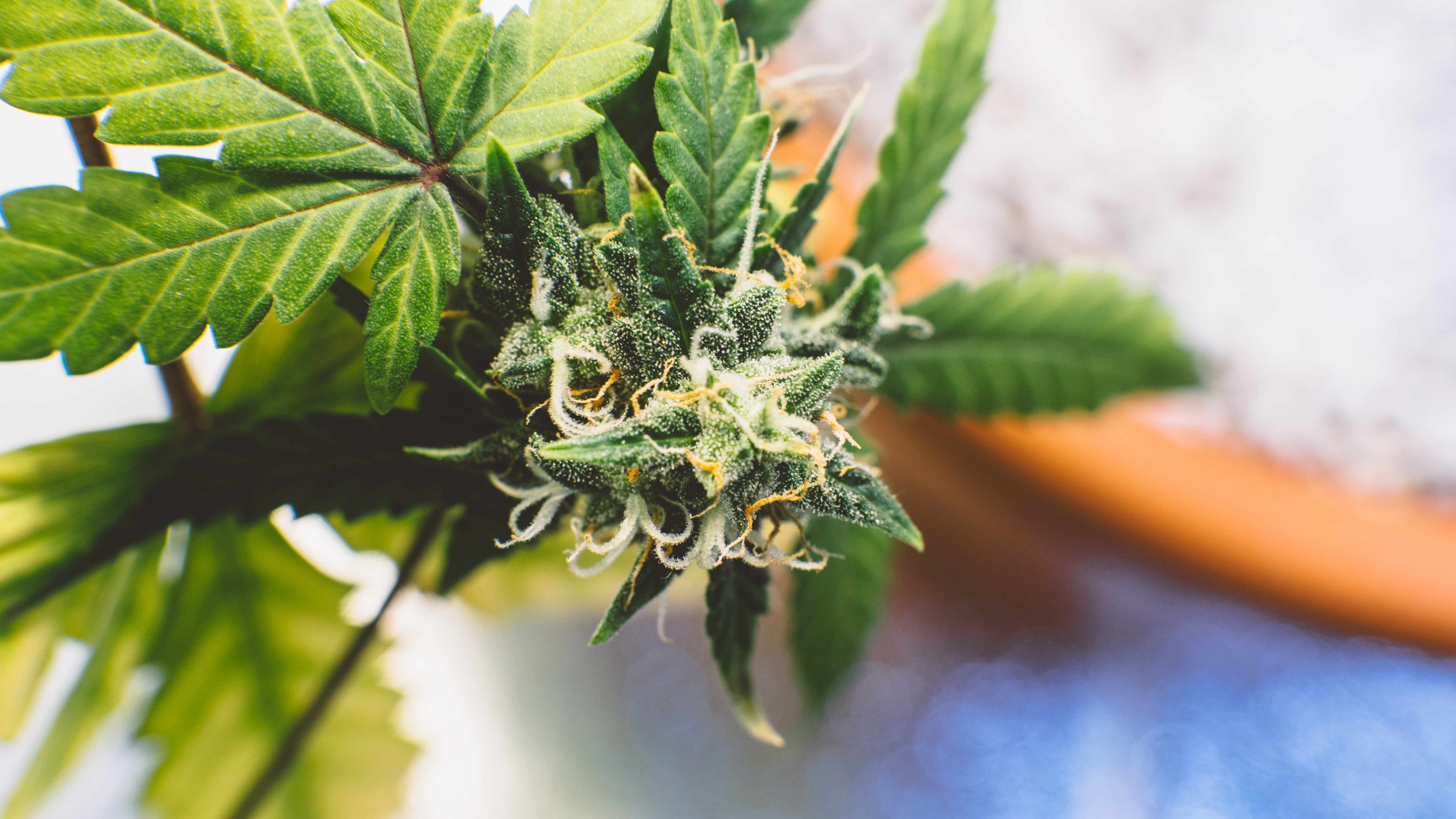


Cannabis plants have several types of leaves, and each type has a different role. One of the most important types to understand is the sugar leaf. Sugar leaves are the small leaves that grow around and sometimes through cannabis flowers, also called buds. They are much smaller than the large fan leaves that grow farther away from the flowers. Sugar leaves are often easy to recognize because their surfaces may look frosty, sticky, or covered with tiny crystals. These crystals are actually structures called trichomes. Because the trichomes can make the leaves look as if they have been dusted with sugar, growers commonly call them sugar leaves.
Sugar leaves develop close to the flowers as the cannabis plant matures. Some stick out from the sides of a bud, while others remain partly hidden between sections of the flower. Their exact size, shape, and number can vary from one cannabis plant to another. Genetics and growing conditions can affect how much resin appears on these leaves. Some sugar leaves may have a thick layer of visible trichomes, while others may have much less. However, their close position to the flower generally makes them more resinous than the large fan leaves found elsewhere on the plant.
Trichomes are an important reason sugar leaves receive so much attention after harvest. These tiny gland-like structures occur on cannabis flowers and nearby leaves. They produce and hold many of the plant’s cannabinoids and aromatic compounds. Cannabinoids include compounds such as THC and CBD, while terpenes are among the compounds responsible for much of the plant’s smell and flavor. Cannabis flowers normally contain a greater concentration of resin than sugar leaves, but sugar leaves can still carry a useful amount because they grow so close to the buds.
It is important not to confuse sugar leaves with fan leaves. Fan leaves are the large, familiar cannabis leaves that extend from the plant’s branches. They play a major role while the plant is growing because they collect light for photosynthesis. Photosynthesis allows the plant to turn light energy into the energy it needs for growth. Fan leaves usually have far fewer visible trichomes than sugar leaves. Sugar leaves are smaller, sit closer to the flowers, and usually have much more resin on their surfaces.
The difference between these two types of leaves becomes especially important at harvest time. After cannabis is harvested, growers usually remove much of the extra leaf material from the flowers. This process is called trimming or manicuring. Large fan leaves are often removed first because they contain little resin compared with the flowers and sugar leaves. Sugar leaves are also commonly trimmed away to give the finished buds a cleaner shape and reduce the amount of leafy plant material surrounding them. However, sugar leaves are often kept rather than thrown away.
When sugar leaves and other small resin-covered pieces are removed during trimming, the collected material is often called trim or sugar trim. Cannabis trim can include sugar leaves, small pieces of flower, and loose trichomes that separate during handling. Although trim is normally less potent than whole cannabis flowers, it may still contain useful cannabinoids and terpenes. For that reason, sugar leaves are often treated as a secondary cannabis material instead of simple plant waste.
There are several possible uses for sugar leaves after harvest. Depending on local laws and how the material has been handled, sugar trim may be used in products such as pre-rolls, infused products, kief, hash, or other cannabis preparations. The best use can depend on how much resin is present and how clean the trim is. Heavily frosted sugar leaves are generally more useful for resin-based processing than leaves with very few trichomes. The condition of the material also matters. Leaves affected by mold, dirt, pests, or other contamination should not be treated in the same way as clean, properly handled trim.
Proper trimming is therefore about more than making cannabis flowers look neat. It also helps separate different parts of the harvested plant based on their quality and possible uses. A person trimming cannabis may place large fan leaves in one group, stems in another, finished flowers in another, and resin-covered sugar leaves in a separate container. This makes it easier to manage the harvested material and prevents useful sugar trim from becoming mixed with lower-resin plant matter.
How sugar leaves are trimmed can also affect the final cannabis flower. Some flowers are trimmed very closely so that almost no visible leaf material remains. Other flowers may keep small sections of sugar leaf, especially when those leaves are heavily covered in trichomes. The amount removed often depends on the desired final product and the trimming method being used. Sugar leaves can be trimmed while the plant is still wet after harvest or after the flowers have been dried. These approaches are known as wet trimming and dry trimming.
Handling sugar leaves correctly after trimming is also important. Freshly harvested leaves contain moisture. If damp plant material is packed into a closed container without proper drying or processing, excess moisture can encourage spoilage and mold. Dried trim also needs protection from heat, light, moisture, and contamination. Good handling helps preserve the quality of the resin and reduces the chance that the material will become unusable.
Understanding sugar leaves is useful because they connect several important parts of cannabis plant anatomy and post-harvest processing. They are leaves, but they are different from the large fan leaves that support much of the plant’s growth. They grow directly around the flowers, collect resin on their surfaces, and may contain cannabinoids and terpenes. Although they are commonly removed during trimming, they do not automatically have to become waste.
The following sections will explain how to identify cannabis sugar leaves, how they differ from fan leaves, why they develop a frosty coating, and how their cannabinoid content compares with cannabis flowers. The article will also cover whether sugar leaves can be smoked, why growers trim them, how wet and dry trimming differ, and what can be done with the leaves after harvest. Finally, it will explain basic drying and storage practices. By understanding what sugar leaves are and why they matter, readers can better understand both the cannabis plant itself and what happens to it after harvest.
What Do Cannabis Sugar Leaves Look Like?
Cannabis sugar leaves are small leaves that grow very close to the flowers of the cannabis plant. They are called “sugar leaves” because they often look as if they have been sprinkled with sugar. This frosty look comes from tiny resin glands called trichomes. These glands can cover the surface of the leaves and make them appear white, shiny, or crystal-like.
Sugar leaves are usually much smaller than the large fan leaves found throughout the plant. They often stick out from the sides of cannabis flowers or grow between parts of the flower. Their size, color, and amount of trichome coverage can vary from one cannabis variety to another.
Knowing how to identify sugar leaves is useful during harvest and trimming. It helps growers separate valuable resin-covered trim from larger leaves that contain less resin.
Where Sugar Leaves Grow
Sugar leaves grow directly around cannabis flowers. They are often found inside or very close to the flower clusters, which are sometimes called buds or colas. Unlike large fan leaves, sugar leaves do not usually extend far away from the plant.
As the cannabis plant enters the flowering stage, the flowers begin to develop along the branches. Small leaves grow between and around these flowers. These are the sugar leaves. Some may be easy to see because they extend from the outside of the flower. Others may be partly hidden inside the bud.
Their position near the flower is important because cannabis flowers usually produce many trichomes. Sugar leaves growing close to these flowers can also become covered with the same type of resin glands.
The largest fan leaves usually grow from stems and branches. They often have long leaf stems and wide fingers. Sugar leaves are different because they are closely connected to the flower itself. They may look as if they are growing directly out of the bud.
During trimming, this location helps growers identify which leaves should be treated as sugar trim. Leaves that are small, close to the flower, and covered in resin are usually considered sugar leaves.
Why Sugar Leaves Look Frosty
The frosty appearance of sugar leaves comes from trichomes. Trichomes are tiny structures that develop on the surface of cannabis flowers and nearby leaves. When many trichomes are packed together, they can give the plant a white, silver, or sparkling appearance.
From a distance, heavy trichome coverage may look like fine sugar crystals. This is where the name “sugar leaf” comes from.
Trichomes contain many of the compounds associated with cannabis. These include cannabinoids and aromatic compounds called terpenes. Because sugar leaves are located close to the flowers, they may develop more trichomes than large fan leaves located farther away.
The amount of frost can change as the plant develops. During early flowering, sugar leaves may still look mostly green. As the flowers mature, more trichomes can appear. The leaves may become sticky and take on a more noticeable crystal-like coating.
Some sugar leaves may be heavily covered with trichomes, while others have only a light coating. This depends on the plant’s genetics, growing conditions, maturity, and location on the plant.
It is also important to understand that a frosty appearance does not tell you the exact strength of the leaf. A leaf with many visible trichomes may contain more resin than one with very few, but appearance alone cannot provide an exact cannabinoid percentage.
Size, Shape, and Appearance
Sugar leaves are generally smaller than fan leaves. They may have several narrow fingers, but the fingers are usually shorter and less spread out. Some sugar leaves have only one or three visible points, especially when much of the leaf is hidden inside the flower.
Their color is often green, but this can change as the plant matures. Depending on genetics and growing conditions, sugar leaves may appear light green, dark green, purple, reddish, or yellow near harvest.
The edges of sugar leaves are usually serrated, meaning they have a saw-like pattern similar to other cannabis leaves. However, their smaller size and position around the flower make them easier to identify.
Some sugar leaves extend far enough from the flower to be clearly visible. These are often removed during trimming because they can make finished buds look leafy. Other sugar leaves remain almost completely inside the flower. Trimmers may leave small parts of these leaves in place rather than cutting deeply into the bud.
The amount of visible sugar leaf can also differ between cannabis varieties. Some plants produce flowers with many leaves sticking outward. Others develop dense flowers with only small leaf tips showing.
Environmental conditions can also affect their appearance. Light exposure, nutrition, temperature, humidity, and plant health may influence leaf size and color. A healthy sugar leaf normally has a firm structure and may feel slightly sticky when it has strong resin coverage.
Sugar leaves should also be distinguished from damaged or dying leaves. Near harvest, some color change can happen naturally, but leaves with clear signs of mold, rot, or contamination should not be treated as normal usable trim.
Cannabis sugar leaves are small leaves that grow directly around and within cannabis flowers. They are usually much smaller than fan leaves and often have a frosty or crystal-like coating. This appearance comes from trichomes, the tiny resin glands found on cannabis flowers and nearby leaves.
Sugar leaves can vary in size, shape, color, and trichome coverage. Some extend clearly from the flower, while others remain partly hidden inside the bud. Their close position to the flower is one of the easiest ways to tell them apart from larger fan leaves.
Being able to recognize sugar leaves is especially useful during harvest and trimming. It allows growers to separate resin-covered sugar trim from larger plant material and helps prepare cannabis flowers for drying, curing, or further processing.
Sugar Leaves vs. Fan Leaves: What Is the Difference?
Cannabis plants have several types of leaves, but two of the most common are sugar leaves and fan leaves. These leaves may look similar at first, especially to someone who is new to growing cannabis. However, they have clear differences in size, location, trichome coverage, and use after harvest. Learning how to tell them apart can make it easier to understand how the cannabis plant grows and how it is handled during harvest.
Both sugar leaves and fan leaves help support the plant while it is alive. They take part in important plant processes and contribute to healthy growth. However, they do not have the same amount of resin, and they are usually handled differently after the flowers are harvested.
Size and Location
One of the easiest ways to tell sugar leaves and fan leaves apart is by looking at their size and where they grow.
Fan leaves are usually the largest leaves on a cannabis plant. They grow from branches and extend away from the main stem. These leaves often have the familiar cannabis shape with several long, pointed leaflets. Depending on the plant and its genetics, fan leaves may have five, seven, nine, or more leaflets.
Because fan leaves grow outward from the plant, they are often easy to see. They help create much of the plant’s leafy canopy. During the vegetative stage, fan leaves can become especially large because the plant is focused on producing stems, branches, roots, and foliage.
Sugar leaves are much smaller. They grow close to the flowers during the flowering stage. Instead of extending far away from the buds, they often grow directly from the flower clusters. Some sugar leaves may stick out slightly, while others may remain partly hidden inside the bud.
Their position near the flowers is one reason sugar leaves look different from fan leaves. As the flowers develop, the nearby sugar leaves may become covered with resin. This gives them a shiny or frosted appearance.
The term “sugar leaf” comes from this frosty look. The resin glands can appear like tiny grains of sugar spread across the leaf surface. Fan leaves may also develop some resin, especially those close to the flowers, but they usually have much less than sugar leaves.
Trichome Coverage
Trichome coverage is another major difference between fan leaves and sugar leaves.
Trichomes are very small structures found on the surface of cannabis flowers and nearby plant tissue. Many of them look like tiny clear or cloudy glands. They contain compounds produced by the cannabis plant, including cannabinoids and aromatic substances known as terpenes.
Sugar leaves usually have much more visible trichome coverage because they grow close to the flowers. In some plants, the leaves around the buds can become heavily coated in resin. This is why they may look white, shiny, or sticky near harvest time.
Fan leaves usually contain fewer trichomes. Large fan leaves located farther away from the flowers may have very little visible resin. Some fan leaves near the top of the plant may develop a small amount of trichome coverage, but they usually do not have the same dense coating seen on sugar leaves.
The amount of resin can vary from one plant to another. Genetics, growing conditions, flower development, and plant maturity can all affect how many trichomes appear. Some cannabis varieties produce very frosty sugar leaves, while others have less visible resin.
It is also important to understand that a frosty appearance does not tell you the exact amount of THC or other cannabinoids in a leaf. Only proper testing can provide an accurate measurement. Still, the greater amount of visible resin on sugar leaves is one reason they are often kept after trimming.
Role During Plant Growth
Fan leaves and sugar leaves both support the cannabis plant, but they are commonly associated with different parts of the plant’s growth.
Fan leaves play a major role in photosynthesis. Photosynthesis is the process plants use to turn light energy into energy they can use for growth. The broad surface of a fan leaf helps it capture light. The plant then uses this energy to support root growth, stem development, leaf production, and flower formation.
Fan leaves also help the plant exchange gases with the surrounding air. Small openings on the leaf surface help manage the movement of carbon dioxide, oxygen, and water vapor.
Because fan leaves are large, they can collect a significant amount of light. This is one reason healthy fan leaves are important during much of the cannabis plant’s life cycle.
Sugar leaves also take part in photosynthesis. Even though they are smaller, they still contain green plant tissue that can capture light. However, their position close to the flowers makes them closely connected with the flowering stage.
As cannabis flowers become larger, sugar leaves often appear to grow from within the flower clusters. They can help support the nearby tissue while the plant continues to develop its buds.
Growers may sometimes remove certain leaves during cultivation to improve airflow or light exposure. However, removing too many healthy leaves can reduce the amount of leaf area available for photosynthesis. Leaf removal should therefore be understood as a plant-management choice rather than something that every plant always needs.
Uses After Harvest
The difference between sugar leaves and fan leaves becomes especially important during harvest and trimming.
Large fan leaves are often removed first. Since they usually have low resin coverage, they are commonly treated as leftover plant material. Depending on local rules and the grower’s practices, they may be composted or discarded.
Sugar leaves are often treated differently because they usually contain more trichomes. During trimming, growers remove many of these smaller leaves from the buds to create a cleaner final flower. The removed material is often called sugar trim.
Sugar trim may be saved because it can still contain cannabinoids and terpenes. In places where cannabis processing is legal, resin-covered trim may be used for products such as kief, hash, infused oils, or other cannabis preparations.
This does not mean sugar leaves are the same as cannabis flowers. Flowers usually contain more resin and a higher concentration of cannabinoids. Sugar leaves also contain more leafy plant material, which can affect taste, texture, and smoke quality.
Fan leaves may also have some uses, but they generally have less value for resin-based processing because they usually contain fewer trichomes. This is why many growers separate sugar trim from large fan leaves during harvest.
Keeping the two types of leaves separate can make later processing easier. It also allows growers to save the most resin-rich trim instead of mixing it with plant material that contains very little resin.
Sugar leaves and fan leaves are both natural parts of the cannabis plant, but they differ in several important ways. Fan leaves are large leaves that grow from branches and help capture light for photosynthesis. They usually have fewer trichomes and are often removed or discarded after harvest.
Sugar leaves are smaller leaves that grow close to cannabis flowers. Because of their location, they usually develop more visible trichomes and may look frosted or sticky. This resin coverage is the main reason sugar leaves are often saved as sugar trim.
Both types of leaves help support the plant while it grows. The biggest differences are their size, position, resin content, and post-harvest use. Understanding these differences makes it easier to identify plant parts correctly and understand why growers handle fan leaves and sugar leaves differently during trimming.
Why Are Sugar Leaves Covered in Trichomes?
Sugar leaves are known for their frosty or crystal-like surface. This appearance comes from tiny structures called trichomes. These trichomes grow on the surface of cannabis flowers and on the small leaves that surround them. Because sugar leaves are so close to the flower, they often develop a thick layer of these resin-filled glands.
Trichomes are one of the main reasons sugar leaves are different from larger fan leaves. Fan leaves may have some trichomes, but sugar leaves usually have much more visible resin. This is also why growers often save sugar leaves after trimming instead of treating them as normal plant waste.
What Cannabis Trichomes Are
Trichomes are very small structures that grow on the surface of the cannabis plant. Some look like tiny hairs, while others have a small rounded head on top of a short stalk. The trichomes with rounded heads are especially important because they can contain resin rich in cannabinoids and aromatic compounds.
To the naked eye, a large group of trichomes may look like white dust, frost, or sugar crystals. This is where the term “sugar leaf” comes from. The leaves are not actually covered in sugar. They only appear that way because of the large number of trichomes on their surface.
Trichomes are most common on cannabis flowers, but they can also appear on nearby leaves. Sugar leaves usually grow directly around the flower. Some of them even extend out from between parts of the bud. Because they are so close to the flower, they often receive a heavier coating of resin than larger leaves found farther away.
Trichomes also play a role in the plant itself. They may help protect cannabis tissue from some insects, environmental stress, and other outside threats. Their sticky surface can make the plant less attractive to certain pests. The strong-smelling compounds found in the resin may also serve as part of the plant’s natural defense system.
Cannabinoids and Terpenes
The resin inside cannabis trichomes contains many of the compounds associated with the plant. These include cannabinoids such as THC and CBD, along with terpenes and other natural plant chemicals.
Cannabinoids are compounds produced by cannabis. Different cannabis varieties can produce different amounts and types of cannabinoids. THC is known for causing intoxicating effects, while CBD does not produce the same type of high. Other cannabinoids may also be present in smaller amounts.
Terpenes are aromatic compounds that help give cannabis its smell and flavor. Different combinations of terpenes can create scents that seem fruity, earthy, spicy, floral, or citrus-like. Since many terpenes are stored in trichome resin, sugar leaves can carry some of the same smells as the nearby flower.
However, sugar leaves do not usually contain the same concentration of resin as the flower itself. The flower has more surface area covered with resin glands and is often the main location where cannabinoids are concentrated. This means sugar leaves may still contain useful resin, but they should not automatically be treated as equal to buds in strength.
The amount of resin on sugar leaves can also vary from one part of the plant to another. A small leaf covered in visible trichomes may contain more resin than a larger leaf with very little frost. For this reason, growers often separate high-resin sugar trim from larger fan leaves and stems after harvest.
Why Trichome Density Varies
Not every sugar leaf looks equally frosty. Some leaves may appear almost white with resin, while others may have only a light coating. Several factors can affect how many trichomes develop.
Genetics is one major factor. Some cannabis varieties naturally produce more resin than others. Plants that are known for heavy trichome production may develop very frosty flowers and sugar leaves. Other varieties may produce less visible resin even when the plants are healthy and mature.
Plant maturity also affects trichome development. As cannabis flowers develop, trichome production often becomes more noticeable. Young flowers may have fewer visible trichomes, while mature flowers can become heavily coated. Sugar leaves located close to these flowers may also become more resinous over time.
Growing conditions can also play a role. Light, temperature, humidity, plant health, and overall stress can affect how the plant develops. Poor growing conditions may reduce flower quality and resin production. Healthy plants grown under stable conditions may be more likely to reach their natural potential for trichome production.
The position of the leaf matters as well. Sugar leaves located deep inside or very close to the flower are often more resinous than leaves farther away. This is because trichome production is usually strongest around the reproductive parts of the plant. A small leaf sticking out of a dense bud may be covered in resin, while another leaf lower on the branch may have much less.
It is also important to understand that visible frost does not tell you the exact amount of THC, CBD, or other cannabinoids in a leaf. A leaf may look very resinous, but appearance alone cannot provide an exact potency number. Only proper laboratory testing can measure cannabinoid levels with accuracy.
Sugar leaves look frosty because they are covered with tiny resin-producing structures called trichomes. These trichomes can contain cannabinoids, terpenes, and other compounds made by the cannabis plant. Since sugar leaves grow close to the flowers, they often collect more resin than larger fan leaves.
The amount of trichome coverage can vary based on genetics, plant maturity, growing conditions, and the leaf’s location. Some sugar leaves may be heavily coated, while others may have only a small amount of visible resin. Although heavy trichome coverage can show that a leaf contains resin, it does not provide an exact measure of potency. Understanding trichomes helps explain why sugar leaves are often saved during trimming instead of being discarded with other plant material.
Do Sugar Leaves Contain THC and Other Cannabinoids?
Cannabis sugar leaves can contain THC, CBD, and other cannabinoids because they often have a layer of resin-producing trichomes on their surface. These small leaves grow close to the flowers, where trichome production is usually highest. This is why sugar leaves may look shiny, frosty, or covered in tiny crystals.
Even though sugar leaves can contain cannabinoids, they are usually less potent than cannabis flowers. The exact amount can vary greatly from one plant to another. Some sugar leaves may have heavy trichome coverage, while others may have only a small amount. The cannabis variety, growing conditions, harvest timing, and position of the leaf can all affect cannabinoid levels.
Understanding these differences is important because sugar leaves are often saved after trimming. They may still contain useful plant compounds, but their strength should not be assumed to be the same as the flower.
Cannabinoid Content of Sugar Leaves
Cannabinoids are chemical compounds produced by the cannabis plant. THC and CBD are two of the best-known cannabinoids, but the plant can produce many others in smaller amounts. These compounds are found mainly in the resin made by glandular trichomes.
Sugar leaves often contain more trichomes than large fan leaves because they grow close to developing flowers. During the flowering stage, resin may spread across the surface of these smaller leaves. This gives them their “sugary” appearance.
A sugar leaf with many visible trichomes may contain measurable amounts of THC, CBD, or other cannabinoids. However, the amount is not fixed. A leaf from one cannabis variety may have a different cannabinoid profile from a leaf taken from another variety.
The same is true within a single plant. Sugar leaves located deep inside a flower cluster may have more resin than leaves farther away from the flower. This means that not all sugar leaves have the same strength.
Cannabinoid content can also depend on whether the plant is a THC-dominant, CBD-dominant, or mixed variety. A CBD-rich cannabis plant may produce sugar leaves containing more CBD, while a THC-rich plant may produce leaves with more THC.
Sugar Leaves vs. Cannabis Buds
Cannabis flowers usually contain a higher concentration of cannabinoids than sugar leaves. This is because the flower is the main area where the plant produces dense concentrations of resin and trichomes.
Sugar leaves can still be resinous, but they also contain more ordinary leaf tissue. When their weight is compared with the same weight of flower, sugar leaves will often contain a lower percentage of cannabinoids.
For example, a dried cannabis flower may look completely covered in trichomes. A nearby sugar leaf may also appear frosty, but part of its weight comes from the leaf itself rather than resin-producing tissue. This can lower the overall cannabinoid concentration by weight.
This is one reason sugar leaves are normally treated as trim instead of premium flower. They still have value, especially when they are heavily coated with resin, but they are not usually considered equal to the flower in potency.
The amount of flower material mixed into the trim can also affect strength. During trimming, small pieces of flower may sometimes break off and mix with sugar leaves. Trim containing more small flower pieces may have a higher cannabinoid content than trim made mostly of leaves.
Factors That Affect Potency
Genetics are one of the main factors that influence cannabinoid production. Different cannabis varieties naturally produce different amounts of THC, CBD, and other compounds. If a plant has high cannabinoid levels in its flowers, its sugar leaves may also carry more resin.
Trichome coverage is another important factor. Sugar leaves that appear heavily frosted may contain more resin than leaves that have very few visible trichomes. However, appearance alone cannot give an exact measure of potency.
Plant maturity also matters. Trichome production develops as the flowers mature. Sugar leaves taken too early may contain fewer mature trichomes than leaves collected near the proper harvest period.
Growing conditions can also affect overall plant health and resin production. Light, temperature, humidity, nutrition, water, and plant stress can all influence how the plant develops. Poor growing conditions may reduce flower quality and can also affect resin production on nearby leaves.
Harvest and handling practices may change the final quality as well. Trichomes are small and can be damaged or knocked off by rough handling. Very dry trim may lose loose trichomes more easily if it is shaken or crushed. Careful handling helps preserve more of the resin on the leaf surface.
The final potency of a batch of sugar trim can also depend on what is included. A container filled mostly with frosty sugar leaves may be different from one that contains stems, fan leaves, and other low-resin plant material.
Why Appearance Does Not Give an Exact THC Percentage
It is common to judge cannabis by how frosty it looks, but visual appearance cannot tell a person the exact THC percentage. Trichomes may suggest that cannabinoids are present, but they do not show how much THC, CBD, or other compounds are actually inside the material.
Two sugar leaves can look similar while having different cannabinoid levels. A thick layer of trichomes does not always mean that all those trichomes contain the same concentration of THC.
Lighting can also affect how frosty a leaf appears. Bright light can make trichomes shine and look more dense than they actually are. Different types of trichomes may also be present, and not every visible structure provides the same amount of resin.
The only reliable way to know the cannabinoid percentage is through laboratory testing. Cannabis laboratories can measure THC, CBD, and other cannabinoids in a sample. These tests can give much more accurate information than visual inspection.
This is especially important when sugar leaves are being used in products where dose and potency matter. Without testing, it is difficult to know exactly how strong a batch of trim may be.
Cannabis sugar leaves can contain THC, CBD, and other cannabinoids because they grow close to the flowers and often develop resin-rich trichomes. However, they are usually less potent than cannabis buds because they contain more leaf tissue and generally have a lower concentration of resin by weight.
Potency can change based on genetics, plant maturity, trichome coverage, growing conditions, harvest practices, and the amount of flower material mixed with the trim. Some sugar leaves may be heavily coated in resin, while others may contain much less.
A frosty appearance can show that trichomes are present, but it cannot tell the exact THC or CBD percentage. Laboratory testing is the most reliable way to measure cannabinoid content. For this reason, sugar leaves should be viewed as cannabinoid-containing plant material whose actual strength can vary widely rather than as a product with a predictable level of potency.
Can You Smoke Cannabis Sugar Leaves?
Cannabis sugar leaves can be smoked, but they are not the same as cannabis flower. Sugar leaves are the small leaves that grow close to the buds. They often have visible trichomes, which are the tiny resin glands that contain cannabinoids and aromatic compounds. Because of this resin, sugar leaves may contain THC, CBD, and other cannabis compounds.
However, sugar leaves usually contain less resin than the flower itself. They also contain more leafy plant material. This can affect the strength, taste, and smoothness of the smoke. Some people save sugar leaves after trimming because the leaves may still contain useful compounds. Even so, smoking them may feel different from smoking properly dried and cured cannabis flower.
Are Sugar Leaves Smokable?
Sugar leaves can be dried and burned in the same general way as other parts of the cannabis plant. Since many sugar leaves are covered with trichomes, they may contain enough cannabinoids to produce noticeable effects. The amount depends on the plant, the strain, and how much resin is present on the leaves.
A very frosty sugar leaf may contain more cannabinoids than a leaf with few visible trichomes. Sugar leaves that grow deep inside a flower may also have more resin than leaves that extend farther away from the bud.
Even when sugar leaves contain cannabinoids, they are usually not as strong as the flowers. Cannabis flowers tend to have the highest concentration of resin-producing trichomes. This is one reason growers often separate buds from trim after harvest.
Sugar leaves are sometimes mixed with small pieces of flower during trimming. This material may be called sugar trim. Sugar trim can contain more cannabinoids than ordinary fan leaves because it often includes both resin-covered leaves and tiny flower pieces.
Why Sugar Leaves May Produce Harsher Smoke
One common difference between sugar leaves and cannabis buds is the amount of leafy material they contain. Leaves contain plant compounds such as chlorophyll, fiber, and other natural substances. When this plant material is burned, the smoke may taste stronger, greener, or more bitter.
Chlorophyll is the green pigment that helps plants absorb light during photosynthesis. It is normal and important while the cannabis plant is growing. However, large amounts of leafy material can affect the taste of dried cannabis when it is burned.
Sugar leaves may also feel harsher if they are not properly dried. Plant material that still holds too much moisture may burn unevenly. It can also produce an unpleasant taste. On the other hand, leaves that become extremely dry may burn very fast and create hot, harsh smoke.
The way cannabis is dried and stored can also affect the final result. Poor storage may damage flavor and aroma. High moisture can also increase the risk of mold, which makes the material unsafe to use.
Because sugar leaves contain more leaf tissue than buds, they may produce more unwanted plant flavors when burned. This does not mean every sugar leaf will taste the same. Resin level, drying conditions, storage, and plant genetics can all make a difference.
Sugar Leaves Compared With Bud
Cannabis buds are normally preferred over sugar leaves because buds contain a higher concentration of trichomes. These trichomes hold many of the cannabinoids and terpenes that give cannabis its strength, smell, and flavor.
Sugar leaves can still contain these compounds, but usually in smaller amounts. As a result, the effects from sugar leaves may be weaker than the effects from the flower from the same plant.
The flavor may also be different. Cannabis flower contains a large amount of resin compared with its total plant material. Sugar leaves have more leaf tissue compared with their resin content. This can create a stronger plant-like taste when the leaves are burned.
Another difference is appearance. Well-trimmed cannabis flower has most of the larger leaves removed. Small sugar leaf tips may still remain, especially when they are covered in trichomes. A close trim removes more leaf material, while a looser trim leaves more of the sugar leaves attached.
Some commercial cannabis products may contain trim. For example, some pre-rolls may use a mixture of small flower pieces and cannabis trim. The exact content can vary by product. A pre-roll made mostly from flower may differ greatly from one made with a larger amount of leafy trim.
This is why the word “trim” does not always describe one exact type of material. Some trim can be rich in resin, while other trim may contain mostly leaves.
Health Considerations
Smoking any plant material creates combustion products. Combustion is the process that happens when material burns. The smoke contains very small particles and chemicals that can irritate the lungs and airways.
Cannabis smoke is therefore not risk-free. Even if sugar leaves are naturally grown and free from pesticides, burning them still creates smoke. The lungs are designed to take in air, not smoke from burned plant material.
Leafy cannabis material may also produce more smoke without providing the same amount of cannabinoids as flower. This means a person may inhale more burned plant material while receiving fewer active compounds.
Contamination is another concern. Sugar leaves should not be used if there are signs of mold, mildew, unusual odors, or other forms of spoilage. Smoking contaminated cannabis can expose the lungs to harmful substances.
The legal status of cannabis also differs by location. Laws may control possession, use, home growing, and cannabis processing. Anyone handling cannabis should understand the rules that apply where they live.
Cannabis sugar leaves can be smoked because they may contain THC, CBD, and other cannabinoids in their trichomes. However, they usually contain less resin and more leafy plant material than cannabis buds. For this reason, sugar leaves are often less potent and may produce a harsher or more plant-like taste when burned.
The amount of resin, the way the leaves are dried, and how they are stored can all affect their quality. Sugar trim that contains many trichomes and small flower pieces may be stronger than ordinary leaf material, but it still should not be assumed to have the same potency as cannabis flower.
Smoking sugar leaves also carries the same basic concern as smoking other plant material. Burning cannabis creates smoke and combustion products that can irritate the lungs. For that reason, sugar leaves should not be viewed as a risk-free product simply because they come from the cannabis plant.
Should You Trim Sugar Leaves Off Cannabis Buds?
Sugar leaves are the small leaves that grow around and between cannabis flowers. They often have a light coating of trichomes, which can make them look frosty or covered in sugar. These leaves are different from the large fan leaves that grow farther away from the buds. After harvest, growers usually remove at least some of the sugar leaves as part of the trimming process.
Trimming sugar leaves can change the appearance, texture, and overall quality of the finished flower. However, not every small leaf must be removed. Some sugar leaves are easy to trim because they stick out from the bud. Others grow deep inside the flower and may be difficult to remove without cutting into the bud itself.
The goal of trimming is usually to remove extra leafy material while keeping the flower as intact as possible. The amount of trimming can vary depending on how the cannabis will be stored, processed, or used.
Why Cannabis Buds Are Trimmed
Cannabis buds are commonly trimmed after harvest to remove extra leaves and improve the final appearance of the flower. Large fan leaves are usually removed first because they contain less resin and can make the harvested plant material look rough or unfinished.
Sugar leaves are smaller and grow much closer to the flower. They can contain more trichomes than fan leaves, but they still contain more leafy plant material than the flower itself. Removing the parts that stick out can create a cleaner and more even-looking bud.
Trimming may also make the flower easier to inspect. When too many leaves cover the outside of a bud, it can be harder to see the condition of the flower underneath. Removing some of this material can make it easier to notice damaged areas or signs of poor storage.
Leafy material can also affect the texture of dried cannabis. Sugar leaves may become thin and brittle after drying. If large amounts remain around the flower, they can change how the final product feels when handled.
The trimming process should not be treated as a way to remove every visible piece of leaf at any cost. Cutting too deeply may remove parts of the flower and reduce the amount of usable bud. A careful trim focuses mainly on leaves that extend away from the flower.
How Much Sugar Leaf Should Be Removed?
There is no single amount of sugar leaf that must always be removed. The amount usually depends on the trimming style and the shape of the flower.
A close trim removes most visible leaf material from the outside of the bud. This can create a smooth, compact appearance. It may be used when appearance is an important part of how the finished flower is presented.
A looser trim leaves more of the small resin-covered leaves attached. This approach may involve removing only the tips and larger sections that extend beyond the flower.
The easiest sugar leaves to remove are usually the ones that clearly stick out from the bud. These can often be cut near their base without affecting much flower material.
Leaves that are buried deep inside the bud are more difficult to remove. Trying to reach them can cause unnecessary cuts or damage. In many cases, it is better to leave small sections of these leaves in place instead of cutting deeply into the flower.
The structure of the plant also makes a difference. Some cannabis varieties produce dense flowers with many small sugar leaves packed inside. Others produce flowers with fewer leaves around the bud. Because of these differences, two plants may require very different levels of trimming.
When Some Sugar Leaves May Be Left on the Bud
It is normal for some small sugar leaves to remain after trimming. A tiny leaf tip covered in trichomes does not always need to be removed, especially if removing it would require cutting into the flower.
Some sugar leaves can blend closely with the structure of the bud. Once dried, they may curl inward and become less noticeable. These small pieces can be part of the natural shape of the harvested flower.
Leaving a limited amount of sugar leaf can also help reduce unnecessary handling. Cannabis trichomes are delicate structures on the surface of the flower and nearby leaves. Frequent touching, squeezing, or trimming can knock some of these structures loose.
For this reason, careful trimming often involves finding a balance. The goal is to remove obvious excess leaf material without repeatedly handling or cutting the flower.
The final appearance may also depend on whether trimming is done before or after drying. Fresh sugar leaves are softer and may stick outward. After drying, they can curl closer to the flower. This can change how much leaf material appears to need trimming.
Saving the Trim
Sugar leaves that are removed do not always have to be thrown away. Resin-covered sugar leaves are often collected separately from larger fan leaves, stems, and other plant waste.
This collected material is commonly called sugar trim. It may still contain trichomes and cannabinoids because it grew close to the cannabis flower. However, its cannabinoid content is usually not the same as the flower itself.
Keeping different types of plant material separate can make later handling easier. High-resin sugar leaves can be placed in one container, while large fan leaves and stems can be kept separately or discarded.
Cleanliness is important when saving trim. Plant material should not be mixed with dirt, damaged leaves, moldy material, or other contaminants. If the trim will be stored, moisture must also be controlled because wet plant material can spoil.
Gentle handling can help protect the trichomes that remain on the leaves. Crushing or rubbing the trim too much may cause resin glands to break away from the plant material.
Saved sugar trim may have several possible uses depending on local cannabis laws and how the material is processed. For this reason, growers often treat resin-covered trim as a separate harvest product instead of ordinary waste.
Sugar leaves are commonly trimmed from cannabis buds because they add extra leafy material around the flower. Removing the parts that stick out can improve the appearance and make the finished bud easier to inspect and handle. However, growers do not always need to remove every small sugar leaf.
A careful trim usually focuses on larger or more visible leaves while avoiding deep cuts into the flower. Small resin-covered leaf tips may be left in place when removing them could damage the bud. The amount of trimming can also depend on the structure of the plant and the desired final appearance.
Sugar leaves that are removed can be collected as sugar trim. Because these leaves grow close to the flower and may contain trichomes, they can still have value after harvest. Separating clean, resin-covered trim from fan leaves, stems, and damaged plant material can make later storage and handling easier.
How to Trim Cannabis Sugar Leaves Properly
Trimming sugar leaves is an important step after cannabis is harvested. The goal is to remove extra leaf material while keeping the flower in good condition. Sugar leaves often grow very close to the buds. Some may even curl into the flower. Because of this, trimming should be done with care.
Good trimming can improve the final appearance of the buds. It can also reduce extra plant material that may affect taste and smoothness. At the same time, resin-covered sugar leaves can be saved as trim instead of being thrown away. Careful handling is important because the surface of the flower contains many delicate trichomes.
Preparing for Trimming
Before trimming begins, prepare a clean work area. A clean surface helps reduce the chance of dust, dirt, hair, or other material getting onto the cannabis. The room should also have enough light so that the leaves and flowers are easy to see.
Small trimming scissors are often used because they allow more control around the buds. The scissors should be clean and sharp. Dull scissors may crush leaves instead of making a clean cut. Sticky resin can also build up on the blades during trimming, so the scissors may need to be cleaned from time to time.
Gloves can help keep the flowers clean and reduce direct contact with the resin. Cannabis trichomes can be sticky, and repeated handling may leave resin on the hands. Gloves also help prevent oils and dirt from the skin from being transferred to the flowers.
It is useful to have separate containers ready before starting. One container can hold finished buds, while another can hold resin-covered sugar trim. A third container may be used for large fan leaves, stems, and other plant material. Separating these materials early makes later handling much easier.
Identifying What to Remove
The first step is to identify the different types of leaves. Large fan leaves are usually easy to see because they extend away from the flower. They have long stems and large leaf fingers. These leaves normally have fewer visible trichomes than sugar leaves.
Sugar leaves are smaller and grow closer to the buds. Many of them have visible resin glands on their surfaces. Some sugar leaves extend far outside the flower, while others are partly hidden inside it.
Large leaves should usually be removed first because they can block access to the smaller leaves underneath. Once the larger leaves are gone, it becomes easier to see the shape of the bud and decide which sugar leaves should be trimmed.
Not every small leaf needs to be cut away completely. Some leaves are buried deep within the flower. Trying to remove them may cause more damage than leaving a small amount behind. The main goal is usually to remove the parts that stick out from the surface of the bud.
Damaged, brown, or unhealthy plant material should also be inspected closely. If any material shows signs of mold or other contamination, it should not be mixed with clean trim.
Trimming Around the Bud
When trimming sugar leaves, hold the flower gently. Avoid squeezing the bud because pressure can damage its shape and disturb surface trichomes.
Start with the sugar leaves that extend clearly beyond the flower. Use the scissors to cut these leaves close to the bud without cutting deeply into the flower itself. Small, controlled cuts are usually safer than trying to remove large sections at once.
The bud can be slowly turned during trimming so that all sides can be inspected. This makes it easier to create a more even finish. Pay attention to areas where several small leaves overlap.
Trimming too close can remove small pieces of flower along with the leaves. This can reduce the amount of usable bud. It can also disturb resin-rich areas. For this reason, the goal should be careful shaping rather than cutting away as much material as possible.
Some growers prefer a very tight trim, while others leave small amounts of sugar leaf on the bud. The final amount depends on the desired appearance and how much leaf material is present.
Trichomes are delicate, especially when the flower is dry. Too much touching, rubbing, or moving can cause some trichome heads to break away. Gentle handling helps protect the resin on both the flowers and the sugar leaves.
Collecting Sugar Trim
Sugar leaves that have visible trichomes can be collected separately. This material is often called sugar trim. It is different from large fan leaves because it usually contains more resin.
Keeping resin-covered trim separate helps maintain its quality. If it is mixed with large leaves, thick stems, or damaged plant material, it becomes harder to use later.
The trim should be handled as little as possible. Repeatedly pressing, crushing, or rubbing the leaves can remove some of the resin from their surfaces.
If the sugar leaves are still fresh and moist, they should not be sealed immediately in an airtight container unless they are being prepared for a specific storage method. Fresh plant material can hold a large amount of moisture. Trapping that moisture may create conditions where mold can grow.
If the trim will be dried, it should be handled in a clean area with suitable airflow. If it will be stored in another way, it should be prepared according to that method rather than left at room temperature for a long period.
Common Trimming Mistakes
One common mistake is cutting too far into the flower. Sugar leaves may grow close to the bud, but removing them does not require cutting deep into the flower. Deep cuts can remove useful material and damage the shape of the bud.
Another mistake is handling the flower too much. Constantly touching or squeezing the buds can disturb trichomes. This is especially important with very dry flowers, where the surface may be more fragile.
Mixing all leaf material together is another problem. Large fan leaves do not usually have the same level of resin as sugar leaves. Keeping high-resin trim separate makes it easier to identify and manage later.
Dirty tools can also create problems. Resin, dust, and plant material can collect on scissors during long trimming sessions. Cleaning the blades when needed helps keep cuts smooth and reduces unwanted contamination.
Poor moisture control is another concern. Fresh trim should not be packed tightly into a closed container and forgotten. Moist plant material can create an environment where mold develops. Any trim that smells unusual, looks moldy, or appears spoiled should not be used.
Trimming cannabis sugar leaves requires patience and careful handling. A clean work area, sharp scissors, good lighting, and separate containers can make the process easier. Large fan leaves are usually removed first, followed by smaller sugar leaves that extend beyond the surface of the buds.
The flower should be handled gently during trimming. Cutting too deeply can damage the bud, while too much touching can disturb trichomes. Small sugar leaves hidden deep inside the flower do not always need to be removed if trimming them would harm the bud.
Resin-covered sugar leaves can be collected separately as sugar trim. Keeping this material away from large fan leaves, stems, and damaged plant matter helps preserve its quality. Proper handling and moisture control are also important, especially when the trim is fresh.
Careful trimming improves the final appearance of cannabis flowers while also protecting valuable resin-covered plant material that may otherwise be wasted.
Wet Trimming vs. Dry Trimming Sugar Leaves
Trimming is an important step after cannabis plants are harvested. Growers remove extra leaves from the flowers so the final buds are cleaner and easier to handle. Sugar leaves are often the main leaves removed during this step because they grow close to the flower and may stick out from the buds.
There are two common ways to trim cannabis after harvest. These are wet trimming and dry trimming. Wet trimming means removing leaves while the plant is still fresh. Dry trimming means allowing the harvested plant to dry before removing most of the sugar leaves.
Both methods can work well. The right choice often depends on the drying space, local humidity, harvest size, and the way the grower wants to handle the crop. Understanding the difference between the two methods can make the trimming and drying process easier to manage.
What Is Wet Trimming?
Wet trimming is done soon after the cannabis plant is harvested. At this stage, the leaves still contain a large amount of water. They are soft, flexible, and usually stand away from the flower more clearly.
The grower normally removes the large fan leaves first. The smaller sugar leaves around the buds can then be cut away. Because the leaves are still fresh, it may be easier to see where each leaf connects to the flower.
One benefit of wet trimming is that the buds take up less space after the extra leaves are removed. This can be useful when the drying area is small. Instead of hanging large branches covered in leaves, the grower can dry smaller, trimmed sections.
Removing leaves before drying may also allow more air to move around the flowers. This can be useful in areas with high humidity, where excess moisture may increase the chance of mold.
However, wet trimming can be sticky. Fresh cannabis contains resin, and this resin can build up on scissors, gloves, and working surfaces. The tools may need to be cleaned often during a large trimming job.
Wet trimming also exposes more of the flower surface before drying. Because there are fewer leaves around the buds, moisture may leave the flowers more quickly. If the drying room is very dry, the buds may dry faster than expected.
For this reason, growers should pay attention to the drying environment after wet trimming. Temperature, humidity, airflow, and drying time can all affect the final condition of the flower.
What Is Dry Trimming?
Dry trimming is done after the harvested cannabis has already spent time drying. In this method, growers may remove the largest fan leaves first but leave many sugar leaves attached during the drying stage.
Branches or whole plants may then be hung in a controlled drying area. Once the flowers and leaves have dried enough, the smaller sugar leaves are removed.
Dry sugar leaves feel different from fresh leaves. Instead of being soft and flexible, they become thinner, drier, and more brittle. Many of them curl inward toward the flower as they lose moisture.
Some growers find that dried leaves are easier to remove because they can break away more easily. However, other growers find dry trimming slower because the sugar leaves may curl tightly around the buds.
Leaving some leaves on the plant during drying may slow moisture loss. The extra plant material can help reduce how quickly the flowers dry in environments where the air is already dry.
A slower drying process may make moisture easier to manage in some conditions. However, growers still need to watch the drying space carefully. Too much moisture or poor airflow can create conditions where mold can grow.
Dry trimming can also create more loose plant material. Dried leaf pieces may break apart during handling. Because dried cannabis can be more fragile, rough handling may also knock trichomes away from the surface.
Careful handling is therefore important when trimming dried flower.
Differences in Handling
The biggest difference between wet and dry trimming is the condition of the leaves during the trimming process.
Wet leaves are soft and flexible. They may stick to scissors because of moisture and resin. They are often easier to pull away from the flower, which can make their stems easier to see.
Dry leaves are more brittle. They may break or crumble when handled. Their edges can also curl closer to the flower, which may make some small sugar leaves harder to reach.
Stickiness is another difference. Fresh cannabis can produce a large amount of sticky resin during trimming. This resin can coat gloves and scissors quickly.
Dry cannabis can still be sticky, especially when it has many trichomes, but the overall handling experience is different. Dried leaves may create more loose particles, while fresh leaves tend to remain in larger pieces.
Trichome handling is also important. Trichomes are small resin glands that can be damaged or separated from the flower through rough handling. During either trimming method, the flowers should be handled only as much as needed.
Dry flowers can be especially fragile. Once the plant loses moisture, dried trichomes may separate more easily if the buds are shaken, squeezed, or handled roughly.
The drying environment also affects which method may be easier. In a humid climate, removing leaves early may help reduce excess moisture around the flowers. In a dry climate, leaving some leaves attached may help slow the drying process.
This is why trimming should not be treated as a separate step from drying. The two processes are closely connected.
Choosing Between Wet and Dry Trimming
There is no single trimming method that works best in every situation. Growers may choose wet or dry trimming based on the conditions available to them.
Humidity is one of the most important factors. In a humid drying area, wet trimming may help reduce some of the extra plant material that holds moisture. Removing leaves may allow better airflow around the flowers.
In a very dry environment, dry trimming may be useful because the remaining leaves can slow moisture loss. This may help prevent flowers from drying too quickly.
Drying space also matters. Wet-trimmed buds usually require less room than whole branches with leaves attached. Growers with limited drying space may find wet trimming easier to manage.
Harvest size can also affect the choice. A small harvest may be easy to wet trim immediately. A large harvest may require many hours of work, making it difficult to trim every plant while it is still fresh.
Some growers may therefore remove large fan leaves at harvest and complete the detailed trimming after drying.
Processing goals may also influence the method. If the sugar leaves will be saved as trim, they should be collected carefully and kept separate from damaged leaves, large stems, and other unwanted plant material.
Clean tools and clean work surfaces are important with either method. Scissors should remain sharp so leaves can be removed without crushing the flowers. The trimmed material should also be handled and stored in a way that reduces moisture problems and contamination.
The main goal is not simply to make the flower look neat. Trimming should support a controlled drying process while protecting the flower from unnecessary damage.
Wet trimming and dry trimming are two common ways to remove sugar leaves from harvested cannabis. Wet trimming is performed while the plant is still fresh, while dry trimming is completed after the flowers have spent time drying.
Wet leaves are softer and may be easier to see and cut, but fresh cannabis can be very sticky. Removing leaves early may also cause the flowers to dry faster. Dry trimming leaves more plant material around the flowers during drying, which can slow moisture loss, but dried leaves may curl around the buds and become more brittle.
Humidity, drying space, harvest size, airflow, and processing goals can all affect which method is more practical. Neither method is automatically better in every case. The best approach is the one that supports a controlled drying process, protects the flowers, and allows the sugar leaves to be removed cleanly with as little unnecessary handling as possible.
What Can You Do With Cannabis Sugar Leaves?
Cannabis sugar leaves are often removed from the buds during trimming, but that does not always mean they should be thrown away. These small leaves grow close to the flowers and often have visible trichomes on their surface. Trichomes are the tiny resin glands that contain many of the plant’s cannabinoids and aromatic compounds.
Because sugar leaves can hold more resin than large fan leaves, growers and processors often save them as a separate type of trim. The amount of useful material depends on the plant, the amount of trichome coverage, and how carefully the leaves were handled during harvest.
Sugar leaves are usually less potent than the flowers themselves. However, they may still contain enough resin to be useful in several types of cannabis products where cannabis possession and processing are legal.
Saving Sugar Leaves as Cannabis Trim
After cannabis flowers are trimmed, the small resin-covered leaves are often called sugar trim. This material is different from large fan leaves, thick stems, and other low-resin plant parts.
Keeping sugar trim separate can make later processing easier. A container of mostly resin-covered leaves will usually have more useful trichomes than a mixed container filled with large leaves and stems.
The quality of sugar trim can vary a great deal. Some plants produce leaves that are heavily coated with visible resin. Other plants may have only a light coating. Trim that includes small pieces of flower may also contain more cannabinoids than trim made only from leaves.
Proper handling matters as well. Rough handling can knock trichomes away from the plant material. Heat, light, moisture, and long storage times may also reduce quality. For this reason, saved trim should be handled carefully and stored under suitable conditions until it is used.
Sugar trim should also be checked for signs of mold, dirt, pests, or other contamination. Poor-quality plant material should not be saved for later use.
Collecting Kief
One common use for dried sugar leaves is the collection of kief. Kief is made up mainly of separated trichomes. It usually looks like a fine, powdery material and may contain a higher concentration of cannabinoids than the leaves it came from.
Sugar leaves can be useful for this purpose because many of their trichomes grow on the outer surface. When dried plant material is handled or screened, some of these resin glands can separate from the leaves.
The amount of kief that can be collected depends on several factors. Plants with heavy trichome production may produce more. Trim with very little visible resin may produce much less. The age and condition of the material can also affect the final result.
Kief can be much stronger than ordinary sugar leaves because it contains a larger percentage of resin and less leafy plant material. For that reason, potency should not be assumed to be the same as the original trim. Anyone using cannabis products should be aware that concentrated materials may have stronger effects than expected.
Hash and Concentrate Applications
Sugar leaves may also be used as starting material in some forms of cannabis processing. This is possible because the resin on the leaves contains cannabinoids and terpenes.
Hash is one example of a product that is made by separating and collecting cannabis resin. In commercial or regulated settings, sugar trim may be processed along with other resin-rich cannabis material.
Some cannabis concentrates may also be produced from trim. However, the quality of the starting material has a major effect on the final product. Trim with dense trichome coverage is usually more useful than large leaves with little visible resin.
Cannabis concentrates can be far more potent than dried flower or trim. Their production may also involve specialized equipment, controlled environments, or processes that are not suitable for home use. Some extraction methods can involve serious fire, chemical, or contamination risks. Because of this, concentrate production should be left to properly equipped and legally permitted processors when required by local law.
The key point is that sugar leaves still contain useful resin. They are often treated as a secondary cannabis material rather than simple plant waste.
Infused Foods and Oils
Sugar leaves may also be used in cannabis-infused foods or oils in places where these products are legal. Cannabinoids in raw cannabis are not always present in the same active form found after heating. This is why cannabis used in infused products is often treated with controlled heat before or during preparation.
However, homemade infused products can be difficult to dose accurately. Sugar leaves do not have a standard level of THC, CBD, or other cannabinoids. One batch may contain much more resin than another.
This variation makes it hard to know exactly how strong a homemade edible or oil will be without laboratory testing. Eating too much THC can cause unpleasant effects that may last for several hours. For this reason, cannabis-infused foods should be approached carefully.
Infused products should also be clearly labeled and stored away from children, pets, and anyone who may consume them by mistake. Cannabis foods can sometimes look like ordinary snacks or baked goods, which increases the risk of accidental use.
Other Uses
Sugar leaves may also be used as starting material for products such as tinctures and topical preparations where these products are permitted by law.
A cannabis tincture is a liquid preparation designed to carry cannabinoids from the plant material. Topical products are applied to the skin and may include creams, balms, or oils. The type and strength of these products can vary greatly depending on the ingredients and processing method.
It is important to understand that not every batch of trim is suitable for reuse. Cannabis that shows mold, mildew, unusual odors, pest damage, chemical contamination, or poor storage conditions should not be turned into another product.
Processing damaged cannabis does not make contamination disappear. In some cases, concentrating plant material may also concentrate unwanted substances. Clean starting material is therefore important for any intended use.
Local cannabis laws should also be checked before processing sugar leaves. Rules for growing, possessing, making concentrates, preparing infused foods, and sharing cannabis products can differ widely between locations.
Cannabis sugar leaves can have several uses after they are removed from the flowers. Because they often contain more trichomes than large fan leaves, they are commonly saved as sugar trim rather than treated as waste.
Dried sugar leaves may provide resin for kief or may serve as starting material for certain cannabis products. They can also be used in infused foods, oils, tinctures, and topical products where local laws allow these activities.
However, sugar leaves are usually less potent than cannabis flowers, and their cannabinoid levels can vary widely from one batch to another. Concentrated products may also be much stronger than the original trim.
How to Dry, Store, and Preserve Sugar Leaves
Cannabis sugar leaves can still contain useful resin after harvest, so proper handling is important. Fresh sugar leaves hold a large amount of moisture. If they are stored while they are still wet, mold and other forms of spoilage can develop. Poor storage can also reduce the quality of the trichomes, cannabinoids, and aromatic compounds found on the leaves.
How sugar leaves should be handled depends on what will happen to them later. Some growers dry the leaves before storing them. Others freeze fresh sugar leaves when they plan to use them for certain types of processing. In either case, cleanliness, moisture control, and careful storage can help protect the plant material.
Drying Sugar Leaves After Harvest
Freshly harvested sugar leaves contain water because they were living plant tissue only a short time before harvest. This moisture must be managed carefully. When fresh leaves are packed together without enough airflow, the trapped moisture can create conditions where mold and bacteria can grow.
Sugar leaves that will be stored in dried form should be allowed to lose moisture gradually. They should not be placed in sealed containers immediately after being removed from the plant. Instead, they need enough air around them so moisture can leave the plant tissue.
The drying area should be clean and protected from direct sunlight. Strong light and excessive heat may reduce the quality of some compounds in cannabis over time. A controlled indoor space is usually easier to manage than an outdoor location because temperature, humidity, dust, insects, and weather conditions are easier to control.
The leaves should also have enough space between them. Large piles of fresh trim can hold moisture in the center even if the outer leaves feel dry. Spreading the material more evenly helps moisture escape at a similar rate.
Drying too quickly can also affect the condition of the plant material. High heat may make leaves brittle and may damage some of the compounds that give cannabis its smell and other qualities. Slow, controlled drying is usually easier to manage than trying to force moisture out with very high temperatures.
Preventing Mold and Excess Moisture
Mold is one of the main problems that can develop when cannabis plant material is stored with too much moisture. Mold spores are naturally present in many environments. When they have moisture, plant material, and suitable temperatures, they may begin to grow.
Fresh sugar leaves should never be packed tightly into a sealed container and then left at room temperature. Moisture from the leaves can become trapped inside the container. This creates a damp environment where spoilage can begin.
Air movement during the early drying period helps reduce this risk. The drying space should also be kept clean. Dirty surfaces, old plant matter, standing water, and poor ventilation may increase the chance of contamination.
Sugar leaves should be checked regularly while they are drying. If some areas remain wet while others are drying, the material may need to be spread out more evenly. Clumps of plant material should not remain pressed together for long periods.
Smell can also provide an early warning that something is wrong. Healthy drying cannabis may have a strong natural plant or cannabis smell. A musty, sour, or unusual odor can suggest excess moisture or spoilage.
Visible fuzzy growth, strange discoloration, or obvious mold should not be ignored. Moldy cannabis material should not be mixed with clean trim. It should be separated and discarded because mold can spread and may create health risks.
Storing Dried Sugar Leaves
Once sugar leaves are properly dried, they should be protected from moisture, heat, air, and strong light. These factors can slowly reduce the quality of stored cannabis material.
A clean, airtight container can help protect dried sugar leaves from outside moisture and excessive air exposure. However, airtight storage should only be used after the material is dry enough. Sealing plant matter that still contains too much moisture can trap that moisture inside the container.
Storage containers should be kept in a cool, dark place. Direct sunlight is not ideal because light can speed up the breakdown of some cannabis compounds. High temperatures may also reduce quality over time.
The container should also be kept away from areas with large temperature changes. For example, a storage area that becomes very hot during the day and cold at night may create changing humidity conditions inside the container.
It is useful to inspect stored sugar leaves from time to time. Check for moisture on the inside of the container, unusual smells, color changes, or signs of mold. If condensation appears, the material may still contain too much moisture.
Keeping stored trim clean is also important. Containers should be washed and fully dried before use. Avoid mixing fresh, moist trim with material that has already been dried because the fresh leaves may raise the moisture level of the entire container.
Freezing Sugar Leaves
Freezing is another way sugar leaves may be preserved, especially when the material is being saved for later processing. Some cannabis processing methods use fresh-frozen plant material instead of dried trim.
Fresh freezing is different from normal dry storage. In this method, the plant material is kept cold soon after harvest rather than being dried first. The purpose is often to preserve the fresh condition of the resin and other plant compounds until the material can be processed.
Sugar leaves that are going to be frozen should be handled carefully. Trichomes can become brittle at very low temperatures. Rough handling of frozen material can cause these resin structures to break away from the leaf surface.
The material should also be protected from repeated freezing and thawing. Temperature changes can introduce moisture and may reduce the quality of the stored plant material. If freezing is chosen, it is better to keep the material consistently frozen until it is ready for its intended use.
Freezing should not be confused with storing dried sugar leaves in an ordinary cool cupboard. These are different preservation methods used for different purposes. Dried trim is normally kept dry, dark, and protected from heat. Fresh-frozen trim is kept at low temperatures to preserve its fresh condition.
Signs Sugar Leaves Should Be Discarded
Not all stored sugar leaves remain safe or useful. Plant material should be inspected before it is used, especially if it has been stored for a long period.
Visible mold is one of the clearest reasons to discard sugar leaves. Mold may appear as fuzzy patches or unusual growth on the plant material. It should not be confused with normal cannabis trichomes, which usually look like tiny clear, cloudy, or amber resin glands under magnification.
An unusual smell can also be a warning sign. A musty or rotten odor may indicate mold, trapped moisture, or other spoilage. Cannabis trim should not smell like damp clothing, rotting plants, or a wet basement.
Excess moisture is another concern. If dried sugar leaves become wet again during storage, their risk of mold increases. Condensation inside a sealed container is a sign that moisture needs attention.
Plant material may also need to be discarded if it has been exposed to chemicals, pests, dirt, or other contaminants. Saving sugar leaves is only useful when the material has been kept clean and in good condition.
When there is clear evidence of mold or serious contamination, trying to remove only the affected area may not solve the problem. Contamination can extend beyond the parts that are easy to see. Questionable material is generally better discarded than mixed with clean trim.
Proper drying and storage can help preserve cannabis sugar leaves after harvest. Fresh sugar leaves contain moisture, so they should not be sealed in airtight containers before they are properly dried. Good airflow, clean conditions, and careful moisture control can reduce the risk of mold and spoilage.
Once dried, sugar leaves should be stored in clean containers and kept away from strong light, high heat, excess humidity, and large temperature changes. Regular inspection can help identify problems before they become worse.
Fresh sugar leaves may also be frozen when they are being saved for certain processing methods. Fresh-frozen trim should remain consistently cold and should be handled gently because frozen trichomes can become fragile.
Sugar leaves that develop mold, unusual odors, excess moisture, or signs of contamination should not be kept with clean material. Careful handling from harvest through storage helps protect the quality of the trim and reduces the chance that useful resin-covered leaves will be lost to poor storage conditions.
Conclusion: Making the Most of Cannabis Sugar Leaves
Cannabis sugar leaves are a normal and important part of the cannabis plant. They are the small leaves that grow close to the flowers, often between or around the buds. They are called sugar leaves because their surface can look as if it has been covered with fine sugar crystals. These crystals are actually trichomes. Trichomes are small structures that contain many of the compounds found in cannabis, including cannabinoids and terpenes. Because sugar leaves can carry a visible layer of trichomes, they are different from many of the larger leaves found elsewhere on the plant.
One of the main differences between sugar leaves and fan leaves is their size and location. Fan leaves are usually much larger and extend away from the main flowers. They play an important role in photosynthesis while the plant is growing. Sugar leaves are smaller and are found much closer to the buds. Since they grow near the flowers, they often receive more resin and trichome coverage. This is one reason growers may treat sugar leaves differently after harvest.
Sugar leaves are usually removed from cannabis buds during the trimming process. Trimming helps prepare the flowers for drying, curing, storage, or other forms of processing. Removing leaves that stick out from the flower can also give the buds a cleaner appearance. However, not every small piece of sugar leaf must always be removed. Some very small leaf tips may remain close to the flower, especially if they are heavily covered in trichomes.
It is also important to understand that sugar leaves are not the same as cannabis flower. Although they may contain THC, CBD, and other cannabinoids, their cannabinoid concentration is usually lower than that of the flower. The exact amount can vary from one plant to another. Genetics, plant maturity, trichome coverage, growing conditions, and how close the leaves grow to the flower can all affect the amount of resin present.
A frosty appearance does not provide an exact measure of potency. A leaf may look heavily coated with trichomes, but appearance alone cannot show the exact amount of THC or other cannabinoids present. Laboratory testing is needed when an exact potency measurement is required. For this reason, sugar leaves should not automatically be treated as having the same strength as cannabis buds.
Careful trimming can help protect both the flower and the useful trim. When sugar leaves are removed, the goal is to cut away the unwanted leaf material without damaging the bud itself. Too much handling can cause trichomes to break away from the surface. Clean tools and clean working areas are also important because harvested plant material can be exposed to dirt, moisture, and other sources of contamination.
Growers may choose between wet trimming and dry trimming. Wet trimming takes place while the harvested plant material is still fresh and contains more moisture. Dry trimming happens after the flowers and leaves have gone through part or all of the drying process. Each method changes how the leaves feel and how easy they are to remove. The better option depends on factors such as humidity, drying conditions, available space, and the way the harvested material will be handled.
There is no single trimming method that is best for every situation. The most important goal is to handle the flowers carefully and maintain good drying conditions. Poor drying can damage the quality of the harvested plant material and may increase the risk of mold. Proper airflow, suitable humidity, and clean handling practices all play an important role after harvest.
Sugar leaves do not always need to be thrown away. When they contain a good amount of visible resin, they are often saved as cannabis trim. This material may have value because the trichomes still contain cannabinoids and aromatic compounds. In places where cannabis processing is legal, resin-rich trim may be used for different types of cannabis products.
For example, dried sugar leaves may be used as a source of trichomes for kief or other processed materials. They may also be used in certain infused products or other cannabis preparations. However, the quality of the final material depends greatly on the condition of the trim. Healthy, clean, properly handled sugar leaves are more useful than leaves that are damaged, contaminated, or poorly stored.
Storage is another important part of preserving sugar leaves. Fresh leaves contain a large amount of moisture, so they should not simply be sealed in an airtight container while they are still wet. Trapped moisture can create conditions that support mold and spoilage. If sugar leaves are being kept in dried form, they should be properly dried before storage.
Dried trim is generally best protected from excess heat, moisture, air, and strong light. These conditions can slowly affect the quality of cannabinoids and terpenes. Containers should also be kept clean, and the stored material should be checked for signs of moisture or spoilage. An unusual smell, visible mold, or other clear signs of contamination may mean the material should be discarded.
Some people also freeze sugar leaves for later processing. Fresh-frozen cannabis material is used in certain processing methods because freezing can help preserve some of the plant’s resin and aromatic compounds. This is different from simply freezing dried trim for everyday storage. The best storage approach depends on how the material will be used later.
Overall, cannabis sugar leaves are more than just unwanted leaves around the bud. They are a distinct part of the cannabis plant with their own appearance, location, and trichome coverage. While they are usually less potent than the flower, their resin content can make them useful after harvest.
Understanding the difference between sugar leaves and fan leaves can also make the trimming process easier. Fan leaves are larger and usually contain less resin, while sugar leaves are smaller and grow much closer to the flowers. Knowing what to remove, what to keep, and how to handle each type of plant material can help reduce waste and protect the quality of the harvest.
The most important points are simple. Sugar leaves are small, resin-covered leaves found around cannabis flowers. They are often trimmed away from finished buds, but they may still contain useful cannabinoids and terpenes. Careful trimming helps protect both the flower and the resin-rich trim. Proper drying and storage help reduce the risk of mold and quality loss. When handled correctly, sugar leaves can be saved instead of being treated as waste.
Learning how sugar leaves fit into the cannabis plant and the post-harvest process gives growers and readers a clearer understanding of cannabis anatomy. It also explains why these small leaves receive so much attention during trimming. By identifying them correctly, trimming them carefully, and storing them under suitable conditions, it is possible to make better use of this often overlooked part of the plant.
Research Citation
Alberti, T., Didaran, F., Sharma, S., De Sarandy Raposo, R., Diatta, A. A., Maraschin, M., & Da Cunha Leme Filho, J. F. (2025). Bracts, buds, and biases: Uncovering gaps in trichome density quantification and cannabinoid concentration in Cannabis sativa L. Plants, 14(14), 2220. https://doi.org/10.3390/plants14142220
Das, P. C., Vista, A. R., Tabil, L. G., & Baik, O.-D. (2022). Postharvest operations of cannabis and their effect on cannabinoid content: A review. Bioengineering, 9(8), 364. https://doi.org/10.3390/bioengineering9080364
Ghosh, D., Chaudhary, N., Shanker, K., Kumar, B., & Kumar, N. (2023). Monoecious Cannabis sativa L. discloses the organ-specific variation in glandular trichomes, cannabinoids content and antioxidant potential. Journal of Applied Research on Medicinal and Aromatic Plants, 35, 100476. https://doi.org/10.1016/j.jarmap.2023.100476
Happyana, N., Agnolet, S., Muntendam, R., Van Dam, A., Schneider, B., & Kayser, O. (2013). Analysis of cannabinoids in laser-microdissected trichomes of medicinal Cannabis sativa using LCMS and cryogenic NMR. Phytochemistry, 87, 51–59. https://doi.org/10.1016/j.phytochem.2012.11.001
Jin, D., Dai, K., Xie, Z., & Chen, J. (2020). Secondary metabolites profiled in cannabis inflorescences, leaves, stem barks, and roots for medicinal purposes. Scientific Reports, 10, 3309. https://doi.org/10.1038/s41598-020-60172-6
Lanyon, V. S., Turner, J. C., & Mahlberg, P. G. (1981). Quantitative analysis of cannabinoids in the secretory product from capitate-stalked glands of Cannabis sativa L. (Cannabaceae). Botanical Gazette, 142(3), 316–319. https://doi.org/10.1086/337229
Livingston, S. J., Quilichini, T. D., Booth, J. K., Wong, D. C. J., Rensing, K. H., Laflamme-Yonkman, J., Castellarin, S. D., Bohlmann, J., Page, J. E., & Samuels, A. L. (2020). Cannabis glandular trichomes alter morphology and metabolite content during flower maturation. The Plant Journal, 101(1), 37–56. https://doi.org/10.1111/tpj.14516
Lorensen, M. D. B. B., Hayat, S. Y., Wellner, N., Bjarnholt, N., & Janfelt, C. (2023). Leaves of Cannabis sativa and their trichomes studied by DESI and MALDI mass spectrometry imaging for their contents of cannabinoids and flavonoids. Phytochemical Analysis, 34(3), 269–279. https://doi.org/10.1002/pca.3202
Ovatlarnporn, C., Sripetthong, S., Nalinbenjapun, S., Yok, G., & Basit, A. (2025). UHPLC-Q-TOF-MS profiling and multifaceted antioxidant, antihyperglycemic and anticancer potential of Cannabis sativa sugar leaves: An unexplored source of cannabidiol, terpenes and polyphenols. Pharmacological Research – Natural Products, 8, 100282. https://doi.org/10.1016/j.prenap.2025.100282
Tanney, C. A. S., Backer, R., Geitmann, A., & Smith, D. L. (2021). Cannabis glandular trichomes: A cellular metabolite factory. Frontiers in Plant Science, 12, 721986. https://doi.org/10.3389/fpls.2021.721986
Questions and Answers
Q1: What are cannabis sugar leaves?
Cannabis sugar leaves are the small leaves that grow around and between cannabis flowers. They often have a coating of resin glands called trichomes, which can make them look as if they are covered in sugar.
Q2: Why are they called sugar leaves?
They are called sugar leaves because the trichomes on their surface can look like tiny sugar crystals. These trichomes contain cannabinoids, terpenes, and other plant compounds.
Q3: Are sugar leaves the same as fan leaves?
No. Sugar leaves are smaller and grow close to the cannabis flowers, while fan leaves are larger and usually have long, recognizable finger-shaped blades.
Q4: Do cannabis sugar leaves contain THC?
Yes, sugar leaves can contain THC, especially when they are heavily covered with trichomes. However, they usually contain lower concentrations than the flower itself.
Q5: Can cannabis sugar leaves be used after harvest?
Yes. Depending on local laws, sugar leaves may be saved for uses such as extraction, concentrates, infused products, or compost instead of being discarded.
Q6: Should sugar leaves be trimmed from cannabis buds?
Sugar leaves are often trimmed after harvest to improve the appearance and texture of dried cannabis flowers. Some growers leave a small amount of sugar leaf on the flower to protect the trichomes.
Q7: When should sugar leaves be trimmed?
They can be trimmed while the plant is freshly harvested, known as wet trimming, or after the flowers have dried, known as dry trimming. Each method affects handling and drying differently.
Q8: Can you smoke cannabis sugar leaves?
Sugar leaves can be smoked where cannabis use is legal, but they may produce a harsher taste and more plant material than cannabis flower. Their cannabinoid content also varies widely.
Q9: Why do cannabis sugar leaves turn yellow or brown?
Yellowing or browning may happen naturally late in flowering, but it can also be linked to nutrient problems, watering issues, heat stress, disease, pests, or environmental conditions.
Q10: What can you do with leftover cannabis sugar leaves?
Where permitted by law, leftover sugar leaves may be processed into extracts or infused products, saved with other trim, or added to compost. The best use depends on their resin content, condition, and local regulations.