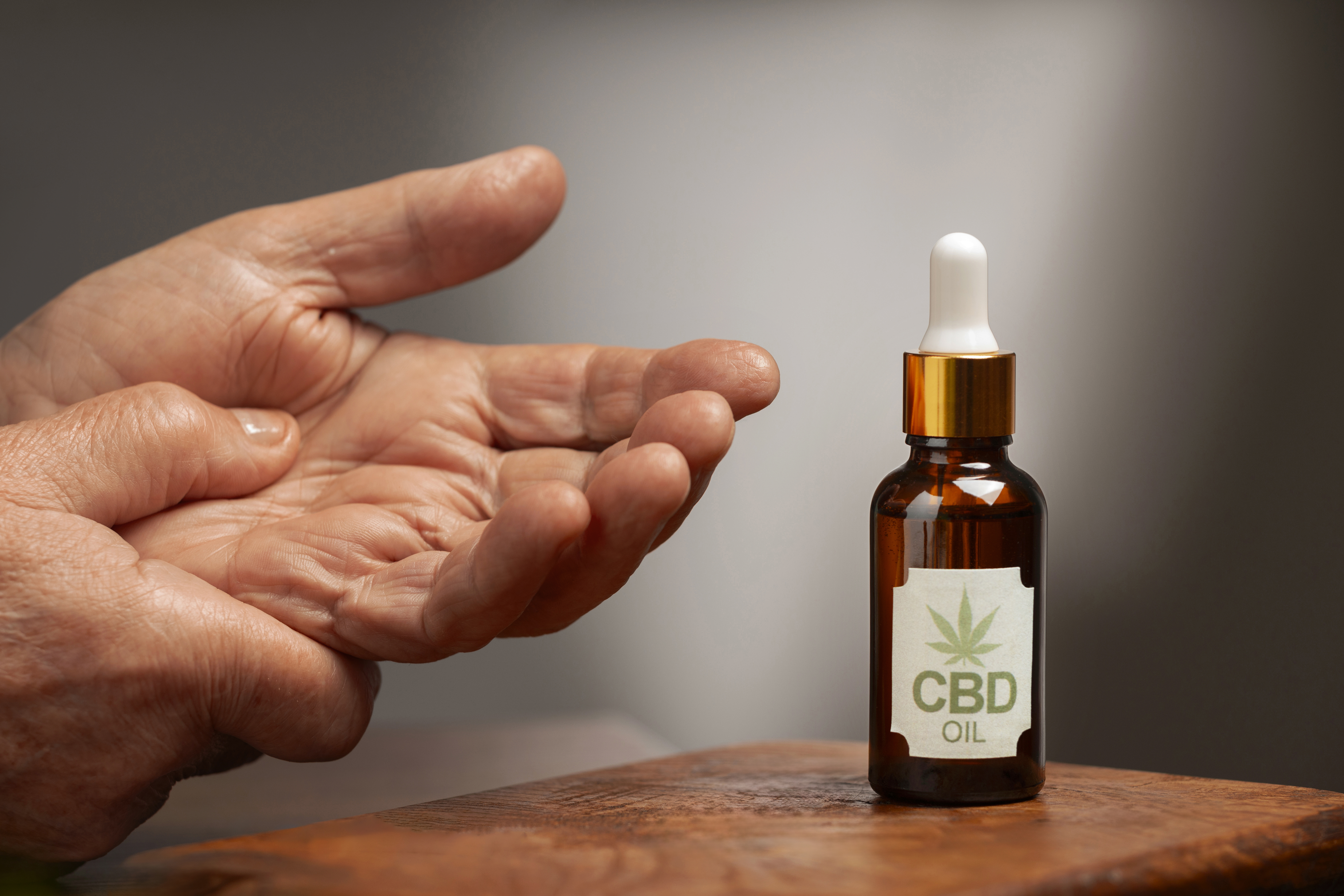


CBD products can be confusing because labels often show several different numbers. A bottle may list 500 mg, 1,000 mg, or even 2,000 mg of CBD. Another product may show a percentage, such as 5%, 10%, or 20% CBD. Some labels also use measurements such as mg/mL, mg/g, or milligrams per serving. These numbers all provide useful information, but they do not always mean the same thing. Learning how to calculate CBD content can make it much easier to understand how strong a product is and how different products compare.
CBD stands for cannabidiol. It is one of the many natural compounds called cannabinoids that are found in cannabis and hemp plants. CBD products can come in many forms, including oils, tinctures, gummies, capsules, creams, balms, and hemp flower. Because these products are made and measured in different ways, there is no single number that tells the whole story about CBD strength. A person may need to look at the total CBD, the size of the product, and the amount of CBD in each serving.
CBD content usually refers to the total amount of CBD found in a product. This amount is often shown in milligrams, or mg. For example, a bottle of CBD oil may contain 1,000 mg of CBD in total. This means the entire bottle contains about 1,000 milligrams of CBD. However, that number alone does not tell you how concentrated the oil is.
Concentration describes how much CBD is found in a certain amount of product. For liquid CBD products, concentration is often shown as milligrams per milliliter, written as mg/mL. For example, a 30 mL bottle containing 1,000 mg of CBD has a different concentration from a 60 mL bottle containing the same 1,000 mg. The smaller bottle contains more CBD in each milliliter because the same total amount of CBD is mixed into less liquid.
This difference is important when discussing CBD strength and potency. The words “strength” and “potency” are often used to describe how concentrated a CBD product is. A product with a higher amount of CBD per milliliter, gram, capsule, gummy, or other unit is usually considered more concentrated. This does not always mean the product contains more CBD in total. A larger package may contain more total CBD while still having a lower concentration.
For example, imagine one bottle contains 600 mg of CBD in 30 mL of oil. Another bottle contains 1,200 mg of CBD in 60 mL. The second bottle has twice as much CBD in total, but both products have the same concentration. Each contains 20 mg of CBD per milliliter. Looking only at the large number on the front of the bottle could make the second product appear stronger, even though the concentration is the same.
CBD labels can also display content as a percentage. This is common with hemp flower, extracts, creams, and some oils. A percentage tells you how much of the product is CBD based on a specific measurement method. For example, CBD flower may be described as containing 10% CBD by weight. Laboratory reports may also show CBD levels in milligrams per gram, or mg/g. Understanding how these units relate to each other makes it easier to read product information and compare results.
Serving size is another important part of CBD content calculations. A bottle may contain a large total amount of CBD, but a person normally uses only part of the product at one time. CBD oils may list the amount in one milliliter. Gummies may show the amount of CBD in each piece. Capsules may list CBD per capsule. Topical products may display the total CBD in the container, although calculating an exact amount used on the skin can be more difficult because the amount applied may vary.
Knowing how to calculate CBD content can also help when comparing products. Two bottles may look similar but contain very different amounts of CBD per milliliter. Two packages of gummies may have the same total CBD but contain a different number of gummies. One product may offer 10 mg per piece, while another provides 25 mg per piece. Looking at concentration and serving size gives a clearer picture than looking only at the total number printed on the package.
A few basic formulas can make these calculations easier. For liquid products, total CBD in milligrams can be divided by the total volume in milliliters to find the amount of CBD per milliliter. For gummies and capsules, total CBD can be divided by the number of pieces to estimate the amount in each unit. CBD percentages can also be converted into other measurements when the correct units are known.
It is important to keep the units clear during every calculation. Milligrams, milliliters, grams, percentages, and serving sizes measure different things. Mixing these units without converting them correctly can lead to incorrect results. It is also helpful to check a product’s Certificate of Analysis, or COA, when one is available. A COA is a laboratory report that can show the measured levels of CBD and other cannabinoids in a product.
This guide explains how CBD content, strength, and potency are measured and calculated. It covers common units such as milligrams, mg/mL, mg/g, percentages, and milligrams per serving. It also explains how to calculate CBD in oils, tinctures, gummies, capsules, and hemp flower. Later sections will show simple formulas and examples that can be used to understand product labels and laboratory results.
The main goal is to make CBD calculations easier to understand. Once the basic measurements are clear, it becomes much simpler to compare products, check concentration, and understand how much CBD is contained in a bottle, serving, capsule, gummy, or other form. CBD content calculations describe the amount and concentration of CBD in a product. They do not, by themselves, determine how much CBD a person should use.
What Does CBD Content Mean?
CBD content refers to the amount of cannabidiol, or CBD, found in a product. This amount can be shown in several ways depending on the product type. Some labels show the total amount of CBD in milligrams. Others show CBD as a concentration, a percentage, or an amount per serving.
Understanding these numbers is important because two CBD products can look similar while having very different strengths. A large bottle may contain more total CBD, but the liquid inside may be less concentrated. A smaller bottle may contain less CBD overall but have more CBD in each milliliter.
This is why it helps to understand the difference between total CBD, CBD concentration, and CBD potency. These terms are related, but they do not always mean the same thing.
Total CBD vs. CBD Concentration
Total CBD refers to the full amount of CBD in the entire product. It is usually shown in milligrams, or mg.
For example, a bottle may say that it contains 1,000 mg of CBD. This means the whole bottle contains about 1,000 milligrams of CBD. It does not tell you how much CBD is found in each milliliter of liquid unless you also know the bottle size.
CBD concentration tells you how much CBD is present in a certain amount of the product. For liquid CBD products, concentration is often shown as milligrams per milliliter, or mg/mL.
Consider two CBD oils.
One bottle contains 1,000 mg of CBD in 30 mL of oil. Another bottle contains 1,000 mg of CBD in 60 mL of oil.
Both products contain the same total amount of CBD. However, they do not have the same concentration.
The 30 mL bottle has about 33.3 mg of CBD per mL. The 60 mL bottle has about 16.7 mg of CBD per mL. This means the first product is about twice as concentrated as the second.
This example shows why total milligrams should not be used alone when comparing CBD strength. Bottle size also matters.
Common CBD Measurement Units
CBD can be measured in several different units. The unit used often depends on whether the product is a liquid, solid, capsule, edible, or plant material.
Milligrams, written as mg, are commonly used to show the total amount of CBD in a product. A bottle labeled “1,500 mg CBD,” for example, usually means that the entire bottle contains about 1,500 milligrams of CBD.
Milligrams per milliliter, or mg/mL, are often used for CBD oils, tinctures, and other liquid products. This measurement tells you how many milligrams of CBD are found in one milliliter of liquid.
For example, an oil with a concentration of 25 mg/mL contains 25 milligrams of CBD in every milliliter.
Milligrams per gram, or mg/g, may be used for solid products, plant material, creams, or laboratory test results. It shows how many milligrams of CBD are found in one gram of material.
CBD may also be shown as a percentage. A percentage describes how much of the product is made up of CBD based on the type of measurement being used. For example, a laboratory report may show CBD as 10%, while another may show the same result as 100 mg/g.
Some products list CBD by serving or unit. Gummies may show 25 mg of CBD per gummy. Capsules may show 20 mg per capsule. This makes it easier to see how much CBD is contained in one piece.
Understanding the unit is essential before comparing products or making calculations.
What CBD Potency Means
CBD potency usually refers to how concentrated the CBD is within a product.
A product with a high amount of CBD in a small volume is generally considered more concentrated than a product with the same amount of CBD in a larger volume.
For example, a 30 mL bottle containing 1,500 mg of CBD has a concentration of 50 mg/mL. A 60 mL bottle containing 1,500 mg has a concentration of 25 mg/mL.
The first bottle has the same total CBD content as the second bottle, but it has twice the concentration.
This distinction is important when people use words such as “strong,” “high strength,” or “high potency.” These terms can be confusing if the label only shows the total CBD amount.
A 2,000 mg bottle may sound stronger than a 1,000 mg bottle. However, that is not always true. If the 2,000 mg product comes in a much larger bottle, its concentration may be equal to or even lower than the smaller product.
The best way to compare liquid CBD products is usually to look at how many milligrams of CBD are present in each milliliter.
Why Bottle Size Matters
Bottle size changes the concentration even when the total CBD amount stays the same.
Imagine a 10 mL bottle containing 1,000 mg of CBD. This product would contain 100 mg of CBD per mL.
Now compare it with a 50 mL bottle that also contains 1,000 mg. That product would contain only 20 mg of CBD per mL.
The total CBD content is identical, but the smaller bottle is five times more concentrated.
This is one reason why shoppers should not compare CBD products by the large number printed on the front of the package alone. That number often represents the total CBD in the entire container.
To understand actual strength, both the total CBD amount and the size of the product need to be considered.
The same principle applies to products other than CBD oil. A package of 30 gummies containing 900 mg of CBD has 30 mg in each gummy if the CBD is evenly distributed. A package containing the same 900 mg divided among 60 gummies would have 15 mg per gummy.
In both cases, total CBD remains the same, but the CBD amount per unit changes.
Understanding CBD Content Makes Comparisons Easier
Once the different measurements are understood, CBD labels become easier to compare.
Total milligrams tell you how much CBD is in the entire product. Concentration tells you how much CBD is found in a certain amount of that product. Percentage shows CBD as a proportion, while mg per serving tells you how much CBD is present in one measured portion.
Each type of measurement provides different information.
For liquid products, mg/mL is often one of the most useful numbers because it shows how concentrated the liquid is. For gummies and capsules, mg per piece may be more useful. For hemp material or laboratory results, percentages and mg/g may be more common.
The key is to make sure you are comparing the same type of measurement. Comparing total milligrams in one product with mg/mL in another can lead to incorrect conclusions.
CBD content can be expressed in several ways, including total milligrams, mg/mL, mg/g, percentages, and milligrams per serving. Total CBD tells you how much CBD is in the entire product, while concentration tells you how much CBD is present in a specific amount.
CBD potency is closely related to concentration. A product with more CBD in a smaller volume is usually more concentrated than one with the same total CBD spread across a larger amount.
When comparing CBD products, it is important to look beyond the total milligram number. Bottle size, serving size, and measurement units all affect how strong a product actually is. Understanding these basic terms creates a solid foundation for calculating CBD content more accurately in the next sections.
How Do You Calculate CBD Content?
Calculating CBD content is easier when you know which numbers to look for on the product label. In most cases, the two most important numbers are the total amount of CBD in milligrams and the total volume of the product in milliliters. These numbers can be used to find the CBD concentration, which tells you how much CBD is present in each milliliter of liquid.
CBD labels can sometimes be confusing because one product may list the total CBD in the entire bottle, while another may list the amount per serving. Some products may also show CBD as a percentage. Because of this, it is important to understand what each number means before doing the calculation.
For liquid CBD products, such as CBD oils and tinctures, the most useful measurement is often milligrams per milliliter, written as mg/mL. This measurement makes it easier to compare products of different bottle sizes and strengths.
The Basic CBD Concentration Formula
The basic formula for calculating CBD concentration is simple:
CBD concentration = total CBD in milligrams ÷ total product volume in milliliters
The answer is expressed in milligrams per milliliter, or mg/mL.
For example, imagine a CBD oil bottle contains 900 mg of CBD and has a total volume of 30 mL. To find the concentration, divide 900 by 30.
900 mg ÷ 30 mL = 30 mg/mL
This means that every 1 mL of the oil contains about 30 mg of CBD.
The total CBD amount tells you how much CBD is in the entire container. The concentration tells you how much CBD is present in a certain amount of the liquid. These are different measurements, and both can be useful.
A larger bottle can contain more total CBD without being more concentrated. For example, a 60 mL bottle containing 1,200 mg of CBD has a concentration of 20 mg/mL. A 30 mL bottle containing 900 mg has a concentration of 30 mg/mL. The first bottle contains more CBD overall, but the second product is more concentrated.
This is why total milligrams alone should not be used to compare liquid CBD products.
Understanding Each Part of the Calculation
To calculate CBD content correctly, first find the total CBD amount. This is usually shown on the front or back of the label. It may appear as 500 mg CBD, 1,000 mg CBD, 1,500 mg CBD, or another amount.
Next, find the total liquid volume. This is usually shown in milliliters. Common bottle sizes include 10 mL, 30 mL, and 60 mL.
Once both numbers are known, divide the total CBD in milligrams by the total number of milliliters.
For example, a 1,500 mg CBD oil in a 30 mL bottle would be calculated like this:
1,500 ÷ 30 = 50 mg/mL
This means each milliliter contains about 50 mg of CBD.
If the bottle were 60 mL instead, the calculation would be:
1,500 ÷ 60 = 25 mg/mL
Both bottles contain the same total amount of CBD, but the smaller bottle has twice the concentration.
Understanding this difference is useful when comparing product labels.
Example Calculation
A common example is a bottle containing 1,000 mg of CBD in 30 mL of oil.
The calculation is:
1,000 mg ÷ 30 mL = 33.33 mg/mL
The product therefore contains about 33.3 mg of CBD per milliliter.
If the product instructions describe one serving as 1 mL, then one serving would contain about 33.3 mg of CBD.
If the serving is only 0.5 mL, the amount would be half of that concentration.
33.3 mg/mL × 0.5 mL = about 16.7 mg CBD
This shows why knowing the concentration is helpful. Once the mg/mL amount is known, you can calculate the CBD in many different measured volumes.
Calculating the Amount in a Measured Serving
After finding the CBD concentration, the next step is to calculate how much CBD is present in a specific serving.
The formula is:
CBD amount = CBD concentration in mg/mL × serving volume in mL
For example, suppose a CBD oil contains 40 mg/mL.
If the serving size is 1 mL:
40 mg/mL × 1 mL = 40 mg CBD
If the serving size is 0.5 mL:
40 mg/mL × 0.5 mL = 20 mg CBD
If the measured serving is 0.25 mL:
40 mg/mL × 0.25 mL = 10 mg CBD
The same formula can be used with any measured liquid volume.
This calculation is more reliable when the dropper or measuring tool has clear milliliter markings. A dropper may have marks such as 0.25 mL, 0.5 mL, 0.75 mL, and 1 mL. These markings can make the calculation easier.
It is important to check the actual serving information on the product rather than assuming that every dropper contains the same volume.
Why Units Must Stay Consistent
One of the most common causes of calculation errors is mixing different units.
Milligrams, grams, and milliliters measure different things. Milligrams and grams measure mass, while milliliters measure liquid volume.
One gram equals 1,000 milligrams. This means that 0.5 grams equals 500 milligrams.
If a calculation uses grams in one part and milligrams in another, the units must be converted before doing the final calculation.
For example, suppose a product contains 1 gram of CBD in 50 mL of oil. First, convert 1 gram to milligrams.
1 gram = 1,000 mg
Then calculate the concentration.
1,000 mg ÷ 50 mL = 20 mg/mL
Trying to divide 1 gram directly by 50 mL without converting the unit can make the result harder to understand and easier to misread.
The same rule applies when working with product labels and laboratory reports. Always check whether the CBD amount is shown as mg, mg/mL, mg/g, or a percentage.
A value of 50 mg is not the same as 50 mg/mL. The first describes an amount. The second describes a concentration.
Calculating CBD content starts with two basic numbers: the total amount of CBD and the total volume of the product. For liquid CBD products, divide the total CBD in milligrams by the bottle volume in milliliters to find the concentration in mg/mL.
Once the concentration is known, multiply it by the measured serving volume to find the amount of CBD in that serving. Keeping all units consistent is also important. Convert grams to milligrams when needed, and do not confuse total milligrams with milligrams per milliliter.
How Do You Calculate CBD Percentage?
CBD percentage is one way to describe how much cannabidiol is present in a product. It can help readers compare strength, especially when looking at hemp flower, extracts, oils, or laboratory test results. However, CBD percentage can be confusing because products may also show CBD in milligrams, milligrams per gram, or milligrams per milliliter.
To calculate CBD percentage correctly, it is important to know what the percentage is based on. Some percentages are based on product weight, while liquid products may use other methods. For this reason, a percentage should not be converted into milligrams without first checking the unit used on the label or Certificate of Analysis, also called a COA.
Understanding CBD percentage becomes easier once the basic conversions are clear. In many weight-based lab reports, 1% is equal to 10 milligrams per gram. This relationship makes it possible to convert between CBD percentage and mg/g with a simple calculation.
What a CBD Percentage Represents
A CBD percentage shows the amount of CBD in relation to the total amount of a product. For solid materials such as dried hemp flower, the percentage is often based on weight.
For example, suppose a hemp sample contains 10% CBD by weight. This means that CBD makes up about 10% of the total sample weight. In a 1-gram sample, 10% equals 0.1 gram of CBD.
Since 1 gram equals 1,000 milligrams, 0.1 gram equals 100 milligrams. Therefore, a hemp sample with 10% CBD contains about 100 mg of CBD per gram.
A product with 15% CBD would contain about 150 mg of CBD per gram. A product with 20% CBD would contain about 200 mg per gram.
This relationship is useful because laboratory reports often show cannabinoid results in either percentages or mg/g. Knowing how the two units relate makes it easier to compare results.
The percentage does not always tell you the total amount of CBD in the entire package. You also need to know the total product weight or volume. A 10% CBD product weighing 1 gram contains less total CBD than a 10% product weighing 5 grams, even though both have the same percentage.
Converting mg/g to CBD Percentage
When a CBD lab result is listed in milligrams per gram, or mg/g, converting it to a percentage is usually simple.
The basic formula is:
CBD percentage = mg/g ÷ 10
For example, if a laboratory report shows 100 mg/g of CBD, divide 100 by 10.
100 ÷ 10 = 10%
This means the sample contains about 10% CBD by weight.
If the result is 75 mg/g, the calculation would be:
75 ÷ 10 = 7.5%
The product would contain about 7.5% CBD.
Another example would be 185 mg/g.
185 ÷ 10 = 18.5%
In this case, the sample contains about 18.5% CBD by weight.
This conversion works because 1 gram contains 1,000 milligrams. One percent of 1,000 milligrams is 10 milligrams. Therefore, every 10 mg/g equals 1%.
This method is especially useful when reading hemp or cannabinoid lab reports. A COA may list CBD in mg/g, while the product description may use a percentage. Converting the values allows you to compare the two more easily.
However, it is important to check whether the laboratory result refers to CBD alone or to total CBD. A report may list CBD and CBDA separately, so the value shown for CBD may not represent all potential CBD in the sample.
Converting CBD Percentage to mg/g
The calculation can also be done in reverse. If a product lists CBD as a percentage and you want to know the amount in milligrams per gram, multiply the percentage by 10.
The formula is:
CBD mg/g = CBD percentage × 10
For example, a product with 5% CBD would contain:
5 × 10 = 50 mg/g
A product with 12% CBD would contain:
12 × 10 = 120 mg/g
A product with 18.5% CBD would contain:
18.5 × 10 = 185 mg/g
This conversion can be useful when comparing hemp products that use different label formats. One product may list CBD as 14%, while another may show 140 mg/g. These values represent the same concentration when both are based on weight.
You can also use the percentage to estimate the total CBD in a known amount of material.
Suppose you have 2 grams of hemp that contains 10% CBD. A 10% concentration equals 100 mg/g. Multiply that amount by the total weight:
100 mg/g × 2 g = 200 mg CBD
This means the 2-gram sample contains about 200 mg of CBD before considering factors such as processing loss or laboratory measurement limits.
The same method can be used with other product weights as long as the CBD percentage is based on weight.
Percentage Calculations for Liquid CBD Products
CBD percentage calculations can become more complicated with oils and other liquids. This is because liquids are usually measured by volume, such as milliliters, while percentages may be based on weight.
A CBD oil label may show total CBD in milligrams and bottle size in milliliters. In this situation, mg/mL is usually the clearest way to describe concentration.
For example, imagine a 30 mL bottle containing 900 mg of CBD. Divide the total CBD by the bottle volume:
900 mg ÷ 30 mL = 30 mg/mL
The oil contains 30 mg of CBD per milliliter.
It may be tempting to turn 30 mg/mL directly into a percentage. However, this can cause errors if the product density is not considered.
Percentage by weight compares CBD weight with total product weight. Milligrams per milliliter compares CBD weight with liquid volume. Weight and volume are not always equal because different oils have different densities.
For example, 1 mL of a carrier oil may not weigh exactly 1 gram. Because of this, treating 10 mg/mL as exactly 1% by weight may only provide an estimate.
If a manufacturer or laboratory provides an official CBD percentage, that value should be used instead of making assumptions from bottle volume.
For everyday product comparisons, mg/mL is often more practical for CBD oils because it shows exactly how many milligrams of CBD are present in each milliliter of liquid.
Why the Calculation Basis Matters
Before calculating a CBD percentage, always check what the measurement refers to. A percentage based on weight is different from a concentration based on volume.
For hemp flower and many solid materials, CBD is commonly reported as a percentage by weight or in mg/g. These values can be converted directly using the 10-to-1 relationship.
For CBD oils, tinctures, and other liquids, concentration is often reported in mg/mL. In these cases, converting the number into a percentage may require information about the product’s weight or density.
The same issue applies to creams, balms, and other topical products. Some labels may show total CBD in the container, while others may give CBD concentration by weight. You need to know the total product amount and the measurement method before calculating an accurate percentage.
Reading the label carefully helps prevent incorrect comparisons. Two CBD products may use different units even when their actual strengths are similar.
Calculating CBD percentage is straightforward when the product is measured by weight. To convert mg/g into a CBD percentage, divide the mg/g value by 10. For example, 150 mg/g equals 15% CBD. To convert a percentage back into mg/g, multiply the percentage by 10. A product containing 20% CBD would therefore contain about 200 mg/g.
Liquid products require more care because they are usually measured in milliliters instead of grams. For CBD oils, mg/mL is often a more useful and accurate way to describe concentration. A direct percentage conversion may require the product’s density and the exact method used by the manufacturer or laboratory.
How Do You Calculate CBD Strength in Oil or Tinctures?
CBD oils and tinctures are often labeled with a total amount of CBD, such as 500 mg, 1,000 mg, or 2,000 mg. However, that number alone does not tell you how strong the liquid is. To understand CBD strength, you also need to know the total volume of the bottle.
CBD strength is usually measured in milligrams per milliliter, written as mg/mL. This tells you how much CBD is present in each milliliter of liquid. Once you know the mg/mL value, it becomes easier to compare products and calculate how much CBD is present in a measured serving.
Finding CBD Strength From the Bottle
The first step is to find two numbers on the product label. You need the total amount of CBD in milligrams and the total bottle volume in milliliters.
For example, a bottle may say that it contains 1,000 mg of CBD in 30 mL of liquid. To calculate the strength, divide the total CBD amount by the bottle volume.
The formula is:
CBD strength in mg/mL = total CBD in mg ÷ total volume in mL
Using the example above:
1,000 mg ÷ 30 mL = about 33.3 mg/mL
This means that each 1 mL of the oil contains about 33.3 mg of CBD.
If the serving size is 0.5 mL, you can multiply the strength by the serving volume.
33.3 mg/mL × 0.5 mL = about 16.7 mg CBD
The same method can be used with most bottled CBD oils, as long as the label clearly states the total CBD amount and the total liquid volume.
It is important to check whether the label shows total CBD or total cannabinoids. These are not always the same. A full-spectrum or broad-spectrum product may contain other cannabinoids in addition to CBD. If you want to calculate CBD strength, use the number that refers specifically to CBD.
Example Strengths
Looking at several examples can make CBD concentration easier to understand.
A 300 mg CBD bottle that contains 30 mL of oil has a strength of 10 mg/mL because 300 divided by 30 equals 10.
A 600 mg CBD bottle with the same 30 mL volume has a strength of 20 mg/mL.
A 1,200 mg CBD bottle in 30 mL contains 40 mg/mL.
A 2,400 mg CBD bottle in 30 mL contains 80 mg/mL.
These examples show why the total number of milligrams matters. When the bottle size stays the same, a larger amount of CBD produces a higher concentration.
However, bottle size can also change the result. For example, 1,200 mg of CBD in a 60 mL bottle would contain only 20 mg/mL. The bottle still contains 1,200 mg of CBD in total, but the CBD is spread through twice as much liquid.
This is why it is better to compare CBD products by mg/mL rather than by total milligrams alone.
Comparing Bottles of Different Sizes
One of the most common mistakes when comparing CBD oils is assuming that the product with the larger CBD number is always stronger.
Consider two bottles that both contain 1,000 mg of CBD.
The first bottle contains 10 mL of liquid. Its strength is:
1,000 mg ÷ 10 mL = 100 mg/mL
The second bottle contains 30 mL of liquid. Its strength is:
1,000 mg ÷ 30 mL = about 33.3 mg/mL
Both bottles contain the same total amount of CBD, but the first bottle is about three times more concentrated.
This difference can affect how much CBD is present in each measured serving. A 1 mL serving from the first bottle contains 100 mg of CBD. The same 1 mL serving from the second bottle contains about 33.3 mg.
A larger bottle can also contain more total CBD while still having the same strength as a smaller bottle. For example, a 30 mL bottle containing 1,000 mg CBD has a strength of about 33.3 mg/mL. A 60 mL bottle containing 2,000 mg CBD also has a strength of about 33.3 mg/mL.
The second bottle contains twice as much CBD overall, but the concentration is the same.
This shows why both total CBD and bottle size must be considered.
Understanding mg/mL
Milligrams per milliliter is one of the clearest ways to describe the strength of a CBD oil or tincture.
The milligram value tells you the amount of CBD. The milliliter value tells you the amount of liquid. When these measurements are combined as mg/mL, they show how much CBD is present in each milliliter.
For example, a CBD oil labeled 25 mg/mL contains 25 mg of CBD in every 1 mL of liquid. A product labeled 50 mg/mL contains twice as much CBD in the same amount of liquid.
This measurement is useful because bottle sizes can vary. Some CBD oils come in 10 mL bottles, while others may contain 30 mL, 60 mL, or more. Looking at mg/mL allows you to compare the concentration even when the containers are different sizes.
The mg/mL value can also help when working with a marked dropper. If the oil contains 40 mg/mL and the measured amount is 0.5 mL, the liquid contains 20 mg of CBD. If the measured amount is 0.25 mL, it contains 10 mg.
These calculations are more reliable when you use volume markings rather than estimating the amount based only on drops. Individual drops can vary in size depending on the dropper, liquid thickness, and how the product is handled.
Calculating CBD strength in oils and tinctures requires two basic pieces of information: the total CBD amount in milligrams and the total liquid volume in milliliters. Divide the total CBD by the bottle volume to find the concentration in mg/mL.
For example, 1,000 mg of CBD in a 30 mL bottle equals about 33.3 mg/mL. A bottle with the same 1,000 mg in only 10 mL has a much stronger concentration of 100 mg/mL.
Total milligrams tell you how much CBD is present in the entire bottle, while mg/mL tells you how concentrated the product is. For this reason, mg/mL is often the most useful measurement when comparing CBD oils and tinctures of different sizes. Understanding this simple calculation can make CBD labels easier to read and help explain the difference between total CBD content and actual product strength.
How Do You Calculate CBD per Serving, Dropper, or Drop?
Knowing how much CBD is in each serving can make a product label much easier to understand. A bottle may show the total amount of CBD in milligrams, but that number does not always tell you how much CBD is in one use. To find that amount, you need to know the product’s CBD concentration and the size of the serving.
Liquid CBD products are often measured in milliliters, or mL. The label may also state how many milligrams of CBD are in the full bottle. From these two values, you can calculate how many milligrams are present in each milliliter. Once you know the mg/mL value, you can estimate how much CBD is in a measured serving, dropper, or individual drop.
The most reliable calculations use measured liquid volume. Drops and droppers can vary in size, so they should not always be treated as exact measurements unless the packaging gives clear volume information.
CBD per Serving
The first step is to calculate the CBD concentration of the liquid. You can do this by dividing the total amount of CBD by the total volume of the bottle.
For example, imagine a bottle contains 1,500 mg of CBD in 30 mL of liquid. Divide 1,500 by 30. The result is 50 mg/mL.
This means every full milliliter contains about 50 mg of CBD.
You can then calculate the amount of CBD in a smaller serving. The basic formula is:
CBD per serving = CBD concentration in mg/mL × serving size in mL
If the serving size is 0.5 mL, multiply 50 mg/mL by 0.5 mL. The serving contains about 25 mg of CBD.
If the serving size is 0.25 mL, multiply 50 by 0.25. The result is about 12.5 mg of CBD.
This method works well because it uses the actual liquid volume. It also allows you to compare different products more accurately. For example, two bottles may both contain 1,500 mg of CBD, but one bottle may contain 30 mL while another contains 60 mL. The 30 mL bottle has a higher CBD concentration because the same total amount of CBD is mixed into less liquid.
CBD per Dropper
Many CBD oils come with a glass dropper. People often assume that one full dropper equals 1 mL, but this is not always correct.
Some droppers hold 1 mL when filled to a marked line. Others may hold less or more. The amount can also change depending on how full the dropper is. For this reason, the best method is to check whether the dropper has measurement marks.
If the dropper shows a 1 mL line, you can use the product’s mg/mL concentration to calculate the CBD amount.
For example, if the oil contains 40 mg/mL of CBD, a measured 1 mL serving contains 40 mg of CBD. A 0.5 mL serving contains about 20 mg, and a 0.25 mL serving contains about 10 mg.
The same idea works for any concentration. If a product contains 25 mg/mL, a measured 0.5 mL portion contains about 12.5 mg of CBD.
It is important to use the markings on the dropper rather than estimating by sight. A dropper that looks full may not contain exactly 1 mL. Air bubbles, the shape of the dropper, and the way the liquid is drawn up can all affect the amount.
The product label may also list CBD per serving. If it does, compare that number with the serving size shown on the package. This can help confirm your calculation.
CBD per Drop
Calculating CBD per individual drop is possible, but it is less exact than using milliliters.
To estimate CBD per drop, you need to know how many drops make up 1 mL of that specific liquid. Once you know this number, divide the CBD concentration in mg/mL by the measured number of drops per mL.
For example, suppose a CBD oil contains 30 mg/mL and you determine that 1 mL produces about 20 drops.
The calculation would be:
30 mg ÷ 20 drops = about 1.5 mg of CBD per drop
If the oil contains 50 mg/mL and the same dropper produces about 20 drops per mL, each drop would contain about 2.5 mg of CBD.
However, the number of drops in 1 mL is not always the same. This is why a fixed estimate such as “20 drops equals 1 mL” should not be treated as a universal rule.
Why Drop Calculations Are Estimates
Drops can change in size for several reasons. The thickness of the oil can affect how quickly it falls from the dropper. A thicker oil may form larger drops, while a thinner liquid may form smaller ones.
The dropper design can also change the result. The opening size, shape, and material may affect the amount of liquid in each drop. Even the angle at which the dropper is held can make a difference.
Because of these differences, two people using the same bottle may not produce exactly the same number of drops in 1 mL.
For better accuracy, it is usually easier to measure the liquid in milliliters. If the dropper has clear markings for 0.25 mL, 0.5 mL, 0.75 mL, and 1 mL, those markings can give a more consistent measurement than counting individual drops.
If a person still wants to calculate CBD per drop, the best approach is to measure how many drops the actual product produces in 1 mL. This gives a product-specific estimate instead of relying on a general number found online.
Calculating CBD per serving starts with finding the product’s concentration in mg/mL. Divide the total CBD in milligrams by the total bottle volume in milliliters. Once you know the concentration, multiply it by the measured serving size to find the amount of CBD in that serving.
A marked dropper can make this process easier because it shows the actual liquid volume. A 1 mL, 0.5 mL, or 0.25 mL marking gives a clearer measurement than simply calling the dropper “full.”
CBD per drop can also be estimated, but this method is less exact. Drop size may change depending on the liquid and the dropper. For this reason, milliliter measurements are generally more useful when calculating CBD content. The key is to use the product’s stated CBD concentration and a measured volume rather than assuming that every drop or dropper contains the same amount.
How Do You Calculate CBD in Gummies, Capsules, and Other Edibles?
CBD gummies, capsules, softgels, and other edible products are often easier to measure than CBD oils because each piece usually contains a set amount of CBD. Even so, product labels can still be confusing. Some labels show the total CBD in the whole package, while others show the CBD amount in one serving. A serving may also include more than one gummy or capsule.
To calculate CBD content correctly, you need to look at three details. These are the total amount of CBD in the package, the number of pieces in the package, and the serving size listed on the label. Once you have these numbers, you can work out how much CBD is in each piece and how much CBD is in one serving.
Calculating CBD per Gummy
To calculate CBD per gummy, divide the total amount of CBD in the package by the total number of gummies.
The basic formula is:
CBD per gummy = Total CBD in mg ÷ Number of gummies
For example, imagine a package contains 600 mg of CBD and 30 gummies. Divide 600 by 30.
600 ÷ 30 = 20 mg
This means each gummy contains 20 mg of CBD.
Another package may contain 1,500 mg of CBD and 60 gummies. In this case, the calculation would be:
1,500 ÷ 60 = 25 mg
Each gummy would contain 25 mg of CBD.
This calculation is useful because the large number on the front of a package often refers to the entire container. A label that says “1,500 mg CBD” does not always mean that one gummy contains 1,500 mg. In most cases, that number describes the combined CBD content of every gummy in the package.
Checking the number of pieces helps you find the actual CBD content of each gummy.
Calculating CBD per Capsule
CBD capsules and softgels can be calculated in the same way as gummies. Divide the total CBD content by the number of capsules in the container.
For example, suppose a bottle contains 900 mg of CBD and 30 capsules.
900 ÷ 30 = 30 mg
Each capsule contains 30 mg of CBD.
If a bottle contains 1,200 mg of CBD and 60 capsules, the calculation would be:
1,200 ÷ 60 = 20 mg
Each capsule contains 20 mg of CBD.
Some capsule labels already state the amount of CBD per capsule. If this information is clearly listed, there may be no need to calculate it yourself. However, checking the total amount against the number of capsules can still help confirm that you are reading the label correctly.
For example, if a label says there are 30 capsules with 25 mg of CBD in each capsule, the total CBD content should be about 750 mg.
25 × 30 = 750 mg
This type of calculation can help you compare the per-capsule amount with the total package amount.
Products Containing Multiple Servings
One of the most common sources of confusion is the difference between CBD per package and CBD per serving.
A package may contain many servings. The number shown on the front may describe the total CBD in the full container, while the nutrition or supplement panel may show the amount in one serving.
For example, imagine a container has 40 gummies and contains 800 mg of CBD in total. Each gummy contains:
800 ÷ 40 = 20 mg
If the serving size is two gummies, then one serving contains:
20 × 2 = 40 mg
This means the product contains 20 mg per gummy but 40 mg per serving.
These numbers are both correct. They simply describe different amounts.
The same rule applies to capsules, chocolates, chews, and other CBD edibles. Always check whether the stated amount refers to one piece, one serving, or the whole package.
This is especially important when comparing products. One brand may list 25 mg per gummy, while another lists 50 mg per serving. If the second product uses a serving size of two gummies, each gummy may also contain 25 mg.
Without checking the serving size, the second product may appear stronger even when the amount per piece is the same.
Checking the Serving Size on the Label
The serving size is one of the most important parts of a CBD edible label. It tells you how many pieces are included in one listed serving.
A serving might be one gummy, two gummies, one capsule, or several small pieces. The package may also show the number of servings per container.
For example, a bag may contain 30 gummies but list 15 servings. This usually means that one serving contains two gummies.
If the package contains 600 mg of CBD in total, each gummy contains:
600 ÷ 30 = 20 mg
Since one serving contains two gummies, the CBD amount per serving is:
20 × 2 = 40 mg
The label may therefore state 40 mg of CBD per serving even though each individual gummy contains only 20 mg.
Reading both the serving size and the number of pieces helps prevent this kind of confusion.
It is also useful to check whether other cannabinoids are included. Some products contain CBD along with THC, CBG, CBN, or other compounds. The total cannabinoid amount should not automatically be treated as the CBD amount. Look for the specific line that lists CBD.
Comparing Edible CBD Products
When comparing gummies, capsules, and similar products, the most useful measurement is often the amount of CBD per piece.
Total package CBD can be helpful, but it does not always tell you which product has the higher concentration per unit.
For example, Product A may contain 1,000 mg of CBD in 50 gummies. Product B may contain 900 mg in 30 gummies.
Product A contains:
1,000 ÷ 50 = 20 mg per gummy
Product B contains:
900 ÷ 30 = 30 mg per gummy
Product A has more total CBD in the package, but Product B has more CBD in each gummy.
This is why it is important to compare the same type of measurement. Comparing total package amounts alone can give the wrong impression.
You can also compare the number of pieces, the CBD per piece, the total package content, and the serving size. These details give a clearer picture of the actual strength of the product.
For capsules, the same method applies. A bottle with 2,000 mg of CBD may not contain stronger capsules than a bottle with 1,000 mg if the first bottle has many more capsules.
Always divide the total CBD by the number of units when the per-piece amount is not clearly stated.
Calculating CBD in gummies, capsules, and other edibles is usually simple once you know what the numbers on the label mean. Start by finding the total CBD in the package and the total number of pieces. Divide the total milligrams of CBD by the number of gummies or capsules to find the amount in each piece.
Next, check the serving size. One serving may contain more than one gummy or capsule, so the CBD per serving can be higher than the CBD per piece. Do not confuse the total CBD in the package with the amount in one serving.
When comparing edible CBD products, use the same measurement for each product. CBD per gummy, capsule, or serving usually gives a clearer comparison than total package CBD alone. Careful label reading and simple division can help you understand the true CBD content of most edible products.
How Do You Calculate CBD Content in Hemp Flower or Plant Material?
Calculating CBD content in hemp flower is different from calculating CBD in a bottle of oil or a package of gummies. With flower and other plant material, CBD is usually listed as a percentage of the product’s dry weight. Lab reports may also show the amount as milligrams per gram, often written as mg/g.
These measurements help show how much CBD is present in a certain weight of hemp. They can also help readers compare one flower product with another. However, the numbers may include both CBD and CBDA, which are related but not the same compound.
To calculate CBD content correctly, it is important to understand percentage, dry weight, milligrams per gram, and the difference between CBD and CBDA.
Understanding CBD Measurements in Flower
Hemp flower is often tested after it has been dried. The lab then reports cannabinoids as a percentage of the flower’s dry weight.
For example, a hemp flower product may be listed as 12% CBD. This means that, in simple terms, CBD makes up about 12% of the tested dry material by weight.
Another lab may report the same type of result as 120 mg/g. These two measurements represent the same concentration.
One gram contains 1,000 milligrams. Because 1% of one gram equals 10 milligrams, the conversion between percentage and mg/g is simple.
A result of 1% CBD equals 10 mg/g. A result of 5% CBD equals 50 mg/g. A result of 12% CBD equals 120 mg/g. A result of 20% CBD equals 200 mg/g.
This means you can convert CBD percentage into mg/g by multiplying the percentage by 10.
For example:
12% CBD × 10 = 120 mg/g.
You can also convert mg/g back into a percentage by dividing by 10.
For example:
150 mg/g ÷ 10 = 15% CBD.
These conversions are useful when comparing products that use different measurement formats.
Calculating CBD From Flower Weight
Once you know the CBD concentration, you can estimate the total CBD in a measured amount of hemp flower.
A simple formula is:
CBD amount = flower weight × CBD concentration.
When using percentage, it helps to convert the percentage into decimal form first.
For example, suppose a hemp flower product weighs 1 gram and contains 10% CBD.
Ten percent written as a decimal is 0.10.
You can calculate the CBD weight like this:
1 gram × 0.10 = 0.10 gram of CBD.
Because 1 gram equals 1,000 milligrams, 0.10 gram equals 100 milligrams.
So, 1 gram of flower at 10% CBD contains about 100 mg of CBD based on the listed concentration.
The same calculation can be used for larger amounts.
For example, suppose you have 3 grams of hemp flower that contains 15% CBD.
First, convert 15% to 0.15.
Then multiply:
3 grams × 0.15 = 0.45 gram.
Convert that result to milligrams:
0.45 gram × 1,000 = 450 mg.
This means 3 grams of flower at 15% CBD contains about 450 mg of CBD based on the stated percentage.
You can also calculate the amount by using mg/g.
If the flower contains 150 mg/g and you have 3 grams, the formula is even simpler:
150 mg/g × 3 g = 450 mg CBD.
Both methods lead to the same result.
Example of Calculating Total CBD in Hemp Flower
Consider another example using a 3.5-gram package of hemp flower. This is a common package size.
Suppose the label shows 14% CBD.
First, convert the percentage into milligrams per gram:
14 × 10 = 140 mg/g.
Next, multiply by the total flower weight:
140 mg/g × 3.5 g = 490 mg.
Based on that concentration, the full 3.5-gram package contains about 490 mg of CBD.
However, this calculation assumes that the percentage refers directly to CBD. In many hemp products, the lab report may list both CBD and CBDA separately. This can change the way total potential CBD is calculated.
That is why it is important to check the cannabinoid profile before using the percentage alone.
CBD vs. CBDA
CBD and CBDA are closely related cannabinoids, but they are not identical.
CBDA stands for cannabidiolic acid. It is one of the main natural forms of cannabidiol found in raw or unheated hemp.
In fresh hemp plants, much of the cannabinoid content may exist as CBDA rather than CBD. Heat can change CBDA into CBD through a process called decarboxylation.
Decarboxylation happens when CBDA loses part of its chemical structure after exposure to heat. This can occur during processing, heating, or other forms of preparation.
Because of this, a lab report may show separate values for CBD and CBDA.
For example, a report might list:
CBD: 2%
CBDA: 12%
These figures should not simply be added together to calculate the exact potential CBD amount. CBDA loses part of its molecular weight when it converts into CBD.
This is why laboratories use a conversion factor.
Calculating Total Potential CBD
A common formula for estimating total potential CBD is:
Total CBD = CBD + (CBDA × 0.877)
The factor 0.877 adjusts for the change in molecular weight that occurs when CBDA converts into CBD.
Consider a hemp flower sample with the following lab values:
CBD = 2%
CBDA = 12%
First, multiply CBDA by 0.877:
12 × 0.877 = 10.524
Then add the existing CBD:
10.524 + 2 = 12.524%
The total potential CBD is therefore about 12.52%.
You can then use that percentage to estimate the total potential CBD in a given weight of flower.
For example, if you have 1 gram of this flower:
12.52% equals about 125.2 mg/g.
That means 1 gram contains about 125 mg of total potential CBD based on the laboratory calculation.
If you have 3.5 grams:
125.2 mg/g × 3.5 g = about 438.2 mg.
This gives an estimate of the total potential CBD in the full amount of flower.
It is important to note that “total potential CBD” does not mean every milligram will always be converted or recovered during use. It is a laboratory calculation based on cannabinoid content and chemical conversion.
Why Decarboxylation Affects CBD Calculations
Decarboxylation is important because raw hemp may contain much more CBDA than CBD.
If you look only at the CBD number on a lab report, you may underestimate the total amount of CBD that could be present after CBDA is converted.
For example, a flower sample might show only 1% CBD but 15% CBDA. Looking at the CBD value alone could make the product appear very low in cannabidiol-related content.
Using the total CBD formula gives a clearer picture:
15 × 0.877 = 13.155
Then add the existing 1% CBD:
13.155 + 1 = 14.155%
The total potential CBD is about 14.16%.
This is much higher than the 1% CBD figure shown by itself.
The calculation is especially useful when reading lab reports for raw hemp flower because the cannabinoid profile may contain several acidic and neutral forms.
CBD content in hemp flower is usually reported as a percentage of dry weight or as milligrams per gram. You can convert percentage to mg/g by multiplying by 10. You can convert mg/g back to percentage by dividing by 10.
To calculate the amount of CBD in a measured quantity of flower, multiply the CBD concentration by the flower’s weight. For example, 1 gram of flower at 10% CBD contains about 100 mg of CBD based on the listed concentration.
Hemp flower may also contain CBDA, which is the acidic form related to CBD. Because CBDA changes into CBD during decarboxylation, total potential CBD is commonly calculated with the formula CBD + (CBDA × 0.877).
How Do You Read CBD Potency on a Certificate of Analysis?
A Certificate of Analysis, often called a COA, is a laboratory report that shows what was found when a CBD product was tested. It can help readers check how much CBD is actually present in a product and compare that amount with what appears on the label. A COA may also list other cannabinoids, such as THC, CBG, CBC, or CBDA.
CBD lab reports can look difficult at first because they often contain several numbers, abbreviations, and units. However, the basic information becomes easier to understand once you know where to look. When checking CBD potency, the most important details are the product or batch information, the cannabinoid profile, the units used by the laboratory, and the measured amount of CBD.
What a Certificate of Analysis Is
A Certificate of Analysis is a report produced after a laboratory tests a product or sample. For CBD products, one part of the report usually focuses on cannabinoid potency. This section shows the amount of CBD and other cannabinoids found in the tested sample.
A COA should be connected to a specific product or production batch. This is important because two batches of the same CBD product may not contain exactly the same cannabinoid levels. Before looking at the potency numbers, check the product name, batch number, lot number, or sample identification information.
The information on the report should match the product being reviewed. If the bottle has a batch or lot number, compare it with the number listed on the COA. This helps confirm that the lab report belongs to that product rather than an older or different batch.
The testing date can also be useful. A recent report may provide a better picture of the current batch than a report from a much older production run.
Finding CBD on the Cannabinoid Profile
The cannabinoid profile is the section that lists the cannabinoids detected in the sample. CBD may appear alongside several related compounds.
CBD stands for cannabidiol. This is the form of cannabidiol commonly listed when discussing the active CBD content of oils, gummies, capsules, and other finished products.
CBDA stands for cannabidiolic acid. It is a natural cannabinoid found in raw hemp. CBDA can change into CBD when it is exposed to enough heat over time through a process called decarboxylation.
Some reports may also provide a figure called “Total CBD.” This value may include both the CBD already present and the potential CBD that could come from CBDA after conversion. The way total CBD is calculated can depend on the laboratory’s reporting method.
It is important not to treat CBD, CBDA, and Total CBD as if they are always the same number. Read the headings carefully before using any value in a calculation.
Understanding Laboratory Units
CBD potency can be reported in several different units. One of the most common is milligrams per gram, written as mg/g. This tells you how many milligrams of CBD are present in one gram of the tested material.
For example, a result of 100 mg/g means that every gram of the tested sample contains 100 milligrams of CBD. Because one gram equals 1,000 milligrams, 100 mg/g is equal to 10 percent by weight.
Another common unit is milligrams per milliliter, written as mg/mL. This is often useful for liquid products such as CBD oils. A result of 40 mg/mL means that one milliliter of the liquid contains 40 milligrams of CBD.
Some COAs report cannabinoid content as a percentage. For example, a result of 12% CBD means CBD makes up about 12 percent of the tested sample on the basis used by the laboratory.
CBD may also be reported as milligrams per unit. This format is useful for products such as gummies, capsules, or softgels. A report may show, for example, that each gummy contains a certain number of milligrams of CBD.
Always check the unit before comparing two results. A value of 25 mg/mL does not mean the same thing as 25 mg/g or 25%.
Converting Laboratory Results Into Useful Numbers
Once you understand the unit, you can convert the result into a form that is easier to compare with the product label.
To convert mg/g into a percentage, divide the mg/g value by 10. For example, 150 mg/g is equal to 15%.
You can also convert a percentage into mg/g by multiplying the percentage by 10. A product that contains 8% CBD has about 80 mg/g when the same weight-based method is being used.
For liquids, mg/mL can help you calculate the total CBD in the bottle. Multiply the CBD concentration by the total bottle volume.
For example, imagine a COA shows 30 mg/mL of CBD and the bottle contains 30 mL of liquid. Multiply 30 mg/mL by 30 mL. The estimated total CBD is 900 mg.
The same approach works for products tested by unit. If one capsule contains 25 mg CBD and the package contains 30 capsules, multiply 25 by 30. The package would contain about 750 mg of CBD in total.
These calculations make it easier to compare the laboratory result with the number printed on the package.
Checking the Product Label Against the COA
The label may list the total CBD amount for the whole package. A bottle might say “1,000 mg CBD,” while a package of gummies might state “600 mg CBD total.”
To compare the label with the COA, first make sure you are comparing the same type of measurement. If the COA reports CBD in mg/mL, calculate the total CBD using the bottle volume. If it reports CBD per gummy, multiply the measured amount by the number of gummies.
Suppose a 30 mL bottle is labeled as containing 1,000 mg CBD. The COA reports 32 mg/mL. Multiplying 32 by 30 gives 960 mg of CBD. That result is close to the label claim, although it is not exactly the same.
Small differences can occur because laboratory testing is a measurement process. Testing methods, sample preparation, product mixing, and measurement uncertainty can affect the final result.
For this reason, readers should avoid expecting every laboratory number to match a label claim down to the exact milligram. The important step is to understand what was measured, what unit was used, and whether the result is reasonably consistent with the product information.
Why Measurement Uncertainty Matters
Laboratory testing is not perfectly exact. Every measurement method has some level of uncertainty. This means the true amount of CBD may fall within a small range around the reported result.
For example, a lab might report a measured amount while also providing information about uncertainty or an acceptable testing range. The exact format depends on the laboratory.
This does not make the COA useless. Instead, it means the numbers should be read as laboratory measurements rather than perfect mathematical values.
It is also important to remember that CBD products may not always be perfectly uniform throughout the entire container. Proper manufacturing and mixing are intended to keep the CBD evenly distributed, but small variations may still occur.
Reading a CBD Certificate of Analysis becomes much easier when you focus on a few key details. Start by checking that the report matches the correct product and batch. Then find CBD, CBDA, and Total CBD in the cannabinoid profile and make sure you understand which value you are using.
Next, check the measurement unit. CBD may be listed as mg/g, mg/mL, a percentage, or milligrams per unit. These units describe CBD content in different ways, so they should not be compared without the correct conversion.
You can convert mg/g to a percentage by dividing by 10, calculate total CBD in a liquid by multiplying mg/mL by bottle volume, or calculate package content by multiplying CBD per unit by the number of units.
What Is the Difference Between CBD Strength, Potency, and Dosage?
CBD product labels often use words such as strength, potency, content, serving size, and dosage. These terms may seem similar, but they do not always mean the same thing. Understanding the difference can help readers compare products more accurately and avoid mistakes when using a CBD content calculator.
A product may contain a high total amount of CBD but still have a lower concentration than another product. In the same way, a product can be highly concentrated even if the bottle contains fewer total milligrams. Dosage is different again because it refers to the amount a person takes, not simply how much CBD is present in the product.
Knowing how these terms work makes it easier to read labels, understand lab reports, and calculate CBD strength correctly.
CBD Strength
CBD strength usually refers to how concentrated the CBD is in a product. For liquid products, strength is often expressed in milligrams per milliliter, written as mg/mL.
For example, imagine a CBD oil contains 1,000 mg of CBD in a 30 mL bottle. To find the strength, divide the total CBD by the bottle volume.
1,000 mg ÷ 30 mL = about 33.3 mg/mL.
This means every 1 mL of the oil contains about 33.3 mg of CBD.
Now consider another bottle that also contains 1,000 mg of CBD but has a total volume of 60 mL.
1,000 mg ÷ 60 mL = about 16.7 mg/mL.
Both bottles contain the same total amount of CBD, but the first bottle is twice as concentrated. This is why total milligrams alone cannot always tell you how strong a CBD oil is.
CBD strength may be shown in other ways depending on the product. Hemp flower may list CBD as a percentage or in mg/g. Gummies and capsules may show the strength as milligrams per piece. The important point is that strength describes how much CBD is present in a specific amount of product.
CBD Potency
CBD potency is closely related to CBD strength. In many product descriptions, the two terms are used in similar ways. Potency generally refers to the concentration of CBD or cannabinoids in a product.
A more potent CBD oil contains more CBD in the same amount of liquid than a less potent oil.
For example, a product containing 50 mg of CBD per mL is more potent than one containing 10 mg per mL. A user would need a smaller volume of the first product to obtain the same amount of CBD.
Potency can also be expressed as a percentage. This format is often seen with hemp extracts, concentrates, and plant material.
For example, a product with 10% CBD contains a lower percentage of CBD than one with 20% CBD, assuming both percentages are measured using the same method.
However, readers should pay close attention to the unit used. A percentage, mg/mL value, and total milligram amount measure different things. Comparing products only makes sense when the measurements are converted to the same type of unit.
Potency also should not be confused with how strongly a person may feel the effects of a product. Product potency describes CBD concentration. Individual responses may vary for many reasons and cannot be determined from the concentration number alone.
CBD Content
CBD content usually refers to the total amount of CBD found in the product.
For example, a bottle labeled “1,500 mg CBD” normally means the entire bottle contains about 1,500 mg of CBD. That number does not automatically tell the reader how much CBD is in each milliliter.
Bottle size is needed to calculate the concentration.
If the 1,500 mg bottle contains 30 mL of liquid, the concentration is:
1,500 mg ÷ 30 mL = 50 mg/mL.
If the same 1,500 mg amount is placed into a 60 mL bottle, the concentration becomes:
1,500 mg ÷ 60 mL = 25 mg/mL.
The total CBD content is still 1,500 mg in both examples. However, their strengths are different.
The same idea applies to gummies. A package may contain 600 mg of CBD in total. If there are 30 gummies, each gummy contains:
600 mg ÷ 30 = 20 mg of CBD.
This difference between total content and concentration is one of the most important ideas to understand when comparing CBD products.
Serving Amount
A serving amount tells you how much CBD is present in a specific measured portion of a product.
For CBD oil, the serving may be listed as 1 mL, 0.5 mL, or another measured amount. For gummies, one serving may be one gummy or several gummies. Capsules may list one or two capsules as a serving.
Suppose a CBD oil contains 40 mg of CBD per mL. If the serving size is 0.5 mL, the amount of CBD in that serving is:
40 mg/mL × 0.5 mL = 20 mg.
The bottle may contain much more CBD overall, but that does not mean all of it is consumed at one time.
This is why users should check both the total CBD amount and the serving size. The total tells how much CBD is in the entire package. The serving information tells how much is present in the portion being measured.
Serving size is especially important when comparing products because manufacturers may use different serving amounts.
Why These Terms Are Often Confused
CBD terminology can be confusing because manufacturers do not always present product information in the same format.
One bottle might display “1,000 mg CBD” in large text on the front. Another might highlight “33 mg per serving.” A third may list a percentage. These products may have similar concentrations even though their labels look very different.
Bottle size can also create confusion.
A larger bottle may contain more total CBD simply because it contains more liquid. That does not always mean it is more concentrated.
For example, a 60 mL bottle containing 1,200 mg of CBD has a concentration of 20 mg/mL. A smaller 30 mL bottle containing 900 mg has a concentration of 30 mg/mL.
The larger bottle contains more CBD overall, but the smaller bottle is stronger per milliliter.
The reverse can also happen. Two bottles may have the same concentration but different total CBD amounts.
For example, a 30 mL bottle containing 900 mg of CBD has 30 mg/mL. A 60 mL bottle containing 1,800 mg also has 30 mg/mL.
The larger bottle contains twice as much CBD in total, but both products have the same concentration.
This is why mg/mL is often useful when comparing liquid CBD products.
Why Calculating Potency Is Not the Same as Recommending a Dose
A CBD content calculator can tell you how much CBD is present in a product or serving. It cannot determine the right dose for a specific person.
Potency calculations are mathematical. They describe the product.
For example, if a 30 mL bottle contains 1,500 mg of CBD, the concentration is 50 mg/mL. If someone measures 0.5 mL, that portion contains 25 mg of CBD.
Those numbers can be calculated from the label.
Dosage is different. A dosage refers to the amount a person chooses or is instructed to take. The suitable amount can depend on factors such as the type of product, reason for use, other medicines, and individual health needs.
CBD may also interact with some medications. For that reason, people who use prescription drugs, have medical conditions, are pregnant, or are breastfeeding should discuss CBD use with a qualified healthcare professional.
A calculator can therefore help explain product strength, but it should not be treated as a personal dosing tool.
CBD strength, potency, content, serving amount, and dosage describe different parts of a CBD product.
CBD content usually means the total amount of CBD in the entire container. CBD strength and potency usually describe how concentrated the CBD is, such as the number of milligrams in each milliliter. A serving amount tells how much CBD is present in one measured portion. Dosage refers to the amount a person takes.
These differences matter when comparing products. A bottle with more total CBD is not always more concentrated, and two bottles with different total amounts can still have the same strength.
For liquid CBD products, calculating mg/mL is one of the clearest ways to compare concentration. For gummies and capsules, milligrams per piece can provide the same type of useful information. Understanding these measurements helps readers use a CBD content calculator correctly and interpret product labels with greater accuracy.
Common CBD Calculation Mistakes and a Simple CBD Content Calculator
Calculating CBD content is usually simple once the correct numbers and units are identified. However, mistakes can happen when labels use different formats or when people compare products without checking the bottle size, serving size, or concentration.
A CBD product may list total milligrams, milligrams per milliliter, a percentage, or milligrams per serving. These numbers do not all mean the same thing. Understanding the difference can make it much easier to compare CBD oils, gummies, capsules, and other products.
The most important step is to identify what the number on the label represents before doing any calculation.
Comparing Total Milligrams Without Considering Bottle Size
One common mistake is comparing CBD products only by looking at the total milligrams listed on the bottle.
For example, one bottle may contain 1,000 mg of CBD in 30 mL of oil. Another may contain 1,000 mg in 60 mL. Both bottles contain the same total amount of CBD, but they do not have the same concentration.
The 30 mL bottle contains about 33.3 mg of CBD per mL.
The 60 mL bottle contains about 16.7 mg per mL.
This means the smaller bottle is about twice as concentrated, even though both labels show 1,000 mg of CBD.
Bottle volume should always be considered when comparing CBD oils.
Confusing Milligrams With Milligrams per Milliliter
Milligrams and milligrams per milliliter measure different things.
Milligrams, written as mg, usually describe the total amount of CBD in a product. Milligrams per milliliter, written as mg/mL, describe the concentration of CBD in a liquid.
For example, a bottle labeled 1,500 mg CBD may contain 1,500 mg in the entire bottle. It does not mean each milliliter contains 1,500 mg.
If that bottle contains 30 mL, divide 1,500 by 30.
The result is 50 mg/mL.
Keeping these units separate helps prevent major calculation errors.
Assuming Every Dropper Holds Exactly 1 mL
Another common mistake is assuming that every full dropper contains exactly 1 mL of liquid.
Some droppers may hold 1 mL, while others may hold less. A dropper may also have measurement marks such as 0.25 mL, 0.5 mL, 0.75 mL, and 1 mL.
The actual amount should be checked on the product packaging or dropper.
If a CBD oil contains 40 mg/mL and the measured amount is 0.5 mL, the CBD content can be calculated as follows:
40 mg/mL × 0.5 mL = 20 mg CBD
Using the measured liquid volume gives a more useful result than simply assuming that one dropper equals one standard amount.
Assuming Every Drop Is the Same Size
Drops can also vary in size.
The size of a drop may depend on the dropper design, liquid thickness, temperature, and the way the dropper is held. Because of this, calculations based on individual drops are usually estimates.
For example, suppose an oil contains 30 mg of CBD per mL. If testing shows that the dropper produces about 20 drops per mL, each drop would contain about 1.5 mg of CBD.
The calculation would be:
30 mg ÷ 20 drops = 1.5 mg per drop
However, if the same dropper produces 25 drops per mL, each drop would contain only about 1.2 mg.
This is why measuring CBD oil in milliliters is usually more accurate than relying on drop counts.
Confusing CBD Percentage With Total CBD
CBD percentage describes concentration. It does not directly tell a reader how much CBD is in the entire product unless the total weight or volume is also known.
For weight-based products, 1% CBD generally equals 10 mg of CBD per gram.
A product containing 10% CBD would therefore contain about 100 mg of CBD per gram.
A 5-gram product at 10% CBD would contain about 500 mg of CBD in total.
The calculation is:
100 mg/g × 5 g = 500 mg CBD
Percentage is useful, but it must be connected to the total amount of product to calculate total CBD.
Ignoring the Units on a Certificate of Analysis
A Certificate of Analysis, often called a COA, may list CBD results using different units.
Some laboratory reports use percentages. Others use mg/g or mg/mL. Certain products may also show milligrams per unit.
These measurements should not be treated as interchangeable.
For example, 50 mg/g does not mean the same thing as 50 mg/mL. One is based on product weight, while the other is based on liquid volume.
Before performing a calculation, check the unit next to the laboratory result.
This simple step can prevent errors when comparing the COA with the product label.
Confusing CBD With Total Cannabinoids
CBD is only one cannabinoid that may appear in hemp products.
A laboratory report may list CBD, CBDA, THC, THCA, CBG, CBC, and other cannabinoids. It may also show a value called total cannabinoids.
Total cannabinoids should not be confused with total CBD.
For example, a product could contain 800 mg of CBD along with smaller amounts of CBG and CBC. The total cannabinoid content may therefore be higher than 800 mg.
When calculating CBD content, use the CBD-specific value rather than the total cannabinoid value.
Forgetting the Number of Servings in Gummies or Capsules
CBD gummies and capsules are often easier to calculate because they are divided into individual units. However, label wording can still cause confusion.
A package may contain 900 mg of CBD across 30 gummies.
To find the CBD per gummy, divide the total CBD by the number of gummies:
900 mg ÷ 30 = 30 mg per gummy
It is also important to check the serving size. A label may define one serving as two gummies instead of one.
If each gummy contains 30 mg and the serving size is two gummies, one labeled serving contains 60 mg of CBD.
Always check both the amount per unit and the stated serving size.
Simple CBD Calculator Formulas
A few basic formulas can be used for most CBD calculations.
To calculate CBD concentration in oil, divide the total CBD in milligrams by the total liquid volume in milliliters.
For example, a 30 mL bottle containing 1,500 mg of CBD has a concentration of:
1,500 ÷ 30 = 50 mg/mL
To calculate CBD in a measured serving, multiply the concentration by the serving volume.
If the concentration is 50 mg/mL and the measured serving is 0.5 mL:
50 × 0.5 = 25 mg CBD
To calculate CBD per gummy or capsule, divide the total CBD by the total number of pieces.
If a package contains 1,200 mg across 40 capsules:
1,200 ÷ 40 = 30 mg per capsule
For weight-based products, CBD percentage can often be converted to mg/g by multiplying the percentage by 10.
For example:
12% CBD × 10 = 120 mg/g
The reverse calculation can be used to convert mg/g to percentage.
120 mg/g ÷ 10 = 12% CBD
These formulas make it easier to compare products even when labels use different formats.
Worked CBD Calculation Examples
Consider a 30 mL bottle containing 500 mg of CBD.
The concentration is:
500 ÷ 30 = about 16.7 mg/mL
A 1 mL serving would contain about 16.7 mg of CBD.
Next, consider a 30 mL bottle containing 1,500 mg.
The calculation is:
1,500 ÷ 30 = 50 mg/mL
A 0.5 mL serving would contain:
50 × 0.5 = 25 mg CBD
Now consider a 60 mL bottle containing 2,000 mg of CBD.
The concentration is:
2,000 ÷ 60 = about 33.3 mg/mL
Even though this bottle contains more total CBD than the 1,500 mg bottle, its concentration is lower than 50 mg/mL because the liquid volume is larger.
For gummies, a package containing 900 mg across 30 pieces would contain:
900 ÷ 30 = 30 mg per gummy
For a weight-based hemp product listed at 120 mg/g, the CBD percentage would be:
120 ÷ 10 = 12% CBD
These examples show why it is important to pay attention to both the amount of CBD and the unit used.
CBD calculations become much easier when each number is matched with the correct unit. Total milligrams show how much CBD is in the whole product, while mg/mL shows the concentration in a liquid. Percentage is often used for weight-based products, while gummies and capsules are usually measured by the amount of CBD in each unit.
Conclusion: Calculating CBD Content With Confidence
Calculating CBD content becomes much easier once you understand the main numbers shown on a product label. The most important thing to remember is that total CBD and CBD concentration are not the same. Total CBD tells you how much CBD is in the entire product. Concentration tells you how much CBD is found in a certain amount of that product, such as one milliliter of oil or one gram of material.
For liquid CBD products, one of the most useful calculations is milligrams per milliliter, or mg/mL. You can find this number by dividing the total amount of CBD in milligrams by the total volume of the bottle in milliliters. For example, if a bottle contains 1,000 mg of CBD in 30 mL of liquid, the concentration is about 33.3 mg/mL. This number makes it easier to compare products that come in different bottle sizes.
Looking only at the total milligrams on the front of the package can be misleading. A large bottle may contain more CBD overall, but it may not be more concentrated. For example, a 60 mL bottle with 1,000 mg of CBD is less concentrated than a 30 mL bottle with the same 1,000 mg amount. This is why dividing the total CBD by the volume gives a clearer picture of product strength.
Different CBD products may also use different measurement units. CBD oils and tinctures are often measured in mg/mL. Hemp flower and some laboratory reports may use mg/g or a percentage. Gummies and capsules usually list CBD in milligrams per piece or serving. Understanding the unit being used is important before making any calculations.
CBD percentage is commonly used when measuring CBD by weight. A result of 10 mg/g equals 1% CBD. This means that a value in mg/g can often be converted to a percentage by dividing it by 10. The reverse calculation is also simple. A CBD percentage can be multiplied by 10 to estimate mg/g when both values use the same weight basis. For example, 15% CBD equals about 150 mg/g.
Calculating CBD in gummies, capsules, and other individual products is often simpler. Divide the total CBD in the package by the number of pieces. If a package contains 900 mg of CBD and has 30 gummies, each gummy contains 30 mg of CBD, assuming the CBD is distributed evenly. Always check the label because the stated serving size may include more than one piece.
Dropper calculations require more care. Some CBD oil labels describe a serving as one dropper, but not every dropper holds the same amount. A marked dropper that shows milliliters is more useful because you can calculate CBD based on the actual liquid volume. If the oil contains 40 mg/mL and you measure 0.5 mL, that amount contains about 20 mg of CBD.
Calculations based on individual drops are less exact. Drop size can change based on the shape of the dropper, the thickness of the liquid, and the way the product is handled. It is better to use milliliter markings when accuracy is important instead of assuming that every drop has the same volume.
CBD calculations may also become more detailed when reading a Certificate of Analysis, or COA. Laboratory reports can list CBD as a percentage, mg/g, mg/mL, or another unit. Before comparing the result with a product label, first check the unit being used. You should also check whether the report lists CBD alone or total CBD.
Total CBD can be different from the amount of CBD directly measured in raw hemp. Hemp may contain CBDA, which is an acidic form that can change into CBD when heat is applied. Because of this, some lab reports calculate total potential CBD by combining CBD with an adjusted amount of CBDA. This calculation gives a better estimate of how much CBD may be available after conversion.
It is also important to separate product strength from dosage. A CBD content calculation tells you how much CBD is present in a product or serving. It does not automatically tell you how much a person should use. Product potency, serving size, personal factors, and other considerations are separate issues.
Many calculation mistakes happen because units are mixed. Milligrams, milliliters, grams, percentages, and servings all describe different things. Before doing any calculation, write down what each number represents. Make sure the units match the formula you are using.
A few basic formulas can cover most CBD products. For liquid products, divide total CBD milligrams by total milliliters to find mg/mL. To find CBD in a measured serving, multiply mg/mL by the number of milliliters used. For gummies or capsules, divide total CBD by the number of pieces. For weight-based products, mg/g can be converted to a percentage by dividing by 10.
These calculations make it easier to understand CBD labels and compare products fairly. They can also help you check whether the numbers on a package match the information shown in a laboratory report. Instead of relying only on a large number printed on the front of a bottle, you can look at concentration, serving size, product volume, and testing information together.
The key is to start with the correct unit and use a formula that matches the product. Once you know whether the product is measured in mg/mL, mg/g, percentage, or milligrams per piece, the calculation is usually simple. Careful unit checking and basic math can help you understand CBD strength and potency with much greater confidence.
Research Citation
Analakkattillam, S., Langsi, V. K., Hanrahan, J. P., & Moore, E. (2022). Analytical method validation for assay determination of cannabidiol and tetrahydrocannabinol in hemp oil infused products by RP-HPLC. Scientific Reports, 12, 12453. https://doi.org/10.1038/s41598-022-13737-6 Nature
Bonn-Miller, M. O., Loflin, M. J. E., Thomas, B. F., Marcu, J. P., Hyke, T., & Vandrey, R. (2017). Labeling accuracy of cannabidiol extracts sold online. JAMA, 318(17), 1708–1709. https://doi.org/10.1001/jama.2017.11909 Johns Hopkins University
Ciolino, L. A., Ranieri, T. L., & Taylor, A. M. (2018). Commercial cannabis consumer products part 2: HPLC-DAD quantitative analysis of cannabis cannabinoids. Forensic Science International, 289, 438–447. https://doi.org/10.1016/j.forsciint.2018.05.033 PubMed
Hall, D. R., Sinclair, J. S., Bhuyan, D. J., Khoo, C., Li, C. G., Sarris, J., & Low, M. (2022). Quality control of cannabis inflorescence and oil products: Response factors for the cost-efficient determination of ten cannabinoids by HPLC. Talanta Open, 5, 100112. https://doi.org/10.1016/j.talo.2022.100112 Western Sydney University
Li, L., Duffy, B. C., Durocher, L. A., Dittmar, M. A., Acosta, R. A., Delaney, E. R., Li, L., Aldous, K. M., & Spink, D. C. (2019). Potency analysis of medical marijuana products from New York State. Cannabis and Cannabinoid Research, 4(3), 195–203. https://doi.org/10.1089/can.2018.0037 PubMed
Mouton, M., Gerber, M., & Van der Kooy, F. (2024). Cure-all cannabidiol? The cannabidiol content of commercial products. Phytomedicine Plus, 4(1), 100520. https://doi.org/10.1016/j.phyplu.2023.100520 ScienceDirect
Patel, B., Wene, D., & Fan, Z. T. (2017). Qualitative and quantitative measurement of cannabinoids in cannabis using modified HPLC/DAD method. Journal of Pharmaceutical and Biomedical Analysis, 146, 15–23. https://doi.org/10.1016/j.jpba.2017.07.021 PubMed
Pourseyed Lazarjani, M., Torres, S., Hooker, T., Fowlie, C., Young, O., & Seyfoddin, A. (2020). Methods for quantification of cannabinoids: A narrative review. Journal of Cannabis Research, 2, 35. https://doi.org/10.1186/s42238-020-00040-2 Springer Link
Spindle, T. R., Sholler, D. J., Cone, E. J., Murphy, T. P., ElSohly, M., Winecker, R. E., Flegel, R. R., Bonn-Miller, M. O., & Vandrey, R. (2022). Cannabinoid content and label accuracy of hemp-derived topical products available online and at national retail stores. JAMA Network Open, 5(7), e2223019. https://doi.org/10.1001/jamanetworkopen.2022.23019
Vandrey, R., Raber, J. C., Raber, M. E., Douglass, B., Miller, C., & Bonn-Miller, M. O. (2015). Cannabinoid dose and label accuracy in edible medical cannabis products. JAMA, 313(24), 2491–2493. https://doi.org/10.1001/jama.2015.6613 JAMA Network
Questions and Answers
Q1: How do you calculate CBD content in a product?
To calculate CBD content, divide the total amount of CBD in milligrams by the total volume or weight of the product. For example, if a 30 mL bottle contains 600 mg of CBD, it has 20 mg of CBD per mL.
Q2: How do you calculate CBD concentration in mg per mL?
Divide the total CBD in milligrams by the bottle size in milliliters. For example, 1,000 mg of CBD in a 50 mL bottle equals 20 mg/mL.
Q3: How do you calculate the percentage of CBD in an oil?
For many liquid products, an approximate percentage can be found by converting the CBD amount to grams and comparing it with the total product amount. For example, 1,000 mg equals 1 gram. Exact percentage calculations may require the product’s weight or density.
Q4: How much CBD is in one drop?
First calculate the CBD per mL, then divide that amount by the estimated number of drops per mL. If an oil contains 20 mg/mL and the dropper produces about 20 drops per mL, each drop contains about 1 mg of CBD.
Q5: How do you calculate CBD per serving?
Multiply the amount of CBD per unit by the number of units in one serving. For example, if one gummy contains 10 mg of CBD and a serving is two gummies, the serving contains 20 mg of CBD.
Q6: How do you calculate CBD in a dropper?
Check how much liquid the dropper holds, then multiply that volume by the CBD concentration. If the oil contains 25 mg/mL and a full dropper holds 1 mL, a full dropper contains 25 mg of CBD.
Q7: How do you calculate CBD content from a lab report?
Look for the CBD concentration listed on the certificate of analysis. It may appear as mg/g, mg/mL, or a percentage. Multiply the concentration by the total weight or volume of the product to estimate the total CBD content.
Q8: How do you convert CBD percentage to milligrams?
For a product measured by weight, multiply the product weight in grams by the CBD percentage and then by 1,000. For example, 10 grams of a 5% CBD product contains about 500 mg of CBD.
Q9: Why does the calculated CBD content sometimes differ from the label?
Differences may come from testing methods, manufacturing variation, rounding, product density, or changes during storage. A recent third-party certificate of analysis can provide a more accurate measurement of cannabinoid content.
Q10: What information do you need to calculate CBD strength accurately?
You normally need the total CBD amount, the product’s total volume or weight, and the serving size. For more precise calculations, you may also need density information and laboratory test results.