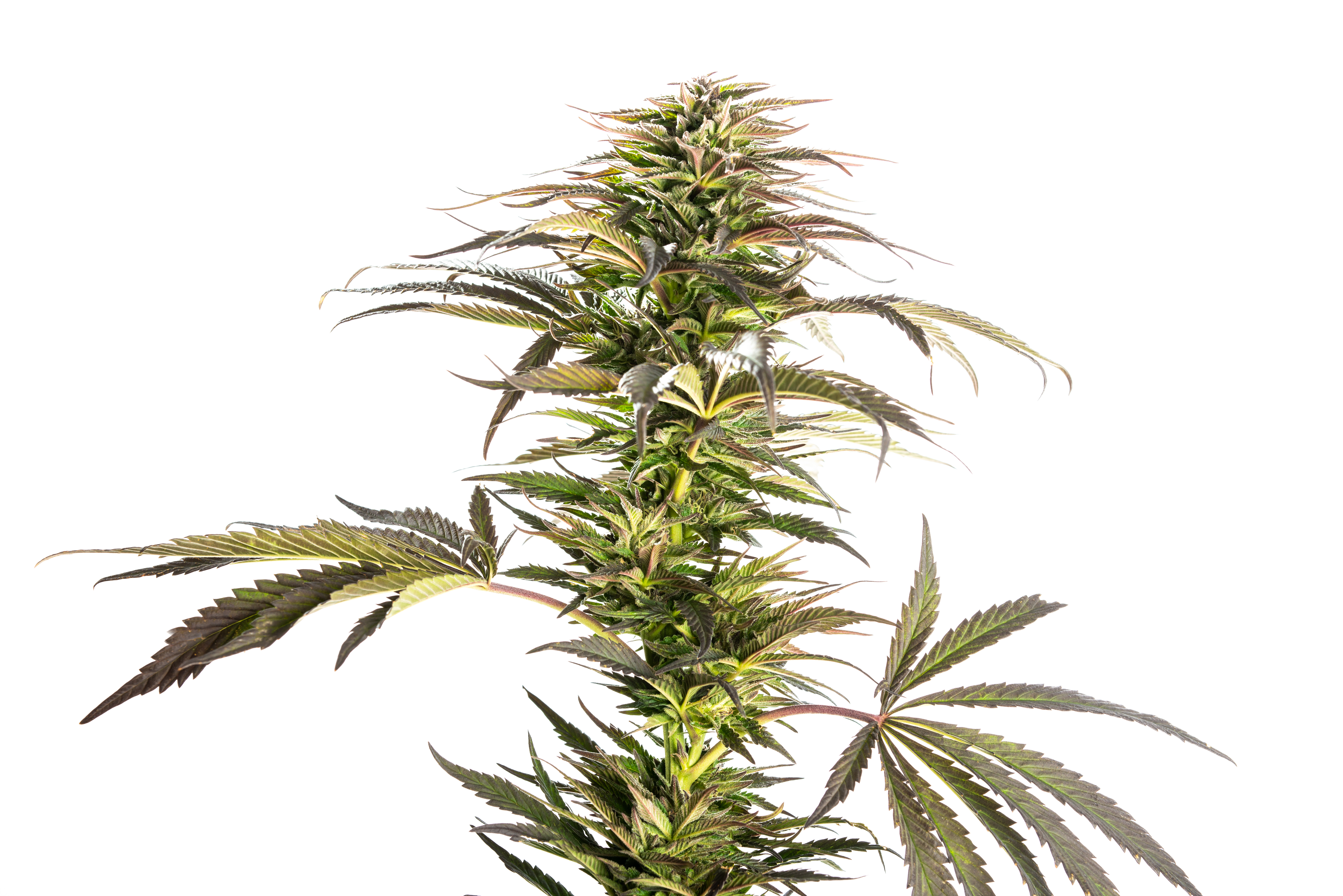


Cannabis seed germination is the first stage in the life of a cannabis plant. It is the process that takes a dry, inactive seed and starts its growth. During germination, the seed takes in water, becomes active, and begins to develop a small root. This first root is often called the taproot. Once it appears, the seed has started to grow and can move toward the seedling stage.
Understanding germination is important because the conditions during this stage can affect how well a young plant starts. A seed may contain everything it needs to begin growth, but it still needs the right environment. If conditions are too dry, too wet, too cold, or too hot, germination may slow down or fail. Good germination is not about using complicated tools. It is mainly about giving the seed steady moisture, enough oxygen, a suitable temperature, and careful handling.
A cannabis seed may look simple from the outside, but there is a young plant inside it. The hard outer shell protects the living parts of the seed while it is inactive. When the seed absorbs enough moisture, important changes begin. The seed coat becomes softer, and the plant inside starts using stored energy. Soon, the shell may split open. A small white root then begins to grow out of the seed. This is one of the clearest signs that germination has started.
Moisture is one of the most important parts of this process. A dry seed usually stays inactive. Water helps start the natural processes that allow growth to begin. However, more water is not always better. A seed that stays in very wet or waterlogged conditions may not receive enough oxygen. Too much moisture may also increase the risk of mold or decay. For this reason, the goal is to keep the seed moist without leaving it soaked for too long.
Oxygen is also needed during germination. Seeds are living material, and they use oxygen as they begin to grow. This is why air circulation and proper moisture levels matter. If a seed is placed in a condition where water blocks most of the available air, its chance of healthy germination may fall. A balanced environment gives the seed both the moisture and oxygen it needs.
Temperature is another major factor. Germinating seeds usually respond best to a stable, moderately warm environment. Very low temperatures can slow the natural activity inside the seed. Very high temperatures can also create stress and may increase moisture loss or other problems. Sudden changes in temperature may make the germination environment less stable. Keeping conditions steady is often more useful than making constant changes.
There are several common methods used to germinate cannabis seeds. Some people place seeds between moist paper towels so they can watch for the first root. Others place seeds directly into a growing medium, such as soil or another seed-starting material. Some use starter plugs or similar products that hold moisture around the seed. Seeds may also be soaked in water for a limited period before they are moved to another germination method. Each method has advantages and possible problems, but all of them depend on the same basic needs: moisture, oxygen, suitable warmth, cleanliness, and patience.
The paper towel method is often used because it makes it easy to see whether a seed has opened. A person can check for the taproot before moving the seed to a growing medium. However, the young root can be damaged if it is handled too often or allowed to dry. Direct planting avoids this extra transfer because the seed begins growing where it will continue to develop. The disadvantage is that it can be harder to see what is happening below the surface. Starter plugs may make moisture control easier, but they still need to be kept within suitable environmental conditions.
No germination method can guarantee that every seed will grow. Seed quality is an important part of the process. Some seeds may be old, damaged, poorly stored, or naturally nonviable. Even seeds that look healthy may not always germinate. For this reason, it is important to understand that germination depends on both seed quality and growing conditions.
Germination time can also vary. Some seeds may open within a short period, while others may need more time. Differences in seed age, storage, moisture, temperature, and genetics can all affect how quickly germination takes place. A slower seed is not always a failed seed. Checking too often, opening containers repeatedly, or moving the seed from one method to another may create more problems than simply allowing enough time.
Once a seed opens and the taproot appears, careful handling becomes important. The new root is delicate and can be damaged by pressure, bending, drying, or rough contact. The seed must then move toward the next stage of growth, when it develops into a seedling. At that point, its needs begin to change. Light becomes more important, and the young plant starts depending more on its growing medium and surrounding environment.
The best way to germinate cannabis seeds is not always one single method. A method that provides steady moisture, enough air, suitable warmth, and limited disturbance can support successful germination. The key is understanding what the seed needs rather than focusing only on one technique.
This article will explain the main germination methods, how long germination usually takes, whether seeds need soaking, what temperature and moisture conditions matter, when to plant a germinated seed, and why some seeds fail to grow. It will also cover common mistakes that can reduce germination success. Because cannabis laws are different from one location to another, readers should always check and follow local laws before buying, germinating, or growing cannabis seeds.
How Cannabis Seed Germination Works
Cannabis seed germination is the first stage in the life of a cannabis plant. It begins when a viable seed is exposed to the right amount of moisture, oxygen, and warmth. These conditions cause the seed to become active after a period of dormancy. During dormancy, the seed is alive, but its growth has not yet started.
Germination may look simple from the outside, but several changes take place inside the seed. The seed absorbs water, internal cells become active, and the young plant begins to use stored food for energy. Eventually, the seed shell opens and a small white root appears.
Understanding this process can help growers avoid common mistakes. Too much water, too little moisture, poor air flow, or unstable temperatures can prevent healthy germination. Knowing what happens inside the seed also makes it easier to recognize when germination is going well.
What Happens Inside a Cannabis Seed
A cannabis seed contains the basic parts needed to begin a new plant. These include a tiny plant embryo and stored nutrients. The embryo stays inactive until the environment becomes suitable for growth.
The first important step is water absorption. When moisture reaches the seed, the outer shell begins to take in water. This process causes the seed to swell slightly. The moisture also activates natural enzymes inside the seed.
These enzymes help break down stored nutrients into forms the young plant can use. At this early stage, the seedling cannot make its own food because it does not yet have developed leaves. Instead, it depends on the energy stored inside the seed.
As this process continues, cells within the embryo begin to grow and divide. Pressure builds inside the seed shell. When growth becomes strong enough, the shell begins to crack.
The first part of the plant to come out is normally the root. This first root is called the radicle, and it develops into the main root system of the young plant. Many growers also refer to this early root as the taproot.
The root usually appears white or cream in color. It may be very small at first, but it can grow quickly under suitable conditions. Once the root is visible, the seed has successfully entered the germination stage.
The next part of the plant begins growing in the opposite direction. This young shoot eventually moves upward and develops into the stem and first leaves.
What Cannabis Seeds Need to Germinate
Cannabis seeds need several basic conditions before germination can begin. Moisture is one of the most important factors. Water softens the seed shell and activates the biological processes needed for growth.
However, more water does not always mean better germination. Seeds should stay moist, but they should not remain in heavily waterlogged conditions for long periods. Too much water can reduce the amount of oxygen around the seed.
Oxygen is also necessary because the developing seed uses it during respiration. Respiration allows the seed to release energy from stored nutrients. Without enough oxygen, normal growth may slow or stop.
This is why a germination environment should provide moisture while still allowing some air to reach the seed. A soaking wet material or compacted growing medium may hold too little air.
Warmth is another important factor. Germination depends on biological reactions that work best within a suitable temperature range. If conditions are too cold, these reactions may slow down. If conditions become too hot, the seed may become stressed or damaged.
Stable conditions are usually better than large changes in temperature. A seed that moves between very warm and very cold conditions may have a harder time beginning steady growth.
Cannabis seeds do not need fertilizer to start germinating. The seed already contains stored nutrients that support the earliest stage of development. Adding strong nutrients during germination can create unnecessary stress for the young root.
Clean conditions also help protect the seed. Germination involves constant moisture, which can encourage mold and other unwanted organisms if the environment is dirty. Clean containers, tools, and growing materials can help reduce this risk.
Signs That Germination Has Started
The clearest sign of cannabis seed germination is a crack in the outer shell followed by the appearance of a small white root. The root may first appear as a tiny point before becoming longer.
It is important not to confuse a cracked shell with complete failure. A crack is normally part of the natural germination process. It shows that the growing embryo has started pushing through the seed coat.
Once the root appears, it should be treated carefully. A young root is soft and easy to damage. Touching, squeezing, or bending it can interfere with early development.
The root may also dry quickly if it is left exposed to air for too long. This is one reason germinated seeds should not be repeatedly removed and inspected.
After the root develops, the young shoot begins moving upward. When planted in a growing medium, the shoot pushes toward the surface. The seed shell may sometimes remain attached to the top of the young seedling for a short time.
Soon after emergence, the first small seed leaves open. These leaves are called cotyledons. They are different from the later leaves that are more commonly associated with cannabis plants.
At this point, the plant is moving from the germination stage into the seedling stage. This difference is important because the young plant’s needs begin to change. Light becomes more important after the seedling appears above the growing medium and begins developing leaves.
Germination should therefore be viewed as a short but important transition. It starts when the inactive seed absorbs moisture and begins internal growth. It continues as the shell opens and the first root emerges. The next stage begins as the young shoot develops into a visible seedling.
Cannabis seed germination begins when a viable seed receives enough moisture, oxygen, and suitable warmth. Water enters the seed and activates enzymes that help release stored energy. The embryo then begins growing until the seed shell cracks and the first white root appears.
Moisture is necessary, but excessive water can limit oxygen and create poor conditions. Stable warmth, clean materials, and gentle handling also support the process. Fertilizer is not needed during the first stage because the seed already contains stored nutrients.
The easiest sign of successful germination is the appearance of the first white root. Once that root emerges, it should be handled as little as possible because it is very delicate. As the root grows and the shoot begins developing, the plant gradually moves from germination into the seedling stage. Understanding these basic steps makes it easier to recognize healthy germination and avoid problems during the earliest stage of cannabis plant growth.
How Long Do Cannabis Seeds Take to Germinate?
Cannabis seeds do not all germinate at the same speed. Some seeds may open within a few days, while others may take longer. The exact time depends on several factors, including seed age, seed quality, moisture, temperature, and the germination method being used. For this reason, growers should avoid expecting every seed to follow the same schedule.
Germination begins when a viable cannabis seed absorbs enough moisture to activate the processes inside the seed. The outer shell then starts to soften. Once the seed is ready, the shell cracks and a small white root begins to grow out. This first root is known as the taproot. When the taproot becomes visible, the seed has successfully started germinating.
Understanding the normal germination time can help prevent common mistakes. One of the biggest mistakes is giving up on a seed too early. Another is disturbing the seed too often because it has not opened as quickly as expected. Giving the seed stable conditions and enough time is usually more helpful than constantly checking or moving it.
Typical Germination Time
Many cannabis seeds begin germinating within about two to seven days when conditions are suitable. Some healthy and fresh seeds may show signs of germination sooner. Older seeds or seeds that were stored under poor conditions may take more time.
The germination method can also affect how easy it is to see progress. For example, when seeds are placed between moist paper towels, the outer shell and emerging root are easy to observe. When seeds are planted directly into soil or another growing medium, germination happens below the surface. In this case, the grower may not see anything until the young shoot reaches the surface.
It is important to remember that germination speed does not always show how strong the future plant will be. A seed that germinates later than another seed may still develop normally. Natural differences exist between individual seeds, even when they come from the same batch.
The main goal during this stage is to provide steady conditions. Seeds need moisture to begin germination, but they also need access to oxygen. They also need a suitable level of warmth. Constantly changing these conditions can slow the process.
Patience is important during this stage. Checking a seed several times each day may seem helpful, but too much handling can cause problems. Opening containers, lifting paper towels, or touching the seed can change the moisture level and may damage the developing root.
Factors That Can Slow Germination
Seed age is one factor that can affect germination time. Fresh seeds usually have a better chance of germinating quickly when they have been stored correctly. Older seeds may still germinate, but the process can be slower. Over time, a seed may lose some of its ability to start healthy growth.
Storage conditions also matter. Cannabis seeds that have been exposed to high heat, excess moisture, or strong changes in temperature may have lower germination rates. Poor storage can damage the seed even when the outer shell still looks normal.
Moisture is another major factor. A seed must absorb water before germination can begin. If the seed becomes too dry during this process, germination may slow down or stop. However, too much water can also cause problems. A fully soaked environment may reduce the amount of oxygen around the seed.
Oxygen is necessary because the seed remains biologically active while germinating. When the growing material becomes waterlogged, air spaces can disappear. This can create conditions that make germination harder and may increase the risk of decay.
Temperature also affects germination speed. Seeds generally respond better to stable, moderately warm conditions. If the environment becomes too cold, the natural processes inside the seed may slow down. Very high temperatures can also cause stress and increase moisture loss.
Frequent temperature changes may also delay germination. A seed that moves between very warm and cool conditions does not have the same stable environment as a seed kept under consistent conditions.
Seed quality is another important issue. Some seeds simply have lower viability. A damaged seed, poorly developed seed, or very old seed may take longer to germinate or may never germinate at all.
When a Seed May Have Failed
It can be difficult to know exactly when a cannabis seed should be considered unsuccessful. Germination speed can vary, so a seed that has not opened after a few days is not always dead.
Growers should usually give seeds enough time before deciding that germination has failed. Some seeds may take more than a week, especially if they are older or if conditions have not remained steady.
A seed becomes more concerning when it shows no change after an extended period under suitable conditions. Signs of decay can also indicate failure. A seed that becomes soft, develops an unpleasant smell, or shows obvious mold may no longer be healthy.
Seeds should not be forced open to check whether growth is happening inside. Cutting, squeezing, or cracking the shell can damage the embryo. This can turn a slow but viable seed into a failed seed.
Repeated handling should also be avoided once the shell begins to crack. The new taproot is very delicate. It can be damaged by fingers, tools, dry air, or rough movement. Even a small amount of damage can affect early development.
If a germinated seed must be moved, it should be handled as little as possible. The root should not be pulled, bent, or pressed. The goal is to protect the seed during the short period between germination and planting.
Cannabis seeds commonly begin germinating within several days, but there is no exact schedule that applies to every seed. Fresh, healthy seeds may open quickly, while older or poorly stored seeds may take longer. Moisture, oxygen, temperature, seed quality, and storage history all influence how fast germination happens.
A slow seed should not automatically be treated as a failed seed. Stable conditions and patience are important. Excessive watering, drying, temperature changes, and frequent handling can all delay germination or damage the young root.
Comparing Common Cannabis Seed Germination Methods
Cannabis seeds can begin germination in several different ways. The basic goal is always the same. A viable seed needs moisture, oxygen, and suitable environmental conditions before it can begin developing a root. The main difference between germination methods is how those conditions are provided and how much handling is required.
No single method is guaranteed to work with every seed. Seed age, storage history, genetics, and general seed quality can all affect the result. For this reason, it is more useful to understand the advantages and limits of each method than to assume that one method is always best.
It is also important to remember that cannabis cultivation laws vary by location. Readers should check local rules before germinating or growing cannabis seeds.
Paper Towel Method
The paper towel method is one of the most widely discussed ways to germinate cannabis seeds. In this approach, the seed is placed in contact with a moist material so that it can absorb water while still having access to air.
One reason this method is popular is visibility. The seed can be checked without digging through soil or another growing medium. This makes it easier to see when the shell begins to open and when the first root appears.
However, the same advantage can also create a problem. Because the developing root is exposed, it can be damaged if it is touched, allowed to dry, or handled too often. The young root is very delicate during this stage. Even small injuries may make it harder for the seedling to establish itself later.
Moisture control is also important. The material should remain damp enough to support germination, but excessive water can reduce the amount of oxygen available around the seed. Very wet conditions can also encourage mold or decay.
The paper towel method therefore offers easy observation, but it also requires careful moisture control and gentle handling.
Direct-to-Medium Germination
Another common approach is placing the seed directly into the growing medium where the young plant will begin its early development.
The main advantage of this method is that there is less handling after germination begins. Once the seed starts producing a root, that root can grow directly into the surrounding medium. This reduces the need to move a fragile germinated seed from one place to another.
Direct germination also more closely resembles the natural process in which a seed begins growing in the same material that will support its first roots.
The main challenge is that the seed cannot easily be seen while germination is taking place. A grower may not know exactly when the shell opens or whether the seed has started developing. This can sometimes lead to unnecessary checking or disturbance.
Moisture levels are especially important with this method. A medium that becomes too dry may interrupt germination. At the same time, a medium that remains heavily saturated may limit oxygen around the seed.
The physical structure of the growing medium also matters. Young roots develop more easily in material that allows both air and moisture to reach the seed.
For people who want to reduce handling, direct-to-medium germination can be a simple option. The tradeoff is that there is less visual information about what is happening below the surface.
Starter Plugs or Blocks
Starter plugs and seed-starting blocks are another option used for germinating seeds. These products are designed to hold moisture while also providing space for air around a developing root.
Their main benefit is consistency. Because they are made specifically for seed starting, they can provide a more controlled environment than some loose growing materials.
Starter plugs can also reduce transplant stress in some situations. Instead of removing a young root from its original germination material, the entire plug may later be placed into a larger growing medium. This helps reduce direct contact with the root.
However, plugs are not automatically better than other methods. They can still become too wet or too dry. Different products also hold water in different ways, so moisture conditions can vary.
Another consideration is cost. Paper towels and basic growing media may already be available, while commercial plugs or blocks require an additional purchase.
For beginners, starter products may make moisture management easier, but they still require attention and proper handling.
Which Method Is Appropriate?
Choosing a germination method usually depends on the grower’s priorities rather than on one method being universally superior.
The paper towel method allows easy observation. It may be useful for someone who wants to see exactly when a seed begins to open. Its main disadvantage is that the germinated seed must usually be moved afterward, which creates an extra opportunity for root damage.
Direct-to-medium germination involves less handling. The seed begins developing in the same environment where its first roots will grow. However, it is harder to observe progress because germination happens below the surface.
Starter plugs offer a middle option. They can provide a stable seed-starting environment and may make later movement easier. At the same time, they cost more than very basic methods and still depend on correct moisture levels.
Seed quality is another important factor. A weak, damaged, or poorly stored seed may fail regardless of the method used. In contrast, a healthy and viable seed has a better chance of germinating when its basic needs are met.
For this reason, changing methods repeatedly is not always the best solution when germination problems occur. It is also important to consider seed condition, moisture, temperature stability, cleanliness, and handling.
Several methods can support cannabis seed germination, including the paper towel method, direct-to-medium germination, and starter plugs or blocks. Each method has advantages and limitations.
The paper towel method makes germination easy to observe but requires careful handling of the exposed root. Direct-to-medium germination reduces handling but makes progress harder to see. Starter plugs can provide a controlled environment, although they add cost and still require proper moisture management.
Should You Soak Cannabis Seeds Before Germinating Them?
Soaking cannabis seeds is a common topic in germination guides because moisture is one of the main signals that starts the germination process. When a dry seed comes into contact with water, the outer shell begins to absorb moisture. This allows the tissues inside the seed to become active. The seed may then begin the natural process that leads to the first root forming.
However, soaking is not required in every germination method. Cannabis seeds can begin germination in several types of moist environments. Some growers use a short soaking stage before moving seeds to another germination medium. Others place seeds directly into a moist growing medium from the beginning. The best choice depends on the condition of the seed, the germination method being used, and how carefully moisture can be controlled.
The most important point is that cannabis seeds need moisture, but they should not remain in conditions where they have poor access to oxygen for too long.
Why Some Growers Pre-Soak Seeds
The main reason for pre-soaking a seed is to help the seed coat absorb moisture. Cannabis seeds have a hard outer shell that protects the plant embryo inside. When the shell takes in water, it begins to soften and expand. This is part of the natural process that happens before the shell opens.
Older seeds may sometimes have harder or drier shells than fresh seeds. Seeds that have been stored for a long period may also absorb moisture differently. For this reason, some germination methods include soaking as an early stage.
Water enters the seed through small openings in the outer shell. Once enough moisture reaches the tissues inside, enzymes and other biological processes become active. Stored food inside the seed begins to provide energy for the developing plant. The first root can then begin growing.
This does not mean that soaking forces a seed to germinate. A seed must still be alive and capable of germination. Water cannot make a dead or badly damaged seed viable again.
The condition of the seed before germination is therefore important. Age, storage conditions, heat exposure, humidity, and physical damage can all affect whether a seed can successfully germinate.
Is Soaking Required?
Soaking cannabis seeds is optional rather than necessary.
A seed mainly needs the correct conditions for germination. These include moisture, oxygen, suitable warmth, and a clean environment. If those conditions are already present in a growing medium or another germination setup, a separate soaking stage may not provide a major advantage.
For example, a seed placed directly into a moist growing medium can absorb water from the material around it. The same basic process happens inside the seed. The outer shell takes in moisture, the embryo becomes active, and the first root begins to develop.
The paper towel method works in a similar way. Moist material keeps water close to the seed while still allowing some air around it. Because the seed is not buried, it is also easier to observe whether the shell has opened.
Direct germination has another possible advantage. The seed does not have to be moved after the first root appears. Moving a newly germinated seed can create a risk of damaging the young root if it is handled roughly.
For this reason, there is no single method that must be used for every cannabis seed. Soaking is simply one possible way of exposing the seed to the moisture needed to begin germination.
Understanding the Role of Water
Water plays an important role in germination, but more water does not always mean better germination.
A dry cannabis seed is in a dormant state. Dormancy allows the seed to remain inactive until environmental conditions become suitable. Once the seed absorbs water, its internal processes begin to change.
The seed starts using stored energy. Cells begin to expand. The embryo becomes more active, and the young root starts developing.
Moisture must remain available during this period. If a seed absorbs water and then becomes completely dry again, germination can be interrupted. A seed that has already started developing may be more sensitive to drying than a seed that has not yet started.
At the same time, excessive moisture can create another problem. Seeds are living structures, and they require oxygen for respiration. If the seed remains in an environment with very little air, normal biological processes may be affected.
This is why moisture control is one of the most important parts of germination.
Problems With Excessive Soaking
One of the main risks associated with soaking seeds is leaving them in waterlogged conditions for too long.
Seeds require oxygen as well as water. Oxygen supports cellular respiration, which allows the seed to release energy from stored nutrients. That energy is needed for the first stages of growth.
In an environment that is completely saturated, oxygen may become limited. Poor oxygen availability can slow normal seed activity and may increase the chance that the seed begins to deteriorate.
Excess moisture can also encourage the growth of mold, fungi, and bacteria. These microorganisms are often present naturally in the environment. When moisture remains high for extended periods, they may multiply quickly.
A damaged or cracked seed may be especially vulnerable because microorganisms can reach the inner tissues more easily.
For this reason, soaking should not be viewed as a way to keep a seed permanently submerged. The purpose of any moisture-based germination method is to provide enough water for the seed to become active while maintaining suitable conditions around it.
Soaking Compared With Other Germination Methods
Each common germination method has advantages and limits.
Soaking can allow the seed coat to absorb moisture quickly, but the seed still needs suitable conditions afterward. A paper towel method makes it easier to see when the shell opens and the first root appears. However, the seed must usually be moved after germination begins.
Direct planting avoids this extra transfer. The seed can begin developing in the same medium where the young seedling will continue to grow. The disadvantage is that the germination process is harder to observe because the seed is covered.
Starter plugs and similar seed-starting materials provide another option. These materials are designed to hold moisture while also maintaining spaces for air. This can help create a stable environment around the seed.
None of these methods can guarantee germination. Seed quality remains an important factor. Even when environmental conditions are suitable, some seeds may fail because they are old, damaged, immature, or no longer viable.
How Seed Age Can Affect Moisture Absorption
Fresh, healthy seeds often absorb moisture without special treatment. Older seeds may sometimes behave differently because the outer shell may become harder over time.
Storage conditions also matter. Seeds exposed to high heat, large changes in humidity, or poor storage environments may lose viability. In some cases, damage may not be visible from the outside.
This is why a seed’s appearance alone cannot prove that it will germinate successfully. A seed may look healthy but fail to grow. Another seed may have an unusual color or pattern and still remain viable.
Moisture can begin the germination process only if the living tissues inside the seed are still capable of development.
Avoiding Common Moisture Mistakes
A common mistake during germination is focusing only on keeping the seed wet.
The goal should instead be to create a balanced environment. The seed needs steady moisture, access to oxygen, suitable warmth, and protection from contamination.
Allowing the germination environment to become completely dry can interrupt development. Keeping it excessively wet can reduce air availability and encourage unwanted microbial growth.
Frequent handling can also create problems. Once the seed coat opens, the emerging root is delicate. Touching, squeezing, or repeatedly moving the seed can damage the developing tissues.
A stable environment is usually more important than constantly changing methods because a seed has not opened as quickly as expected.
Soaking cannabis seeds before germination is an optional technique, not a required step. The main purpose of soaking is to allow the outer seed coat to absorb moisture and begin the natural processes that lead to germination. However, seeds can also absorb the water they need from moist growing media, paper-based germination methods, or seed-starting materials.
Water is essential, but the amount of water must be balanced with access to oxygen. Excessive soaking or waterlogged conditions can reduce oxygen around the seed and may increase the risk of mold, bacteria, or decay. Too little moisture can also cause problems because a seed that begins germinating should not be allowed to dry out completely.
Seed quality, age, previous storage conditions, cleanliness, moisture, oxygen, and environmental stability all affect germination success. For that reason, soaking should be viewed as one possible part of germination rather than a method that guarantees better results. The most important goal is to provide a stable environment that supports the seed’s natural germination process while avoiding excessive water and unnecessary handling.
Temperature, Moisture, and Environmental Conditions
Cannabis seeds need the right environment to begin germination. A seed may be healthy, but it can still fail to sprout if the temperature, moisture, or surrounding conditions are poor. The early germination stage is sensitive because the seed is changing from a dry, inactive state into a living seedling. During this time, small changes in heat or water can have a large effect.
The main goal is to create conditions that stay warm, moist, and stable without becoming too wet or too hot. Cannabis seeds also need access to oxygen. This means that soaking a seed in too much water or keeping it in a waterlogged growing medium can cause problems. Growers should focus on balance rather than trying to make the environment as warm or wet as possible.
Why Temperature Matters
Temperature plays an important role in the germination process. When a cannabis seed absorbs water, several natural processes begin inside the seed. These processes help the seed use its stored energy and begin forming the first root. Temperature affects how quickly these processes take place.
A moderately warm environment usually supports steady germination. If the environment is too cold, the seed may absorb water but remain inactive for a longer period. Cold conditions can slow down the biological activity inside the seed. As a result, germination may take longer than expected, or the seed may not germinate at all.
Excessive heat can also create problems. A very hot environment may cause moisture to evaporate too quickly. This can cause the germination material or growing medium to dry out. High temperatures may also place stress on the seed and increase the chance of harmful microbial growth.
Temperature stability is just as important as the actual temperature. A seed that moves between warm and cold conditions throughout the day may have more difficulty germinating than a seed kept in a steady environment. Large temperature changes can slow the process and make moisture levels harder to control.
For this reason, cannabis seeds should be kept away from areas where temperatures change often. Windowsills, direct sunlight, heating vents, and outdoor areas may become much hotter or colder during different parts of the day. A protected indoor area is often easier to manage because the environment is more stable.
Getting Moisture Levels Right
Moisture is one of the most important parts of germination. A dry cannabis seed remains dormant. Once the seed absorbs enough water, the outer shell begins to soften, and the processes needed for growth can begin.
However, more water does not always lead to better germination. The seed needs moisture, but it also needs oxygen. If the seed is completely surrounded by too much water for a long time, oxygen may become limited. This can slow germination and increase the risk of the seed beginning to rot.
The material around the seed should usually feel moist rather than soaked. For example, if a paper towel method is being used, the paper should contain enough water to stay damp but should not have large amounts of water collecting around the seed. If the seed is planted directly into a growing medium, the medium should be evenly moist without becoming muddy or waterlogged.
Allowing the seed to dry out can also cause problems. Once germination begins, the seed needs steady access to moisture. If the seed starts to crack and the young root begins to appear, drying can damage the new tissue. The emerging root is very small and delicate. It does not yet have the ability to search through a large area for water.
This is why moisture should be checked regularly. The goal is not to keep adding water on a fixed schedule. Instead, the goal is to prevent the germination material from becoming either too dry or too wet.
Does Humidity Matter?
Humidity refers to the amount of moisture in the air. It can influence how quickly water evaporates from the seed and the material around it.
In very dry air, a paper towel or growing medium may lose moisture quickly. This means the seed may need closer monitoring to prevent it from drying out. In a more humid environment, moisture may remain in place for longer.
However, extremely high humidity can create other problems. When warm temperatures and heavy moisture remain trapped in a closed space, mold and other unwanted growth may develop more easily. Seeds and young roots can be damaged by mold, especially when air movement is very limited.
This is why humidity should be balanced with ventilation. The germination area should not be allowed to become completely dry, but it should also not remain sealed in a hot, wet environment for long periods.
Good air exchange helps provide oxygen and can reduce the chance of mold developing. At the same time, strong airflow should be avoided because it may dry the germination material too quickly. Gentle, normal air circulation is usually enough.
Creating a Stable Environment
A stable environment makes cannabis germination easier to manage. Seeds do not usually benefit from constant changes in location, temperature, light, or moisture.
One useful approach is to choose a clean indoor space where conditions remain fairly steady throughout the day. The area should not be directly exposed to strong sunlight, heaters, cold drafts, or air conditioning vents. These sources can create fast temperature changes and may cause moisture to disappear more quickly.
Cleanliness is also important during germination. The seed is surrounded by moisture, and moisture can support the growth of mold and bacteria. Using clean containers, clean hands, and fresh germination materials can help reduce contamination.
Seeds should also be disturbed as little as possible. Constantly opening a container, touching the seed, or moving it between different places may change the environment and can damage an emerging root. Checking the seed is useful, but it should be done carefully.
Growers should pay attention to several conditions at the same time. If a seed appears to be drying out, adding some moisture may be needed. If water is collecting around the seed, the environment may be too wet. If mold appears, the combination of warmth, moisture, and poor air exchange may need to be corrected.
The goal is consistency. Cannabis seeds normally respond better to a steady environment than to repeated attempts to change conditions quickly.
Temperature, moisture, humidity, and air movement all affect cannabis seed germination. Seeds need a moderately warm and stable environment so the natural processes inside the seed can begin and continue. Conditions that are too cold may slow germination, while excessive heat can dry the seed or place it under stress.
Moisture must also stay balanced. A cannabis seed needs water to leave its dormant state, but too much water can reduce oxygen and increase the risk of rot. The surrounding material should stay moist without becoming waterlogged. At the same time, it should not be allowed to dry out after germination has started.
Humidity can help prevent fast moisture loss, but excessive humidity combined with poor ventilation may encourage mold. Clean materials, gentle air exchange, stable temperatures, and limited handling can create a better environment for germination. By keeping these conditions steady, growers can reduce many of the common problems that prevent healthy cannabis seeds from sprouting.
Do Cannabis Seeds Need Light or Darkness to Germinate?
Light is one of the most common topics people ask about when germinating cannabis seeds. New growers may wonder if seeds should be placed under a grow light, kept near a sunny window, or stored in complete darkness. The answer becomes clearer when you understand what is happening inside the seed.
During germination, a cannabis seed depends mainly on moisture, oxygen, and a stable temperature. It does not need strong light to begin the process. The seed already contains stored energy that supports its first stage of growth. Light becomes much more important after the young shoot comes out of the growing medium and begins developing leaves.
Understanding this difference can help prevent problems during the early stages of plant development.
Light During Germination
Cannabis seeds do not need strong light while they are germinating. In nature, seeds usually begin germination under a thin layer of soil, where little or no light reaches them. The seed uses stored nutrients inside its shell to support the first stages of growth.
When moisture enters the seed, the internal growth process begins. The seed coat becomes softer, and the first root starts to develop. This root is often called the taproot. Its first job is to move downward and begin taking in water and nutrients.
Because the seed is using stored energy, direct sunlight or bright artificial light does not improve germination. In fact, very strong light can sometimes create other problems. A powerful lamp can increase heat and cause germination materials to dry too quickly.
For this reason, seeds started between moist materials are often kept in a warm, protected area away from strong direct light. The goal is not to create absolute darkness at all times. The goal is to provide a stable environment where moisture and temperature remain easier to control.
Seeds placed directly into a growing medium are naturally protected from light because they are covered by the material around them. This creates conditions similar to those found in nature.
Darkness and the Germination Process
Many growers associate cannabis seed germination with complete darkness. While darkness is commonly used, it is more accurate to say that strong light is not required during this stage.
A seed can often begin germination even when small amounts of normal room light are present. Brief exposure to light while checking the seed usually does not stop germination.
The larger concern is the environment around the seed. If light causes the area to become too hot or dry, germination may slow down. This is why a dark or shaded location can be useful. It helps protect the seed from temperature changes and rapid moisture loss.
Keeping the environment stable is more important than trying to create perfect darkness. Frequent changes in moisture or temperature can create more problems than normal light exposure.
It is also important not to disturb seeds too often simply to check their progress. Once the shell opens, the young root can be very delicate. Careful handling becomes more important as germination continues.
Why Seedlings Need Different Conditions
The light requirements change once the seedling begins to emerge.
After germination, the young plant starts moving toward the surface of the growing medium. The first small leaves eventually open. At this point, the plant begins depending more on light for energy.
Plants use light during photosynthesis. Photosynthesis is the process that allows green plant tissue to use light energy to support growth. A germinating seed does not depend heavily on this process because it is still using stored energy. An emerged seedling does.
This means growers should think of germination and seedling growth as two separate stages.
During germination, the main goal is to support the seed while the first root develops. After emergence, the focus shifts toward giving the seedling enough light to support healthy growth.
If a seedling receives too little light after emerging, it may begin stretching as it tries to reach a stronger light source. The stem can become long, thin, and weak. This is different from the germination stage itself, when strong light is not necessary.
Recognizing when the plant moves from one stage to the next makes it easier to adjust the environment correctly.
Avoiding Excessive Heat From Light
One reason to keep germinating seeds away from powerful light sources is heat.
Grow lights and direct sunlight can raise temperatures around a germination container or growing medium. Even if the room feels comfortable, the area close to a strong lamp may become much warmer.
Higher temperatures can also cause moisture to evaporate faster. A paper towel or growing medium that starts out moist may become dry sooner than expected. If the seed dries out while it is beginning to germinate, development may slow or stop.
This does not mean that all light is harmful. The main problem is excessive heat or drying caused by the light source.
The environment should remain stable instead of changing between very warm and cool conditions. A steady environment makes it easier for the seed to absorb moisture and continue its normal biological processes.
Checking moisture levels is useful, but the seed should not be disturbed more than necessary. The aim is to maintain consistent conditions rather than making frequent changes.
Protecting Seeds From Direct Sunlight
Direct sunlight can create especially large changes in temperature.
A container placed near a sunny window may warm quickly during the day and cool again when the sunlight disappears. These temperature swings can make the germination environment less stable.
Sunlight can also dry exposed germination materials quickly. This can be a concern when seeds are being started in a shallow container or between moist materials.
A shaded, protected location usually makes environmental conditions easier to manage during germination. Once a seedling emerges and begins developing leaves, its light needs change, and suitable lighting becomes much more important.
It is therefore useful to avoid treating germinating seeds and young seedlings in exactly the same way. Each stage has different needs.
Maintaining Stable Germination Conditions
The success of germination depends on several factors working together. Light or darkness is only one part of the environment.
The seed must have enough moisture to activate growth, but it should not remain in conditions that are excessively saturated. It also needs access to oxygen. Temperature should remain within a suitable and fairly stable range.
Strong light is usually unnecessary during this stage because the seed has its own stored energy. Keeping seeds protected from intense light also makes it easier to prevent excess heat and rapid drying.
After the seedling appears above the growing medium, however, light becomes essential for continued plant development. This is the point when the plant begins using its leaves to collect light and produce energy.
Cannabis seeds do not require strong light to germinate. During the germination stage, the seed relies mainly on stored energy, moisture, oxygen, and suitable environmental conditions. A dark or shaded location is commonly used because it can help maintain steady moisture and temperature.
Complete darkness is not always necessary. Brief exposure to normal room light usually does not determine whether a viable seed will germinate. The greater concerns are excessive heat, rapid drying, and unstable conditions.
Light becomes much more important after the young shoot emerges and begins developing leaves. At that stage, the seedling starts depending on light for photosynthesis and continued growth.
When and How to Move a Germinated Seed to Its Growing Medium
Once a cannabis seed has germinated, the next step is moving it into a growing medium. This stage needs care because the young root is very fragile. A seed may look strong from the outside, but the newly formed taproot can be damaged easily by pressure, dryness, or rough handling. The goal is to move the seed without harming the root and then give it a stable place where it can continue to grow.
The growing medium may be soil, a seed-starting mix, or another suitable material used for young plants. Whatever medium is used, it should be loose enough for roots to move through and should hold moisture without staying soaked. Good drainage is also important because young roots need both water and oxygen.
Knowing When the Seed Is Ready
A cannabis seed is generally ready to move once the shell has opened and a small white root has appeared. This first root is called the taproot. It is the beginning of the plant’s root system and will later develop smaller side roots.
The taproot does not need to become very long before the seed is moved. In fact, waiting too long can make the process harder. A longer root is easier to bend, break, or damage. It may also begin growing into the paper towel or other material used during germination.
The seed should be checked carefully, but it should not be handled more than needed. Once the root appears, prepare the growing medium before touching the seed. This reduces the time the root spends exposed to open air.
A newly germinated root can dry out quickly. For this reason, it is best to have the planting area ready before moving the seed. The process should be simple and gentle.
Protecting the Taproot
The taproot is one of the most sensitive parts of a newly germinated cannabis seed. Damage at this stage may slow growth or prevent the seedling from developing normally.
Avoid touching the white root directly whenever possible. Oils, dirt, and pressure from fingers may harm the soft tissue. If the seed must be moved, handle the outer seed shell rather than the root.
Clean tweezers can also be used, but they should be handled with care. The seed should never be squeezed. A light grip on the seed shell is enough.
The root should also be protected from drying. Do not leave a germinated seed sitting in the open air while preparing the pot or growing medium. Even a short period in a hot, dry area can reduce moisture in the root.
The taproot should not be bent or forced into a planting hole. Make a hole that is wide enough and deep enough before placing the seed inside. The root should fit naturally without being pushed against hard soil or packed material.
Gentle handling gives the young plant a better chance to continue normal root development.
Planting Depth
Planting depth is important because a seed needs enough cover to remain moist, but it should not be buried too deeply. If it is planted too deep, the young shoot may use too much stored energy trying to reach the surface.
A shallow planting hole is usually best for a newly germinated seed. The exact depth can vary depending on the growing medium, but the main goal is to give the seed enough coverage without placing it far below the surface.
The growing medium should be loose rather than tightly packed. Dense soil can make it harder for the young root to expand and for the shoot to rise.
When placing the germinated seed into the hole, the root should generally point downward. This helps the taproot grow in its natural direction. However, there is no need to force the seed into a perfect position. Roots respond to gravity and can often correct their direction as they grow.
Once the seed is in place, cover it lightly with the growing medium. Do not press the soil down hard. A loose covering allows air to remain in the material and makes it easier for the young shoot to reach the surface.
Choosing a Suitable Growing Medium
Young seedlings need a growing medium that supports both moisture and airflow. Heavy, compacted material may hold too much water and reduce the amount of oxygen available to the roots.
A light seed-starting mix can be easier for young roots to move through. It should drain well while still holding enough moisture to prevent the seed from drying out.
The medium should also be clean. Old soil that has been stored in poor conditions may contain mold, insects, or other problems. Using fresh and suitable growing material can reduce stress during the early seedling stage.
Large amounts of fertilizer are usually not needed during germination. A cannabis seed contains stored energy that supports its earliest growth. Very strong growing media may place extra stress on delicate young roots.
The main goal at this stage is to provide a stable environment where the root can expand and the seedling can emerge.
Moisture After Planting
Moisture is necessary after the germinated seed is planted, but too much water can cause serious problems. The growing medium should be evenly moist rather than soaked.
If the medium becomes waterlogged, air spaces can fill with water. This reduces the oxygen available to the young root. Roots need oxygen for normal growth, even when the plant is very small.
Heavy watering may also move the seed deeper into the soil or disturb its position. A gentle watering method is usually better during the first stage after planting.
The surface should not be allowed to become completely dry while the seedling is trying to emerge. At the same time, adding water too often can keep the medium constantly wet.
The best approach is to check moisture instead of following a fixed watering schedule. Conditions may change based on temperature, humidity, container size, and the type of growing medium.
A small container may dry faster than a large one. Warm conditions may also increase moisture loss. The goal is balance: enough water to keep the young root moist, but enough air in the medium to support healthy root growth.
What Happens After Planting
After the germinated seed has been placed in the growing medium, the root continues growing downward while the young shoot begins moving toward the surface.
The seedling may take some time to appear. It is important not to dig up the seed repeatedly to check its progress. Doing so can damage the root or disturb the growing environment.
Once the shoot reaches the surface, the plant begins moving from the germination stage into the seedling stage. The first leaves will begin to open, and the young plant will become more dependent on light.
At this point, the care requirements begin to change. Light, airflow, moisture, and the growing environment all become important parts of seedling development.
Growers should continue to avoid overwatering. A small seedling has a limited root system and does not need the same amount of water as a mature plant.
Moving a germinated cannabis seed into its growing medium is a simple process, but careful handling matters. The seed is usually ready once the shell opens and a small white taproot appears. The root should be protected from pressure, bending, and drying because it is very delicate.
Prepare the growing medium before moving the seed so the transfer can be completed quickly. Use a loose, clean, well-draining medium and make a shallow planting hole. Place the seed gently, avoid touching the taproot, and cover it lightly without packing the soil.
After planting, keep the medium evenly moist but not waterlogged. Too much water can reduce oxygen around the root, while too little moisture can cause the young seedling to dry out. Avoid digging up the seed to check it. With stable moisture, gentle handling, and a suitable growing medium, the germinated seed can continue developing into a healthy young seedling.
Why Cannabis Seeds Fail to Germinate
Cannabis seeds, like the seeds of many other plants, do not always germinate successfully. A seed may look healthy on the outside but still fail to produce a root. In other cases, the seed may begin to open and then stop developing. Several factors can affect this process, including seed age, storage conditions, moisture, temperature, cleanliness, and handling.
Understanding these problems can help explain why germination fails. It is also important to remember that no method can make every seed germinate. Some seeds are naturally less viable than others because of age, genetics, damage, or poor storage before they reach the grower.
Laws about cannabis seeds and cultivation vary by location. Anyone handling or growing cannabis should first make sure that local laws allow it.
Seeds Are Too Old or Poorly Stored
Seed quality is one of the most important factors in germination. A seed contains a living embryo. Over time, that embryo may lose its ability to grow, especially when the seed has been stored under poor conditions.
Heat, strong light, and excess moisture can damage stored seeds. Large changes in temperature can also reduce seed quality over time. Seeds that have been exposed to damp conditions may begin to break down even before germination starts.
Older seeds are not always unusable, but their germination rate may be lower than that of fresher seeds. Some may take longer to respond, while others may never open at all.
Storage history can be difficult to judge when seeds come from an unknown source. A seed may appear normal on the outside even if its internal tissues have been damaged. This is why appearance alone cannot prove that a seed is viable.
Too Much Water
Water is needed for germination, but too much water can create problems. Seeds need moisture to begin the biological processes that cause the embryo to grow. At the same time, they also need access to oxygen.
When a seed remains surrounded by too much water, the amount of available oxygen may decrease. This can interfere with normal development. Very wet conditions can also encourage bacteria, fungi, and other microorganisms.
A common mistake is assuming that more water will make a seed germinate faster. In reality, excessive moisture may increase the chance of decay.
A seed that becomes soft, unusually dark, or unpleasant smelling may be breaking down rather than developing normally. Mold may also appear when moisture remains excessive for a long period.
The main idea is that germination requires a balance. Moisture is necessary, but constant saturation can create an unhealthy environment.
Too Little Moisture
The opposite problem can also stop germination. Seeds need to absorb water before growth can begin. This process allows the tissues inside the seed to become active.
If the environment becomes too dry, a seed may fail to absorb enough moisture. A seed that has already started to germinate can also be harmed if it dries out during this sensitive stage.
The first root that appears from a seed is especially delicate. It does not have the protection that older roots have. If this new root becomes dry, its cells can become damaged and development may stop.
Changes between very wet and very dry conditions can also place stress on a germinating seed. Stable conditions are generally more suitable for normal plant development than repeated changes.
Incorrect Temperature
Temperature affects many of the chemical and biological processes inside seeds. Conditions that are too cold can slow these processes. Conditions that are too hot can damage living tissues or increase the growth of unwanted microorganisms.
Large temperature changes can also create stress. For example, moving seeds between very warm and very cool places may make conditions less stable.
It is important to understand that warmer conditions are not always better. Excessive heat may cause moisture to disappear quickly and can damage fragile plant tissue.
Cold conditions, on the other hand, may cause germination to slow greatly. A seed may appear inactive even though it has not completely lost its ability to germinate.
Stable, suitable environmental conditions are generally more important than trying to force faster germination.
Mold and Contamination
Mold is another common reason seeds may fail. Fungi grow well when moisture is high and air movement is poor. Organic material can also provide food for mold and bacteria.
Contamination may come from dirty containers, hands, tools, surfaces, or growing materials. Once microorganisms begin growing around a weak or damaged seed, they may cause the seed to rot.
A small amount of discoloration does not always mean that mold is present. However, visible fuzzy growth, strong odors, or soft decaying material may be signs of contamination.
Clean handling can reduce this risk. It is also useful to avoid unnecessary contact with seeds once they have started opening.
Young plant tissue is vulnerable because it is soft and has not yet developed strong protective structures.
Excessive Handling
Checking seeds too often can sometimes cause more harm than good. Once a seed begins to open, the emerging root is extremely fragile.
Touching, squeezing, bending, or dropping a germinated seed may damage this root. Damage may not always be obvious at first. The root can develop tiny injuries that later interfere with growth.
Frequent movement can also expose developing seeds to changes in moisture, temperature, and air conditions.
This is one reason patience matters during germination. A seed does not need constant handling to continue developing. In many cases, leaving it undisturbed reduces the chance of accidental damage.
Seeds should also not be forced open. A shell that has not opened naturally may contain an embryo that is not yet ready to grow. Breaking the shell by hand can damage the living tissue inside.
Why Some Seeds Still Do Not Germinate
Even when environmental conditions appear suitable, some seeds simply do not germinate. Natural variation occurs in all types of plants.
A seed may contain an embryo that did not develop correctly. It may have suffered invisible damage during harvesting, processing, transport, or storage. Genetic factors can also affect seed strength.
For this reason, failure does not always mean that one specific environmental problem occurred. Germination is a biological process, and biological systems always have some degree of variation.
The best way to understand germination problems is to consider several possible causes rather than focusing on only one factor.
Cannabis seeds can fail to germinate for many reasons. Poor seed quality, age, improper storage, excess water, lack of moisture, unsuitable temperatures, contamination, and excessive handling can all affect the process.
One of the most important points is that seeds need balanced and stable conditions. Too much water can reduce oxygen and encourage decay, while too little moisture can stop normal development. Extreme or changing temperatures may also interfere with biological activity.
Cleanliness and careful handling are especially important after a seed begins to open because the first root is fragile. At the same time, even well-kept seeds may sometimes fail because of natural differences in viability.
How to Tell Whether Cannabis Seeds Are Healthy and Viable
Cannabis seeds can vary a great deal in quality. Some may be fresh and capable of normal development, while others may have lost viability because of age, damage, or poor storage. It is not always possible to know for certain whether a seed is viable just by looking at it. Still, several visible signs and background details can help you judge its general condition.
Seed viability simply means that a seed is still alive and capable of starting normal growth under suitable conditions. A healthy-looking seed is not a guarantee of success, but damaged, soft, or badly stored seeds may have a lower chance of developing. Understanding the difference between appearance, age, storage history, and actual viability can help readers avoid common myths and unrealistic expectations.
Seed Appearance
The outside of a cannabis seed can provide some clues about its condition, but appearance should never be treated as a perfect test. Mature seeds are often firm and have a developed outer shell. Their color may range from light brown to darker brown, and some may show stripes, spots, or other natural markings.
A seed that looks pale or green may be less mature, but color alone does not prove that a seed is unusable. Different varieties can produce seeds with different shades and patterns. Some healthy seeds may look lighter than expected, while darker seeds may still fail to develop.
The condition of the shell can also be useful to observe. Seeds with major cracks, deep damage, or obvious signs of decay may have been exposed to poor conditions. A damaged shell can leave the inner parts of the seed less protected from moisture changes, contamination, or physical harm.
Firmness is another common sign people look at. A mature seed often has a hard outer coat rather than a soft or easily crushed shell. However, squeezing or pressing seeds strongly is not a good way to test them. Too much pressure can damage a seed that may otherwise be healthy.
The main point is that appearance can provide clues, but it cannot give a definite answer. A seed can look normal on the outside while having poor viability inside. The opposite can also happen. A seed that does not look perfect may still be capable of normal development.
Seed Age and Storage
Age can affect seed viability, but age alone does not decide whether a seed is still healthy. Seeds are living biological material, and their condition changes over time. As seeds get older, the chance of successful development may slowly decline.
Storage conditions can be just as important as age. Seeds that have been kept in a stable environment may remain in better condition than seeds exposed to repeated changes in heat, moisture, or air. High humidity can encourage unwanted biological activity or damage. Excessive heat can speed up natural breakdown inside the seed. Frequent changes in storage conditions can also place stress on stored seeds.
Light exposure can matter as well because strong light may add heat and create unstable conditions. In general, seeds tend to keep better when protected from major environmental changes. This is true for many types of plant seeds, not only cannabis.
The storage history may not always be known. A person may receive seeds without knowing how long they were stored or what conditions they experienced before purchase. In those cases, visual inspection can only provide limited information.
Older seeds should not automatically be considered dead. Some can remain viable for a long period when stored well. At the same time, a newer seed is not guaranteed to be healthy if it was damaged or poorly stored.
For this reason, age and storage history should be viewed together. A fresh-looking seed with unknown storage conditions may still have problems, while an older seed that was carefully stored may remain in good condition.
Germination as the Practical Viability Test
Visual checks can only go so far. In general seed biology, the clearest evidence of viability is whether a seed is able to begin normal biological development under suitable, lawful growing conditions.
This is important because the outer shell does not reveal everything that is happening inside the seed. Internal tissues may have weakened even when the shell looks normal. A seed may also have suffered hidden damage from moisture, temperature changes, age, or poor handling.
This is why appearance-based guesses should not be treated as proof. A person may look at two seeds that seem almost identical, yet one may remain viable while the other does not.
The same idea applies to many crops and garden plants. Seed companies and growers often use controlled germination testing to estimate how many seeds in a batch are still viable. The result gives a more useful picture than appearance alone.
For readers, the key lesson is simple: a seed’s outside appearance can suggest quality, but only actual biological performance can confirm whether it is viable.
Avoiding Common Seed-Viability Myths
Several common claims about cannabis seeds are often presented as simple ways to judge quality. Many of these methods are less reliable than they appear.
One example is judging seeds only by color. Dark seeds are sometimes described as automatically better than pale seeds. In reality, natural color can vary. Genetics, maturity, age, and storage can all influence appearance.
Another common idea is that a seed’s pattern or markings prove that it is strong. Stripes or spots are normal features on many seeds, but they do not guarantee viability. A plain-looking seed may still be healthy.
The so-called float test is another method often discussed online. This involves placing seeds in water and judging them based on whether they float or sink. The problem is that floating behavior can be affected by several physical factors. It is not a dependable way to prove whether a seed is alive. It can also expose seeds to moisture unnecessarily.
Size is another weak indicator. Larger seeds are not always better than smaller seeds. Seed size can vary naturally between plant varieties and even between seeds from the same plant.
The safest conclusion is that no single visual feature, water test, or simple home trick can guarantee seed quality. Viability depends on the condition of the living tissues inside the seed, and those tissues cannot be fully judged from the outside.
Healthy cannabis seeds are often firm, mature-looking, and free from major visible damage, but appearance alone cannot confirm viability. Color, size, shell markings, and other visible traits can vary naturally, so they should be treated only as general clues.
Age and storage history are also important. Heat, moisture, physical damage, and unstable storage conditions can reduce seed quality over time. However, an older seed is not automatically unusable, especially if it has been stored under stable conditions.
Most importantly, readers should be cautious about common myths. Color, size, shell patterns, and floating tests do not provide a guaranteed answer. The true condition of a seed depends on the living material inside it.
Essential Cannabis Germination Tips and Common Mistakes to Avoid
Cannabis seed germination depends on several basic factors, including seed quality, moisture balance, cleanliness, and careful handling. The early stage of plant growth is delicate, so small problems can affect whether a seed develops normally. In places where cannabis cultivation is legal, understanding these general principles can help growers recognize common germination problems and avoid unnecessary damage.
Start With Viable Seeds
Seed quality has a major effect on germination. A healthy seed has a better chance of developing than one that has been damaged, stored poorly, or kept for a very long time. However, appearance alone cannot always show whether a seed is viable.
Storage conditions also matter. Seeds can lose quality when they are exposed to too much heat, moisture, or changing environmental conditions. Poor storage may damage the seed before germination even begins.
It is also important to understand that not every seed will germinate. Seeds are living biological material, and natural differences exist between them. Even seeds that look similar may respond differently under the same conditions.
For this reason, germination results should not be judged only by how a seed looks. The condition of the seed, its age, and how it was stored can all influence the outcome.
Maintain Consistent Conditions
Seeds usually respond better to stable conditions than to constant changes. Frequent changes in moisture, temperature, and exposure can place stress on a developing seed.
One common problem is allowing the germination environment to become very dry and then making it very wet again. Repeated changes like this can interfere with the normal process that begins after a seed absorbs water.
Consistency is more important than constant adjustment. Seeds do not need to be handled or moved repeatedly once germination has started. Too much attention can sometimes create more problems than it solves.
A stable environment also makes it easier to identify problems. If conditions change every few hours, it becomes difficult to know whether poor germination is caused by the seed itself or by the surrounding environment.
Do Not Overwater
Water is necessary for germination, but too much water can cause problems. Seeds also need access to oxygen. When the area around a seed becomes heavily saturated, oxygen may become limited.
Excess moisture can also encourage mold and decay. This is especially important during the early stages because seeds and new roots are sensitive to poor conditions.
A common mistake is assuming that more water will make germination happen faster. In reality, excessive moisture may have the opposite effect. The goal is to provide enough moisture for the seed to begin its natural processes without leaving it in a constantly waterlogged environment.
The same principle applies after germination. Young seedlings have small and developing root systems, so they can be affected by poor moisture management.
Keep Germination Materials Clean
Cleanliness is important because warm and moist environments can also support mold, fungi, and bacteria. These organisms may compete with or damage developing seeds.
Hands, containers, surfaces, and growing materials should be kept reasonably clean. This does not mean that everything must be completely sterile, but good hygiene can reduce the chance of contamination.
Seeds should also be checked for signs of decay or unusual growth. Mold may appear as fuzzy material around the seed or nearby growing material. A bad smell, unusual softness, or visible breakdown of the seed may also suggest that something is wrong.
Keeping the germination area clean is a simple way to reduce avoidable problems.
Avoid Constantly Checking or Handling Seeds
It can be tempting to check seeds frequently, especially when waiting for the first signs of germination. However, repeated handling can cause damage.
Once a seed begins to open, the new root is very delicate. Touching, squeezing, turning, or moving the seed too often may injure this new growth.
Frequent checking can also disturb the surrounding moisture and environmental conditions. Opening containers or moving germination materials again and again may cause them to dry more quickly or experience sudden temperature changes.
Patience is therefore an important part of germination. Seeds develop at different rates, and slower germination does not always mean that a seed has failed.
Handle Germinated Seeds Carefully
The first root that appears from a seed is fragile. Damage at this stage can affect the plant’s ability to establish itself.
A germinated seed should be treated gently. The new root should not be crushed, bent, or allowed to dry out. Rough handling may damage tissues that are still developing.
This is also why unnecessary transfers should be avoided. Every time a germinated seed is moved, there is another chance that the root may be damaged.
Careful handling becomes even more important as the root grows and the young plant begins changing from the germination stage into the seedling stage.
Know When Germination Ends
Germination is only the first stage of plant development. It begins when the seed absorbs moisture and activates its internal growth processes. It becomes clearly visible when the seed coat opens and new plant growth begins to emerge.
After the young shoot and early leaves begin developing, the plant is moving into the seedling stage. At this point, its needs begin to change.
A seed mainly depends on the energy stored inside it during early germination. A seedling, however, begins relying more on its surroundings as it develops leaves and a growing root system.
Understanding this transition is important because problems can occur when germination conditions are continued for too long. Conditions that help a seed begin developing are not always the same conditions needed by an established seedling.
Successful cannabis seed germination depends on basic plant biology and careful environmental management. Seed quality should be considered first because damaged, old, or poorly stored seeds may have lower viability. Stable conditions are also important because repeated changes in moisture and the surrounding environment can interfere with normal development.
Too much water is a common mistake because seeds need oxygen as well as moisture. Excess water can also increase the risk of mold and decay. Clean materials and good hygiene can help reduce contamination during this sensitive stage.
Seeds should not be handled more than necessary. Once the first root appears, the developing plant becomes especially delicate. Careful handling helps protect the new root from physical damage.
Conclusion: Improving Cannabis Seed Germination Success
Successful cannabis seed germination depends on a few basic conditions working together. A seed needs enough moisture to begin the germination process, but it also needs oxygen and a stable environment. It should not be allowed to dry out once germination begins, but it should also not remain soaked in too much water. Finding this balance is one of the most important parts of the process. When the conditions stay steady, a healthy and viable seed has a better chance of opening and producing its first root.
Seed quality also plays an important role. Even perfect growing conditions cannot make every seed germinate. Some seeds may be old, damaged, poorly stored, or naturally unable to grow. This is why starting with healthy seeds is important. However, appearance alone cannot always tell you whether a seed will germinate. A seed that looks healthy may still fail, while a seed that looks less perfect may still grow. The most reliable sign of seed viability is whether the seed begins to germinate when placed under suitable conditions.
Moisture control is another major factor. Cannabis seeds need water because it helps activate the natural processes inside the seed. Once the seed absorbs enough moisture, the shell may begin to open and the first small root can appear. However, more water does not always mean better results. A seed that stays completely soaked for too long may not receive enough oxygen. Excess water may also increase the chance of mold or decay. For this reason, the goal is to keep the germination environment evenly moist rather than overly wet.
Temperature also affects how well seeds germinate. Seeds generally respond better to a stable and moderately warm environment than to large changes in temperature. Conditions that are too cold may slow the process, while excessive heat can create stress and cause the germination material to dry too quickly. A steady environment helps reduce these problems. It also makes it easier to manage moisture because the growing material is less likely to switch quickly between wet and dry conditions.
Cleanliness is just as important. Germinating seeds are exposed to moisture for several days, which can also create conditions where mold or unwanted microorganisms may develop. Clean containers, clean hands, and clean germination materials can reduce this risk. It is also helpful to avoid unnecessary contact with the seed. Every time a seed is handled, there is a chance that the shell or young root could be damaged.
Patience is another important part of cannabis seed germination. Not every seed develops at the same speed. One seed may begin to open earlier than another even when both are kept under the same conditions. A slower seed is not always a failed seed. Giving seeds enough time can prevent unnecessary handling or changes to the environment. Constantly moving, opening, or checking seeds can create more problems than it solves.
Once the seed opens and a small root appears, careful handling becomes even more important. The first root is very delicate. It can be damaged if it is crushed, bent, allowed to dry out, or handled too often. This is why germinated seeds should be treated gently when they are moved into a growing medium. The surrounding material should allow both moisture and air to reach the developing root. A seed should also not be buried so deeply that the young shoot has difficulty reaching the surface.
It is also important to understand that germination is only the first stage of plant development. Germination mainly covers the period when the dormant seed absorbs moisture, opens, and begins producing its first root and shoot. After the young plant emerges from the growing medium, it enters the seedling stage. At this point, its needs begin to change. The young plant starts depending more on light and must continue developing a healthy root system and its first leaves.
Several germination methods can work when the basic needs of the seed are met. Some people use moist paper, while others place seeds directly into a growing medium or use seed-starting products. No method can guarantee that every seed will grow. The success of any method depends more on maintaining suitable moisture, oxygen, temperature, cleanliness, and careful handling than on choosing one specific technique.
Many germination problems can also be prevented by avoiding common mistakes. Too much water may limit oxygen and encourage decay. Too little moisture may cause the seed to dry before it finishes germinating. Large temperature changes may slow development. Rough handling may damage the new root. Moving a seed too soon or disturbing it repeatedly may also make successful establishment more difficult. Keeping the process simple and consistent often reduces these risks.
In summary, better cannabis seed germination begins with healthy seeds and stable conditions. Seeds need moisture, oxygen, moderate warmth, cleanliness, and time. They should be protected from excessive water, extreme temperatures, contamination, and unnecessary handling. Once the first root appears, careful transfer and continued moisture management become important. Remember that germination is only the beginning. After the seedling emerges, it enters a new stage of growth with different needs. Anyone handling or cultivating cannabis seeds should also check and follow all national, state, provincial, and local laws that apply in their area.
Research Citation
Ahsan, S. M., Shin, J. H., & Choi, H. W. (2022). Availability of hydrogen peroxide solutions as a germination liquid medium for contamination-free in vitro seedling development of Cannabis sativa. Horticultural Science and Technology, 40(6), 605–613. doi:10.7235/HORT.20220055.
Cockson, P., Webb, A., Martinez-Ochoa, N., Moffitt, L., Pearce, R., & Chakrabarti, M. (2025). Impact of seed moisture and temperature on hemp seed germination. Agrosystems, Geosciences & Environment, 8(2), e70129. doi:10.1002/agg2.70129.
Geneve, R. L., Janes, E. W., Kester, S. T., Hildebrand, D. F., & Davis, D. (2022). Temperature limits for seed germination in industrial hemp (Cannabis sativa L.). Crops, 2(4), 415–427. doi:10.3390/crops2040029.
Ghasempour, S., Ghanbari Jahromi, M., Mousavi, A., & Iranbakhsh, A. (2024). Seed priming with cold plasma, iron, and manganese nanoparticles modulates salinity stress in hemp (Cannabis sativa L.) by improving germination, growth, and biochemical attributes. Environmental Science and Pollution Research, 31, 65315–65327. doi:10.1007/s11356-024-35590-y.
Hesami, M., Pepe, M., Monthony, A. S., Baiton, A., & Phineas Jones, A. M. (2021). Modeling and optimizing in vitro seed germination of industrial hemp (Cannabis sativa L.). Industrial Crops and Products, 170, 113753. doi:10.1016/j.indcrop.2021.113753.
Islam, M. M., Rengel, Z., Storer, P., Siddique, K. H. M., & Solaiman, Z. M. (2022). Industrial hemp (Cannabis sativa L.) varieties and seed pre-treatments affect seed germination and early growth of seedlings. Agronomy, 12(1), Article 6. doi:10.3390/agronomy12010006.
Langa, S., Magwaza, L. S., Mditshwa, A., & Tesfay, S. Z. (2024). Seed dormancy and germination responses of cannabis landraces to various pre-treatments. South African Journal of Botany, 165, 91–100. doi:10.1016/j.sajb.2023.12.021.
Langa, S., Magwaza, L. S., Mditshwa, A., & Tesfay, S. Z. (2024). Temperature effects on seed germination and seedling biochemical profile of cannabis landraces. International Journal of Plant Biology, 15(4), 1032–1053. doi:10.3390/ijpb15040073.
Pepe, M., Hesami, M., & Jones, A. M. P. (2021). Machine learning-mediated development and optimization of disinfection protocol and scarification method for improved in vitro germination of cannabis seeds. Plants, 10(11), 2397. doi:10.3390/plants10112397.
Sorokin, A., Yadav, N. S., Gaudet, D., & Kovalchuk, I. (2021). Development and standardization of rapid and efficient seed germination protocol for Cannabis sativa. Bio-protocol, 11(1), e3875. doi:10.21769/BioProtoc.3875.
Questions and Answers
Q1: What is the best way to germinate cannabis seeds?
In places where cannabis cultivation is legal, seeds are commonly germinated in a warm, moist environment. The goal is to give the seed enough moisture to begin sprouting without soaking it for too long or allowing it to dry out.
Q2: How long do cannabis seeds usually take to germinate?
Many viable cannabis seeds begin to sprout within a few days, although some may take longer. Seed age, storage conditions, temperature, moisture, and genetics can all affect germination time.
Q3: What temperature is best for cannabis seed germination?
Cannabis seeds generally germinate best under moderately warm and stable conditions. Large temperature swings can slow germination or reduce the chance that a seed will sprout successfully.
Q4: Do cannabis seeds need light to germinate?
Cannabis seeds do not normally require strong light during the earliest stage of germination. Once the seedling emerges and begins developing leaves, suitable light becomes important for healthy plant growth.
Q5: How much water do cannabis seeds need during germination?
Seeds need consistent moisture, but they should not remain waterlogged. Excess water can reduce oxygen around the seed and may encourage mold, while too little moisture can stop the germination process.
Q6: Why are my cannabis seeds not germinating?
Seeds may fail to germinate because they are old, damaged, poorly stored, exposed to unsuitable temperatures, kept too wet or too dry, or simply not viable. Germination rates can also vary between seed batches.
Q7: Can old cannabis seeds still germinate?
Yes, some older seeds may still germinate if they were stored properly. However, germination rates generally decrease as seeds age, especially when they have been exposed to heat, moisture, or major temperature changes.
Q8: How can I prevent mold during cannabis seed germination?
Avoid excessive moisture and keep the germination area reasonably clean. Good hygiene and adequate air exchange can help reduce conditions that allow mold and other microorganisms to develop.
Q9: When is a germinated cannabis seed ready for the next growing stage?
A seed has entered the next stage once it has opened and produced an initial root. At that point, it is becoming a seedling and requires an appropriate growing environment to continue developing normally.
Q10: What are the most common cannabis germination mistakes?
Common problems include overwatering, allowing seeds to dry out, exposing them to extreme temperatures, handling emerging roots too much, using damaged seeds, and changing conditions repeatedly. Consistent conditions are generally more favorable for successful germination.