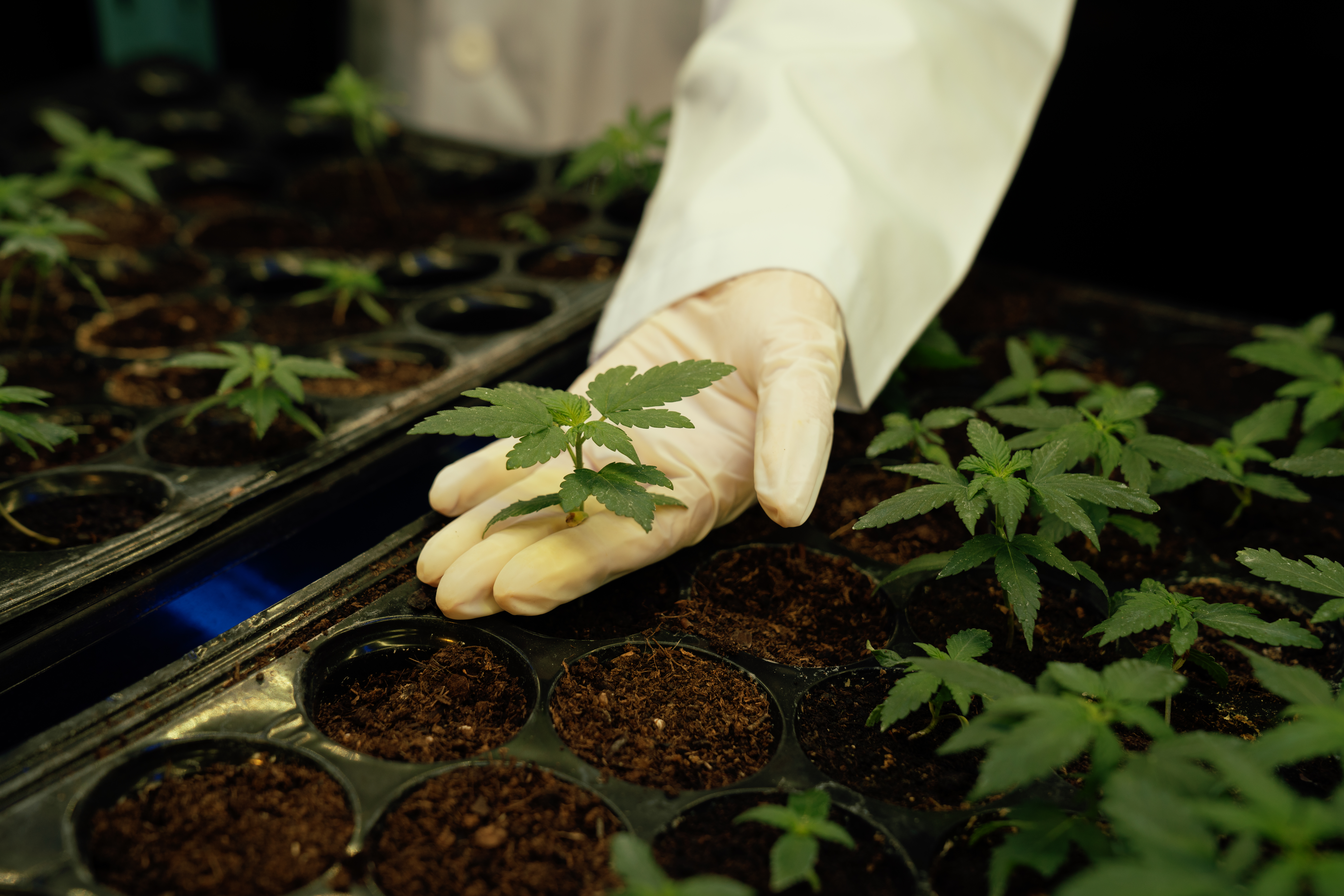


Marijuana plant grafting is a method that joins part of one cannabis plant to another cannabis plant. The goal is to help the two plant sections heal together and continue growing as one plant. This method has been used with many types of fruit trees, flowers, vegetables, and ornamental plants. Cannabis grafting follows the same basic plant science, but it must be done with care because marijuana stems can be soft, hollow, and easy to damage.
A grafted plant has two main parts. The first part is called the rootstock. This is the lower section of the plant. It includes the roots and part of the main stem. The rootstock takes in water and nutrients from the growing medium. It also supports the plant and helps supply the upper branches with what they need for growth.
The second part is called the scion. The scion is a cutting or branch taken from another marijuana plant. It is attached to the rootstock through a carefully made cut. When the graft works, the tissues of the rootstock and scion connect. The scion then receives water and nutrients through the root system of the rootstock. It continues to grow as a branch while keeping the traits of the plant from which it was taken.
Grafting does not mix the genetics of two plants in the same way that breeding does. The rootstock and scion remain genetically different. A branch taken from one strain will still grow according to the genetics of that strain. Its leaf shape, growth pattern, flowering time, aroma, and other traits will mainly come from the donor plant. The rootstock may affect the general strength, water supply, and growth of the full plant, but it does not turn the scion into a new strain.
This point is important because grafting and crossbreeding are often confused. Crossbreeding combines genetic material through reproduction and seed production. Grafting only joins plant tissues. It allows separate plant parts to share one root system, but it does not create a genetic blend. A multi-strain grafted plant may have several branches with different genetics, yet each branch stays true to its original donor plant.
One major reason for grafting marijuana plants is to grow more than one strain on a single rootstock. A healthy plant may support several grafted branches when each graft heals correctly. This can be useful where growing space is limited. Instead of keeping a separate large mother plant for every strain, several strains may be maintained on one plant. Each grafted branch can then serve as a source of plant material while sharing the same root zone.
Grafting may also support strain preservation. Some growers maintain selected plants because they have useful growth traits or stable genetics. A small branch from an important plant may be grafted onto a healthy rootstock. This can provide another way to keep that plant material alive. However, grafting should not be viewed as a perfect replacement for all other propagation methods. It requires skill, clean tools, healthy plants, and close care during healing.
Another reason for grafting is to study how different strains grow on the same root system. One branch may grow quickly, while another may stay short and compact. Some strains may have long flowering periods, while others finish earlier. Placing several strains on one plant can make these differences easy to observe. It can also create management problems. Faster branches may shade slower ones. Different flowering times may make pruning, lighting, and harvesting more difficult.
The health of the rootstock is very important. A weak root system cannot support several demanding branches well. The rootstock should have healthy leaves, active growth, firm stems, and no clear signs of pests or disease. A damaged or stressed plant may struggle to heal after grafting. It may also have trouble supplying water to a new scion before the tissues connect.
The scion must also be healthy. Soft, damaged, infected, or flowering branches may have a lower chance of success. A good scion usually comes from active vegetative growth. Its stem should be firm but not too woody. The cut surface must remain clean and moist while the graft is being prepared. Even a healthy scion can fail when it dries out before the union forms.
Successful grafting depends on close contact between the living tissues inside both stems. These tissues help move water and nutrients through the plant. They also produce new cells that close the wound. When the cut surfaces are matched and held firmly together, new tissue can form between them. Over time, the union becomes stronger and the scion begins to grow normally.
The early healing period is often the most delicate stage. The scion has no roots of its own. It depends on the graft union for water. Before the connection is complete, the leaves may lose moisture faster than the stem can replace it. Stable humidity, moderate light, and limited movement can reduce this stress. Strong heat, dry air, or direct wind may cause the scion to wilt.
Cleanliness is also essential. Grafting creates open wounds on both plants. Dirty blades, hands, clips, or tape may introduce harmful bacteria or fungi. These organisms can damage the cut tissue before it heals. Sharp and clean tools make smoother cuts and reduce the amount of crushed plant tissue. A smooth cut gives the rootstock and scion a better chance to connect.
Marijuana grafting is not always successful on the first attempt. Some grafts fail because the stems do not match well. Others fail because of drying, movement, infection, or weak plant health. Careful preparation improves the chance of success, but every graft must be watched closely. Signs such as firm leaves, green tissue, and new growth may show that the union is working.
Legal rules must also be considered before grafting or growing marijuana plants. Cannabis laws differ by country, state, province, and city. Some places allow limited personal cultivation, while others require permits or do not allow home growing at all. Plant counts may include every rooted plant, mother plant, seedling, and grafted plant. Local rules should be checked before starting any cannabis cultivation project.
Marijuana plant grafting combines plant science, careful cutting, and patient aftercare. It can help place several strains on one root system, preserve selected plant material, and make better use of limited growing space. Still, grafting has limits. It does not create a new hybrid, guarantee stronger growth, or remove the need for good plant care. Healthy stock, clean tools, accurate cuts, and stable healing conditions remain the foundation of a successful grafted marijuana plant.
Benefits and Limitations of Grafting Marijuana Plants
Grafting marijuana plants can offer several practical benefits, especially when space is limited or when several strains need to be kept alive at the same time. The basic idea is simple. A healthy rooted plant acts as the rootstock, while branches from other plants are attached to it as scions. Once the grafts heal, each scion continues to grow as part of the same plant.
This method can be useful, but it also has limits. Grafting does not turn weak genetics into strong genetics, and it does not guarantee larger harvests. The result depends on plant health, strain compatibility, skill, and aftercare. A grafted plant may also be harder to manage than a normal single-strain plant.
Saving Space in the Growing Area
One of the main benefits of grafting is space saving. Keeping several strains often requires one mother plant for each strain. Every mother plant needs its own pot, light, water, nutrients, and growing space. This can quickly fill a small indoor area.
A multi-strain grafted plant may reduce the number of separate mother plants needed. Several scions can grow from one rootstock. Each branch may come from a different strain, but all branches share the same root system and container.
This may be useful in small grow rooms, tents, research spaces, or plant collections where floor space is limited. Instead of keeping five separate mother plants, one healthy rootstock may support several grafted branches.
Space is not saved in every situation. A multi-strain plant may still grow wide and require careful training. Each branch needs enough light and airflow. If too many scions are added, the plant may become crowded and difficult to control.
Grafting saves root-zone and container space more than canopy space. Branches still need room above the pot. Careful pruning and training are needed to prevent stronger branches from blocking weaker ones.
Keeping Several Strains on One Plant
Grafting allows several marijuana strains to grow on one rootstock. Each grafted branch keeps the genetic traits of the plant from which it came. A branch from one strain will not change into the rootstock strain. It should continue to produce its own leaf shape, growth pattern, smell, flowering behavior, and other inherited features.
This can help preserve several strains without keeping a full-size plant for each one. Small grafted branches may act as living genetic material. Cuttings can later be taken from these branches if new plants are needed.
Clear labels are very important. Once many strains grow on one plant, it can become difficult to remember which branch belongs to which strain. Each graft should be labeled with the strain name and grafting date. A simple written map of the plant can also prevent confusion.
Strains with similar growth habits are usually easier to manage together. A very fast-growing branch may take more light and space than a slow-growing one. Differences in stretch, branch strength, leaf size, and flowering time may make the canopy uneven.
A multi-strain plant needs regular inspection. Strong branches may need pruning, while weak branches may need better light or support. The goal is to keep all grafted sections growing at a balanced rate.
Using a Strong and Healthy Rootstock
A healthy rootstock may provide a strong base for the grafted plant. The rootstock controls the root system, water uptake, and much of the plant’s support structure. It should have healthy roots, a firm stem, and active vegetative growth.
A weak rootstock cannot support healthy scions for long. Problems such as root disease, pest damage, poor drainage, or nutrient stress may affect every grafted branch. Since all scions depend on the same roots, a root-zone problem can harm the entire plant.
A vigorous rootstock may help support steady growth, but it cannot repair poor genetics in a scion. A weak or unhealthy scion may still grow poorly even when attached to a strong root system.
The rootstock should also have enough branches and stem space for the planned grafts. Thin, soft, or damaged stems may be difficult to cut and secure. A plant that has recently suffered from heat, overwatering, nutrient burn, or pests should recover before grafting begins.
A strong rootstock offers the best chance of stable healing. It does not remove the need for clean cuts, good tissue contact, correct humidity, and careful aftercare.
Supporting Strain Preservation
Grafting may support strain preservation when several varieties need to be kept in a small space. A grower may keep one branch from each selected strain on a shared rootstock. These branches may later provide cuttings for future plants.
This method may be useful when a strain is rare, difficult to replace, or important for breeding or research. It can provide another way to maintain living plant material without using many separate pots.
However, grafting should not be the only method used to protect valuable genetics. Grafts can fail. Plants may also be lost to pests, disease, equipment failure, or other problems. Important strains are often safer when preserved through more than one method.
Healthy cuttings, separate backup plants, seeds, or tissue culture may offer extra protection. A single multi-strain plant creates a shared risk because all branches depend on one root system. If the rootstock dies, every grafted strain on that plant may also be lost.
Uses in Breeding and Plant Research
Grafting can be useful in plant research because it allows different plant parts to be studied on one shared root system. Researchers may compare how several scions respond when they receive water and nutrients from the same rootstock.
This may help separate the effects of roots from the effects of shoot genetics. For example, two scions may grow differently even though they share the same roots. These differences may show how strongly each strain’s genetics affect branch growth and plant structure.
Grafting may also support breeding work by helping preserve selected plants while other tests are carried out. A branch from a valuable plant may be maintained on another rootstock instead of keeping the original plant at full size.
Grafting does not combine the DNA of two plants in the same way that breeding does. The rootstock and scion remain genetically different. Seeds are not created simply because one strain is grafted onto another. A new genetic cross requires pollination and sexual reproduction.
Grafting Does Not Guarantee Better Yield
A common misunderstanding is that grafting will automatically increase yield. This is not always true. A healthy rootstock may support good growth, but the scion still follows its own genetic limits.
Yield depends on many factors, including light, plant health, nutrition, temperature, training, root condition, and flowering time. Poor graft alignment or weak healing may reduce growth instead of improving it.
A multi-strain plant may also produce uneven results. One branch may grow quickly, while another stays small. Some strains may need more support or a longer flowering period. Managing these differences may require extra time and skill.
Too many grafts may place stress on the plant. Each graft creates a wound that must heal. Adding several scions at once may slow recovery or increase the chance of failure.
Grafting Does Not Increase Potency or Flavor
Grafting does not normally make a strain more potent. The scion keeps the main genetic traits of the donor plant. Its expected cannabinoid profile, aroma, flavor, and flower structure are still linked to its own genetics and growing conditions.
The rootstock may affect plant health, water movement, and nutrient uptake, but it does not directly change one strain into another. A high-potency scion will not transfer its genetics into the rootstock branches. A low-potency scion will not become stronger simply because it is attached to a vigorous plant.
Flavor and aroma also depend on genetics, plant health, harvest timing, drying, and storage. Grafting should be viewed as a plant management method, not as a direct way to improve flower quality.
Added Difficulty and Maintenance
Grafted marijuana plants usually need more attention than standard plants. Each graft must heal correctly. The plant must then be trained so that no branch becomes too dominant.
Different strains may have different nutrient needs, but they all share one root zone. It is not possible to give one grafted branch a separate soil feeding plan. The grower must use a balanced approach that supports the whole plant.
Flowering time may also create problems. One branch may mature early, while another needs several more weeks. Harvesting one section without damaging the rest of the plant requires care.
Graft unions should be checked as stems become thicker. Tape, clips, or ties may need to be removed before they restrict growth. Weak unions may need support, especially when branches become heavy.
Grafting marijuana plants can save container space, preserve several strains, and allow different varieties to grow on one rootstock. A strong root system may provide a healthy base, while grafted branches keep the genetic traits of their donor plants. This method may also support breeding work, research, and mother-plant management.
The limits are just as important as the benefits. Grafting does not create a new strain, guarantee higher yield, or automatically improve potency and flavor. Multi-strain plants may be harder to prune, feed, flower, and harvest. Successful results depend on healthy plant material, careful grafting, clear labels, balanced growth, and regular long-term care.
Choosing Compatible Strains, Rootstock, and Scions
Successful marijuana grafting starts with choosing the right plants. A graft may fail even when the cutting method is correct if the rootstock and scion are weak, damaged, or poorly matched. The rootstock is the lower part of the grafted plant. It includes the roots and part of the main stem. The scion is the branch or shoot taken from another plant and attached to the rootstock.
Both parts must be healthy enough to recover from cutting. They must also be able to form a strong connection. Stem size, plant age, growth speed, and overall health all affect the result. Careful plant selection gives the graft a better chance to heal and continue growing.
Can Different Marijuana Strains Be Grafted Together?
Different marijuana strains can often be grafted together because they belong to the same plant species or closely related cannabis groups. This close relationship makes it easier for their inner stem tissues to join. The plants do not need to be the same strain, but they should have similar stem growth and health.
Grafting one strain onto another does not blend their genetics. The rootstock keeps its own genetic makeup, while the scion keeps the traits of the donor plant. A branch taken from one strain will still produce the leaf shape, flower structure, aroma, and other traits linked to that strain. The rootstock may affect plant vigor, water movement, and nutrient support, but it does not turn the scion into a new strain.
Stem size is one of the most important points when matching plants. The scion and the selected rootstock branch should have a similar diameter. This makes it easier to line up the inner tissue layers. These layers carry water and nutrients through the plant. When they are not aligned, the scion may dry out before the graft can heal.
Growth rate should also be considered. A very fast-growing strain may take over the canopy and shade slower branches. This can create uneven growth on a multi-strain plant. Strong branches may receive more light while weaker branches remain small. Regular pruning and training may help, but choosing strains with similar vigor makes long-term care easier.
Flowering time can also create problems. One strain may finish flowering much earlier than another. This may lead to different feeding, support, and harvest needs on the same plant. The plant can still be managed, but it may require closer attention. Strains with similar flowering periods are often easier to maintain together.
Plant structure matters as well. A tall strain with long spaces between branches may grow very differently from a short, compact strain. These differences can make the canopy harder to balance. Matching plants with similar height, branching habits, and growth speed may reduce this problem.
Choosing the Rootstock
The rootstock supports the entire grafted plant, so it must be strong and healthy. A poor root system can limit every branch above it. A good rootstock should have firm stems, healthy leaves, active new growth, and a well-developed root system.
The plant should not show signs of pests or disease. Spots, yellowing, drooping, stem damage, mold, or slow growth may point to a health problem. A weak rootstock may not have enough energy to heal the graft. It may also pass pests or disease problems to the new scion.
The rootstock should be in active vegetative growth. During this stage, the plant is producing new leaves, stems, and roots. Its tissues are usually softer and easier to cut than old, woody stems. Active growth also means the plant can direct energy toward healing.
A plant that has recently suffered from overwatering, underwatering, heat stress, nutrient problems, or transplant shock should not be used right away. It should be allowed to recover first. Grafting adds another form of stress, and a plant that is already struggling may not respond well.
The rootstock should also have enough branches or stem space for the planned graft. For a multi-strain plant, several healthy branches may be needed. The branches should be spaced far enough apart to avoid crowding. Good spacing also allows each scion to receive light and airflow after healing.
Root strength is another key factor. A rootstock with fast root development and steady growth may support several scions more effectively than a weak or slow-growing plant. However, a strong rootstock cannot correct every problem. Each grafted branch still needs proper light, pruning, airflow, and care.
The age of the rootstock should match the grafting method. Very young seedlings may be too thin and fragile. Older plants may have thick or hard stems that are more difficult to join. A healthy plant in active vegetative growth often provides the best balance between strength and flexibility.
Choosing the Scion
The scion should come from a healthy donor plant. It should be taken from active vegetative growth rather than from a flowering branch. A vegetative shoot is more likely to focus on healing and producing new leaves. A flowering scion may have higher energy needs and may respond poorly to the stress of grafting.
The selected shoot should have firm green tissue and no visible damage. It should not show signs of pests, disease, nutrient deficiency, or severe stress. Weak stems, twisted growth, dry leaves, and discolored tissue should be avoided.
A scion should have at least one healthy growing tip and enough leaf tissue to continue growth after healing. However, too many large leaves may increase water loss. The scion cannot take up water normally until its tissues connect with the rootstock. Large leaves may release moisture faster than the scion can replace it.
Some leaf material may be reduced before grafting to limit water loss. This must be done carefully. Removing too much leaf tissue may reduce the scion’s ability to produce energy. The goal is to keep enough healthy growth while lowering the stress placed on the fresh graft.
The lower section of the scion should have a similar thickness to the selected rootstock stem. A close match helps the inner tissues touch. Perfectly equal stem size is not always possible, but at least one side of the inner layers should be aligned closely.
The scion should be cut with a clean, sharp blade. Crushed or torn tissue is harder to join. Once the scion is removed from the donor plant, it should be attached quickly. The cut surface should not be allowed to dry out or become dirty.
The donor plant should also be clearly labeled. This is especially important when several strains are being grafted onto one rootstock. Each scion should be labeled with the strain name and grafting date. Clear records prevent confusion later, especially when branches begin to look similar during vegetative growth.
Choosing compatible plant material is one of the most important parts of marijuana grafting. Different cannabis strains may be joined, but they should have similar stem size, plant health, and growth stage. Strains with similar vigor, structure, and flowering time are often easier to manage on one rootstock.
The rootstock should have a strong root system, active vegetative growth, healthy stems, and no signs of pests or disease. It must be able to support the scion while healing from the cut. The scion should come from a healthy donor plant and should have firm green tissue, active growth, and a stem size that matches the grafting point.
Careful selection does not guarantee success, but it removes many common problems before the graft is made. Healthy, well-matched plants are more likely to form a stable union and continue growing as a balanced multi-strain plant.
Best Time and Plant Stage for Grafting
Choosing the right time to graft a marijuana plant can greatly affect the chance of success. Grafting places stress on both the rootstock and the scion because each plant section must heal after being cut. The two pieces must also form a strong tissue connection before the scion can receive enough water and nutrients. Healthy plants in active growth usually recover faster than weak, old, or flowering plants.
The best time to graft is normally during the vegetative stage. During this stage, the plant focuses on producing stems, leaves, and roots. Its tissues are active, flexible, and able to repair damage. A plant in vegetative growth also has more time to recover before flowering begins. This makes the healing process easier to manage and reduces the risk of poor growth later.
Plant age alone does not decide whether a plant is ready for grafting. Stem strength, growth speed, plant health, and environmental conditions are also important. A suitable plant should have several healthy nodes, firm stems, and steady new growth. The stem should be thick enough to cut and secure without splitting, but it should not be hard or woody.
Why Vegetative Growth Is the Best Stage
The vegetative stage gives the rootstock and scion the best chance to join. Plant cells near the cut surfaces begin repairing the wound soon after the graft is secured. These cells form healing tissue between the two plant sections. Over time, new pathways develop that allow water and nutrients to move from the roots into the scion.
Young stems in vegetative growth contain softer tissue than mature stems. This makes them easier to cut cleanly. Smooth cuts create better contact between the scion and rootstock. Close contact is important because large gaps may dry out or prevent the tissues from joining.
Vegetative plants are also less focused on flower production. A flowering plant directs much of its energy toward forming buds and supporting reproduction. A vegetative plant can direct more energy toward stem growth and tissue repair. This does not guarantee success, but it creates better conditions for healing.
The plant should show active growth before grafting. New leaves should appear at a steady rate, and the stems should look green and firm. Plants that have recently been transplanted, heavily pruned, or treated for a serious problem should be allowed to recover first. Adding another stressful procedure too soon may slow healing or cause the graft to fail.
Why Very Young Seedlings May Be Too Fragile
Very young seedlings are usually poor choices for grafting because their stems are thin and delicate. A small stem may bend, crush, or split when cut. It may also be difficult to hold the scion and rootstock together with tape or clips.
Seedlings have limited energy reserves and small root systems. They may struggle to recover from cuts while also developing new roots and leaves. Even a slight change in humidity, temperature, or watering may cause serious stress.
A better rootstock usually has an established root system and several sets of true leaves. Its stem should be large enough to handle a clean cut. The plant should also be strong enough to support the scion while the graft heals.
The scion should not be extremely soft or newly formed. Very soft growth can lose moisture quickly after being removed from the donor plant. A healthy shoot with firm green tissue is often easier to handle and secure.
Why Older Woody Stems May Heal Slowly
Older stems may become thick, hard, and woody. This change makes clean cutting more difficult. A blade may tear or crush the tissue instead of creating a smooth surface. Poor cuts reduce contact between the rootstock and scion.
Woody stems may also have different tissue thicknesses than young stems. The active layers that must connect can be harder to align. If these layers do not touch, water movement into the scion may remain limited.
Mature stems can still be grafted in some cases, but they often require more care. The scion and rootstock should have similar diameters, and the cuts must fit closely. Strong support may also be needed because heavy branches can place pressure on the graft union.
Using younger side branches is often easier than cutting into a thick main stem. Side branches may have flexible tissue while still being strong enough to support a graft.
Why Grafting During Flowering Is More Difficult
Grafting during flowering is generally more difficult because the plant is already under greater demand. It must supply water and nutrients to developing flowers while also maintaining leaves, stems, and roots. A fresh graft creates another area that requires energy and repair.
Flowering branches may also be less flexible than vegetative shoots. Their growth pattern changes, and some stems begin to harden. The scion may lose water before the graft develops a working connection.
Lighting schedules used for flowering can create another challenge. Long dark periods and strong daytime light may make the healing environment harder to control. A newly grafted scion often benefits from mild light and stable conditions. Strong flowering lights may increase water loss and cause the scion to wilt.
Grafting during flowering may also delay development on the affected branch. Even when the graft survives, growth may be uneven. The new branch may not have enough time to become established before harvest.
For these reasons, grafting is best completed well before flowering begins. The graft should be stable, actively growing, and free from support restrictions before the plant enters the flowering stage.
How Stem Thickness Affects Timing
Stem thickness is one of the clearest signs that a plant may be ready for grafting. Thin stems are difficult to cut and secure. Very thick stems may be hard to match and slow to heal.
The scion and rootstock should have similar diameters whenever possible. Matching sizes make it easier to align the active inner tissues. When one stem is much smaller, only one side may line up correctly. This can still work, but it requires greater accuracy.
The correct thickness also depends on the grafting method. Some methods use small side branches, while others involve a larger stem. No matter which method is chosen, the plant tissue should be firm enough to hold its shape after cutting.
How Plant Health Affects Grafting Success
Only healthy plants should be used for grafting. A rootstock with damaged roots, nutrient problems, pests, or disease may not have enough strength to support a scion. A weak scion may dry out or fail to produce new growth.
Leaves should have a healthy color, and stems should be free from spots, rot, or physical damage. The growing medium should drain well, and the roots should receive enough oxygen. Plants showing severe drooping, leaf loss, or slow growth should not be grafted until the cause has been corrected.
The donor plant should also be checked carefully. A scion can carry pests or plant disease from one plant to another. Using clean and healthy material protects the rootstock and any other grafted branches.
How Temperature and Growth Speed Affect Timing
Moderate temperatures support steady plant growth and tissue repair. Excessive heat can increase water loss from the scion. Cold conditions may slow cell activity and delay healing. Sudden temperature changes may also place extra stress on the graft.
Plants should be growing at a stable rate before the procedure. Fast, weak growth caused by poor lighting may produce soft stems that are difficult to handle. Very slow growth may show that the plant is stressed or that the environment is not suitable.
The grafting area should remain stable before and after the procedure. Large changes in temperature, humidity, airflow, or light can reduce the chance of success. Grafting should be delayed when the growing space is experiencing heat problems, equipment changes, or other unstable conditions.
The best time to graft a marijuana plant is during healthy and active vegetative growth. Plants at this stage have flexible stems, strong tissue repair, and enough time to recover before flowering. Very young seedlings may be too fragile, while older woody stems can be harder to cut and align. Flowering plants may heal more slowly because their energy is already directed toward flower production.
A suitable rootstock and scion should be healthy, actively growing, and similar in stem thickness. Moderate temperatures and stable environmental conditions also support healing. Careful timing does not remove every risk, but it gives the graft a stronger chance to form a lasting connection and produce healthy new growth.
Tools, Materials, and Preparation
Grafting requires careful preparation because both the rootstock and the scion are wounded during the process. These open cuts can dry out, become contaminated, or fail to connect if the tools and plant material are not prepared correctly. A clean work area, healthy plants, and steady environmental conditions can improve the chance of a strong graft. Cannabis cultivation and plant grafting should only be carried out where permitted by local law.
Cutting Tools
A sharp cutting tool is one of the most important items needed for grafting. A sterile razor blade, grafting knife, or small precision blade may be used to make the required cuts. The blade must be sharp enough to pass through the stem in one smooth movement.
A dull blade may crush or tear the plant tissue. Damaged tissue may have trouble forming a strong connection between the rootstock and the scion. Rough cuts can also leave small gaps where the two plant sections should touch. These gaps may slow healing and increase the chance of failure.
The cutting tool should be cleaned before use and again when moving between different plants. A suitable disinfectant can help remove plant sap, dirt, and possible disease organisms. The blade should be allowed to dry after cleaning so that disinfectant does not enter the fresh plant wound.
Care is also needed when handling sharp tools. The cutting surface should be stable, and the blade should always move away from fingers and hands. Gloves may provide some protection, but they do not replace safe handling.
Grafting Tape and Plant Clips
The rootstock and scion must remain in close contact while the graft heals. Grafting tape, soft plant tape, grafting clips, or other gentle supports may help hold the two sections together.
The support should be firm enough to prevent movement. Even small shifts may separate the inner tissues and delay healing. However, the tape or clip should not be so tight that it crushes the stem or stops normal growth.
Flexible grafting tape is useful because it can stretch as the stem becomes thicker. Some materials also help reduce moisture loss around the cut area. Plant clips are often easier to place, but the correct size is important. A clip that is too large may not hold the union securely. A clip that is too small may press too hard against the stem.
The graft should be checked during recovery. Tape or clips may need to be loosened or removed after the union becomes stable. Leaving support in place for too long can restrict the growing stem.
Cleaning Supplies and Gloves
Cleanliness is essential because grafting creates an open entry point for fungi, bacteria, and other harmful organisms. The work surface should be cleaned before any cuts are made. Tools, clips, and reusable materials should also be disinfected.
Disposable gloves can reduce direct contact between the hands and fresh plant tissue. Gloves should be clean and changed when moving between plants that may have pest or disease problems. Touching the cut surfaces should be avoided, even when gloves are worn.
A clean cloth or paper towel may be used to wipe tools and remove excess moisture from the work area. Used plant material should be removed quickly. Old leaves, cut stems, and soil on the work surface may carry pests or disease organisms.
Labels and Recordkeeping
Clear labels are especially important when several strains are being grafted onto one plant. Each scion should be labeled with the strain name and the date of grafting. The location of the graft may also be recorded.
Labels should be placed where they remain easy to read without pressing against the stem. Waterproof ink is helpful because water and humidity may cause normal ink to fade.
A simple written record can include the name of the rootstock, the source of the scion, the grafting date, and signs of progress. Notes about wilting, new growth, tape removal, or graft failure can help improve future attempts. Recordkeeping also reduces the risk of mixing up branches when the plant becomes larger.
Preparing the Rootstock
The rootstock should be healthy, actively growing, and free from visible pests or disease. It should have a strong root system and firm green stems. A weak rootstock may not have enough energy to support healing and new growth.
The plant should be watered before grafting, but the growing medium should not be soaked. A plant that is too dry may have trouble supplying moisture to the scion. A plant sitting in waterlogged soil may already be under root stress.
The selected grafting area should be easy to reach and strong enough to support the new scion. Leaves or small shoots that block the work area may be removed carefully. However, too much healthy growth should not be removed at one time because the rootstock still needs leaves for energy production.
Preparing the Scion
The scion should come from a healthy donor plant during active vegetative growth. A firm shoot with fresh green tissue is usually more suitable than a weak, damaged, or woody branch.
The scion should be inspected for insects, spots, discoloration, and other signs of poor health. Plant material with possible disease should not be used. Grafting infected material may spread the problem to the rootstock.
The scion should be prepared shortly before attachment because the cut end can lose moisture quickly. It should not be left under strong light, high heat, or dry airflow. Large leaves may increase water loss, so leaf area is often kept manageable during the early healing period.
The stem size of the scion should be close to the size of the selected rootstock section. Similar stem diameters make it easier to align the inner growth tissues. Perfectly equal stems are not always possible, but close contact on at least one side is important.
Preparing the Healing Area
A stable healing area should be ready before the graft is made. This prevents delays after the plant tissues have been cut. The area should have mild light, stable temperatures, controlled humidity, and gentle airflow.
Strong light can increase water loss from the scion before the graft has formed a working connection. Very dry air may cause rapid wilting. Excess humidity, however, may encourage mold or soft stem tissue. The goal is to limit drying without creating wet and stagnant conditions.
Direct airflow should not blow against the graft. Strong fans may move the scion and weaken the union. Gentle air circulation around the area may still help prevent stagnant moisture.
The plant should be placed where it will not be bumped, moved, or handled often. Frequent inspection can disturb the graft. All supplies should be within reach before the procedure begins so that the work can be completed in an organized manner.
Successful preparation begins with healthy plants, clean materials, and a stable workspace. Sharp blades help create smooth cuts, while grafting tape or clips keep the rootstock and scion from moving. Disinfected tools and clean gloves reduce the risk of contamination. Clear labels protect strain records, especially on multi-strain plants. The rootstock and scion should both be healthy, actively growing, and similar in stem size. A mild healing area should also be prepared in advance. Careful planning cannot guarantee success, but it can reduce common problems such as drying, infection, poor alignment, and stem damage.
How to Graft a Marijuana Plant Step by Step
Grafting a marijuana plant requires clean tools, healthy plant material, and careful handling. The goal is to join a cutting from one plant to a rooted plant so the two sections heal together. The rooted plant is called the rootstock. The cutting placed onto it is called the scion. Both parts must stay alive long enough for new tissue to form between them.
The process works best when both plants are healthy and growing at a similar rate. Weak plants may not have enough energy to repair the cut. Plants affected by pests, disease, heat stress, overwatering, or nutrient problems should recover before grafting begins. A clean working area is also important because every cut creates an open wound where harmful microbes may enter.
Preparing the Rootstock
The rootstock should be watered several hours before grafting. The growing medium should be moist but not soaked. A well-watered plant is less likely to wilt after a branch is cut. Too much water, however, may reduce oxygen around the roots and place the plant under stress.
A healthy branch or section of the main stem should be selected as the grafting point. The stem should be green, firm, and flexible. Very thin stems may bend or dry too quickly. Thick, woody stems can be harder to cut and may take longer to heal. The best grafting area usually has a stem width close to the width of the scion.
Leaves and small shoots near the grafting point may need to be removed. Clearing the area makes it easier to create a smooth cut and secure the connection. It also prevents nearby leaves from pushing against the tape or clip. Growth below the graft may be left at first because it can help the rootstock continue producing energy. Excess growth may be removed later if it begins to compete with the new scion.
The blade must be cleaned before the cut is made. A sharp razor or grafting knife creates a smooth surface with less tissue damage. A dull blade may crush the stem, leaving an uneven wound that is difficult to join.
Preparing the Scion
The scion should come from a healthy donor plant in active vegetative growth. A young shoot with firm green tissue is usually easier to work with than an old or woody branch. The scion should also be close in width to the selected rootstock stem.
A short section containing at least one healthy growing point should be selected. Large leaves may be trimmed to reduce water loss. The leaves should not all be removed because the scion still needs some leaf tissue to support later growth. Reducing the leaf area helps limit the amount of moisture that escapes before the graft begins moving water into the scion.
The scion should be removed with one clean cut. Once separated from the donor plant, it begins losing moisture. The cut end should not be touched because skin oils, dirt, or pressure may damage the exposed tissue. The scion should be attached to the rootstock as soon as possible.
Keeping the scion in a cool and humid place during preparation may reduce drying. It should not be placed in direct light or left uncovered for a long period. Quick and careful handling improves the chance that the tissue remains fresh.
Joining the Plants
Matching cuts must be made on the rootstock and scion. A common method uses angled cuts because they create a larger contact area than flat cuts. The surfaces should be smooth and similar in length. Rough, torn, or uneven cuts make it harder for the tissues to meet.
The most important step is aligning the living tissue just below the outer stem surface. This tissue helps produce the new cells that connect the rootstock and scion. Perfect alignment across the full stem is not always possible, especially when the stems have slightly different widths. At least one side should line up closely.
The scion should be placed against the rootstock immediately after both cuts are prepared. The two pieces should fit together without large gaps. They must remain steady because movement can break the weak connection before healing starts.
Grafting tape, soft plant tape, or a suitable grafting clip may be used to hold the union. The material should be firm enough to prevent movement but not so tight that it crushes the stem. Every exposed cut surface should be covered as much as possible. This helps reduce moisture loss and lowers the chance of contamination.
A small support stake may be added when the scion is long or top-heavy. The support should hold the branch without pulling on the graft. The plant should then be labeled with the strain name and grafting date. Clear labels are especially important when several strains are grafted onto one plant.
Moving the Plant to the Healing Area
The newly grafted plant should be moved to a stable healing area. Strong light should be reduced during the first stage of recovery. Bright light causes leaves to lose more water, but the scion cannot replace that moisture well until the tissues begin to connect.
Humidity should remain high enough to slow water loss, but the area should not stay wet or stagnant. Excess moisture and poor airflow may encourage mold. Gentle air movement is helpful, although direct wind should not blow against the graft.
Temperature should remain moderate and stable. Sudden heat or cold may slow healing and increase stress. The rootstock should be watered only when needed. Heavy feeding, major pruning, transplanting, and strong training should be avoided while the graft is healing.
The graft should not be touched or moved often. Frequent inspection may shift the scion or weaken the forming tissue. Visual checks are usually enough during the early stage. Firm leaves, green tissue, and new growth are positive signs. Severe wilting, dark tissue, or a collapsing stem may show that the graft is failing.
Successful marijuana grafting depends on careful preparation and steady conditions. The rootstock and scion should be healthy, similar in size, and actively growing. Clean tools and smooth cuts reduce tissue damage and contamination. The cut surfaces must be aligned closely and secured so they cannot move. After the graft is completed, moderate light, stable temperatures, suitable humidity, and limited disturbance give the plant time to heal. Clear labeling also helps growers track each graft, especially when several strains share one rootstock.
Creating and Managing a Multi-Strain Marijuana Plant
A multi-strain marijuana plant is created by grafting branches from different cannabis strains onto one healthy rootstock. Each grafted branch keeps the traits of the plant it came from. This means one branch may grow like one strain, while another branch may grow like a different strain. The branches share the same root system, but they do not combine into a new strain.
This method may help reduce the number of separate plants needed to keep several strains. It may also make it easier to preserve selected genetics in a small growing area. However, managing a multi-strain plant can be more difficult than caring for a normal plant. Each branch may grow at a different speed, stretch to a different height, or reach maturity at a different time.
Good planning is important before adding several grafts to one plant. The rootstock must be healthy, well rooted, and strong enough to support several branches. The chosen strains should also have growth habits that are not too different. A balanced plant is easier to train, feed, and maintain.
Adding More Than One Scion
A multi-strain plant can carry several scions, but it is often safer to begin with one graft. The first graft gives the grower a chance to test the rootstock, the grafting method, and the healing environment. Once the first scion has healed and started producing new growth, another graft may be added to a different branch.
Adding many grafts at the same time may place too much stress on the rootstock. Each cut creates a wound that the plant must repair. Several wounds may slow growth and increase the chance of moisture loss, infection, or graft failure. The plant may also have trouble supporting several weak scions during the early healing stage.
A slow and controlled process may improve the chance of success. Each new graft should be checked for firm tissue, healthy leaf color, and new growth before more branches are added. The rootstock should continue growing well between grafting sessions.
There is no fixed number of strains that can be placed on one plant. The practical limit depends on the size of the rootstock, the number of healthy branches, the space around the plant, and the ability to manage uneven growth. A small plant may only support a few grafts. A larger mother plant may support more, but every extra branch increases the amount of care required.
Spacing Grafts Across the Rootstock
Grafts should be placed far enough apart to avoid crowding. When several grafts are close together, the branches may rub against each other or block light from reaching lower growth. Crowded branches also reduce airflow, which may increase the risk of moisture buildup and plant disease.
Each graft should have enough open space to develop leaves and side shoots. Branches growing from different sides of the rootstock may be easier to separate and train. This layout can also make it easier to inspect each graft union.
Placing every scion on the same side of the plant may create an uneven structure. The weight of the branches may pull the main stem in one direction. This can place stress on the rootstock and on the graft unions. A more even pattern helps spread branch weight around the plant.
The final size of each strain should be considered when choosing graft locations. A fast-growing strain may need more room than a short and compact strain. Taller strains may be placed where they can be bent or trained without covering smaller branches.
Choosing Strains With Similar Growth Habits
A multi-strain plant is usually easier to manage when the grafted strains have similar growth patterns. Strains with close flowering times, stretch levels, and feeding needs often grow more evenly on one root system.
Large differences may create problems. One strain may grow tall and fast, while another stays short. The taller branch may block light from the shorter branch. One strain may also enter flowering maturity much earlier than another. This can make harvest timing and canopy control more difficult.
Similar flowering times are helpful because all branches are exposed to the same light cycle. Each scion keeps its own flowering traits, so some branches may finish earlier than others. The light schedule cannot be changed for only one branch. For this reason, selecting strains with close flowering periods may make the plant easier to manage.
Growth strength is also important. A very vigorous strain may use more space and produce more side shoots. A slower strain may struggle to compete. Choosing strains with similar vigor can help prevent one branch from taking over the plant.
Labeling Every Grafted Branch
Clear labeling is one of the most important parts of managing a multi-strain marijuana plant. Once several branches begin growing together, they may become difficult to identify by appearance alone. Leaves can look similar, especially during vegetative growth.
Each graft should be labeled with the strain name and the date it was attached. A small plant tag may be placed near the base of the grafted branch. The label should not be tied too tightly because the stem will become thicker over time.
A written record should also be kept outside the growing area. This record may include the graft location, donor plant, grafting date, healing time, and any problems that appeared. A simple drawing of the plant can help show which strain is growing on each side.
Labels should be checked often. Water, humidity, and plant movement may damage writing or cause tags to fall off. Permanent, water-resistant markings are usually easier to read over a long period.
Preventing Strong Strains From Taking Over
Different strains rarely grow at exactly the same rate. A strong branch may produce more leaves, stretch higher, and develop more side shoots than the others. If this growth is not controlled, the strongest strain may shade weaker grafts and receive most of the light.
The plant may also direct more energy toward the branch with the largest leaf area. This can make weaker branches grow even more slowly. Regular observation is needed to keep the plant balanced.
Fast-growing branches may be shortened through careful pruning. New shoots can also be guided outward instead of allowing them to grow directly above smaller branches. Removing a small amount of growth from the strongest scion may give slower branches time to catch up.
Growth below the grafts should also be watched. Rootstock shoots may grow quickly because they are directly connected to the roots. These shoots may compete with the grafted branches. Unwanted growth below the grafting points may need to be removed so that the plant continues supporting the selected scions.
Balancing the Canopy With Pruning and Training
Pruning and training help keep all grafted strains at a similar height. A level canopy allows light to reach more branches evenly. It also improves airflow between leaves and makes each graft easier to inspect.
Branches may be bent gently and secured in place while they are still flexible. Tall scions can be guided outward, while shorter scions can be left more upright. This helps reduce large height differences.
Training should be done with care around the graft union. Pulling or bending too close to the union may cause it to split. Support should be placed along the branch so that pressure is not focused on the healed area.
Pruning should also be limited during stressful periods. Heavy pruning soon after grafting may slow healing. It is better to wait until the scion is growing strongly before removing large shoots or shaping the branch.
Dead leaves, weak shoots, and crowded inner growth may be removed as needed. This keeps the canopy open and allows air to move through the plant. However, too much leaf removal can reduce the plant’s ability to produce energy.
Creating a multi-strain marijuana plant requires a healthy rootstock, compatible scions, and careful long-term planning. It is often best to add one graft at a time and allow each scion to heal before adding another. Grafts should be spaced around the plant so the branches have enough room, light, and airflow.
Strains with similar growth speed and flowering time are usually easier to manage together. Every branch should be labeled clearly because each scion keeps the traits of its original donor plant. Strong branches may need pruning or training so they do not shade weaker strains. Balanced growth, regular inspection, and careful support help protect the graft unions and keep the plant healthy.
Healing Conditions and Aftercare
A marijuana graft needs time to form a strong connection between the rootstock and the scion. During this period, the cut tissues are still weak and cannot move water and nutrients as well as a normal stem. The plant must be kept in stable conditions so the graft does not dry out, rot, or separate. Good aftercare is just as important as making clean cuts and lining up the plant tissues correctly.
The first few days are often the most sensitive. The scion has no roots of its own, so it depends on stored moisture while the graft begins to heal. Sudden changes in temperature, light, humidity, or airflow may cause stress. Too much handling may also break the new connection. Careful control of the growing area gives the graft a better chance to survive.
Humidity and Temperature
Humidity helps reduce water loss from the scion. Before the graft heals, the scion cannot pull enough water through the rootstock. Its leaves may lose moisture faster than the stem can replace it. Moderate to high humidity can slow this water loss and help the leaves remain firm.
A humidity cover may be placed over the grafted area or the whole plant. The cover should not press against the leaves or stem. It should also allow some air exchange. A fully sealed space may become too wet and create conditions where mold can grow. Water drops should not remain on the graft wound because constant moisture may soften the tissue and increase the risk of rot.
The grower should check the plant each day without moving the graft. A small amount of condensation inside a cover may be normal. Heavy water buildup, wet leaves, or a strong damp smell may show that the area needs more ventilation. Humidity should be reduced slowly as the graft begins to heal. Removing the cover too quickly may cause the scion to wilt.
Temperature also affects healing. A mild and stable temperature allows plant cells to repair the wound and grow together. Cold conditions may slow healing, while excessive heat may increase water loss. High heat may also cause leaves to droop and the scion to dry out. The plant should be kept away from heaters, cold windows, strong fans, and other areas with sudden temperature changes.
Stable conditions are more useful than chasing an exact number. The graft should not feel hot, cold, wet, or dry. A comfortable growing environment with no sharp changes usually supports better recovery.
Lighting and Airflow
A newly grafted marijuana plant should not receive strong light right away. Bright light increases photosynthesis and causes the leaves to release more water. Since the scion cannot yet replace water quickly, intense light may lead to severe wilting.
Soft or reduced light is often better during the early healing stage. The plant still needs enough light to stay healthy, but it should not be placed under the strongest part of a grow lamp. Raising the light, lowering its power, or moving the plant to the edge of the growing area may reduce stress.
Signs of excessive light may include curled leaves, fast wilting, dry leaf edges, or a scion that feels weak and thin. If these signs appear, the light level may need to be reduced. The plant can return to stronger light in small steps after the graft becomes stable and new growth appears.
Airflow is also important, but it must be gentle. Fresh air helps prevent mold and keeps the environment from becoming stale. However, direct wind may dry the scion or shake the graft union. Even small movements can stop the tissues from joining correctly.
Fans should not blow straight at the plant. Air should move around the growing space without causing the leaves or grafted stem to move. A calm but well-ventilated area gives the plant fresh air while protecting the weak connection.
Watering and Feeding
The rootstock should be watered carefully during the healing period. It needs enough moisture to support the scion, but the growing medium should not stay soaked. Waterlogged roots may receive less oxygen, which can slow growth and increase the risk of root problems.
The best approach is to check the growing medium before watering. The upper layer may be allowed to dry slightly while the root zone remains moist. A small container may dry faster than a large one, so watering should depend on the plant and the medium rather than a fixed schedule.
Overwatering may cause drooping that looks similar to graft stress. This can make it difficult to judge whether the graft is healing. Soggy soil, slow growth, yellow leaves, or a heavy container may show that the plant is receiving too much water.
Heavy feeding should also be avoided during early recovery. The plant is using energy to repair the graft union, not to support rapid growth. Strong fertilizer may add more stress, especially if the roots are already sensitive. A mild feeding plan or plain water may be enough for a short period, depending on the condition of the rootstock and the type of growing medium.
Nutrient changes should be made slowly. A sudden increase in fertilizer may burn the roots or leaves. The plant can return to its normal feeding routine after the graft is stable and active growth has started.
Removing Tape or Clips
Grafting tape or clips hold the rootstock and scion together while the tissues heal. These supports should remain in place until the union is strong enough to stay closed without help.
Removing support too early may pull the tissues apart. A graft may look joined on the outside while still being weak inside. The plant should not be tested by bending or pulling the scion. New growth, firm leaves, and a stable stem are better signs that healing is taking place.
Tape or clips should also not remain too long. As the stem grows thicker, tight material may press into the tissue. This may slow water movement or leave a narrow area around the stem. The support should be checked often without disturbing the graft.
Tape may be loosened in stages rather than removed all at once. A clip may also be taken off carefully while the stem is supported by hand. If the union opens or bends, the support may need to be replaced for a longer period.
How Long Does a Marijuana Graft Take to Heal?
Healing time is not the same for every plant. Some grafts may begin to show improvement within several days, while others may need two weeks or longer before the connection becomes strong. Plant health, stem size, temperature, humidity, tissue alignment, and aftercare all affect the process.
A fixed number of days should not be the only guide. A successful graft often has firm leaves, green tissue, and new growth. The scion should stay upright without constant wilting. The union may also become slightly thicker as new tissue forms around the cut.
A failed graft may remain limp, dry out, turn dark, or separate from the rootstock. Mold, soft tissue, and a bad smell may also show that the union is not healing. A failed scion should be removed with a clean tool so damaged tissue does not affect the rest of the plant.
Successful graft healing depends on stable and gentle care. Moderate humidity helps protect the scion from drying out, while steady temperatures support tissue repair. Soft light and mild airflow reduce stress without creating stale conditions. Careful watering protects the roots, and light feeding prevents extra strain during recovery.
Tape or clips must stay in place long enough to support the union, but they should not restrict the stem as it grows. Healing may take several days or a few weeks. New growth, firm leaves, and a stable connection are the clearest signs that the graft has succeeded. Patient aftercare gives the rootstock and scion the time they need to join and begin growing as one plant.
Signs of Success, Failure, and Common Problems
A marijuana graft needs close attention during the healing stage. The scion has no root system of its own, so it depends on the rootstock for water and nutrients. Until the tissues connect, the scion may look weak or slightly drooped. This does not always mean the graft has failed. The condition of the leaves, stem, and graft union should be checked over several days before making a final judgment.
A successful graft usually becomes stronger in stages. A failed graft often continues to decline even when humidity, light, and temperature are stable. Learning how to tell the difference can prevent unnecessary removal of a healthy scion. It can also help identify problems before they damage the rootstock.
Signs of a Successful Graft
One of the first positive signs is that the scion stays green. The leaves may droop for a short period after the procedure, but they should not become dry, brittle, or deeply discolored. A scion that begins to hold its leaves upright is likely starting to receive water through the rootstock.
Firm leaves are another helpful sign. Healthy leaf tissue should feel flexible but not weak or papery. Leaves that remain soft, green, and supported show that severe dehydration has not occurred. Minor leaf stress can be normal, especially during the first few days. The main concern is whether the condition improves or becomes worse.
New growth is one of the strongest signs of success. A growing tip may begin to extend, or a small new leaf may start to open. This means the graft has formed enough internal connection to support active growth. New growth should not be expected at once. The plant must first repair the wound and connect the water-carrying tissues.
The graft union should also become stable. The scion should not move when the plant is handled gently. The area may look slightly swollen as healing tissue forms around the cut. This swelling is often part of the repair process. The union should remain green or light brown rather than turning black or soft.
A successful graft may also resist a mild change in humidity. During the earliest healing stage, the scion may depend on high humidity to limit water loss. Once the connection becomes stronger, the plant should stay firm when humidity is slowly returned to normal levels.
Signs of Graft Failure
Severe wilting is a common sign of failure. A scion that hangs downward and does not recover may not be receiving enough water. Temporary drooping can occur after cutting, but it should not continue to become worse each day. Leaves that curl tightly, dry along the edges, or become crisp show serious water loss.
Stem color can also reveal a problem. Brown, black, gray, or transparent tissue near the cut may indicate dead tissue or decay. A healthy stem should remain firm. Soft or mushy tissue may be linked to rot. Dry, hollow, or shriveled tissue often means the scion has lost too much moisture.
Stem collapse is another clear warning sign. The scion may bend sharply above the graft or separate from the rootstock. This may happen when the connection was loose, the cut surfaces were not aligned, or the plant was moved during healing.
Mold may appear as white, gray, or dark growth around the union. A sour or unpleasant smell may also develop when tissue begins to rot. These signs should be taken seriously because decay can spread into the healthy part of the rootstock.
A failed scion may also remain alive-looking for a short time but never produce new growth. The leaves may slowly fade, yellow, or drop. In this case, the tissues may not have formed a working connection.
Poor Tissue Alignment
The inner growth layers of the rootstock and scion must touch for the graft to heal. When the stems are not aligned, the plant cannot build a strong connection between the two parts. The outer surfaces may appear joined, but water and nutrients may not move through the union.
Stem size can make alignment difficult. A very thin scion attached to a thick rootstock may only touch along one edge. This can still work when the living layers are carefully matched, but poor placement lowers the chance of success. Smooth, matching cuts make close contact easier.
Movement after attachment may also shift the tissues out of place. The graft should be held firmly with tape or a clip, but the support should not crush the stem.
Scion Dehydration
The scion loses water through its leaves after it is removed from the donor plant. It cannot replace this water until the graft begins to function. Low humidity, strong light, heat, and direct airflow can increase water loss.
A scion should not be left exposed for a long time before attachment. The cut should be made cleanly, and the pieces should be joined without delay. Large leaves may place extra demand on the scion because they release more moisture. Careful leaf trimming may reduce stress, but too much leaf removal can also reduce the plant’s ability to produce energy.
Strong light should be avoided during early healing. Bright light raises leaf activity and water demand. A softer light level allows the plant to focus on repair.
Contaminated Tools or Plant Material
Open plant tissue can be damaged by bacteria, fungi, and other harmful organisms. Dirty blades may transfer these organisms from one plant to another. Tools should be cleaned before grafting and again between plants.
The rootstock and scion should also be free from pests, spots, rot, and unusual stem damage. Grafting unhealthy tissue does not correct the original problem. It may spread disease into the entire plant.
Hands, clips, tape, and work surfaces should be clean. A sharp blade is safer for the plant because it creates a smooth cut with less damaged tissue. A dull blade may crush the stem and leave an uneven wound.
Loose or Excessively Tight Wrapping
Wrapping holds the scion and rootstock together while the tissues heal. Loose wrapping allows the cut surfaces to separate. Even small movement can damage new healing cells. A loose scion may twist, lean, or fall away from the rootstock.
Wrapping that is too tight can cause a different problem. It may crush the stem, block normal growth, or limit the movement of water. As the stem becomes thicker, tape or clips may press into the tissue. The support should be checked regularly without pulling the graft apart.
The wrapping should keep the union stable while still protecting the stem from pressure damage. Once the graft can support itself, the material may be loosened or removed with care.
Rootstock Shoots Taking Over
The rootstock may continue producing shoots below the graft. These shoots have a direct connection to the root system, so they may grow faster than the scion. When they are allowed to remain, they can take light, space, water, and nutrients away from the grafted branch.
Growth below the graft should be inspected often. Unwanted shoots may be removed before they become large. Removal should be careful so the rootstock is not damaged. Some healthy foliage may be kept during early healing if it helps the plant continue normal growth, but strong competing shoots should not be allowed to dominate.
Uneven Multi-Strain Growth
A multi-strain plant may have branches that grow at very different speeds. One strain may stretch quickly, while another stays short and compact. The fastest branch can shade the others and take over the canopy.
Regular pruning and gentle training can help keep growth balanced. Strong branches may need to be shortened, while slower branches may need better access to light. Each graft should be checked as an individual branch even though all branches share one root system.
Flowering time can also create problems. One branch may mature earlier than another. Careful labeling makes it easier to track the needs and progress of every strain.
Mold and Stem Rot
High humidity can protect a scion from dehydration, but too much moisture can encourage mold. Water should not collect around the graft union. The healing area needs gentle air movement, but direct wind should be avoided.
Rot often begins when damaged tissue stays wet and has little airflow. The union may become dark, soft, or swollen. A bad smell may develop. When rot appears, the affected scion should be removed before the problem spreads farther into the rootstock.
The remaining stem should be inspected for healthy tissue. Any cutting tool used during removal must be cleaned before it touches another plant.
Removing a Failed Scion and Trying Again
A scion should be removed when it is clearly dead, rotting, moldy, or fully separated. Keeping dead tissue attached may create a place for disease to grow. The cut should be made below the damaged area using a clean, sharp blade.
The rootstock may be used for another attempt when the branch remains healthy. The new graft should not be placed into soft, dark, or infected tissue. A fresh section of firm green stem should be selected. The plant may need time to recover before another graft is attempted.
Records can improve later results. The grafting date, strain name, stem size, healing conditions, and cause of failure can be written down. These notes may reveal patterns, such as repeated dehydration, poor alignment, or tape being removed too early.
A successful marijuana graft usually stays green, becomes firm, forms a stable union, and begins producing new growth. A failed graft often shows severe wilting, dry leaves, dark tissue, mold, rot, or stem collapse. Most failures are linked to poor tissue contact, dehydration, contamination, movement, or incorrect wrapping.
Long-Term Care of Grafted Marijuana Plants
A grafted marijuana plant needs steady care long after the graft has healed. The joined stem may look strong, but it can still become weak if the plant grows too fast, carries too much weight, or develops uneven branches. A multi-strain plant also needs more attention than a normal plant because each branch may grow at a different speed. Good long-term care helps protect the graft unions, balance the canopy, and keep the whole plant healthy.
Inspecting the Graft Unions
Each graft union should be checked often as the plant grows. The joined area should stay firm, dry, and free from cracks. Healthy unions usually become thicker over time as new tissue forms around the connection. A small raised area may appear where the scion and rootstock meet. This is often part of the normal healing process.
Problems may develop if the stem grows faster than the grafting tape or clip can expand. A tight support can press into the stem and block normal growth. It may also reduce the movement of water and nutrients through the plant. Tape, clips, or ties should be removed once the union is strong enough to support the branch. However, they should not be removed too early because the graft may split or bend.
The graft area should also be checked for soft tissue, dark spots, mold, or unusual swelling. These signs may point to infection or poor healing. A branch that suddenly wilts may have a damaged graft union. Early checks make it easier to correct a problem before the branch is lost.
Balancing Strong and Weak Branches
Different marijuana strains often have different growth patterns. One strain may produce long, fast-growing branches, while another may stay short and compact. On a multi-strain plant, the stronger branch can block light from reaching the weaker branches. It may also take more space and create an uneven canopy.
Careful pruning can help control fast-growing sections. Removing a small amount of growth from the strongest branch allows more light and air to reach the rest of the plant. The goal is not to stop the strong strain from growing. The goal is to keep all grafted branches at a manageable size.
Branches should be pruned in small steps instead of removing a large amount at one time. Heavy pruning may stress the whole plant because all branches share the same root system. A balanced approach gives weaker scions time to develop without placing too much pressure on the rootstock.
Plant training may also help control height and branch direction. Soft ties can guide tall branches away from smaller ones. Any tie placed near a graft should remain loose enough to avoid damaging the union.
Supporting Heavy or Uneven Growth
Some grafted branches may become heavier than others, especially when they produce dense leaves or flowers. A heavy branch can pull on the graft union and cause it to split. Support becomes more important as the plant grows taller and wider.
Plant stakes, soft ties, and support frames may be used to hold branches in place. Supports should carry part of the branch weight without pressing against the graft. A tie should not rub against the stem or cut into the bark. It should also allow room for the branch to expand.
Uneven weight can make the whole plant lean to one side. The container should remain stable, and the root area should not shift when branches are moved. A larger or heavier container may help support a mature multi-strain plant. Branches should also be arranged so that weight is spread across the canopy rather than placed on one side.
Managing Water and Nutrients
All grafted branches depend on the same root system. This means every strain receives water and nutrients from the same growing medium. One branch cannot receive a separate root feeding plan from another branch. This can be challenging when grafted strains have different growth rates or nutrient needs.
The best approach is to use a balanced feeding plan that supports the whole plant without causing signs of excess. Overfeeding may damage the root system and affect every grafted branch. Underfeeding may slow growth across the entire plant. Changes should be made slowly while watching the leaves and stems for signs of stress.
Watering should be based on the condition of the root zone rather than the appearance of one branch. A drooping scion does not always mean that the whole plant needs more water. The problem may come from the graft union, branch damage, heat, or uneven light. Adding too much water can lead to root problems.
Good drainage is important because the shared root system supports all strains on the plant. Root disease can weaken every branch at the same time. The growing medium should stay moist enough for healthy growth but should not remain soaked for long periods.
Removing Growth Below the Grafts
Shoots may appear on the rootstock below the grafted branches. These shoots use water, nutrients, and energy from the root system. If they are allowed to grow, they may become stronger than the scions and take over part of the canopy.
New shoots below the grafts should be checked and removed while they are still small. Small shoots are easier to remove and cause less stress than thick branches. The cut should be clean, and the main stem should not be damaged.
Some rootstock growth may be kept if it is part of the plant design, but it must be controlled. A vigorous rootstock branch can shade grafted sections and reduce their growth. Clear labeling helps separate rootstock growth from grafted strain growth.
Watching for Pests and Disease
A grafted marijuana plant should be inspected for pests and disease on a regular basis. The graft unions are important areas because they were once open wounds. Even after healing, damaged tissue may be more likely to trap moisture or develop cracks.
Leaves should be checked for spots, holes, webbing, eggs, or unusual color changes. Stems should be checked for soft areas, mold, and small insects. The lower side of leaves should also be inspected because many pests hide there.
Problems on one branch may spread to the rest of the plant. All scions share close contact through the rootstock and canopy. Fast action can prevent a small problem from affecting every strain on the plant.
Good airflow helps reduce excess moisture around the branches and graft unions. However, strong air should not push or shake the grafted sections. Fans should create gentle movement rather than direct force.
Keeping Accurate Plant Records
Clear records are very useful when caring for a multi-strain plant. Each graft should have a label that includes the strain name and grafting date. The branch location may also be recorded in a notebook or plant map.
Records can include the date when the graft healed, the rate of branch growth, pruning dates, and any signs of stress. Feeding changes and plant responses may also be noted. These details make it easier to understand which strains grow well together.
Good records also prevent confusion during flowering and harvest. Branches may look similar even when they come from different strains. A lost label can make it difficult to track flowering time, growth habits, or harvest results.
Long-term care keeps grafted marijuana plants strong, balanced, and easier to manage. Graft unions should be checked for pressure, cracking, mold, and weak tissue. Strong branches may need pruning, while heavy branches may need support. Every scion shares the same root system, so watering and feeding must support the whole plant. Shoots below the grafts should be controlled, and the plant should be checked often for pests and disease. Clear labels and written records also help track each strain. Consistent care allows the grafted branches to grow without placing too much stress on the rootstock or the graft unions.
Flowering and Harvesting a Multi-Strain Plant
A grafted marijuana plant can carry several strains on separate branches, but each branch still follows the traits of its original donor plant. This means the plant may look like one large plant from the outside, yet its branches may grow, flower, and mature at different speeds. Careful planning is needed during flowering because all branches share the same roots, growing space, light schedule, and general feeding plan.
The main goal is to keep every grafted branch healthy while allowing each strain to finish at its natural pace. Regular checks, clear labels, balanced pruning, and careful harvesting can make this process easier.
Each Branch Keeps Its Original Genetics
Grafting does not mix the genes of two marijuana strains. The rootstock and scion become physically connected, but they do not combine into a new strain. The rootstock supplies water, minerals, and physical support. The scion continues to produce leaves, flowers, aromas, and growth patterns based on its own genetics.
For example, a scion taken from a fast-flowering strain will usually keep its short flowering period. A scion from a taller strain may still stretch more than nearby branches. Flower shape, smell, resin production, and maturity time also remain linked to the donor plant.
The rootstock may affect plant vigor and general health, but it does not change the basic identity of the scion. Each grafted branch should therefore be treated as a separate strain growing on a shared root system.
Clear labels are important because branches may appear similar during early growth. Each label should include the strain name, grafting date, and expected flowering time. This information can help prevent confusion when the plant reaches harvest.
Managing Different Flowering Times
One of the main challenges with a multi-strain plant is that different branches may not mature at the same time. Some strains may finish flowering in eight weeks, while others may need ten weeks or longer.
All branches are exposed to the same light schedule, so flowering usually begins at about the same time. However, their flowers may develop at different rates. Early-finishing branches may form mature flowers while later strains are still building size.
Each branch should be checked separately instead of judging the whole plant as one unit. The age of the plant alone is not enough to decide when every branch is ready. Growers should watch flower development, leaf changes, resin maturity, and the condition of each labeled branch.
Differences in flowering time may also affect watering and feeding. A nearly mature branch may need less nitrogen, while a later branch may still be growing actively. Since all branches share one root zone, separate feeding programs are not possible. A moderate plan that supports the entire plant is usually easier to manage than strong changes made for one strain.
Very different flowering times may create problems. For this reason, strains with similar flowering periods are often easier to manage on one rootstock.
Controlling Canopy Height and Light Exposure
Different strains may stretch at different rates when flowering begins. One branch may grow much taller than the others and block light from reaching shorter scions. A balanced canopy helps each branch receive enough light.
Gentle training and pruning can control uneven growth. Taller branches may be tied down or moved toward the outside of the canopy. Shorter branches may be raised or supported so their flowers remain exposed.
Heavy pruning should be avoided after flowering is well established because it may place extra stress on the grafted plant. Small adjustments are usually safer than major changes. Leaves may be removed when they block important flowering sites, but enough healthy foliage should remain to support plant growth.
The graft unions must also be protected during training. Pulling too hard on a grafted branch may damage the connection between the scion and rootstock. Supports should be attached in a way that reduces pressure near the union.
Maintaining Airflow Around Every Strain
A multi-strain canopy may become crowded because branches have different shapes and leaf sizes. Dense growth may trap moisture and reduce airflow around the flowers. Poor airflow can increase the risk of mold, especially when thick flowers grow close together.
Branches should be spaced so air can move through the center and outer parts of the plant. Weak growth, damaged leaves, and crowded lower shoots may be removed when needed. Fans should provide gentle movement without blowing directly on one graft point for long periods.
Each branch may respond differently to humidity. Strains with dense flowers may need closer inspection than strains with loose flower structures. A shared environment should be kept stable and clean. Sudden changes in humidity may affect some branches more strongly than others.
Regular checks are important near the end of flowering. Flowers should be inspected for unusual discoloration, soft tissue, damaged leaves, or signs of pests. Problems found on one branch should be handled quickly before they spread to the rest of the plant.
Checking Each Branch for Harvest Readiness
Harvest readiness should be judged branch by branch. A grafted plant should not be harvested all at once unless all strains mature at the same time.
Flower appearance can provide useful clues. Mature flowers often show fuller shape, slower new growth, and changes in the small hairs around the flower. Leaves near mature flowers may also begin to fade as the branch reaches the end of its cycle.
Trichomes can also help show maturity. These small resin glands change in appearance as the flowers develop. However, they should be checked on each strain because different strains may show slightly different patterns.
The expected flowering period is only a guide. Plant health, light levels, temperature, and stress may speed up or slow down maturity. Direct observation is more reliable than following a fixed date alone.
Records can make this process easier. Notes should include when flowering began, expected harvest dates, visible changes, and the condition of each branch. Photographs may also help compare progress over several days.
Harvesting Branches at Different Times
A multi-strain plant may require several harvest sessions. Early branches can be removed while later branches remain attached and continue to mature.
The branch should be supported before it is cut. A clean, sharp tool should be used to prevent tearing. The cut should be made far enough from the graft union to avoid damaging the rootstock or nearby branches.
Large movements should be avoided because shaking or bending the plant may place stress on other grafts. Removing one heavy branch may also change the plant’s balance. Remaining branches may need extra support after part of the plant has been harvested.
The open cut should be kept clean and dry. Dead stem material should not be left hanging from the plant. The remaining plant should be monitored for signs of stress, wilting, or damage after each harvest.
Staggered harvesting may allow later strains to receive more light after mature branches are removed. However, sudden exposure to strong light may stress flowers that were previously shaded. Light and branch positions should be adjusted carefully.
Keeping Harvested Strains Properly Labeled
Correct labeling remains important after harvest. Each branch should be marked before it is removed from the plant. The label should stay with the harvested material during drying, trimming, and storage.
Without clear labels, similar-looking flowers from different strains may be mixed. This can make it difficult to compare growth, flowering time, aroma, and final quality.
Records should note the strain name, harvest date, branch location, flowering length, and any problems seen during growth. These details can help improve future grafting projects. They may also show which strains grew well together and which combinations were difficult to manage.
Flowering and harvesting a multi-strain marijuana plant require close attention because every grafted branch keeps the genetics of its donor strain. Branches may differ in height, flower structure, growth speed, and maturity time. Since all scions share one root system and one growing environment, care must be balanced across the whole plant.
Each branch should be labeled, supported, and checked separately. Uneven growth can be managed through gentle training, careful pruning, and better canopy spacing. Good airflow and regular inspections can reduce the risk of mold and other plant problems.
Harvesting may take place in stages when strains mature at different times. Mature branches should be removed carefully without harming nearby grafts. All harvested material should remain clearly labeled. With steady care and accurate records, a multi-strain grafted plant can be managed from early flowering through the final harvest.
Conclusion: Building a Healthy Grafted Marijuana Plant
Grafting marijuana plants can be a useful way to grow more than one strain from a single root system. The method may also help save space, preserve selected genetics, and reduce the need to keep many separate mother plants. However, grafting works best when each step is done with care. A healthy result depends on strong plant material, clean tools, correct timing, close tissue contact, and steady care during healing.
The rootstock and the scion are the two main parts of a grafted plant. The rootstock is the lower plant section that provides the roots and part of the stem. The scion is the upper branch taken from another plant. Once the graft heals, the scion continues to grow and keeps the genetic traits of the donor plant. It does not mix with the rootstock to form a new strain. A grafted branch may still produce the same growth pattern, flower structure, aroma, and flowering time linked to its original genetics.
Healthy plant selection is one of the most important parts of the process. The rootstock should have a strong root system, active growth, and firm stems. It should not show signs of pests, disease, nutrient stress, or root problems. A weak rootstock may not have enough strength to support the new branch. The scion should also come from a healthy plant. It should have green tissue, active growth, and a stem that is close in size to the selected rootstock branch. Damaged, dry, soft, or flowering shoots are usually harder to graft.
Clean tools help protect the open plant tissue. A sharp blade creates a smooth cut that is easier to join. A dull blade may crush the stem and damage the cells needed for healing. Blades, clips, tape, and hands should be clean before the graft is started. Tools should also be cleaned between plants. This lowers the risk of moving fungi, bacteria, pests, or plant diseases from one plant to another.
The cuts on the rootstock and scion must fit together as closely as possible. The inner growth layers need contact so the plant can form a working connection. Poor alignment is one of the main reasons grafts fail. Even when the stems are not the same width, at least one side of the scion should line up with one side of the rootstock. The union should then be held in place with grafting tape, a soft clip, or another support that does not crush the stem.
Movement can break the early connection before it becomes strong. The graft should remain still while the plant tissues begin to join. The plant should not be moved, bent, or checked too often during this stage. The support should be firm enough to hold the parts together, but not so tight that it cuts into the stem. As the graft grows, tape or clips may need to be loosened or removed. Leaving them in place for too long may restrict stem growth.
Healing conditions also have a major effect on success. A fresh scion cannot take up water well until the graft begins to connect. Moderate humidity can reduce water loss and help keep the scion from drying out. Strong light, high heat, and direct airflow may increase stress. A mild and stable environment is usually better during early healing. The plant still needs light and fresh air, but harsh conditions should be avoided.
Watering should remain controlled. The rootstock should not be allowed to dry out, but the growing medium should not stay soaked. Waterlogged roots may reduce oxygen and slow recovery. Heavy feeding should also be avoided while the plant is under stress. A stable root zone and gentle care are more useful than strong nutrients during the first stage of healing.
A successful graft often begins to show firm leaves, green tissue, and new growth. The scion may droop at first, but it should slowly regain strength if the connection is working. Continued wilting, black tissue, stem collapse, mold, or a bad smell may show that the graft has failed. Failed plant material should be removed before decay spreads into healthy tissue. The rootstock may sometimes be used again after the damaged area is cut back to clean, healthy growth.
A multi-strain plant needs regular care even after all grafts have healed. Some strains grow faster than others. Strong branches may shade weaker ones or take more space in the canopy. Pruning and branch training can help keep growth balanced. Each graft should be labeled with the strain name and grafting date. Clear labels reduce confusion during flowering and harvest.
All grafted branches share the same root system. This means they also share the same watering and root-zone feeding plan. Different strains may not respond in exactly the same way. One branch may prefer lighter feeding while another may grow faster under the same conditions. Choosing strains with similar growth habits and flowering times may make the plant easier to manage.
Flowering may also happen at different speeds. One grafted branch may mature earlier than another. Each branch should be checked on its own instead of treating the whole plant as one strain. Mature branches may be harvested first while later branches remain on the rootstock. Careful cutting is needed so nearby grafts and supporting branches are not damaged.
Successful marijuana grafting is not based on one step alone. It depends on the full process, from plant selection to long-term care. Healthy plants provide a better starting point. Clean tools lower the risk of infection. Smooth cuts and close alignment help the tissues connect. Stable humidity, light, airflow, and watering support healing. Clear labels, balanced pruning, and regular checks help the plant remain manageable over time.
Grafting may require patience and more than one attempt. Each graft provides useful information about stem size, timing, healing conditions, and strain compatibility. Keeping simple records may help improve later results. Dates, strain names, methods, healing time, and signs of success can all be noted.
A healthy grafted marijuana plant can support several separate strains while using one root system. Each branch remains genetically linked to its donor plant, but all branches depend on the same roots for water and nutrients. Careful planning and steady maintenance are therefore essential. Local laws should always be checked before marijuana plants are grown, grafted, or maintained.
Research Citation
Ahsan, S. M., Injamum-Ul-Hoque, M., Rahman, M. M., Kang, S.-M., Lee, I.-J., & Choi, H. W. (2025). Improved biomass production and secondary metabolism: A critical review of grafting in Cannabis sativa. Plants, 14(15), 2347. https://doi.org/10.3390/plants14152347
Bitežnik, L., Štukelj, R., & Flajšman, M. (2024). The efficiency of CBD production using grafted Cannabis sativa L. plants is highly dependent on the type of rootstock: A study. Plants, 13(8), 1117. https://doi.org/10.3390/plants13081117
Crombie, L., & Crombie, W. M. L. (1975). Cannabinoid formation in Cannabis sativa grafted inter-racially and with two Humulus species. Phytochemistry, 14(2), 409–412. https://doi.org/10.1016/0031-9422(75)85100-4
Lazare, S., Golshmid, P., Krassin, A., Simhon, E., Cohen, T. L., & Dag, A. (2024). Grafting of cannabis: The effect of the rootstock on vegetative and reproductive indices of the scion. Plant Science, 348, 112210. https://doi.org/10.1016/j.plantsci.2024.112210
Purdy, S. J., Hewavitharana, A. K., Azman Halimi, R., Magner, N. J., Peterswald, T. J., Trebilco, A., Kretzschmar, T., & Hailstones, D. (2022). A one-step grafting methodology can adjust stem morphology and increase THCA yield in medicinal cannabis. Agronomy, 12(4), 852. https://doi.org/10.3390/agronomy12040852
Bartusch, K., & Melnyk, C. W. (2020). Insights into plant surgery: An overview of the multiple grafting techniques for Arabidopsis thaliana. Frontiers in Plant Science, 11, 613442. https://doi.org/10.3389/fpls.2020.613442
Feng, M., Augstein, F., Kareem, A., & Melnyk, C. W. (2024). Plant grafting: Molecular mechanisms and applications. Molecular Plant, 17(1), 75–91. https://doi.org/10.1016/j.molp.2023.12.006
Melnyk, C. W. (2017). Plant grafting: Insights into tissue regeneration. Regeneration, 4(1), 3–14. https://doi.org/10.1002/reg2.71
Melnyk, C. W., Schuster, C., Leyser, O., & Meyerowitz, E. M. (2015). A developmental framework for graft formation and vascular reconnection in Arabidopsis thaliana. Current Biology, 25(10), 1306–1318. https://doi.org/10.1016/j.cub.2015.03.032
Melnyk, C. W., & Meyerowitz, E. M. (2015). Plant grafting. Current Biology, 25(5), R183–R188. https://doi.org/10.1016/j.cub.2015.01.029
Questions and Answers
Q1: What is marijuana grafting?
Marijuana grafting is a plant-growing method that joins a stem or branch from one cannabis plant to the rooted base of another plant. The two parts heal together and continue growing as one plant.
Q2: Why do growers graft marijuana plants?
Growers may graft marijuana plants to keep several strains on one root system, preserve valued genetics, save growing space, or test how different branches perform under the same conditions.
Q3: Can different marijuana strains be grafted onto one plant?
Yes, different marijuana strains can often be grafted onto one healthy cannabis rootstock. Each grafted branch keeps the genetic traits of the plant from which it was taken.
Q4: What is the best grafting method for marijuana?
The cleft graft and splice graft are common methods. Both methods require clean cuts, close contact between the plant tissues, and firm support while the graft heals.
Q5: When is the best time to graft a marijuana plant?
The best time is usually during the vegetative growth stage when the plant is healthy and actively growing. Grafting should not be done when the plant is flowering, stressed, weak, or affected by pests.
Q6: How long does a marijuana graft take to heal?
A graft may begin joining within several days, but full healing often takes one to three weeks. The exact time depends on plant health, temperature, humidity, and the quality of the graft connection.
Q7: What tools are needed for grafting marijuana? Common tools include a sterile razor blade or grafting knife, plant clips or grafting tape, clean gloves, labels, and a humidity cover. All cutting tools should be disinfected before use.
Q8: What conditions help a marijuana graft survive?
A healing graft needs stable warmth, high humidity, gentle light, and protection from strong airflow. The rootstock should remain watered, but the growing medium should not stay overly wet.
Q9: Why does a marijuana graft fail?
A graft may fail because of dirty tools, uneven cuts, poor tissue contact, low humidity, excessive heat, dehydration, disease, or movement at the graft union. Weak or unhealthy plant material also lowers the chance of success.
Q10: Does grafting change the genetics or effects of a marijuana strain?
No, grafting does not combine or change the genetics of the joined strains. Each grafted branch continues to produce growth based on its original genetics while sharing the same root system.