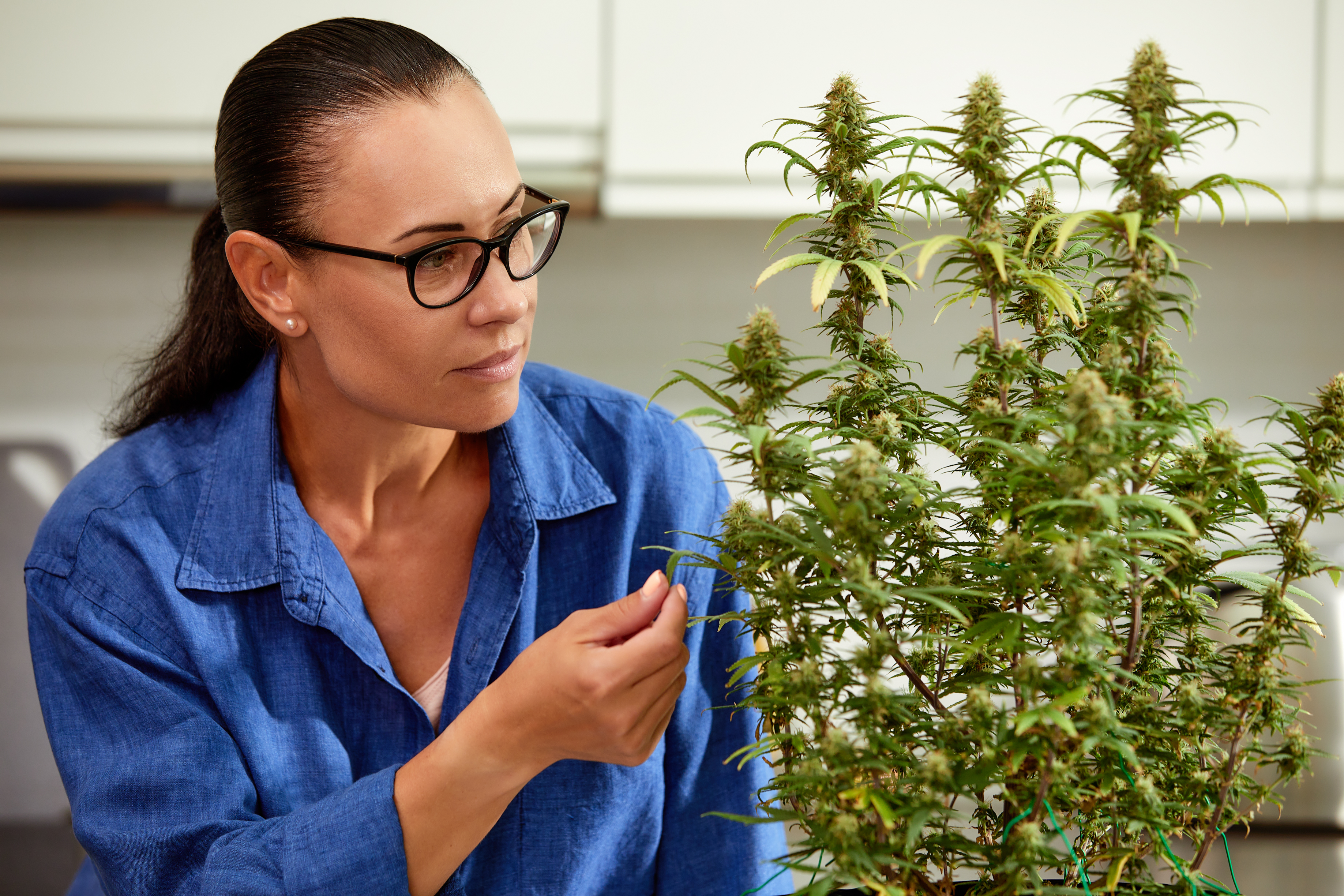


Cannabis plants are known for having a strong and easy-to-recognize smell. For some people, this aroma is part of the plant’s appeal. For others, it can create problems, especially when cannabis is grown at home in places where odor may affect neighbors or other people in the same building. This is one reason some growers look for low odor marijuana strains. These strains are often described as having a softer or less noticeable smell than varieties that produce strong skunk, fuel, or diesel-like aromas.
The term “low odor marijuana” does not mean that the plant has no smell at all. All cannabis plants produce natural compounds that create aroma. Even varieties described as mild or low odor can become noticeable at certain stages of growth. The difference is usually in how strong the smell becomes and what type of aroma the plant produces. A mild earthy, pine, floral, or fruity smell may be less noticeable than the sharp scent of a strong skunk or diesel strain.
The smell of cannabis comes from several natural chemicals produced by the plant. Terpenes are some of the best-known compounds linked to cannabis aroma. Terpenes can create scents that are similar to citrus fruit, pine trees, herbs, flowers, berries, or spices. However, terpenes are not the only compounds responsible for cannabis odor. Researchers have also studied other chemicals, including volatile sulfur compounds, which can help create the strong skunk-like smell found in some varieties.
Genetics play an important role in how a cannabis plant smells. Some varieties naturally produce stronger aromas than others. Breeders may select plants with certain smells, flavors, growth traits, or cannabinoid levels and use them to create new varieties. Over time, this process can produce cannabis strains that tend to have milder aromas. Still, genetics do not provide a perfect guarantee. Two plants of the same named strain may have slightly different smells because of natural differences between individual plants.
These differences are often called phenotype variation. A phenotype is the set of traits that an individual plant shows. Plants from the same strain can share many features but may not be exactly the same. One plant may have a stronger fruity smell, while another may have a lighter earthy scent. This means growers should not expect every plant with the same strain name to produce the exact same aroma.
Plant maturity also affects odor. Young cannabis plants usually have a lighter smell than mature plants. As the plant develops, it produces more aromatic compounds. The smell often becomes easier to notice as flowers form and mature. Handling mature plant material can also release more aroma into the air. After harvest, cannabis may continue to produce a noticeable smell as plant material is dried, stored, or handled.
Growing conditions can also influence how noticeable the aroma becomes. Temperature, airflow, plant health, humidity, and other environmental factors may affect the way aromatic compounds are produced and released. This means the same strain may not smell exactly the same in every setting. A strain known for a mild aroma can still become noticeable under certain conditions.
People may choose low odor strains for several reasons. Home growers may live close to neighbors or share walls with other homes. Others may simply prefer plants with softer scents. In areas where home cannabis cultivation is legal, odor can still be an important issue because housing rules, lease agreements, building policies, and local nuisance laws may apply. A plant being legal to grow does not always mean that strong odors affecting other people are allowed.
For this reason, low odor genetics should be viewed as one part of responsible cultivation rather than a way to make cannabis completely undetectable. No strain can be expected to stay odorless throughout its full life cycle. Claims such as “odor-free cannabis” should be treated with care because cannabis naturally produces aromatic compounds.
It is also important to understand that smell does not tell a person how strong a cannabis strain is. A mild-smelling plant may still contain significant levels of THC or other cannabinoids. In the same way, a plant with a very strong smell is not always more potent. Aroma and cannabinoid content are different traits controlled by different parts of the plant’s chemistry.
This guide explains what low odor marijuana strains are, why some cannabis varieties smell stronger than others, and which strains are commonly described as having milder aromas. It will also explain the role of genetics, terpenes, volatile compounds, plant maturity, and phenotype variation. Readers will learn whether autoflowering varieties smell less, whether indica or sativa labels can predict odor, and whether low odor strains are less potent. The guide will also discuss responsible ways to think about cannabis odor during legal home cultivation.
Before growing cannabis, readers should always check the laws that apply where they live. Cannabis cultivation rules can differ between countries, states, provinces, cities, and even housing properties. Some areas allow limited home cultivation, while others prohibit it completely. There may also be rules about plant numbers, growing locations, security, or odors. Understanding these requirements is an important part of responsible cannabis cultivation.
Low odor marijuana strains can help reduce the chance of very strong cannabis smells, but they should not be viewed as completely scent-free plants. Genetics, plant development, environmental conditions, and individual plant differences can all affect aroma. By understanding these factors, growers can make more informed choices and have more realistic expectations about how much odor a cannabis plant may produce.
Why Does Marijuana Have Such a Strong Smell?
Marijuana has a strong and easy-to-recognize smell because the plant produces many natural chemicals that can enter the air. These chemicals are called volatile compounds. The word “volatile” means that the compounds can evaporate and spread through the air at normal temperatures. Once they are in the air, they can reach the nose and create the smell that people connect with cannabis.
The smell of marijuana is not caused by one chemical. Instead, it comes from a mixture of different compounds. Some create sweet, fruity, citrus, pine, floral, or earthy scents. Others create the sharp, skunky, or fuel-like smell that is often linked with mature cannabis flowers.
The strength and type of odor can vary greatly from one cannabis plant to another. Genetics play an important role, but the age of the plant and the chemical profile of the flowers also matter. Two plants may look similar but have very different smells because they produce different amounts and combinations of aromatic compounds.
Understanding these compounds helps explain why some cannabis strains have a powerful smell while others have a softer aroma.
Terpenes and Cannabis Aroma
Terpenes are natural compounds that are produced by many plants. They are not unique to cannabis. Fruits, herbs, flowers, and trees also contain terpenes. These compounds help give plants their familiar scents.
For example, limonene is often linked with citrus-like smells. It is also found in the peels of lemons and oranges. Pinene has a fresh scent that may remind people of pine trees. Myrcene can create earthy, herbal, or musky notes. Linalool is often linked with floral scents and is also found in plants such as lavender.
Cannabis can produce many different terpenes at the same time. The exact mixture depends on the genetics of the plant. One strain may contain more compounds that create fruity aromas, while another may have a stronger earthy or pine-like scent.
Terpenes are produced in high amounts in the resin glands of cannabis flowers. These tiny structures are often called trichomes. They contain several compounds, including cannabinoids and aromatic chemicals.
As cannabis flowers develop, their aroma may become more noticeable. This happens partly because the flowers and their resin glands produce more aromatic compounds as they mature. However, the smell of a plant cannot be explained by terpene levels alone.
For many years, terpenes were often described as the main reason cannabis has its strong smell. Research now shows that the full picture is more complex. Two cannabis samples can contain similar major terpenes but still smell very different.
This is because small amounts of other chemicals can have a major effect on how the human nose experiences an odor. Some compounds are powerful enough to be noticed even when they are present in very low amounts.
The type of terpene profile can also affect how people describe a strain. A strain with strong citrus or fruit notes may seem less “skunky,” even if the total aroma is still quite noticeable. For this reason, odor type and odor strength are not always the same thing.
A cannabis plant that smells sweet may still have a strong aroma. Likewise, a plant with a milder earthy scent may seem less noticeable even though it is still producing many volatile compounds.
Volatile Sulfur Compounds and the “Skunky” Smell
One of the most recognizable features of cannabis is the sharp smell often described as “skunky.” Scientists have found that this smell is linked in part to a group of chemicals known as volatile sulfur compounds.
Sulfur compounds can have very strong odors. Similar types of chemicals can also be found in other natural materials, including garlic, onions, and the defensive spray released by skunks. This does not mean cannabis contains exactly the same chemical mixture as these substances. It means certain sulfur-containing compounds can produce very strong odors even at low levels.
Research into cannabis aroma has identified several sulfur compounds that may help create its sharp and distinctive scent. Some of these compounds can be detected by the human nose at extremely low concentrations.
This helps explain an important point about cannabis smell. A chemical does not need to be present in a large amount to make a plant smell strong. Some compounds have a much stronger effect on smell than others.
A plant could therefore have only a small amount of a sulfur-based compound and still produce a noticeable skunky odor. This is one reason why measuring only the most common terpenes may not fully explain how strong a cannabis sample smells.
Researchers have also found that the chemical mixture responsible for cannabis aroma can change as the plant develops and after the flowers are harvested. Some odor-producing compounds may become more noticeable as flowers mature.
Handling plant material can also release aromatic chemicals into the surrounding air. When plant surfaces and resin glands are disturbed, more volatile compounds may escape. This is one reason mature cannabis flowers can produce a noticeable aroma even without being heated or burned.
The combination of terpenes, sulfur compounds, and other volatile chemicals gives cannabis its complex scent. One compound may add a citrus note, another may produce an earthy smell, and a small amount of a sulfur compound may add the strong skunky character.
Because these compounds work together, cannabis aroma can vary widely between strains. One plant may smell fruity and sweet, while another may smell strongly of fuel, pine, spice, or skunk.
Genetic differences are an important reason for this variation. Different cannabis varieties naturally produce different chemical profiles. Individual plants within the same strain can also vary. This means a strain name alone cannot always predict exactly how strong a plant will smell.
Environmental conditions may also influence how strongly certain compounds are expressed, but genetics provide much of the basic chemical pattern that shapes the plant’s aroma.
Marijuana has a strong smell because cannabis produces many volatile compounds that easily enter the air. Terpenes are part of this mixture and help create scents such as citrus, pine, earth, fruit, herbs, and flowers. However, terpenes alone do not fully explain the sharp smell that many people associate with cannabis.
Volatile sulfur compounds also play an important role, especially in the familiar skunky aroma. Some of these compounds can be detected by the nose even when they are present in very small amounts. This helps explain why cannabis can produce such a strong odor without having a large amount of one single chemical.
What Makes a Marijuana Strain Low Odor?
Cannabis plants can produce many different smells. Some have a strong skunky or fuel-like scent, while others smell more like fruit, flowers, herbs, pine, or soil. Some plants also have a much lighter aroma than others. These are often described as low odor marijuana strains.
However, low odor does not mean odorless. Cannabis naturally produces chemicals that create noticeable smells. The strength and type of these smells can vary from one plant to another. Genetics play a major role, but they are not the only factor. The individual plant, its stage of growth, and its environment can also affect how strong its aroma becomes.
Understanding these differences can help explain why some cannabis strains are known for a milder smell and why a strain name alone cannot guarantee that every plant will have the same aroma.
Genetics and Aroma Production
Genetics are one of the main factors that control how a cannabis plant smells. Each plant has genes that influence the types and amounts of aromatic compounds it can produce. Different cannabis varieties may therefore develop very different scent profiles.
Terpenes are among the best-known compounds connected with cannabis aroma. For example, some terpenes are linked with citrus, pine, floral, earthy, or herbal scents. However, cannabis aroma is more complicated than terpene levels alone. Research has found that other compounds, including esters, aldehydes, ketones, and sulfur-containing compounds, can also affect the final smell of cannabis flowers.
Some varieties may naturally produce smaller amounts of the compounds linked with very pungent smells. Others may produce a different mix of compounds that creates a softer aroma. A plant with a light herbal or fruity scent may seem less obvious than one with a strong skunk or fuel smell, even when both plants are producing aromatic chemicals.
Volatile sulfur compounds are especially important when discussing the well-known skunky cannabis smell. These compounds can be detected by the human nose even when they are present in very small amounts. Because of this, a plant does not always need to produce a large total amount of aromatic chemicals to smell strong.
Breeders may select plants with certain aroma traits and use them to create later generations. Over time, this can make some aroma traits more common in a particular genetic line. Even so, genetics do not guarantee that every seed will grow into a plant with exactly the same smell.
Mild Aroma Versus No Aroma
The term “low odor” can sometimes be misleading. It usually means that a plant has a less intense or less recognizable cannabis smell. It does not normally mean that the plant produces no scent at all.
Almost all flowering cannabis plants produce volatile compounds that can be detected in the air. A strain described as low odor might still smell earthy, sweet, fruity, floral, or slightly spicy. The smell may simply be less sharp or less pungent than the strong skunk, diesel, or chemical aromas associated with some varieties.
It is also important to separate the type of smell from the strength of smell. A fruity cannabis plant is not automatically a low odor plant. A fruit-like scent can still become very strong. In the same way, an earthy strain may have either a light or powerful aroma depending on its genetics and chemical profile.
This is why terms such as “mild,” “subtle,” and “low odor” should be treated as general descriptions. There is no universal scale that every seed company or breeder uses to measure cannabis odor. One breeder may describe a plant as mild while another person may consider the same type of aroma fairly noticeable.
The human sense of smell also varies. One person may notice a scent very quickly, while another may find it less obvious. Because smell is partly based on human perception, descriptions of odor strength are not always exact.
Scientific research also shows that cannabis aroma comes from many compounds working together. Some minor compounds can have a large effect on the way an aroma is perceived even when those compounds are present at low levels.
Phenotype Differences
Another reason low odor strains can be unpredictable is phenotype variation. A phenotype is the set of visible and measurable traits that an individual plant develops. Plants can share the same general genetic background but still show different characteristics.
For example, several seeds sold under the same strain name may produce plants with slightly different heights, leaf shapes, flowering traits, and aromas. One plant may have a mild herbal scent, while another plant from the same seed line may develop a stronger fruity or pungent smell.
Research has found considerable differences in terpene profiles both between cannabis cultivars and among plants carrying the same cultivar label. This means a strain name alone does not always provide an exact picture of the plant’s chemical profile or aroma.
Environmental conditions can add another layer of variation. Temperature, light, plant health, and other growing conditions may influence how plant compounds develop. Post-harvest handling can also change the final aroma. For this reason, two genetically similar plants grown under different conditions may not smell exactly the same.
Breeder descriptions can still be useful. They can help readers understand the general aroma traits expected from a genetic line. However, these descriptions should be viewed as guidance rather than a guarantee. Terms such as “low odor,” “mild smell,” or “subtle aroma” describe a general tendency, not an exact result for every plant.
A low odor marijuana strain is generally a cannabis variety that tends to produce a less intense or less pungent aroma than strongly scented varieties. Genetics are a major reason for these differences because they influence the plant’s production of terpenes and many other volatile compounds. Sulfur-containing compounds and other minor chemicals can also have a strong effect on how cannabis smells.
Low odor should not be confused with odorless. Cannabis plants naturally produce aromatic compounds, especially as flowers develop. A variety described as mild may still produce fruity, earthy, floral, herbal, or pine-like scents.
Individual plants can also differ because of phenotype variation. Even seeds carrying the same strain name may produce plants with different aroma profiles. Environmental conditions can create further differences. For these reasons, breeder descriptions are useful for identifying general trends, but they cannot guarantee exactly how strong a particular plant will smell.
Low Odor Marijuana Strains Commonly Associated With Milder Aromas
Some marijuana strains are known for having a softer smell than very pungent varieties. This does not mean they have no odor. Every cannabis plant produces natural compounds that create a scent. However, some strains may smell less sharp, less skunky, or less noticeable than others.
The smell of a plant can also change from one plant to another. Genetics play a major role, but growing conditions, plant age, and the individual phenotype can also affect aroma. A strain that smells mild in one situation may have a stronger scent in another. For this reason, strain names should be used as a general guide rather than a guarantee.
Several strains are often discussed when growers look for cannabis with a milder aroma. These include Northern Lights, Blue Mystic, Northern Cheese, Jack Herer, and some Blueberry-type strains.
Northern Lights
Northern Lights is one of the better-known cannabis strains associated with a more moderate aroma. Its smell is often described as earthy, sweet, woody, and slightly pine-like. Compared with strains that have strong skunk, diesel, or fuel scents, Northern Lights may seem less sharp.
The strain is often included in discussions about lower-odor cannabis because its scent can be less aggressive than that of some other varieties. Its aroma may still become noticeable as flowers mature, so it should not be considered odorless.
Different versions of Northern Lights also exist. Seed producers may maintain their own genetic lines, and individual plants can show different traits. One plant may have a mild earthy smell, while another may produce a richer and sweeter aroma. This natural variation is common in cannabis.
People choosing Northern Lights mainly because of its smell should therefore read detailed descriptions of the exact genetics being considered. The name alone cannot predict exactly how strong a mature plant will smell.
Blue Mystic
Blue Mystic is another strain often associated with a milder scent. Its aroma is commonly described as fruity, berry-like, herbal, and slightly earthy. Some plants may have a sweet smell that is less similar to the classic skunky scent often linked with cannabis.
This can make the aroma seem less intense to some people. However, the type of smell and the strength of the smell are two different things. A fruity cannabis plant can still produce a clear and noticeable scent.
Blue Mystic plants may also differ depending on their genetics. Some may produce stronger berry notes, while others may have more earthy or herbal traits. Environmental conditions can also affect the compounds that create aroma.
For this reason, Blue Mystic should be viewed as a strain that may have a softer aroma rather than one that will always remain low odor.
Northern Cheese
Northern Cheese combines genetics that may produce earthy, sweet, and sometimes cheese-like aromas. Some versions are described as having a more controlled or moderate scent compared with very pungent Cheese varieties.
Even so, the word “Cheese” is important to consider. Traditional Cheese genetics are often known for having a strong smell. A Northern Cheese plant may become more noticeable during flower development, especially as its aromatic compounds increase.
The final scent depends on the exact genetic line and the individual plant. One phenotype may lean toward mild earthy notes, while another may show stronger Cheese-like traits.
This is why strain descriptions should always be read carefully. A strain may be marketed as more discreet because it smells less than related genetics, but this does not mean the plant will have very little odor.
Jack Herer and Related Varieties
Jack Herer is commonly linked with herbal, pine, spice, and citrus aromas. Its scent can be different from the strong skunk or heavy fuel smell found in some cannabis strains.
Some growers may find these herbal and pine-like aromas less obvious than traditional cannabis odors. However, Jack Herer is not always considered a true low-odor strain. Certain plants can become quite aromatic as flowers mature.
Jack Herer is also a good example of why phenotype variation matters. The strain has been reproduced and crossed by different breeders over many years. As a result, plants sold under this name may not all have exactly the same aroma.
Some may smell more like pine and herbs. Others may have stronger citrus, spice, or sweet notes. Related hybrids can also inherit different aroma traits from the other parent plant.
When comparing Jack Herer genetics, it is better to look at the specific breeder’s aroma description rather than assuming every version will smell the same.
Blueberry-Type Cultivars
Blueberry-type cannabis strains are generally known for sweet and fruity aromas. Depending on the genetics, the scent may include blueberry, other berries, fruit, flowers, earth, or herbs.
These strains are sometimes considered when a person wants to avoid a sharp skunk smell. A sweet berry aroma may seem softer or less traditional than the scent produced by strong skunk or diesel genetics.
However, a pleasant smell should not be confused with a weak smell. Some Blueberry plants can have a very rich aroma even if the scent is fruity rather than skunky.
This is an important difference when comparing low-odor strains. Aroma character describes what a plant smells like. Aroma intensity describes how strong that smell is. A plant can have a pleasant fruit aroma while still releasing a large amount of scent.
Anyone comparing Blueberry-type genetics should therefore look for descriptions that mention both the type and strength of the aroma.
Other Mild-Aroma Genetics
Many other cannabis strains may be described as mild, subtle, lightly fruity, earthy, floral, or low odor. However, these descriptions are not based on one standard system.
There is no universal scale that every breeder uses to measure cannabis smell. One company may describe a strain as mild, while another person may consider the same aroma fairly strong.
Genetic variation makes the issue even more complicated. Cannabis plants grown from seed are not always identical. Different phenotypes can appear within the same strain. One plant may produce less aroma, while another may develop a much stronger scent.
For this reason, it is better to compare several pieces of information rather than relying on a single strain list. Detailed genetic descriptions can help. Information about dominant aroma notes can also give a better idea of what to expect.
It is also useful to remember that scent can change as a plant develops. A plant that has very little smell when young may become much more aromatic later. Low odor should therefore be understood as a relative term.
Several cannabis strains are commonly associated with milder or less traditionally skunky aromas. Northern Lights is often described as earthy, sweet, and pine-like, while Blue Mystic may produce softer berry and herbal notes. Northern Cheese can have moderate earthy and sweet aromas, although some plants may develop stronger Cheese-like scents. Jack Herer often has pine, spice, herbal, and citrus notes, while Blueberry-type strains are known for sweet fruit aromas.
None of these strain names guarantees a low-smell plant. Genetics, phenotype differences, plant maturity, and growing conditions can all influence aroma. A fruity or pleasant smell also does not always mean the odor is weak. When comparing low-odor marijuana strains, it is best to look at both the type of scent and its expected intensity while keeping in mind that individual plants can vary.
Are There Marijuana Strains That Do Not Smell?
Many people searching for low odor cannabis want to know whether a marijuana plant can grow without producing any noticeable smell. The short answer is no. Cannabis naturally produces aromatic compounds, so every plant will create at least some scent as it develops. However, the strength and type of that smell can vary a great deal from one strain to another.
Some cannabis strains have a softer smell that may be described as earthy, sweet, fruity, floral, or herbal. Others produce a much stronger scent that may be described as skunky, fuel-like, spicy, or sharp. Because of these differences, some strains are marketed as low odor. This does not mean they are completely free from smell. It simply means their aroma may be less intense than that of more pungent strains.
Understanding this difference can help growers have more realistic expectations when choosing genetics for legal home cultivation.
Why Truly Odorless Cannabis Is Unlikely
Cannabis plants naturally produce many chemical compounds that create aroma. Terpenes are among the best-known examples. These compounds can produce scents that resemble pine, citrus, herbs, fruit, flowers, or spices. Cannabis can also produce other volatile compounds that add to its strong and sometimes skunky smell.
These aromatic compounds serve natural purposes for the plant. They are part of the plant’s chemical makeup and develop as the plant grows. Because of this, removing all smell from a living cannabis plant would be very difficult.
Young cannabis plants may have very little odor. During the early growth stage, a plant may smell mostly green, fresh, or herbal. This can make some growers think that the plant will remain low odor throughout its entire life.
The smell often becomes more noticeable as flowers begin to develop. During this stage, the plant produces larger amounts of aromatic compounds. The scent may become stronger as the flowers mature.
Even strains described as mild can become clearly noticeable during late flowering. The amount of smell can also vary between individual plants. Two plants from the same strain may not have exactly the same aroma or level of odor.
Environmental conditions can affect how noticeable the smell becomes as well. Temperature, air movement, plant maturity, and the amount of plant material can all influence how much aroma is present in the surrounding area.
For these reasons, growers should not expect any cannabis variety to remain completely odorless from seed to harvest.
Understanding “Low Odor” Marketing Claims
Seed sellers and breeders often use terms such as “low odor,” “low smell,” “mild aroma,” “subtle scent,” or “stealth strain.” These phrases can be useful when comparing different varieties, but they should not be taken as guarantees.
There is no single industry standard that defines exactly how weak a cannabis smell must be before a strain can be called low odor. One breeder may describe a strain as mild because it smells less than a very pungent Skunk variety. Another breeder may use the same term for a plant that still produces a noticeable smell during flowering.
The type of aroma can also affect how people judge its strength. For example, a sweet berry scent may feel less obvious than a sharp skunk or fuel smell, even when both aromas are strong. This means that “low odor” sometimes describes the character of the smell rather than its actual intensity.
Growers should therefore read strain descriptions carefully. Instead of looking only for the words “low odor,” it helps to examine the full aroma profile.
Descriptions such as mild, earthy, floral, light fruit, or subtle pine may suggest a softer scent. Descriptions such as skunk, diesel, fuel, pungent, or heavy musk may suggest a stronger or more recognizable cannabis smell.
Still, written descriptions are only general guides. Cannabis plants show natural variation, so the exact result cannot be guaranteed.
What Growers Should Realistically Expect
A low odor marijuana strain should be viewed as a plant that may produce a less intense or less recognizable smell than many other cannabis varieties. It should not be viewed as a plant that produces no smell at all.
Aroma can change throughout the plant’s life cycle. A plant that seems mild during early growth may develop a stronger smell once flowers begin forming. The aroma may become even more noticeable as the flowers mature.
Handling the plant can also release more scent. Touching flowers or leaves may break small resin structures on the plant’s surface. This can release additional aromatic compounds into the air.
Harvested cannabis may also continue to smell strongly. Cutting, trimming, drying, and storing plant material can release or concentrate its natural aroma. A variety that seemed fairly mild while growing may still produce a noticeable scent after harvest.
Growers should also understand the role of phenotype variation. A strain is not always made up of plants that are completely identical. Seeds from the same strain can produce individual plants with different traits.
One plant may have a light berry aroma, while another may smell more earthy or pungent. One plant may remain fairly mild, while another may develop a stronger scent. This variation is normal in cannabis genetics.
Because of this, strain names should not be treated as a guarantee of odor level. They are better used as a starting point when comparing genetics.
There are no marijuana strains that can be guaranteed to produce absolutely no smell. Cannabis naturally creates aromatic compounds, and these compounds become more noticeable as the plant grows and develops flowers. Some strains can produce a much softer aroma than others, which is why they are often described as low odor.
Terms such as low smell, mild aroma, and subtle scent should be understood as relative descriptions rather than promises of an odorless plant. The final aroma can depend on genetics, the individual phenotype, plant maturity, environmental conditions, and post-harvest handling.
Growers looking for a milder-smelling variety should focus on strains that are consistently described as subtle, earthy, floral, lightly fruity, or herbal. At the same time, they should remember that every cannabis plant is capable of producing a noticeable aroma, especially during flowering and after harvest. Realistic expectations are important when choosing low odor cannabis genetics for legal home cultivation.
Do Autoflowering Marijuana Strains Smell Less?
Autoflowering marijuana strains are often described as a good choice for growers who want smaller plants, shorter growth cycles, or simpler flowering. They are also sometimes marketed as being less noticeable because of their size. However, being an autoflower does not mean that a cannabis plant will have less odor. Some autoflowering strains have a mild smell, while others can produce a very strong aroma.
The main difference between autoflowering and photoperiod cannabis is the way the plant begins to flower. It is not a direct measure of how much odor the plant will produce. Research has identified genetic differences that allow autoflowering cannabis to flower without depending on changes in day length. These genetic traits control flowering behavior, but they do not guarantee a mild aroma.
For this reason, a grower who is concerned about odor should look closely at the genetics and aroma profile of a specific strain instead of assuming that every autoflower will smell less.
Autoflowering Versus Photoperiod Genetics
Most traditional cannabis varieties are photoperiod plants. This means their flowering response is linked to changes in the length of light and darkness they receive. Autoflowering plants are different. They have genetic traits that allow them to begin flowering without relying on the same changes in day length. Researchers have identified several genetic areas linked to this photoperiod-insensitive flowering trait.
Autoflowering genetics have often been linked with Cannabis plants described as ruderalis types. These plants became known for flowering based more on maturity than seasonal changes in daylight. Modern autoflowering marijuana strains, however, are usually the result of breeding autoflowering traits into other cannabis varieties.
This breeding process means that today’s autoflowers can have a wide range of features. Some may be compact and fast to mature. Others may have strong aromas, high cannabinoid levels, or flavor profiles similar to photoperiod varieties.
The autoflowering trait itself mainly describes flowering behavior. It does not tell a person whether the plant will smell like citrus, fruit, pine, herbs, fuel, or the strong odor often described as skunky.
This is an important difference. A plant can be small and quick to flower while still producing a noticeable smell. Likewise, a larger photoperiod plant may come from genetics that naturally produce a milder aroma. Plant size and flowering type should not be used alone to predict odor.
Genetics Matter More Than the Autoflower Label
The genetics of an individual cannabis variety are much more useful when thinking about its aroma. Cannabis plants produce many volatile compounds that affect how they smell. Terpenes are one important group of these compounds, although research also shows that other compounds can have a major effect on cannabis aroma.
Studies of cannabis genetics have found large differences in terpene profiles both between cultivars and between plants sold or grown under the same cultivar name. Genetic differences can affect the enzymes involved in producing these aromatic compounds.
Recent research also shows that minor compounds can strongly affect how a cannabis sample smells. Two plants with fairly similar major terpene profiles may still have noticeably different aromas because of other volatile chemicals present in much smaller amounts.
This helps explain why it is difficult to make a simple statement such as “autoflowers smell less.” The autoflowering trait and the aroma profile are separate characteristics.
For example, an autoflower that was bred from a strongly scented cannabis variety may keep much of that parent plant’s aroma. Another autoflower may come from genetics selected for a softer herbal, floral, or mild fruity scent. Both plants are autoflowers, but their smell can be very different.
Individual plants can also vary. Seeds from the same genetic line are not always completely identical in the way they grow or smell. These differences are sometimes described as phenotype variation. Researchers studying genetically related cannabis plants have found that different phenotypes can produce distinct aroma characteristics.
Because of this variation, even a strain known for a mild smell cannot be guaranteed to produce exactly the same aroma in every plant.
Evaluating Low-Odor Autoflower Claims
When looking at autoflowering strains described as low odor, it is useful to treat those descriptions as general guidance rather than a promise.
Terms such as “low odor,” “mild aroma,” and “discreet” do not have one standard scientific definition for cannabis. One breeder may describe a plant as mild because it lacks a strong skunk or fuel smell. Another person may still consider the same plant quite noticeable because it has a strong fruit or floral scent.
It is also important to separate the type of smell from the strength of the smell. A plant with a sweet berry scent may seem less like the traditional smell associated with marijuana, but the total aroma could still be strong. A pine or citrus scent can also become quite noticeable even if it does not smell strongly skunky.
Strain descriptions can still provide useful clues. A detailed description that explains whether a cultivar tends to have light herbal, earthy, floral, fruity, or pungent notes gives more information than a simple statement that it is “low odor.” Information from several sources can also help show whether the mild-aroma description is consistent.
Genetic consistency is another issue to consider. Cannabis research has shown that cultivar names do not always represent plants with identical chemical or genetic profiles. Plants carrying the same strain name can sometimes show meaningful differences in their aromatic characteristics.
For that reason, the name of an autoflowering strain should not be treated as a guarantee of how much it will smell.
Autoflowering marijuana strains do not automatically smell less than photoperiod cannabis. The term “autoflower” mainly describes a genetic flowering trait that allows a plant to begin flowering without depending on the normal seasonal change in day length. It does not describe the strength of the plant’s aroma.
Odor is influenced much more by the specific genetics of the strain and the volatile compounds the plant produces. Some autoflowering varieties may have relatively mild herbal, fruity, or earthy aromas, while others can become very pungent. Even individual plants within the same genetic line can show differences in smell.
When evaluating an autoflower for its aroma, it is therefore better to study the specific strain’s reported scent characteristics rather than relying on the autoflower label alone. Most importantly, low odor should be understood as a relative term. Autoflowering cannabis can still produce a noticeable smell, especially as flowers develop and mature.
When Does a Cannabis Plant Smell the Most?
Cannabis can produce a noticeable smell during much of its life cycle, but the strength of that smell changes as the plant develops. Young plants usually have a mild scent, while mature flowering plants can become much more aromatic. The smell can become especially noticeable near the end of flowering and during the period after harvest.
The odor comes from many volatile compounds produced by the plant. Terpenes are part of the aroma, but research shows that other compounds also play an important role. In particular, certain volatile sulfur compounds can create the strong skunky smell linked with some cannabis varieties. Studies have found that concentrations of these sulfur compounds can rise sharply during the final weeks of flowering.
The exact timing and strength of the smell can vary from one plant to another. Genetics, plant maturity, and chemical composition can all influence how noticeable the aroma becomes.
Early Plant Development
Cannabis plants are usually less aromatic during their early stages of growth. Seedlings and young plants have not yet developed the large amount of flower tissue associated with the strongest cannabis smells. A person may still notice a light plant-like, herbal, or green scent when standing close to a young plant, but it is normally much weaker than the smell produced later in the plant’s life.
As the plant grows, it develops more leaves, stems, and other tissues that contain aromatic compounds. The plant’s chemical profile also changes as it matures. However, the early vegetative stage is generally not when cannabis produces its strongest characteristic odor.
The exact scent can also depend on genetics. Some plants may begin producing a more noticeable smell earlier than others. One plant may have a light herbal smell, while another may already have stronger pine, citrus, earthy, or other aroma notes.
It is important to understand that smell alone is not a reliable way to judge the health, maturity, or potency of a plant. A strong-smelling young plant is not automatically stronger in cannabinoid content, and a mild-smelling plant is not necessarily weak. Aroma and cannabinoid concentration are different plant characteristics.
Flower Development
The flowering stage is when cannabis aroma often becomes much stronger. During this stage, the plant develops flowers that contain many glands responsible for producing cannabinoids and aromatic chemicals. As the flowers mature, the amount and variety of volatile compounds can change.
Research has shown that certain compounds responsible for the familiar skunky cannabis smell increase significantly toward the end of flowering. One study that followed cannabis plants through their life cycle found that volatile sulfur compounds became much more concentrated during the final weeks of flower development.
This helps explain why a plant that smelled fairly mild earlier can become much more noticeable as it approaches maturity. Reviews of cannabis odor emissions also report that odor can be especially noticeable shortly before harvest.
Not all mature plants smell the same. One variety may smell strongly of fuel or skunk, while another may have a sweeter, fruity, pine-like, or earthy scent. Recent research also suggests that minor compounds can have a major effect on cannabis aroma. This means two varieties with similar levels of common terpenes can still smell quite different.
Even plants with related genetics can develop different aroma profiles. This is one reason it is difficult to predict exactly how strong a cannabis plant will smell based only on a strain name.
Harvest and Post-Harvest Handling
The cannabis smell does not disappear when the plant is harvested. In many cases, freshly harvested flowers remain highly aromatic because they still contain large amounts of volatile compounds.
Handling plant material can also make the aroma more noticeable. When flowers and leaves are touched, moved, cut, or otherwise disturbed, volatile compounds can enter the surrounding air. This can make freshly harvested plant material seem especially strong-smelling.
The chemical profile continues to change after harvest. Some volatile compounds decrease over time, while others may become more noticeable during drying or curing. Research on volatile sulfur compounds found that some of the compounds linked with the skunky smell reached their highest measured concentrations during curing before declining during later storage.
Dried cannabis can still contain a wide range of aromatic chemicals. A 2024 study examining dried cannabis flowers identified 75 volatile compounds across different samples, showing that dried material can maintain a complex aroma profile even after the living plant has been harvested.
For this reason, the period immediately after harvest should not be viewed as the point when cannabis stops producing a noticeable smell. The type and strength of the odor can continue changing as plant material dries and ages.
Cannabis usually has its weakest aroma during the early stages of plant development. Young plants may have a light herbal or green scent, but they normally do not produce the intense smell associated with mature cannabis flowers.
The aroma generally becomes stronger as flowering progresses. Research shows that some of the volatile sulfur compounds responsible for the characteristic skunky smell rise sharply during the final weeks of flowering. This means the period shortly before harvest can be one of the most noticeable stages for cannabis odor.
The smell can remain strong after harvest. Fresh plant material releases many volatile compounds, and some aroma chemicals continue to change during drying and curing. Certain sulfur compounds have even been found to reach their highest levels during the curing period before falling during storage.
However, there is no exact point when every cannabis plant will smell strongest. Genetics and chemical composition can cause major differences between plants. Some varieties produce strong skunky or fuel-like odors, while others have milder herbal, fruity, earthy, or pine-like scents. In general, though, cannabis aroma tends to increase as flowers mature and can remain strong during the early post-harvest period.
Are Low Odor Cannabis Strains Less Potent?
A common question about low odor cannabis is whether plants with a weaker smell are also less potent. Some people assume that a strong smell means a cannabis strain contains more THC or produces stronger effects. However, smell and potency come from different groups of compounds in the cannabis plant. A strain can have a mild aroma and still contain a high level of THC. In the same way, a very strong-smelling strain is not always more potent.
The strength of cannabis depends mainly on its cannabinoid content, while its smell depends mostly on aromatic compounds. Genetics, plant chemistry, and growing conditions can affect both traits, but they do not always change in the same way. This is why smell alone should not be used to judge how strong a cannabis strain may be.
Aroma and Cannabinoid Content Are Different Traits
Cannabis contains many natural chemical compounds. Two important groups are cannabinoids and aromatic compounds. Cannabinoids include THC and CBD. These compounds affect how cannabis interacts with the human body. THC is mainly responsible for the intoxicating effects linked with marijuana, while CBD does not usually cause the same type of high.
Cannabis aroma comes from a different group of chemicals. Terpenes are among the best-known aroma compounds. These chemicals can produce smells that seem fruity, spicy, earthy, floral, citrus-like, or pine-like. Other volatile compounds also contribute to the scent of cannabis, including sulfur-based chemicals that can create a strong skunky smell.
Because cannabinoids and aroma compounds serve different roles, there is no simple rule that links smell strength with THC level. A plant may produce a noticeable amount of THC while producing a mild aroma. Another plant may smell very strong while having a moderate cannabinoid level.
Genetics play an important role in both traits. A breeder may select plants for high cannabinoid content while also selecting for a softer aroma. This can result in strains that are relatively low in odor but still have significant THC levels. However, the exact chemical profile can vary from plant to plant.
Why Smell Cannot Reliably Predict Strength
Smell is not a reliable way to measure cannabis potency. Human smell perception is very sensitive to some chemicals, even when they are present in very small amounts. A tiny amount of a strong-smelling compound may produce a noticeable odor without having any connection to the amount of THC in the plant.
The opposite can also happen. A cannabis flower may smell mild but contain a high level of cannabinoids. The aroma may simply be less sharp, less skunky, or less noticeable to the person smelling it.
People also experience smells differently. One person may describe a strain as strong-smelling, while another may consider the same aroma mild. Factors such as previous exposure, personal sensitivity, and the surrounding environment can change how strong an odor seems.
Cannabinoid potency is better measured through laboratory testing. A lab can analyze a cannabis sample and report levels of THC, CBD, and other cannabinoids. These measurements provide much more useful information than aroma alone.
Strain names are also not perfect indicators of potency. Two products sold under the same strain name may have different chemical profiles. Differences can occur because of genetics, growing conditions, plant maturity, and testing methods. For this reason, a laboratory report is more reliable than a strain name or smell when trying to understand cannabinoid content.
Aroma Intensity Versus Aroma Type
It is also important to understand the difference between aroma intensity and aroma type. Aroma intensity describes how strong the smell is. Aroma type describes what the smell resembles.
For example, one strain may have a soft berry aroma, while another may have a sharp fuel-like scent. The second strain may seem much stronger because the smell is more noticeable. However, this does not mean it contains more THC.
A fruity or floral strain can also have a strong odor. Sweet-smelling cannabis is not always low odor. A plant may avoid the traditional skunky smell but still release a noticeable amount of aromatic compounds.
In the same way, a low odor strain may still develop a clear scent as it matures. The smell may simply be less intense or less likely to have a strong skunk, diesel, or fuel character.
Environmental conditions can also influence aroma. Temperature, plant health, maturity, and handling may affect how strongly a plant releases volatile compounds. These changes can affect smell without causing the same change in cannabinoid concentration.
This is another reason why growers and consumers should avoid using scent as a measure of strength. Aroma provides information about the sensory character of cannabis, but it does not give an accurate measurement of cannabinoid potency.
Low odor cannabis strains are not automatically less potent than strong-smelling strains. Smell and potency come mainly from different chemical compounds. Cannabinoids such as THC and CBD influence many of the effects of cannabis, while terpenes and other volatile chemicals create its aroma.
A strong smell does not prove that cannabis has a high THC level, and a mild smell does not mean that it is weak. Some low odor strains can still contain significant amounts of THC, depending on their genetics and chemical profile.
Aroma intensity should also not be confused with aroma type. A fruity, floral, or earthy strain may smell different from a skunky strain but can still produce a noticeable odor. Likewise, a mild-smelling plant can still have a high cannabinoid content.
When accurate information about potency is needed, laboratory testing is the most reliable source. Smell, strain names, and appearance can provide clues about the character of cannabis, but they cannot accurately measure its strength.
Indica, Sativa, and Hybrid Plants: Which Smell Less?
When people look for low odor marijuana strains, they often ask whether indica, sativa, or hybrid plants smell less. It may seem useful to choose a strain based on one of these labels. However, these broad categories are not reliable ways to predict how strong a cannabis plant will smell.
The aroma of a cannabis plant depends more on its individual genetics and chemical profile. Two strains that are both called indica may smell very different from each other. The same is true for sativa and hybrid strains. One plant may have a mild, earthy scent, while another may produce a strong smell that is fruity, skunky, spicy, or similar to fuel.
Because of this, people who want lower odor cannabis should look beyond basic indica and sativa labels. Aroma descriptions, strain genetics, and information about specific varieties are usually more useful.
Why Indica and Sativa Labels Are Poor Odor Predictors
The terms indica and sativa have been used for many years to describe different types of cannabis. They are often connected with differences in plant shape, growth pattern, and expected effects. However, these labels do not tell a person exactly how strong a plant will smell.
A strain described as indica may produce strong skunk, cheese, fuel, or earthy smells. Another indica strain may have a softer scent that is sweet, herbal, or lightly fruity. The same type of variation can be found among sativa strains. Some may have strong citrus or pine aromas, while others may smell milder.
Hybrid strains can also vary widely. A hybrid is generally produced from different genetic lines. As a result, it may carry aroma traits from several parent plants. One hybrid may have a mild scent, while another may produce a very strong odor during flowering.
This means there is no simple rule saying that indica smells less than sativa or that hybrids smell less than both. The individual strain matters much more.
Modern cannabis varieties have also been bred and crossed many times. Because of this, many strains contain a mix of genetic traits. The simple labels indica, sativa, and hybrid may not fully describe the chemical features of a plant.
For someone concerned about odor, it is more useful to study the specific strain instead of relying only on its general category.
Aroma Variation Within Similar Strains
Even plants that belong to the same named strain may not smell exactly the same. This happens because cannabis plants can show different traits even when they come from similar genetics.
These differences are often called phenotype variation. A phenotype is the set of traits that can be seen, smelled, or measured in an individual plant. These traits may include plant shape, flower structure, color, growth rate, and aroma.
For example, two plants sold under the same strain name may both have a fruity aroma, but one may smell much stronger than the other. Another plant may produce more earthy or herbal notes. This natural variation makes it difficult to promise that every plant of a certain strain will remain low odor.
Breeding also plays an important role. Seed producers may select plants for certain traits over several generations. One breeder may focus on strong aroma, while another may select plants with a milder scent. Because of this, the same general strain name may differ from one producer to another.
Environmental conditions can also affect how noticeable an aroma becomes. Temperature, plant health, maturity, and other factors may influence the release of aromatic compounds. Genetics still play a major role, but the growing environment can change how those traits are expressed.
For this reason, strain names should be treated as useful guides rather than guarantees. A strain that is commonly described as mild smelling can still produce an individual plant with a noticeable aroma.
Better Information to Look For
People searching for low odor marijuana should focus on detailed strain information rather than broad indica, sativa, or hybrid labels.
Aroma descriptions can be helpful. Words such as mild, subtle, herbal, floral, light fruit, or soft earth may suggest a less aggressive scent. In contrast, descriptions that use words such as skunk, diesel, fuel, pungent, cheese, or strong musk may suggest a more noticeable aroma.
However, these descriptions should still be read with care. A strain that smells sweet or fruity is not always low odor. A pleasant aroma can still be very strong. The type of smell and the strength of the smell are two different things.
Chemical information can provide more detail when it is available. Cannabis aroma comes from several types of volatile compounds. Terpenes are commonly discussed because they contribute scents such as citrus, pine, spice, and flowers. Other compounds can also affect how cannabis smells.
Laboratory reports may show which terpenes or other chemicals are present in a sample. However, even lab information does not always tell a person exactly how strong the plant will smell in real conditions. Aroma is complex, and several compounds may work together to create the final scent.
Information from reputable breeders and legal cultivation sources can also help. Comparing several descriptions is often better than relying on a single source. If several sources describe a strain as mild, subtle, or less pungent, that can give a more realistic idea of its expected aroma.
Indica, sativa, and hybrid labels do not reliably show how strong a cannabis plant will smell. Aroma depends more on the specific genetics, phenotype, chemical profile, and characteristics of the individual plant. Plants within the same general category can have very different scents and odor levels.
People looking for low odor marijuana should pay closer attention to detailed strain descriptions and genetic information. Mild, herbal, floral, or softly fruity varieties may be worth examining, but no description can guarantee that a plant will have little smell.
It is also important to remember that aroma type and aroma strength are not the same. A sweet-smelling plant may still produce a powerful scent. Choosing a strain based on specific aroma information instead of simple indica or sativa labels gives readers a clearer and more realistic way to understand low odor cannabis.
Choosing a Low Odor Strain for Legal Home Cultivation
Choosing a low odor cannabis strain starts with understanding that no strain is fully odorless. Cannabis naturally produces aromatic compounds, and these compounds become more noticeable as the plant matures. Some strains have a lighter or less “skunky” smell than others, but aroma can still change from one plant to another.
For people who are allowed to grow cannabis at home, choosing genetics with a milder scent may make the growing space easier to manage. However, strain names alone do not always tell the full story. Genetics, plant development, and individual plant traits can all affect how strong the smell becomes.
Check Genetics and Aroma Descriptions
The first step is to study the genetic and aroma description of a strain. Seed producers and breeders often describe the main scent of each variety. These descriptions may include words such as earthy, floral, pine, berry, citrus, sweet, herbal, fuel, diesel, or skunk.
If a lower odor is important, strains described as mild, subtle, lightly fruity, herbal, or earthy may be worth considering. These descriptions do not guarantee that the plant will have very little smell, but they can provide a useful starting point.
It is also helpful to understand that the type of smell and the strength of the smell are not the same thing. A plant may smell like berries instead of skunk, but the berry aroma can still become strong. A pleasant scent does not always mean a weak scent.
Strains described as heavily skunky, pungent, fuel-like, or diesel-like are often associated with more noticeable aromas. If odor level is an important concern, it may be better to avoid varieties that are specifically promoted for their strong smell.
Genetics influence the types of aromatic compounds a cannabis plant may produce. However, environmental conditions and individual plant traits can also affect how those genetics are expressed.
Compare More Than One Source
A single strain description should not be treated as a guarantee. Different breeders may sell cannabis plants or seeds under the same general strain name, but their genetic lines may not be exactly the same.
For this reason, it is useful to compare information from several reliable sources. One breeder may describe a strain as mild and earthy, while another may describe a similar variety as sweet and fairly strong. Comparing several descriptions can give a more balanced idea of what to expect.
When available, chemical testing can also provide useful information. Laboratory reports may show which terpenes and other compounds are present in a sample. However, even laboratory data cannot always tell a person exactly how strong a plant will smell in a home setting.
Independent reports from legal cannabis markets can also help explain how a strain commonly smells. These reports should still be treated with care because personal descriptions of smell are subjective. One person may consider an aroma light, while another may find the same smell strong.
The most useful approach is to look for patterns. If several sources consistently describe a strain as mild, subtle, or less pungent, that may provide stronger evidence than relying on one description.
Consider Phenotype Variation
Phenotype variation is another important factor. A phenotype is the set of visible and chemical traits shown by an individual plant. Two plants from the same strain can share many genetic features while still developing somewhat different aromas.
One plant may have a mild herbal smell, while another from the same group may develop a stronger sweet or skunky scent. This happens because plants do not always express their genetics in exactly the same way.
This is one reason why it is difficult to guarantee that a particular strain will remain low odor. Seed-grown plants can show more variation than people sometimes expect.
The aroma may also change as the plant develops. A young plant may have very little noticeable smell. Later, as flowers develop, aromatic compounds may become much easier to detect. A strain that appears mild early in its life may become stronger near maturity.
Because of this variation, strain descriptions should be viewed as general guidance rather than exact predictions.
Consider Local Rules and Neighbor Impacts
Before growing cannabis at home, it is important to understand the laws that apply in the area where the person lives. Cannabis cultivation laws vary widely between countries, states, provinces, cities, and other local areas.
Some locations allow limited home cultivation, while others do not permit it at all. Even where growing cannabis is legal, there may be rules about the number of plants, where plants can be kept, and whether they can be visible from public areas.
Housing rules can also matter. A landlord, homeowners association, condominium board, or building management company may have rules that affect cannabis cultivation or strong odors.
Odor can also affect nearby residents. A legal activity can still cause problems if strong smells regularly enter shared hallways, neighboring homes, or nearby outdoor areas. For this reason, responsible growers should think about how their activity may affect other people.
Choosing a strain with a milder aroma can be one part of responsible cultivation, but it should not be used as a way to hide illegal growing. The goal should be to reduce unnecessary odor while following all laws, housing rules, and local requirements.
Choosing a low odor cannabis strain requires more than picking a strain with a reputation for mild smell. Genetics matter, but individual plants can still vary. Aroma descriptions such as earthy, floral, herbal, or lightly fruity may suggest a milder profile, while terms such as skunk, fuel, diesel, and pungent often suggest a stronger scent.
It is best to compare information from several reliable sources instead of trusting one strain description. Growers should also remember that phenotype variation can cause two plants with the same strain name to smell different.
Managing Cannabis Odor Responsibly
Cannabis plants naturally produce strong smells, especially as they mature. The strength and type of odor can differ from one plant to another. Some plants may smell sweet, fruity, earthy, or floral. Others may have a stronger skunky, fuel-like, or spicy smell. Even strains that are described as low odor can become noticeable during certain stages of plant growth.
For people who legally grow cannabis at home, odor can affect other people who live nearby. Strong smells may travel into other rooms, shared hallways, or outdoor areas. For this reason, responsible odor management should focus on keeping the growing area clean, maintaining healthy indoor air, and respecting local laws and housing rules. The goal should not be to hide illegal activity. Instead, odor management should be part of safe and considerate home cultivation where growing cannabis is allowed.
Start With Naturally Milder Genetics
The genetics of a cannabis plant have a major effect on its aroma. Some varieties naturally produce stronger-smelling compounds than others. Choosing a strain known for a milder scent can reduce the chance of having an extremely pungent plant.
However, strain names should not be treated as a guarantee. Two plants sold under the same strain name may produce different levels of aroma. This happens because cannabis plants can show different traits, even when they share similar genetics. The individual expression of a plant is often called its phenotype.
Growers who are concerned about odor should read several descriptions of a strain before making a choice. It can help to look at information from breeders, seed companies, and other reliable sources. Words such as mild, earthy, herbal, floral, or lightly fruity may suggest that a strain has a softer aroma. In comparison, terms such as skunk, diesel, fuel, or very pungent may point to a stronger smell.
Still, even a strain described as mild will usually develop some odor. Cannabis naturally produces aromatic compounds, so a completely odorless plant should not be expected.
Ventilation and Indoor Air Quality
Fresh air is important in any indoor space where plants are being grown. Poor air movement can make smells seem stronger because the same air remains trapped in one location for long periods.
Good ventilation also supports basic indoor air quality. Warm and humid indoor spaces can feel uncomfortable and may encourage moisture problems. A growing area should have enough air movement to prevent the room from becoming stale or overly humid.
Responsible ventilation should also consider other people in the home and surrounding area. Simply moving strong-smelling air into a shared hallway, neighboring property, or public space can create problems for others. The purpose of ventilation should be to maintain a healthy indoor environment, not to move an odor problem from one location to another.
Growers should also remember that building design matters. Apartments, shared housing, and multi-unit buildings may have connected ventilation systems. Odors can sometimes travel through vents, doors, gaps, or shared spaces. Checking rental agreements and building rules can help prevent disputes.
Cleanliness and Plant Material
Keeping the growing area clean is another important part of odor management. Plant material that falls onto the floor or is left in containers can continue to release smells. Dead leaves, trimmed material, spilled soil, standing water, and other waste can also make the area less sanitary.
Cleaning the area on a regular basis helps prevent old plant material from building up. It can also make it easier to notice moisture, mold, pests, or other problems before they become serious.
Plant waste should be handled according to local rules. Cannabis laws are different from one location to another, and some places have specific rules for disposing of cannabis plants or harvested material. Growers should follow local regulations rather than placing large amounts of cannabis waste where other people can easily access it.
Containers, tools, trays, and work surfaces can also hold plant odors. Keeping these items clean can reduce the amount of old plant material left in the growing space.
Harvested Cannabis and Aroma
Cannabis can remain highly aromatic after it has been harvested. In some cases, cutting or handling plant material can make the smell seem stronger because aromatic compounds are released into the air.
Fresh flowers, leaves, and stems can all produce noticeable smells. This means odor concerns do not end when a plant is removed from the growing area. Post-harvest handling should also be done responsibly.
Once cannabis is legally dried and stored, suitable closed containers can help protect the plant material while limiting the spread of its aroma around the home. Proper storage can also keep the product away from children, pets, and anyone who should not have access to it.
Where required, cannabis should be stored according to local laws. Some areas have rules about how much cannabis can be kept at home and where it must be stored. These laws should be checked before growing or keeping harvested cannabis.
Avoid Trying to Mask Problems With Fragrances
Strong air fresheners, scented sprays, candles, and perfumes may seem like an easy way to deal with cannabis odor. However, these products usually add another smell rather than removing the original one.
Mixing several strong scents can make the indoor environment less comfortable. Some scented products can also irritate people who are sensitive to fragrances. This can be especially important in homes where people have allergies, asthma, or other breathing concerns.
A better approach is to deal with the source of the smell. Keeping the growing space clean, removing old plant material, maintaining reasonable indoor conditions, and choosing milder genetics can all help reduce unnecessary odors.
Strong fragrances should not be used as a substitute for basic cleanliness or good air quality.
Legal and Housing Considerations
Cannabis cultivation laws vary widely between countries, states, provinces, and cities. A person may be allowed to possess cannabis but still be restricted from growing it at home. Other areas may allow home cultivation but limit the number of plants or where they can be kept.
Housing rules can create additional limits. A landlord, condominium association, homeowners’ association, or building manager may have rules about smoking, cultivation, strong odors, or changes made to a property.
Before growing cannabis, people should check the laws that apply to their location. They should also review any rental agreement or housing policy that may affect cultivation.
Odor can sometimes become a nuisance issue even when cultivation itself is legal. A legal activity can still cause conflict when strong smells regularly enter another person’s living space. Being aware of neighbors and shared areas is therefore an important part of responsible home cultivation.
Managing cannabis odor responsibly starts with realistic expectations. No cannabis strain can be guaranteed to remain completely odorless. Genetics can influence how strongly a plant smells, but individual plants may still vary.
Choosing strains known for milder aromas can help, but cleanliness, indoor air quality, proper handling of plant waste, and responsible storage also matter. Harvested cannabis can continue to produce a strong aroma, so odor management should continue after the plant has been cut.
Growers should not depend on perfumes or scented sprays to cover cannabis smells. These products usually mask odors for a short time instead of solving the cause. Keeping the area clean and maintaining a healthy indoor environment are more practical approaches.
Conclusion: Choosing Low Odor Marijuana Strains Responsibly
Low odor marijuana strains can be useful for people who are allowed to grow cannabis at home and want plants with a milder smell. However, it is important to understand that no cannabis strain is truly odorless. Every cannabis plant produces natural compounds that create scent. Some plants may smell less than others, but even a mild strain can become noticeable as it grows and matures. For this reason, growers should have realistic expectations when choosing a strain based on aroma.
Genetics play a major role in how a cannabis plant smells. Some strains naturally produce strong skunk, fuel, diesel, or sharp herbal scents. Other strains may have softer aromas that are described as fruity, floral, earthy, sweet, or pine-like. Strains such as Northern Lights and Blue Mystic are often described as having milder aromas than many strongly scented varieties. Still, a strain name alone cannot guarantee how much a plant will smell. Different breeders may produce different versions of the same strain, and individual plants can also develop different aroma levels.
This difference between individual plants is often called phenotype variation. Cannabis plants grown from seeds can show different traits even when the seeds come from the same strain. One plant may have a mild earthy smell, while another may produce a stronger sweet or skunky scent. This means that a low odor strain should be seen as a strain that may have a lower chance of producing a strong smell, rather than a plant that will always remain mild.
Plant age also affects aroma. Young cannabis plants usually have less noticeable smells than mature flowering plants. As flowers develop, the plant produces more aromatic compounds. The smell can become stronger as the flowers mature. Handling mature flowers can also release more scent into the air. After harvest, cannabis may continue to have a strong aroma because many of the natural compounds remain in the plant material.
The type of smell is also different from the strength of the smell. A plant that smells like fruit or berries may still produce a strong aroma. In the same way, a plant with an earthy scent may be easier for some people to notice than expected. When people describe a strain as low odor, they may mean that it does not have the strong skunk-like smell that is commonly linked with cannabis. This does not always mean that the total amount of scent is low.
It is also important not to use smell as a way to judge cannabis potency. Aroma and cannabinoid levels are separate traits. A plant with a mild smell may still contain significant amounts of THC or other cannabinoids. A plant with a very strong smell is not automatically more potent. THC and CBD levels are better understood through reliable laboratory testing rather than by smelling the plant.
The labels indica, sativa, and hybrid are also not reliable ways to predict odor. Plants within each group can have very different aroma profiles. Genetics, breeding, and the plant’s individual chemical makeup have a much greater effect on smell. Someone looking for a milder strain should pay more attention to detailed aroma descriptions than broad strain categories.
Autoflowering cannabis should also not be assumed to have less odor. Autoflowering describes the way a plant moves into its flowering stage, not how strongly it smells. Some autoflowering strains may have mild aromas, while others can become very noticeable. The specific genetics of the strain are more important than whether it is an autoflowering or photoperiod type.
When comparing possible low odor strains, it is useful to read information from more than one reliable source. Breeder descriptions can provide basic information, but they may not describe every plant in the same way. Independent strain information and chemical data can provide additional details about expected aromas. Words such as mild, subtle, earthy, floral, or lightly fruity may point toward less pungent genetics. In contrast, terms such as skunk, diesel, fuel, and very pungent usually suggest a stronger aroma.
People who legally grow cannabis at home should also consider the rules where they live. Cannabis cultivation laws can differ between countries, states, provinces, and cities. Some places may allow home growing but set limits on the number of plants or where they can be kept. Rental agreements, housing rules, and local nuisance laws may also apply. Choosing a mild-smelling strain does not replace the need to follow these requirements.
Responsible growing also means thinking about how odors may affect other people. Even when cultivation is legal, strong plant smells may travel beyond the growing area. Basic cleanliness, proper handling of plant waste, suitable storage, and good household ventilation can help reduce unnecessary odors. These steps should be used to support responsible legal cultivation rather than to hide prohibited activity.
In the end, low odor marijuana strains are best understood as plants that may produce a less intense or less traditionally skunky aroma. They should not be treated as odorless cannabis. Genetics, individual plant differences, maturity, environmental conditions, and post-harvest handling can all change how strong a plant smells.
Choosing a strain with a reputation for mild aroma can be a useful starting point, but there are no guarantees. Growers should review strain information carefully, compare several sources, and understand that aroma can change throughout the plant’s life. They should also remember that smell does not determine THC or CBD strength.
For people who are allowed to cultivate cannabis, the most responsible approach is to combine realistic strain selection with attention to local laws, housing rules, and the comfort of others. Low odor genetics may reduce strong aromas, but they cannot remove them completely. Understanding this from the beginning can help growers make better, more informed choices.
Research Citation
Ross, S. A., & ElSohly, M. A. (1996). The volatile oil composition of fresh and air-dried buds of Cannabis sativa. Journal of Natural Products, 59(1), 49–51. doi:10.1021/np960004a.
Rice, S., & Koziel, J. A. (2015). Characterizing the smell of marijuana by odor impact of volatile compounds: An application of simultaneous chemical and sensory analysis. PLOS ONE, 10(12), e0144160. doi:10.1371/journal.pone.0144160.
Booth, J. K., Page, J. E., & Bohlmann, J. (2017). Terpene synthases from Cannabis sativa. PLOS ONE, 12(3), e0173911. doi:10.1371/journal.pone.0173911.
Fischedick, J. T. (2017). Identification of terpenoid chemotypes among high (−)-trans-Δ9-tetrahydrocannabinol-producing Cannabis sativa L. cultivars. Cannabis and Cannabinoid Research, 2(1), 34–47. doi:10.1089/can.2016.0040.
Gilbert, A. N., & DiVerdi, J. A. (2018). Consumer perceptions of strain differences in Cannabis aroma. PLOS ONE, 13(2), e0192247. doi:10.1371/journal.pone.0192247.
Zager, J. J., Lange, I., Srividya, N., Smith, A., & Lange, B. M. (2019). Gene networks underlying cannabinoid and terpenoid accumulation in Cannabis. Plant Physiology, 180(4), 1877–1897. doi:10.1104/pp.18.01506.
Booth, J. K., Yuen, M. M. S., Jancsik, S., Madilao, L. L., Page, J. E., & Bohlmann, J. (2020). Terpene synthases and terpene variation in Cannabis sativa. Plant Physiology, 184(1), 130–147. doi:10.1104/pp.20.00593.
Oswald, I. W. H., Ojeda, M. A., Pobanz, R. J., Koby, K. A., Buchanan, A. J., Del Rosso, J., Guzman, M. A., & Martin, T. J. (2021). Identification of a new family of prenylated volatile sulfur compounds in cannabis revealed by comprehensive two-dimensional gas chromatography. ACS Omega, 6(47), 31667–31676. doi:10.1021/acsomega.1c04196.
Urso, K., Frazier, A., Heald, S., & Khlystov, A. (2022). Terpene exhaust emissions and impact ozone modeling from cannabis plants at commercial indoor cultivation facilities in Colorado. Journal of the Air & Waste Management Association, 72(8), 828–848. doi:10.1080/10962247.2022.2046206.
Oswald, I. W. H., Paryani, T. R., Sosa, M. E., Ojeda, M. A., Altenbernd, M. R., Grandy, J. J., Shafer, N. S., Ngo, K., Peat, J. R., III, Melshenker, B. G., Skelly, I., Koby, K. A., Page, M. F. Z., & Martin, T. J. (2023). Minor, nonterpenoid volatile compounds drive the aroma differences of exotic cannabis. ACS Omega, 8(42), 39203–39216. doi:10.1021/acsomega.3c04496.
Questions and Answers
Q1: What is low odor marijuana?
Low odor marijuana refers to cannabis strains that produce a milder smell than strongly scented varieties. These strains may release fewer noticeable aromas during growth, flowering, drying, or storage.
Q2: Why do some marijuana strains smell less than others?
The strength of a cannabis plant’s smell depends mainly on its genetics and terpene profile. Some strains naturally produce lower amounts of strong-smelling aromatic compounds.
Q3: What causes the smell of marijuana plants?
Cannabis odor mainly comes from terpenes and other volatile compounds produced by the plant. These substances can create aromas that are earthy, fruity, citrus-like, floral, or skunky.
Q4: Are low odor marijuana strains completely odorless?
No. All cannabis plants can produce some smell, especially during flowering. Low odor strains simply tend to have a weaker or less noticeable scent.
Q5: When do marijuana plants usually smell the strongest?
Cannabis plants usually become more aromatic during the flowering stage as flowers develop and terpene production increases. The smell may also remain noticeable during drying and curing.
Q6: Do low odor marijuana strains have fewer terpenes?
Not always. A low odor strain may still contain many terpenes, but its terpene combination may produce a softer or less skunky aroma.
Q7: Does low odor marijuana have less THC or CBD?
Not necessarily. Odor strength does not directly determine THC or CBD levels. A low odor strain can still contain high or low levels of cannabinoids depending on its genetics.
Q8: What types of aromas are common in low odor marijuana?
Low odor cannabis strains may have mild herbal, fruity, floral, pine, or earthy scents. These aromas are often less sharp than the strong skunky smell linked with some cannabis varieties.
Q9: Can the smell of marijuana vary because of growing conditions?
Yes. Temperature, humidity, plant health, maturity, and environmental conditions can affect terpene production and how noticeable the plant’s aroma becomes.
Q10: How can you identify a low odor marijuana strain?
The best way is to review reliable information about the strain’s genetics, terpene profile, and typical aroma. Keep in mind that smell can still vary from one plant to another because of genetics and growing conditions.