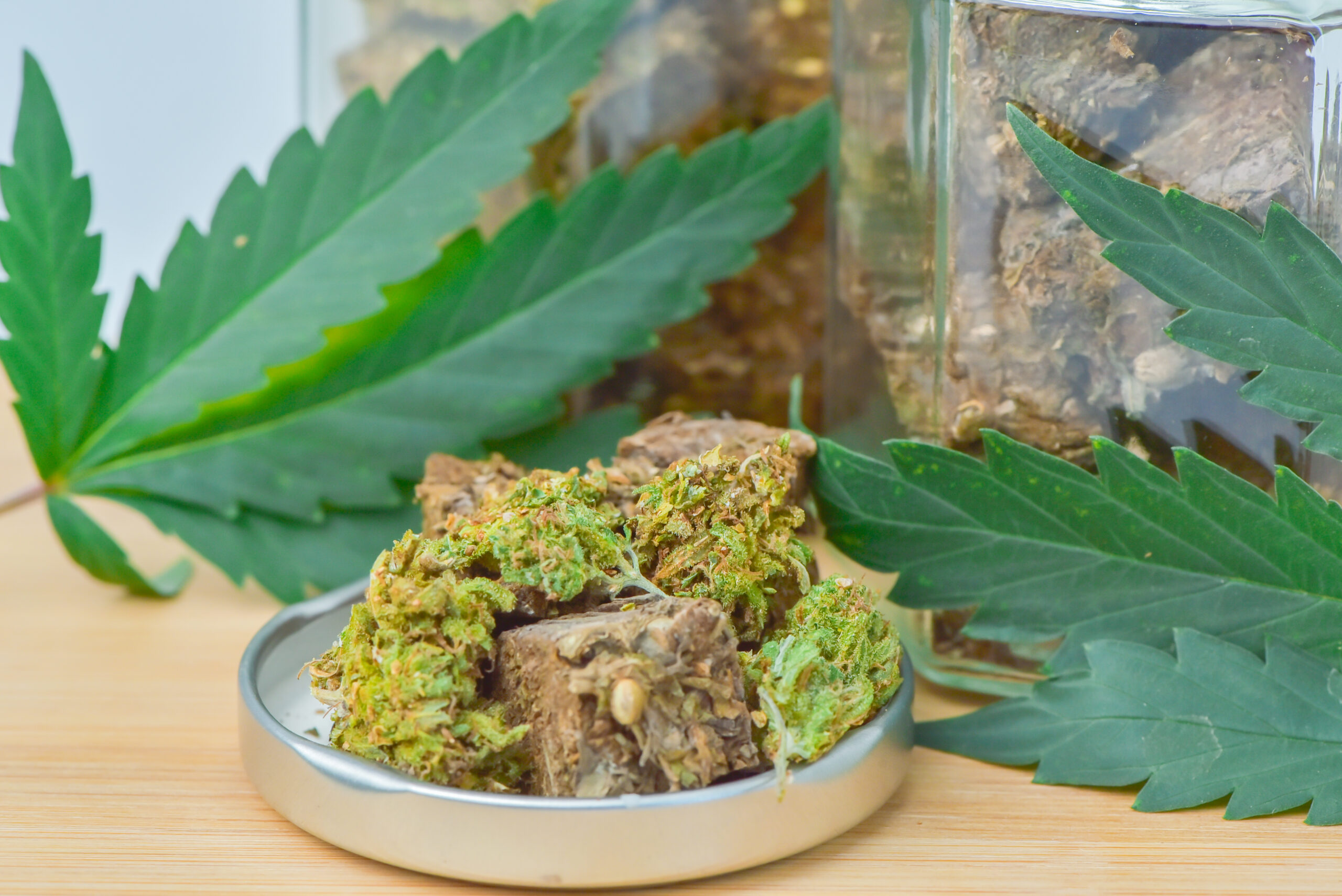


Myrcene is a natural compound found in many plants. It belongs to a group of plant chemicals called terpenes. Terpenes are the substances that give plants their smell and taste. When you smell a ripe mango, fresh thyme, or a bag of hops used for beer, you are noticing terpenes. Myrcene is one of the most common terpenes in nature, and it is also one of the most talked about terpenes in cannabis. People search for myrcene because they want to understand how it may affect the body and mind, which strains tend to have more of it, and what science shows about its possible health benefits and risks.
One reason myrcene gets so much attention is that it often appears in higher amounts than many other terpenes, especially in certain cannabis varieties. Terpenes do not work the same way as THC or CBD, which are cannabinoids. Instead, terpenes are part of the plant’s aroma and chemical profile. Even so, many users and researchers focus on myrcene because it is linked to effects that people commonly describe as calming, relaxing, and body-focused. These are exactly the kinds of effects many people want when they are choosing products for evening use, stress relief, rest, or discomfort. Because of this, myrcene comes up often in discussions about how different strains “feel,” why some products seem more sedating, and how scent and chemistry may connect to experience.
Myrcene is not only found in cannabis. It is also present in hops, which are used to flavor beer, and in fruits like mangoes. It appears in herbs and plants such as lemongrass and thyme as well. This is important because it shows that myrcene is not rare, and it is not unique to one plant. In nature, terpenes help plants in many ways. They can attract pollinators, deter pests, or protect the plant from environmental stress. For humans, these compounds have become useful in areas like food flavoring, fragrance, and essential oils. Myrcene’s earthy, musky, and herbal scent is part of why it shows up in products like perfumes and plant-based oils.
Many people search for “myrcene effects” because they want a simple answer to a complicated question: what does myrcene do? The truth is that myrcene does not have one guaranteed effect for every person. Effects can vary based on dose, product type, other terpenes present, and how much THC or CBD is in the product. Still, myrcene is often associated with relaxation and potential sedation, especially when combined with certain cannabinoid levels. This is why myrcene is frequently discussed in connection with the “couch-lock” feeling that some people describe. People also look for myrcene because they want help selecting strains or products that match their goals, like winding down at night or easing physical tension.
Another big search topic is health benefits. You will see myrcene connected to topics like inflammation, pain, antioxidants, and more. There is research interest in myrcene for these reasons, but it is important to keep expectations realistic. Much of the research on terpenes, including myrcene, comes from lab studies or animal studies, not large human trials. That does not mean myrcene is useless. It means the evidence has limits, and claims should stay within what studies actually support. People want clear guidance because terpene marketing can sometimes sound stronger than the science. This guide is written to explain what is known, what is still uncertain, and how to use myrcene information in a practical way.
Safety is another reason people search for myrcene. If a compound is linked to sleepiness or strong relaxation, it makes sense to ask about side effects. People want to know if myrcene is safe to inhale, eat, or use in products like oils or vapes. They also want to understand possible risks, like drowsiness, reduced alertness, or interactions with other substances. Clear safety basics matter, especially for new users, medical users, and anyone who needs to drive or work after using a product.
This article will cover myrcene from the ground up. You will learn what myrcene is and what it smells and tastes like. You will read about the main effects people associate with it and why it is often linked to sleepiness. You will also explore potential health benefits and the current limits of research. We will explain how myrcene may work alongside THC and CBD, why the full chemical profile can matter, and how to identify high-myrcene products using lab reports. You will also see examples of cannabis strains that are often high in myrcene, and you will learn about other plants that contain it, like mangoes and hops. By the end, you should be able to understand what myrcene is, why it matters, and how to use terpene information to make more informed choices.
What Is Myrcene?
Myrcene (also spelled β-myrcene) is a natural compound made by many plants. It belongs to a large group of plant chemicals called terpenes. Terpenes are the parts of plants that help create smell and taste. They are also one reason why different plants have different aromas, like citrus, pine, mint, or pepper.
Myrcene is a terpene (and what that means)
A terpene is a type of organic (carbon-based) compound that plants produce. Terpenes are found in the plant’s oils, often called essential oils. These oils can give plants a strong scent. Terpenes can also help plants survive in nature.
Myrcene is one of the most common terpenes found in cannabis, but it is not unique to cannabis. It is also present in many everyday plants and foods. Because it appears in so many plants, myrcene is widely studied in areas like food science, plant biology, and natural product research.
Myrcene is a monoterpene
Terpenes come in several types based on their size. Myrcene is a monoterpene. “Mono” means one, and “terpene” refers to the basic building blocks that form the compound. Monoterpenes are usually small, light molecules, which means they can evaporate easily. That is why they often have strong smells and can be noticed quickly.
Because myrcene is small and volatile, it can:
- Release aroma easily when a plant is crushed, warmed, or processed
- Change over time if it is exposed to heat, light, or oxygen
- Show up strongly in scent even in small amounts
This is one reason why storage matters for products that contain terpenes. Heat and air can reduce terpene content and change the aroma.
A simple look at myrcene’s chemical identity
You do not need to be a chemist to understand myrcene, but a basic idea helps. Myrcene is a hydrocarbon, meaning it is made mostly of carbon and hydrogen. Like many terpenes, it is built from smaller units that plants link together during normal growth.
In cannabis and other plants, myrcene is produced through natural plant pathways that create aromatic oils. These pathways are part of how plants build protective and signaling chemicals.
Where myrcene is found in nature
Myrcene appears in many plants. Some of the most common sources include:
- Cannabis (often one of the main terpenes in many strains)
- Hops (used in beer; contributes to aroma and flavor)
- Mango (often mentioned because of its strong fragrance compounds)
- Lemongrass (commonly used in teas and essential oils)
- Thyme and other herbs (adds to herbal scent profiles)
- Bay leaves (part of the overall spicy-herbal aroma)
Plants can have myrcene in different amounts. Even within the same plant type, the level can vary based on genetics, growing conditions, harvest timing, and processing methods.
What myrcene does for the plant
Plants do not create myrcene just for humans to enjoy the smell. Terpenes like myrcene play real roles in plant survival. Myrcene can help plants by supporting:
- Defense against insects and pests
Strong-smelling oils can discourage insects from feeding on leaves or flowers. - Protection from environmental stress
Some terpenes help plants respond to heat, drought, or damage. - Plant communication
Plants can release aromatic compounds into the air. These scents may send signals to other plants or attract beneficial insects.
Think of terpenes as part of a plant’s “tool kit.” They help the plant protect itself and interact with the world around it.
How myrcene contributes to scent and flavor
Myrcene is often described as having an earthy, musky, herbal smell. In cannabis, it can also lean skunky or clove-like, depending on what other terpenes are present. Myrcene rarely acts alone. Most plants contain many terpenes at the same time. The final scent is a blend.
In cannabis products, myrcene can influence:
- Aroma (how it smells in the jar or when ground)
- Flavor (what you taste during use)
- The overall terpene profile (how the strain is described on a lab report)
This is why people often look at terpene testing. Two products can have similar THC levels but smell and feel different because the terpene mix is different.
Myrcene is a common terpene found in cannabis and many other plants. It is a monoterpene, which means it is a small, aromatic molecule that can evaporate easily and produce strong scent. In nature, myrcene helps plants with defense, stress response, and signaling. For people, myrcene matters because it strongly affects smell and flavor, and it is often a key part of a product’s terpene profile.
What Does Myrcene Smell and Taste Like?
Myrcene is a terpene, which means it is one of the natural aroma compounds made by plants. Terpenes are the reason many plants have strong, easy-to-recognize smells. Myrcene is one of the most common terpenes found in cannabis, but it is also found in many other plants and herbs. Because myrcene is so common, people often want to know what it smells like, what it tastes like, and how it affects the overall flavor of a product.
The smell of myrcene (earthy, musky, herbal, and slightly sweet)
Most people describe myrcene as having an earthy smell. Think of damp soil after rain, or the scent of a forest floor with leaves and wood. It can also smell musky, which means it has a deep, heavy odor that may remind you of cloves, old wood, or certain herbs. Myrcene is often described as herbal, like crushed leaves, wild plants, or dried tea herbs.
Some people notice a slightly sweet note too. This sweetness is not like candy. It is more like the gentle sweetness you might smell in ripe fruit or certain flowers. The mix of earthy, musky, herbal, and soft sweet notes is what makes myrcene stand out.
It is important to know that you rarely smell myrcene by itself in real life. In cannabis, essential oils, and plants, myrcene is usually mixed with many other terpenes. That mix can make the smell feel stronger, lighter, sharper, or more “fresh,” depending on what else is present.
What myrcene tastes like in cannabis and other plants
Taste and smell are closely connected. If something smells earthy and herbal, it often tastes that way too. Myrcene can create a taste that people describe as:
- Earthy (like soil, roots, or mushrooms)
- Herbal (like thyme, basil, or dried green leaves)
- Spicy (a mild spice note, not hot like chili)
- Fruity or sweet (a light background note, not a strong fruit flavor)
In cannabis flower, myrcene often supports a “dank,” “green,” or “plant-like” taste. In some strains, it can help create a taste that feels heavier and more grounded. In hops (used in beer), myrcene can bring out a strong herbal and resin-like flavor. In plants like lemongrass or thyme, myrcene can blend with other terpenes and create a crisp, clean herbal taste.
Even foods that contain myrcene may not taste “like myrcene” to you, because the food has many other compounds too. For example, mango has several aroma compounds. Myrcene may be part of the mango smell, but it is not the only reason mango smells the way it does.
How myrcene shapes a full terpene profile
A terpene profile is the mix of terpenes in a plant or product. Myrcene can change how that mix feels to your nose and mouth. In many cases, myrcene acts like a base note. A base note is a deeper smell that lasts longer and gives a scent its “body.” If a product has a lot of myrcene, the aroma may feel fuller, heavier, and more earthy.
Myrcene can also make other smells seem smoother. For example, if a product has sharp terpenes like pinene (pine-like) or limonene (citrus-like), myrcene can balance them. That does not mean it removes the sharp scents, but it can keep the overall smell from feeling too bright or too harsh.
In cannabis strains, higher myrcene levels are often linked with a smell that people call “skunky,” “dank,” or “earthy.” This is not because myrcene is the only terpene involved, but because it supports that general scent style when combined with other terpenes.
Comparing myrcene with other common terpenes
It helps to compare myrcene with a few other popular terpenes, because many people confuse them.
- Myrcene vs. limonene: Limonene smells bright and citrus-like, similar to lemon peel or orange zest. Myrcene is more earthy and herbal. If a product smells like fresh citrus, limonene may be stronger. If it smells like herbs, soil, or deep plant notes, myrcene may be higher.
- Myrcene vs. pinene: Pinene smells like pine needles, fresh wood, and forest air. It often feels crisp and sharp. Myrcene usually feels heavier and softer, with less of that “fresh pine” feeling.
- Myrcene vs. linalool: Linalool smells floral, often like lavender. It can feel light and calming. Myrcene is less floral and more earthy. If a product smells like lavender or soft flowers, linalool may be more noticeable than myrcene.
These comparisons matter because most products contain more than one terpene. When you learn the basic scent patterns, it becomes easier to understand what you are smelling and tasting.
Myrcene is best known for an earthy, musky, herbal smell with a slightly sweet background note. In cannabis, it often adds a deeper, plant-like aroma and can make the overall scent feel fuller and heavier. The taste connected to myrcene is often earthy and herbal, sometimes with mild spice or gentle sweetness. Since myrcene almost always appears with other terpenes, the final smell and taste depend on the full terpene profile. Comparing myrcene to limonene, pinene, and linalool can help you identify what you are experiencing and choose products that match your preference.
What Does Myrcene Do? (Primary Effects)
Myrcene is a terpene, which means it is a natural plant compound that helps create smell and flavor. Terpenes also play a role in how a plant “feels” to people when used in products like cannabis or essential oils. Myrcene is best known for effects that many people describe as calming, heavy, or body-based. These effects can feel different from person to person, and they can change depending on the other compounds present, such as THC, CBD, and other terpenes.
Sedative and relaxing properties
Many people associate myrcene with relaxation. When myrcene levels are high, the experience is often described as more soothing and less “bright” or energetic. This does not mean myrcene is a sleep medicine. It means that, in some settings, myrcene is linked with a calmer state and a slower pace. People often look for myrcene when they want to unwind in the evening, reduce tension, or feel less “wired.”
Relaxation can include both mental and physical calming. Mentally, some people feel less restless or less busy in their thoughts. Physically, some people feel their body soften, like a “sink into the couch” feeling. Not everyone gets the same result, and dose matters. A small amount may feel mildly calming, while a larger amount in a strong product may feel more sedating.
Muscle relaxation effects
Myrcene is also connected to muscle relaxation. For some people, it can feel like tight muscles loosen or that the body feels less stiff. This is one reason myrcene is often discussed in conversations about recovery, rest, and end-of-day comfort. A muscle-relaxing feeling can be helpful if you carry stress in your shoulders, jaw, or back.
It is important to separate “feeling relaxed” from “treating a medical condition.” If you have ongoing pain, muscle spasms, or serious discomfort, you should talk with a healthcare professional. Myrcene may be part of a product that people use for comfort, but it should not replace medical care when you need it.
Body-focused sensations
Some terpenes feel more “head” focused, meaning they are linked with alertness, focus, or mental lift. Myrcene is often described as more “body” focused. People may notice a heavier feeling in the arms and legs, a warm sense of calm, or a slower, grounded mood. This body emphasis is one reason myrcene is commonly associated with the term “couch-lock,” which describes feeling very relaxed and not wanting to move much.
This does not mean myrcene automatically makes you stuck on the couch. Your experience depends on many factors, including your tolerance, the strength of the product, the cannabinoid levels, and even your setting. If you use a high-THC product that also contains high myrcene, the body-heavy effect may feel stronger than if the same myrcene level is paired with lower THC or more CBD.
How myrcene may influence mood
Myrcene is often linked with a calmer mood. People may describe feeling more settled, less tense, or less irritable. Some also describe it as “comforting” or “easygoing.” In simple terms, myrcene is often sought out by people who want to take the edge off and feel more at ease.
At the same time, a calming effect can sometimes feel like drowsiness. If you are sensitive to relaxing compounds, myrcene-heavy products might make you feel sleepy or less motivated. That is why many people prefer high-myrcene strains at night or during downtime rather than before work, exercise, or driving.
If you are trying to use terpene information to choose a product, think about your goal:
- If you want to relax, myrcene may be a good terpene to look for.
- If you want energy and focus, you may prefer products where myrcene is lower and other terpenes are higher.
Interaction with cannabinoids
Myrcene does not act alone. In cannabis, it is part of a larger “team” of compounds. THC and CBD are the best-known cannabinoids, and they can strongly shape the experience. Myrcene may change how these cannabinoids feel, mainly by influencing the overall “tone” of the experience.
For example:
- With higher THC, myrcene is often linked with stronger relaxation and heavier body effects.
- With more CBD, the experience may feel more balanced, less intense, and calmer overall.
Myrcene also combines with other terpenes. A product with myrcene plus limonene may feel relaxing but still upbeat. Myrcene plus linalool may feel deeply calming. Myrcene plus pinene may feel less sleepy and more clear-headed for some people. This is why terpene profiles matter more than a single terpene by itself.
If you are shopping using lab results (COAs), myrcene is usually listed as a percentage or in milligrams per gram. Higher myrcene often points toward a more relaxing, body-centered effect. Lower myrcene often points toward a lighter feel, especially when combined with terpenes known for brightness and alertness.
Myrcene is best known for calming, relaxing, and body-focused effects. Many people link it with muscle relaxation and a heavier, more settled feeling, especially when combined with THC. Myrcene can also influence mood by helping some people feel less tense and more at ease. Still, it works as part of a larger mix of cannabinoids and other terpenes, so the full terpene profile—and the strength of the product—matters most.
Does Myrcene Make You Sleepy?
Myrcene is often linked with sleepy, relaxing effects. Many people look for myrcene when they want a calm body feeling or an “end of day” experience. But the honest answer is: myrcene can make some people feel sleepy, but it does not affect everyone the same way. Sleepiness depends on many factors, not just one terpene.
Why myrcene is connected to drowsiness
Myrcene is a terpene found in many plants. In cannabis, it is one of the most common terpenes. It is known for an earthy, musky smell and for being linked with relaxing effects.
People connect myrcene to sleepiness for a few main reasons:
- It is often found in strains people describe as calming.
- It tends to show up in products meant for evening use.
- It is frequently mentioned when people talk about “heavy” body effects.
Even so, it is important to remember that cannabis effects come from the full chemical profile. That includes cannabinoids (like THC and CBD) and other terpenes. Myrcene is only one part of the overall picture.
What research suggests about sedative effects
Many studies on myrcene are based on lab or animal research, not large human trials. Some research suggests myrcene may have calming properties, including effects related to relaxation and sedation. But in real life, people often experience myrcene through cannabis products, where many compounds act together.
So, if someone feels sleepy after using a high-myrcene strain, it may be because of:
- The terpene mix (myrcene plus other relaxing terpenes)
- The THC level and dose
- The person’s tolerance and body chemistry
- The time of day and their stress level
In simple terms: myrcene may support sleepy effects, but it is rarely the only reason someone feels tired.
How myrcene relates to “couch-lock”
“Couch-lock” is a slang term. It means feeling so relaxed that you do not want to move much. People often describe it as:
- Heavy body feeling
- Slow, calm mindset
- Low motivation to get up and do tasks
Myrcene is commonly linked to this effect. A common idea is that high-myrcene products may feel more body-heavy and more relaxing than products with lower myrcene.
Still, “couch-lock” is not only about myrcene. It can also happen when:
- THC is high
- The dose is too strong for the user
- The user is already tired
- The product includes other sedating terpenes (like linalool)
So, myrcene is best seen as a supporting ingredient that may push the experience in a calmer direction.
Why myrcene shows up in nighttime strains
Many strains labeled for nighttime or relaxation often test high in myrcene. That is one reason people think of myrcene as a “sleep terpene.”
Nighttime strains also often share other features:
- Higher THC (sometimes)
- Terpenes linked with calm, like linalool
- A body-focused effect rather than an energizing effect
If you are choosing a product for evening use, myrcene can be a helpful clue, but it is not enough by itself. A better approach is to look at the full terpene profile and the THC/CBD ratio.
High-myrcene vs. low-myrcene strains: what may feel different
When myrcene is higher, people often report:
- More physical relaxation
- Less “mental energy”
- A smoother, heavier body feel
When myrcene is lower, the experience may feel:
- More alert
- More upbeat
- Less “heavy” in the body
But again, this is not a rule. Some low-myrcene strains can still feel sedating if THC is high or if other calming terpenes are present. And some high-myrcene strains can still feel functional at low doses.
Why people respond differently to myrcene
Two people can use the same product and feel very different effects. That can happen for many reasons:
- Tolerance: Frequent users may feel less sleepy than new users.
- Dose: A small dose may feel relaxing, while a large dose may feel very sedating.
- Body size and metabolism: People process cannabinoids and terpenes at different speeds.
- Mood and setting: Stress, anxiety, and a busy day can change how relaxing a product feels.
- Other ingredients: Some products include added terpenes or blends that shift effects.
Also, myrcene is not a “sleep switch.” It does not force sleep in the way a strong sleep medicine might. For many people, it is more like a relaxation helper that may make rest easier.
Myrcene is strongly linked with relaxation and may contribute to sleepy or “couch-lock” effects, especially in products that also have higher THC or other calming terpenes. However, myrcene does not work alone, and not everyone will feel sleepy from it. If you want a more restful experience, look for higher myrcene, check the THC level, and pay attention to the full terpene profile. Start with a low dose, especially if you are new or sensitive to sedation.
What Are the Health Benefits of Myrcene?
Myrcene is a terpene found in many plants, including cannabis, hops, mango, lemongrass, and thyme. People often look up myrcene because it is linked to relaxing effects and because early research has explored possible health-related uses. It is important to be clear about what research can and cannot say. Many myrcene studies are done in labs or in animals. Human studies are more limited. Because of that, myrcene should not be treated as a proven treatment for any disease.
Still, researchers have looked at several possible areas where myrcene may be helpful. These include inflammation, pain, oxidative stress, and bacteria. Below is a clear explanation of each area and what it may mean in real life.
Anti-inflammatory properties
Inflammation is a normal response in the body. It can help protect you when you have an injury or infection. But long-term inflammation can be a problem. It is linked to many conditions, like joint pain, some skin issues, and certain chronic diseases.
In lab and animal research, myrcene has shown signs that it may help reduce inflammation signals in the body. Scientists often study inflammation by measuring things like swelling, immune activity, or chemical messengers related to inflammation. Myrcene has been studied because it may influence these pathways.
What this may mean for the average person: myrcene could play a supporting role in products that aim to promote relaxation and comfort. But it is not a stand-alone solution. Also, the amount of myrcene needed to create a clear anti-inflammatory effect in humans is not fully known.
Pain relief potential
Pain is another common reason people search for myrcene. Pain can come from inflammation, nerve issues, injury, or muscle strain. Some early studies suggest myrcene may have analgesic (pain-reducing) potential, especially in animal models.
There are a few reasons researchers are interested in this:
- Myrcene may support relaxation in the body, which can affect how pain feels.
- Myrcene may interact with body systems involved in pain signaling.
- In cannabis products, myrcene often appears alongside cannabinoids, so researchers also look at combined effects.
It is important to avoid a common misunderstanding: myrcene is not the same as THC or CBD. Myrcene does not work like a typical pain medication. If it helps with pain, it may be mild and more supportive than direct. Also, many studies look at mixtures of compounds, so it is not always easy to separate what myrcene is doing by itself.
Antioxidant activity
Antioxidants help protect cells from damage caused by oxidative stress. Oxidative stress happens when the body has more unstable molecules (often called free radicals) than it can manage. Over time, oxidative stress can contribute to aging and may play a role in certain diseases.
In lab research, myrcene has shown antioxidant-like activity. This means it may help limit oxidative damage under certain test conditions. This is one reason myrcene appears in conversations about “health benefits.”
However, antioxidant effects in a lab do not always translate directly to strong effects in the human body. The human body is complex, and digestion, metabolism, and dose all matter. Myrcene may contribute to a broader plant-based profile that supports overall wellness, but it should not be viewed as a guaranteed way to prevent disease.
Possible antibacterial effects
Some studies have explored whether myrcene may help slow the growth of certain bacteria. This is usually tested in lab settings, where researchers expose bacteria to plant compounds and measure changes in growth.
These findings are interesting, but they can be easy to misread. A compound showing antibacterial activity in a petri dish does not mean it can treat infections in people. Human infections involve the immune system, tissues, and many other factors. Also, using essential oils or terpene concentrates in unsafe ways can irritate the skin or lungs.
A more realistic takeaway is that myrcene is one of many plant compounds researchers study when looking at natural chemical defenses in plants. It may be part of why some plants have traditionally been used in home remedies, but that is not the same as medical proof.
Research findings from animal and lab studies
Most of the strongest evidence around myrcene comes from lab and animal research. These studies help scientists understand what myrcene might do in the body and which areas deserve more study. They can suggest possible mechanisms, like how myrcene might affect inflammation or pain pathways.
But there are limits:
- Animals do not always respond the same way humans do.
- The doses used in studies may be higher than what people commonly consume.
- Some studies use isolated myrcene, while real products contain many compounds.
Current limitations of human research
Human research on myrcene alone is limited. Many cannabis-related studies focus on THC, CBD, or whole-plant products, not single terpenes. Also, terpene levels can vary a lot from one product to another. That makes it hard to compare results.
Because of these limits, it is best to treat myrcene’s “health benefits” as possible, not promised. People who are pregnant, nursing, have a medical condition, or take prescription drugs should talk with a qualified healthcare professional before using terpene-rich products, especially concentrated forms.
Myrcene has been studied for possible anti-inflammatory, pain-support, antioxidant, and antibacterial effects. Much of the evidence comes from lab and animal studies, and human research is still limited. The most responsible way to view myrcene is as a potentially helpful plant compound that may support comfort and relaxation, not as a proven medical treatment. When choosing terpene-rich products, focus on tested products, realistic expectations, and safety first.
How Does Myrcene Interact with THC and CBD?
Myrcene is a terpene. Terpenes are natural compounds that give plants their smell and taste. In cannabis, terpenes also help shape the overall experience. That experience is not only about THC or CBD by themselves. It often depends on how cannabinoids and terpenes work together. This combined action is commonly called the entourage effect.
What the entourage effect means
The entourage effect is the idea that cannabis compounds can influence each other. THC, CBD, and terpenes may create results that feel different than any one compound alone. Think of it like cooking. Salt alone tastes salty. Pepper alone tastes spicy. But together, they change the whole flavor. In a similar way, myrcene may change how THC or CBD feels in the body.
It is important to be clear about one point: the entourage effect is still being studied. People often use the term broadly. Some parts are supported by lab research, while other parts need more human studies. Still, terpene profiles are useful because they help explain why two products with similar THC or CBD levels can feel different.
How myrcene may influence THC’s effects
THC is the main compound linked to intoxication or a “high.” Many users connect high myrcene with a more relaxing, heavier, or more body-focused effect. There are a few reasons myrcene may be linked to that experience:
- Relaxation support: Myrcene is often described as calming. When THC is paired with a calming terpene profile, people may feel more physically relaxed.
- Sedation and “couch-lock” reports: Many products labeled as relaxing or nighttime options contain myrcene as a dominant terpene. This does not prove cause and effect, but it is a common pattern in lab reports.
- Perceived intensity: Some people say THC feels “stronger” when myrcene is high. One explanation often discussed is that myrcene may affect how compounds move in the body. However, this is a complex topic, and it is not fully proven in humans.
The key takeaway is this: myrcene may shape the style of a THC experience. It may lean the experience toward calm, heavy, or sleepy for some people, especially at higher doses of THC.
How myrcene may interact with CBD
CBD does not cause the same intoxicating effect as THC. Many people use CBD for balance, comfort, or relaxation without feeling “high.” When CBD and myrcene appear together, the effects people describe often include:
- A smoother feel: CBD is often seen as moderating or “softening” the sharper edges of THC for some users. Myrcene may add an extra relaxing layer.
- Body comfort focus: CBD products that also contain myrcene are frequently marketed for calm, rest, and physical ease. Again, marketing is not proof, but it matches many user goals.
- Less mental stimulation: If a person is sensitive to feeling wired or anxious, a myrcene-forward product paired with CBD may feel steadier than a product dominated by sharper terpenes.
CBD can affect how the body responds to THC, and terpenes may also play a part. But results vary from person to person. Your dose, your tolerance, and your body chemistry all matter.
Why terpene balance matters
Myrcene does not work alone. The full terpene blend can change the outcome. For example:
- Myrcene + limonene: may feel relaxed but still upbeat for some people, since limonene is often linked to brighter mood.
- Myrcene + linalool: may feel more calming and bedtime-friendly, since linalool is often linked to soothing effects.
- Myrcene + pinene: may feel more clear-headed than myrcene alone for some users, since pinene is often linked to alertness.
This is why two strains with similar THC levels can feel very different. One may feel sleepy, and another may feel more social or focused, even if both contain myrcene. The ratio and mix matter.
Myrcene in full-spectrum products
Myrcene shows up often in full-spectrum or broad-spectrum products. Full-spectrum means the product contains many cannabinoids and terpenes, not just isolated THC or CBD. Broad-spectrum is similar but usually removes THC (depending on the product). People often choose these products because they want a more complete plant profile.
If you are comparing products, lab testing can help. A COA (Certificate of Analysis) may list myrcene as a percentage or in milligrams per gram. Higher numbers usually mean the smell is stronger and the terpene may have a bigger role in the experience.
Practical way to use this information
If your goal is relaxation, you may look for products where myrcene is one of the top terpenes, especially when paired with calming terpenes like linalool. If your goal is daytime function, you may prefer a product with lower myrcene or a more balanced terpene mix. Also, start low and go slow. Even a terpene-rich product can feel very different depending on dose.
Myrcene may influence how THC and CBD feel by shaping the overall “profile” of effects. Many people associate myrcene with relaxation, body comfort, and sometimes sleepiness, especially when THC is also high. CBD may add balance, and myrcene may deepen the calming feel. Most importantly, myrcene is only one piece of the puzzle. The full terpene mix, cannabinoid levels, and your personal sensitivity all work together to create the final experience.
Which Cannabis Strains Are High in Myrcene?
Myrcene levels can vary a lot from one cannabis plant to another. Even the same strain name can test differently from batch to batch. This happens because terpene levels change with growing methods, harvest timing, drying, curing, and storage. So, the best way to know if a strain is high in myrcene is to check the lab test results, not just the strain label.
That said, some well-known strains are often linked with higher myrcene. People usually describe these strains as relaxing, heavy, or more “body-focused.” This is not a guarantee of effects, but it is a common pattern when the lab results show high myrcene.
Common strains that are often high in myrcene
Here are several popular strain names that are commonly reported as myrcene-forward in many lab-tested products:
- Blue Dream (often listed as a hybrid)
Blue Dream products sometimes show a mix of sweet and earthy notes. When myrcene is high, the aroma may lean more herbal and musky. Many products labeled Blue Dream can also contain pinene and caryophyllene, so the full terpene balance matters. - Granddaddy Purple (GDP) (often listed as an indica)
GDP is frequently associated with earthy, grape-like, and herbal aromas. In many tested batches, myrcene is one of the top terpenes, sometimes paired with linalool or caryophyllene. - OG Kush (often listed as a hybrid)
OG Kush commonly has a strong earthy and spicy smell. Many OG Kush products show myrcene near the top of the terpene list, but it can also have limonene and caryophyllene. The “Kush” label alone does not guarantee high myrcene, so lab results still matter. - Mango Kush (often listed as an indica or indica-leaning hybrid)
Mango Kush products often aim for sweet, fruity notes. Some batches show higher myrcene, which can add a deeper, musky “fruit skin” smell rather than a bright candy smell. - White Widow (often listed as a hybrid)
White Widow can have an earthy, woody, and slightly spicy scent. Many lab tests show myrcene as a major terpene, though some batches may lean more toward pinene or terpinolene instead.
What “high in myrcene” usually means
A product is often considered “high myrcene” when myrcene is one of the top terpenes listed on the COA (Certificate of Analysis). There is no single official cutoff that everyone uses. Still, these guidelines are common in practice:
- Myrcene is the #1 or #2 terpene in the lab report
- Myrcene is clearly higher than the other terpenes (for example, it is double the amount of the next terpene)
- Total terpene content is meaningful, and myrcene makes up a large share of that total
Some labels show terpene numbers in percent (%), while others show mg/g. Here is the basic conversion idea:
- 10 mg/g = about 1%
(This is a rough and easy way to think about it.)
So, if you see myrcene listed as 5 mg/g, that is roughly 0.5%. If you see 12 mg/g, that is roughly 1.2%.
Indica vs. sativa is not a reliable rule
A common myth is: “Indica strains are high in myrcene, and sativa strains are not.” This is not always true. Many products labeled “indica” do test high in myrcene, but strain labels are not scientific categories. They are often marketing categories or old breeding labels.
A better approach is this:
- Use the strain label as a starting clue
- Use the COA terpene results as the real check
You may even find a “sativa” labeled product with higher myrcene, especially if it was grown, harvested, or cured in a way that preserved myrcene.
How to read lab results to find myrcene
When you look at a COA or a product label with terpene results, follow these steps:
- Find the terpene list (it may be on a QR code link).
- Look for “myrcene” (sometimes written as β-myrcene).
- Check the amount (percent or mg/g).
- See where it ranks compared with other terpenes.
- Check the testing date if it is available. Terpenes can fade over time.
- Notice the top terpene partners. Myrcene often appears with:
- Caryophyllene (peppery, spicy)
- Limonene (citrus)
- Linalool (floral)
- Pinene (pine, fresh)
- Caryophyllene (peppery, spicy)
This matters because myrcene is only one part of the profile. Two products can both be “high myrcene” but still feel different because the other terpenes and cannabinoids are different.
Many popular strain names, like Blue Dream, Granddaddy Purple, OG Kush, Mango Kush, and White Widow, are often linked with higher myrcene. But strain names are not a guarantee. The most accurate way to confirm high myrcene is to read the lab report and check where myrcene ranks and how much is present. Also, do not rely on “indica vs. sativa” as a rule. Focus on the COA terpene list, the amounts, and the full terpene balance to choose a product that fits your goals.
Is Myrcene Only Found in Cannabis?
No. Myrcene is not only found in cannabis. Myrcene is a natural plant compound called a terpene. Terpenes help plants produce their smell and taste. They also help plants protect themselves from pests and harsh conditions. Because many plants use the same natural chemistry, myrcene shows up in a wide range of herbs, fruits, and other plant materials.
Myrcene in common foods and plants
Myrcene is found in many everyday plants. Some well-known sources include:
- Mangoes
Mangoes have a sweet and tropical smell, but they also contain several plant compounds, including terpenes. Myrcene is one of the terpenes that can appear in mango aroma. The amount can vary by mango type, ripeness, and storage conditions. This means one mango may not have the same terpene profile as another. - Hops
Hops are used in beer for flavor and aroma. Hops contain many terpenes, including myrcene. In fact, myrcene is often one of the major aroma compounds in some hop varieties. This is one reason some beers can smell herbal, earthy, or slightly resin-like. - Lemongrass
Lemongrass is popular in teas and cooking. It is known for a citrus-like scent, but it also contains other aromatic compounds. Myrcene can be present alongside other terpenes that shape the overall smell. Lemongrass is also used to make essential oils, where the aroma compounds are more concentrated. - Thyme
Thyme is a common culinary herb. Like many herbs, thyme produces terpenes to create its strong smell. Myrcene can be part of thyme’s natural aroma mix, along with other terpenes that give thyme its sharp and herbal notes. - Bay leaves
Bay leaves add a warm, herbal scent to soups and stews. They contain many aromatic compounds, including terpenes. Myrcene may appear in small amounts as part of the broader profile.
It is also possible to find myrcene in other plants, because terpenes are widespread in nature. The key point is that cannabis is only one plant among many that can produce myrcene.
What myrcene does in plants
Plants do not make myrcene to help humans. Plants produce it for their own needs. Myrcene can support the plant in several ways:
- Defense against insects and animals
Strong aromas can help deter pests. Some terpenes may make plants less attractive to insects or grazing animals. - Response to stress
Plants can adjust their terpene production when they face heat, dryness, or damage. Terpene levels can change based on growing conditions. - Communication and attraction
Aroma compounds can also help attract pollinators or influence how the plant interacts with its environment.
Because of these roles, the amount of myrcene in a plant can change depending on where and how it was grown, the time of harvest, and how it is stored.
Myrcene in essential oils
Myrcene can be present in essential oils because essential oils are concentrated plant extracts. Essential oils are usually made by methods like steam distillation. These processes pull aromatic compounds out of the plant.
Essential oils may come from plants like lemongrass, hops, or other fragrant herbs. Since myrcene is a volatile aroma compound, it can show up in the final oil, depending on the source plant and how the oil is made.
A key safety point is that essential oils are more concentrated than whole plants. A small amount of oil can contain a much higher amount of aroma compounds compared to a serving of food. This matters because concentrated products may affect the body differently and may not be safe to use the same way as food ingredients.
Myrcene in food and beverage products
Myrcene matters in food and drinks mainly because it helps shape flavor and aroma. For example:
- In beer, myrcene from hops can influence the smell and taste profile.
- In herbal teas or spice blends, myrcene may contribute to an earthy or herbal scent, even if it is not the main compound.
- In fruit aroma, myrcene can be part of the larger group of compounds that create a fruit’s overall scent.
It is important to understand that flavor is rarely caused by one compound alone. Flavor and aroma are usually a mix of many terpenes and other chemicals working together.
Myrcene in fragrance and cosmetics
Myrcene is also relevant in the fragrance world because terpenes are common in scented products. Many perfumes, soaps, and lotions use plant-derived aroma compounds or blends that mimic plant scents.
In cosmetics, myrcene is not usually listed as the “main” feature, because it is often part of a fragrance mixture. Also, the final scent depends on many ingredients, not one terpene.
Myrcene is not unique to cannabis. It is a terpene found in many plants, including mangoes, hops, lemongrass, thyme, and bay leaves. Plants make myrcene to support natural functions like defense and stress response, and its levels can change based on growing and storage conditions. Myrcene also shows up in essential oils, food and drinks (especially hops-based products), and fragrance items, mainly because it contributes to aroma. In simple terms, cannabis is just one of many natural sources of myrcene.
Does Eating Mango Increase Myrcene Effects?
A common idea online is that eating a mango before using cannabis can make the effects feel stronger, faster, or longer. People often link this to myrcene, a terpene found in cannabis and in some fruits and herbs. The simple version of the claim sounds like this: “Mango has myrcene, so it adds more myrcene to your body, and that helps THC work better.” The problem is that this story is more certain than the research is.
First, it helps to separate two different questions. One question is: Does mango contain myrcene? The second is: If it does, does eating mango raise myrcene in your body enough to change how cannabis feels? These are not the same question.
The origin of the mango–cannabis theory
The mango theory became popular because it follows a simple chain of ideas. Myrcene is known for its relaxing and sometimes sleepy effects in many cannabis products. Some researchers have suggested that myrcene may help certain compounds move across cell membranes. There has also been discussion in scientific reviews about whether myrcene could help cannabinoids cross the blood–brain barrier more easily. However, these discussions are not the same as proof in human studies. Strong human evidence confirming this effect is limited.
Because mango is often described online as being “high in myrcene,” people began recommending that users eat a mango about 30 to 60 minutes before consuming cannabis. This timing advice is mostly based on repeated claims and personal reports, not on controlled human trials that measure mango intake and cannabis response.
What the science can and cannot confirm
What research supports:
- Myrcene is a real terpene that has been studied in laboratory and early human research.
- Some studies suggest myrcene may have sedative, relaxing, or muscle-relaxing properties.
- Terpenes may interact with cannabinoids in ways researchers are still exploring.
- Lab research has shown that certain terpenes may affect cannabinoid receptor activity under controlled conditions.
What research does not clearly support:
- That eating mango reliably increases myrcene levels in the human body in a meaningful way.
- That mango consumption directly increases THC strength or duration.
- That the blood–brain barrier claim has been confirmed through strong human clinical trials.
Many of the ideas repeated online are based on theory, early lab data, or indirect reasoning. Human studies measuring mango intake and cannabis effects in a controlled setting are lacking.
Is mango actually high in myrcene?
Another important issue is the mango itself. Not all mango varieties are the same. Different cultivars have different aroma compounds. Some research analyzing mango volatile compounds has shown that myrcene is not always the dominant terpene in most mango types. In some cases, it was present in small amounts or not detected at high levels.
This means that the common belief that all mangoes are rich in myrcene may not be accurate. Even if mango contains some myrcene, the amount may be small. It is also unclear how much myrcene survives digestion and reaches the bloodstream in active form.
Other reasons someone might feel a difference
If someone feels stronger effects after eating mango, there may be other explanations:
- Food timing: Eating food can change how substances are absorbed, especially with edible cannabis products.
- Expectation effect: If a person expects stronger effects, they may interpret their experience differently.
- Sugar and hydration: Mango provides natural sugar, fluids, and nutrients. These can affect how a person feels physically.
- Dose differences: The person may unknowingly use more cannabis or a different product on that occasion.
These factors can influence perception without mango directly increasing myrcene in a meaningful way.
Practical safety notes
Eating mango is generally safe for most people. However, cannabis products can cause drowsiness and impaired attention. Early research suggests that myrcene itself may influence alertness and performance at certain doses. For this reason, people should avoid driving or operating machinery after using cannabis, whether or not they eat mango beforehand.
It is also important to remember that cannabis affects people differently. Body weight, metabolism, tolerance, product type, and dose all play major roles in the experience.
The idea that eating mango boosts cannabis effects through myrcene is popular, but it is not strongly supported by human research. Myrcene does have biological effects, and terpene–cannabinoid interactions are real areas of scientific study. However, there is no clear proof that eating mango raises myrcene levels enough to increase THC strength in a reliable way. In addition, mango varieties do not always contain high amounts of myrcene.
The mango theory is interesting but not proven. Anyone who chooses to try it should understand that results may vary and that the effect is not guaranteed by current scientific evidence.
Is Myrcene Safe?
Myrcene is a natural compound found in many plants. It is one of the most common terpenes in cannabis, and it also appears in mangoes, hops, lemongrass, thyme, and bay leaves. Because it is so common, many people assume it is always safe. In real life, safety depends on how much you use, how you use it, and your personal health needs. This section explains myrcene’s safety profile in a clear and practical way.
Regulatory status in food and flavoring
Myrcene has been used for a long time in flavor and fragrance products. You may come across it in foods, drinks, and scented items because it can add an earthy, herbal smell and taste. When myrcene is used in these products, it is usually present in very small amounts.
It is important to understand what this means. Food or flavor use does not automatically prove that any amount is safe in every form. For example, breathing in heated vapors or using highly concentrated extracts is not the same as eating a food that contains trace levels of myrcene. So, the general history of use in flavors is helpful, but it does not cover every product type.
General safety profile
For many adults, myrcene is likely to be well tolerated when exposure is low. That includes small amounts from food, or terpene levels found in most normal cannabis flower products. Problems are more likely when myrcene is taken in high doses, especially in concentrated forms.
Myrcene is also known for effects that can feel strong, such as relaxation and sedation. Those effects are not always dangerous, but they can raise safety concerns in daily life. For example, if a product makes you very sleepy, you should not drive a car or operate machines.
A simple way to think about it is this:
- Low exposure (food-level amounts or typical flower levels): usually lower risk
- High exposure (high-terpene extracts or added terpenes): higher risk and more caution needed
Possible side effects (drowsiness, sedation)
The most common side effects people report with myrcene-heavy products are related to sleepiness and body heaviness. These can include:
- Drowsiness or feeling “too relaxed”
- Slower reaction time
- Heavy eyelids or trouble staying alert
- Dizziness, especially when standing up fast
- Dry mouth (often from cannabis products overall, not myrcene alone)
These side effects may be stronger when myrcene is combined with THC, alcohol, or medicines that also cause sedation. Mixing sedating substances can make the effects add up. That increases the chance of accidents, falls, or poor judgment.
If you are new to myrcene-rich products, start with a small amount and wait long enough to see how your body reacts. With inhaled products, effects can come quickly. With edibles, effects can take much longer, and it is easier to take too much by mistake.
Risks at high concentrations
Higher concentrations bring extra concerns. Some products, like vape cartridges, terpene “sauce,” or infused pre-rolls, may have added terpenes. When terpenes are highly concentrated, the body may respond differently than it would to normal plant levels.
Possible risks at higher concentrations can include:
- Throat or lung irritation from inhalation
- Headaches or nausea in sensitive users
- Strong sedation that interferes with daily tasks
- Increased anxiety in some people (often linked to THC strength, but terpene intensity may contribute)
Another key point is product quality. Safety is not only about myrcene itself. It also depends on whether the product is tested for contaminants like pesticides, solvents, heavy metals, or mold. A “high-myrcene” label does not guarantee the product is clean.
Safety considerations for medical use
If you are using cannabis for medical reasons, myrcene safety matters even more. Myrcene-rich products are often chosen for:
- Sleep support
- Evening relaxation
- Pain and tension relief
These goals may be helpful for some people, but you should still consider your full health picture.
Be extra careful if you:
- Take sedating medications (sleep aids, anxiety meds, some pain medicines, antihistamines)
- Have breathing issues (asthma or COPD), especially with inhaled products
- Have liver conditions or take many medications (because your body must process many compounds)
- Are pregnant or breastfeeding (avoid cannabis and concentrated terpenes unless a qualified clinician advises otherwise)
If you want a safer approach, choose products with clear lab testing (COAs) and terpene information, and avoid products that list “added terpenes” without details. For medical users, it can also help to talk with a healthcare professional who understands cannabis interactions.
Myrcene is widely found in nature, and low exposure is usually lower risk for many adults. The biggest safety concerns are drowsiness, strong sedation, and irritation from high-concentration products, especially when inhaled or mixed with other sedating substances. For the safest use, start low, avoid mixing with alcohol or sedating medications, choose lab-tested products, and get medical guidance if you have health conditions or take prescription drugs.
How Is Myrcene Extracted and Used Commercially
Myrcene is a terpene found in many plants. In nature, it helps plants produce strong aromas and may also help protect them from insects and stress. In commercial products, myrcene is valued for its scent, its role in flavor, and how it can shape the overall terpene profile in cannabis and hemp items. Companies get myrcene in three main ways: extracting it from plants, producing it from natural starting materials, or making it through controlled chemical processes. Each approach has its own goals, such as purity, cost, consistency, and how the final product will be used.
Steam distillation (common for essential oils)
Steam distillation is one of the most common methods used to collect terpenes from aromatic plants. It is widely used for essential oils because it can separate volatile compounds (like terpenes) from plant material.
Here is the basic idea:
- Plant material (such as leaves, flowers, or peels) is placed in a distillation chamber.
- Steam passes through the plant material.
- Heat helps release volatile compounds, including myrcene, into the steam.
- The steam is cooled back into a liquid.
- The liquid separates into two layers: water and essential oil.
- The essential oil contains a mixture of terpenes, which may include myrcene.
Steam distillation does not usually produce “pure myrcene” right away. Instead, it creates an essential oil that contains many terpenes. If a company needs higher myrcene concentration, it may use further steps to separate and refine the oil. These steps can include fractional distillation, which separates compounds by their boiling points. This can increase myrcene content and create a more consistent ingredient for manufacturing.
Steam distillation can work well, but it also has limits:
- Heat can damage some delicate compounds if not controlled.
- The final oil can vary based on plant type, harvest time, and storage.
- It often takes a large amount of plant material to produce a small amount of oil.
CO₂ extraction (common in cannabis and hemp)
CO₂ extraction uses carbon dioxide under high pressure, often in a “supercritical” state (where it acts like a gas and a liquid). This method is popular for cannabis and hemp processing because it can be tuned for different targets, and it does not leave behind harsh solvent residues when done correctly.
A simplified view of the process:
- CO₂ is pressurized and heated to reach a supercritical state.
- The supercritical CO₂ passes through plant material.
- It pulls out oils and volatile compounds, including terpenes.
- Pressure and temperature changes help separate different fractions (like terpenes vs. heavier oils).
Many processors use a “terpene fraction” step to collect volatile terpenes early, since terpenes can be sensitive to heat and oxidation. This early collection can help preserve aroma. After that, other compounds can be extracted in later steps.
CO₂ extraction can create high-quality extracts, but commercial results depend on:
- The exact settings (pressure, temperature, run time)
- How the plant material was dried and stored
- Whether terpenes are captured and protected during processing
Other extraction approaches (limited or specialized)
Some commercial operations use other methods, depending on the plant source and the final product goals.
Solvent extraction (like ethanol):
- Ethanol can pull many compounds from plant material.
- It is often used to produce broad extracts rather than isolated myrcene.
- Extra refining steps are needed to separate terpenes and remove solvent.
Mechanical methods (like pressing):
- These methods are more common for citrus oils.
- They usually produce a complex oil mixture, not isolated myrcene.
In general, when a product needs reliable, repeatable myrcene levels, companies often rely on refining steps after the first extraction.
Synthetic production (for consistency and scale)
Myrcene is also produced through controlled chemical processes. In the flavor and fragrance world, synthetic production can be used to create large amounts of myrcene with consistent quality. This can be important when manufacturers need the same aroma profile across many batches.
Synthetic or semi-synthetic routes may start from widely available natural materials. The focus is usually on:
- Consistent purity
- Stable supply
- Lower cost at scale
- Easier standardization for manufacturing
After production, myrcene is typically purified and tested. This testing may check:
- Identity (confirming it is myrcene)
- Purity level (how much is myrcene vs. other compounds)
- Contaminants (unwanted residues or byproducts)
How myrcene is used in commercial products
Vape and inhalable cannabis products
In cannabis and hemp markets, myrcene may be added back into oils or concentrates to restore aroma that was lost during processing. It may also be used to build a targeted terpene blend.
Important commercial considerations include:
- Dilution and balance: Myrcene is strong and is usually used in measured amounts.
- Blend design: Myrcene is often combined with other terpenes to create a rounded profile.
- Stability: Terpenes can evaporate or degrade, so packaging and storage matter.
Because inhalation products have stricter safety expectations, reputable manufacturers rely on lab testing and careful formulation. They also avoid adding unnecessary additives and keep terpene levels within ranges their process is designed to support.
Aromatherapy and wellness products
Myrcene-containing essential oils are used in:
- Diffusers
- Room sprays
- Massage oils (after dilution in a carrier oil)
- Bath products
In these products, myrcene is usually part of a larger essential oil profile, not a single isolated ingredient. Formulators pay attention to skin safety and proper dilution, since concentrated terpenes can irritate skin for some users.
Flavor and fragrance
Myrcene is widely valued for its earthy, herbal, and slightly spicy character. It can be used to:
- Build complex fragrance bases
- Support “fresh” or “green” notes
- Contribute to flavor blends in food or beverages (where allowed)
In flavor and fragrance work, myrcene may be used directly or as a building block for other aroma compounds. Manufacturers want predictable performance, so consistent purity and careful storage are key.
Stability and storage considerations
Terpenes like myrcene are sensitive. They can change when exposed to heat, light, or oxygen. Over time, this can reduce aroma strength or shift the smell in unwanted ways.
Common best practices include:
- Store cool: Lower temperatures slow down evaporation and oxidation.
- Avoid light: Dark or opaque containers help protect volatile compounds.
- Limit oxygen exposure: Tight seals and smaller headspace reduce oxidation.
- Use compatible containers: Glass is often preferred; some plastics can absorb terpenes or allow them to pass through.
- Control moisture and contamination: Clean handling reduces quality loss.
In large-scale production, companies may use nitrogen blanketing (replacing oxygen in the container) to reduce oxidation. They may also create terpene blends that are stabilized for specific product types.
Commercial myrcene comes from plant extraction, refined terpene fractions, or controlled production methods designed for consistent supply. Steam distillation is common for essential oils, while CO₂ extraction is widely used in cannabis and hemp because it can protect terpene quality when done carefully. Myrcene is used in vape formulations, essential oil products, and flavor and fragrance manufacturing, often as part of a balanced terpene blend. Because myrcene is volatile and sensitive, proper refining, testing, packaging, and storage are critical for keeping its aroma and performance stable over time.
How to Identify High-Myrcene Products
If you want the effects linked to myrcene, you need more than a strain name or a label that says “relaxing.” The best way to identify a high-myrcene product is to look for real test results and learn how to read them. This section explains how to do that step by step, using simple checks you can repeat each time you shop.
Read the lab report (COA) first
A COA is a Certificate of Analysis. It is a lab report that shows what is in a product. If a brand or dispensary cannot provide a COA, you cannot confirm terpene levels with confidence.
When you open a COA, look for these items:
- Product name and batch or lot number: This should match the product you are buying.
- Test date: Terpene results can vary by batch, so newer results are usually better.
- Terpene panel: This is where myrcene appears. It may be listed as “myrcene” or “β-myrcene.”
- Units: Terpenes are often shown as percent (%) by weight. Sometimes they are listed as mg/g.
A quick tip: 1% = 10 mg/g. So if a COA lists myrcene at 8 mg/g, that is about 0.8%.
Find the myrcene number and compare it
Once you find myrcene on the terpene panel, check two things:
- Myrcene amount (the direct number).
- How myrcene ranks compared to the other terpenes.
A product can have “some” myrcene but still not be “myrcene-forward.” Many people who want myrcene effects look for products where myrcene is one of the top terpenes, such as #1 or #2 on the list.
Also look at total terpenes if the COA provides it. This helps you understand how strong the aroma and terpene impact may be overall. For example, myrcene at 0.6% may feel more noticeable when total terpenes are high than when total terpenes are low.
Understand terpene percentages in plain terms
Terpene numbers can look small, but they matter. A few points can help you interpret them:
- Very low: myrcene is present, but not a major feature.
- Moderate: myrcene may be noticeable and may shape the experience.
- High: myrcene is likely a key driver of aroma and effects, especially when combined with relaxing cannabinoids.
Exact “high” cutoffs are not the same everywhere, because terpene totals vary by product type and how it was made. Still, the easiest rule is this: the higher the myrcene number and the higher its rank on the terpene list, the more likely it is to feel like a myrcene-led product.
Compare terpene profiles, not just one terpene
Myrcene rarely acts alone. The full terpene mix can change the overall feel.
When comparing products, look at the other top terpenes listed next to myrcene. Examples:
- Myrcene + linalool: often linked to calm, soothing effects.
- Myrcene + caryophyllene: often chosen for body comfort and stress support.
- Myrcene + limonene or pinene: may feel more balanced and less “heavy” for some people.
So, if two products have similar myrcene levels, the one with different supporting terpenes may feel different.
Choose products based on your goal: relaxation vs. energy
Many shoppers use myrcene as a guide for relaxation, but not everyone wants the same result.
If your goal is deep relaxation or evening use, you may prefer:
- Higher myrcene levels
- Myrcene listed as a top terpene
- A profile that also includes calming terpenes (like linalool)
If your goal is mild calm without strong sleepiness, you may prefer:
- Moderate myrcene
- A mix that includes brighter terpenes (like limonene or pinene)
- A lower dose plan
If your goal is daytime focus, myrcene may not be your main terpene. You might still choose a product with some myrcene, but you would usually want it lower on the list.
Ask the dispensary the right questions
Not all staff will bring up terpenes unless you ask. These questions make it easier to get clear answers:
- “Do you have the COA for this exact batch?”
- “How much myrcene is in the terpene panel?”
- “Is myrcene one of the top three terpenes in this product?”
- “What are the top five terpenes, in order?”
- “Is this product made from cannabis-derived terpenes or added terpenes?”
For concentrates and vape products, it can also help to ask:
- “Was this made with full-spectrum extract?”
- “Are any terpenes added back after extraction?”
These details matter because processing can change terpene levels.
Watch for common label traps
Labels can be helpful, but they can also be vague. Be careful with:
- “Indica” or “sativa” claims without terpene numbers
- Words like “relax,” “sleep,” or “calm” with no COA
- Strain names that suggest myrcene (like “Mango”) but have no test results
Strain names can hint at a profile, but the COA is the proof. Even the same strain name can test differently from one grower to another.
To identify high-myrcene products, start with the COA and find myrcene on the terpene panel. Check the amount and the rank of myrcene compared to other terpenes. Then compare the full terpene profile, because supporting terpenes can change how a product feels. Finally, use clear questions at the dispensary and do not rely only on strain names or marketing terms. This simple process helps you pick products that better match your goals, whether you want stronger relaxation, gentler calm, or a more balanced effect.
Myrcene vs. Other Popular Terpenes
Terpenes are natural compounds made by many plants. They give plants their smell and taste. In cannabis, terpenes also work with cannabinoids like THC and CBD. This can change how a product feels. Myrcene is one of the most common terpenes in cannabis, but it is not the only one that matters. To understand myrcene better, it helps to compare it with other popular terpenes, especially limonene, pinene, and linalool.
Myrcene is often linked with a calm, relaxed feeling. Many people describe myrcene-heavy products as “body-focused.” That means you may feel more heaviness in your muscles, more relaxation, and less mental “buzz.” The smell of myrcene is often earthy, musky, and herbal. Some people also notice a slight fruity or sweet note, depending on what other terpenes are present.
Myrcene vs. Limonene (Energy vs. Relaxation)
Limonene is the terpene that often smells like citrus, such as lemon or orange peel. It is commonly linked with a brighter, more uplifting feel. While myrcene is often tied to relaxation, limonene is often tied to energy and mood lift.
If you compare them in a simple way, myrcene tends to “slow things down,” while limonene tends to “wake things up.” A product with higher limonene may feel more cheerful or more mentally active for some people. A product with higher myrcene may feel more calming and may be better for evening use.
But it is not a rule that limonene always feels energizing or that myrcene always feels sedating. Your dose, your body, and the amount of THC also matter. Still, when people are choosing between a “daytime” and “nighttime” option, terpene profiles that lean limonene often get picked for the day, and terpene profiles that lean myrcene often get picked for the night.
Myrcene vs. Pinene (Focus vs. Sedation)
Pinene smells like pine needles, fresh wood, or rosemary. It is often linked with alertness, clarity, and a more “open” breathing feeling. Myrcene, on the other hand, is more often linked with muscle relaxation and a heavier body feeling.
Think of pinene as a terpene that can support focus, while myrcene can support rest. Some people say pinene-heavy products feel “sharper” or “cleaner” mentally. In contrast, myrcene-heavy products may feel more comforting and may make you want to sit down and relax.
Pinene is also interesting because it is found in many plants people already know, like pine trees, basil, and dill. Myrcene is also common in plants, but it is known more for its earthy smell. When you see pinene in a lab report, it may be a clue that the product could feel more clear-headed than one that is heavy in myrcene.
Myrcene vs. Linalool (Calming Comparison)
Linalool is famous for its floral smell, often linked with lavender. Like myrcene, linalool is often connected with calming effects. This is where people sometimes get confused, because both can be tied to relaxation.
The difference is that myrcene is more often described as “body relaxation,” while linalool is often described as “stress calming” or “soothing.” Linalool can feel gentle, soft, and calming in a way that may help with tension. Myrcene can feel heavier and more physical, like your muscles are loosening.
If you are looking for a calm product but you want less of a heavy, sleepy feeling, a profile with some linalool and not too much myrcene may feel better for you. If you want a stronger “wind down” effect, myrcene paired with other relaxing terpenes can feel more suitable.
How Terpene Combinations Change Overall Effects
Terpenes do not work in isolation. In real products, you usually see a mix, not just one terpene. That mix can change the final experience. For example:
- Myrcene + Limonene can feel like relaxed mood support. Some people feel calm but not “stuck.”
- Myrcene + Pinene can feel balanced: some body relaxation with a clearer head.
- Myrcene + Linalool can feel strongly calming and may be better for evening or rest.
Also, THC and CBD levels matter a lot. A high-THC product with high myrcene may feel more intense than a low-THC product with the same terpene profile. A product with more CBD may feel smoother for some users, even if myrcene is present.
Why No Terpene Works Alone
It is tempting to say, “Myrcene does this,” or “Limonene does that.” But real effects depend on many factors. Terpenes interact with cannabinoids, your body chemistry, your tolerance, and your dose. Even your food intake and your mood can change how you feel.
The best approach is to use terpenes as a guide, not a promise. If you want more relaxation, you might look for higher myrcene and possibly linalool. If you want a brighter daytime feel, you might look for more limonene and pinene. Then start low, go slow, and pay attention to how you respond.
Myrcene is often linked with deep relaxation and a heavier body feel. Limonene is often linked with a brighter, more uplifting feel. Pinene is often linked with clarity and focus. Linalool is often linked with soothing calm. The most important point is that terpene mixes matter. No terpene works alone, and the full product profile (including THC and CBD) plays a big role in the final effect.
Conclusion
Myrcene is one of the most common terpenes people talk about because it shows up in many plants and is often found in cannabis, too. It is a natural compound that helps create smell and taste, but it may also shape how a person feels after using a product that contains it. When you understand myrcene, you can make better choices about strains, terpene blends, and products, especially if your goal is relaxation, comfort, or nighttime use.
In this guide, you learned that myrcene is a monoterpene. That means it is a small, aromatic compound made by plants. Plants use terpenes for protection and survival. Terpenes can help repel pests, reduce stress, and attract pollinators. For people, terpenes are most noticeable through scent and flavor. Myrcene is often described as earthy, musky, herbal, and sometimes slightly sweet. In cannabis, that “earthy” smell is one reason many people connect myrcene with a heavy, calming experience. In other plants, myrcene still plays a big role in aroma. Hops, mangoes, lemongrass, thyme, and bay leaves are common examples. Seeing myrcene in everyday plants is useful because it shows that myrcene is not rare, and it is not limited to one product type.
A key point in the outline is what myrcene does. Many people search for myrcene because they want to know if it is relaxing, if it makes you sleepy, or if it causes the feeling some people call “couch-lock.” Research and real-world product testing suggest myrcene is often linked with calming and sedating effects, though results can vary from person to person. A terpene does not act like a single “on/off switch.” Effects can change based on dose, the full terpene mix, and the cannabinoid profile. Still, if you consistently notice that certain products make you feel more relaxed and those products also test high in myrcene, it is reasonable to treat myrcene as one factor that may support that experience.
The guide also covered possible health benefits people often associate with myrcene. Early research has explored myrcene for anti-inflammatory, antioxidant, and pain-related effects, plus possible antibacterial activity. It is important to keep the limits in mind. A lot of terpene research is based on lab studies or animal studies, not large human trials. That does not mean the research is useless. It means you should treat it as early evidence, not a final medical answer. If you are considering myrcene for a health reason, it is smart to focus on safe use, product quality, and guidance from a qualified healthcare professional, especially if you have a condition, take medications, or are sensitive to sedating products.
Another major topic is how myrcene may interact with THC and CBD. Many people use the phrase “entourage effect” to describe the idea that cannabinoids and terpenes may work together. In simple terms, a product is not just THC or CBD alone. It is a mix of compounds. Myrcene may influence how strong or heavy a THC product feels, and it may support a more body-focused effect for some people. But it is not accurate to say myrcene will always “increase” THC in the same way for everyone. The best approach is to look at the whole label and lab report and then compare how you feel across different products over time.
Strains were another focus in the outline because people often want practical examples. Many well-known strains are reported to be higher in myrcene, but terpene levels can change by grower, batch, and lab results. That is why reading a COA (certificate of analysis) matters. Instead of relying only on strain names, check the terpene percentages. Also, be careful with the old idea that “indica means sleepy and sativa means energetic.” That simple rule does not always match real testing. Some strains labeled as sativa can be high in myrcene, and some labeled as indica can be lower. Lab data is more reliable than the label category.
The guide also addressed questions about mango and myrcene. You may have heard that eating mango can boost myrcene effects. The reality is more complicated. Mango does contain terpenes, and myrcene can be found in mango. However, the idea that mango will strongly change your experience is not proven in a clear, direct way for most people. Factors like digestion, timing, and the amount of myrcene actually absorbed make it hard to predict. If someone enjoys mango, there is little harm in eating it as food, but it should not be treated as a guaranteed method to change effects.
Safety is always worth repeating. Myrcene is used in many industries, including food and fragrance, but “natural” does not automatically mean risk-free. Myrcene-heavy products may increase drowsiness for some people. That can affect driving, work, or any task that needs focus. High concentrations may also irritate some users, depending on the product type and how it is used. If you are trying a high-myrcene product for the first time, start low, go slow, and pay attention to how you respond. If you are using inhaled products, choose reputable brands with clear testing, because purity and proper formulation matter.
Finally, the most practical skill in this article is learning to identify high-myrcene products. The easiest path is to read lab reports and compare terpene totals and individual terpene percentages. Look for myrcene listed by name and check how it ranks compared to other terpenes in the formula. Then match that information to your goal. If you want more relaxation, myrcene may be a helpful terpene to look for, especially when paired with other calming terpenes. If you want more daytime clarity, you may prefer a profile where myrcene is lower and other terpenes are more dominant. Over time, this approach helps you choose products based on tested chemistry, not guesswork.
Research Citations
Surendran, S., Qassadi, F., Surendran, G., Lilley, D., & Heinrich, M. (2021). Myrcene—What are the potential health benefits of this flavouring and aroma agent? Frontiers in Nutrition, 8, 699666. https://doi.org/10.3389/fnut.2021.699666
McKenna, M. K., & McDougall, J. J. (2022). Anti-inflammatory and analgesic properties of the cannabis terpene myrcene in rat adjuvant monoarthritis. International Journal of Molecular Sciences, 23(14), 7891. https://doi.org/10.3390/ijms23147891
Chen, L., Liu, Y., Xu, D., Zhang, N., Chen, Y., Yang, J., & Sun, L. (2024). Beta-myrcene as a sedative–hypnotic component from lavender essential oil in DL-4-chlorophenylalanine-induced-insomnia mice. Pharmaceuticals, 17(9), 1161. https://doi.org/10.3390/ph17091161
Almarzooqi, S., Venkataraman, B., Raj, V., Alkuwaiti, S. A. A., Das, K. M., Collin, P. D., Adrian, T. E., & Subramanya, S. B. (2022). β-Myrcene mitigates colon inflammation by inhibiting MAP kinase and NF-κB signaling pathways. Molecules, 27(24), 8744. https://doi.org/10.3390/molecules27248744
Jansen, C., Shimoda, L. M. N., Kawakami, J. K., Ang, L., Bacani, A. J., Baker, J. D., Badowski, C., Speck, M., Stokes, A. J., Small-Howard, A. L., & Turner, H. (2019). Myrcene and terpene regulation of TRPV1. Channels, 13(1), 344–366. https://doi.org/10.1080/19336950.2019.1654347
Esmaeili, A., & Hashemi, E. (2011). Biotransformation of myrcene by Pseudomonas aeruginosa. Chemistry Central Journal, 5, 26.
Rao, V. S., Menezes, A. M., & Viana, G. S. (1990). Effect of myrcene on nociception in mice. Journal of Pharmacy and Pharmacology, 42(12), 877–878.
Paumgartten, F. J., Delgado, I. F., Alves, E. N., Nogueira, A. C., de-Farias, R. C., & Neubert, D. (1990). Single dose toxicity study of beta-myrcene, a natural analgesic substance. Brazilian Journal of Medical and Biological Research, 23(9), 873–877.
Paumgartten, F. J., De-Carvalho, R. R., Souza, C. A., Madi, K., & Chahoud, I. (1998). Study of the effects of beta-myrcene on rat fertility and general reproductive performance. Brazilian Journal of Medical and Biological Research, 31(7), 955–965. https://doi.org/10.1590/S0100-879X1998000700012
National Toxicology Program. (2010). NTP technical report on the toxicology and carcinogenesis studies of beta-myrcene (CAS No. 123-35-3) in F344/N rats and B6C3F1 mice (gavage studies) (Technical Report No. 557). National Toxicology Program.
Questions and Answers
Q1: What is myrcene?
Myrcene is a natural terpene found in many plants. It is known for its earthy, musky, and slightly sweet scent. It is one of the most common terpenes in cannabis and is also present in herbs, fruits, and spices.
Q2: What does myrcene smell like?
Myrcene has an earthy and musky aroma. It can also smell slightly fruity, herbal, or spicy depending on the plant source.
Q3: Which plants contain myrcene?
Myrcene is found in cannabis, hops, mangoes, lemongrass, thyme, and bay leaves. It is especially common in aromatic plants and herbs.
Q4: What is myrcene commonly used for?
Myrcene is used in perfumes, cosmetics, and flavoring products because of its strong scent. It is also studied for its possible effects in aromatherapy and wellness products.
Q5: Is myrcene found in cannabis?
Yes, myrcene is one of the most common terpenes in cannabis. Some cannabis strains have high levels of myrcene, which may influence their aroma and overall effects.
Q6: Does myrcene have potential health benefits?
Research suggests that myrcene may have anti-inflammatory, antioxidant, and relaxing properties. However, more human studies are needed to confirm its full effects.
Q7: Is myrcene safe?
Myrcene is generally considered safe when used in small amounts in food and cosmetic products. Safety depends on dosage and method of use. High concentrations may cause irritation.
Q8: How does myrcene affect the body?
Myrcene may interact with receptors in the body that influence mood, pain response, and inflammation. Some studies suggest it may promote relaxation and calmness.
Q9: What is the chemical structure of myrcene?
Myrcene is a monoterpene with the chemical formula C10H16. It is an unsaturated hydrocarbon made of two isoprene units.
Q10: Why is myrcene important in the cannabis industry?
Myrcene is important because it helps shape the aroma and profile of cannabis strains. It is often associated with earthy or herbal scents and may contribute to the overall experience of certain products.