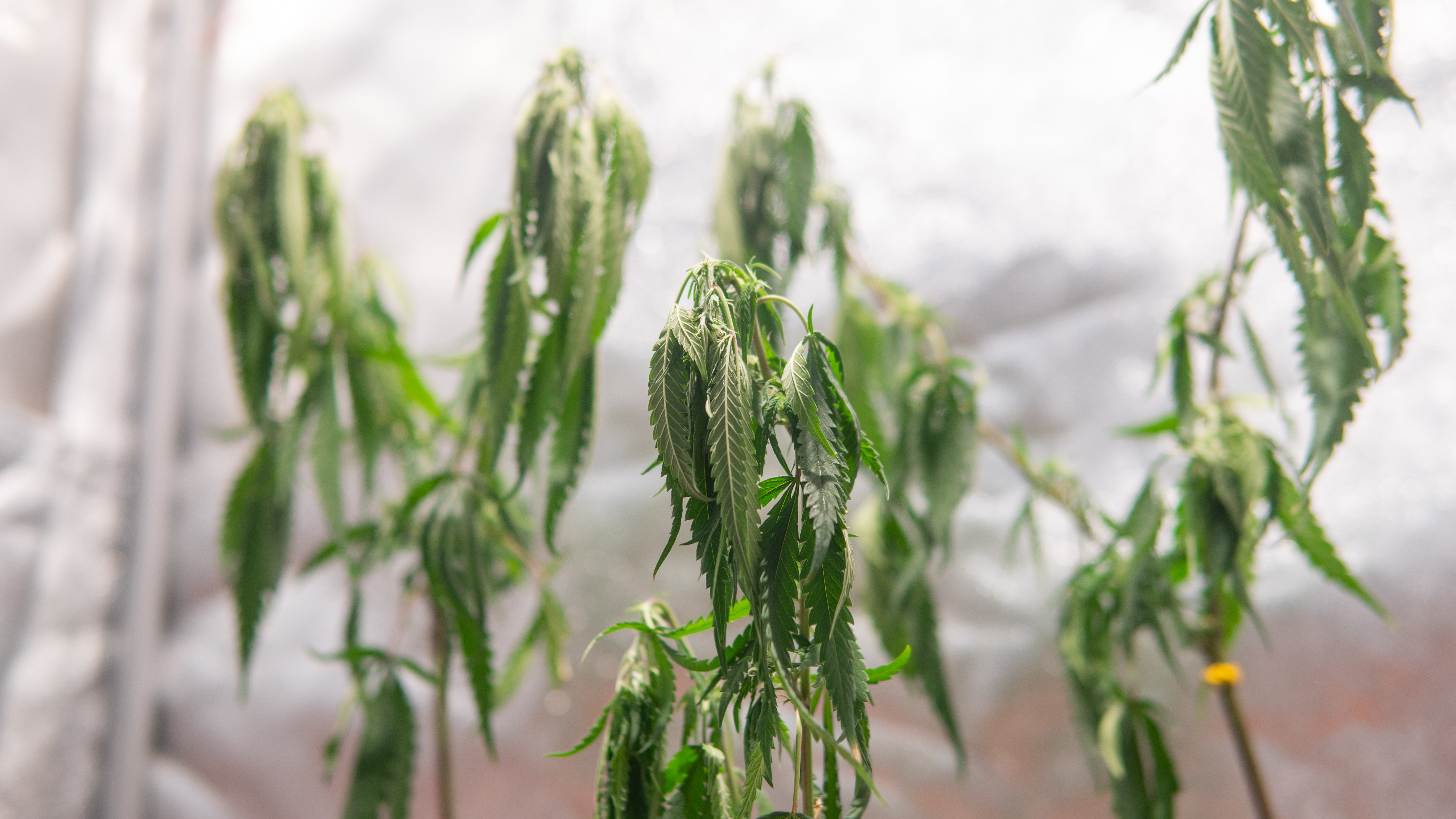


Nitrogen deficiency is one of the most common nutrition problems that can affect cannabis plants. It happens when a plant does not receive enough usable nitrogen to support healthy growth. Nitrogen is an essential nutrient, which means cannabis plants cannot grow well without it. The plant needs nitrogen to form green leaves, build strong stems, create new tissue, and carry out many basic life processes. When nitrogen levels become too low, the plant may lose its healthy green color and begin to grow more slowly.
Nitrogen is one of the three main nutrients listed on fertilizer labels. These nutrients are often shown as NPK. The letter N stands for nitrogen, P stands for phosphorus, and K stands for potassium. Each nutrient has an important role in plant development. Nitrogen mainly supports leaf and stem growth. Phosphorus helps with root development and flower production. Potassium supports water movement, plant strength, and general health. Cannabis plants need all three nutrients, but the amount of each nutrient changes during different stages of growth.
Nitrogen is especially important because it is a major part of chlorophyll. Chlorophyll is the green substance inside leaves that allows plants to absorb light. The plant uses this light during photosynthesis. Photosynthesis is the process that allows the plant to turn light, water, and carbon dioxide into energy. Without enough chlorophyll, a cannabis plant cannot use light as well as it should. This is why nitrogen-deficient leaves often become pale green or yellow. The loss of green color shows that the plant may not be producing enough chlorophyll.
Cannabis plants also use nitrogen to make proteins, enzymes, and other materials needed for growth. Proteins help build plant cells and tissues. Enzymes help control chemical reactions inside the plant. These reactions affect growth, nutrient use, energy production, and many other functions. A nitrogen shortage can therefore affect much more than leaf color. It can weaken the whole plant and reduce its ability to develop new branches, leaves, and stems.
The amount of nitrogen a cannabis plant needs depends on its age and growth stage. Seedlings need only small amounts because their root systems and leaves are still developing. Giving a young seedling too much nitrogen may damage its roots or burn its leaves. As the plant enters the vegetative stage, its nitrogen needs increase. During this stage, the plant focuses on building leaves, branches, and stems. Healthy vegetative growth creates the structure that will later support flower development.
Nitrogen demand usually becomes lower after the plant moves into the flowering stage. The plant still needs some nitrogen, especially during the first part of flowering, but it begins to use more phosphorus and potassium. Growers often switch to a flowering fertilizer with less nitrogen during this period. However, reducing nitrogen too early or too sharply can cause leaves to turn yellow before the plant is ready. A balanced feeding plan should lower nitrogen gradually while still giving the plant enough to maintain healthy leaves.
Nitrogen deficiency often starts in the oldest leaves near the bottom of the plant. This happens because nitrogen is a mobile nutrient. A mobile nutrient can move from one part of the plant to another. When the plant cannot find enough nitrogen in the root zone, it takes nitrogen from older leaves and sends it to younger leaves and new growth. The lower leaves then lose their green color first. If the problem continues, yellowing may spread upward through the plant.
Early signs may include pale lower leaves, slower growth, and weak stems. As the deficiency becomes more serious, the lower leaves may turn fully yellow, dry out, or fall from the plant. The plant may stop producing healthy new growth. Branches may remain thin, and the entire plant may look weak. A severe deficiency can reduce the plant’s ability to support flower production later in its life cycle.
It is important to understand that yellow leaves do not always mean the plant needs more nitrogen. Several other problems can cause similar symptoms. Overwatering can reduce oxygen around the roots and prevent the plant from absorbing nutrients. Incorrect pH can make nitrogen unavailable even when it is present in the soil or nutrient solution. Root damage, cold temperatures, salt buildup, and other nutrient problems can also cause yellowing.
Natural aging must also be considered. An older leaf may turn yellow and fall without showing a serious problem. Cannabis plants may also show a natural fade near the end of flowering. During this time, the plant may use nutrients stored in older fan leaves. A slow yellowing of lower leaves close to harvest may be normal. Rapid yellowing during vegetative growth or early flowering is more likely to require attention.
Correct diagnosis is important because adding more fertilizer without checking the cause can make the situation worse. A plant that has nutrient lockout may already have enough nitrogen in its growing medium. Adding more can cause salt buildup, damaged roots, or nitrogen toxicity. Before treating the plant, growers should examine where the yellowing begins, how quickly it spreads, and what stage of growth the plant is in. They should also check watering habits, root health, pH, drainage, and feeding strength.
Finding nitrogen deficiency early gives the plant a better chance to recover. Mild cases can often be corrected before they cause serious damage. The goal is not to make every leaf dark green. The goal is to provide a balanced amount of nitrogen that supports steady growth without causing excess. Healthy cannabis plants should have green leaves, firm stems, active new growth, and a feeding program suited to their stage of development.
This guide explains how to recognize nitrogen deficiency, understand its causes, and separate it from other problems. It also covers how to treat the condition in soil, coco coir, and hydroponic systems. Later sections will explain how to check pH, choose a suitable fertilizer, monitor recovery, and prevent the problem from returning. By understanding how nitrogen works inside the plant, growers can make safer feeding choices and respond to yellowing leaves with greater accuracy.
Why Cannabis Plants Need Nitrogen
Nitrogen is one of the most important nutrients for cannabis plants. It is known as a primary macronutrient because plants need it in larger amounts than many other nutrients. On fertilizer labels, nitrogen is shown as the first number in the NPK ratio. The letters NPK stand for nitrogen, phosphorus, and potassium. These three nutrients support many basic plant functions.
Cannabis plants need nitrogen throughout most of their life cycle. However, the amount they need changes as they grow. Young plants need only a small amount, while plants in the vegetative stage often need much more. Flowering plants still require nitrogen, but their needs usually decrease as flower development becomes the main focus.
A plant that receives enough nitrogen can build healthy leaves, stems, and branches. It can also produce the green pigment needed to absorb light. When nitrogen levels are too low, the plant may become pale, weak, and slow-growing. Understanding the role of nitrogen helps growers recognize why a deficiency can affect the entire plant.
Nitrogen’s Role in Plant Growth
Nitrogen supports several important processes inside a cannabis plant. One of its main jobs is helping the plant produce chlorophyll. Chlorophyll is the green pigment found in leaves. It allows the plant to capture energy from light and use it during photosynthesis.
Photosynthesis is the process that plants use to make food. The leaves absorb light, while the roots take in water and nutrients. The plant then uses these materials, along with carbon dioxide from the air, to produce sugars. These sugars provide energy for leaf growth, root growth, stem development, and flower production.
When a plant does not receive enough nitrogen, it may produce less chlorophyll. This is why nitrogen-deficient leaves often change from dark green to pale green and then yellow. The loss of green color means that the leaf may not capture light as well as it should. This can reduce photosynthesis and slow down the plant’s overall growth.
Nitrogen is also needed to produce amino acids. Amino acids are building blocks that plants use to create proteins. These proteins support the growth of cells and tissues. They are also involved in many chemical reactions that take place inside the plant.
Enzymes also depend on nitrogen. Enzymes help control and speed up important plant processes. These include breaking down nutrients, producing energy, and building new plant tissue. Without enough nitrogen, the plant may struggle to complete these tasks at a normal rate.
Nitrogen also plays a role in the production of genetic material. Every new plant cell needs genetic instructions so it can grow and function correctly. Since cannabis plants produce many new cells during active growth, they need a steady supply of nitrogen.
Healthy nitrogen levels help cannabis plants develop broad fan leaves, strong stems, and new branches. These parts are especially important during the vegetative stage. Large leaves collect more light, while strong branches create sites where flowers may later develop.
Too little nitrogen can cause weak stems and limited branching. This may reduce the size of the plant and the number of future flower sites. For this reason, nitrogen is closely linked to plant structure and early growth.
Nitrogen Requirements During Each Growth Stage
Cannabis plants do not need the same amount of nitrogen throughout their entire life cycle. Nutrient needs change during the seedling, vegetative, and flowering stages. Giving the right amount at each stage helps prevent both deficiency and excess.
Seedlings need only small amounts of nitrogen. During the first days of life, a seedling uses energy stored inside the seed. Once the first true leaves appear, the young plant begins to absorb more nutrients through its roots.
Seedlings are small and have delicate root systems. A strong fertilizer solution can damage them. Too much nitrogen at this stage may burn the roots or cause the leaves to become very dark. Seedling soil often contains enough nutrients to support early growth for a short period. Extra feeding should be introduced carefully when needed.
Nitrogen demand usually becomes much higher during the vegetative stage. This is the stage when cannabis plants focus on building leaves, stems, branches, and roots. Plants may grow quickly during this period, especially when they receive strong light, enough water, and suitable temperatures.
Fast growth requires large amounts of new plant tissue. Since nitrogen is used to make chlorophyll, proteins, and enzymes, the plant must absorb a steady supply. A lack of nitrogen during vegetative growth can cause yellow lower leaves, thin stems, and slow development.
The vegetative stage is often the time when growers use a fertilizer with a higher first number in the NPK ratio. This shows that the product contains a larger share of nitrogen. However, the exact amount needed depends on the plant’s size, growing medium, light level, and overall health.
A large plant in a small container may use the available nitrogen quickly. A fast-growing plant under bright indoor lights may also need more nutrients than a slower plant. Soil that contains compost or other organic matter may provide nitrogen over time, while an inactive or exhausted soil mix may offer very little.
As cannabis plants enter the flowering stage, their nutrient needs begin to change. The plant starts using more energy to form flowers. Phosphorus and potassium often become more important during this period. However, this does not mean that nitrogen should be removed completely.
Cannabis plants still need nitrogen during early flowering. Leaves must stay healthy so they can continue photosynthesis. Stems and branches may also keep growing during the first part of the flowering stage. If nitrogen is reduced too quickly, the lower leaves may turn yellow long before the plant is ready for harvest.
Nitrogen needs usually decrease as flowering continues. A high nitrogen level during late flowering may cause unwanted effects. Leaves may become very dark, and the tips may curl downward. Excess nitrogen can also disturb the balance of other nutrients.
Gradual changes are safer than sudden changes. Growers should not use the same nutrient strength from the beginning of vegetative growth until harvest. They should also avoid switching from a high-nitrogen formula to a formula with almost no nitrogen in one step.
Plant appearance, growth rate, and stage should guide adjustments. Healthy leaves should usually have a natural green color. They should not look pale, but they should also not appear unusually dark or shiny.
How Cannabis Moves Nitrogen
Nitrogen is known as a mobile nutrient. This means the cannabis plant can move nitrogen from one part of the plant to another. When the roots cannot absorb enough nitrogen, the plant may take stored nitrogen from older leaves and send it to younger leaves and new growth.
Young leaves are often more important to the plant’s future growth. They receive more light and may continue developing for a longer time. To protect these newer areas, the plant removes nitrogen from older leaves near the bottom.
This movement explains why nitrogen deficiency often starts low on the plant. The oldest fan leaves may first become lighter green. As more nitrogen is removed, these leaves may turn fully yellow. They can later become dry, weak, or brown before falling from the plant.
If the deficiency continues, the yellowing may move upward. Leaves in the middle of the plant may begin to lose color, followed by higher leaves in severe cases. This bottom-to-top pattern is one of the main signs that helps identify nitrogen deficiency.
The movement of nitrogen also explains why damaged leaves do not always recover after feeding. A leaf that has lost most of its chlorophyll may stay yellow even after the roots receive nitrogen. Severely damaged tissue may already be dying.
Growers should watch the newer growth after treatment. If the new leaves appear greener and the yellowing stops spreading, the plant may be recovering. The goal is not always to make every old leaf green again. The more important goal is to restore healthy growth and stop the deficiency from becoming worse.
Other mobile nutrients may also cause symptoms on older leaves. For this reason, the location of yellowing is only one part of a diagnosis. The pattern, leaf markings, plant stage, feeding history, and root conditions must also be considered.
Nitrogen helps cannabis plants produce chlorophyll, proteins, enzymes, genetic material, and new plant tissue. These functions make it essential for photosynthesis, leaf growth, stem strength, and branch development.
Cannabis plants need different amounts of nitrogen at different stages. Seedlings require small amounts, while vegetative plants usually need a larger and steady supply. Flowering plants still need some nitrogen, especially during early flowering, but the amount normally decreases as harvest approaches.
Nitrogen is a mobile nutrient. When there is not enough available, the plant moves nitrogen from older leaves to younger growth. This causes the lower leaves to become pale and yellow first. Understanding this process makes it easier to recognize nitrogen deficiency and respond before the problem spreads through the plant.
Symptoms of Nitrogen Deficiency in Cannabis
Nitrogen deficiency often develops slowly, but the symptoms become easier to notice as the problem gets worse. The first signs usually appear on the oldest leaves near the bottom of the cannabis plant. These leaves may lose their deep green color and become pale green or yellow. If the plant does not receive enough usable nitrogen, the yellowing can spread upward toward the middle and top of the plant.
Cannabis plants need nitrogen to produce chlorophyll. Chlorophyll is the green material inside leaves that helps the plant absorb light and turn it into energy. When nitrogen levels are too low, the plant cannot produce enough chlorophyll. This causes the leaves to lose their normal green color. Less chlorophyll also means the plant cannot carry out photosynthesis as well as it should. Over time, this can slow growth and weaken the plant.
Nitrogen is a mobile nutrient. This means the plant can move nitrogen from one part of its structure to another. When nitrogen is limited, the plant takes stored nitrogen from older leaves and sends it to younger leaves and new growth. This is why symptoms often begin at the bottom of the plant. The plant is trying to protect its newest growth by using nutrients stored in older fan leaves.
Early Symptoms
The earliest symptom of nitrogen deficiency is often a change in leaf color. Older fan leaves near the base of the plant may appear lighter than normal. They may first turn pale green before becoming yellow. The color change is usually even across the leaf instead of appearing as separate spots or unusual patterns.
The yellowing may begin near the leaf tips and gradually spread across the entire leaf. In some cases, the veins and the tissue between the veins turn yellow at about the same rate. This is different from some other nutrient problems, which may cause the veins to stay green while the rest of the leaf becomes yellow.
Early nitrogen deficiency may also cause slower growth. New branches may take longer to develop, and the distance between new growth points may become shorter. The plant may look smaller or less full than other cannabis plants of the same age. Stems may appear thin, and lower branches may not grow as strongly as expected.
The plant may also produce smaller leaves. New leaves may still look green at first because the plant sends its remaining nitrogen to the newest growth. However, if the deficiency continues, even the newer leaves may become lighter. The whole plant may eventually develop a pale appearance.
A mild deficiency may be difficult to notice under strong grow lights. Some lights can make yellow leaves appear greener than they really are. It can help to inspect the plant under natural white light. Comparing the plant with healthy plants of the same variety may also make color changes easier to see.
Growers should pay attention to the speed of the yellowing. One or two old leaves turning yellow may be part of normal plant aging. A steady increase in yellow lower leaves, combined with slow growth, is more likely to point to a nutrient issue.
Advanced Symptoms
When nitrogen deficiency becomes severe, the lower leaves may turn completely yellow. These leaves may begin to wilt, curl, or hang downward. The edges can become dry, and brown areas may form as the leaf tissue dies. Eventually, the affected leaves may become crisp and fall from the plant.
Leaf loss can reduce the plant’s ability to produce energy. Large fan leaves collect light and support photosynthesis. When the plant loses many of these leaves, it has less healthy tissue available to support growth. This can be especially harmful during the vegetative stage, when the plant is building its branches, stems, and leaf structure.
As the problem continues, yellowing may move from the lower part of the plant into the middle section. Leaves that were once healthy may begin to fade. The plant may look thin because it is losing older leaves faster than it can produce new ones.
Severe nitrogen deficiency can also affect stem growth. Stems and branches may remain thin, weak, or short. The plant may have trouble supporting later flower growth because it did not build a strong structure during the vegetative stage. Side branches may develop slowly, and the overall plant shape may appear narrow or underdeveloped.
New growth can also become pale when the deficiency is advanced. At this stage, the plant no longer has enough stored nitrogen to protect young leaves. Growth may slow greatly or stop. The plant may remain alive, but its ability to produce healthy tissue becomes limited.
In flowering cannabis plants, severe nitrogen deficiency may cause leaves to yellow and fall too early. This can reduce the amount of healthy leaf area available to support flower development. Some yellowing near the end of flowering can be natural, but rapid yellowing during early or middle flowering may signal a serious problem.
How Symptoms Progress
Nitrogen deficiency usually follows a clear pattern. It begins with older leaves because the plant moves nitrogen from those leaves to newer parts. The lower fan leaves first become pale green. They then turn yellow, dry out, and fall. If the plant still cannot get enough nitrogen, the symptoms move upward.
This bottom-to-top pattern is an important clue. However, it should not be used as the only way to diagnose the problem. Overwatering, damaged roots, incorrect pH, and other nutrient issues can also cause yellow leaves. The grower should examine the entire plant and review its recent feeding and watering routine.
It is also important to understand that damaged leaves may not return to their original green color after treatment. A leaf that is only slightly pale may improve, but a fully yellow or brown leaf is unlikely to recover. The best sign of improvement is healthy new growth and yellowing that stops spreading.
The speed of symptom development can provide useful information. A mild deficiency may progress over several days or weeks. Sudden yellowing across many leaves may be linked to a root-zone problem, a major pH change, or a mistake in the feeding program. When symptoms appear quickly, growers should check more than the fertilizer level.
Plant age and growth stage should also be considered. A young cannabis plant should normally have healthy green leaves if it has access to balanced nutrients. Yellowing lower leaves during active vegetative growth should be investigated. Gradual yellowing near the final stage of flowering may be normal as the plant uses stored nutrients.
Nitrogen deficiency in cannabis usually starts with pale or yellow leaves at the bottom of the plant. This happens because nitrogen is mobile, allowing the plant to move it from older leaves to new growth. Early symptoms include pale lower leaves, slow growth, thin stems, and smaller leaves. Advanced symptoms include complete yellowing, dry leaf tissue, early leaf loss, weak branches, and yellowing that spreads upward.
Growers should watch the pattern and speed of the symptoms. A bottom-to-top pattern can suggest nitrogen deficiency, but other causes must also be considered. Healthy new growth and yellowing that stops spreading are the clearest signs that the plant is recovering.
Common Causes of Nitrogen Deficiency
Nitrogen deficiency can develop for several reasons. The most obvious cause is that the plant does not receive enough nitrogen. However, the problem is not always caused by weak fertilizer. A cannabis plant may have nitrogen around its roots but still be unable to absorb it. Problems with watering, pH, roots, temperature, or salt buildup can all reduce nutrient uptake. For this reason, growers should look at the entire growing environment before adding more fertilizer.
Not Enough Nitrogen in the Growing Medium
Cannabis plants remove nitrogen from the growing medium as they develop. The plant uses this nutrient to form chlorophyll, amino acids, enzymes, leaves, and stems. During strong vegetative growth, nitrogen use can be very high. A growing medium that supported a small seedling may not contain enough nitrogen for a larger plant.
Some potting soils contain added nutrients, but these nutrients do not last forever. A soil mix may provide enough food for several weeks before the nutrient supply begins to fall. Once the available nitrogen has been used, older leaves may become pale green or yellow. The plant moves nitrogen from these older leaves to the new growth at the top.
Low-quality or exhausted soil may also contain very little usable nitrogen from the beginning. Soil that has been reused without being amended can lose much of its nutrient value. Cannabis grown in this type of soil may show slow growth, weak stems, and early yellowing.
Container size can also affect nitrogen availability. Small pots hold less soil and fewer nutrients. A large plant in a small container may use the available nitrogen very quickly. The roots may also become crowded, which makes it harder for the plant to take in water and nutrients. A plant that has outgrown its container may require more frequent feeding or a move into a larger pot.
Organic soil requires special attention because many organic nitrogen sources must be broken down by microorganisms before the plant can use them. If the soil contains little microbial activity, nutrients may be released too slowly. Cold soil, dry conditions, or chemical damage can reduce the activity of useful soil organisms.
Incorrect Fertilizer Use
Using the wrong fertilizer is another common cause of nitrogen deficiency. Cannabis plants need different nutrient ratios during different growth stages. A vegetative fertilizer usually contains more nitrogen than a flowering formula. Switching to bloom nutrients too early can leave the plant without enough nitrogen while it is still producing leaves and branches.
Some growers reduce nitrogen as soon as they plan to begin flowering. However, cannabis plants continue to stretch and form new tissue during the first part of the flowering stage. A sudden drop in nitrogen during this period may cause early yellowing and weak growth.
Incorrect mixing can also create a deficiency. Adding too little fertilizer to the water may not provide enough nitrogen. This is more likely when the plant is large, growing quickly, or kept under strong lighting. Feeding at a weak strength may be safe for young plants but may not meet the needs of mature plants.
Feeding too infrequently can cause a similar problem. A plant may receive the correct fertilizer but not receive it often enough. This can happen in soilless media such as coco coir, which contains few nutrients of its own. Plants grown in coco depend on the nutrient solution for most of their food. Long periods between feedings can lead to fast nutrient shortages.
Measurement mistakes are another possible cause. Growers may use the wrong measuring tool, confuse milliliters with teaspoons, or forget to add one part of a multi-part nutrient system. Nutrient bottles should be shaken when required, and each product should be measured carefully. Guessing the amount can lead to either deficiency or excess.
Root and Environmental Problems
Healthy roots are needed for healthy nutrient uptake. Even when the fertilizer contains enough nitrogen, damaged roots may not be able to absorb it. Overwatering is one of the most common causes of poor root function. When the growing medium remains wet for too long, air spaces fill with water. Roots need oxygen to function, so low oxygen levels can slow nutrient absorption.
Overwatering may also lead to root rot. Damaged roots often appear brown, soft, or slimy instead of pale and firm. A plant with unhealthy roots may show yellow leaves, slow growth, drooping, and poor water use. Adding more nitrogen will not solve the problem until the root conditions improve.
Underwatering can also reduce nitrogen uptake. Nutrients move through the growing medium in water. When the soil becomes extremely dry, roots cannot take in enough water or dissolved nutrients. Repeated cycles of severe drying and heavy watering can stress the roots and cause uneven feeding.
Compacted soil is another concern. Dense soil drains slowly and contains less oxygen. Roots may struggle to spread through the container. Heavy soil can also develop wet pockets where root damage begins. A light, well-draining mix usually supports better nutrient absorption.
Low root-zone temperatures can slow plant activity. Cold roots absorb water and nutrients more slowly, even when the air above the plant feels warm. Cannabis plants kept on cold floors may develop nutrient problems during cool weather. Raising pots slightly off a cold surface may help protect the root zone.
Excess fertilizer salts can also block nitrogen uptake. When strong nutrients are used too often, unused salts may collect in the growing medium. High salt levels can pull water away from the roots and damage delicate root tissue. The plant may then show deficiency symptoms even though the medium contains a large amount of fertilizer. This situation is often called nutrient lockout.
Rapid Plant Growth
Fast growth can cause a nitrogen shortage when the plant uses the nutrient faster than it is replaced. This often happens during late vegetative growth or the stretch period after flowering begins. Plants may increase in size very quickly during these stages. They form new leaves, branches, and stem tissue, all of which require nitrogen.
Strong grow lights can increase the speed of plant growth. Warm temperatures, healthy roots, added carbon dioxide, and good airflow may also raise nutrient demand. A feeding plan that worked under weaker conditions may no longer provide enough nitrogen when the plant begins growing faster.
Large plants are more likely to use nitrogen quickly because they have more leaves and a larger root system. Several plants sharing one bed or container may also compete for the available nutrients. A plant that receives less root space or water may become deficient before the others.
Growers should avoid increasing fertilizer strength without checking the plant and root zone first. Fast growth may increase nitrogen demand, but yellow leaves can also result from pH problems, overwatering, or salt buildup. The correct response depends on the true cause.
Nitrogen deficiency can result from low nutrient levels, incorrect fertilizer use, root damage, watering problems, cold conditions, salt buildup, or rapid plant growth. The growing medium may contain too little nitrogen, or the roots may be unable to absorb what is already present. Small containers and exhausted soil can also increase the risk.
A careful diagnosis should include the plant’s growth stage, feeding history, container size, moisture level, root health, and recent environmental changes. Adding more fertilizer without checking these factors may make the problem worse. Correcting the underlying cause gives the plant the best chance to return to healthy growth.
Nitrogen Deficiency or Nutrient Lockout?
Nitrogen deficiency and nutrient lockout can cause similar symptoms in cannabis plants. In both cases, older leaves may turn pale green or yellow. Growth may slow, and weak leaves may dry out and fall from the plant. However, the causes are different. A true nitrogen deficiency means the plant does not have access to enough nitrogen. Nutrient lockout means nitrogen may be present in the growing medium, but the roots cannot absorb it.
This difference is important because each problem needs a different treatment. Adding fertilizer may help a true deficiency. It may make nutrient lockout worse. Before giving the plant more nitrogen, growers should check the root zone, pH level, nutrient strength, watering habits, and general root health.
Understanding Nutrient Lockout
Nutrient lockout happens when plant roots cannot take in nutrients from the growing medium. The nutrients may already be present in the soil, coco coir, or hydroponic solution. However, certain conditions make them unavailable to the plant.
Incorrect pH is one of the most common causes of nutrient lockout. Cannabis roots absorb nutrients best within a suitable pH range. When the pH becomes too high or too low, the chemical form of some nutrients changes. The roots may no longer absorb those nutrients well, even when the fertilizer contains enough of them.
Salt buildup can also cause lockout. Mineral fertilizers leave dissolved salts in the root zone. These salts may build up when plants receive strong nutrient solutions, when growers feed too often, or when there is not enough drainage. As the salt level rises, roots may have trouble taking in water and nutrients. The plant can then show signs that look like a deficiency.
Root damage is another possible cause. Roots need oxygen, moisture, and a suitable temperature to work well. Overwatering can fill air spaces in the growing medium and reduce the amount of oxygen available to roots. Poor drainage may keep the root zone wet for too long. Root disease, compacted soil, and very cold conditions may also reduce nutrient absorption.
A plant affected by nutrient lockout may show more than one deficiency at the same time. For example, lower leaves may turn yellow while other leaves develop spots, pale areas, or damaged edges. The symptoms may continue even after fertilizer is added. This is a warning that the problem may involve the root zone rather than a lack of nitrogen alone.
Checking Root-Zone pH
Checking pH is one of the first steps when nitrogen deficiency symptoms appear. pH measures how acidic or alkaline a liquid or growing medium is. Cannabis plants can only absorb nutrients well when the pH stays within a useful range.
For plants grown in soil, growers often aim for a root-zone pH of about 6.0 to 7.0. A range near 6.2 to 6.8 is commonly used because it allows the roots to absorb many important nutrients. Coco coir and hydroponic systems usually need a lower pH, often around 5.5 to 6.5. The exact target may depend on the growing system and nutrient product.
Growers should test the water before feeding the plant. When using liquid nutrients, the nutrients should be mixed into the water before the final pH is checked. Fertilizers can change the pH of the solution. Adjusting the water before adding nutrients may lead to an incorrect final reading.
Runoff can also provide useful information. Runoff is the liquid that drains from the bottom of the container after watering. If the runoff pH is very different from the input solution, the root-zone pH may be unstable. However, runoff results should not be treated as a perfect measurement. They are best used together with observations of the plant and the feeding history.
Sudden pH changes should be avoided. Moving the pH too far in one watering can place more stress on the roots. Gradual correction is usually safer. Growers should also check that pH meters are clean and properly calibrated. A meter that gives false readings can lead to unnecessary changes and further nutrient problems.
Checking Electrical Conductivity and Salt Buildup
Electrical conductivity, often called EC, is a measurement of the dissolved salts in water or nutrient solution. Some growers use PPM, which means parts per million. Both measurements help show how strong a nutrient solution is.
A low EC may suggest that the plant is not receiving enough nutrients. A very high EC may show that too much fertilizer is present. High readings in the runoff or reservoir may point to salt buildup. This can make it harder for roots to absorb water and nutrients.
Salt buildup often develops when plants receive more fertilizer than they can use. It may also occur when the growing medium dries out too much between waterings. As water leaves the medium, fertilizer salts remain behind. Repeated cycles can cause the salt concentration to rise.
Signs of excess salts may include burned leaf tips, dry leaf edges, slow growth, and leaves that appear dark green before becoming damaged. The plant may also wilt even when the growing medium contains moisture. These symptoms can occur because high salt levels affect the movement of water through the roots.
When testing runoff, growers should compare the reading with the nutrient solution going into the container. A much higher runoff reading may suggest buildup. In hydroponic systems, the reservoir EC should be checked often. Fast changes may show that plants are drinking more water than nutrients or taking up nutrients faster than water.
EC and PPM do not show which specific nutrients are present. They only measure the total amount of dissolved material. A normal EC reading does not prove that the nutrient balance is correct. The solution may still contain too much of one nutrient and too little of another. Plant symptoms, pH, feeding records, and the type of fertilizer must all be considered.
Correcting the Cause Before Adding Nitrogen
Before adding more nitrogen, growers should review the full growing environment. The first step is to check whether the plant has been overwatered or underwatered. Roots need moisture, but they also need air. Soil that stays wet for long periods may reduce root function and cause yellow leaves.
The next step is to inspect drainage. Containers should have open drainage holes, and water should not sit around the roots. Heavy or compacted soil may hold too much moisture. A better-aerated growing mix may be needed during the next transplant.
Growers should then check the pH of the nutrient solution and root zone. If the pH is outside the useful range, it should be corrected slowly. The feeding strength should also be reviewed. A high EC or PPM reading may mean that adding more fertilizer would increase the salt problem.
When salt buildup is severe, growers may need to water the growing medium with properly adjusted water to reduce the excess salts. The exact approach depends on the growing medium and the condition of the plant. Heavy flushing should not be done without reason because it can remove useful nutrients and leave roots too wet.
After the root-zone problem is corrected, a balanced nutrient solution can be given at a suitable strength. It is usually better to use a complete fertilizer than to add a large dose of nitrogen alone. Cannabis plants need nitrogen, phosphorus, potassium, calcium, magnesium, sulfur, and trace elements in balanced amounts.
Growers should make one change at a time and watch the plant closely. Damaged yellow leaves may not become green again. The best sign of recovery is healthy new growth and yellowing that no longer spreads upward. Repeated feeding every day can cause nitrogen toxicity, burned roots, or further lockout.
Nitrogen deficiency and nutrient lockout may look alike, but they are not the same problem. A true deficiency means the plant does not receive enough usable nitrogen. Nutrient lockout means nitrogen may be present, but the roots cannot absorb it because of incorrect pH, salt buildup, poor watering, or root damage.
Growers should check pH, EC or PPM, drainage, moisture levels, and root health before adding more fertilizer. Adding nitrogen without checking these conditions may make the problem worse. Careful testing and gradual adjustments give the plant the best chance to recover. Healthy new leaves, steady growth, and yellowing that stops spreading are the clearest signs that the root zone and nutrient balance are improving.
How to Diagnose Nitrogen Deficiency Correctly
Correct diagnosis is important before treating a cannabis plant for nitrogen deficiency. Yellow leaves are a common warning sign, but they can appear for many reasons. A plant may turn yellow because of poor watering, incorrect pH, damaged roots, heat stress, pests, or another nutrient problem. Adding more nitrogen without checking the cause may make the plant worse. It can lead to nutrient burn, salt buildup, or nitrogen toxicity.
A careful diagnosis should include the location of the yellow leaves, the plant’s growth stage, recent feeding habits, and the condition of the roots and growing medium. Growers should study the full plant instead of looking at one damaged leaf. The pattern and speed of the changes can provide useful clues.
Examine Where Yellowing Begins
The location of the first yellow leaves is one of the clearest signs of a possible nitrogen deficiency. Nitrogen is a mobile nutrient. This means a cannabis plant can move nitrogen from older leaves to newer parts when the available supply becomes low.
Older fan leaves are usually found near the bottom of the plant. When nitrogen becomes limited, the plant removes some nitrogen from these leaves and sends it toward new shoots and leaves. This helps the plant protect its youngest growth. As a result, nitrogen deficiency often starts with pale green or yellow lower leaves.
The yellowing may first appear as an even loss of green color across the leaf. Both the areas between the veins and the veins themselves may become pale. The entire leaf may later turn yellow. If the deficiency continues, the leaf may dry out, develop brown areas, and fall from the plant.
The yellowing often moves upward over time. Lower leaves are affected first, followed by leaves in the middle of the plant. New growth may stay green during the early stage. Severe deficiency can eventually affect most of the plant.
Growers should be careful when yellowing begins in new growth instead of older leaves. This pattern may point to a different nutrient issue. For example, sulfur and iron problems often affect younger leaves first because these nutrients do not move through the plant in the same way as nitrogen.
Random yellow patches may also have another cause. Root damage, insects, leaf disease, light stress, and water problems can create uneven damage. A true nitrogen deficiency usually follows a more even and predictable bottom-to-top pattern.
Review the Plant’s Growth Stage
The plant’s growth stage must be considered before nitrogen deficiency is diagnosed. Cannabis plants use different amounts of nitrogen during different stages of development.
During vegetative growth, cannabis needs a steady supply of nitrogen to produce leaves, branches, stems, chlorophyll, and new plant tissue. Yellow lower leaves during early or middle vegetative growth may be a serious warning sign. The plant should usually be developing quickly at this time. A lack of nitrogen can slow growth and reduce the size of the plant.
Seedlings can also develop pale leaves, but growers should not assume that every pale seedling needs fertilizer. Young plants require fewer nutrients than large plants. Their roots are still developing, and strong fertilizer may burn them. Seedling problems may be caused by wet soil, poor drainage, unsuitable pH, or a growing medium that is too rich.
During early flowering, cannabis still requires some nitrogen. The plant continues to stretch and produce leaves during the first part of the flowering stage. Reducing nitrogen too early may cause rapid yellowing and weak growth. A plant that turns yellow several weeks before harvest may not have enough healthy leaves to support flower development.
Yellowing near the end of flowering may be more natural. As harvest approaches, some plants use nutrients stored in older fan leaves. This can cause a slow yellowing pattern known as fading. Natural fade usually develops gradually and begins with older leaves. It should not be confused with a severe deficiency that spreads quickly through the plant.
Growers should ask when the yellowing began and how many weeks remain before harvest. Rapid yellowing during vegetative growth or early flowering needs more attention than a slow loss of color near the end of the plant’s life cycle.
Review the Feeding History
A plant’s recent feeding history can help confirm or rule out nitrogen deficiency. Growers should check which nutrients were used, how much was added, and how often the plant was fed.
The fertilizer label should show an NPK ratio. The first number represents nitrogen. A vegetative fertilizer often contains more nitrogen than a flowering fertilizer. If a low-nitrogen bloom formula was introduced too early, the plant may begin to lose color.
The amount of fertilizer also matters. A suitable product may still cause deficiency if it is mixed at a very weak strength or applied too rarely. Large, fast-growing plants usually require more nutrients than small plants. Plants grown under strong lights may also use water and nutrients faster.
Recent flushing should be considered. Flushing removes or reduces nutrients from the root zone. A plant may become deficient if it is flushed and then left without balanced feeding for too long. Heavy watering can also wash available nutrients from some soil mixes.
Growers should think about the growing medium. Fresh commercial soil may already contain nutrients. Older soil or reused soil may have fewer available nutrients. Coco coir and hydroponic systems usually provide little or no nutrition unless nutrients are added through the water.
Feeding records are useful during diagnosis. Notes should include nutrient strength, pH readings, watering dates, and changes in plant appearance. These records can help growers connect symptoms with a recent change in care.
Rule Out Similar Problems
Several problems can look like nitrogen deficiency. Ruling them out can prevent the wrong treatment.
Magnesium deficiency often affects older leaves, but it usually creates yellowing between the veins while the veins remain greener. Nitrogen deficiency tends to cause a more even pale color across the entire leaf.
Sulfur deficiency may create light green or yellow leaves, but it often begins in younger growth. Iron deficiency also tends to affect new leaves first. The location of the symptoms helps separate these problems.
Overwatering can cause pale or yellow leaves because water fills the air spaces in the growing medium. Roots need oxygen to function. When the root zone stays wet, the plant may struggle to absorb nitrogen and other nutrients. Leaves may droop even though the soil is wet.
Underwatering can also lead to yellowing and dry leaves. A dry root zone limits the movement of water and dissolved nutrients into the plant. The growing medium and recent watering pattern should be checked before more fertilizer is added.
Incorrect pH can cause nutrient lockout. In this case, nitrogen may be present, but the roots cannot absorb it well. Testing the nutrient solution, soil, runoff, or reservoir can help identify this issue.
Root problems must also be considered. Root-bound plants, root rot, cold roots, and compacted soil can limit nutrient uptake. Pests and diseases may create spots, holes, webbing, powdery growth, or uneven damage that does not match a normal deficiency pattern.
Correctly diagnosing nitrogen deficiency requires more than seeing a yellow leaf. Growers should examine where the yellowing starts, how it spreads, and which parts of the plant remain healthy. A bottom-to-top pattern that begins with older fan leaves is a common sign of nitrogen deficiency.
The growth stage also provides important information. Yellowing during vegetative growth or early flowering is more concerning than a slow fade close to harvest. Feeding history, fertilizer strength, pH, watering habits, and root health should all be reviewed.
Other problems, including magnesium deficiency, overwatering, nutrient lockout, pests, and root damage, can create similar symptoms. Growers should make one careful change at a time and watch how the plant responds. A complete diagnosis reduces the risk of overfeeding and makes it easier to choose the correct treatment.
How to Fix Nitrogen Deficiency in Soil-Grown Cannabis
Nitrogen deficiency in soil-grown cannabis should be treated carefully. Yellow leaves may suggest that the plant needs more nitrogen, but adding fertilizer right away is not always the best first step. Problems with watering, soil pH, drainage, or root health can stop a plant from taking in nitrogen that is already present in the soil. A grower should check these conditions before applying extra nutrients. This reduces the risk of overfeeding the plant and causing nutrient burn.
Nitrogen deficiency usually starts in the older leaves near the bottom of the plant. These leaves may turn pale green and then become yellow. The yellowing may slowly move upward if the problem continues. Growth may also become slower, and the plant may look thin or weak. Once the cause has been confirmed, the grower can begin making small and controlled changes.
Check Moisture and pH First
The first step is to check the moisture level of the soil. Cannabis roots need both water and oxygen. When soil stays wet for too long, air spaces in the growing medium become filled with water. This limits the amount of oxygen available to the roots. Weak or stressed roots cannot absorb nutrients well, even when the soil contains enough nitrogen.
A grower should allow overly wet soil to dry before watering again. The surface of the soil may feel dry while the lower part of the container is still wet, so checking the weight of the pot can help. A wet container feels much heavier than a dry one. Drainage holes should also be clear so extra water can leave the pot.
Underwatering can also reduce nitrogen uptake. Very dry soil may pull away from the sides of the container. Water may then run down the edges instead of soaking into the root zone. In this case, water should be added slowly and evenly until the soil becomes moist throughout the pot.
Soil pH should also be checked before adding more nutrients. Cannabis grown in soil usually absorbs nutrients best when the root zone is slightly acidic. When the pH moves too far outside the useful range, nitrogen and other nutrients may become harder for the roots to absorb. This condition is often called nutrient lockout.
Testing the water before feeding can help identify a pH problem. Runoff water may also provide useful information, although runoff readings can be affected by salts and soil materials. The main goal is to keep the root zone stable. Large and sudden pH changes can stress the plant even more.
Apply a Nitrogen-Containing Fertilizer
After checking water, drainage, and pH, the next step is to provide a balanced fertilizer that contains nitrogen. A complete fertilizer made for vegetative cannabis growth often contains nitrogen along with phosphorus, potassium, and smaller amounts of other nutrients.
The fertilizer label normally shows three numbers. These numbers represent nitrogen, phosphorus, and potassium. The first number shows the amount of nitrogen. A vegetative fertilizer usually has more nitrogen than a flowering fertilizer because cannabis plants need more nitrogen while building leaves and branches.
The product should be mixed according to the manufacturer’s instructions. However, it is often safer to begin with a mild or moderate dose, especially when the plant is already stressed. A weak plant may not handle a strong feeding well. Applying too much fertilizer can burn the roots and cause brown leaf tips, dark green leaves, or downward-curving leaf tips.
It is important not to combine several nitrogen products at the same time. For example, a grower should not use a strong liquid fertilizer, a nitrogen supplement, and a dry soil amendment during the same treatment unless the products are designed to work together. Using several sources makes it difficult to know how much nitrogen the plant is receiving.
After feeding, the grower should return to a normal watering schedule. The plant should not be fed again immediately just because the old yellow leaves remain yellow. Severely damaged leaves may never return to their original green color.
Organic Nitrogen Sources
Organic growers may use natural materials to add nitrogen to soil. Common choices include worm castings, finished compost, fish-based fertilizer, blood meal, feather meal, and other nitrogen-rich amendments. Each source works at a different speed.
Liquid fish-based fertilizers may provide nitrogen more quickly because they are mixed with water and reach the root zone soon after application. These products can be useful when a plant shows an active deficiency. They must still be measured carefully because too much can damage the plant.
Worm castings are a mild source of nutrients and may also support soil structure and microbial activity. They can be added as a top dressing or mixed into the growing medium. However, worm castings may not contain enough nitrogen to correct a serious deficiency on their own.
Blood meal and feather meal contain larger amounts of nitrogen, but they are usually slower to become available. Soil microorganisms must break these materials down before the plant can use much of the nitrogen. This process depends on moisture, temperature, and microbial activity. Because of this delay, dry amendments are often better for long-term soil feeding than for correcting a severe problem quickly.
Compost can also provide nitrogen, but its nutrient content is not always consistent. It depends on the materials used and how well the compost was prepared. Only mature, fully broken-down compost should be used around cannabis roots. Unfinished compost may generate heat, contain harmful organisms, or compete with the plant for nitrogen while it continues to break down.
Organic products should always be applied according to their label directions. Adding extra material does not always create faster recovery. It may lead to strong soil, excess salts, or nutrient imbalance.
Monitor the Plant After Treatment
After treatment, the plant should be observed for several days. The most useful sign of improvement is healthy new growth. New leaves should develop a normal green color, and the yellowing should stop spreading to higher parts of the plant.
Old leaves that are fully yellow, dry, or damaged may not recover. This does not always mean the treatment has failed. The plant may keep these leaves for a short time before they dry and fall. The grower should focus on whether new damage is appearing.
Plant growth may also begin to improve. New branches may extend faster, and leaves may appear stronger. Water use may return to normal as the roots recover. These changes can take time, especially if the deficiency was caused by root stress.
If yellowing continues to spread after treatment, the problem should be checked again. The cause may be incorrect pH, damaged roots, excess salts, poor drainage, or a different nutrient deficiency. Applying more nitrogen without confirming the cause can make the condition worse.
Fixing nitrogen deficiency in soil-grown cannabis requires more than simply adding fertilizer. The grower should first check soil moisture, drainage, root health, and pH. These conditions control how well the plant can absorb nitrogen. Once the root zone is stable, a balanced nitrogen-containing fertilizer can be applied at a careful strength. Organic materials may also help, but some release nitrogen slowly and are better for long-term soil health. After treatment, the grower should watch the new growth rather than expecting damaged leaves to turn green again. Slow, measured changes are safer and more effective than repeated heavy feeding.
Treating Nitrogen Deficiency in Coco Coir and Hydroponics
Nitrogen deficiency can develop quickly in coco coir and hydroponic systems because the roots depend on the nutrient solution for nearly all their food. Unlike rich soil, these growing methods contain little or no stored nutrition. When nitrogen is missing, poorly balanced, or unavailable because of incorrect pH, the plant may begin to show pale lower leaves, slow growth, weak stems, and spreading yellow color.
Treatment should begin with a full check of the growing system. Adding extra nitrogen without checking the root zone can make the problem worse. The plant may already have enough nutrients in the solution but may be unable to absorb them. A careful review of the nutrient mix, pH, electrical conductivity, roots, reservoir, and irrigation equipment can help identify the true cause.
Check the Nutrient Solution
Start by reviewing the nutrient solution being given to the plant. Cannabis grown in coco coir or hydroponics needs a complete fertilizer that contains nitrogen, phosphorus, potassium, calcium, magnesium, and trace nutrients. A product made for soil may not provide the correct balance for these systems.
Read the nutrient label and confirm that nitrogen is included. The first number in the NPK ratio shows the amount of nitrogen in the product. During vegetative growth, the plant usually needs more nitrogen because it is building leaves, branches, and stems. During flowering, nitrogen needs decrease, but the plant still requires some nitrogen, especially during the early flowering period.
Check that the nutrients were mixed at the correct strength. A solution that is too weak may not provide enough nitrogen. This can happen when a grower uses only a small part of the suggested dose, forgets one part of a multi-part nutrient system, or adds too much plain water to the reservoir.
Nutrient strength can be measured with an EC or PPM meter. EC means electrical conductivity, while PPM means parts per million. Both readings estimate the amount of dissolved fertilizer in the water. A very low reading may show that the plant is not receiving enough nutrition. A very high reading may suggest salt buildup, which can damage the roots and block nutrient absorption.
Do not respond to a low-nitrogen symptom by adding a strong nitrogen product at once. First, prepare a fresh and balanced nutrient solution. Follow the product instructions and use a moderate feeding strength based on the plant’s age and growth stage. Young plants and stressed plants often need a weaker solution than large, healthy plants.
Correct the Root-Zone pH
The correct pH helps cannabis roots absorb nitrogen and other nutrients. When the pH moves too far outside the suitable range, nitrogen may remain in the nutrient solution but become harder for the plant to use. This condition is often called nutrient lockout.
In coco coir and most hydroponic systems, growers often keep the nutrient solution slightly acidic. The exact target may depend on the system, nutrient brand, water source, and plant stage. Test the pH of the solution after all nutrients and additives have been mixed. Adding nutrients can change the pH, so testing plain water alone does not provide enough information.
Hydroponic growers should also test the reservoir regularly because pH can change as plants absorb water and nutrients. A small daily change may be normal, but large or repeated changes can point to root problems, unclean equipment, unstable water, or an unbalanced nutrient mix.
Coco growers may check both the incoming nutrient solution and the runoff that leaves the bottom of the container. A large difference between the two readings may suggest salt buildup or an unhealthy root-zone balance. However, runoff readings should be viewed as one part of the diagnosis. They should be compared with plant symptoms, feeding history, and EC results.
Make pH corrections slowly. A sudden and extreme change can stress the roots. Mix any pH adjustment product thoroughly, wait for the solution to settle, and test again before feeding the plant.
Inspect Roots and Irrigation Equipment
Healthy roots are needed for nitrogen absorption. Even a well-balanced nutrient solution cannot correct the problem if the roots are damaged or lacking oxygen.
In hydroponic systems, healthy roots are often light in color and firm. Dark, slimy, weak, or foul-smelling roots may indicate root disease or poor oxygen levels. Warm reservoir water can hold less oxygen and may support harmful microbial growth. A dirty reservoir, blocked air stone, or weak air pump can also reduce oxygen around the roots.
Check the reservoir temperature, aeration equipment, pumps, tubing, and water flow. Clean blocked parts and replace damaged equipment. Remove dead plant material from the system because it can decay and affect water quality.
In coco coir, overwatering can reduce the amount of oxygen around the roots. Coco should remain moist, but the roots still need air. Containers should have enough drainage holes, and excess nutrient solution should be able to leave the pot. A heavy, waterlogged container may stay wet for too long, especially when the plant is small or the temperature is low.
Irrigation systems should also be checked for uneven watering. A blocked dripper may leave one plant or one part of a container too dry. A damaged line may give too much water to another plant. Make sure every plant receives a similar amount of nutrient solution. Check the lines, pumps, timers, and drippers for leaks or clogs.
Restore a Balanced Feeding Program
After correcting pH, root conditions, and equipment problems, begin a balanced feeding program. Use nutrients designed for coco coir or hydroponic cannabis. These products are made to supply nutrients in forms that can dissolve in water and remain available to the roots.
If using a multi-part fertilizer, add each part to the water separately. Stir the solution well before adding the next part. Do not mix concentrated nutrient products directly together because they may react and form compounds that the plant cannot absorb.
Avoid treating nitrogen deficiency with nitrogen alone unless the rest of the nutrient balance is known to be correct. Cannabis plants need several nutrients at the same time. Adding too much nitrogen can create dark green leaves, downward clawing, weak flowering, and problems with calcium, potassium, or other nutrients.
Give the plant time to respond after treatment. New growth should begin to look healthier, and the yellowing should stop spreading. Older leaves that have turned fully yellow may not return to green. Focus on the color and strength of new leaves rather than expecting badly damaged leaves to recover.
Continue testing the nutrient solution, pH, EC, reservoir, and runoff. Keep records of each feeding and adjustment. Written notes can make it easier to identify patterns and prevent the same problem during future growth cycles.
Treating nitrogen deficiency in coco coir and hydroponics requires more than adding fertilizer. The grower should first check the nutrient solution, EC or PPM level, pH, root health, reservoir condition, and irrigation equipment. A fresh and balanced nutrient solution can help restore healthy growth when the roots are working well. Corrections should be gradual because sudden changes may create more stress. Recovery is usually shown by greener new growth, stronger development, and yellowing that no longer spreads. Regular testing and careful feeding are the best ways to prevent nitrogen deficiency from returning.
Nitrogen Deficiency During the Flowering Stage
Nitrogen deficiency can be difficult to judge during the flowering stage. Cannabis plants naturally use less nitrogen as they move from leaf and stem growth into flower production. Older fan leaves may also begin to turn yellow as harvest gets closer. However, yellowing that starts too early or spreads too fast may show that the plant does not have enough nitrogen. Growers need to consider the timing, speed, and location of the yellowing before making changes.
Adding too much nitrogen during flowering can also cause problems. The goal is not to keep every leaf dark green until harvest. Instead, the goal is to provide enough nitrogen to support healthy plant function while allowing the plant to focus on flower growth.
Nitrogen Needs During Early Flowering
Cannabis plants still need nitrogen during the first part of flowering. When the light cycle changes, the plant does not stop growing leaves and stems at once. Many plants enter a stretch period that may last for several weeks. During this time, branches grow longer, new leaves form, and flower sites begin to develop.
This rapid growth requires nitrogen. Nitrogen supports chlorophyll, which helps the leaves absorb light and produce energy. It also supports proteins, enzymes, and new plant tissue. A plant that receives too little nitrogen during early flowering may lose healthy leaves before the flowers have fully formed.
Some growers switch from a vegetative fertilizer to a bloom fertilizer too quickly. Bloom nutrients often contain less nitrogen and more phosphorus or potassium. This change may be useful later, but an early and sudden drop in nitrogen can stress the plant. Lower leaves may turn pale green, then yellow. Growth may slow, and branches may remain thin.
A gradual change is often safer. The plant may need a balanced mix of growth and bloom nutrients during the first weeks of flowering. The exact amount depends on the growing medium, plant size, fertilizer strength, and cultivar. The grower should watch the plant instead of making a large change based only on the calendar.
If yellowing begins during the first or second week of flowering, it should not be ignored. Early yellowing may reduce the number of healthy leaves available to support flower development. Severe deficiency may also cause early leaf drop. Once a leaf falls, it can no longer collect light or help produce energy for the plant.
Nitrogen Deficiency in Mid-Flowering
During the middle part of flowering, cannabis plants continue to need some nitrogen. Their demand is usually lower than it was during vegetative growth, but it does not fall to zero. Healthy fan leaves still play an important role because they support photosynthesis and help power flower growth.
A mild change in leaf color may not be serious. However, fast yellowing that moves from the bottom to the middle of the plant may suggest a true deficiency. Other signs may include weak branches, slow flower growth, early leaf loss, and a general pale color across the plant.
Before adding fertilizer, the grower should check the root zone. Incorrect pH may stop the roots from absorbing nitrogen even when it is present. Overwatering can reduce oxygen around the roots, while salt buildup can damage root function. In these cases, adding more nitrogen may not solve the problem. It may increase the salt level and make the plant more stressed.
The grower should also review recent feeding. A plant may become deficient after a long flush, a missed feeding, or an early switch to a low-nitrogen formula. Plants in small containers may use their nutrient supply faster than plants with more root space. Coco coir and hydroponic systems may show changes more quickly because they depend on a steady nutrient solution.
If treatment is needed, it should be controlled. A complete flowering fertilizer that contains a modest amount of nitrogen may be enough. The grower should avoid adding several strong products at the same time. A large dose can turn a deficiency into nitrogen toxicity.
Natural Yellowing During Late Flowering
Yellowing during late flowering can be a normal part of plant maturity. As the plant approaches harvest, it may move stored nutrients from older fan leaves to developing flowers and younger tissue. Because nitrogen is a mobile nutrient, the plant can remove it from older leaves and use it elsewhere.
This process often causes lower leaves to fade from green to pale green and then yellow. The change is usually gradual. It tends to begin with the oldest fan leaves and slowly move upward. The plant may continue producing flowers while some lower leaves age and fall.
Natural fading does not mean that every yellow leaf should be ignored. Timing is important. A slow fade during the final weeks may be expected, while rapid yellowing halfway through flowering may signal a problem. The grower should also look at the overall condition of the plant. Healthy flower development, firm stems, and stable upper growth may suggest normal maturity. Weak growth, spreading damage, and early leaf loss may suggest deficiency or root stress.
Some cultivars remain green until harvest, while others fade more clearly. Leaf color alone cannot provide a complete diagnosis. The grower should consider the feeding schedule, root-zone pH, runoff readings, watering habits, and the number of weeks left before harvest.
Deciding Whether Nitrogen Treatment Is Needed
The decision to treat nitrogen deficiency during flowering depends on how early the symptoms appear and how quickly they spread. A plant with many weeks left before harvest may benefit from a small nitrogen correction. A plant that is close to harvest may not need treatment if the yellowing is slow and limited to older leaves.
The location of the symptoms also matters. Nitrogen deficiency usually begins on older, lower leaves. If new growth turns yellow first, another issue may be present. Problems involving sulfur, iron, root damage, or incorrect pH may affect newer leaves in different ways.
Growers should avoid applying a strong vegetative fertilizer late in flowering. Too much nitrogen may cause dark green leaves, downward clawing, soft growth, and slower flower development. It may also upset the balance of other nutrients.
When treatment is necessary, a modest and balanced correction is usually better than a large dose. The grower should observe the plant for several days. Damaged leaves may remain yellow, but healthy new growth and slower symptom spread can show that the plant is improving.
Cannabis plants still need nitrogen during flowering, especially during the early stretch and the first stages of flower development. Reducing nitrogen too early may cause rapid yellowing, weak growth, and early leaf loss. During mid-flowering, growers should check pH, root health, watering, and nutrient strength before adding more fertilizer.
Late-flowering yellowing may be a normal sign of maturity when it happens slowly and begins with older leaves. Treatment is more likely to be needed when yellowing starts early, spreads quickly, or affects plant growth. Careful diagnosis and small nutrient adjustments can help protect flower development without causing nitrogen toxicity.
Recovery Time and Signs That Treatment Is Working
Treating nitrogen deficiency does not make a cannabis plant recover at once. The plant needs time to absorb the added nutrients, move them through its tissues, and use them to support new growth. Recovery may take several days or longer, depending on how serious the deficiency is and what caused it.
A mild nitrogen deficiency may improve quickly after the feeding problem is corrected. A severe deficiency may take more time because the plant has already lost many healthy leaves. Root problems, incorrect pH, overwatering, and salt buildup can also delay recovery. Growers should focus on new growth and changes in the spread of symptoms instead of expecting every yellow leaf to turn green again.
How Long Recovery May Take
A cannabis plant may begin showing signs of improvement within three to seven days after proper treatment. However, this time can vary. Plants growing in healthy soil with active roots may respond faster than plants with damaged or waterlogged roots. Hydroponic plants may also respond quickly because nutrients are delivered directly through the water. Still, quick nutrient access will not help when the pH is outside the proper range or when the roots cannot absorb nutrients.
The severity of the deficiency also affects recovery time. A plant with a few pale lower leaves may return to normal growth faster than a plant with widespread yellowing and leaf loss. When nitrogen deficiency has continued for several weeks, the plant may need more time to rebuild its strength.
The growth stage matters as well. A cannabis plant in the vegetative stage may recover more clearly because it is still focused on producing leaves and branches. Once enough nitrogen becomes available, the plant can begin creating healthy green growth again. A plant in late flowering may not show the same level of recovery because its natural growth pattern has changed. It may continue using nutrients stored in older leaves as it moves closer to maturity.
Damaged leaves should not be used as the only measure of recovery. Leaves that are completely yellow, dry, or brown often stay damaged. The plant may remove these leaves naturally, or they may fall off. This does not always mean treatment failed. The main goal is to stop the deficiency from spreading and support healthy new growth.
Positive Signs of Recovery
One of the first positive signs is that yellowing stops moving upward. Before treatment, the plant may lose color from the lower leaves, followed by leaves in the middle of the plant. After successful treatment, this spread should slow down or stop. A few damaged leaves may continue to decline because their tissues were already too weak to recover. However, leaves that were still mostly healthy may keep their color.
New growth should also appear greener and stronger. Healthy new leaves usually have an even green color and a normal shape. They should not look pale, thin, or weak. New stems may grow more quickly, and the spaces between branches may begin developing at a more normal rate.
Another useful sign is an improvement in the plant’s overall growth speed. Nitrogen deficiency often causes slow growth because the plant cannot produce enough chlorophyll and plant tissue. Once the problem is corrected, new leaves and branches may begin growing faster. This improvement may be gradual rather than sudden.
Stems and branches may also become stronger. A nitrogen-deficient plant can look thin and weak, especially when the problem continues for a long period. Successful treatment gives the plant the nutrients it needs to produce stronger tissues. The plant may begin holding its leaves in a more active position instead of looking weak or droopy.
Normal water use can also return. A plant with a serious nutrient or root problem may use water more slowly than expected. When healthy growth starts again, the plant may begin taking up water at a more normal rate. However, growers should not water more often simply because treatment has started. The growing medium should still be checked before each watering.
Signs That the Treatment Has Failed
If yellowing continues to spread after several days, the original cause may not have been corrected. The plant may still have an incorrect root-zone pH, poor drainage, damaged roots, or high salt levels. It is also possible that the first diagnosis was wrong.
Yellowing that reaches new leaves may point to another nutrient issue. Nitrogen deficiency usually begins with older leaves because nitrogen is mobile within the plant. When new growth becomes yellow first, problems such as sulfur deficiency, iron deficiency, root damage, or unsuitable pH may be involved.
Burned leaf tips after treatment can mean the fertilizer dose was too strong. The tips may become yellow, brown, and dry. This is a common sign of nutrient burn. Adding more nitrogen to a stressed plant can make the problem worse, especially when fertilizer salts are already present in the growing medium.
Leaves that become very dark green may show that the plant is receiving too much nitrogen. The tips of the leaves may bend downward and form a claw shape. Stems may become weak, and flowering plants may develop slowly. These signs suggest nitrogen toxicity rather than continued deficiency.
Runoff or reservoir readings can also show why treatment has failed. A high EC or PPM reading may mean that too many fertilizer salts are present. An unsuitable pH may prevent the plant from absorbing nitrogen even when enough nitrogen is available. Growers should correct these conditions instead of continuing to add fertilizer.
Avoiding Repeated Treatment
One of the most common mistakes is feeding the plant again before it has time to respond. A cannabis plant cannot show full recovery within a few hours. Repeated feeding may create salt buildup, nutrient burn, or nitrogen toxicity.
After treatment, growers should observe the plant for several days. They should record the feeding strength, pH, watering date, and visible symptoms. This makes it easier to see whether the plant is improving.
Only one major adjustment should be made at a time. For example, a grower should not change the pH, double the fertilizer strength, flush the soil, and add several supplements on the same day. Too many changes can stress the plant and make it difficult to identify what solved or worsened the problem.
When more treatment is needed, changes should be small and controlled. Nutrient strength can be increased slowly if the plant remains pale and all other conditions are correct. The product label should always be followed, and the plant’s response should guide future feeding.
Recovery from nitrogen deficiency takes time. Mild cases may begin improving within a few days, while severe cases can take longer. Healthy new growth, stronger stems, improved growth speed, and yellowing that stops spreading are the clearest signs that treatment is working.
Old leaves may remain yellow or fall off, even after the plant begins to recover. This is normal when the damage is advanced. Growers should focus on the condition of new leaves and the overall direction of plant health.
When symptoms continue, the cause may involve pH, root damage, watering problems, salt buildup, or an incorrect diagnosis. Repeated fertilizer applications should be avoided because too much nitrogen can cause dark leaves, clawing, and nutrient burn. Careful observation and gradual changes give the plant the best chance to return to healthy growth.
Preventing Nitrogen Deficiency and Avoiding Nitrogen Toxicity
Preventing nitrogen deficiency is easier than trying to repair a plant after severe yellowing begins. Cannabis plants need a steady supply of nitrogen, but they do not need the same amount during every stage of growth. Too little nitrogen can lead to pale leaves, slow growth, and weak stems. Too much nitrogen can cause dark green leaves, curled tips, and delayed flower development. The goal is to keep nitrogen at a balanced level while also protecting the roots and maintaining the correct pH.
Use a Growth-Stage Feeding Plan
A growth-stage feeding plan helps provide the right amount of nitrogen at the right time. Young seedlings need only a small amount of nutrients because their roots are still developing. Many soils also contain enough nutrients to support seedlings for a short period. Feeding too early or using a strong fertilizer can damage young roots and burn the leaf tips.
Nitrogen demand usually increases during the vegetative stage. At this time, cannabis plants produce new leaves, stems, and branches. Healthy vegetative growth requires enough nitrogen to support chlorophyll production and photosynthesis. A fertilizer made for vegetative growth often contains more nitrogen than a flowering fertilizer.
Growers should follow the fertilizer label instead of guessing the dose. It is often safer to begin with a lower strength and increase it slowly when needed. Plant size, light level, temperature, and growing medium can all affect how much fertilizer a plant uses. A small plant under mild lighting may need less nitrogen than a large plant growing quickly under strong lighting.
Nitrogen needs often decrease after flowering begins, but they do not disappear at once. Cannabis plants still need some nitrogen during the early flowering stage. Removing it too quickly can cause leaves to turn yellow before the plant has built enough healthy growth to support flower production.
A gradual change from vegetative nutrients to flowering nutrients is usually more suitable than a sudden change. During late flowering, growers may allow nitrogen levels to decrease further. However, the plant should not suffer from severe yellowing several weeks before harvest.
Maintain Healthy Root Conditions
Healthy roots are necessary for proper nitrogen absorption. A growing medium may contain enough nitrogen, but damaged roots may be unable to take it in. This can create symptoms that look like a feeding problem even when fertilizer is present.
Overwatering is one of the most common causes of poor root health. Roots need both moisture and oxygen. When soil remains wet for too long, air spaces fill with water. This reduces oxygen around the roots and slows nutrient uptake. The plant may begin to droop, grow slowly, and develop yellow lower leaves.
Containers should have enough drainage holes to allow extra water to escape. The growing medium should also have a loose structure that supports airflow. Heavy or compacted soil may stay wet for too long and make it difficult for roots to spread.
Underwatering can also reduce nitrogen uptake. Very dry soil limits the movement of dissolved nutrients toward the roots. Repeated periods of severe dryness may damage fine roots and cause stress. Watering should be regular, but the growing medium should not remain soaked at all times.
Root-bound plants may also develop nutrient problems. When roots fill the container, they have less access to fresh soil, water, and nutrients. The growing medium may dry too quickly, and salt levels may rise. Transplanting before the plant becomes severely root-bound can help maintain steady growth.
Root-zone temperature also matters. Very cold conditions can slow root activity, while extreme heat can reduce oxygen and encourage root problems. Keeping the root area within a stable, suitable range helps the plant absorb nitrogen and other nutrients more effectively.
Monitor pH and Nutrient Strength
Correct pH allows cannabis roots to absorb nitrogen and other essential nutrients. When the pH moves too far outside the suitable range, nitrogen may become harder for the plant to use. This problem is known as nutrient lockout.
Growers should test the pH of the water and nutrient solution before feeding. Soil, coco coir, and hydroponic systems do not always use the same target range, so measurements should match the chosen growing method. Sudden or extreme pH changes should be avoided because they can place more stress on the roots.
Nutrient strength should also be monitored. Electrical conductivity, or EC, and parts per million, or PPM, can help show how many dissolved salts are in a nutrient solution. Very low readings may suggest that the plant is not receiving enough nutrients. Very high readings may mean that salts are building up around the roots.
Salt buildup can make it difficult for roots to take in water. It may also cause burnt leaf tips, curled leaves, or symptoms that resemble a deficiency. Adding more fertilizer without checking the root zone can make the problem worse.
It is useful to keep records of each feeding. These records may include the date, fertilizer type, dose, pH, EC or PPM, and plant response. Written records make it easier to identify patterns and avoid repeating mistakes.
Understand Nitrogen Toxicity
Nitrogen toxicity happens when a cannabis plant receives more nitrogen than it can use. It is often caused by strong fertilizer, frequent feeding, rich soil, or a combination of several nitrogen products.
One of the first signs is very dark green foliage. The leaves may look shiny, thick, or unusually soft. Leaf tips may curl downward in a shape sometimes called a claw. Burnt tips may also appear if fertilizer salts become too concentrated.
Nitrogen toxicity can slow root development and interfere with the uptake of other nutrients. It may also produce weak, overly soft growth that is more sensitive to pests and disease. During flowering, excess nitrogen may delay flower development and keep the plant focused on leaf production.
Nitrogen deficiency and nitrogen toxicity can be separated by leaf color and growth pattern. Deficiency usually causes pale green or yellow lower leaves. Toxicity usually causes very dark green leaves and downward curling. However, both problems may reduce plant performance.
When toxicity appears, growers should stop adding high-nitrogen fertilizer and review the feeding program. The correct response depends on the growing medium and the severity of the problem. Large changes should be avoided unless the root zone has been tested. Repeated flushing or heavy watering without a clear reason may create more root stress.
Create a Routine Inspection Schedule
Regular plant inspection helps growers identify nitrogen problems before they become severe. Lower leaves should be checked because nitrogen deficiency often begins there. New growth, leaf shape, stem strength, and overall plant color should also be observed.
It is helpful to inspect plants under neutral light. Strong purple, red, or blue grow lights can make leaf color difficult to judge. Viewing plants under white light can make pale or dark areas easier to see.
Growers should compare changes over several days instead of reacting to a single leaf. One old lower leaf turning yellow may not be a serious problem. Rapid yellowing across several leaves is more concerning, especially during vegetative growth or early flowering.
Photos can also help track plant health. Taking pictures from the same angle each week makes changes in color, height, and leaf condition easier to notice. This is especially useful when several plants are growing together.
Feeding decisions should be based on plant condition, growth stage, and root-zone measurements. A fixed schedule can be useful, but it should not replace observation. Plants may use nutrients at different rates depending on their size and environment.
Preventing nitrogen deficiency requires balanced feeding, healthy roots, correct pH, and regular observation. Cannabis plants usually need more nitrogen during vegetative growth and less during flowering, but the change should be gradual. Overwatering, compacted soil, root-bound containers, incorrect pH, and salt buildup can all block nitrogen uptake.
Growers should also avoid overfeeding. Dark green leaves, downward curling, and burnt tips may indicate nitrogen toxicity. Keeping clear feeding records and inspecting plants often can help identify problems early. A careful, steady approach is more effective than making large changes after symptoms appear.
Conclusion
Nitrogen deficiency is one of the most common nutrient problems found in cannabis plants. It can affect plant color, leaf health, growth speed, and final development. Nitrogen is important because the plant uses it to make chlorophyll, proteins, enzymes, and new tissue. Chlorophyll gives leaves their green color and helps the plant turn light into energy. When a cannabis plant does not receive enough usable nitrogen, it cannot grow at a normal rate or maintain healthy leaves.
The first signs of nitrogen deficiency often appear on the oldest leaves near the bottom of the plant. These leaves may change from dark green to pale green before turning yellow. The yellowing may then move upward if the problem continues. Lower leaves may also become weak, dry, brown, or curled. Some may fall from the plant earlier than expected. Growth may slow, branches may stay thin, and the plant may produce less new tissue. These symptoms appear on older leaves first because nitrogen is a mobile nutrient. The plant can move nitrogen from old leaves to young leaves when supplies are low.
However, yellow leaves do not always mean that the plant needs more nitrogen. Several other problems can cause similar symptoms. Incorrect pH can stop the roots from absorbing nutrients that are already present. This condition is known as nutrient lockout. Overwatering can reduce oxygen around the roots and limit nutrient uptake. Underwatering can also make it harder for nutrients to move through the plant. Root damage, cold temperatures, compacted soil, poor drainage, and salt buildup may also create symptoms that look like nitrogen deficiency.
For this reason, growers should diagnose the problem before adding fertilizer. They should check where the yellowing started, how quickly it spread, and which leaves are affected. A true nitrogen deficiency usually begins on older, lower leaves. Yellowing that begins on young leaves may point to another nutrient problem. Growers should also review the plant’s growth stage, feeding history, watering routine, root health, and growing medium.
Testing pH is an important part of the diagnosis. A nutrient solution may contain enough nitrogen, but the roots may not be able to absorb it if the pH is outside the suitable range. Growers should check the pH of the water, nutrient solution, reservoir, soil, or runoff when symptoms appear. Those using coco coir or hydroponic systems should also check electrical conductivity or parts per million. These readings help show whether the nutrient level is too weak, too strong, or affected by salt buildup.
Treatment depends on the growing method. In soil, growers should first make sure that the medium is not too wet and that the container drains well. After checking pH and root conditions, they can apply a complete fertilizer that contains nitrogen. A fertilizer designed for vegetative cannabis growth is often suitable because it normally contains a higher amount of nitrogen than a flowering formula. The product should be mixed according to the label. It is usually safer to begin with a moderate amount instead of using a very strong dose.
Organic growers may use compost, worm castings, fish-based fertilizer, blood meal, feather meal, or other nitrogen-rich materials. These products can support long-term soil fertility, but some work slowly. Dry organic amendments often need time to break down before the nitrogen becomes available to the plant. They may not correct a serious deficiency as quickly as a liquid fertilizer. Growers should also avoid mixing several strong nitrogen sources at once because this may cause excess feeding.
In coco coir and hydroponic systems, growers should check the nutrient solution, reservoir, irrigation equipment, and roots. They should confirm that the nutrient mix contains enough nitrogen and that it was prepared correctly. Old or unbalanced reservoir water may need to be replaced. Clogged lines, poor aeration, high water temperatures, and unhealthy roots should also be corrected. A complete nutrient formula designed for the specific growing system is usually better than adding nitrogen alone because the plant needs a balanced supply of several nutrients.
Recovery does not always mean that damaged leaves will turn green again. Leaves that are fully yellow, dry, or dead may not recover. The best sign of improvement is healthy new growth. When treatment works, the yellowing should stop spreading, new leaves should look greener, and plant growth should slowly improve. The plant may also begin to use water at a more normal rate. Growers should allow time for the plant to respond instead of adding more fertilizer every day.
The flowering stage requires careful judgment. Cannabis plants still need some nitrogen during early flowering. Reducing nitrogen too early can cause rapid yellowing, weak leaf growth, and poor plant health. During late flowering, however, some yellowing of older fan leaves may be normal. The plant may use stored nutrients as it approaches maturity. This gradual change is often called natural fade.
Natural fade should not be confused with a serious deficiency that starts early or spreads quickly. Growers should consider how far the plant is from harvest. If many weeks remain and yellowing is moving rapidly through the plant, treatment may be needed. If the plant is close to harvest and only older leaves are fading slowly, adding a large amount of nitrogen may do more harm than good.
Too much nitrogen can cause nitrogen toxicity. A plant with excess nitrogen may develop very dark green leaves, shiny growth, burnt tips, or leaves that bend downward like claws. Excess nitrogen can also slow flower development and create nutrient balance problems. The goal is not to keep the plant as dark green as possible. The goal is to provide enough nitrogen for healthy growth without giving more than the plant can use.
Prevention is easier than treating a severe deficiency. Growers should use a feeding plan that matches the plant’s age, size, growth rate, and stage of development. Young plants need less fertilizer than large plants. Vegetative plants usually need more nitrogen than flowering plants. Nitrogen should be reduced gradually during flowering rather than removed too early.
Healthy roots also help prevent nutrient problems. Containers should have good drainage, and the growing medium should not remain soaked for long periods. Plants should be transplanted before they become severely root-bound. Hydroponic reservoirs should have enough oxygen and suitable temperatures. Growers should also test pH and nutrient strength regularly and keep records of feeding amounts, dates, and plant responses.
Regular plant checks can help growers notice small problems before they become serious. Lower leaves should be inspected often because they usually show nitrogen deficiency first. Changes in color, growth speed, leaf position, and water use can provide early warnings. When a problem appears, growers should make one careful change at a time and observe the result.
Nitrogen deficiency can be corrected when it is identified early and treated carefully. The most effective approach is to check pH, watering, root health, nutrient strength, and growth stage before adding more fertilizer. Balanced feeding, healthy roots, regular testing, and close plant observation can reduce the risk of future problems. These steps help cannabis plants maintain healthy growth throughout the vegetative stage and enter flowering with enough strength to continue developing.
Research Citation
Anderson, S. L., Kjelgren, R. B., & Brym, Z. (2021). Response of essential oil hemp (Cannabis sativa L.) growth, biomass, and cannabinoid profiles to varying fertigation rates. PLOS ONE, 16(7), e0252985. https://doi.org/10.1371/journal.pone.0252985
Bevan, L., Jones, M., & Zheng, Y. (2021). Optimisation of nitrogen, phosphorus, and potassium for soilless production of Cannabis sativa in the flowering stage using response surface analysis. Frontiers in Plant Science, 12, 764103. https://doi.org/10.3389/fpls.2021.764103
Campiglia, E., Radicetti, E., & Mancinelli, R. (2017). Plant density and nitrogen fertilization affect agronomic performance of industrial hemp (Cannabis sativa L.) in Mediterranean environments. Industrial Crops and Products, 100, 246–254. https://doi.org/10.1016/j.indcrop.2017.02.022
Cockson, P., Landis, H., Smith, T., Hicks, K., & Whipker, B. E. (2019). Characterization of nutrient disorders of Cannabis sativa. Applied Sciences, 9(20), 4432. https://doi.org/10.3390/app9204432
Dilena, E., Close, D. C., Hunt, I., & Garland, S. M. (2023). Investigating how nitrogen nutrition and pruning impacts on CBD and THC concentration and plant biomass of Cannabis sativa. Scientific Reports, 13, 19533. https://doi.org/10.1038/s41598-023-46369-5
James, M. S., Vann, M. C., Suchoff, D. H., McGinnis, M., Whipker, B. E., Edmisten, K. L., & Gatiboni, L. C. (2023). Hemp yield and cannabinoid concentrations under variable nitrogen and potassium fertilizer rates. Crop Science, 63(3), 1555–1565. https://doi.org/10.1002/csc2.20966
Landi, S., Berni, R., Capasso, G., Hausman, J.-F., Guerriero, G., & Esposito, S. (2019). Impact of nitrogen nutrition on Cannabis sativa: An update on the current knowledge and future prospects. International Journal of Molecular Sciences, 20(22), 5803. https://doi.org/10.3390/ijms20225803
Saloner, A., & Bernstein, N. (2020). Response of medical cannabis (Cannabis sativa L.) to nitrogen supply under long photoperiod. Frontiers in Plant Science, 11, 572293. https://doi.org/10.3389/fpls.2020.572293
Saloner, A., & Bernstein, N. (2021). Nitrogen supply affects cannabinoid and terpenoid profile in medical cannabis (Cannabis sativa L.). Industrial Crops and Products, 167, 113516. https://doi.org/10.1016/j.indcrop.2021.113516
Song, C., Saloner, A., Fait, A., & Bernstein, N. (2023). Nitrogen deficiency stimulates cannabinoid biosynthesis in medical cannabis plants by inducing a metabolic shift towards production of low-N metabolites. Industrial Crops and Products, 202, 116969. https://doi.org/10.1016/j.indcrop.2023.116969
Questions and Answers
Q1: What does nitrogen deficiency look like in cannabis plants?
Nitrogen deficiency usually causes older, lower leaves to turn pale green and then yellow. The yellowing often spreads upward as the condition becomes more severe.
Q2: Why does nitrogen deficiency start on lower cannabis leaves?
Nitrogen is a mobile nutrient. When the plant does not have enough, it moves nitrogen from older leaves to newer growth, causing the lower leaves to yellow first.
Q3: What causes nitrogen deficiency in cannabis?
Common causes include low nutrient levels, incorrect soil pH, damaged roots, poor-quality growing media, overwatering, or nutrient lockout.
Q4: What is the correct pH for preventing nitrogen deficiency in cannabis?
Cannabis grown in soil usually absorbs nitrogen best at a pH of about 6.0 to 7.0. In hydroponic systems, a pH of about 5.5 to 6.5 is commonly used.
Q5: How can nitrogen deficiency in cannabis be treated?
Check the growing medium’s pH first. Then apply a balanced cannabis nutrient or nitrogen-rich fertilizer at the recommended strength without overfeeding the plant.
Q6: How quickly does a cannabis plant recover from nitrogen deficiency?
New growth may begin looking healthier within several days after treatment. Damaged yellow leaves may not turn green again, so recovery should be judged by the condition of new growth.
Q7: Can too much nitrogen harm cannabis plants?
Yes. Excess nitrogen can cause very dark green leaves, downward-curled leaf tips, weak stems, slow flowering, and nutrient imbalances.
Q8: Is nitrogen deficiency normal during cannabis flowering?
Some yellowing of older leaves can be normal late in flowering because the plant uses stored nutrients. Rapid or early yellowing may indicate a true deficiency or another growing problem.
Q9: Can overwatering cause nitrogen deficiency symptoms in cannabis?
Yes. Overwatering reduces oxygen around the roots and can limit nutrient absorption. The plant may show yellow leaves even when enough nitrogen is present in the growing medium.
Q10: How can nitrogen deficiency in cannabis be prevented?
Use a suitable nutrient schedule, maintain the correct pH, avoid overwatering, provide good drainage, and regularly inspect lower leaves for early signs of yellowing.