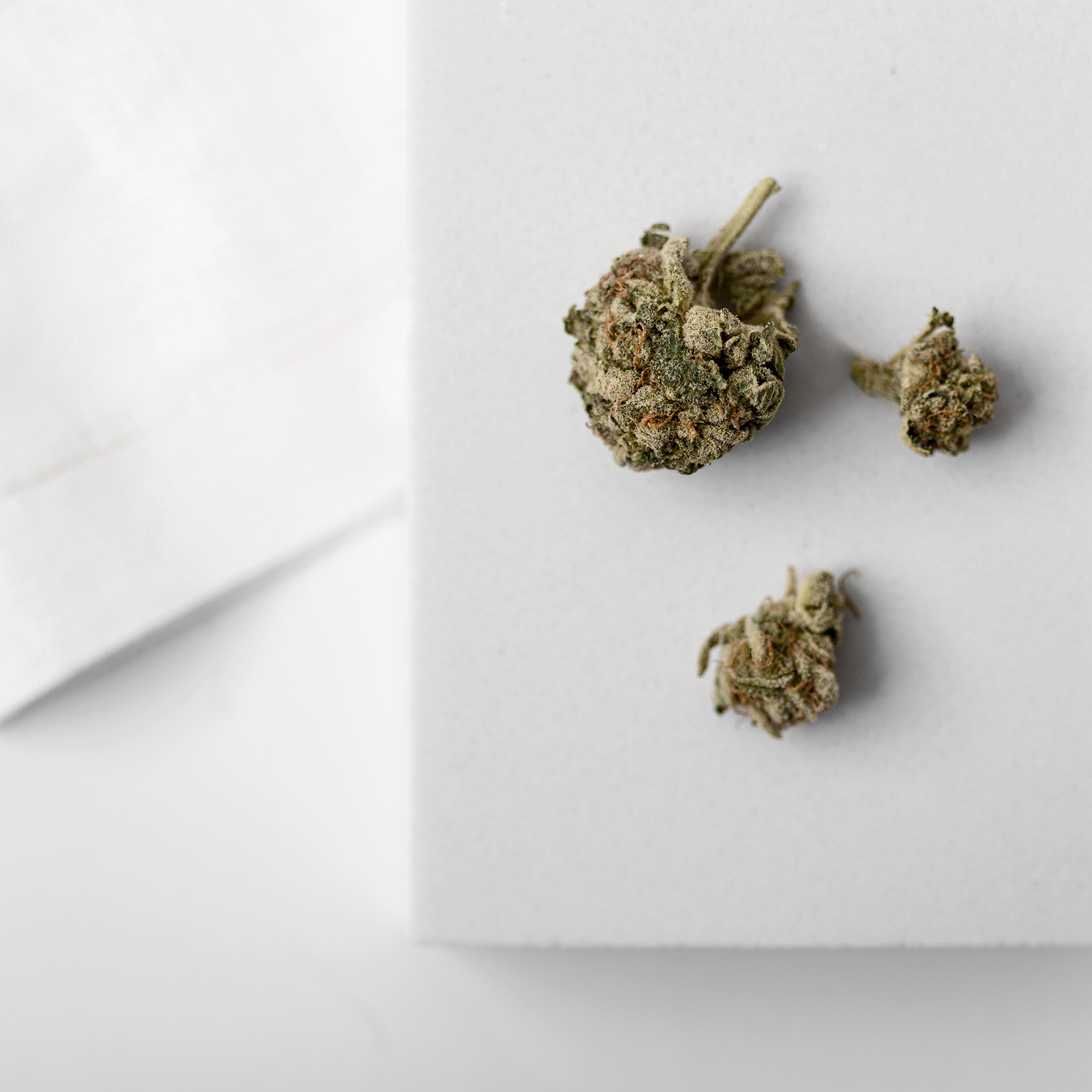


Pink Gorilla is a hybrid cannabis strain that has gained attention for its strong effects, heavy resin production, and colorful flowers. The strain is often linked to Gorilla-family genetics, which are known for sticky buds, strong aromas, and high potency. Pink Gorilla may also show sweet, fruity, floral, earthy, or fuel-like qualities. These features make it interesting to both growers and adult cannabis users. Growers may value the strain for its dense flowers and thick layer of trichomes. Users may be interested in its mix of mental uplift and physical relaxation.
Pink Gorilla is usually described as an indica-dominant hybrid. This means it may produce stronger calming and body-focused effects than highly energetic sativa strains. However, the experience can be different from one person to another. A small amount may feel calming and pleasant, while a larger amount may cause deep relaxation, sleepiness, or reduced focus. The final effects may depend on the strength of the product, the amount used, the person’s tolerance, and the method of use. The same strain name may also be used for products with different genetic backgrounds, so results are not always the same.
One reason Pink Gorilla attracts growers is its appearance. Healthy plants may develop thick buds covered in shiny resin glands. These resin glands are called trichomes. They contain many of the cannabinoids and terpenes that affect the strength, smell, and flavor of the flowers. Some plants may show pink, red, or purple shades late in the flowering stage. Orange pistils and dark green leaves may add more color to the buds. However, the name Pink Gorilla does not mean every plant will turn bright pink. Flower color depends on genetics, temperature, plant health, maturity, and growing conditions.
The strain is also known for its possible strength. Many Pink Gorilla products are sold as high-THC cannabis. THC is the main cannabinoid linked to the intoxicating effects of cannabis. A high THC level may cause a powerful experience, especially for people with little tolerance. Users should not assume that every sample has the same level of THC. Potency can change from one breeder, grower, harvest, and laboratory test to another. Regulated products may include a label or certificate of analysis that shows the tested cannabinoid levels. This information can help adults make safer choices.
Pink Gorilla may produce several types of aromas and flavors. Some plants may smell sweet, fruity, floral, or candy-like. Others may have stronger earthy, sour, pine, chemical, or diesel notes. The Gorilla side of the genetics may add a sharp fuel-like scent. Pink-family genetics may add berry, candy, or floral qualities. The final aroma can also be affected by how the plant is grown, dried, cured, and stored. Poor drying or storage may reduce flavor and create harsh smoke. Careful handling may help protect the natural terpene profile.
Growers may be interested in Pink Gorilla because it can often be grown indoors or outdoors. Indoor growing gives more control over temperature, humidity, lighting, and airflow. Outdoor growing may provide more space and natural light, but it also exposes the plants to changing weather, pests, and heavy rain. Dense flowers may hold moisture, so growers need to watch for mold during late flowering. Good airflow, clean equipment, and careful watering can help lower this risk. Strong branches or plant supports may also be needed if the flowers become heavy.
Pink Gorilla may require moderate growing skill. It is not always considered the hardest strain to grow, but it may need regular attention. Growers should watch plant height, branch spacing, nutrient levels, root health, and humidity. Training methods such as topping, low-stress training, pruning, or trellising may help create an even canopy. An even canopy allows more parts of the plant to receive useful light. This may improve flower development and reduce crowded areas where moisture can build up.
Flowering time and yield can vary. Different breeders may publish different estimates because not all Pink Gorilla seeds come from the same parent plants. Indoor flowering may take several weeks, while outdoor harvest timing depends on the local season. Yield may also change based on light strength, root space, plant health, feeding, training, and grower experience. Advertised yields should be treated as possible results, not promises. Careful observation is more useful than relying only on a calendar.
Adult users should approach Pink Gorilla with care because strong cannabis may cause unwanted effects. These may include dry mouth, dry eyes, dizziness, anxiety, sleepiness, reduced coordination, or a fast heart rate. Starting with a small amount may lower the chance of an unpleasant experience. People should allow enough time to feel the full effects before using more. Cannabis should not be used before driving, operating machines, or completing safety-sensitive work. It should also be stored in a locked place away from children and animals.
This article will explain the main facts growers and users should know about Pink Gorilla. It will cover the strain’s genetics, indica and sativa balance, appearance, THC level, terpene profile, aroma, flavor, effects, possible uses, side effects, growing needs, flowering time, yield, harvest signs, drying, curing, and storage. It will also explain what buyers should check before purchasing seeds or flower. Because strain names and breeder records may differ, readers should always confirm the details of the exact Pink Gorilla product they plan to grow or use.
Cannabis laws are different in each country, state, and local area. Seeds, plants, cultivation, possession, and use may be legal in one place and restricted in another. Readers should check current local laws before buying, growing, or using cannabis. This article provides general educational information and does not replace legal or medical advice.
Pink Gorilla Genetics and Strain Background
Pink Gorilla is generally described as a hybrid cannabis strain with strong indica traits. It is often linked to Gorilla Glue #4 and a Pink-family cannabis strain. However, the exact parentage may differ between breeders and seed sellers. This is important because two products sold under the Pink Gorilla name may not produce plants with the same appearance, aroma, growth pattern, or effects.
Cannabis strain names are not always controlled by one breeder. A popular name may be used by different companies for similar but separate crosses. For this reason, growers should check the breeder’s official description before buying seeds or clones. The breeder’s information may include the parent strains, expected flowering time, growth style, possible THC range, and whether the seeds are regular, feminized, or autoflowering.
Understanding the genetics helps growers prepare for the plant’s needs. It also helps adult users understand why the flower may have a strong aroma, high resin level, and relaxing effects. Genetics do not control every detail, but they create the basic range of traits that a plant may show.
What Are the Parent Strains of Pink Gorilla?
Pink Gorilla is commonly connected to Gorilla Glue #4, which is also known as GG4, and a Pink-family strain such as Pink 2.0. Some seed sources may list a different pink-colored or sweet-flavored parent. This difference may explain why online descriptions do not always match.
Gorilla Glue #4 is widely known for strong growth, heavy resin production, sticky flowers, and a sharp aroma that may include earth, fuel, pine, and sour notes. When Gorilla genetics are used in a cross, breeders often aim to pass on potency, thick trichome coverage, and dense flower development. These traits may make Pink Gorilla attractive to growers who want resin-rich buds.
The Pink-family parent may add color, sweetness, fruit-like aromas, floral notes, or a calmer physical effect. Some plants may develop pink, purple, red, or dark green shades during flowering. However, the name Pink Gorilla does not mean that every plant will produce bright pink buds. Color depends on both genetics and the growing environment.
Temperature may also affect color development. Cooler nighttime temperatures can sometimes support purple or red pigment expression in plants that already carry the right genes. However, growers should not expose plants to harmful cold only to create color. Plant health, flower quality, and mold prevention are more important than visual appearance.
The two parent lines may also influence plant structure. Gorilla genetics often produce strong branches and vigorous growth. A Pink-family parent may add a shorter, wider, or more indica-like shape. The final plant may develop several side branches with dense flowering sites. Still, each seed can express a slightly different mix of traits.
This variation is called phenotype variation. One Pink Gorilla plant may grow tall and stretch during early flowering. Another plant from the same seed pack may remain shorter and produce wider leaves. One may smell sweet and fruity, while another may have a stronger fuel or earthy scent.
Growers who want consistent results should buy from a breeder that provides clear genetic records. They should also keep notes on each plant. Notes about height, feeding response, flowering time, smell, color, and yield can help identify the strongest phenotype.
Is Pink Gorilla Indica or Sativa?
Pink Gorilla is often described as an indica-dominant hybrid. This means the strain may show more traits linked to indica-style growth and effects, while still keeping some sativa features.
An indica-dominant plant often grows with a compact or medium-sized structure. It may develop wider leaves, shorter spaces between branches, and dense flowers. These traits can be useful in indoor grow spaces where height is limited. However, Pink Gorilla may still stretch after the flowering light cycle begins, especially if Gorilla Glue #4 has a strong influence.
The term indica-dominant does not mean every plant will remain short. Vegetative time, container size, lighting, temperature, and plant training can change the final height. A plant kept in the vegetative stage for many weeks will usually grow larger than one switched to flowering early.
Indica-dominant strains are also commonly linked to physical relaxation and heavier body effects. Pink Gorilla may begin with a noticeable mental lift before becoming more calming. Some adults may feel relaxed, sleepy, or less interested in physical activity after using it.
However, the indica and sativa labels cannot fully predict a person’s experience. The amount used can make a major difference. A small amount may feel lighter and more balanced, while a larger amount may produce strong body heaviness or sleepiness.
Tolerance also affects the experience. A regular cannabis user may react differently from a person with little experience. Individual body chemistry, mood, setting, and the method of use can also change how the effects feel.
The plant’s harvest timing may influence the final experience as well. Growers often check trichomes to estimate flower maturity. Flowers harvested earlier may have a different cannabinoid balance than flowers left to mature longer. Drying, curing, storage, and age can also affect the final quality.
For these reasons, Pink Gorilla should be viewed as a hybrid with a likely indica-leaning character rather than a strain that creates one fixed result for everyone.
How Its Parent Genetics Influence the Strain
The Gorilla side of Pink Gorilla may have a strong effect on resin production. Resin appears in small glands called trichomes. These glands cover the flowers and nearby leaves. They contain cannabinoids and aromatic compounds known as terpenes.
A plant with strong Gorilla genetics may develop a thick layer of trichomes. The buds may feel sticky during trimming, and the smell may become intense as flowering continues. Common aroma notes may include earth, fuel, pine, sourness, or a chemical sharpness.
Heavy resin production does not always mean that every harvest will have the same potency. Light strength, plant health, nutrients, harvest timing, drying, and storage all affect flower quality. The genetic potential must be supported by a stable growing environment.
The Pink-family genetics may soften some of the harsher Gorilla qualities. They may add sweet, berry-like, floral, candy-like, or creamy aromas. This can create a more layered scent instead of a simple fuel smell. Some phenotypes may lean toward fruit and flowers, while others may remain earthy and strong.
The parent strains may also influence the effects. Gorilla-family strains are often described as powerful and physically relaxing. A Pink-family parent may add mood elevation, calmness, or a smoother beginning. The result may be a strain that starts with mental activity before settling into deeper physical relaxation.
Growers should remember that genetics provide possibilities rather than promises. Even seeds from the same pack may not grow in exactly the same way. Careful selection, stable conditions, and good plant care are needed to bring out the best traits.
Pink Gorilla is generally presented as an indica-dominant hybrid connected to Gorilla Glue #4 and a Pink-family strain. The Gorilla side may contribute resin, strong aromas, potency, and vigorous growth. The Pink side may add sweet flavors, colorful flowers, and calming traits.
The exact genetics may differ between breeders, so growers should check the official seed or clone description before buying. They should not rely only on the strain name. Understanding the parent strains can help growers predict plant structure, flowering behavior, aroma, and possible effects. However, each phenotype may still show different traits based on its genes and growing conditions.
Appearance, Plant Structure, and Bud Features
Pink Gorilla is known for its strong plant structure, dense flowers, and heavy resin production. Its exact appearance can change from one plant to another because different breeders may use different parent selections. Growing conditions also affect plant height, branch strength, flower color, and bud density. Even plants grown from the same seed pack may show small differences because each seed can produce a unique phenotype.
Growers should not expect every Pink Gorilla plant to look exactly the same. Some plants may stay short and wide, while others may stretch more during flowering. Some may develop dark purple or pink tones, while others remain mostly green. The final appearance depends on genetics, climate, light quality, plant health, and harvest timing.
What Does a Pink Gorilla Plant Look Like?
Pink Gorilla plants are often described as medium-sized, sturdy, and bushy. Many plants produce a strong main stem with several side branches. The branches may become thick enough to carry heavy flowers, but support may still be needed near the end of the flowering stage.
The leaves are usually broad and may have a deep green color. This type of leaf shape is common in indica-dominant cannabis plants. However, some Pink Gorilla plants may show slightly narrower leaves if they express more traits from the sativa side of their genetics.
During early growth, the plant may remain compact if it receives strong light and enough space for the roots. Weak light can cause the stems to stretch as the plant searches for a better light source. Overcrowding can also lead to taller, thinner growth because the plants compete for light.
Pink Gorilla may stretch after the flowering stage begins. The amount of stretch can depend on the phenotype and the length of the vegetative stage. A plant that has been allowed to grow for many weeks before flowering will usually finish larger than a plant switched to flowering early.
Indoor growers can control plant size by adjusting the vegetative period, container size, lighting, and training methods. Topping and low-stress training may help create a wider and more even canopy. These methods spread the branches apart so more flower sites receive direct light.
Outdoor plants may grow taller and wider because they have more root space and natural sunlight. A long growing season can allow Pink Gorilla to develop into a large plant with many branches. Outdoor size will still depend on local weather, soil quality, water supply, and the time of year when the plant begins growing.
The branches may need support during late flowering. Pink Gorilla can develop dense buds that become heavy as they mature. Bamboo stakes, plant ties, or a trellis net can prevent branches from bending or breaking. Support also helps keep the canopy open, which improves airflow around the flowers.
Good spacing is important because a thick, bushy plant can hold moisture between its leaves and branches. Removing a small amount of crowded lower growth may improve air movement. However, growers should avoid removing too many healthy leaves at one time. The leaves collect light and help the plant produce energy.
Plant structure may also show signs of health problems. Weak stems, curled leaves, pale color, and slow growth can point to issues with light, watering, nutrients, pH, or root health. Growers should check the full growing environment before assuming that an unusual plant shape is caused by genetics.
Bud Color and Resin Production
Pink Gorilla flowers are often dense, thick, and covered with visible trichomes. Trichomes are small resin glands that form on the buds and nearby leaves. They contain cannabinoids and terpenes, which influence the strain’s potency, smell, and flavor.
Mature flowers may have a frosted appearance because of the heavy resin layer. Under bright light, the trichomes can look white, silver, or crystal-like. This resin production is one reason Pink Gorilla may appeal to growers who value strong aroma and sticky flowers.
The buds may develop a rounded or slightly pointed shape. Some phenotypes may produce tight, compact flowers, while others may have a more open structure. Dense buds can be attractive, but they also require careful humidity control. Moisture can become trapped inside thick flowers, which increases the risk of bud rot.
Pink Gorilla may produce green flowers with orange or brown pistils. Pistils are the thin hair-like parts that grow from the flowers. They often begin white and slowly darken as the buds mature. Pistil color can help growers judge development, but it should not be the only sign used to choose a harvest date.
Pink, red, purple, or dark violet shades may appear on the flowers and nearby leaves. These colors are linked to natural plant pigments called anthocyanins. Some plants carry stronger color-producing genetics than others.
Cooler nighttime temperatures may help bring out purple or pink colors in plants that already have the right genetics. However, cold temperatures do not create color in every plant. Temperatures that are too low can slow growth, damage roots, or reduce flower quality.
Growers should not lower temperatures too far just to make the buds more colorful. Plant health, proper ripening, and mold prevention are more important than appearance. Bright color does not prove that a flower is more potent or better in quality.
Nutrient levels can also affect color. A natural fade may happen near the end of flowering as the plant uses stored nutrients from older leaves. Yellow, red, or purple leaves can appear during this stage. However, early or severe discoloration may be a sign of stress, poor pH, nutrient problems, or cold damage.
Resin production depends on more than genetics. Strong lighting, healthy roots, steady temperatures, balanced feeding, and proper harvest timing all support trichome development. Plant stress can reduce resin if it becomes too severe.
Handling the flowers carefully is also important. Trichomes can break off when buds are crushed, shaken, or exposed to too much heat. Gentle harvesting, trimming, drying, and storage help protect the resin layer.
Pink Gorilla usually grows as a sturdy, branching plant with broad leaves and a medium-to-bushy structure. Its size can change based on the phenotype, light level, container size, training method, and length of the vegetative stage. Indoor plants are easier to control, while outdoor plants may become much larger in a long and sunny growing season.
The mature flowers may be dense, sticky, and covered in trichomes. Green buds are common, but some plants may also develop pink, red, or purple shades. These colors depend mostly on genetics, although cool nights and natural late-flowering changes may make them more visible.
Growers should focus on healthy growth instead of color alone. Good airflow, branch support, balanced feeding, stable temperatures, and careful humidity control can help Pink Gorilla produce strong plants and resin-rich flowers.
THC, CBD, Terpenes, and Overall Potency
Pink Gorilla is often described as a strong cannabis strain. However, its exact strength can vary from one product to another. Cannabis plants do not produce the same cannabinoid and terpene levels every time. Genetics play a major role, but growing methods, harvest timing, drying, curing, and storage also affect the final flower.
Growers and users should avoid relying on one THC number found online. Different breeders may sell plants under the Pink Gorilla name, and those plants may not have the same parents. Even seeds from the same pack can produce plants with small differences. These differences are known as phenotypes. One phenotype may produce stronger flower, while another may have a sweeter smell or deeper color.
The best way to understand the strength of a legal cannabis product is to check its laboratory test results. These results are often shown on the package or in a certificate of analysis. The report may list THC, CBD, minor cannabinoids, and important terpenes.
How Strong Is Pink Gorilla?
Pink Gorilla is usually marketed as a moderately strong to highly potent strain. Many products with Gorilla genetics are known for producing resin-rich flowers and high THC levels. Pink Gorilla may share these traits, but its exact THC content is not fixed.
THC stands for tetrahydrocannabinol. It is the main cannabinoid linked to the intoxicating effects of cannabis. A product with more THC may cause stronger mental and physical effects, especially when used in a large amount. However, a higher number does not always mean that the experience will be better.
The strength a person feels depends on several factors. These include tolerance, body chemistry, age, food intake, product type, and method of use. A person with little cannabis experience may feel strong effects from a small amount. A regular user may need more to notice the same level of effect.
The method of use also matters. Inhaled cannabis often begins to work within minutes. This makes it easier for a user to stop after a small amount and judge the effects. Edible cannabis can take much longer to work. Some people may not feel the full effects for one or two hours, and sometimes longer. Taking another dose too soon may lead to an uncomfortable experience.
High-THC cannabis may cause heavy relaxation, poor coordination, dizziness, anxiety, or confusion. It may also increase heart rate for a short period. People who are sensitive to THC should use extra care. New users should begin with a low amount and wait before taking more.
Growers should also understand that strong genetics do not guarantee strong flower. A plant grown under weak light or poor conditions may not reach its full potential. Harvesting too early can also reduce cannabinoid development. Poor drying or long exposure to heat and air may cause THC to break down over time.
This is why THC percentages should be treated as a guide rather than a promise. The number may help users compare tested products, but it cannot predict exactly how each person will react.
CBD and Other Cannabinoids
Pink Gorilla is normally selected for THC production rather than high CBD content. CBD stands for cannabidiol. Unlike THC, CBD does not usually produce a strong intoxicating effect. It may influence how a cannabis product feels, but its role depends on the amount present and the other compounds in the flower.
Most Pink Gorilla products are expected to contain much less CBD than THC. A low-CBD strain may feel more intense because there is not much CBD present to balance the overall cannabinoid profile. However, this does not mean CBD always cancels out THC. The way these compounds interact is complex and may differ between people.
Cannabis can also contain minor cannabinoids. These may include cannabigerol, or CBG, and cannabinol, or CBN. They are often found in much smaller amounts than THC. Their levels may change based on genetics and plant maturity.
CBG is sometimes found in young plants because it acts as an early building block for other cannabinoids. CBN may become more noticeable as THC ages and breaks down. Flower that has been stored for a long time or exposed to heat and air may have higher CBN levels and lower THC quality.
A laboratory report can provide a clearer view of these compounds. Users buying Pink Gorilla from a legal market should check the label instead of assuming that all products are the same. Two packages with the same strain name may have different THC, CBD, and minor cannabinoid levels.
Growers should also avoid making medical claims based only on cannabinoid content. A strain name does not prove that a product can treat pain, anxiety, insomnia, or another condition. Anyone using cannabis for a medical reason should speak with a qualified healthcare professional.
Common Terpenes in Pink Gorilla
Terpenes are natural aromatic compounds found in cannabis and many other plants. They help create the smell and flavor of the flower. They may also affect the way a cannabis product feels, although more research is needed to understand these effects.
Pink Gorilla may produce a mix of sweet, fruity, floral, earthy, pine-like, chemical, or fuel-like aromas. The exact terpene profile can vary between plants. Gorilla-family genetics often produce earthy, sharp, or fuel-like notes. Pink-family genetics may add sweeter, fruitier, or more floral qualities.
Myrcene is one terpene that may appear in relaxing cannabis strains. It often has an earthy, herbal, or musky smell. It is also found in plants such as hops and mangoes. Strains with a strong myrcene scent may smell deep, rich, or slightly spicy.
Caryophyllene may add peppery, woody, or spicy notes. It is also found in black pepper and cloves. This terpene can make the aroma feel warmer or sharper, especially when the flower is broken apart.
Limonene may create citrus-like notes. It is common in the peels of lemons and oranges. A Pink Gorilla phenotype with more limonene may have a brighter or sweeter scent.
Pinene may produce a fresh pine smell. It is found in pine needles, rosemary, and several herbs. Smaller amounts can add a clean or forest-like quality to the strain’s aroma.
Linalool may add floral or lavender-like notes. This terpene can soften stronger fuel or earth scents and give the flower a sweeter smell.
The terpene profile depends on more than genetics. Plant health, temperature, humidity, light, nutrition, and harvest timing can affect terpene production. Drying and curing are also important. High heat can cause terpenes to escape because many of them are volatile. This means they can evaporate easily.
Flower that dries too quickly may lose much of its smell. Flower that is stored in a warm, bright, or open area may also lose aroma over time. Airtight containers kept in a cool and dark place can help protect the terpene profile.
A strong smell does not always mean high THC. Terpenes create aroma, while cannabinoids such as THC create most of the intoxicating effects. A flower can smell powerful but have moderate THC. Another sample may have high THC but a weaker smell because it was dried or stored poorly.
Pink Gorilla is generally considered a potent cannabis strain, but its exact strength can vary. THC levels depend on genetics, growing conditions, harvest timing, testing methods, and storage. The strain is usually higher in THC than CBD, though minor cannabinoids may also be present.
Its terpene profile may include sweet, fruity, floral, earthy, pine-like, spicy, or fuel-like notes. These aromas can differ from one phenotype or product to another. Careful growing, drying, curing, and storage can help protect both cannabinoids and terpenes.
Users should check laboratory results when available and avoid treating one published THC level as a guarantee. New or sensitive users should begin with a small amount because high-THC cannabis may cause strong relaxation, anxiety, dizziness, or reduced coordination.
Aroma, Flavor, and Smoke or Vapor Profile
Pink Gorilla is often known for having a strong and complex aroma. Its scent may combine sweet, fruity, floral, earthy, and fuel-like notes. However, the exact aroma can change from one plant to another. Genetics, growing conditions, harvest timing, drying, curing, and storage can all affect the final smell and flavor.
Some Pink Gorilla plants may smell sweeter, while others may have stronger earthy or chemical notes. The flower may also develop a richer scent after it is broken apart or ground. This happens because grinding opens the flower and releases more aromatic compounds into the air.
The overall aroma and flavor can help people identify the strain, but scent alone cannot confirm its strength, quality, or genetic background. A strong smell does not always mean the flower has a high THC level. It mainly shows that the plant contains noticeable aromatic compounds called terpenes.
What Does Pink Gorilla Smell Like?
Pink Gorilla may have a sweet and fruity smell when the container is first opened. Some people may notice scents that remind them of berries, candy, ripe fruit, or sweet flowers. These softer notes may come from the Pink side of the strain’s reported genetics.
The aroma may become deeper after the flower is handled. Breaking apart a bud can release earthy, woody, pine-like, or herbal scents. These heavier notes may balance the sweeter side of the strain.
Some Pink Gorilla flowers may also have a sharp fuel or chemical smell. This type of scent is often linked to strains from the Gorilla genetic family. It may smell like diesel, glue, soil, or fresh paint. These descriptions do not mean the flower contains fuel or harmful chemicals. They are simple ways to explain the natural smell created by the plant’s terpenes.
The strength of the aroma can depend on how the plant was grown. Healthy plants grown under stable conditions may produce more noticeable terpenes. Strong lighting, proper feeding, good airflow, and correct harvest timing may help protect the plant’s natural scent.
Harvest timing can make a major difference. Flowers harvested too early may smell grassy or weak because they have not fully developed. Flowers left too long may lose some of their brighter fruit or floral notes. The final aroma may become heavier, duller, or more earthy.
Drying also affects smell. Freshly cut cannabis often smells like grass, leaves, or fresh plants. This is normal because the flower still contains a large amount of moisture and plant material. During a slow drying process, the grassy smell may become weaker while the strain’s natural aroma becomes clearer.
What Does Pink Gorilla Taste Like?
The flavor of Pink Gorilla often follows its aroma. The first taste may be sweet, fruity, or floral. Some flowers may have notes that remind the user of berries, candy, grapes, or tropical fruit. Other plants may have a more earthy or herbal flavor.
A sour, spicy, or fuel-like taste may appear after the first sweet notes. This can create a strong contrast. The flower may begin with a smooth, sweet flavor and finish with a sharp, earthy, or diesel-like aftertaste.
The flavor can also depend on the method used to consume the flower. Smoking burns the plant material, which may create stronger roasted, earthy, or smoky notes. High heat can also cover some of the lighter fruit and floral flavors.
Dry-herb vaporizing heats the flower without directly burning it. This method may allow more of the natural terpene flavor to remain noticeable. Lower vaporizer temperatures may bring out sweet, citrus, berry, or floral notes. Higher temperatures may produce thicker vapor and stronger earthy or fuel-like flavors.
The condition of the flower also affects taste. Cannabis that is too dry may taste hot, sharp, or weak. Flower that contains too much moisture may burn poorly and may have a grassy or unpleasant flavor. Properly dried flower should have balanced moisture and should not feel wet or crumble into powder.
Clean equipment is also important. Old residue inside a pipe, vaporizer, or grinder may change the flavor. It can add burnt, bitter, or stale notes that are not part of the strain. Keeping equipment clean helps the natural taste of Pink Gorilla remain clear.
How Drying and Curing Affect Aroma
Drying and curing are important steps after harvest. They help protect the smell, flavor, texture, and overall quality of the flower. Even well-grown Pink Gorilla plants may lose much of their aroma if they are dried or cured incorrectly.
Drying should normally happen slowly in a dark area with steady airflow. Direct wind should not blow hard against the flowers because this can dry the outside too quickly. When the outer layer dries faster than the inside, moisture may remain trapped in the center of the buds.
Drying too quickly may cause the flower to smell like hay or cut grass. It may also produce a rough or harsh taste. This can happen when the drying area is too warm, too dry, or exposed to strong airflow.
Drying too slowly can also create problems. Flowers kept in a damp space may develop mold. Dense Pink Gorilla buds may hold moisture inside, even when the outside feels dry. Growers should inspect large flowers carefully during drying.
Curing begins after the flower has reached a suitable level of dryness. The dried buds are placed in clean, airtight containers and checked often. During curing, moisture moves more evenly through the flower.
A proper cure may help the aroma become smoother and more complete. Sweet, floral, fruity, earthy, and fuel-like notes may become easier to notice. The smoke or vapor may also feel less harsh.
Curing cannot repair mold, poor genetics, or badly damaged flower. It also cannot create terpenes that were lost during very hot drying. Its main purpose is to protect and improve the balance of the flower after a careful harvest and drying process.
How Storage Changes Smell and Flavor
Storage conditions can slowly change the aroma and flavor of Pink Gorilla. Heat, light, air, and moisture are the main causes of quality loss.
Heat can cause terpenes to evaporate or break down. This may make the flower smell weaker over time. A warm storage area may also dry the buds and reduce their flavor.
Light can also damage cannabinoids and terpenes. Clear containers placed near windows may expose the flower to sunlight. Dark glass containers stored in a cool place can offer better protection.
Too much air can make cannabis stale. Opening the container often allows fresh oxygen to enter. Over time, this may weaken the aroma and change the texture. The flower may become dry, brittle, and less flavorful.
Excess moisture is another serious concern. Damp cannabis may develop mold, especially when it is stored in a sealed container. Moldy flower may have a musty, sour, or basement-like odor. It should not be consumed.
Cannabis should also be kept away from strong-smelling products. Coffee, spices, perfume, cleaning products, and tobacco may affect the scent of the flower if stored nearby in poorly sealed containers.
Pink Gorilla may offer a complex aroma and flavor profile that includes sweet fruit, candy, flowers, earth, herbs, spice, fuel, and chemical-like notes. The exact balance can vary because not every plant has the same genetics or growing conditions.
Breaking or grinding the flower may release stronger scents. Smoking may bring out deeper earthy and roasted flavors, while dry-herb vaporizing may protect more of the lighter fruit and floral notes.
Drying, curing, and storage have a major effect on the final quality. Slow drying and careful curing may protect the strain’s natural aroma and reduce harshness. Cool, dark, airtight storage can help prevent terpene loss and keep the flower from becoming stale.
Aroma and flavor can make Pink Gorilla enjoyable and easy to recognize, but they should not be used as proof of potency. Laboratory testing is still the most reliable way to measure THC, CBD, and other cannabinoids.
Pink Gorilla Effects and Typical User Experience
Pink Gorilla is often described as a strong hybrid strain that may produce both mental and physical effects. The exact experience can vary from one person to another. Factors such as tolerance, dose, product strength, body chemistry, and method of use can all change how the strain feels. Some people may notice an uplifting mental effect first, while others may feel physical relaxation soon after use.
Pink Gorilla is usually linked with a strong, calming experience. However, users should not assume that every product with this name will have the same strength or effects. Different growers, breeders, and plant types may produce flowers with different cannabinoid and terpene levels. Careful use is important, especially for people who have little experience with high-THC cannabis.
How Do the Effects Usually Begin?
The first effects of Pink Gorilla may appear as a change in mood or mental awareness. Some adult users may feel more cheerful, calm, or mentally relaxed. Others may notice that sounds, colors, music, food, or conversations feel more interesting. These early effects may be pleasant, but they can also feel intense when the dose is too high.
Some users may experience a short period of mental energy before the heavier body effects begin. During this stage, a person may feel more social or interested in simple activities. Light conversation, music, television, or creative tasks may feel enjoyable. However, this does not mean Pink Gorilla is a reliable productivity strain. Strong cannabis can reduce attention, memory, and decision-making skills.
The mental effects may also depend on a person’s surroundings. A quiet and comfortable place may support a calmer experience. A busy, stressful, or unfamiliar setting may make the effects feel less comfortable. People who are sensitive to THC may experience racing thoughts, worry, or confusion. Starting with a small amount may lower the risk of an unpleasant reaction.
Pink Gorilla may affect short-term memory. A person may forget what they were saying or lose track of a task. Time may also seem to move more slowly or quickly. These effects are common with strong THC products and usually become less noticeable as the experience fades.
No one should drive, operate machinery, cook over an open flame, or perform risky tasks after using Pink Gorilla. Even when a person feels alert, reaction time and judgment may still be reduced.
Physical Effects and Relaxation
After the first mental effects, Pink Gorilla may create a stronger feeling of physical relaxation. The muscles may feel looser, and the body may begin to feel heavy. Some users may want to sit down, rest, or remain in one place. This is one reason the strain is often linked with evening or nighttime use.
The physical effects may begin in the face, shoulders, or limbs. A gentle feeling of warmth or pressure may spread through the body. At lower amounts, the user may still feel able to move around and complete simple tasks. At higher amounts, the strain may become more sedating.
Large doses may lead to what is often called couch-lock. This means the body feels so relaxed or heavy that standing up and moving may require more effort. Couch-lock is not guaranteed, but it may be more likely in people with low tolerance or when the product has a high THC level.
Pink Gorilla may also increase appetite. Food may smell and taste stronger during the experience. Users should prepare simple snacks and water before using the strain. This may help them avoid cooking or using sharp tools while impaired.
Sleepiness may develop later in the experience. For this reason, Pink Gorilla may not be a suitable choice before work, school, driving, exercise, or an important event. It may also make it harder to stay focused during detailed tasks.
The effects may become stronger when cannabis is mixed with alcohol or other substances. Combining substances can increase dizziness, nausea, confusion, and loss of coordination. Avoiding these combinations is a safer choice.
How Long Do the Effects Last?
The length of the Pink Gorilla experience depends on how it is used. Inhaled cannabis, such as smoked or vaporized flower, often begins working within a few minutes. The effects may become stronger over the next 15 to 30 minutes. They may then last for several hours, although mild tiredness or reduced focus can remain longer.
People should avoid taking repeated inhalations too quickly. It is better to wait and judge the full effect before using more. A dose that feels mild at first may become much stronger after several minutes.
Edible cannabis can take much longer to work. The first effects may not appear for 30 minutes to two hours or more. The timing can depend on the product, dose, recent meals, and individual digestion. Because the onset is slow, some people take another dose too soon. This can lead to an experience that is much stronger and longer than expected.
Edible effects may last six hours or more. Some users may continue to feel sleepy or mentally slow after the main effects have ended. Anyone using an edible product should plan enough time to remain in a safe place.
Tolerance also affects duration. A frequent cannabis user may feel the effects for a shorter time or may need more to notice them. A new or occasional user may feel a small dose for much longer. Using more cannabis to overcome tolerance can raise the risk of unwanted effects.
The actual strength of the product matters as well. Two Pink Gorilla products may have different THC levels. One batch may be much stronger than another. Reading the product label and reviewing legal laboratory test results can help users understand the expected potency.
Pink Gorilla may begin with a mental lift, a calmer mood, or stronger sensory awareness. These effects may later develop into deep physical relaxation, heaviness, increased appetite, and sleepiness. The experience can become intense when the dose is high, especially for users with limited tolerance.
Inhaled cannabis usually acts faster and lasts for a shorter period than edible cannabis. Edibles may take much longer to begin and can remain active for several hours. Users should begin with a small amount, wait before taking more, and avoid driving or completing risky tasks.
Pink Gorilla does not affect everyone in the same way. Product strength, dose, tolerance, body chemistry, and surroundings can all influence the experience. Responsible use in a safe setting can help reduce the risk of anxiety, confusion, dizziness, or excessive sedation.
Possible Uses, Side Effects, and Responsible Consumption
Pink Gorilla is often described as a strong hybrid that may produce both mental and physical effects. Some adults choose it because they want a calm experience after work or during a quiet evening. Others may be interested in its reported mood-related effects, body relaxation, or appetite support.
However, cannabis affects each person in a different way. The same amount may feel mild to one person and too strong to another. Potency can also change between products, harvests, and breeders. A flower sold under the Pink Gorilla name may not have the same THC level or terpene profile as another product with the same name.
For this reason, users should avoid treating any expected effect as a promise. Responsible use means understanding possible benefits, knowing the risks, and using only a small amount until the effects are clear.
Why Do Adults Choose Pink Gorilla?
Some adults choose Pink Gorilla because it may create a calm and relaxing experience. The effects may begin with a change in mood or mental state. A person may feel happier, less tense, or more interested in music, food, or a quiet activity. As the effects continue, the body may begin to feel heavier and more relaxed.
This type of effect may make Pink Gorilla more suitable for evening use than for a busy morning. A person may find it difficult to complete detailed tasks after using a strong amount. The strain may also reduce the desire to move around or take part in active work.
Some people choose relaxing cannabis strains when they want to rest after a long day. They may use cannabis during quiet activities such as watching a movie, listening to music, or preparing for sleep. Pink Gorilla may also increase appetite in some users. Food may smell stronger, taste more intense, or feel more enjoyable.
Other users may be interested in cannabis because they are dealing with discomfort, stress, poor sleep, or a low appetite. However, personal reports do not prove that Pink Gorilla can treat these problems. Cannabis strains are not consistent medicines. Their chemical content may vary, and the effects may change from one person to another.
People who want to use cannabis for a medical reason should speak with a qualified healthcare professional. This is especially important for people who take prescription medicine or have a history of heart, mood, or mental health conditions. A healthcare professional can help explain possible risks, drug interactions, and safer choices.
It is also important to remember that a strain name does not provide complete information. A regulated product label or laboratory report may give better details about THC, CBD, and other cannabinoids. These numbers can help a user understand the likely strength of the product before using it.
Common Unwanted Effects
Dry mouth is one of the most common unwanted effects linked to cannabis use. A person may feel thirsty or notice that the inside of the mouth feels sticky. Drinking water before, during, and after use may help reduce this discomfort. Sugary drinks and alcohol may make dehydration feel worse.
Dry or red eyes may also occur. This effect is usually temporary, but it can feel uncomfortable. Some users may also notice blurred vision or increased sensitivity to light.
Dizziness is another possible side effect, especially when standing up quickly. Cannabis may affect balance, blood pressure, and coordination. A person who feels dizzy should sit or lie down in a safe place. Walking on stairs, cooking, or using sharp tools may increase the risk of injury.
Pink Gorilla may also cause anxiety or nervousness. This reaction may be more likely when the product has a high THC level. A person may feel worried, restless, or unable to control racing thoughts. Some users may also experience paranoia, which can create a strong feeling that something is wrong even when there is no clear danger.
A rapid heartbeat may happen after cannabis use. This can feel frightening, especially for a new user. Anxiety may make the heartbeat feel even stronger. Anyone who has a heart condition or serious health concern should ask a medical professional about cannabis before using it.
Strong doses may cause heavy sleepiness. The arms and legs may feel difficult to move, and the user may have trouble staying awake. Although this may be expected with some relaxing strains, it can become a problem if the person needs to drive, care for someone, or complete an important task.
Short-term memory problems may also occur. A person may forget what they were saying, lose track of time, or have trouble following a conversation. Attention, reaction speed, and decision-making may also become weaker.
Nausea can occur, although some people use cannabis because they believe it helps their stomach. The effect depends on the individual, the dose, and the pattern of use. Heavy or frequent cannabis use can cause serious vomiting problems in some people.
The chance of unwanted effects often rises with the dose. New users and people with low tolerance may react strongly to a small amount. Products with very high THC levels may also be harder to control. Edible products can be especially unpredictable because the effects may take much longer to appear.
Basic Harm-Reduction Practices
Starting with a small amount is one of the most useful safety steps. A user should not assume that Pink Gorilla will feel the same as another strain. The product may be stronger than expected, even when the person has used cannabis before.
After inhaling cannabis, a user should wait and observe the effects before taking more. Smoking and vaporizing usually produce effects faster than edible products. However, the full experience may still take time to develop.
Edibles require extra care because the effects may not begin for an hour or longer. A person may think the first dose did not work and take a second dose too soon. When both doses begin to work, the experience may become much stronger than intended. Edible effects can also last much longer than inhaled cannabis effects.
Cannabis should never be used before driving. It can reduce reaction speed, attention, judgment, and control. A person may feel able to drive while still being impaired. The safest choice is to arrange transportation before using cannabis.
Users should also avoid operating machinery, climbing ladders, swimming alone, or completing other high-risk tasks. Even a small change in balance or judgment can lead to an accident.
Mixing cannabis with alcohol may increase dizziness, nausea, poor balance, and confusion. The combined effects can be harder to predict than using either substance alone. Mixing cannabis with sedatives or other medicines may also increase sleepiness or cause other problems. A healthcare professional or pharmacist can explain possible interactions.
Cannabis should be stored in a locked place away from children and animals. Edibles may look like normal candy, cookies, or snacks. Clear labels and child-resistant containers can help prevent accidental use.
Pregnant or breastfeeding individuals should seek professional medical advice before using cannabis. THC can enter the body of a developing baby and may also pass into breast milk. Avoiding exposure is the safest approach unless a qualified medical professional provides other guidance.
Users should only consume cannabis in a safe and familiar location. Being around trusted adults may help if the effects become uncomfortable. A calm room, water, and slow breathing may reduce mild anxiety. A person who develops chest pain, severe confusion, repeated vomiting, breathing trouble, or other serious symptoms should seek medical help.
Pink Gorilla may appeal to adults who are looking for a strong hybrid with relaxing physical effects and a possible mood lift. Some users may choose it for quiet evening activities, appetite support, or rest. However, these effects are not guaranteed, and they do not prove that the strain can treat a health condition.
Possible side effects include dry mouth, red eyes, dizziness, anxiety, rapid heartbeat, sleepiness, memory problems, and reduced coordination. These effects are more likely when the dose is too high or the user has little cannabis experience.
Responsible use begins with a small amount, enough waiting time, and a safe setting. Users should never drive after consuming cannabis. They should also avoid mixing it with alcohol, keep all products away from children and animals, and speak with a healthcare professional when medical conditions or prescription drugs are involved.
Is Pink Gorilla Easy or Difficult to Grow?
Pink Gorilla is often described as a strain with moderate growing difficulty. It may not be the best choice for a first-time grower who has no experience with watering, plant training, humidity control, or nutrient use. However, a beginner with a simple setup and a clear growing plan may still succeed. The main challenge is keeping the plant healthy as it becomes larger and develops dense flowers.
This strain may grow with a strong structure and several side branches. It can produce heavy buds when it receives enough light, root space, and care. Those same dense buds can also create problems when humidity is too high. Moisture may become trapped inside the flowers, which can increase the risk of mold or bud rot. Growers must pay close attention to airflow and plant spacing during the flowering stage.
The exact growing behavior may differ between Pink Gorilla seed lines. One breeder may sell a version that stays short and compact, while another version may grow taller. Some plants may respond well to training, while others may show stress after heavy pruning. Growers should always review the information from the breeder before planting the seeds.
Recommended Grower Experience
Pink Gorilla is usually a better match for growers who already understand the basic cannabis life cycle. A grower should know how to identify the vegetative stage, the flowering stage, and the signs of plant stress. Basic knowledge of watering, feeding, light distance, and pest control can make the growing process easier.
One common mistake is giving the plant too much water. Cannabis roots need both moisture and oxygen. Soil that stays wet for too long may prevent enough air from reaching the roots. This can slow plant growth and may cause the leaves to droop or turn yellow. Growers should allow the upper part of the growing medium to dry before watering again. The plant should not be allowed to become completely dry for long periods, but the roots should not remain soaked.
Nutrient control is also important. Pink Gorilla may respond well to regular feeding, but more nutrients do not always produce more flowers. Too much fertilizer can burn the leaf tips and cause nutrient buildup around the roots. It may also make it harder for the plant to absorb certain minerals. Growers should begin with a mild feeding level and increase it only when the plant shows healthy growth.
Plant structure is another important concern. Pink Gorilla may develop several strong branches, but mature flowers can become heavy. Branches may bend or break if they do not have enough support. Stakes, plant ties, or a trellis net can help hold the branches in place. Support should be added before the flowers become too large. Adding support late in the flowering stage may damage the buds or roots.
Growers must also watch for signs of pests and disease. The lower leaves, branch joints, and undersides of leaves should be checked often. Early pest problems are usually easier to control than large outbreaks. A clean growing area, good airflow, and healthy plants can reduce many common risks.
Indoor and Outdoor Cultivation
Pink Gorilla may be grown indoors or outdoors where cannabis cultivation is legal. Each method offers different benefits and challenges.
Indoor growing gives the grower more control over the environment. Temperature, humidity, light exposure, and airflow can be adjusted throughout the plant’s life. This control can be helpful for Pink Gorilla because its flowers may become thick and dense. The grower can reduce humidity during flowering and use fans to keep air moving around the plants.
Indoor plants also receive a fixed light schedule. During the vegetative stage, growers commonly provide long hours of light each day. When the plants reach the desired size, the light schedule is changed to begin flowering. This allows the grower to control when the plant starts producing buds.
Space can be a concern indoors. Pink Gorilla plants may stretch after the flowering stage begins. A plant that looks small at the end of the vegetative stage may become much taller during the first weeks of flowering. Growers should leave enough space between the plant canopy and the grow lights. Plant training can help control height and create a flatter canopy.
Outdoor growing gives the plant access to natural sunlight and more room for root and branch growth. Under good conditions, an outdoor Pink Gorilla plant may become larger than an indoor plant. Large containers or healthy garden soil can support strong root development. Outdoor plants may also require less equipment.
However, outdoor growers have less control over rain, humidity, heat, wind, and cold weather. Long periods of rain during flowering can be dangerous for dense buds. Moisture may stay trapped in the flowers and lead to mold. Growers in wet climates may need to protect plants from heavy rain or improve air movement around them.
The local growing season is also important. Pink Gorilla needs enough time to complete flowering before cold and wet weather arrives. Growers should check the expected harvest period provided by the breeder. They should also compare it with the normal weather in their area.
Outdoor pests may include insects, animals, and soil problems. Plants should be inspected often. Broken branches, leaf damage, or unusual spots may be early signs of trouble. Outdoor plants may also need support against strong winds, especially when the branches carry heavy flowers.
Soil, Coco, and Hydroponic Systems
Pink Gorilla can grow in soil, coco coir, or a hydroponic system. The best choice depends on the grower’s experience, equipment, and daily schedule.
Soil is often the easiest option for new growers. A high-quality soil mix can provide nutrients and support healthy root growth. Soil may also act as a buffer when small feeding or pH mistakes happen. This means the plant may have more time to recover before serious damage occurs.
Growers using soil should choose a mix that drains well. Heavy soil that holds too much water can reduce oxygen around the roots. Adding materials such as perlite may improve drainage. The container should also have enough holes at the bottom to allow extra water to escape.
Coco coir is a lighter growing medium made from coconut fiber. It holds moisture but also allows air to reach the roots. Plants grown in coco may grow quickly when watering and feeding are managed correctly. However, coco usually contains little or no nutrition. The grower must provide nutrients through the water.
Coco often requires more frequent watering than soil. The pH and nutrient strength should be checked often. A mistake can affect the plant quickly because coco offers less buffering than soil. For this reason, growers should be prepared to monitor the plant every day.
Hydroponic systems grow plants without soil. The roots receive water, oxygen, and nutrients through a controlled system. Hydroponic Pink Gorilla plants may grow fast and produce strong results under the right conditions. However, these systems require close attention.
Water temperature, pH, nutrient strength, oxygen levels, and equipment function must be checked often. A failed air pump or blocked water line can damage the plant quickly. Root diseases may also spread fast in a warm or poorly maintained water system.
Hydroponics may be a good choice for an experienced grower who understands system maintenance. It is usually not the simplest option for someone growing cannabis for the first time. A basic soil setup may be easier to manage and more forgiving.
Pink Gorilla is not considered the hardest cannabis strain to grow, but it does require regular care. It may be best for growers who understand watering, feeding, airflow, humidity, and plant support. Beginners can still grow it when they use a simple setup and avoid making too many changes at once.
Indoor growing offers better control over temperature, light, and humidity. Outdoor growing may allow larger plants, but weather and pests can create more risks. Soil is often the simplest growing medium, while coco and hydroponic systems may offer faster growth with more daily work.
Environmental Conditions, Feeding, and Plant Training
Pink Gorilla plants need a stable growing environment to reach their full potential. The strain may produce thick branches, dense flowers, and a heavy layer of resin when conditions remain balanced. However, dense growth can also trap moisture and reduce airflow. This can increase the risk of mold, pests, and weak flower development.
Growers should pay close attention to temperature, humidity, watering, nutrients, and plant shape throughout the full growth cycle. Sudden changes may stress the plants and slow their development. A steady routine is often more effective than making large changes in response to every small problem.
Temperature, Humidity, and Air Movement
Pink Gorilla plants usually grow best under moderate and stable temperatures. During the vegetative stage, plants can often handle warmer conditions because they are focused on producing leaves, stems, and roots. Temperatures that are too high may cause leaves to curl upward, lose moisture quickly, or develop dry edges. Very low temperatures may slow growth and reduce the plant’s ability to absorb water and nutrients.
During flowering, growers should avoid excessive heat. High temperatures may reduce aroma, weaken terpene quality, and cause flowers to develop in a loose or stretched form. Cooler nighttime conditions may help some Pink Gorilla plants display purple, pink, or red colors. However, growers should not expose plants to extreme cold just to improve color. Cold root zones may slow nutrient uptake and increase plant stress.
Humidity should also change as the plant develops. Young plants and plants in the vegetative stage can usually handle more moisture in the air. Flowering plants need lower humidity, especially when the buds begin to become large and dense. Moisture can collect inside thick flowers where it is hard to see. This creates a suitable environment for gray mold and bud rot.
Powdery mildew is another concern in humid or crowded grow spaces. It often appears as a white, dusty coating on leaves. It can spread quickly when airflow is poor and plants are placed too close together. Growers should inspect leaves, stems, and flowers often. Any infected plant material should be handled carefully to reduce the chance of spreading spores.
Steady air movement helps control heat and moisture. Fans should move air above, below, and through the plant canopy. The leaves should move slightly, but they should not be pushed strongly at all times. A powerful fan aimed at one area may cause wind damage or dry patches.
Fresh air exchange is also important. Indoor grow rooms need a system that removes warm, humid air and brings in cleaner air. Growers should also leave enough space between plants. A crowded room may have strong lighting, but poor airflow can still lead to mold and pest problems.
Nutrient and Water Management
Pink Gorilla plants need a balanced nutrient plan, but more fertilizer does not always lead to larger flowers. Overfeeding can burn roots, damage leaf tips, and cause nutrient buildup in the growing medium. It may also block the uptake of other important elements.
During vegetative growth, plants need enough nitrogen to support healthy leaf and stem development. However, too much nitrogen can produce very dark green leaves, weak stems, and curled leaf tips. High nitrogen levels during flowering may slow flower development and keep the plant focused on leaf growth.
When flowering begins, growers usually reduce nitrogen and provide nutrients that support flower and root development. Changes should be gradual. A sudden increase in fertilizer strength may shock the roots. Growers should follow product directions carefully and watch how the plants respond before increasing the amount.
Watering habits are just as important as fertilizer levels. The roots need both water and oxygen. Constantly wet soil can reduce oxygen around the roots and increase the risk of root disease. Plants may droop even when the soil contains plenty of water because damaged roots cannot function well.
Growers should water the full root zone, then allow the growing medium to dry to a suitable level before watering again. The correct schedule depends on plant size, container size, temperature, humidity, and the type of growing medium. A fixed calendar may not work because plant water use changes throughout the growth cycle.
The weight of the container can help growers judge moisture levels. A wet pot feels much heavier than a dry one. Growers can also check the top layer of the medium, but the surface may dry before the lower root zone. Learning the normal wet and dry weight of each container can prevent both overwatering and underwatering.
Water pH affects how well roots can absorb nutrients. Even when nutrients are present, an unsuitable pH level may make some of them harder for the plant to use. This can cause symptoms that look like a nutrient shortage. Growers should test the pH of their water and nutrient solution. They should also use a range that fits their growing medium, since soil, coco, and hydroponic systems have different needs.
Training Pink Gorilla Plants
Pink Gorilla plants may develop strong growth and several productive branches. Training can help create an even canopy, improve light coverage, and increase airflow. It can also keep indoor plants from growing too close to the lights.
Low-stress training is one of the simplest methods. The main stem and side branches are gently bent and secured so that more growing tips receive direct light. This can create a wider plant with several main flower sites instead of one tall central stem. Bending should be done slowly to avoid breaking branches.
Topping is another common method. It involves removing the main growing tip during the vegetative stage. This encourages the plant to divide its energy between two or more branches. Topping can help control height, but it also causes temporary stress. The plant should be healthy and actively growing before this method is used.
Pruning can remove weak lower branches and leaves that receive very little light. These areas often produce small flowers and may reduce airflow near the center of the plant. However, growers should not remove too much growth at one time. Heavy pruning can slow recovery and place unnecessary stress on the plant.
A trellis net can support Pink Gorilla branches as the flowers gain weight. The branches can be spread across the net to form a level canopy. This makes it easier to keep most flower sites at a similar distance from the light. A second support net may be needed later if the buds become heavy.
Training should be limited once flowering is well underway. Strong bending, topping, or heavy pruning during this stage may interfere with flower development. Growers should complete most major training before flowering or during the early stretch.
Stress can sometimes cause sensitive cannabis plants to produce unwanted male flowers. This may happen because of light leaks, extreme heat, root problems, physical damage, or unstable feeding. Growers should inspect flowering plants often, especially after a stressful event. Early detection can help prevent pollen from spreading through the grow area.
Pink Gorilla plants perform best when growers maintain steady environmental conditions and avoid extreme changes. Moderate temperatures, lower flowering humidity, and strong airflow can reduce the risk of mold and heat stress. Careful watering and balanced feeding help protect the root zone and prevent nutrient problems.
Training methods such as low-stress training, topping, pruning, and trellising can improve light coverage and support heavy branches. These methods should be used while the plants are healthy and still have time to recover. A balanced approach gives Pink Gorilla plants the best chance to form strong, resin-rich flowers without unnecessary stress.
Flowering Time, Yield, and Harvest Readiness
Pink Gorilla growers need to pay close attention during the flowering stage. This is when the plant forms buds, produces resin, and develops most of its aroma. The final result depends on more than the number of days listed by a breeder. Plant health, temperature, light, feeding, and genetics can all change how fast the crop finishes.
Growers should treat flowering dates and yield estimates as helpful guides. They are not fixed promises. Two Pink Gorilla plants from the same seed pack may grow at different speeds. One plant may finish early, while another may need more time. Careful observation is the best way to decide when the flowers are ready.
How Long Does Pink Gorilla Take to Flower?
Pink Gorilla is usually grown as a photoperiod cannabis strain. This means indoor plants begin flowering when the light schedule changes. Most growers use about 12 hours of light and 12 hours of darkness each day during this stage. Outdoor plants begin flowering as the days become shorter later in the growing season.
The exact flowering time can differ between seed producers. Some versions may finish in about eight to nine weeks. Other plants may need nine to ten weeks or longer. Growers should always check the information supplied by the breeder or seed seller. However, the stated flowering period should only be used as an estimate.
The flowering count usually begins when the plant receives its first full 12-hour dark period. It should not begin when the grower first sees small hairs or early flower sites. Plants often need one or two weeks to clearly enter full flowering after the light schedule changes.
Several factors may slow the flowering process. Low temperatures can reduce plant activity and delay bud growth. Weak lighting may also lead to slow development and loose flowers. Root problems, nutrient shortages, pests, and repeated stress can extend the finishing time.
Too much nitrogen during flowering may also cause problems. The plant may continue producing dark green leaves instead of focusing its energy on flower development. Light leaks during the dark period can confuse indoor plants and may delay flowering. In some cases, light stress may also cause unusual growth or unwanted male flowers.
Growers should not harvest only because the breeder’s expected date has arrived. A plant listed as an eight-week strain may still need another week. Environmental conditions and phenotype differences can change the schedule. The plant’s actual maturity signs are more important than the calendar.
Expected Indoor and Outdoor Yield
Pink Gorilla may produce a moderate to heavy harvest when grown under suitable conditions. However, yield figures vary widely. Some seed companies provide estimates in grams per square meter for indoor gardens. Outdoor estimates may be listed as grams per plant. These numbers should not be viewed as guaranteed results.
Indoor yield depends heavily on the quality and strength of the grow light. A healthy plant cannot produce dense flowers if it receives weak or uneven light. The canopy should be arranged so that the main flowering sites receive good exposure. Buds hidden under thick leaves or crowded branches often stay small and soft.
The number of plants also affects the final yield. A grower may use several small plants or fewer large plants. Both methods can work when the canopy fills the available space. Longer vegetative growth may create larger plants, but it also increases the total growing time.
Container size and root health also matter. A plant with limited root space may dry out quickly and struggle to support heavy flower growth. A large container can support a bigger plant, but it must still drain well. Roots need water, nutrients, and oxygen to stay healthy.
Training methods can help improve indoor production. Topping, low-stress training, pruning, and trellising may create a wider and more even canopy. These methods help light reach more flower sites. Plant supports may also prevent heavy branches from bending or breaking late in flowering.
Outdoor plants may grow much larger than indoor plants when they receive strong sunlight and enough root space. A long growing season can allow Pink Gorilla plants to develop many branches before flowering begins. Large outdoor plants may produce high yields, but they also need support and protection.
Weather is one of the biggest outdoor risks. Heavy rain, strong winds, high humidity, and early frost can reduce the harvest. Dense buds may hold moisture and become vulnerable to mold. Outdoor growers should inspect flowers often during wet weather.
Final dried weight will always be much lower than the weight of freshly cut branches. Fresh flowers contain a large amount of water. Growers should wait until drying and trimming are complete before measuring the true harvest.
How to Know When Pink Gorilla Is Ready to Harvest
Pink Gorilla should be harvested when the flowers reach full maturity. Growers can judge maturity by looking at several signs together. No single sign is perfect on its own.
Pistils are one useful sign. These are the small hair-like parts that grow from the flowers. Early in flowering, most pistils are white and straight. As the plant matures, many pistils become orange, brown, or red and begin to curl inward.
Pistil color can help, but it should not be the only harvest test. Heat, wind, touching, or other forms of stress can cause pistils to darken early. Some plants also continue producing fresh white pistils late in flowering.
Calyx swelling is another important sign. The calyxes are the small structures that make up much of the bud. They often become rounder and fuller near harvest. Mature buds usually look dense and developed rather than thin or unfinished.
The plant’s smell may also become stronger as harvest approaches. Pink Gorilla may develop sweet, fruity, earthy, floral, or fuel-like aromas. A strong smell can show that terpene production is active, but smell alone cannot confirm maturity.
Many growers check the trichomes with a small magnifying tool. Trichomes are the tiny resin glands that cover the flowers. They may look clear, cloudy, or amber depending on their stage of development.
Clear trichomes usually show that the flowers are still immature. Cloudy or milky trichomes often appear near peak maturity. Amber trichomes form as some resin glands age further. Growers commonly harvest when most trichomes are cloudy and a smaller number have turned amber.
Trichomes should be checked on the flower calyxes. Sugar leaves may develop amber trichomes earlier than the flowers. Checking only the leaves may cause a grower to harvest too soon.
The plant may also use less water near the end of flowering. Some larger fan leaves may fade or yellow as the plant matures. However, severe leaf damage can also come from root problems, pests, or nutrient issues. Growers should not assume that every yellow leaf means the crop is ready.
Pink Gorilla flowering time may range from about eight to ten weeks, but the exact schedule depends on genetics and growing conditions. Breeder estimates are useful for planning, yet growers should not depend on dates alone.
Yield depends on light, root space, training, plant health, weather, and grower skill. Advertised harvest figures show what may be possible under good conditions, but they do not guarantee the same result for every garden.
Harvesting, Drying, Curing, Storage, and Buying Seeds
Harvesting Pink Gorilla at the right time is only one part of producing good-quality flower. Growers must also handle the buds carefully after harvest. Drying, curing, and storage can affect aroma, flavor, smoothness, and shelf life. Poor handling may reduce the quality of a healthy crop, even when the plants were grown well.
Growers also need to be careful when buying Pink Gorilla seeds or clones. More than one breeder may use the same strain name. These versions may not have the same parent plants, growth habits, flowering times, or effects. Checking the source before buying can help growers avoid confusion and choose genetics that fit their needs.
Harvesting and Trimming Pink Gorilla
Pink Gorilla flowers may develop a thick layer of trichomes. These small resin glands contain many of the cannabinoids and aromatic compounds found in the plant. Rough handling can damage or remove them. For this reason, growers should hold harvested branches by the stems instead of squeezing the flowers.
Clean cutting tools are important during harvest. Sticky resin can quickly build up on scissors, so growers may need to clean the blades often. Sharp scissors make cleaner cuts and reduce damage to the flowers. Gloves can also help keep hands clean and prevent dirt or skin oils from reaching the buds.
Growers should inspect every branch during harvest. Any flower with visible mold, rot, pests, or an unusual smell should be removed. Damaged buds should not be mixed with healthy flowers. Mold can spread during drying and storage, especially when moisture levels remain high.
After cutting the plant, growers can choose between wet trimming and dry trimming. Wet trimming means removing most leaves soon after harvest, while the plant is still fresh. The leaves are easier to see and cut at this stage. This method may work well in humid areas because removing extra plant material can help the buds dry faster.
Dry trimming means hanging the branches with more leaves still attached. The leaves are removed after the flowers have dried. This method may slow down moisture loss and help protect the buds from drying too quickly. It is often useful in dry climates. However, the best method depends on the drying space, local humidity, bud density, and personal workflow.
Growers should avoid trimming too closely if it causes damage to the flowers. Small leaves covered in trichomes may be kept for legal processing where permitted. Large fan leaves usually contain fewer trichomes and are often removed.
Drying Pink Gorilla Flowers
Drying removes moisture from the harvested flowers in a slow and controlled way. Fresh cannabis contains too much water for safe storage. If it is placed in sealed containers too early, mold may grow. If it dries too fast, the flower may lose aroma and become harsh.
A good drying space should be dark, clean, and well ventilated. Direct light can damage sensitive plant compounds. Strong fans should not blow directly on the buds because this may dry the outside much faster than the inside. Instead, gentle air movement should circulate around the room.
Branches can be hung from lines, racks, or hooks. They should not be packed too closely together. Crowded branches may trap moisture and create areas where mold can develop. Growers should leave enough space for air to move around each branch.
The flowers should lose moisture slowly. Very warm air may dry them too fast, while cold and damp conditions may slow drying too much. A stable environment is more useful than one that changes throughout the day. Growers should inspect the crop daily for soft spots, wet areas, or unpleasant odors.
Drying is often complete when the smaller stems bend and begin to snap instead of folding without resistance. However, large stems may still contain some moisture. Growers should also feel the outside of the flowers. The buds should feel dry on the surface, but they should not crumble when touched.
Drying time may differ based on flower size, room conditions, airflow, and whether the branches were wet trimmed or dry trimmed. Dense Pink Gorilla flowers may hold moisture inside even when the outer surface feels dry. This is why growers should not depend only on the number of days that have passed.
Curing and Long-Term Storage
Curing begins after the flowers are dry enough to place in airtight containers. This process allows the remaining moisture inside each bud to spread more evenly. Proper curing may improve aroma, flavor, smoothness, and the overall quality of the flower.
Clean glass jars are commonly used for curing. The containers should not be filled to the top. Leaving some open space allows the flowers to move and helps air circulate when the jar is opened. Packing the buds too tightly may trap moisture and increase the risk of mold.
During the early curing stage, growers should open the containers regularly. This releases moist air and replaces it with fresh air. If the buds feel soft or wet after being sealed, they may need more time in the drying area before curing continues. A strong ammonia-like or musty smell may be a sign of too much moisture or microbial growth.
Growers should check the flowers carefully throughout curing. Buds that feel wet should not remain sealed. Any sign of mold means the affected material should be separated and discarded. Moldy cannabis should not be consumed.
After the moisture becomes stable, the containers can remain closed for longer periods. Curing may continue for several weeks. Some growers cure flower for longer, but the benefits may become less noticeable over time. The goal is to create a stable product, not to leave the buds in storage without checking them.
Long-term storage should protect Pink Gorilla from light, heat, air, and excess moisture. Airtight containers stored in a cool, dark place may help preserve quality. Clear jars should be kept inside a cabinet or another dark location. Repeated exposure to warm air or sunlight can reduce aroma and strength.
Refrigerators and freezers are not always ideal for everyday flower storage. Temperature changes may cause moisture to form inside containers. Freezing can also make trichomes brittle and easier to break away. Growers who use cold storage need to control moisture and avoid opening containers while they are still cold.
Choosing Pink Gorilla Seeds or Clones
Growers should research Pink Gorilla genetics before buying seeds or clones. The same strain name may be used by different breeders. One seller may list Gorilla Glue #4 and Pink 2.0 as the parents, while another may use different Pink-family genetics. These differences may affect plant size, flower color, aroma, yield, and potency.
The breeder should provide clear information about the parent strains, flowering period, expected height, plant type, and recommended growing conditions. Growers should look for detailed descriptions instead of relying only on product photos or strong marketing claims.
Seed type is also important. Regular seeds may produce both male and female plants. Growers must identify and remove male plants if they want to prevent pollination. Feminized seeds are designed to produce mostly female plants, although stressed plants may still develop unwanted male flowers.
Photoperiod seeds need a change in the light schedule to begin flowering. This gives indoor growers more control over the length of the vegetative stage. Autoflowering seeds begin flowering according to age rather than changes in the light cycle. Autoflowering plants often finish faster, but they may have less time to recover from stress.
Growers should confirm whether the Pink Gorilla product is photoperiod or autoflowering before buying it. The name alone does not always make this clear.
Clones may offer more predictable traits because they are cut from a known mother plant. However, clones may also carry pests, mold, viruses, or other plant problems. Growers should inspect them carefully and keep new plants away from the main garden for a short period when possible.
Reliable sellers should explain their germination policy and replacement rules. Growers should also review shipping terms, seed storage advice, and customer support options. A germination guarantee may have specific conditions, such as following an approved method or reporting problems within a certain number of days.
Local law must also be checked before ordering seeds, clones, or live plants. Cannabis laws may control possession, seed shipping, home cultivation, plant numbers, and where plants can be grown. Legal seed sales do not always mean that growing cannabis is legal in the buyer’s area.
Good Pink Gorilla flower depends on careful work after harvest. Growers should protect the trichomes, remove damaged material, and choose a trimming method that fits the local climate. Slow drying in a dark, clean space can help protect aroma and reduce harshness. Proper curing allows moisture to spread evenly and may improve the final quality.
Storage should protect the flower from heat, light, air, and excess moisture. Growers should also research Pink Gorilla seeds and clones before buying. Breeder details, parent strains, seed type, flowering needs, and legal rules should all be reviewed. These steps can help growers avoid poor genetics, storage problems, and preventable losses.
Conclusion: Is Pink Gorilla the Right Strain for You?
Pink Gorilla is a cannabis strain that may appeal to both growers and adult users because of its strong effects, resin-covered flowers, colorful appearance, and sweet but earthy aroma. It is often described as an indica-dominant hybrid, although the exact genetic balance may differ between breeders. Some versions are linked to Gorilla Glue #4 and Pink 2.0, while others may use a different Pink-family parent. This is why people should not assume that every product sold as Pink Gorilla will have the same traits. The most reliable details will usually come from the breeder or licensed producer that created the seeds, clone, or finished product.
The strain is often chosen for its possible mix of mental uplift and physical relaxation. Some adults may notice a calmer mood, a pleasant change in focus, or a stronger sense of ease. These early effects may later become heavier and more physical. A larger amount may cause deep relaxation, reduced energy, or sleepiness. However, cannabis affects each person differently. Body chemistry, tolerance, dose, product strength, and method of use can all change the experience. One person may find Pink Gorilla relaxing, while another person may feel anxious, dizzy, or too tired.
Pink Gorilla is also commonly described as a strong strain. THC levels can vary, but many versions are sold as high-potency cannabis. New or occasional users should be careful because high-THC products can feel intense. Starting with a small amount may lower the risk of an unpleasant reaction. It is also important to allow enough time for the effects to develop before using more. This is especially important with edible products because they may take much longer to work than smoked or vaporized cannabis.
Possible side effects may include dry mouth, dry eyes, dizziness, anxiety, faster heart rate, short-term memory problems, and poor coordination. Larger amounts may increase these effects. Cannabis should not be used before driving, operating tools, or doing any activity that requires fast reactions. Mixing cannabis with alcohol may also increase confusion, sleepiness, or loss of balance. All cannabis products should be kept in a locked and secure place away from children and animals.
For growers, Pink Gorilla may offer attractive features, but it still requires careful management. The plants may produce dense flowers with thick trichome coverage. Some plants may also develop pink, red, or purple tones near the end of flowering. However, the color is not guaranteed. Genetics, temperature, plant health, and maturity all affect how much color appears. Growers should focus on plant health instead of trying to force unusual colors with extreme cold or stress.
The dense flower structure may increase the risk of mold when humidity is too high. Good airflow is important throughout the grow space, especially during flowering. Plants should not be crowded together, and wet leaves or flowers should not remain damp for long periods. Growers should inspect the inner parts of large buds because mold may begin where it is difficult to see. Lower humidity near harvest can help protect dense flowers, but conditions should remain stable rather than changing suddenly.
Pink Gorilla may grow indoors or outdoors when the environment is suitable. Indoor growers have more control over light, temperature, humidity, and air movement. Outdoor growers may have more space and natural sunlight, but they must also manage rain, pests, strong winds, and changing temperatures. A warm and fairly dry finish is often better for dense-flowering cannabis plants. Outdoor growers should also consider whether the local season is long enough for the specific Pink Gorilla version they are growing.
Plant training may help improve the final structure. Topping, low-stress training, light pruning, and trellis support can spread branches and create a more even canopy. This may allow light to reach more flowering sites. Strong support may also be needed because heavy buds can bend or break weaker branches. Training should be done gradually. Too much stress, especially close to flowering, may slow growth or increase the chance of plant problems.
Flowering time and yield should be treated as estimates. A breeder may provide a suggested flowering period, but each plant may finish at a different rate. Light strength, root health, nutrients, temperature, stress, and phenotype can all affect the schedule. Yield estimates also depend on many factors. A healthy plant under strong lighting may produce much more than a stressed plant in a poor environment. Advertised yields should not be viewed as a promise.
Harvest timing can have a major effect on quality. Growers should look at several signs instead of using the calendar alone. Swollen flower parts, changes in pistil color, stronger aroma, and trichome maturity can all help show when the plant is ready. Clear trichomes usually suggest that the flowers are not fully mature. Mostly cloudy trichomes often show higher maturity, while more amber trichomes may indicate a later harvest. Growers should inspect trichomes on the flowers, not only on the small leaves near the buds.
Drying and curing are just as important as growing. Flowers should dry slowly in a dark place with controlled airflow and moderate humidity. Drying too fast may cause weak aroma and harsh smoke. Drying too slowly in a damp room may increase the risk of mold. After drying, curing in clean, airtight containers may improve moisture balance, smell, and smoothness. Stored cannabis should be protected from heat, light, and excess air.
Pink Gorilla may be a suitable choice for growers who can control humidity, support heavy branches, and watch plant maturity closely. It may also suit experienced adult users who understand how strong cannabis affects them. Still, it is not automatically the right strain for everyone. People should consider potency, possible side effects, personal tolerance, and local laws before using or growing it.
The most important step is to confirm the source. Seeds, clones, and finished flowers with the same name may not share identical genetics. Buyers should check breeder details, parent strains, seed type, flowering information, and legal shipping rules. Reliable sources are more likely to provide clear and accurate information.
Overall, Pink Gorilla is known for possible strong potency, rich resin, sweet and fuel-like aromas, colorful flowers, and relaxing effects. Its final qualities depend on genetics, cultivation, harvest timing, drying, and storage. Careful growing and responsible adult use can help reduce problems and protect quality. Cannabis should always be handled legally, stored safely, and used with awareness of its possible risks.
Research Citation
Birenboim, M., Chalupowicz, D., Maurer, D., Barel, S., Chen, Y., Fallik, E., Paz-Kagan, T., & Shimshoni, J. A. (2022). Multivariate classification of cannabis chemovars based on their terpene and cannabinoid profiles. Phytochemistry, 200, 113215. https://doi.org/10.1016/j.phytochem.2022.113215
Booth, J. K., & Bohlmann, J. (2019). Terpenes in Cannabis sativa: From plant genome to humans. Plant Science, 284, 67–72. https://doi.org/10.1016/j.plantsci.2019.03.022
Danziger, N., & Bernstein, N. (2021). Light matters: Effect of light spectra on cannabinoid profile and plant development of medical cannabis (Cannabis sativa L.). Industrial Crops and Products, 164, 113351. https://doi.org/10.1016/j.indcrop.2021.113351
Jin, D., Dai, K., Xie, Z., & Chen, J. (2020). Secondary metabolites profiled in cannabis inflorescences, leaves, stem barks, and roots for medicinal purposes. Scientific Reports, 10, 3309. https://doi.org/10.1038/s41598-020-60172-6
Laverty, K. U., Stout, J. M., Sullivan, M. J., Shah, H., Gill, N., Holbrook, L., Deikus, G., Sebra, R., Hughes, T. R., Page, J. E., & van Bakel, H. (2019). A physical and genetic map of Cannabis sativa identifies extensive rearrangements at the THC/CBD acid synthase loci. Genome Research, 29(1), 146–156. https://doi.org/10.1101/gr.242594.118
Magagnini, G., Grassi, G., & Kotiranta, S. (2018). The effect of light spectrum on the morphology and cannabinoid content of Cannabis sativa L. Medical Cannabis and Cannabinoids, 1(1), 19–27. https://doi.org/10.1159/000489030
Rodriguez-Morrison, V., Llewellyn, D., & Zheng, Y. (2021). Cannabis yield, potency, and leaf photosynthesis respond differently to increasing light levels in an indoor environment. Frontiers in Plant Science, 12, 646020. https://doi.org/10.3389/fpls.2021.646020
Schwabe, A. L., & McGlaughlin, M. E. (2019). Genetic tools weed out misconceptions of strain reliability in Cannabis sativa: Implications for a budding industry. Journal of Cannabis Research, 1, Article 3. https://doi.org/10.1186/s42238-019-0001-1
Sommano, S. R., Chittasupho, C., Ruksiriwanich, W., & Jantrawut, P. (2020). The cannabis terpenes. Molecules, 25(24), 5792. https://doi.org/10.3390/molecules25245792
Zager, J. J., Lange, I., Srividya, N., Smith, A., & Lange, B. M. (2019). Gene networks underlying cannabinoid and terpenoid accumulation in cannabis. Plant Physiology, 180(4), 1877–1897. https://doi.org/10.1104/pp.18.01506
Questions and Answers
Q1: What is the Pink Gorilla cannabis strain?
Pink Gorilla is a hybrid cannabis strain known for its strong effects, sweet flavor, and high THC content. Its exact genetic background may vary by breeder.
Q2: Is Pink Gorilla an indica or sativa strain?
Pink Gorilla is usually described as an indica-dominant hybrid, although its exact balance can depend on the breeder and seed source.
Q3: What are the effects of Pink Gorilla?
Pink Gorilla may produce feelings of relaxation, happiness, calmness, and mild euphoria. Stronger doses may cause sleepiness or heavy body effects.
Q4: How strong is Pink Gorilla cannabis?
Pink Gorilla is often considered a potent strain with a high THC level. Actual strength may vary based on genetics, growing conditions, and testing methods.
Q5: What does Pink Gorilla taste and smell like?
Pink Gorilla may have sweet, fruity, earthy, and floral flavors. Some varieties may also have notes of berries, citrus, or fuel.
Q6: How long does Pink Gorilla take to flower?
Pink Gorilla plants commonly need about eight to ten weeks of flowering indoors, but the exact time may vary by phenotype and growing environment.
Q7: Can Pink Gorilla be grown indoors?
Yes, Pink Gorilla can be grown indoors where growers can control lighting, temperature, humidity, airflow, and plant nutrition.
Q8: How tall does Pink Gorilla grow?
Pink Gorilla usually grows to a medium height, but plants may become taller outdoors or when given a long vegetative period.
Q9: What yield can growers expect from Pink Gorilla?
Pink Gorilla may produce moderate to high yields when grown under suitable conditions. Yield depends on plant health, lighting, training, nutrients, and grower experience.
Q10: Is Pink Gorilla suitable for beginner growers?
Pink Gorilla may be manageable for beginners, but growers should monitor humidity, airflow, nutrients, and plant structure carefully to avoid common growing problems.