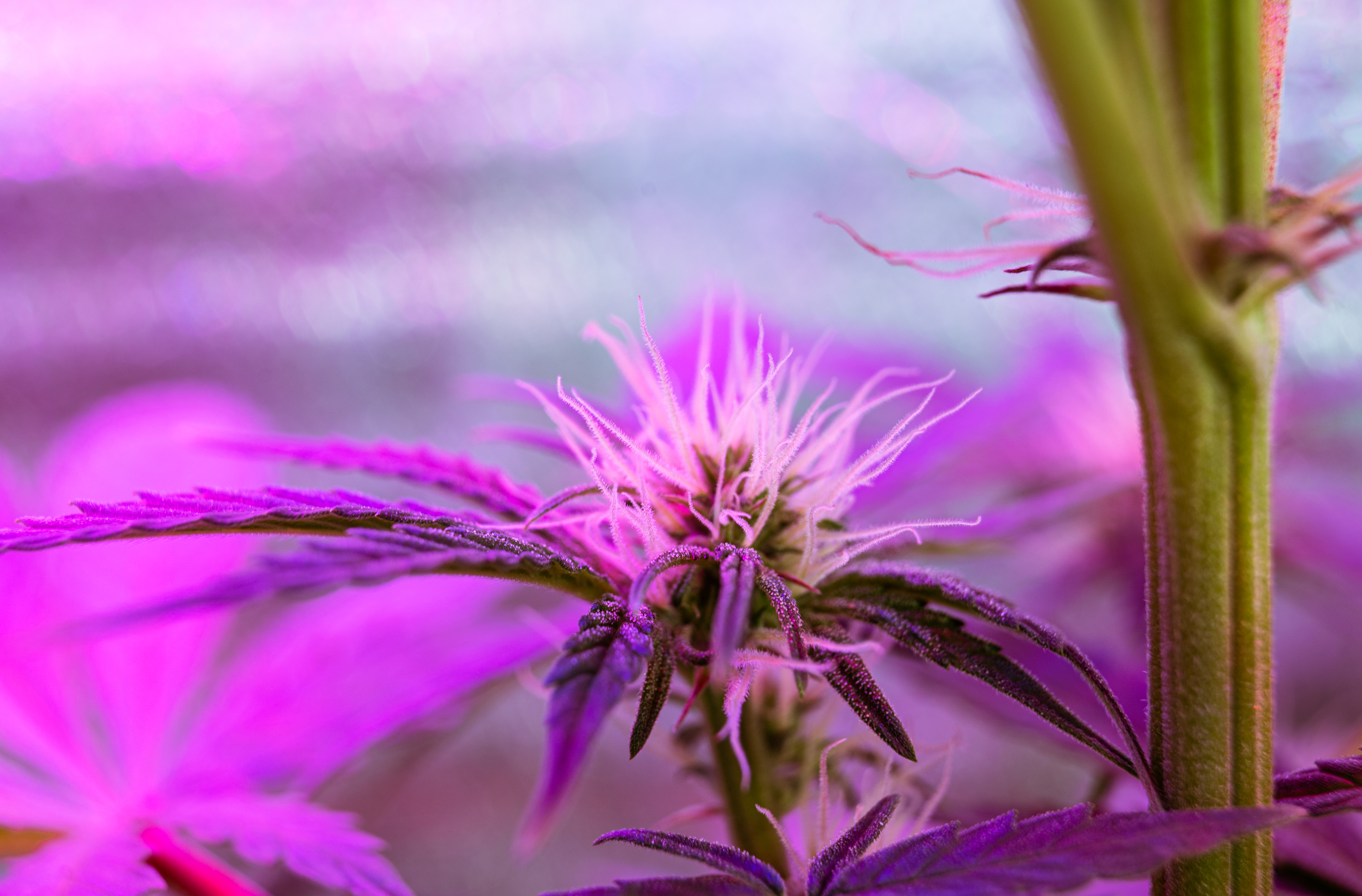


Purple Punch Autoflower is a compact cannabis variety known for its fast growth, dense flowers, and sweet fruit-like aroma. It combines traits linked to Purple Punch with autoflowering genetics. This makes it different from many traditional cannabis plants. Instead of waiting for a change in the daily light schedule, an autoflowering plant begins to flower based mainly on its age. This feature can make the growing process easier to manage, especially in small indoor spaces or outdoor areas with changing daylight hours.
Most Purple Punch Autoflower plants have an indica-dominant growth pattern. They often develop broad leaves, short spaces between branches, and a thick central stem. Many plants stay short or medium in height, although the final size depends on the breeder, growing space, container, light level, and overall plant health. A healthy plant may form one large main flower with several smaller flowers along the side branches. Gentle training can help spread these branches and create a more even canopy, but strong stress can slow growth because autoflowering plants have limited time to recover.
The strain is often linked to sweet aromas that may remind growers of grapes, berries, candy, or baked desserts. Some plants may also produce mild earthy or spicy notes. These traits are influenced by genetics and growing conditions. Not every plant will smell or look the same, even when the seeds come from the same package. Small differences can appear in height, branch spacing, flower shape, aroma, and finishing time.
Purple coloring is one of the most recognized features of this variety. Some plants may develop purple, red, or dark blue shades in the leaves and flowers. This color comes from natural pigments called anthocyanins. Genetics play the largest role in whether a plant can develop these shades. Cooler nighttime temperatures may bring out stronger colors in some plants, but cold stress should not be used to force the change. A plant can remain green and still be healthy, mature, and productive. Purple color alone does not prove that the flowers are stronger or better.
One major benefit of Purple Punch Autoflower is its short life cycle. Many versions may be ready for harvest within about eight to eleven weeks from germination. However, this time frame is only a general estimate. Some plants may finish earlier, while others may need more time. Light strength, temperature, humidity, root health, stress, and breeder genetics can all affect the schedule. Harvest should be based on the condition of the flowers and trichomes rather than the number of days listed on a seed package.
Autoflowering plants can be grown indoors or outdoors. Indoor growing gives more control over lighting, temperature, airflow, and humidity. This control can be useful during flowering because thick flowers may hold moisture and become more likely to develop mold. Outdoor growing can reduce the need for artificial lighting, but plants may face heavy rain, pests, strong wind, or sudden temperature changes. Containers are often useful outdoors because they allow the plants to be moved when weather conditions become unsafe.
Purple Punch Autoflower is often described as suitable for new growers, but it still requires careful management. Its automatic flowering cycle removes the need to change the light schedule, yet its fast growth leaves less time to correct mistakes. Overwatering, strong nutrients, poor drainage, and rough training can slow development during an important stage. A plant that becomes stressed during the first few weeks may remain smaller because it cannot extend its vegetative stage.
A successful grow starts with a healthy root zone. Light, well-draining soil helps roots receive both water and oxygen. Containers need enough drainage holes to prevent water from collecting around the roots. Watering should be based on soil moisture and container weight instead of a fixed daily routine. Young plants need only small amounts of water because their roots have not spread through the full container. As the plant becomes larger, its water use will increase.
Lighting also has a strong effect on plant size and flower production. Many indoor growers use an 18-hour or 20-hour daily light schedule throughout the full life cycle. The light should be strong enough to support healthy growth but not so close that it causes pale leaves, curled edges, or bleaching. Outdoor plants need several hours of direct sunlight each day. Limited light may cause weak stems, stretched growth, and smaller flowers.
Nutrients should be used with care. Autoflowering plants may need less fertilizer than large photoperiod plants. Strong feeding can cause burned leaf tips, dark leaves, or slowed growth. A light feeding plan that changes gradually as the plant enters flowering is often easier to control. Soil pH, watering habits, and root health should always be checked before more nutrients are added because many deficiency signs are caused by poor nutrient uptake rather than a lack of fertilizer.
This guide explains the full growing process, including growth stages, indoor and outdoor conditions, containers, soil, lighting, watering, nutrients, training, plant height, expected yield, purple color development, common problems, and harvest timing. It also covers basic drying and curing steps after harvest. Since laws differ by country, state, and local area, all cannabis seeds and plants should be handled only where cultivation is legal. Local rules should be checked before any growing project begins.
Genetics, Appearance, Aroma, and Growth Characteristics
Purple Punch Autoflower is known for its compact growth, broad leaves, sweet aroma, and colorful flowers. However, the exact features of the plant can differ from one seed producer to another. This is because breeders may use different parent plants when creating their own version. Growing conditions can also affect the final height, shape, smell, and color of the plant.
Understanding these basic traits helps growers plan the space, lighting, containers, and care needed during the full growth cycle. It also helps prevent confusion when one Purple Punch Autoflower plant looks different from another plant sold under the same name.
Purple Punch Autoflower Genetics
Purple Punch Autoflower is generally created by crossing Purple Punch with a cannabis plant that carries autoflowering genetics. Purple Punch is commonly linked to indica-dominant parent lines. It is known for producing dense flowers, broad leaves, and sweet fruit-like aromas. The autoflowering parent adds the ability to begin flowering based on the plant’s age.
Most regular cannabis plants are photoperiod plants. These plants usually begin flowering when they receive longer periods of darkness. Indoor growers often change the light schedule to 12 hours of light and 12 hours of darkness to start flowering. Autoflowering plants do not need this change. They usually begin flowering after several weeks of growth, even when the light schedule stays the same.
The autoflowering trait comes from Cannabis ruderalis genetics. Ruderalis plants developed in regions with short summers and changing daylight hours. They adapted by flowering according to age instead of waiting for a specific amount of darkness. Breeders use this trait to create plants that finish more quickly and are easier to manage under simple light schedules.
Purple Punch Autoflower may contain indica, sativa, and ruderalis genetics. The indica side often supports a short, sturdy plant shape. Sativa traits may add some height, longer branches, or narrower leaves in certain versions. Ruderalis genetics provide automatic flowering and may help the plant finish within a shorter time.
The exact genetic percentages are not always the same. One breeder may create a very compact Purple Punch Autoflower, while another may produce a taller plant with more side branching. For this reason, the information provided by the seed breeder should be checked before planting. The breeder’s description may include expected height, flowering time, yield, and other important traits.
Plant Size and Structure
Purple Punch Autoflower often develops into a short or medium-sized plant with a bushy structure. Its main stem usually supports several side branches that grow upward toward the light. The spaces between the branches may be short, which can make the plant appear thick and full.
The leaves are often broad and dark green during healthy growth. This leaf shape is commonly linked to indica-dominant cannabis genetics. The plant may develop one strong main flower at the top, along with several smaller flowers on the side branches. Training can help spread these branches and create a more even canopy.
Height can vary greatly. Some plants may remain below 60 centimeters, while other versions may grow more than one meter tall. Genetics play a major role, but the growing environment also affects final size. Strong lighting, enough root space, correct watering, and stable temperatures can support healthy growth. Poor lighting may cause the plant to stretch and become taller with weaker stems.
Container size can also affect development. A very small container may limit root growth and reduce plant size. A larger container gives the roots more room, but it can also hold too much water if the soil does not drain well. The plant should have enough root space without being placed in soil that stays wet for long periods.
Outdoor plants may grow larger because they receive strong sunlight and have more open space. Indoor plants may remain more compact because the available height and light coverage are controlled. Plant size should be considered before choosing a grow tent, light position, or outdoor location.
Aroma, Flavor, and Flower Appearance
Purple Punch Autoflower is often linked to sweet and fruity aromas. Common descriptions include grape, berry, candy, vanilla, and baked dessert notes. Some plants may also develop mild earthy, herbal, or spicy scents.
The exact aroma depends on the plant’s terpene profile. Terpenes are natural compounds that create smells in many plants, fruits, flowers, and herbs. Cannabis plants produce different combinations of terpenes, which is why two plants of the same strain may not smell exactly alike.
Growing conditions can affect aroma strength. Healthy plants grown under stable conditions may produce a stronger scent during flowering. High heat, serious nutrient problems, mold, or poor drying methods may reduce the final aroma. The smell usually becomes more noticeable as the flowers mature and produce more resin.
The flowers may appear green, dark green, purple, red, or nearly black in some areas. Purple coloring is linked to pigments called anthocyanins. Genetics must support this color change. Cooler nighttime temperatures may increase purple expression, but cold conditions should not be used in a way that harms the plant.
Not every Purple Punch Autoflower will turn purple. Some plants may remain mostly green even when they are healthy and fully mature. This does not mean the plant has poor genetics or weak flowers. Color is only one plant feature and should not be used as the main measure of quality or harvest readiness.
The flowers are often dense and covered with visible resin glands. Dense flowers require good airflow because moisture can become trapped inside them. Humidity should be controlled during late flowering to lower the risk of mold. Regular inspection is also important, especially around large flowers and tightly packed branches.
Purple Punch Autoflower combines Purple Punch traits with autoflowering genetics. This gives the plant a fast growth cycle, automatic flowering, and a commonly compact structure. Many versions develop broad leaves, strong branches, dense flowers, and sweet aromas that may resemble grapes, berries, candy, or desserts.
Plant height, shape, color, and aroma can vary because breeders use different parent lines. The growing environment also affects how the plant develops. Strong lighting, healthy roots, stable temperatures, and correct watering can support better growth. Purple coloring may appear when the genetics and conditions allow it, but green flowers can be just as healthy and mature. Understanding these traits makes it easier to plan the growing space and provide the right care during each stage.
Is Purple Punch Autoflower Easy to Grow?
Purple Punch Autoflower is often described as a manageable cannabis variety for new and intermediate growers. Its compact size, short life cycle, and automatic flowering process can make it easier to manage than many traditional photoperiod strains. However, “easy to grow” does not mean that the plant can be ignored. It still needs a stable environment, careful watering, suitable soil, and close observation throughout its life.
Autoflowering plants begin flowering based on age rather than changes in daylight hours. This feature removes one major step from indoor growing. A grower does not need to change the light schedule to trigger flowering. The plant moves from early growth into flowering on its own. This can make the process feel simpler, especially for someone who has never managed a flowering light schedule before.
The main challenge is the plant’s limited recovery time. Purple Punch Autoflower usually completes its full life cycle much faster than a photoperiod plant. A serious mistake during the seedling or early growth stage may reduce its final size. The plant may begin flowering before it has fully recovered. For this reason, gentle and consistent care is usually more useful than frequent changes or aggressive methods.
Anyone considering cannabis cultivation should first check local laws. Cannabis growing rules differ by country, state, province, and city. Some areas allow limited home cultivation, while others ban it or require registration.
Overall Growing Difficulty
Purple Punch Autoflower is generally considered suitable for beginners because its basic growth pattern is easy to understand. It usually develops a short, bushy shape with broad leaves and several side branches. Its smaller size can make it useful for limited indoor spaces, balconies, greenhouses, or private outdoor areas where growing is legal.
Automatic flowering is one of its main advantages. Photoperiod cannabis plants usually need a clear change in their daily light and dark periods before they begin flowering. Autoflowering plants do not depend on this change. Purple Punch Autoflower normally begins forming early flowers after several weeks of growth, even when the daily light schedule stays the same.
This feature reduces the risk of mistakes connected to light leaks or incorrect flowering schedules. It can also allow growers to keep plants of different ages in the same indoor space. Younger plants and flowering plants may remain under the same general lighting schedule.
The short life cycle also creates a challenge. Purple Punch Autoflower has less time to recover from root damage, severe overwatering, nutrient stress, broken branches, or extreme temperatures. A photoperiod plant may remain in its vegetative stage longer while it recovers. An autoflower usually continues moving toward flowering even when growth has slowed.
The best approach is to keep the growing process simple. A healthy plant does not need constant adjustment. Stable conditions often produce better results than changing water, nutrients, lighting, and training methods every few days.
Main Advantages for Growers
One major advantage of Purple Punch Autoflower is its fast growth. Many versions are ready for harvest within a few months of germination. This shorter cycle may allow legal growers to complete more than one outdoor crop during a warm season. It can also reduce the total time that indoor equipment must remain in use.
Its compact size is another useful feature. Purple Punch Autoflower often stays shorter than many photoperiod strains. This can make lighting, airflow, and plant support easier to manage. A smaller plant may also require less vertical space. However, exact height can vary because breeders use different parent plants and breeding methods.
The plant’s automatic flowering process can make planning easier. A grower does not need a separate vegetative and flowering room. There is also no need to wait for a specific light change before flowering starts. This makes the strain useful for simple indoor setups.
Purple Punch Autoflower may also be grown indoors or outdoors where permitted by law. Indoor growing gives more control over temperature, humidity, light, and airflow. Outdoor growing provides natural sunlight and may reduce equipment needs. Both methods can work, but each has different risks. Indoor plants may face heat or ventilation problems, while outdoor plants may face pests, heavy rain, strong wind, and sudden weather changes.
Common Beginner Mistakes
Overwatering is one of the most common problems. New growers may believe that a young plant needs a large amount of water every day. In reality, a small seedling has a limited root system. Soil that stays wet for too long can reduce oxygen around the roots. This may cause drooping, slow growth, yellow leaves, or root disease.
Strong feeding is another frequent mistake. Autoflowering plants are often smaller than large photoperiod plants, so they may not need the same nutrient strength. Applying too much fertilizer can burn leaf tips, damage roots, and slow growth. Young plants are especially sensitive because many commercial soils already contain nutrients.
Poor soil can also cause problems. Dense soil holds too much water and limits airflow around the roots. A light and well-draining medium is usually easier to manage. Containers must also allow extra water to escape. Water that collects around the bottom of the root zone can lead to ongoing stress.
Late transplanting may slow the plant. Moving an established autoflower from one container to another can disturb the roots. Since the plant has a fixed life cycle, recovery time is limited. Many growers reduce this risk by starting the plant in its final container, although the exact method depends on the growing system.
Heavy pruning or aggressive training can also cause stress. Removing too many leaves at once reduces the plant’s ability to collect light. Breaking stems or cutting the main growing point may delay development. Low-stress methods are usually safer when performed early and carefully. Weak, damaged, or slow-growing plants should not receive additional stress.
Temperature and humidity are also important. Excess heat can cause leaves to curl, growth to slow, and flowers to become loose. High humidity during flowering can increase the risk of mold inside dense flowers. Very dry air may cause seedlings to lose water too quickly. Good airflow helps, but strong fans should not blow directly on a small plant for long periods.
Purple Punch Autoflower can be a suitable choice for beginners because it flowers automatically, stays fairly compact, and usually finishes quickly. Its simple growth pattern removes the need to change the light schedule to begin flowering. However, the fast life cycle means that serious mistakes can have a lasting effect.
Purple Punch Autoflower Growth Stages and Total Grow Time
Purple Punch Autoflower usually moves from seed to harvest faster than a photoperiod cannabis plant. Most versions finish in about 8 to 11 weeks after germination. However, this time range is only a general estimate. The actual schedule depends on genetics, light strength, temperature, root health, watering habits, and the amount of stress the plant receives.
Some plants may finish earlier, while others need one or two extra weeks. A breeder’s schedule should be used as a guide rather than a strict deadline. The plant’s condition and flower maturity are more important than the number of days that have passed.
Because autoflowering plants have a short life cycle, each stage matters. Problems during the first few weeks can affect the plant’s final size and flower production. Healthy early growth gives the plant a better chance of developing strong branches and dense flowers later.
Germination and Seedling Stage
The germination and seedling stage usually covers the first one to two weeks. Germination begins when the seed absorbs moisture and opens. A small white root then grows from the seed. This root moves downward and begins searching for water, oxygen, and nutrients.
After the seed is placed in the growing medium, the first stem rises above the soil. Two small round leaves, called cotyledons, appear first. These leaves provide stored energy while the young plant begins making its own food through light.
The first true leaves appear soon after the cotyledons. Unlike the round seed leaves, true cannabis leaves have pointed edges. The first set may have only one blade. Later sets develop three, five, or more blades as the plant becomes stronger.
Seedlings are delicate during this stage. Their roots are small and cannot use large amounts of water. Keeping the entire container wet can reduce oxygen around the roots. This may slow growth and cause the leaves to droop. Small amounts of water should be applied near the seedling instead of soaking a large area.
Strong nutrients are usually not needed during the first days, especially when the plant is growing in a lightly fertilized soil mix. Too much fertilizer can burn young roots and damage leaf tips. The seedling also needs gentle light. Light that is too weak may cause a long, thin stem. Light that is too strong may cause pale leaves, curling, or slow growth.
By the end of the seedling stage, the plant should have several sets of true leaves. The stem should appear firm, and new growth should form at a steady rate.
Vegetative Growth
The vegetative stage often begins during the second week and may continue until about week three or four. Purple Punch Autoflower grows leaves, roots, stems, and side branches quickly during this period.
Autoflowering plants do not remain in vegetative growth for as long as photoperiod plants. Their internal genetic clock controls when flowering begins. A grower cannot keep the plant in vegetative growth for extra weeks by using a long light schedule.
Healthy root development is one of the main goals during this stage. Roots need water, oxygen, and a loose growing medium. Dense or constantly wet soil can limit root growth. When the roots cannot spread, the plant may remain small.
The plant’s water use begins to increase as more leaves develop. However, the soil should still be allowed to lose some moisture between waterings. The container’s weight can help show when water is needed. A dry container feels much lighter than a recently watered one.
Purple Punch Autoflower may begin producing several side branches during vegetative growth. These branches may later support flower sites. Gentle low-stress training can sometimes begin when the plant is healthy and has several established nodes. The main stem may be bent carefully to create a wider shape and improve light exposure.
Stress should be limited during this stage. Major root damage, overwatering, nutrient burn, or severe pruning can slow development. Since the plant will continue aging even when growth is delayed, it may enter flowering before it has reached a strong size.
Pre-Flowering and Stretch
Pre-flowering often begins between weeks three and five. Small white hairs called pistils may appear where the branches meet the main stem. These pistils show that the plant is female and is moving into its flowering stage.
The plant may grow taller quickly during this period. This growth is often called the flowering stretch. The main stem and side branches become longer as the plant prepares to support developing flowers.
The amount of stretching varies. Some Purple Punch Autoflower plants stay short and compact, while others may nearly double in height. Genetics, light distance, container size, and environmental conditions can affect this change.
Water needs often increase during the stretch because the plant has more leaves and faster growth. Nutrient needs may also change. The plant still needs some nitrogen to support leaves and stems, but it also begins needing nutrients that support flower formation.
Changes should be made slowly. A sudden increase in fertilizer strength may cause brown leaf tips or dark, claw-shaped leaves. The plant should be observed after each feeding before more nutrients are added.
Training should become gentler once pre-flowering begins. Stems may become less flexible, and rough bending can cause breaks. Heavy pruning may also reduce the plant’s ability to recover. At this point, the main focus should be keeping the canopy open, stable, and well lit.
Flowering and Ripening
The flowering stage usually becomes clear by weeks four to six. Small groups of flowers form at the nodes and branch tips. These flowers slowly grow together and become larger.
White pistils continue to appear during early flowering. The plant may also begin producing more trichomes. Trichomes are tiny resin glands found on the flowers and nearby leaves. They may first look clear and shiny under magnification.
Purple Punch Autoflower often develops a stronger smell as flowering continues. Sweet grape, berry, fruit, or dessert-like scents may become more noticeable. Good ventilation becomes important, especially indoors.
Humidity should be controlled as the flowers become thicker. Dense flowers can hold moisture between their inner parts. High humidity and poor airflow may increase the risk of mold. Air should move around the plant without blowing strongly on one area.
During the middle of flowering, the plant puts more energy into flower growth. The flowers become wider and heavier. Some branches may need support if they begin to bend.
Late flowering is the ripening period. New white pistils appear more slowly, while older pistils often darken and curl inward. The flowers may swell, and the plant may drink less water than it did during peak growth.
Some leaves may fade from green to yellow near the end of the life cycle. This can be a natural sign of aging. However, sudden yellowing early in flowering may point to root, pH, watering, or nutrient problems.
Purple coloring may also become stronger during ripening when the plant has the right genetics. Cooler nighttime temperatures can sometimes support this color change, but the plant should not be exposed to extreme cold.
The breeder’s expected finish date may arrive before the flowers are fully mature. Harvest should not be based only on the calendar. Flower swelling, pistil changes, trichome appearance, and the plant’s overall condition should also be checked.
Purple Punch Autoflower commonly takes about 8 to 11 weeks to move from germination to harvest, although some plants may need more time. The first two weeks focus on seedling and root development. Fast vegetative growth follows, but it lasts only a short period. Pre-flowering and stretching often begin between weeks three and five. The plant then spends the remaining weeks developing, swelling, and ripening its flowers.
Indoor and Outdoor Growing Conditions
Purple Punch Autoflower can grow indoors or outdoors, but each setting creates different needs. Indoor growing gives more control over temperature, humidity, light, and airflow. Outdoor growing can provide strong natural sunlight and more space, but the plant is exposed to changing weather, pests, and moisture. The best setting depends on the available space, local climate, and ability to manage the plant each day.
Purple Punch Autoflower usually stays compact, which makes it suitable for small indoor grow areas, balconies, patios, and protected outdoor spaces. However, even a small plant needs enough room for healthy roots, good airflow, and full light exposure. Crowded plants may stretch, trap moisture, and develop weak lower growth. A clean and stable growing area can help the plant move through its short life cycle with fewer problems.
Indoor Growing
Indoor growing allows close control over nearly every part of the environment. This can be useful because autoflowering plants grow quickly and have limited time to recover from stress. A major problem during the seedling or early vegetative stage may reduce plant size and final yield. Stable indoor conditions can lower this risk.
A grow tent is often used to create a closed and controlled space. The tent should be large enough for the plant, light fixture, container, fans, and ventilation equipment. Purple Punch Autoflower may remain short, but it can still stretch when flowering begins. Space must be left between the top of the plant and the light. The plant should also have enough room to spread its side branches.
A reflective grow tent helps direct light toward the leaves instead of allowing it to escape. It also makes it easier to manage odor. Purple Punch Autoflower may develop a strong fruit-like or sweet smell during flowering. An exhaust fan connected to a carbon filter may help remove warm air and reduce strong odors before the air leaves the grow area.
Fresh air must enter the space as warm and humid air is removed. This air exchange provides carbon dioxide, which plants need for growth. It also helps control heat and moisture. The exhaust fan should be strong enough for the size of the grow tent, but it should not create severe pressure or very strong airflow.
Indoor plants should not be placed too close together. Leaves from nearby plants may overlap and block light from lower branches. Crowding can also trap moisture between flowers and leaves. Enough space should be provided so air can move around each plant. The grow area should remain clean, with dead leaves and spilled water removed as soon as possible.
Outdoor Growing
Outdoor Purple Punch Autoflower plants depend on natural sunlight. A location with several hours of direct light each day is usually best. The strongest growth often happens when the plant receives direct morning and midday sun. A heavily shaded location may cause stretching, weak stems, and smaller flowers.
Outdoor growing works best during warm and stable weather. Autoflowering plants have a short growth cycle, so they should not be started too early during cold spring conditions. They should also not be started so late that flowering happens during cold, wet autumn weather. A grow period with warm days, mild nights, and limited heavy rain can support better results.
Containers are often useful for outdoor autoflowers. A container allows the plant to be moved when the weather becomes dangerous. It can be placed under cover during heavy rain, strong wind, or hail. It can also be moved to receive more sunlight during the day. Containers should have many drainage holes because outdoor plants may receive more water than expected during storms.
The growing area should have some protection from strong wind. Light wind can strengthen stems, but powerful wind may bend or break branches. A wall, fence, or wind screen may offer protection without blocking too much sunlight. Stakes or soft plant ties may also support branches as the flowers become heavier.
Outdoor plants may face pests such as caterpillars, aphids, spider mites, slugs, and fungus gnats. Leaves should be checked often, especially on the lower surface. Small holes, pale spots, sticky residue, or damaged new growth may be signs of pest activity. Early detection is important because an autoflower has little time to recover from heavy damage.
Temperature, Humidity, and Airflow
Temperature affects nearly every stage of growth. Purple Punch Autoflower usually grows best in warm conditions without extreme heat. Seedlings often prefer a mild and stable environment. Mature plants may handle slightly warmer conditions, but long periods of high heat can slow growth and damage leaves.
During the day, temperatures around 20 to 27 degrees Celsius are often suitable. Night temperatures may be slightly lower. Large temperature changes between day and night should be avoided. Very cold nights may slow root activity, while very hot days may increase water loss and cause stress.
High heat may cause leaf edges to curl upward. Leaves may also become dry or pale. Growth can slow, and the plant may drink water more quickly. Indoor growers can reduce heat by increasing ventilation, moving the light farther away, or running the light during cooler hours. Outdoor plants may need temporary shade during severe afternoon heat, but constant shade should be avoided.
Humidity should be higher during early growth and lower during flowering. Young plants have small root systems and may benefit from moderate humidity. Too little moisture in the air can cause rapid water loss. However, very high humidity can slow root development and support fungal growth.
As flowering begins, humidity should gradually decrease. Dense Purple Punch Autoflower flowers may trap moisture deep inside their structure. This can create a risk of mold or bud rot. Late-flowering plants should be protected from long rain periods and heavy morning dew. Indoor humidity can be reduced through stronger air exchange, a dehumidifier, or less standing water in the grow space.
Airflow should be gentle and steady. Indoors, an oscillating fan can move air around the leaves and branches. The fan should not blow directly at one part of the plant all day. Strong direct wind may dry leaves, bend stems, and damage young growth. The leaves should move slightly rather than shake hard.
Outdoor airflow usually comes from natural wind. Plants placed against a solid wall may receive less air movement, so enough space should remain around the container. Lower leaves should not touch wet soil. Dead or damaged plant material should also be removed because it may trap moisture and support pests or fungi.
Managing Rain, Mold, and Weather Changes
Rain can be helpful outdoors, but too much rain may create serious problems. Heavy rain may soak the soil, reduce oxygen around the roots, and wash nutrients from the container. Wet flowers can also remain damp for many hours. Dense flowers are especially at risk because trapped moisture may not dry quickly.
Outdoor plants should be moved under cover when long periods of rain are expected. The cover should block rain while still allowing fresh air and light to reach the plant. A closed plastic cover without ventilation can trap humidity and may create more mold risk.
After rain, the plant should be checked carefully. Water may be gently shaken from the branches, but rough handling should be avoided. Flowers should be inspected for brown areas, soft tissue, or a musty smell. Damaged flowers should be dealt with quickly to prevent mold from spreading.
Sudden cold weather can also slow growth. Containers may be moved indoors or into a protected area during cold nights. However, outdoor plants should not be moved into a dark, hot, or poorly ventilated room for long periods. Any temporary shelter should still provide safe temperatures and airflow.
Purple Punch Autoflower can perform well indoors or outdoors when the environment remains stable. Indoor growing offers greater control over light, temperature, humidity, airflow, and odor. Outdoor growing provides natural sunlight and more open space, but it also exposes the plant to rain, wind, pests, and changing temperatures.
Healthy growth depends on warm conditions, moderate humidity, steady airflow, and enough space between plants. Humidity should be lowered as flowers become dense, while heavy rain and standing moisture should be avoided. Indoor ventilation and outdoor weather protection are both important for preventing mold. Careful control of the growing environment gives Purple Punch Autoflower the best chance to develop strong branches, healthy leaves, and mature flowers before harvest.
Containers, Soil, pH, and Root Health
Purple Punch Autoflower grows best when its roots have enough air, moisture, and space. Since autoflowering plants have a short life cycle, early root problems can reduce growth for the rest of the plant’s life. A poor container, heavy soil, or incorrect pH may slow the plant before flowering begins. Choosing the right materials from the start can help the plant develop a strong root system and steady growth.
Choosing a Container
The container must allow extra water to drain away from the roots. Fabric pots are a common choice because their soft sides allow more air to reach the growing medium. Air entering through the sides may help prevent roots from circling around the inside of the pot. Fabric pots also dry faster than many plastic containers, which can lower the risk of waterlogged soil.
Plastic pots can also work well when they have enough drainage holes. They hold moisture longer than fabric pots, so watering may be needed less often. However, water can collect at the bottom when drainage is poor. The pot should never sit in standing water for a long time because this limits oxygen around the roots.
A final container size of about 3 to 5 gallons is often suitable for a medium-sized autoflower. Smaller containers may limit root growth and cause the soil to dry quickly. Larger containers hold more growing medium, but they can stay wet for too long when the plant is still small. The correct size depends on the available space, the growing medium, and the expected plant size.
Many growers place an autoflower seed directly into its final container. This method reduces the need for transplanting. Autoflowering plants grow quickly and may begin flowering only a few weeks after germination. Damage or stress during transplanting may slow growth at an important stage. When transplanting is needed, it should be done early and with care so the root ball stays together.
Best Soil or Growing Medium
Purple Punch Autoflower usually performs well in a light and loose soil mix. The growing medium should hold enough moisture for the roots while also allowing extra water to drain. Heavy garden soil is often too dense for containers. It may become compacted, reduce airflow, and stay wet around the roots.
A basic soil mix may contain peat moss or coco coir as the main material. These materials help hold moisture while keeping the mix light. Perlite may be added to create small air spaces and improve drainage. Compost or worm castings may provide organic matter and mild nutrients. However, too much compost or rich fertilizer can make the mix too strong for young plants.
Seedlings need very little nutrition during their first days of growth. Soil that contains high levels of fertilizer may burn young roots or cause dark, curled leaves. A lightly fertilized seedling mix is often safer. Additional nutrients may be added later as the plant becomes larger and shows stronger growth.
The soil should not be pressed down tightly when the pot is filled. Lightly filling the container helps keep air pockets in the mix. The surface can be gently leveled without heavy pressure. After watering, the soil may settle on its own.
Drainage can be tested before planting. Water should move through the growing medium and leave the bottom of the pot without forming a pool on the surface. Very fast drainage may mean the mix does not hold enough moisture. Very slow drainage may mean it contains too many fine or heavy materials.
Soil pH and Root-Zone Conditions
Soil pH affects how well a plant can absorb nutrients. Even when nutrients are present, the roots may not be able to use them when the pH is too high or too low. Cannabis grown in soil commonly performs well when the root-zone pH stays near 6.0 to 7.0. Small changes within this range are normal.
An incorrect pH may lead to nutrient lockout. The plant may show yellow leaves, brown spots, weak growth, or unusual leaf colors. These signs can look like a nutrient shortage. Adding more fertilizer without checking the pH may make the problem worse.
Water, soil, and fertilizer can all affect root-zone pH. The pH of the water should be checked after nutrients are mixed. Organic soil may help control small changes, but large changes can still cause problems. Testing runoff water may give some information, although it does not always show the exact condition around every root.
Root health also depends on oxygen. Roots need both water and air. When soil stays soaked for too long, the air spaces fill with water. The roots may become weak, dark, or damaged. The plant may droop even though the soil is wet. Growth may slow, and leaves may begin to yellow.
Healthy roots are usually light in color and have a clean smell. Poor drainage may produce a sour or unpleasant smell. Fungus gnats may also appear when the top layer stays wet for long periods. Allowing part of the soil to dry between watering can improve oxygen levels and reduce pest problems.
Soil Versus Coco Coir
Soil and coco coir can both support healthy Purple Punch Autoflower plants, but they require different care. Soil is often easier for beginners because it holds nutrients and moisture for a longer time. A good soil mix may also contain helpful microorganisms and organic matter. Watering may be less frequent, and small feeding errors may be easier to correct.
Coco coir looks similar to soil, but it acts more like a hydroponic growing medium. It holds water while still allowing air around the roots. Plants may grow quickly in coco when feeding and watering are managed correctly. However, coco contains very few nutrients on its own. A complete nutrient solution is usually needed from an early stage.
Coco often requires more frequent watering than soil. The pH range is also usually lower, often around 5.8 to 6.2. Calcium and magnesium may need closer attention because coco can hold these minerals. Growers must watch the nutrient strength, pH, and moisture level more carefully.
Soil may be the simpler choice when low maintenance is important. Coco may suit growers who can check the plants often and adjust feeding as needed. Neither medium guarantees better results. Healthy roots depend more on proper watering, drainage, nutrition, and pH control.
A healthy Purple Punch Autoflower begins with a strong root zone. The container should have good drainage and enough space for the roots. A light soil mix with peat or coco, perlite, and a small amount of organic matter can provide a good balance of moisture and air. Heavy soil and strong fertilizer should be avoided during early growth.
Lighting, Watering, and Nutrient Management
Lighting, watering, and feeding have a major effect on the health of Purple Punch Autoflower plants. These plants grow quickly and move into flowering without waiting for a change in the light cycle. Because their life cycle is short, early mistakes can affect the final size and yield of the plant. A stable routine is important, but growers should also watch the plant and adjust care when needed.
Too much light can damage leaves, while weak light can cause thin growth and small flowers. Too much water can slow root growth, while too little water can cause wilting. Strong nutrients may burn the roots and leaves. The best approach is to make small changes and check how the plant responds before making another adjustment.
Best Light Schedule
Purple Punch Autoflower does not need a 12-hour light and 12-hour dark schedule to begin flowering. The plant starts flowering based on age. This makes it different from photoperiod cannabis plants, which need longer nights before they begin producing flowers.
Many indoor growers use an 18/6 light schedule. This means the lights remain on for 18 hours and turn off for six hours each day. This schedule gives the plant plenty of light while also providing a dark period. The dark period can help reduce heat inside the growing area. It also gives lights, fans, and other equipment time to cool down.
Another common schedule is 20/4. Under this schedule, plants receive 20 hours of light and four hours of darkness. The extra light may support faster growth when the environment is stable. However, the longer light period also increases electricity use and may create more heat.
Some growers leave the lights on for 24 hours each day. Autoflowering plants can grow under constant light, but this schedule is not always necessary. Heat, power use, and equipment wear may increase. A short dark period can make the growing environment easier to manage.
The same schedule should usually be kept from the seedling stage until harvest. Sudden or frequent schedule changes may create stress. A timer can help keep the light schedule consistent every day.
Light Intensity and Distance
Seedlings do not need the same light strength as mature flowering plants. Young plants have small leaves and weak roots. Strong light placed too close can dry the growing medium quickly and damage tender leaves.
During the seedling stage, the light should be gentle. As the plant develops more leaves and stronger roots, the light intensity can be raised slowly. During flowering, Purple Punch Autoflower needs enough light to support dense flower development. However, stronger light does not always mean better results. The plant can only use a certain amount of light under normal growing conditions.
Each grow light is different. The correct hanging distance depends on the power, design, and heat output of the fixture. Manufacturer guidance provides a useful starting point. The plant should then be watched for signs of stress.
Pale or bleached leaves near the top of the plant may show that the light is too strong. Upward-curling leaf edges, dry patches, or damaged top flowers can also be warning signs. Heat from the lamp may make these problems worse.
Weak lighting creates different symptoms. Stems may become long and thin as the plant reaches toward the light. Large spaces may form between leaf nodes. Flowers may remain small, loose, or poorly developed.
Light distance should be checked as the plant grows taller. An even canopy helps keep all major branches at a similar distance from the light. This allows light to reach more flower sites without placing the tallest branch too close to the fixture.
Watering Practices
Overwatering is one of the most common problems when growing autoflowering plants. It usually happens because water is given too often, not because too much water is used during one watering.
Young seedlings have small root systems. They cannot use all the moisture held inside a large container. Soaking the entire pot each day may leave the soil wet for too long. Wet soil contains less oxygen, and roots need oxygen to grow. Constant moisture can cause slow growth, drooping leaves, and root damage.
A young plant should receive a small amount of water around the seedling. The watering area can become wider as the roots spread. This encourages the roots to search through the soil instead of remaining in one small area.
Larger plants need more water because they have more leaves and roots. Water use also increases under strong lights, warm temperatures, and low humidity. Even so, watering should not follow a fixed daily schedule. Conditions can change from one day to another.
The surface of the soil can be checked before watering, but the top layer may dry while the lower soil remains wet. Lifting the container is another useful method. A dry pot feels much lighter than a recently watered pot. Learning this weight difference makes it easier to decide when water is needed.
When watering a mature plant, water should be applied slowly and evenly. Pouring too quickly may create channels in the soil. Water can run down the sides of the pot without reaching all parts of the root zone.
Drooping leaves can mean overwatering or underwatering. The soil should be checked before more water is added. Dry, light soil may show that the plant needs water. Heavy, wet soil suggests that the plant needs more time to dry.
Nutrient Needs
Purple Punch Autoflower usually needs a gentle feeding plan. Autoflowering plants often remain smaller than photoperiod plants, so they may not need the full nutrient strength listed on a fertilizer label.
Seedlings can often grow for a short time without added fertilizer, especially when the soil already contains nutrients. Strong feeding during early growth may burn young roots. It is safer to begin with a low amount and increase it only when the plant is growing well.
During vegetative growth, the plant needs nitrogen to produce healthy green leaves and stems. It also needs phosphorus, potassium, calcium, magnesium, and other nutrients in balanced amounts. Too much nitrogen may cause very dark leaves, weak stems, or leaf tips that bend downward like claws.
When flowering begins, the nutrient balance can be changed gradually. Flowering formulas often contain less nitrogen and more phosphorus and potassium. However, the plant still needs some nitrogen during flowering. Removing it too early may cause rapid yellowing and weak growth.
Extra phosphorus and potassium do not always create larger flowers. Excess fertilizer can damage the roots and block the uptake of other nutrients. Brown or burned leaf tips are often an early sign of nutrient burn. If feeding continues at the same strength, the damage may spread along the leaf edges.
Incorrect pH can also cause nutrient problems. Nutrients may be present in the soil but unavailable to the roots. This is known as nutrient lockout. Adding more fertilizer will not solve the problem if pH or root health is the main cause.
Salt buildup may happen when mineral nutrients are used often. It can affect soil balance and root function. The growing medium, water quality, pH, and feeding strength should be reviewed before making large changes.
Good lighting, careful watering, and moderate feeding support healthy Purple Punch Autoflower growth. An 18/6 or 20/4 light schedule can provide enough daily light without requiring a flowering schedule change. Light strength should increase slowly as the plant grows, and the distance should be adjusted to prevent stretching or light burn.
Water should be given according to soil moisture, container weight, and plant size rather than a fixed calendar. Seedlings need small amounts, while mature plants need deeper and more even watering. Nutrients should begin at a low strength and increase only when the plant shows healthy growth. Careful observation and gradual adjustments reduce stress and help the plant develop strong roots, healthy leaves, and well-formed flowers.
Training, Pruning, and Plant Height Control
Training and pruning can help Purple Punch Autoflower develop a wider shape and a more even canopy. These methods may improve light exposure and airflow around the plant. However, autoflowering plants grow on a fixed schedule. They do not have a long vegetative stage like photoperiod plants. Any stress during early growth may reduce the time available for recovery.
Purple Punch Autoflower often develops a compact and bushy structure. Its main stem may grow faster than the lower branches, creating one tall central flower. Training can lower the main stem and help side branches receive more light. Careful plant control may also prevent the plant from growing too close to the grow light.
The best approach is usually gentle and early. Strong pruning, repeated cutting, or late training may slow development. Each plant should be judged by its health, growth rate, and structure before any method is used.
Low-Stress Training
Low-stress training involves gently bending stems without cutting them. The main stem is usually moved to one side and held in place with a soft plant tie. This allows lower branches to grow upward and form a flatter canopy.
A flat canopy can improve light distribution. When one main stem grows much taller than the rest of the plant, the top receives the strongest light. Lower branches may remain shaded. Bending the main stem brings several branches closer to the same height. More flower sites may then receive useful light.
Low-stress training should begin while the plant is young and flexible. The main stem should have several healthy leaf nodes and should be strong enough to bend without breaking. Training a weak seedling may damage its roots or slow its early growth.
The stem should be bent in small steps. A sharp bend can split the outer tissue or break the stem completely. Soft ties are safer than thin wire because they are less likely to cut into the plant. Ties should also be checked often. Stems become thicker as the plant grows, and a tight tie may restrict growth or damage the surface.
The plant may turn its growing tip back toward the light within a day or two. Side branches may also begin to rise. The main stem can be adjusted again if the plant remains healthy. Training should become lighter after flowering begins because older stems are less flexible and more likely to snap.
Topping and High-Stress Training
Topping is a high-stress method that removes the top growing point of the main stem. This can encourage two main branches to develop below the cut. Some experienced growers use topping to create a wider plant, but the method carries more risk with autoflowers.
An autoflower has limited time to recover from damage. If topping slows growth for several days, the plant may enter flowering before it has rebuilt enough healthy growth. The result may be a smaller plant with fewer productive branches.
Topping should only be considered when the plant is growing quickly and shows no signs of stress. The leaves should have a healthy color, and the stem should be developing at a steady rate. The root zone should also be working well. A plant that is drooping, pale, burned, or growing slowly should not be topped.
Timing is important. Topping too early can damage a small plant that has not formed enough roots. Topping too late can interfere with the flowering stretch. Many growers avoid topping autoflowers because low-stress training offers more control with less recovery time.
Other high-stress methods, such as stem crushing or heavy branch removal, should also be used with great care. Purple Punch Autoflower may respond poorly when several stressful methods are applied at once. Simple training is often safer than trying to force the plant into a complex shape.
Pruning and Leaf Removal
Pruning involves removing selected leaves or branches. Limited pruning can improve airflow and reduce heavy shade, but removing too much healthy growth may weaken the plant.
Large fan leaves collect light and support plant growth. They should not be removed only because they look large. A healthy leaf continues to provide energy to the plant. Removing many leaves at one time may slow flower development and reduce the plant’s ability to recover from stress.
Some leaf removal may be useful when a leaf is damaged, dead, or blocking airflow through the center of the plant. A leaf may also be removed if it rests on wet soil or creates a crowded area where moisture can collect. Leaves that show serious pest damage may need to be removed to reduce the spread of the problem.
Light pruning around the lower part of the plant can help keep the area open. Small branches that receive very little light may produce loose and underdeveloped flowers. Removing a few weak lower shoots early may allow the plant to direct more growth toward stronger branches.
Pruning should be done gradually. Removing a small amount and then observing the plant is safer than making a major change in one session. Clean cutting tools should be used to reduce the risk of infection. Damaged plant material should also be removed from the growing area.
Controlling Plant Height
Purple Punch Autoflower is often compact, but some plants may stretch more than expected. Genetics, light strength, temperature, container size, and plant health can all affect height.
Early low-stress training is one of the most useful ways to control vertical growth. Bending the main stem lowers the tallest point and spreads growth across the available space. Side branches can also be guided outward to prevent crowding.
Light distance also affects plant height. A weak or distant light may cause the plant to stretch. The spaces between leaf nodes may become long, and the stem may appear thin. Moving the light closer or increasing its strength may reduce stretching, but the change should be gradual. Excess light can cause pale leaves, curled edges, or bleaching.
High temperatures may also increase stretching. Warm conditions combined with low light can produce weak growth. Stable temperatures and proper airflow can help the plant develop shorter and stronger stems.
Container size may influence plant growth, but using a very small container is not a good way to control height. A restricted root zone can reduce plant health, water stability, and final yield. It is better to manage height through training, lighting, and environmental control.
Late height problems can be difficult to correct. A flowering stem may become stiff and break when bent. If a branch must be moved, it should be adjusted slowly and supported with soft ties. The light may also be raised if enough space remains. Branches should not be pushed directly against hot equipment or tent walls.
Training and pruning can help Purple Punch Autoflower develop a balanced shape, but all methods should be gentle and carefully timed. Low-stress training is often the safest option because it improves light exposure without cutting the plant. Topping and other high-stress methods may work on strong plants, but they can reduce growth when recovery is slow.
Leaf removal should be limited to damaged, crowded, or poorly placed growth. Healthy fan leaves should remain whenever possible because they support development. Plant height is best controlled through early training, correct lighting, stable temperatures, and enough growing space. Careful adjustments made during early growth are safer than major changes during flowering.
Expected Yield and How to Improve Production
Purple Punch Autoflower can produce a useful harvest in a short amount of time, but the final yield is never fixed. Seed companies may provide estimated yield ranges, yet these numbers are usually based on plants grown under controlled conditions. Actual results depend on the plant’s genetics, health, environment, and care throughout its life cycle.
A healthy plant with strong roots and stable growing conditions is more likely to produce dense, well-developed flowers. A stressed plant may remain small or develop loose flowers, even when high-quality seeds are used. The best way to improve production is to support steady growth from the seedling stage until harvest. Trying to force faster growth with too much light, water, or fertilizer often causes problems instead of increasing yield.
Indoor Yield
Indoor yield may be measured by the amount produced by each plant or by the total amount harvested from one square meter of growing space. These measurements can be helpful for planning, but they should not be treated as promises. Two Purple Punch Autoflower plants grown in the same room may still produce different amounts because each seed can develop slightly different traits.
Light quality has a strong effect on indoor production. A weak light may cause the plant to stretch as it searches for more energy. Long, thin stems and large spaces between branches can reduce the number of strong flowering sites. Flowers may also remain small or loose when the plant does not receive enough light.
A very strong light can also lower yield when it is placed too close to the canopy. Signs of too much light may include pale upper leaves, dry edges, curled leaves, or bleached flower tops. The light should provide enough energy without causing heat or light stress. The distance and power setting should be adjusted as the plant grows.
Plant spacing is another important factor. Crowded plants block light and airflow from reaching lower branches. This can lead to weak lower growth and areas of trapped moisture. Each plant should have enough room to spread its branches without pressing against nearby plants or the sides of the growing area.
Container size also affects indoor yield. A very small pot may limit root growth and cause the soil to dry too quickly. A container that is much larger than needed may stay wet for too long, especially when the plant is young. A suitable final container gives the roots enough room while allowing the growing medium to drain and dry at a healthy rate.
Outdoor Yield
Outdoor Purple Punch Autoflower plants depend heavily on sunlight and weather. A plant that receives many hours of direct sunlight can produce more energy for leaf and flower development. A shaded location may slow growth and reduce the size of the final harvest.
The growing season should provide enough warm days for the plant to complete its full life cycle. Autoflowers usually finish faster than photoperiod plants, which may make them useful in areas with shorter summers. However, cold nights, storms, or long periods of cloudy weather can still slow growth.
Container size can influence outdoor plant size. A larger container may allow a wider root system and help the plant hold more water during hot weather. The container must still have strong drainage. Soil that remains wet after rain can reduce oxygen around the roots and increase the risk of root disease.
Outdoor plants may also face pests, strong wind, animals, and sudden weather changes. Insects can damage leaves and reduce the plant’s ability to collect light. Heavy wind can break branches, while long periods of rain can create mold inside dense flowers. Regular checks help identify these problems before they become severe.
Outdoor yield may be higher when conditions are favorable, but it is often less predictable than indoor yield. The grower has limited control over sunlight, temperature, humidity, and rain. A protected location with good sun and airflow provides the best chance of healthy flower development.
Factors That Improve Yield
Healthy roots are the base of a productive Purple Punch Autoflower plant. Roots need moisture, oxygen, nutrients, and space. Soil that is light and well drained allows air to reach the root zone. Overwatering fills the small air spaces in the soil and can cause the roots to weaken. Water should be added when the growing medium has started to dry rather than according to a fixed daily schedule.
Strong and stable lighting supports photosynthesis. The plant uses light energy to build stems, leaves, and flowers. Sudden changes in light strength may cause stress, so adjustments should be made in small steps. The canopy should also receive light as evenly as possible. Gentle low-stress training can help spread the branches and expose more flower sites.
Moderate nutrient use supports growth without damaging the roots. Too little nutrition can lead to pale leaves and slow development. Too much fertilizer can cause burned leaf tips, dark leaves, or nutrient lockout. Autoflowering plants often need lighter feeding than large photoperiod plants. Nutrient strength should be increased only when the plant is growing well and shows no signs of stress.
Airflow and humidity control are especially important during flowering. Purple Punch Autoflower may form thick flowers that hold moisture. High humidity can increase the risk of mold, particularly when branches are crowded. Gentle air movement helps moisture leave the canopy and keeps fresh air around the leaves.
Low stress during early growth may also improve the final harvest. Autoflowers have a limited vegetative stage and cannot remain in vegetative growth while recovering from damage. Severe pruning, late transplanting, root damage, and strong nutrient burn may reduce plant size before flowering begins. Gentle care during the first few weeks allows the plant to build the structure needed to support flowers later.
Harvest timing can affect both yield and quality. Harvesting too early may reduce the final weight because the flowers have not finished swelling. Waiting too long may increase the risk of aging flowers, mold, or damage. Flower maturity should be checked closely rather than relying only on the number of weeks since germination.
Supporting Heavy Flowers
Healthy Purple Punch Autoflower plants may develop branches that bend as the flowers gain weight. Support should be added before a branch starts to split. Soft plant ties, stakes, or a support frame can hold branches in place without cutting into the stems.
Ties should not be pulled too tightly because stems continue to grow and thicken. Each support should hold the branch gently while still allowing some natural movement. Branches should also be spaced so that air can move between the flowers.
Humidity should be kept under control during the final weeks. Dense flowers can trap moisture deep inside areas that are difficult to see. The outside of a flower may appear dry while mold is beginning near the stem. Good airflow, proper spacing, and regular inspection can reduce this risk.
Purple Punch Autoflower yield depends on genetics, light, root health, watering, nutrition, plant spacing, and the growing environment. Indoor growing offers more control, while outdoor growing may provide strong natural light but greater exposure to weather and pests. Yield can be improved by maintaining healthy roots, using stable lighting, feeding moderately, controlling humidity, and avoiding severe stress during early growth. Branch supports may also protect heavy flowers as harvest approaches. Breeder yield figures should be viewed as estimates, since every plant and growing environment can produce different results.
Purple Color Development and Common Growing Problems
Purple Punch Autoflower is known for flowers and leaves that may develop purple, red, or dark blue shades. However, not every plant will show these colors. Plant genetics, temperature, nutrition, light exposure, and general health can all affect its final appearance. Color alone does not prove that a plant is healthy, mature, or ready for harvest. Growers should examine the full plant and consider its growth pattern before making changes.
Why Purple Punch Autoflower May Turn Purple
Purple shades in cannabis plants are mainly caused by natural pigments called anthocyanins. These pigments are also found in foods such as blueberries, grapes, red cabbage, and blackberries. They may appear in the leaves, stems, and flowers of cannabis plants when the correct genes are present.
Genetics are the most important factor in purple color development. Some Purple Punch Autoflower plants have a strong ability to produce anthocyanins. Others may carry fewer color-producing traits. This means that two seeds from the same package may not look exactly alike. One plant may develop deep purple flowers, while another may remain mostly green.
Color often becomes more visible during the later part of flowering. Chlorophyll gives plants their green color. Near the end of the growth cycle, chlorophyll production may slow down. Existing chlorophyll can also begin to break down. This allows purple, red, and yellow pigments to become easier to see.
Cooler nighttime temperatures may support purple color development in plants that already carry the right genetics. A small difference between daytime and nighttime temperatures may help bring out darker shades. However, growers should not expose plants to extreme cold. Very low temperatures can slow root activity, limit nutrient uptake, and damage plant tissue. Cold and wet conditions can also increase the risk of mold.
Strong light may also affect color expression. Flowers and leaves receiving good light exposure may develop more noticeable shades than areas hidden under a thick canopy. However, intense light does not always improve color. Excess light can bleach the upper flowers, curl leaves, and cause dry or pale areas.
Why Some Purple Punch Autoflower Plants Stay Green
A Purple Punch Autoflower plant may remain green throughout its life, even when it is healthy. The name of the strain does not guarantee that every plant will become purple. Seed-grown plants have natural genetic differences. The exact traits also vary among seed breeders.
Temperature can affect the final color. Plants grown under warm and stable conditions may remain greener than plants exposed to slightly cooler nights. This does not mean that warm-grown plants have failed. Green flowers may still have the expected structure, aroma, and maturity.
Nutrition also plays a role in plant color. Healthy leaves need chlorophyll to collect light and support growth. A plant that receives enough nitrogen may remain dark green for much of its life. However, adding extra nutrients to keep the plant green or force a color change can create problems. Purple flowers should come from genetics and natural plant development, not from severe stress or nutrient deficiency.
Purple stems do not always mean that the flowers will turn purple. Stem color may come from genetics, strong light, temperature changes, or stress. Some healthy plants naturally have red or purple lines along their stems. Other plants develop purple stems when they have trouble taking in nutrients. The condition of the leaves, roots, and new growth should also be checked before deciding that there is a problem.
Overwatering and Underwatering
Overwatering is one of the most common problems during the growth of an autoflowering plant. It usually happens when water is added too often or when the soil drains slowly. Roots need both water and oxygen. Soil that remains wet for long periods may contain too little air.
An overwatered plant may have heavy, drooping leaves. The leaves may feel thick and firm rather than dry. Growth may slow, and the soil may remain wet for several days. Fungus gnats may also appear because their larvae develop in moist growing media.
Underwatering can cause drooping as well, but the signs are often different. An underwatered plant may have thin, weak, or dry leaves. The growing medium may pull away from the side of the container. The pot may also feel very light. Severe dryness can damage small roots and reduce the plant’s ability to take in nutrients.
Watering should be based on the condition of the growing medium rather than a fixed daily plan. The upper part of the soil should have time to dry slightly before more water is added. Container weight can also provide useful information. A dry container usually feels much lighter than a fully watered one.
Nutrient Burn, Toxicity, and Deficiency
Nutrient burn happens when fertilizer levels are too strong. It often begins with yellow or brown tips on the leaves. The damaged areas may spread along the leaf edges when the problem becomes severe. Autoflowering plants can be sensitive to rich soil and heavy feeding, especially during their early growth.
Nitrogen toxicity can make leaves appear very dark green. Leaf tips may curl downward in a shape often called a claw. Stems may become weak, and flower development may slow. Excess nitrogen during flowering can also delay natural leaf fading.
Nutrient deficiencies can produce yellowing, spots, weak stems, or damaged leaf edges. However, these signs do not always mean that more fertilizer is needed. Poor drainage, damaged roots, incorrect pH, or excess fertilizer can prevent the plant from using nutrients that are already present.
A nutrient problem should be examined carefully before any correction is made. The location of the damage can provide clues. Some deficiencies first appear on older leaves, while others affect new growth. Environmental conditions and recent feeding should also be reviewed.
Incorrect pH and Nutrient Lockout
The pH level affects how easily roots can absorb nutrients. Even a well-fed plant may show deficiency signs when the root-zone pH is outside a suitable range. This condition is commonly called nutrient lockout.
Lockout may cause yellow leaves, brown spots, slow growth, or several deficiency symptoms at the same time. Adding more fertilizer may make the situation worse because unused mineral salts can continue to build up around the roots.
Root-zone pH should be checked when several nutrient problems appear without a clear cause. The quality of the water, type of growing medium, and nutrient product can all affect pH. Soil and soilless media may also require different ranges.
Heat and Light Stress
Heat stress may cause leaf edges to curl upward. Leaves near the top of the plant can become dry, pale, or brittle. Flowers may develop slowly when temperatures remain too high. High heat can also increase water use and reduce humidity control.
Light stress usually appears on the highest parts of the plant. Upper leaves may turn pale or yellow while lower leaves remain green. Severe light exposure may bleach the tops of flowers. This damage cannot be corrected by adding nutrients.
Light distance, fixture power, airflow, and room temperature should be considered together. A lamp may not feel hot at leaf level but can still provide too much light. Young plants usually need less light than mature flowering plants.
Mold and Pest Problems
Purple Punch Autoflower may produce thick and closely packed flowers. Dense flowers can hold moisture, especially when humidity is high or airflow is weak. This creates conditions that support mold.
Flower mold may begin inside a bud where it is difficult to see. Affected tissue may become brown, gray, or soft. Small leaves may suddenly dry and pull out easily. Moldy flowers should not be consumed because they may contain harmful spores.
Good airflow and controlled humidity are important during flowering. Plants should have enough space around them so air can move through the canopy. Dead leaves and fallen plant material should not remain in the growing area.
Common pests include spider mites, fungus gnats, aphids, thrips, and whiteflies. Spider mites may create tiny pale dots on leaves and fine webbing. Fungus gnats are small flying insects often linked to wet soil. Thrips can leave silver marks or thin scars on leaf surfaces.
Early detection makes pest problems easier to manage. Both sides of the leaves should be checked on a regular basis. The soil surface, stems, and spaces between flowers should also be inspected.
A Clear Troubleshooting Process
Plant problems are easier to understand when changes are made slowly. The entire plant should first be inspected from the lower leaves to the newest growth. The growing medium should be checked for moisture, poor drainage, unpleasant smells, or signs of pests.
Recent watering and feeding practices should then be reviewed. Sudden problems often follow a major change, such as a stronger nutrient dose, heavy watering, high room temperature, or moving the light closer.
Temperature, humidity, light distance, and root-zone pH should also be examined. Only one major factor should be changed at a time when possible. Several changes made together can make it difficult to identify the real cause.
Damaged leaves may not return to their original appearance. New growth provides a better sign of recovery. A plant that begins producing healthy new leaves is often responding well, even when older damage remains visible.
Purple color in Purple Punch Autoflower depends mainly on genetics. Cooler nights, plant maturity, and light exposure may make the color more visible, but extreme stress should never be used to force purple shades. A healthy green plant can still develop mature and good-quality flowers.
Common problems include overwatering, underwatering, nutrient burn, nitrogen toxicity, pH imbalance, heat stress, excessive light, mold, and pests. Many of these conditions can produce similar symptoms, so careful inspection is important. Checking the roots, leaves, growing medium, temperature, humidity, light, and recent care practices can help identify the cause.
Harvest Timing, Trichome Inspection, Drying, and Curing
Harvesting Purple Punch Autoflower at the right time is important because timing affects the final quality, aroma, smoothness, and overall condition of the flowers. Harvesting too early may result in flowers that are smaller, less mature, and lower in resin. Waiting too long may cause the flowers to lose freshness or become more likely to develop mold, especially in a humid growing space. The best harvest decision should be based on several signs rather than the plant’s age alone.
Breeder timelines can provide a useful estimate, but they are not exact deadlines. One Purple Punch Autoflower plant may finish earlier than another because of differences in genetics, lighting, temperature, root health, and feeding. Careful inspection during the final weeks helps determine when the plant is truly ready.
Signs That Harvest Is Near
Several visible changes may show that Purple Punch Autoflower is approaching harvest. One of the first signs is slower growth. The plant may stop stretching, and the flowers may no longer increase in size as quickly as they did during the middle of flowering. The buds often appear fuller, denser, and more rounded as the calyxes swell.
Pistils also change as the flowers mature. Pistils are the thin, hair-like parts that grow from the flowers. They often begin as white or cream-colored hairs. Many of them become orange, brown, or red as harvest approaches. They may also curl inward toward the flower.
Pistil color can help show general progress, but it should not be the only sign used to choose a harvest date. Heat stress, strong light, touching, or pollination can cause pistils to darken early. Some plants may also continue producing new white pistils late in flowering. Trichome inspection provides a more reliable way to judge maturity.
Leaves may begin to fade near the end of the plant’s natural life cycle. Large fan leaves can turn pale green or yellow as the plant uses stored nutrients. Some fading is normal during late flowering. However, sudden leaf damage, brown patches, or rapid drying may point to a watering, nutrient, or root problem rather than natural maturity.
The plant’s aroma may also become stronger as harvest nears. Purple Punch Autoflower may produce sweet, fruity, grape-like, berry, or candy-like scents. A strong aroma does not confirm that the plant is ready, but it may appear along with other signs of maturity.
Checking Trichomes
Trichomes are tiny resin glands found on the surface of cannabis flowers. They can look like small clear or cloudy drops under magnification. These glands contain many of the compounds that give the flowers their aroma and other characteristics.
A handheld microscope, jeweler’s loupe, or phone magnifying attachment can make trichomes easier to inspect. The flowers should be checked under normal white light because colored grow lights can change their appearance. Several areas of the plant should be examined instead of checking only one flower.
Trichomes generally move through three main stages. Clear trichomes are still developing and often look like tiny pieces of glass. A plant with mostly clear trichomes is usually not fully mature. Cloudy trichomes have a white or milky appearance. This stage often shows that the flowers are reaching full maturity. Amber trichomes have a yellow, gold, or light brown color and appear as the resin glands age.
Many growers wait until most trichomes are cloudy and some have turned amber. The exact balance may vary because plants mature at different rates. It is better to look at the general condition of the flowers rather than expecting every trichome to have the same color.
Trichomes on the sugar leaves may become cloudy or amber before the trichomes on the main flowers. Sugar leaves are the small resin-covered leaves that grow between the buds. Checking only these leaves may lead to an early harvest. The inspection should focus mainly on trichomes growing directly on the swollen flower parts.
Flowers near the top of the plant often mature faster because they receive stronger light. Lower flowers may need more time. Checking upper, middle, and lower areas gives a more accurate picture of the plant’s overall maturity.
Choosing the Right Harvest Window
The stated seed-to-harvest time should be treated as a general guide. A breeder may list a finish time of eight, nine, or ten weeks, but the actual plant may need additional time. Environmental conditions can speed up or delay growth.
Low temperatures, weak lighting, root stress, pest damage, overwatering, and nutrient problems can slow flower development. Strong lighting, healthy roots, stable temperatures, and good airflow may support faster and more even maturity. Genetics also play a major role. Two seeds from the same package may grow at different speeds.
Harvest should be delayed when most flower trichomes are still clear and the buds are continuing to swell. The plant may need more time if many new white pistils are still appearing. Harvest may be close when growth has slowed, most pistils have darkened, flowers appear full, and the trichomes are mainly cloudy.
Mold risk must also be considered. Purple Punch Autoflower can form thick flowers that hold moisture. A plant with mature flowers may need to be harvested sooner when the growing area becomes very humid or heavy rain is expected outdoors. Flowers should be inspected carefully for gray, brown, or fuzzy areas. A musty smell can also be a warning sign.
Cutting and Trimming the Plant
Before cutting the plant, the growing area and tools should be clean. Pruning shears or scissors should be sharp enough to make clean cuts. Clean tools reduce the chance of transferring dirt, mold, or plant material between branches.
The plant can be harvested as one whole plant or divided into separate branches. Whole-plant drying may take longer because the stem and leaves hold more moisture. This slower process can be useful in a dry environment. Separate branches may dry faster and are often easier to hang in a small space.
Large fan leaves can be removed before drying. These leaves contain little flower material and can hold extra moisture around the buds. Removing them may improve airflow. Smaller sugar leaves can be trimmed before or after drying.
Wet trimming means shaping the flowers shortly after harvest. Fresh leaves are soft and easy to cut, but trimmed flowers may dry faster. Dry trimming means leaving more leaf material on the branches during drying and trimming it later. This method can slow moisture loss, although dry leaves may be more difficult to remove neatly.
The best trimming method depends on humidity, available space, and personal workflow. A dry room may benefit from slower whole-plant drying and dry trimming. A humid room may require smaller branches and more leaf removal to reduce moisture around dense flowers.
Drying the Flowers
Drying removes moisture from harvested flowers in a controlled way. Fast drying may leave the outside brittle while moisture remains trapped inside. Slow drying in poor airflow may increase the risk of mold. The goal is steady moisture loss under stable conditions.
The drying space should be dark because strong light can damage the quality of stored flowers. It should also have gentle air circulation. Fans may be used to move air around the room, but they should not blow directly onto the hanging flowers. Direct airflow can dry the outside too quickly.
Branches should be spaced so they do not touch each other. Crowded flowers can trap moisture and create areas where mold can grow. The drying space should be checked each day for unusual smells, soft wet spots, or visible mold.
Temperature and humidity should remain as stable as possible. Very warm air can cause the flowers to dry too quickly. High humidity can make drying take too long. Sudden changes may also cause uneven results.
Drying time can vary from several days to more than a week. Thick flowers and whole plants generally take longer than small branches. A common sign of progress is when small stems bend and begin to snap instead of folding easily. The flowers should feel dry on the surface but should not crumble when handled.
Curing and Storage
Curing begins after the flowers have dried enough to be placed in clean, airtight containers. Glass jars are commonly used because they are easy to clean and do not add strong odors. Containers should not be packed tightly. Some open space allows air and moisture to move around the flowers.
During the early curing period, moisture from the center of the flowers moves toward the outside. The containers should be checked regularly. Flowers that feel very soft or damp may need more drying before they are sealed again. A sour, musty, or ammonia-like smell may show that too much moisture is trapped inside.
Opening the containers for a short time allows extra moisture to escape and replaces stale air. This process is often done more frequently during the first part of curing. The need for opening becomes lower as moisture levels become more stable.
Finished flowers should be stored in a cool, dark, and dry place. Heat, light, air, and moisture can reduce quality over time. Containers should remain sealed when they are not being checked or used. Flowers should never be stored while they are still wet because trapped moisture can lead to mold.
Successful harvesting begins with careful observation. Purple Punch Autoflower should not be harvested only because it has reached the number of weeks listed by the breeder. Flower swelling, pistil changes, leaf fading, aroma, and trichome color should all be considered together.
Trichomes on the flowers provide one of the clearest signs of maturity. Most should appear cloudy, while some may have turned amber. Several parts of the plant should be checked because top and lower flowers may mature at different speeds.
Clean cutting, controlled drying, and careful curing protect the work completed during the growing cycle. Darkness, stable conditions, gentle airflow, and enough space between branches reduce the risk of uneven drying and mold. Proper curing helps moisture become more balanced before long-term storage. Careful handling during each final step supports cleaner, better-preserved flowers.
Conclusion
Purple Punch Autoflower is a fast-growing cannabis variety that can fit many types of grow spaces. It is often chosen for its compact shape, short growth cycle, dense flowers, and possible purple color. The plant may also produce sweet grape, berry, and dessert-like aromas. However, the final results can vary from one seed to another. Different breeders may use different parent plants, so not every Purple Punch Autoflower will grow in the same way. Plant height, grow time, flower color, aroma, and yield may all be different. For this reason, breeder information should be used as a guide rather than a promise.
A successful grow starts with a healthy root system. Purple Punch Autoflower needs a light and airy growing medium that drains well. Dense or wet soil can reduce the amount of oxygen around the roots. This can slow growth and increase the risk of root problems. A container with enough drainage holes is also important. Many growers place an autoflower seed directly into its final pot. This can help avoid transplant stress during the plant’s short life cycle. Fabric pots may also improve airflow around the root zone, but plastic pots can work well when drainage is good.
Careful watering is one of the most important parts of growing Purple Punch Autoflower. Young seedlings have small roots and do not need large amounts of water. Soaking the full container during the first days of growth may keep the soil wet for too long. This can cause slow development, drooping leaves, or weak roots. Water should be added in small amounts near the seedling at first. As the plant grows, the watering area and amount can slowly increase. The weight of the container and the dryness of the upper soil can help show when more water is needed. A fixed daily watering plan may not work because plants use water at different rates.
Nutrients should also be used with care. Autoflowering plants often need less fertilizer than large photoperiod plants. Strong feeding during early growth can burn the roots and leaf tips. A mild nutrient solution is usually safer, especially during the seedling stage. Nutrient strength can increase slowly as the plant becomes larger and healthier. During flowering, the feeding plan may shift toward nutrients made for flower development. However, the plant still needs some nitrogen. Adding too many products does not always improve yield. Too much fertilizer may cause salt buildup, nutrient lockout, or damaged leaves.
Light quality has a major effect on plant size and flower development. Purple Punch Autoflower does not need a change to a 12-hour light schedule to begin flowering. Many indoor growers use 18 hours of light and 6 hours of darkness. Others use 20 hours of light and 4 hours of darkness. Both schedules may support healthy growth when temperature and light intensity are controlled. Seedlings need softer light, while mature plants can handle stronger light. A lamp placed too close may cause pale leaves, curling edges, or bleached flowers. A lamp placed too far away may cause stretching and weak growth.
Temperature, humidity, and airflow should remain as stable as possible. High humidity may be useful for very young plants, but it should be reduced as flowers become larger and denser. Purple Punch Autoflower may form thick flowers that can trap moisture. Poor airflow and high humidity can increase the risk of mold. Gentle air movement around and through the plant helps prevent wet areas from forming. Indoor growers may need an exhaust fan and small circulation fans. Outdoor plants should be protected from long periods of rain, strong wind, and very humid weather.
Gentle training may improve the shape of the plant and help light reach more flower sites. Low-stress training involves bending and securing stems without cutting them. This method can create a wider and more even canopy. It is best started while the plant is young and flexible. Heavy pruning, topping, or other high-stress methods may slow growth. Autoflowers have limited time to recover before flowering begins. Training should only be used on healthy plants that are growing quickly. A weak or damaged plant should be allowed to recover instead of being trained.
Purple color is a popular feature of this variety, but it is not guaranteed. Genetics are the main factor that controls purple color. Cooler nighttime temperatures may help bring out darker shades in plants that already have the right genes. Extreme cold should not be used to force color because it can damage growth. A plant that stays green can still produce mature and healthy flowers. Color alone does not show quality, strength, or harvest readiness.
Yield depends on the full growing environment. Strong light, healthy roots, correct watering, good airflow, and low stress can all improve production. Container size, plant height, training, temperature, and genetics also affect the final amount. Breeder yield estimates may help with planning, but real results may be lower or higher. New growers should focus first on plant health rather than trying to reach the highest possible yield. A healthy plant is more likely to produce dense and well-developed flowers.
Harvest timing should be based on the condition of the flowers, not only on the number of weeks since germination. Breeder schedules often give an estimated harvest window, but some plants may finish earlier or later. Growers should watch for swollen flowers, fewer new white pistils, and slower growth. Trichomes should also be checked with a magnifying tool. Clear trichomes usually show that the plant is still developing. Cloudy trichomes often show greater maturity, while amber trichomes appear later. Several flowers from different parts of the plant should be checked before a harvest decision is made.
Drying and curing are the final steps in protecting the quality of the harvest. Flowers should dry in a dark space with gentle airflow, stable temperature, and controlled humidity. A fan should not blow directly on the flowers because fast drying may leave the outside dry while the inside stays wet. Once drying is complete, the flowers can be placed in clean, airtight containers for curing. Extra moisture should be released during the early curing period. The containers should be kept away from heat, bright light, and damp areas.
Purple Punch Autoflower can be manageable when each part of the grow is kept simple and stable. Healthy roots, careful watering, mild feeding, proper lighting, steady airflow, and correct harvest timing are more important than using many products or complex methods. Close observation helps growers notice problems early and make smaller changes. When the plant is given a stable environment and enough time to mature, it has a better chance of producing healthy growth, strong flowers, and a successful harvest.
Research Citations
Aleph One. (2023, March 3). Purple Punch Auto cannabis strain week-by-week guide. Fast Buds.
Barney’s Farm. (n.d.). Purple Punch Auto strain. Retrieved July 20, 2026.
Fast Buds. (n.d.). Purple Punch Auto cannabis seeds. Retrieved July 20, 2026.
Leafly. (n.d.). Purple Punch weed strain information. Retrieved July 20, 2026.
Bassolino, L., Giacomelli, E., Giovanelli, S., Pistelli, L., & Pistelli, L. (2023). When Cannabis sativa L. turns purple: Biosynthesis and accumulation of anthocyanins. Antioxidants, 12(7), 1393. https://doi.org/10.3390/antiox12071393
Gagalova, K. K., Chapman, M. A., Smith, M. A., & Deyholos, M. K. (2024). Leaf pigmentation in Cannabis sativa: Characterization of anthocyanin diversity and biosynthesis genes. The Plant Genome.
Kurtz, L. E., Brand, M. H., Lubell-Brand, J. D., & Durocher, S. N. (2023). Gene dosage at the autoflowering locus affects flowering time and plant architecture in Cannabis sativa. Journal of the American Society for Horticultural Science, 148(2), 83–92.
Steel, L., Toth, J. A., Petit, J., & Smart, L. B. (2023). Comparative genomics of flowering behavior in Cannabis sativa. Frontiers in Plant Science, 14, 1227898. https://doi.org/10.3389/fpls.2023.1227898
Toth, J. A., Stack, G. M., Cala, A. R., Carlson, C. H., Wilk, R. L., Crawford, J. L., Viands, D. R., Philippe, G., Smart, C. D., Rose, J. K. C., & Smart, L. B. (2022). Identification and mapping of major-effect flowering time loci Autoflower1 and Early1 in Cannabis sativa L. Frontiers in Plant Science, 13, 991680.
Booth, J. K., Page, J. E., & Bohlmann, J. (2017). Terpene synthases from Cannabis sativa. PLOS ONE, 12(3), e0173911. https://doi.org/10.1371/journal.pone.0173911
Questions and Answers
Q1: What is Purple Punch Autoflower?
Purple Punch Autoflower is an autoflowering cannabis strain known for its sweet grape, berry, and dessert-like aroma. It usually grows faster and stays smaller than many photoperiod strains.
Q2: How long does Purple Punch Autoflower take to grow?
Purple Punch Autoflower often takes about 8 to 11 weeks from seed to harvest. The exact time may vary based on genetics, growing conditions, and plant health.
Q3: How tall does Purple Punch Autoflower grow?
Purple Punch Autoflower commonly grows between 60 and 120 centimeters tall. Indoor plants may stay compact, while outdoor plants may grow taller in good conditions.
Q4: What yield can Purple Punch Autoflower produce?
Indoor plants may produce about 350 to 500 grams per square meter. Outdoor plants may yield around 50 to 150 grams per plant, depending on sunlight, climate, and care.
Q5: Is Purple Punch Autoflower easy to grow?
Purple Punch Autoflower is often considered suitable for beginners because it flowers automatically and has a short life cycle. Careful watering and feeding are still important.
Q6: What light schedule is best for Purple Punch Autoflower?
Many indoor growers use an 18-hour light and 6-hour dark schedule throughout the full growth cycle. A 20-hour light and 4-hour dark schedule may also be used.
Q7: What temperature is best for Purple Punch Autoflower?
A daytime temperature of about 20°C to 27°C is often suitable. Night temperatures should remain stable and should not drop too low.
Q8: What nutrients does Purple Punch Autoflower need?
The plant needs more nitrogen during early growth and more phosphorus and potassium during flowering. Autoflowers often need lighter nutrient doses than large photoperiod plants.
Q9: When should Purple Punch Autoflower be harvested?
Harvest is usually ready when most pistils have darkened and the trichomes appear mostly cloudy, with some turning amber. Trichome color provides a more reliable sign than pistil color alone.
Q10: What are the common effects of Purple Punch Autoflower?
Purple Punch Autoflower is often described as calming and physically relaxing. Effects may vary based on potency, dosage, tolerance, and individual response.