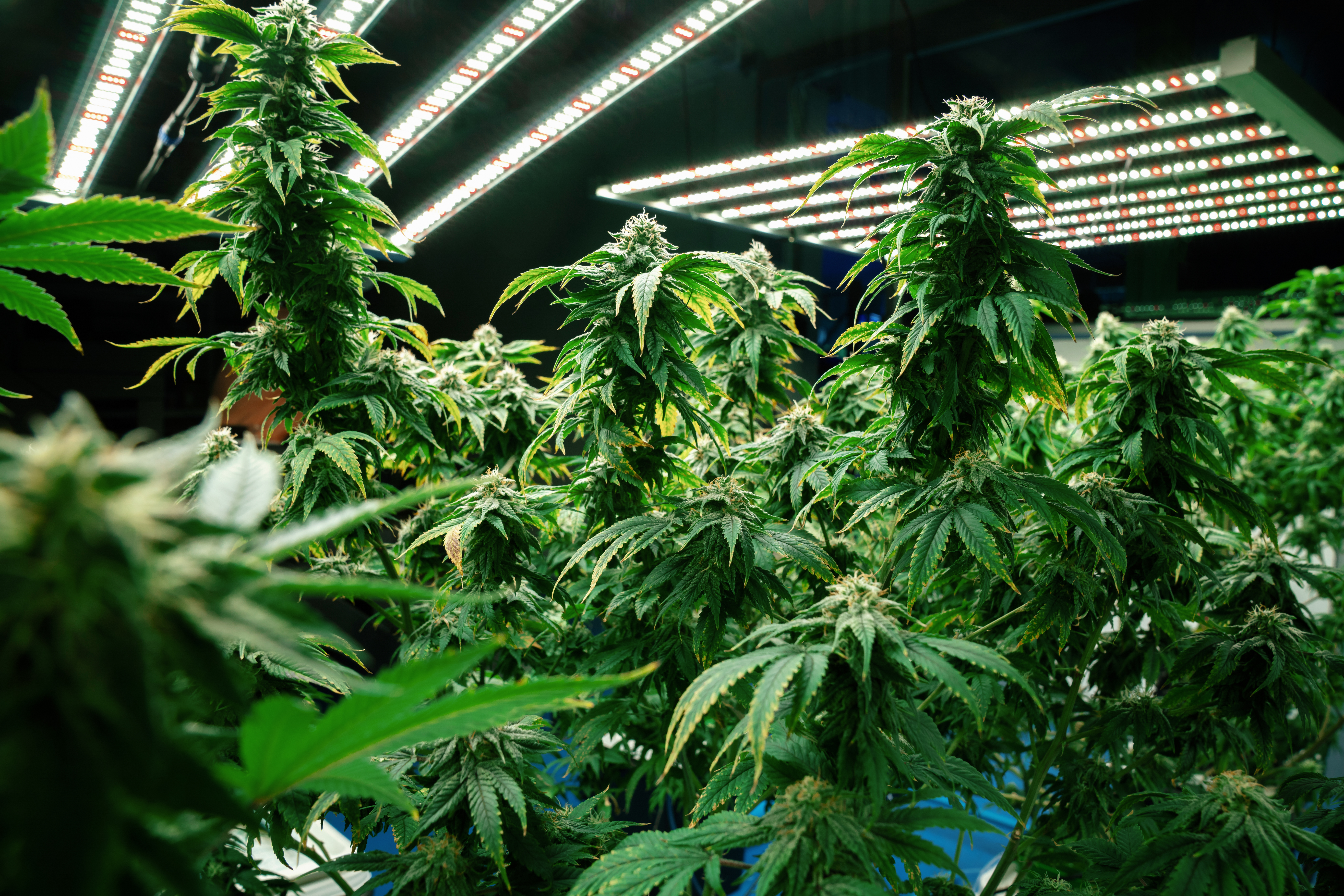


The Screen of Green method is a cannabis plant training method that many growers call SCROG or ScrOG. The main idea is simple. A grower uses a screen, net, or grid to spread plant branches across a wide, flat space. Instead of letting the plant grow straight up with one main top, the grower guides the branches outward. This helps create an even layer of green growth under the light. That flat layer is often called the canopy.
Cannabis plants naturally grow toward light. Many plants will form one main stem that becomes taller than the rest of the plant. Smaller branches may stay lower and receive less light. When this happens, the top of the plant may get strong light, while the lower parts stay shaded. The Screen of Green method is used to help solve this problem. It spreads the branches so more parts of the plant can sit at a similar height. This can help the plant receive light in a more even way.
The word “screen” in Screen of Green refers to the net or grid placed above the plant. The screen gives the grower a structure to guide the branches. The word “green” refers to the plant growth that fills the screen over time. When the method is done correctly, the plant tops can form a wide, green layer. This can make better use of the grow space, especially in indoor setups where space and light may be limited.
SCROG is often used by growers who want to control plant height. This matters because cannabis plants can stretch as they grow. Some plants grow tall very fast, and this can become a problem in a small tent, room, or cabinet. A tall plant may get too close to the light. It may also become harder to manage. The Screen of Green method helps train the plant to grow sideways instead of mostly upward. This can make the plant easier to shape and support.
Another reason growers use SCROG is to make better use of light. Grow lights have a set area they can cover well. If a plant is uneven, some parts may get too much light while other parts get very little. A flat canopy can help more growth sites sit inside the best light zone. This does not mean SCROG is magic or that it works without care. It means the method is one tool that can help growers manage the shape of the plant.
The Screen of Green method is also linked to space planning. Some growers use it when they have a small number of plants but want each plant to fill more area. This can be important in places where plant counts are limited by law. It can also matter for growers who only have a small indoor space. SCROG can allow one or a few plants to spread across a wider area. However, this method takes time. The plant must be trained with care while it grows. The screen also makes it harder to move the plant once branches have grown through or across it.
A good SCROG setup starts with planning. The grower must think about the legal rules in their area, the size of the growing space, the type of cannabis plant, and the amount of time needed for training. Cannabis laws are not the same everywhere. Some places allow home growing. Other places limit it or ban it. Rules may also cover plant numbers, growing locations, security, odor control, and age limits. Before anyone grows cannabis, they should check and follow the laws where they live.
The Screen of Green method is not only about placing a net over a plant. It is about guiding growth in a planned way. The grower must watch how the plant responds. Branches need space, light, airflow, and gentle handling. A thick canopy can block air if it becomes too crowded. Poor airflow can raise the risk of moisture problems. For this reason, SCROG works best when the grower understands basic plant care first.
This guide explains the Screen of Green method in a clear and practical way. It covers what SCROG means, how it works, how it compares with the Sea of Green method, what equipment is used, when training begins, how net height is chosen, and what mistakes to avoid. It also explains how the method may differ for photoperiod plants and autoflowering plants. The goal is to help readers understand the method before they try it, so they can make safer, more informed choices. SCROG can be useful, but it requires patience, planning, and steady attention to plant health.
What Is the Screen of Green Method?
The Screen of Green method is a plant training method used by some cannabis growers to create a wide, flat layer of plant growth. It is often called SCROG or ScrOG. The name comes from the way the plant canopy looks when it is trained across a screen. Instead of growing mostly upward in one tall shape, the plant is guided outward so the top growth spreads across a net or screen. Over time, the screen fills with green growth, which is why the method is called Screen of Green.
The main idea behind SCROG is simple. A screen, net, or grid is placed above the plant. As the plant grows, its branches are guided across the screen. This helps spread the plant out from side to side. The goal is to create an even canopy where many parts of the plant receive light at a similar level. This can be useful in indoor growing areas where light is fixed above the plants and space is limited.
SCROG is not a type of cannabis seed, strain, or growing medium. It is a training style. A grower may use it with different types of cannabis plants, as long as the grow is legal in that area and the plant has enough time and strength to respond to training. The method is often discussed in indoor growing because indoor spaces usually have clear limits on height, width, and light position.
How SCROG Changes Plant Shape
Cannabis plants naturally tend to grow upward. Many plants form a main central stem with side branches growing out from it. If the plant is left alone, the highest parts may receive the strongest light, while lower parts may sit in shade. The Screen of Green method changes this growth pattern by spreading the branches across a screen.
This wider shape can help create more top growth points across the plant. Instead of one main top standing above the rest, the plant is trained so several growing tips sit closer to the same height. This makes the canopy look more level. A level canopy is one of the main goals of SCROG because indoor grow lights usually work best when the plant tops are at a steady distance from the light.
The screen also helps manage plant height. This matters because some cannabis plants stretch as they grow. A plant that grows too tall may get too close to a light, run out of vertical space, or become harder to manage. SCROG encourages sideways growth, which may help growers use the width of the space instead of relying only on height.
Why a Screen Is Used
The screen is the main tool that makes SCROG different from simple low-stress training. It gives the grower a clear frame for shaping the plant. The screen may be made from string, plastic netting, wire grid, or another safe and stable material. The exact material can vary, but the screen should be strong enough to hold branches in place without cutting into them.
The grid openings in the screen help guide branch placement. As the plant grows, the branches can be moved into open spaces so the canopy fills out more evenly. This makes the screen both a support tool and a spacing tool. It helps keep the plant organized, especially when branches grow in different directions.
A screen also makes the grow area easier to plan. The grower can see which parts of the canopy are full and which areas still have gaps. This is one reason SCROG is often used in small indoor spaces. A flat screen gives the plant a clear area to fill. It also helps the grower avoid a crowded center with empty edges.
How SCROG Uses Light More Evenly
Light is one of the main reasons growers use the Screen of Green method. Indoor cannabis plants depend on grow lights, and those lights usually shine from above. If some branches are much taller than others, the upper parts may block light from reaching the lower parts. This can lead to uneven growth.
SCROG helps reduce this problem by spreading the canopy across the screen. More growth points sit closer to the same height. This may allow light to reach the upper surface of the plant more evenly. The result is a canopy that is easier to light and easier to inspect.
This does not mean SCROG creates results on its own. The plant still needs proper care, enough space, clean airflow, and a legal growing setup. The method only helps shape the plant so the available light can be used in a more balanced way. Good plant health remains the base of any growing method.
Where the Screen of Green Method Is Commonly Used
SCROG is most common in indoor grows, grow tents, and other controlled spaces. These areas often have limited height, fixed light positions, and a set floor area. A tall plant may not fit well in these spaces, so a wide and even canopy may be easier to manage.
Some growers also compare SCROG with other plant training methods, such as low-stress training or the Sea of Green method. SCROG is different because it uses a screen to guide the plant over time. It also often focuses on fewer plants spread across a larger area. This can be helpful in places where plant count limits are part of local law.
Legal rules are important. Cannabis growing is not allowed everywhere. Some places allow home growing, some allow it only for medical use, and others do not allow it at all. Before learning or using any growing method, readers should check the laws in their city, state, province, or country. SCROG should only be considered in places where cannabis cultivation is legal.
The Screen of Green method is a cannabis plant training method that uses a screen or net to spread branches into a flat, even canopy. It is designed to guide growth sideways, improve light coverage, and help manage plant height in limited spaces. The method does not replace basic plant care, and it does not remove the need to follow local laws. At its core, SCROG is about shaping the plant so more of its top growth can share the available light in a balanced way.
How Does SCROG Work?
The Screen of Green method works by guiding cannabis branches through a screen or net so the plant grows wide instead of tall. The screen helps spread the branches across the grow space. This creates a flat, even canopy where many parts of the plant can get light at the same level. Instead of having one main top that rises above the rest of the plant, SCROG encourages many growing tips to share the same space.
This method is often used by growers who want to manage plant height and make better use of light. It is most useful in legal grow spaces where the grower has limited room, such as a tent, small indoor room, or compact garden area. Since cannabis laws are different from place to place, growers should always check local rules before starting any grow.
SCROG does not change the plant overnight. It works over time. The grower slowly trains branches as the plant grows. The screen acts like a guide. It helps the grower decide where each branch should go. This keeps the canopy open, balanced, and easier to manage.
How the Screen Shapes the Plant
A cannabis plant will often grow upward if it is left alone. The main stem may become taller than the side branches. This can create an uneven shape. The upper parts may get strong light, while lower parts may stay shaded. SCROG helps solve this problem by spreading the plant across a screen.
When a branch reaches the screen, it can be gently guided sideways. As the branch grows, more side growth can rise through the screen. Over time, the plant fills the open spaces in the screen. The goal is to create a level layer of growth across the top.
This shape can help the plant use light more evenly. Light usually reaches the top of the plant first. When the canopy is flat, more growing tips can sit near the same light level. This may reduce wasted space and heavy shade. It can also make the plant easier to inspect because the main growth is spread out instead of crowded in one tall column.
The screen also gives support. As branches become longer and heavier, the net can help hold them in place. This is useful because trained branches may spread far from the center of the plant. The screen helps keep the plant organized as it grows.
Why Branch Tucking Matters
Branch tucking is one of the main actions used in SCROG. It means guiding branches under or across the screen instead of letting them grow straight up too early. The purpose is to move growth into empty parts of the screen. This helps fill the canopy in a more even way.
Tucking should be done with care. Branches can bend, but they can also break if handled roughly. Younger branches are often more flexible than older, woody branches. A careful grower watches how the plant responds and avoids forcing any branch into a sharp bend.
The idea is not to damage the plant. The idea is to guide it. Each time a branch grows above the screen, it can be moved toward an open square or open space. As new tops grow upward, they begin to form the green layer that gives this method its name.
Tucking also helps stop one part of the plant from taking over the canopy. If one branch grows much taller than the rest, it can block light and make the canopy uneven. Guiding that branch sideways gives other branches a chance to catch up. This creates a more balanced plant structure.
How SCROG Uses Light More Evenly
Light is one of the main reasons growers use the Screen of Green method. In many indoor grow spaces, the light comes from above. This means the top of the plant receives the most light. Lower parts may receive less light, especially if the plant is thick or tall.
A flat canopy can help more growth sites receive steady light. When many tops are spread across the same height, each one has a better chance of getting direct light. This can support more even growth across the plant.
SCROG can also help prevent empty spaces in the grow area. Without training, a plant may grow in a narrow shape. This can leave unused space around it. With SCROG, branches are guided outward so they cover more of the available area. The grow space becomes more organized because the plant is trained to match the shape of the screen.
This does not mean that SCROG removes the need for good plant care. The plant still needs proper watering, airflow, spacing, and a clean growing area. A thick canopy can trap moisture if it is not managed well. That is why growers often pay close attention to airflow and plant health when using this method.
The Role of Vegetative Growth and Flowering
SCROG is usually built during the vegetative stage. This is the stage when the plant is growing leaves, stems, and branches. During this time, the plant is easier to shape because it is focused on growth. The screen can be filled slowly as the branches spread.
Once the plant moves into flowering, it may still stretch for a time. This means it can keep growing taller even after the flowering stage begins. Because of this, growers often plan the screen with some extra space in mind. If the screen is filled too much before flowering, the canopy may become crowded later. If it is not filled enough, the grower may not use the full space.
The timing depends on the plant type, growth speed, and grow space. Photoperiod cannabis plants give growers more control over when flowering begins. Autoflowering plants follow their own life cycle, so they often allow less time for training. For that reason, SCROG with autoflowers is usually gentler and needs earlier planning.
During flowering, heavy training is usually reduced. The main goal becomes keeping the canopy healthy, supported, and open enough for light and airflow. At this stage, the screen is more of a support system than a training tool.
The Screen of Green method works by using a screen or net to guide cannabis branches into a wide, even canopy. It helps the plant grow across the space instead of only growing upward. The screen supports the branches, helps manage height, and allows more growing tips to receive light at a similar level.
SCROG depends on steady care, gentle branch guidance, and good timing. It is not just about placing a net over the plant. The grower must watch how the plant grows and guide it as needed. When done correctly in a legal grow space, SCROG can make a plant easier to manage and can help use space and light more efficiently.
SCROG vs SOG: What Is the Difference?
SCROG stands for Screen of Green. It is a cannabis training method that uses a screen, net, or grid to spread the plant’s branches across a flat space. The main goal is to create an even canopy. A canopy is the top layer of plant growth that receives the most light. When the canopy is flat and even, more branches can get strong light at the same time.
In a SCROG setup, growers usually work with fewer plants. Instead of letting each plant grow tall in its natural shape, the branches are guided outward. This helps fill the screen with many growing points from the same plant or from a small number of plants. The method is often used in indoor growing because indoor space is limited. It can also help when a grower needs to control plant height.
SCROG is more hands-on than some other growing methods. It takes time because the plant must grow enough branches to fill the screen. The grower also needs to check the canopy often so that one area does not grow much taller than the rest. For this reason, SCROG is often seen as a method for growers who have patience and want more control over plant shape.
What SOG Means
SOG stands for Sea of Green. It is different from SCROG because it usually uses many smaller plants instead of a few larger trained plants. The goal of SOG is to create a full canopy quickly. Each plant stays smaller, but together they form a wide “sea” of green growth.
In a SOG setup, the plants are placed close together. Since each plant does not need to grow very large, the vegetative stage is often shorter than it is in SCROG. This means the plants spend less time growing leaves and branches before they move into the flowering stage. The method can be useful for growers who want a faster crop cycle, but it often depends on having more plants.
This is one of the biggest differences between SOG and SCROG. SOG may need a higher plant count, while SCROG can often be done with fewer plants. This matters because many places have strict rules about how many cannabis plants a person may grow. Before choosing either method, growers should check local laws and understand plant limits in their area.
Plant Count and Space Use
Plant count is one of the first things to compare when looking at SCROG and SOG. SCROG usually makes better use of fewer plants by spreading each plant across a screen. This can help a grower fill a small grow area without using many plants. It can also be useful where legal plant limits are low.
SOG takes the opposite approach. Instead of training a few plants to fill the space, it uses more small plants to fill the area faster. Each plant only needs to take up a small part of the canopy. This can save time, but it may not be a good fit for growers who must stay under a low plant limit.
Both methods are designed to use space well. SCROG uses space by spreading branches sideways. SOG uses space by placing more plants close together. The better choice depends on the grower’s legal limits, room size, and comfort level with plant care.
Time and Training Differences
SCROG usually needs more training time. The screen must be filled in a planned way, and the branches need regular attention while the plant grows. This can make the vegetative stage longer. A grower may wait until enough of the screen is filled before allowing the plant to move into its next stage of growth.
SOG often needs less training. Since the plants stay smaller and are grown close together, the grower does not need to guide long branches across a screen. This can make SOG easier in some ways. However, more plants can also mean more work in other areas, such as watering, checking plant health, and managing the grow space.
The time difference is important. SCROG may take longer at the start, but it gives more control over the canopy. SOG may move faster, but it often depends on managing more individual plants. Neither method is automatically better. They simply solve different growing problems.
Canopy Shape and Light Exposure
Both SCROG and SOG aim to improve light use, but they do it in different ways. SCROG creates a flat canopy by spreading branches across a screen. This helps keep many growth points at a similar height. When the canopy is even, light can reach more of the upper plant area.
SOG creates a full canopy by using many small plants. Instead of one plant producing many trained branches, each plant adds its own top growth to the canopy. Together, these tops make a dense layer of green growth. This can also improve light use, but it depends on even plant size and spacing.
Light exposure is a key reason growers compare these methods. Indoor grow lights have a limited reach. If plants grow too tall or uneven, some parts get strong light while others stay shaded. SCROG helps solve this by spreading growth flat. SOG helps solve it by keeping many plants small and close to the same height.
Which Method Is Better for Beginners?
SCROG may be better for beginners who want to learn plant training and do not want to manage many plants. It teaches growers how branches grow, how the canopy forms, and how light affects plant shape. However, it does require steady attention. If the screen is ignored for too long, the canopy can become uneven.
SOG may seem simpler because it needs less branch training. But it can be harder if the grower is not ready to care for many plants at once. More plants can mean more chances for problems to spread if airflow, moisture, or plant health is not managed well.
A beginner should choose the method that fits their space, legal limits, and comfort level. A small legal grow with limited height may fit SCROG better. A grower who can legally manage more plants and wants a faster canopy may study SOG. The safest choice is the method that the grower can manage well and legally.
SCROG and SOG are both canopy methods, but they are not the same. SCROG uses a screen to spread fewer plants across a wider area. It takes more training and often a longer vegetative period, but it gives strong control over plant shape and height. SOG uses more small plants placed close together. It can create a full canopy faster, but it often needs a higher plant count and careful plant management.
The main difference comes down to strategy. SCROG focuses on training fewer plants. SOG focuses on filling space with more plants. Before choosing either method, growers should think about local cannabis laws, plant limits, grow space, time, and how much daily care they can give. Both methods can be useful, but the best choice depends on the grower’s situation and ability to manage the plants responsibly.
Why Growers Use the Screen of Green Method
The Screen of Green method is used because it helps growers shape plants into a wide and even canopy. Instead of letting one main stem grow much taller than the rest of the plant, SCROG spreads branches across a screen or net. This can make the plant easier to manage in a small space. It can also help more parts of the plant receive light at the same level.
Many indoor growers look for this method because space and light are often limited. A grow room, tent, or cabinet may not have much height. A strong light may cover only a set area. When a plant grows tall and narrow, some parts may get too much light while lower areas stay shaded. SCROG helps solve this problem by guiding the plant outward. The result is a flatter plant shape with more growth spread across the lighted area.
Before using SCROG, growers should also understand local cannabis laws. Rules about cannabis growing are different from place to place. Some areas allow home growing. Other areas limit plant numbers, plant size, or growing location. Some places do not allow it at all. Because of this, any grow method should only be used where it is legal.
Better Use of Light
One major reason growers use SCROG is to make better use of light. Cannabis plants need light to support healthy growth. In a normal upright plant, the top may receive strong light, while the lower parts receive much less. This can lead to uneven growth. The top may grow fast, but the lower branches may stay weak or shaded.
SCROG spreads the branches across a screen so more tops sit close to the same height. This helps the light reach more of the active growth. A flatter canopy can make the lighted area more useful because fewer branches are hidden below the top layer. It may also help reduce wasted space under the light.
This does not mean SCROG creates results by itself. Light strength, plant health, air movement, watering, and nutrition still matter. The screen is only a tool. It helps place the plant where the light can reach it better. For indoor growers, this is one of the main reasons the method is popular.
More Even Canopy Growth
SCROG is also used to create an even canopy. A canopy is the top layer of plant growth. When the canopy is uneven, tall branches may block light from shorter ones. This can create weak growth below the top layer. It can also make the plant harder to manage because some areas grow faster than others.
The screen helps guide branches into open spaces. This gives the plant a wider shape. It also helps reduce crowding in one small area. When the branches are spread out, each section has more room to grow. This can support a more balanced plant structure.
An even canopy can also make plant care easier. It is simpler to inspect the top growth when branches are not stacked on top of each other. The grower can see changes in leaf color, branch shape, and general plant health more clearly. This can help problems be noticed earlier, before they spread across the plant.
Better Height Control
Height control is another common reason growers use the Screen of Green method. Indoor growing spaces often have a set ceiling height. The plant, container, light, and safe distance from the light all take up space. If the plant grows too tall, it may get too close to the light. This can cause heat stress or light stress, depending on the setup.
SCROG helps by training the plant to grow sideways instead of straight up. The screen gives the grower a way to guide tall branches back into the canopy. This can keep the plant shorter and wider. It may be useful for growers who have limited vertical space.
This is especially important with cannabis plants that stretch during the early flowering stage. Some plants can grow much taller after the light cycle changes or after flowering begins. SCROG gives the grower a structure for managing that stretch. It helps keep the canopy more level while the plant changes from vegetative growth to flowering growth.
Efficient Use of Small Grow Spaces
Many growers use SCROG because it can make a small grow space more efficient. A small tent or indoor area may not have enough room for many large plants. SCROG can help one or a few plants fill the available area more evenly. This can be useful in places where legal plant limits are low.
Instead of placing many plants in the same space, a grower may train fewer plants to cover the screen. This can make the growing area look fuller without increasing plant count. It can also make the space easier to organize because the plants are trained into one flat layer.
However, SCROG takes time. It usually needs more planning than simply letting a plant grow naturally. The grower must set up the screen, watch branch growth, and guide the canopy as it fills. This makes the method useful for growers who are patient and willing to check plants often.
Improved Airflow and Plant Access When Planned Well
A good SCROG setup can also help with airflow and access, but only if it is planned well. A flat canopy can make it easier for air to move across the top of the plant. Better airflow may help reduce damp, still areas around leaves. This matters because crowded leaves and poor air movement can raise the risk of plant health problems.
Access is also important. A screen that is too crowded or too hard to reach can make plant care difficult. Growers need space to water, inspect leaves, check branches, and remove dead or damaged growth when needed. If the plant is trapped behind a screen with no access, simple care tasks may become harder.
For this reason, SCROG is not only about putting a net over a plant. The grower must think about the full space. The screen, plant, container, light, and walking or reaching space should work together. A well-planned setup can make care easier. A poor setup can make care more difficult.
Why SCROG May Not Be Best for Every Grower
SCROG has benefits, but it is not the best choice for every grower. It takes more time than some other growing styles. The plant needs regular attention while the canopy is being shaped. If a grower cannot check the plant often, the branches may grow unevenly through the screen. This can make the canopy harder to fix later.
SCROG can also make plants harder to move. Once branches are woven or guided through a screen, the plant may be locked into place. This can be a problem if the grower needs to move the plant for cleaning, inspection, or safety reasons. It is important to plan before the screen fills up.
Beginners may also find SCROG more complex than basic low-stress training. It requires patience and careful timing. Still, many growers choose it because it gives them a clear way to manage shape, height, and light coverage. The method can be simple in concept, but it works best when the grower pays close attention to plant growth.
The Screen of Green method is used because it can help growers make better use of light, control plant height, and create a wider, more even canopy. It is often helpful in indoor spaces where light coverage and vertical height are limited. It may also help growers with legal plant limits make better use of fewer plants, as long as home growing is allowed in their area.
SCROG is not a no-work method. It needs planning, steady care, and enough access to the plant. The screen should support the plant without making care harder. For growers who want a more controlled canopy and are willing to spend time guiding plant growth, SCROG can be a useful method to understand.
What Equipment Is Needed for a SCROG Setup?
A Screen of Green setup does not need to be complex, but it does need to be planned well. The main goal of SCROG is to guide cannabis branches across a screen so the plant forms a flat and even canopy. Because of this, the screen is the most important part of the setup. Still, the screen is only one piece of the system. A grower also needs the right frame, growing space, containers, lighting, plant support, and room to reach the plant for care. Each item has a clear purpose. When these parts work together, the plant is easier to train, inspect, and manage.
Before setting up any cannabis grow, it is important to understand local laws. Cannabis growing rules are different from one place to another. Some areas allow home growing, while others limit plant numbers or do not allow it at all. A SCROG setup should only be used where cannabis growing is legal and allowed.
The Screen or Net
The screen or net is the main tool in the Screen of Green method. It gives the plant a structure to grow across instead of growing straight upward. As the branches reach the screen, they can be guided into open spaces. This helps spread the plant across a wider area. The goal is to create a level canopy where many growth points receive light.
A SCROG screen is often made from garden netting, string, plastic mesh, wire mesh, or a framed grid. The material should be strong enough to hold branches in place without cutting into them. Soft netting can be gentle on branches, but it may stretch or sag if it is not supported well. A firmer grid may hold its shape better, but it should not have sharp edges. Any rough or sharp material can damage stems as the plant moves and grows.
Grid size also matters. The openings should be large enough for branches to pass through, but not so large that the screen fails to guide the plant. A common goal is to have spaces that make it easy to spread branches evenly. The exact size can depend on the plant, the grow area, and the type of screen used. The screen should make training easier, not harder.
The Frame and Support System
A SCROG screen needs a stable frame or support system. The frame keeps the screen tight and level. Without a firm frame, the screen may sag when the plant becomes heavier. A sagging screen can make the canopy uneven. It can also make plant care more difficult.
The frame can be made from wood, metal, PVC pipe, or another strong material. The best choice depends on the size of the grow space and what materials are easy to use. The frame should fit the growing area without blocking access to the plant. It should also be steady enough to stay in place during watering, pruning, and regular checks.
Some growers use a fixed screen that stays in one place. Others use a screen that can be lifted or adjusted. A fixed screen can be simple and strong, but it may make it harder to move plants later. An adjustable screen can offer more control, but it must still be secure. The most important point is that the frame should hold the screen flat and steady during the full grow cycle.
Containers and Growing Medium
The container holds the plant and gives the roots room to grow. In a SCROG setup, the container should be placed before the screen becomes full. Once branches are trained through the screen, moving the plant can be difficult. This is why container choice and placement should be planned early.
The container should match the size of the plant and the grow space. A larger plant usually needs more root space than a smaller plant. Good drainage is also important. If water sits in the container for too long, roots can become stressed. Drainage holes help extra water leave the container. A saucer or tray may be used to catch runoff, but standing water should not be left around the roots.
The growing medium may be soil, coco coir, or another legal growing medium. Each type holds water and nutrients in a different way. The grower should understand how the chosen medium behaves before starting. In a SCROG setup, plant access may become harder as the screen fills, so simple and steady plant care is important.
Lighting and Space Planning
Light is one of the main reasons growers use SCROG. The screen helps create a flat canopy so more growth points can sit at a similar height. This makes it easier for light to reach the plant evenly. A good SCROG setup should match the screen size to the light coverage area.
If the screen is much wider than the light can cover, the edges of the canopy may receive weaker light. If the screen is too small, the grower may not get the full benefit of spreading the plant. The light should be placed so it covers the canopy without causing heat stress or light stress. The correct distance depends on the type of grow light, the strength of the light, and the plant’s stage of growth.
Vertical space is also important. SCROG is often used when grow height is limited, but the plant still needs enough room above the canopy. Space is needed for the screen, the plant, the light, and safe distance between the light and the plant tops. Planning this space before training begins can prevent problems later.
Plant Ties and Gentle Training Tools
Some branches may need help staying in place as they are guided across the screen. Soft plant ties can be useful for this. They can hold branches gently without cutting into the stem. Twist ties, garden wire, or string may be used only if they are not too tight. Anything that squeezes the stem can cause damage as the branch grows thicker.
Gentle handling is important. The goal of SCROG is to guide growth, not force it. Branches should be moved slowly and carefully. If a branch feels stiff, it may not be ready to bend far. Trying to move it too much at once can cause breaks. A good setup gives the grower enough room to reach the plant and train it with care.
Small pruning tools may also be part of the setup, but they should be clean and sharp. Clean tools lower the risk of spreading disease or causing rough cuts. Pruning should be done with a clear reason, such as improving airflow or removing weak growth that receives little light.
Access for Watering, Inspection, and Airflow
One of the most common SCROG setup problems is poor access. Once the plant grows into the screen, it becomes harder to move. This means the grower must be able to water, inspect, and care for the plant without needing to pull it out of place.
The setup should leave enough room around the plant to reach the container and check the canopy. It should also allow the grower to inspect the lower parts of the plant. A dense canopy can hold moisture if airflow is poor. Good airflow helps reduce damp spots and supports healthier growth. Fans may be used in indoor spaces, but air should move gently. Strong wind can stress the plant or dry it too quickly.
Access also matters for cleaning. A grow area should be kept tidy. Dead leaves, spilled growing medium, and standing water can create problems. A clean space is easier to manage and inspect. Since SCROG can create a thick canopy, regular checks are important.
A SCROG setup needs more than a simple net. It needs a strong screen, a stable frame, proper containers, enough light coverage, gentle training tools, and space for care. Each part helps the plant grow into an even canopy. The screen guides the branches, the frame keeps the structure steady, and the grow space supports daily plant care. Good planning is especially important because the plant becomes harder to move once it grows into the screen. A simple and well-built setup can make SCROG easier to manage, safer for the plant, and more useful in a limited growing space.
When Should You Start SCROG Training?
Timing is one of the most important parts of the Screen of Green method. SCROG is not just about placing a net over a cannabis plant. It is about guiding the plant while it is still young enough to bend and shape. The goal is to spread the branches across the screen before the plant becomes too tall, stiff, or hard to manage.
Growers often ask when to start SCROG because starting too early or too late can cause problems. A plant that is too young may not have enough branches to train across the screen. It may also be too weak to handle much movement. A plant that is too mature may have thick stems that are harder to bend without damage. This is why SCROG timing should be based on plant growth, not only on the number of days since planting.
The best time to begin SCROG training is usually during the vegetative stage. This is the part of the growth cycle when the plant is building stems, leaves, and branches. During this stage, the plant has time to recover from light training and keep growing into the screen. The grower can guide the branches across open parts of the net and shape the canopy before flowering begins.
Start When the Plant Has Enough Healthy Growth
A cannabis plant should have strong, healthy growth before SCROG training starts. The plant should look stable, green, and active. It should have several branches that can be guided sideways. The branches should be flexible enough to bend without snapping. This gives the grower more control over the shape of the canopy.
A weak or stressed plant is not a good choice for early training. If the leaves are yellowing, curling, drooping, or showing signs of stress, it is better to fix the health issue first. Training a stressed plant can slow growth even more. SCROG works best when the plant is already growing well.
The screen should be introduced when the plant is close enough to reach it soon. If the screen is placed too high, the plant may grow upward too long before training begins. If it is placed too low, there may not be enough space to care for the plant under the canopy. The screen should allow room for watering, checking the soil or growing medium, and removing weak lower growth when needed.
Photoperiod Plants Give More Time for Training
Photoperiod cannabis plants are often easier to use with the Screen of Green method because the grower has more control over the timing of flowering. These plants stay in the vegetative stage while they receive longer periods of light each day. This gives the grower more time to fill the screen before changing the light schedule for flowering.
This extra time is helpful because SCROG depends on steady canopy shaping. The grower can guide new branches across empty spaces in the screen. Over time, the plant spreads outward instead of growing straight up. Once enough of the screen is filled, the plant can be moved into flowering if local laws allow the grower to cultivate cannabis.
The screen does not need to be completely full before flowering starts. Many growers aim for a mostly filled screen because cannabis plants often stretch after flowering begins. Stretch means the plant grows taller during the early flowering stage. If the screen is already too full before this stretch, the canopy may become crowded. Crowding can block light and reduce airflow.
Autoflowers Need Earlier and Gentler Planning
Autoflowering cannabis plants can be used with SCROG, but they need more careful timing. Autoflowers do not wait for a change in the light schedule before they flower. They begin flowering based on age. This means the grower has less time to train them before they move into the next stage.
Because of this short life cycle, training should be gentle and well planned. Heavy bending, late training, or repeated stress can slow the plant at the wrong time. An autoflower does not have the same long recovery window as a photoperiod plant. If the plant is slowed too much, it may begin flowering before it has filled the screen.
For autoflowers, the best approach is usually to start only when the plant is strong and growing fast. The training should focus on guiding soft branches rather than forcing stiff stems into place. The goal is still to create an even canopy, but the process should be less aggressive. Healthy growth matters more than trying to fill every part of the screen.
Watch the Plant Before Flowering Begins
The time to start SCROG is closely tied to the time before flowering. The plant should be trained while it is still able to grow into the screen. Once flowering begins, the focus changes. The grower should avoid major stress and should focus more on keeping the canopy even, open, and healthy.
During early flowering, some light guiding may still happen because the plant may stretch. This is often the last chance to shape the canopy. After the main stretch slows down, the plant should be left more stable. At that point, too much bending or moving can disturb flower development.
A good sign that SCROG timing is working is an even canopy. Most of the main growth should sit close to the same height. Light should reach the top layer of the plant in a balanced way. Branches should not be stacked on top of each other, and the center of the plant should not be too crowded. Good airflow is important because a dense screen can hold moisture if it is not managed well.
SCROG training should usually begin during the vegetative stage, when the cannabis plant is healthy, strong, and flexible enough to guide across the screen. The right time depends on plant size, branch growth, plant type, and available space. Photoperiod plants often give growers more time to train because flowering can be delayed until the screen is mostly filled. Autoflowers need earlier and gentler planning because they flower on their own schedule. The main goal is to shape the plant before flowering becomes the main focus. A strong start, steady growth, and an even canopy will make the Screen of Green method easier to manage.
How High Should a SCROG Net Be?
The height of a SCROG net is important because it shapes how the plant grows. The screen is not just a support tool. It is the guide that helps turn tall upward growth into a flat and even canopy. When the net is placed at the right height, the branches have enough room to grow up, reach the screen, and spread across it. This helps more parts of the plant receive light at the same level.
A SCROG net that is too low may make plant care harder. The grower may not have enough space to water, inspect the base of the plant, or remove weak lower growth. A very low net may also crowd the plant before it has enough branch strength. This can lead to bent stems, tight growth, and poor airflow under the screen.
A net that is too high may cause a different problem. The plant may grow tall before it reaches the screen. This can waste vertical space and make the canopy harder to control. The lower parts of the plant may become shaded before the branches are trained across the net. This is why net height should be planned before training begins.
Common SCROG Net Height Ranges
There is no single perfect height for every SCROG setup. Many growers place the net around 8 to 12 inches above the top of the container or growing medium. Some setups may use a higher screen, such as 12 to 18 inches, when the plant is larger, the container is taller, or more room is needed under the canopy.
These ranges are only general guides. The best height depends on the size of the grow space, the plant type, the light setup, and how much access is needed below the screen. A small indoor grow tent may need a lower screen because vertical space is limited. A larger room may allow the screen to sit higher.
The goal is to place the net where the branches can reach it while the plant is still easy to manage. The plant should not need to stretch too far before training begins. It should also not be so close to the screen that the grower cannot work around it.
Plant Size and Growth Style
Plant size is one of the biggest factors in choosing net height. A short, bushy plant may reach a low screen more easily. A taller plant with longer spacing between nodes may need a higher screen, or it may need earlier training before it grows too tall.
Different cannabis varieties grow in different ways. Some grow compact and wide. Others grow tall and fast. A plant with strong side branches may work well with a lower screen because those branches can be guided outward early. A plant that grows tall with fewer side branches may need more time before it fills the screen.
Growth speed also matters. Fast-growing plants may reach the net quickly. If the net is too high, the plant may stretch upward before the grower can shape it. Slower-growing plants may take longer to reach the screen, so the grower may need to be patient and avoid forcing branches too early.
Container Size and Grow Space
The container affects the final net height because it raises the plant base. A tall pot or deep container already adds height to the setup. This matters in grow tents or small indoor rooms where every inch of vertical space counts.
The grower should think about the full height of the setup, not just the screen. The total height includes the container, the plant, the screen, the canopy above the screen, and the safe distance from the grow light. If the screen is too high, the plant may run out of room during flowering stretch.
Access is also important. The grower needs enough space to reach the lower part of the plant. Watering, checking the stem, looking for pests, and cleaning fallen leaves all become harder if the screen is too low. A good SCROG setup should leave enough room under the screen for basic care.
Light Distance and Canopy Control
Light distance is another reason net height matters. The main goal of SCROG is to create an even canopy. When the canopy is flat, the light can reach more tops at a similar strength. This helps reduce shaded areas and supports steady growth across the screen.
The screen should be low enough to control plant height, but high enough to let the plant build strong branches. During flowering, many cannabis plants stretch upward. This means the canopy may rise after the screen is mostly filled. Growers should leave space above the screen for this stretch and for the required distance between the canopy and the grow light.
A crowded grow space can make light control difficult. When the net sits too high, the canopy may end up too close to the light. This may increase heat stress or light stress. When the net sits too low, the plant may become packed and hard to shape. The best height gives the plant room to spread while keeping the canopy within a safe light range.
Adjusting Net Height Before Training
The net should be stable before major training begins. A loose screen can shift when branches are tucked or guided. This can damage stems or make the canopy uneven. A firm frame or tight net helps keep the layout steady.
Some growers use adjustable nets or frames. This can help during setup, but it is better to choose the height carefully before the screen fills. Once branches grow through the net, moving it becomes much harder. Raising or lowering the screen after training begins can stress the plant and may break branches.
The grower should test the setup before the plant reaches the screen. There should be space to reach the plant from the front, sides, or back if possible. The net should also be wide enough for the plant to spread without crowding the edges too soon.
A SCROG net should be placed high enough to allow plant care, but low enough to guide the branches before the plant grows too tall. Many growers use a range of about 8 to 12 inches above the container or growing medium, but this is not a fixed rule. The right height depends on plant size, container height, grow space, light distance, and the amount of access needed below the screen.
How Long Should Plants Stay in Vegetative Growth Before Flowering?
Vegetative growth is the stage when a cannabis plant builds its roots, stems, and branches before it begins to flower. In a Screen of Green setup, this stage is very important because the plant needs enough time to spread across the screen. The goal is not only to grow a tall plant. The goal is to create a wide, even canopy with many strong growing points.
In a normal grow, a plant may be allowed to grow upward with less training. In SCROG, the grower guides the branches sideways across the screen. This takes time because the branches need to grow long enough to reach open spaces in the net. The plant also needs time to recover from gentle training and keep producing healthy new growth.
There is no single number of days that works for every SCROG grow. Some plants grow fast, while others grow slowly. Some screens are small, while others are wide. A plant in a small tent may fill its screen faster than a plant in a larger space. A strong plant with healthy roots may also grow faster than a stressed plant. For this reason, vegetative time should be based more on plant growth and screen coverage than on a fixed calendar date.
How Screen Size Affects Vegetative Time
Screen size is one of the biggest factors that affects how long the vegetative stage should last. A small screen can be filled faster because the plant does not need to spread as far. A larger screen takes more time because the branches must cover more space.
When one plant is used to fill a large screen, the vegetative stage may need to be longer. The plant must grow enough branches to reach many areas of the net. When several plants are used under one screen, each plant may only need to cover part of the space. This can reduce the time needed before flowering.
The goal is to avoid large empty spots in the screen. Empty areas mean light is not being used well. At the same time, the screen should not be packed too tightly before flowering starts. Cannabis plants often stretch after the flowering stage begins. This means they can keep growing taller and wider for a short time after the light schedule changes. If the screen is already too full before flowering, the canopy may become crowded.
A crowded canopy can block airflow and light. It can also make it harder to inspect the plant. This may raise the risk of moisture problems or hidden damage. A good SCROG setup leaves enough space for the plant to finish stretching without turning into a thick, tangled mass.
When to Switch From Vegetative Growth to Flowering
Many growers think about switching to flowering when the screen is mostly filled. This does not mean every single square must be covered. It means the main branches have spread across much of the net and the canopy is close to even.
A common idea is to switch before the screen is completely full, because the plant may continue to stretch during early flowering. The right timing depends on how much the plant is expected to stretch. Some plants stretch a lot after flowering begins. Others stay shorter and more compact. Plants that stretch more may need to be switched earlier. Plants that stretch less may need a longer vegetative stage to fill the screen.
The plant’s health also matters. A weak or stressed plant should not be rushed. If the leaves look pale, droopy, burned, or damaged, it may be better to correct the problem before moving into flowering. Flowering takes a lot of energy. A plant that enters flowering while stressed may have a harder time forming healthy flowers.
The shape of the canopy is another sign to watch. The canopy should be fairly even before flowering begins. If some branches are much taller than others, they may block light from the lower parts of the plant. SCROG works best when the branches are spread out so each top gets strong light. A level canopy helps the plant use the grow light more evenly.
Photoperiod Plants and Vegetative Timing
Photoperiod cannabis plants give the grower more control over the length of the vegetative stage. These plants usually begin flowering when the light schedule changes. This gives the grower more time to train the plant across the screen before flowering starts.
Because of this control, photoperiod plants are often used for SCROG. The grower can wait until the screen has enough coverage before changing the light cycle. This is helpful when the goal is to fill a wide screen or manage a small number of plants.
Still, more vegetative time is not always better. A plant that stays in vegetative growth for too long can become too large for the space. The branches may grow thick and harder to move. The screen may also become too full before flowering stretch begins. This can make the canopy hard to manage.
The best timing is a balance. The plant should be large enough to fill the screen well, but not so large that it becomes crowded. A grower should think about the full size of the plant, not just the size it is on the day flowering begins.
Autoflowers and Vegetative Timing
Autoflowering cannabis plants are different because they flower based on age, not on a light schedule change. This means the grower has less control over when flowering starts. The vegetative stage is usually shorter, so there is less time to fill a screen.
For this reason, SCROG with autoflowers must be planned with care. Gentle training is usually more important than heavy training. Since the plant may begin flowering on its own, there may not be enough time for long recovery periods. A grower cannot simply extend the vegetative stage to fill more of the screen.
Autoflowers may still be used with a screen, but the goal should be realistic. The screen may help support branches and spread the canopy, but it may not fill as fully as a photoperiod SCROG. Trying to force too much training into a short time can stress the plant. A simple and gentle approach is often better.
Other Signs That the Plant Is Ready
Screen coverage is important, but it is not the only sign. A plant should also look healthy and strong before flowering begins. The leaves should have good color. The stems should be firm enough to support new growth. The branches should be placed in a way that lets light reach the canopy.
The root zone should also be stable. If the plant has recently been moved to a new container, it may need time to settle before flowering. If watering problems, pest issues, or nutrient problems are present, those should be handled first. Flowering is not the best time to fix major plant stress.
Access is another point to consider. Before flowering starts, the grower should be able to reach the plant for watering, pruning, and inspection. Once the screen fills in, moving the plant can be hard. The SCROG setup should be arranged so the plant can still be cared for during the rest of the grow.
The right vegetative time for SCROG depends on screen size, plant type, growth speed, and the amount of canopy coverage. Instead of following one exact number of days, growers should look at how well the plant has filled the screen and how healthy it is. Photoperiod plants allow more control because the grower can choose when to start flowering. Autoflowers give less time, so they need a gentler and more limited approach.
A good SCROG plant should enter flowering with a mostly filled screen, an even canopy, and strong overall health. The screen should not be too empty, but it should also not be too crowded. Leaving space for early flowering stretch helps protect airflow, light spread, and plant access. In the end, the best time to flower is when the plant is ready to finish filling the screen without becoming hard to manage.
Can Autoflowers Be Grown With SCROG?
Autoflowering cannabis plants may be grown with the Screen of Green method, but they need a more careful plan than photoperiod plants. The main difference is time. A photoperiod plant stays in the vegetative stage until the light schedule changes. This gives the grower more control over how long the plant grows before flowering starts. With this type of plant, a grower may keep training the branches until the screen is partly or mostly filled.
Autoflowering plants work in a different way. They begin flowering based on age, not on a change in light schedule. This means they have a shorter and more fixed growth cycle. Once the plant starts to flower, there is less time to shape it. If training starts too late, the plant may not have enough time to recover or fill the screen well.
This is why SCROG with autoflowers should be simple and gentle. The goal is not to force the plant into a large screen. The goal is to help the plant spread out enough so more bud sites can receive light. Autoflowers may still benefit from a more even canopy, but the grower has less room for mistakes.
Why SCROG May Work With Autoflowers
The Screen of Green method may work well with autoflowers when it is used in a light and careful way. Since many autoflower plants stay shorter than large photoperiod plants, a screen may help organize their growth in a small space. It may also help keep branches from growing too close together. When branches are spread across a screen, more of the plant can receive direct light.
This can be useful in indoor grows where space is limited. A flat canopy can make it easier for the light to reach several growing points at once. It may also help the grower manage plant height, especially when the light must stay a safe distance from the top of the plant. If one branch grows much taller than the others, it can shade the rest of the plant. A screen can help guide that branch to the side, so the canopy stays more even.
Still, autoflowers should not be pushed too hard. They do not have a long vegetative stage. If the plant is stressed, slowed down, or damaged, it may move into flowering before it has recovered well. This can affect plant size and growth. For this reason, growers should think of autoflower SCROG as light support and shape control, not heavy training.
When to Start SCROG With Autoflowers
Timing is very important when using SCROG with autoflowers. Training should begin only after the plant is healthy and has enough branch growth to guide. A very young seedling should not be forced into a screen. At that stage, the roots and main stem are still developing. Too much stress too early may slow the plant.
Once the plant has several sets of leaves and begins to grow side branches, the grower may start guiding growth in a gentle way. The screen should be placed low enough that branches can reach it without being stretched or bent too sharply. The branches should be moved slowly and carefully. The purpose is to guide them sideways as they grow, not to snap or crush them.
The best time to shape an autoflower is during early vegetative growth. This is the short period when the plant is building size and structure. Once flowers begin forming, training should become much lighter. At that point, the plant should spend most of its energy on flowering. Moving branches too much during flowering may cause stress and may also damage young flower sites.
How Gentle Training Helps Autoflowers
Gentle training matters because autoflowers have less recovery time. A photoperiod plant may be given more vegetative time after stress. An autoflower usually cannot. It keeps moving through its life cycle. This is why many growers avoid hard training methods on autoflowers, especially late in growth.
With SCROG, gentle training means guiding branches through the screen with care. The grower should avoid sharp bends. Branches should be moved a little at a time. If a branch does not bend easily, it should not be forced. Healthy growth is more important than filling every square of the screen.
The screen should also be easy to reach. If the plant is hard to access, it becomes harder to water, check leaves, remove dead growth, and inspect for pests or disease. A dense screen may look full, but it can create problems if air cannot move through the plant. Good airflow helps reduce moisture buildup around leaves and flowers. This is important because dense growth can trap humidity.
A gentle SCROG setup should support the plant while still leaving space for care. The screen should not become a barrier that makes the plant difficult to manage.
Common Problems When SCROG Is Used With Autoflowers
One common problem is starting too late. If the plant has already begun flowering, there may not be enough time to spread it across the screen. Late training may also disturb early flower growth. Another problem is using a screen that is too large for the plant. Autoflowers may not fill a big screen the same way a long-vegetating photoperiod plant can. A smaller screen or partial screen may work better.
Another issue is placing the screen too high. If the screen is too far above the plant, the branches may not reach it soon enough. If it is too low, the grower may struggle to water or inspect the plant. The screen should fit the grow space and the plant’s expected size.
Overtraining is also a concern. Too much bending, tucking, or branch movement can slow the plant. Autoflowers do not need constant handling. Once the main shape is set, it is better to let the plant grow with only light adjustments.
Growers should also watch the lower part of the plant. Growth below the screen may receive less light. If too much crowded growth remains under the canopy, airflow may become poor. This does not mean the plant should be stripped heavily. It means the grower should keep the lower area clean enough for air to move and for plant checks to be easy.
Autoflowers may be grown with the Screen of Green method, but the process should be simple, early, and gentle. These plants have a shorter life cycle than photoperiod plants, so they do not give the grower much time to fix mistakes. SCROG may help spread branches, improve light exposure, and control height in a small space. However, it should not be used in a harsh or heavy way. The best approach is to guide healthy branches slowly, avoid late stress, keep the screen easy to access, and focus on plant health. For growers in legal areas, autoflower SCROG can be useful when the setup matches the plant’s size and growth speed.
Common SCROG Mistakes and How to Avoid Them
The Screen of Green method can help growers shape cannabis plants into a wide, even canopy. It can make better use of light, control plant height, and keep growth more organized. However, SCROG works best when it is planned early and managed with care. Small mistakes can lead to crowded growth, broken branches, poor airflow, or uneven light coverage. These issues can make the grow harder to manage and may reduce the value of the screen.
Many SCROG problems happen because the plant is not trained at the right time or because the screen is not set up in a practical way. The screen should guide the plant, not trap it. Growers also need to think about access, airflow, moisture, and plant health. A full canopy may look strong, but it still needs space for air to move and for the grower to inspect the plant. Understanding the most common mistakes can help growers use the Screen of Green method in a cleaner, safer, and more organized way.
Starting the Screen of Green Method Too Late
One common SCROG mistake is starting the training too late. The Screen of Green method works best when the plant still has flexible branches and enough time to spread across the screen. When training starts too late, the stems may already be thick, stiff, and harder to bend. This can raise the risk of broken branches. It can also make the canopy uneven because the plant has already grown in a tall shape.
A grower should think about the screen before the plant gets too large. The screen should not be added only after the plant is already tall and crowded. The goal is to guide the plant into the screen as it grows, not force a large plant into place all at once. A plant that is trained slowly is often easier to manage. Its branches can be moved with less stress, and the grower has more control over the final shape of the canopy.
Timing also matters because cannabis plants may grow fast during late vegetative growth and early flowering. This fast growth is often called the stretch. If the screen is added after this stage has already started, there may not be enough time to shape the plant well. A better plan is to set up the screen early enough so the main branches can be guided across it before the plant becomes too tall.
Placing the Screen Too High or Too Low
Another common mistake is placing the SCROG screen at the wrong height. A screen that is too high may not help much because the plant has to grow tall before it reaches the net. This can waste space below the screen and make the plant harder to control. A screen that is too low can also cause problems because there may not be enough room to water, check the soil, inspect the stems, or remove weak lower growth.
The best screen height depends on the grow space, container size, plant type, and light setup. There is no single height that works for every grow. A smaller indoor space may need a lower screen because height is limited. A larger space may allow more room between the container and the screen. The main goal is to place the screen where branches can reach it while still leaving enough space for plant care.
Access is very important. The grower should be able to reach under the screen without damaging the plant. If the screen blocks all access, simple tasks can become difficult. Watering may become messy. Checking for pests or weak growth may take more time. A good SCROG setup should support the plant, but it should not make basic care harder.
Filling the Screen Unevenly
An uneven canopy is one of the most common SCROG problems. This happens when some branches are allowed to grow much taller than others. The taller branches may block light from the shorter ones. Over time, this can create shaded areas and weak growth. The main purpose of SCROG is to create a flat layer of growth, so an uneven screen works against the method.
The grower should guide branches across open parts of the screen. Strong branches should not all be left in one area. Each branch should be spread out so the plant fills the screen in a balanced way. This helps more top growth receive light. It also helps air move through the canopy.
The screen should not be filled too fast without planning. If too many branches are packed into one area, the canopy can become crowded. Crowded growth can make it harder for air to move through the plant. It can also make it harder to see problems early. A clean and even screen is usually easier to manage than a dense and tangled one.
Overtraining Weak Branches
SCROG uses training, but too much force can harm the plant. Weak branches should not be bent hard or pulled too far. If a branch feels stiff, it should be moved slowly and gently. A broken branch may heal, but it can also slow growth or create stress. The plant should be guided into shape, not forced into shape.
Gentle handling is even more important with young plants, autoflowers, or plants that already show stress. A plant that has been overwatered, underwatered, or damaged by pests may not respond well to heavy training. The grower should focus on plant health first. A healthy plant is usually better able to handle training.
Training should be done in small steps. A branch may be moved a little one day and adjusted again later. This gives the plant time to respond. If the grower tries to move every branch at once, the plant may become stressed. Slow and steady work often gives better results than fast and rough handling.
Ignoring Growth Below the Screen
Growth below the screen can become a problem if it is ignored. Lower leaves and small branches may receive little light once the canopy fills in. These shaded areas may use plant energy without adding much value to the top canopy. They may also reduce airflow under the screen.
Many growers remove weak lower growth once the screen begins to fill. This helps the plant focus more energy on the upper growth that receives stronger light. It also makes the space under the screen cleaner and easier to inspect. However, this should be done with care. Removing too much at once can stress the plant. A careful approach is better than stripping the plant heavily in one session.
The area below the screen should stay easy to manage. Dead leaves should not be left to collect under the canopy. Moist plant material can raise the risk of mold or pests. Keeping the lower area clean helps support a healthier grow space.
Waiting Too Long to Stop Tucking
Many growers ask when to stop tucking in SCROG. Tucking means guiding branches under or across the screen to keep the canopy even. This is useful during vegetative growth and the early stretch, but it should not continue too long. If the grower keeps tucking late into flowering, branches and forming flowers may be damaged.
A common goal is to shape the plant before the flowering sites become too developed. Once the canopy is set and flowering growth is underway, the grower should become more careful. At that point, heavy bending may do more harm than good. Light adjustments may still be possible, but rough movement should be avoided.
The exact time to stop depends on the plant. Some plants stretch more than others. Some fill the screen quickly, while others need more time. The grower should watch the plant’s growth and stop major tucking when the screen is mostly filled and the flowering structure is beginning to form.
Forgetting Airflow and Moisture Control
A full SCROG canopy can become thick. Thick growth may hold moisture if airflow is poor. This can raise the risk of mold, mildew, and pest problems. Good airflow helps keep the leaves dry and helps the grow space stay more stable.
The grower should make sure air can move above and below the canopy. Leaves should not be packed so tightly that the center of the plant stays damp. The screen should be checked often because dense growth may hide early signs of trouble. Yellow leaves, damaged leaves, pests, and moisture problems may be harder to see once the screen is full.
Good SCROG care is not only about shaping the plant. It is also about keeping the whole grow area healthy. Light, airflow, moisture, and access all matter. A strong canopy is helpful only if the plant remains healthy from top to bottom.
The Screen of Green method can help create an even canopy, but it works best with planning and steady care. Common mistakes include starting too late, placing the screen at the wrong height, filling the screen unevenly, overtraining weak branches, ignoring lower growth, tucking too long, and forgetting airflow. These problems can reduce the value of the method and make the grow harder to manage.
A good SCROG setup should be simple, balanced, and easy to reach. The plant should be trained gently and checked often. The screen should guide the plant, not trap it. When growers understand these common mistakes, they can use the SCROG method in a cleaner, safer, and more organized way while following all local cannabis laws.
Conclusion: Is the Screen of Green Method Right for You?
The Screen of Green method can be a useful way to manage cannabis plants in a legal grow space. It is often called SCROG because it uses a screen, net, or grid to spread plant growth across a flat area. The main goal is to guide the plant so the canopy stays even. This can help more branches reach the light instead of leaving most of the light on one tall main stem. For growers who have limited space, a low ceiling, or a small plant count, this method can make the grow area easier to manage.
SCROG is not only about placing a net over a plant. It is about planning the plant’s shape before it becomes too large. A good SCROG setup starts with enough space, strong support, and steady access to the plant. The screen should be stable. The plant should be healthy enough to handle training. The grower also needs room to water, check leaves, look for pests, and manage airflow. A screen that blocks access can make normal care harder. This is why planning matters before the screen fills with growth.
One reason many growers study SCROG is height control. Cannabis plants can stretch as they grow, especially when they enter the flowering stage. A screen can help guide growth sideways instead of letting the plant grow straight up. This may help in tents, closets, or indoor rooms where vertical space is limited. A flatter canopy may also make light coverage more even. When many growing tops sit at a similar height, the light can reach them in a more balanced way. This does not mean SCROG guarantees better results. Plant health, genetics, light quality, airflow, temperature, water, and nutrients still matter. The screen is only one part of the full growing system.
SCROG is different from the Sea of Green method, or SOG. SCROG usually uses fewer plants and more training time. SOG often uses more small plants grown close together. This difference is important because legal plant limits vary by place. Some growers may choose SCROG because it can make use of fewer plants, while others may not want the extra training work. The better choice depends on the legal rules, the grow space, the plant type, and the time the grower can spend on plant care.
Timing is another key part of SCROG. The method works best when the plant is trained before the canopy becomes too crowded. Photoperiod cannabis plants often give growers more control over timing because flowering can be started through the light schedule. Autoflowering plants may be harder to train with SCROG because they grow on a shorter life cycle. They do not wait for a light change before flowering. This means late or heavy training can be harder for them to recover from. Growers who use autoflowers usually need a lighter and earlier approach.
The screen height also depends on the setup. There is no single height that works for every plant. Container size, plant shape, branch strength, light distance, and room height all play a role. A screen that is too low may make care difficult. A screen that is too high may not help shape the plant early enough. The goal is to place it where branches can reach it and be guided without causing too much stress. The grower should also leave enough space below and around the screen for airflow and basic plant checks.
SCROG can also create problems when it is done without care. A dense canopy can trap moisture if airflow is poor. Lower growth may become shaded if the plant is not managed well. Branches can break if they are bent too hard. The grower may also lose access to the back of the grow space if the screen is fixed in place and hard to reach. These issues do not mean SCROG is a bad method. They show that the method needs patience, regular checks, and a simple setup that allows easy care.
Legal safety should come first. Cannabis laws are different from one country, state, city, or province to another. Some places allow home growing. Others limit plant counts, plant size, grow location, or who can grow. Some places do not allow home growing at all. Before using SCROG or any other cannabis growing method, readers should check the rules where they live. They should also follow safety rules for electrical equipment, lighting, ventilation, and indoor growing spaces.
The Screen of Green method may be a good choice for growers who want better canopy control and who are willing to train plants with care. It may be useful for small legal grows, low ceilings, or spaces where light needs to be spread across the plant more evenly. It may not be the best choice for people who want the fastest or simplest grow. SCROG takes time, planning, and steady attention. A simple setup, healthy plants, and legal compliance are more important than trying to force advanced results.
The main point is that SCROG is a plant-shaping method, not a shortcut. It can help create an even canopy, control height, and improve the use of space when done correctly and legally. Growers who understand the basics can decide if it fits their space, plant type, and level of experience. A careful, legal, and health-focused approach will always be better than rushing the process.
Research Citations
Backer, R., Schwinghamer, T., Rosenbaum, P., McCarty, V., Eichhorn Bilodeau, S., Lyu, D., Ahmed, M. B., Robinson, G., Lefsrud, M., Wilkins, O., & Smith, D. L. (2019). Closing the yield gap for cannabis: A meta-analysis of factors determining cannabis yield. Frontiers in Plant Science, 10, 495. doi: 10.3389/fpls.2019.00495.
Danziger, N., & Bernstein, N. (2021). Plant architecture manipulation increases cannabinoid standardization in ‘drug-type’ medical cannabis. Industrial Crops and Products, 167, 113528. doi: 10.1016/j.indcrop.2021.113528.
Danziger, N., & Bernstein, N. (2021). Shape matters: Plant architecture affects chemical uniformity in large-size medical cannabis plants. Plants, 10(9), 1834. doi: 10.3390/plants10091834.
Danziger, N., & Bernstein, N. (2022). Too dense or not too dense: Higher planting density reduces cannabinoid uniformity but increases yield/area in drug-type medical cannabis. Frontiers in Plant Science, 13, 713481. doi: 10.3389/fpls.2022.713481.
Rodriguez-Morrison, V., Llewellyn, D., & Zheng, Y. (2021). Cannabis yield, potency, and leaf photosynthesis respond differently to increasing light levels in an indoor environment. Frontiers in Plant Science, 12, 646020. doi: 10.3389/fpls.2021.646020.
Llewellyn, D., Golem, S., Foley, E., Dinka, S., Jones, A. M. P., & Zheng, Y. (2022). Indoor grown cannabis yield increased proportionally with light intensity, but ultraviolet radiation did not affect yield or cannabinoid content. Frontiers in Plant Science, 13, 974018. doi: 10.3389/fpls.2022.974018.
Schober, T., Präger, A., Hartung, J., & Graeff-Hönninger, S. (2024). The effects of plant density and duration of vegetative growth phase on agronomic traits of medicinal cannabis (Cannabis sativa L.): A regression analysis. PLOS ONE, 19(12), e0315951. doi: 10.1371/journal.pone.0315951.
Reichel, P., Munz, S., Hartung, J., & Graeff-Hönninger, S. (2024). Harvesting light: The interrelation of spectrum, plant density, secondary metabolites, and Cannabis sativa L. yield. Agronomy, 14(11), 2565. doi: 10.3390/agronomy14112565.
Garrido, J., Corral, C., García-Valverde, M. T., Hidalgo-García, J., Ferreiro-Vera, C., & Martínez-Quesada, J. J. (2025). Subcanopy and inter-canopy supplemental light enhances and standardizes yields in medicinal cannabis (Cannabis sativa L.). Plants, 14(10), 1469. doi: 10.3390/plants14101469.
Karnoutsos, P., Mallis, S., Sarrou, E., Koukovinos, N., Tsaliki, E., Karagiovanidis, M., Ganopoulos, I., & Kalivas, A. (2026). The impact of planting density and vegetative duration on yield optimization and cannabinoid stability in medicinal cannabis under controlled-environment cultivation. Horticulturae, 12(5), 619. doi: 10.3390/horticulturae12050619.
Questions and Answers
Q1: What is the Screen of Green method?
The Screen of Green method, also called SCROG, is a plant training method that uses a screen or net to help guide plant branches into an even, flat canopy. It is often discussed in cannabis growing, but it is only appropriate where cultivation is legal.
Q2: Why do growers use Screen of Green?
Growers use Screen of Green to spread plant growth across a wider space. This helps more parts of the plant receive light and can make the canopy easier to manage.
Q3: Is Screen of Green good for beginners?
Screen of Green can be useful for beginners, but it requires patience and regular plant checks. New growers should first understand basic plant care, plant laws, and safe growing practices before trying any training method.
Q4: How does Screen of Green improve light use?
SCROG helps arrange branches so more leaves and flowering sites sit near the same height. This can reduce shaded areas and help the plant use available light more evenly.
Q5: What is the main difference between SCROG and SOG?
SCROG uses a screen to train fewer plants into a wide canopy. SOG, or Sea of Green, usually uses more smaller plants grown close together. SCROG focuses more on training, while SOG focuses more on plant numbers and spacing.
Q6: What kind of screen is used for Screen of Green?
Growers often use a net, mesh, or screen with openings large enough for branches to pass through. The screen should be stable, clean, and safe for the plant.
Q7: Does Screen of Green work indoors and outdoors?
Screen of Green can be used indoors or outdoors where growing is legal. Indoor growers use it to manage limited space and light. Outdoor growers may use it to support plant shape and structure.
Q8: What are the benefits of Screen of Green?
The main benefits include better canopy control, improved light exposure, stronger branch support, and more efficient use of grow space. It can also make plant inspection easier when managed well.
Q9: What are the common mistakes with Screen of Green?
Common mistakes include overcrowding the canopy, poor airflow, waiting too long to guide branches, and not checking plants often enough. A crowded screen can make it harder to spot stress, pests, or moisture problems.
Q10: Is Screen of Green legal?
The method itself is a plant training technique, but using it for cannabis depends on local laws. Cannabis cultivation rules can vary by country, state, city, and license type, so growers should always check current laws before growing.