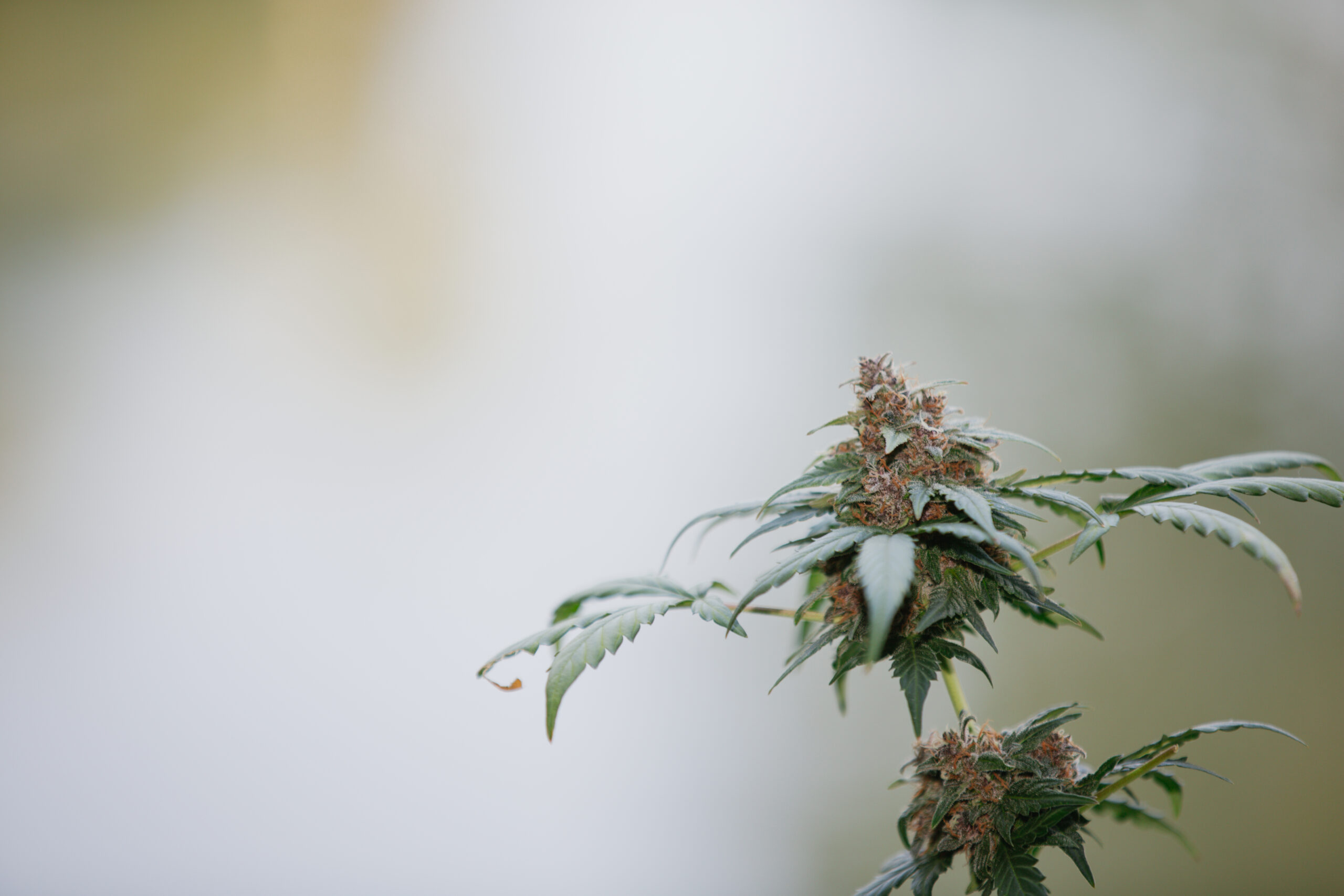


SCROG is short for “Screen of Green.” It is a cannabis training method that uses a screen, net, or trellis to guide plant branches sideways instead of letting them grow straight up. The goal is simple: create a wide, flat canopy so more bud sites sit at the same height under the light. When the canopy is even, the light can reach more of the plant in a useful way. This can help growers get bigger yields from the same grow space, especially indoors or in grow tents where height and light coverage are limited.
Many cannabis plants want to grow like a Christmas tree. They build one main top that rises above the rest. That top gets the strongest light, so it often becomes the biggest cola. Lower branches stay in the shade, and their buds may turn out smaller and less dense. SCROG changes that pattern. Instead of one tall top, you encourage many tops. You do this by gently bending and placing branches under a screen so they spread out. As the plant keeps growing, the tops rise through the openings in the screen. Over time, the plant fills the screen with many evenly spaced bud sites. This is why the method has the word “screen” in its name. The screen is not just support. It is the tool that helps you shape the plant.
Canopy management is the main idea behind SCROG. “Canopy” means the top layer of the plant where the leaves and bud sites sit. In an indoor grow, your light has a limited footprint. It shines strongest in the center and weaker near the edges. It also loses strength the farther it is from the plant. If your plant is tall and uneven, some tops are very close to the light while others are far away. This can cause uneven growth. The high tops can get too much light and stress, while the low sites do not get enough. SCROG aims to level the canopy. When most tops are at the same height, you can set the light at one good distance and get more consistent results across the whole plant.
SCROG can also help with airflow. A well-managed canopy can reduce pockets of still, humid air. That matters because humidity and poor airflow can raise the risk of mold and mildew, especially in late flowering when buds get thick. SCROG does not automatically fix airflow problems, but it can make it easier to control the plant’s shape. When you spread branches out and remove weak lower growth, you can help air move through the plant more evenly. This is one reason many indoor growers like the method.
Another reason SCROG is popular is space efficiency. Many home growers work with small spaces, like a closet, a tent, or a spare room. In these setups, the light is often the biggest limit. SCROG helps you use the light better by filling the grow area with an even layer of tops. Instead of growing several small plants, some growers use one or two plants and train them to fill the same space. This can be helpful if you are limited by plant counts or you want fewer plants to manage. It can also be useful for growers who want to focus on one strong plant and maximize its potential.
This guide is designed to make SCROG clear and easy to follow. You will learn what SCROG is, how it works, and why it can lead to bigger yields when done correctly. You will also learn what equipment you need, how to choose a screen, and how to set up your SCROG in a practical way. Timing is a major part of success, so the guide will explain when to start training, how long you may need in the vegetative stage, and when to switch to flowering. You will also learn how many plants to use, what kinds of strains usually respond well to SCROG, and what to expect for total grow time.
Because many growers search the same questions online, this article is built to answer the top questions people ask about SCROG cannabis. You will see clear explanations about yield potential, common mistakes, and how SCROG compares to other training methods like LST, topping, and Sea of Green. You will also learn how to maintain a SCROG canopy during early flowering, when the plant stretches and grows fast. That stage is often where SCROG grows succeed or fail, so it deserves careful attention.
One important note before you begin: SCROG is not a “set it and forget it” method. It takes regular, gentle work. You will spend time tucking, weaving, and adjusting branches. You will also need to watch plant health, lighting, and airflow as the canopy fills in. The good news is that SCROG does not require complex tools or advanced skills. It requires patience, steady attention, and a clear plan. If you understand the purpose of the screen and you train at the right time, SCROG can be one of the most effective ways to get a full, productive canopy in a limited space.
By the end of this guide, you should know whether SCROG fits your setup and goals. You will have a step-by-step path you can follow, along with practical tips to avoid common problems. Most of all, you will understand the core idea behind SCROG: shape the plant to match the light, not the other way around. That simple shift is what makes Screen of Green such a powerful method for growers who want bigger yields and more even bud development.
What Is SCROG Cannabis?
SCROG cannabis is a way of growing cannabis plants using a screen or net to guide the plant’s branches. SCROG stands for Screen of Green. The main idea is simple: instead of letting the plant grow tall like a Christmas tree, you help it grow wide and even. This creates a flat “table” of leafy growth across the top of the plant. When done well, SCROG helps more parts of the plant get strong light, which can support bigger and more even buds.
What “Screen of Green” really means
In SCROG, the “screen” is usually a net, trellis, or grid made from string, nylon, or another material. The “green” is the plant’s canopy, which means the top layer of leaves and branches that sits under the grow light. You place the screen above the plant, and as the plant grows, you gently pull and guide the branches sideways under the screen. Each branch is directed into its own space in the grid. Over time, the screen fills with many growing tips, not just one main top.
This matters because cannabis often wants to grow with one main cola (top bud) that gets most of the light. In SCROG, you train the plant so it has many top sites at the same height. That can help the plant use the light more evenly across the whole canopy.
How SCROG differs from SOG
Many people confuse SCROG with SOG, but they are not the same method.
- SCROG (Screen of Green) usually uses fewer plants that are trained for a longer time in the vegetative stage. The goal is to spread each plant out to fill the screen.
- SOG (Sea of Green) usually uses many small plants packed close together. The plants are flipped to flower earlier, and growers rely on lots of small colas instead of training a wide canopy.
So, SCROG focuses on shaping and controlling a plant’s structure. SOG focuses on plant count and quick turnover. If you have a plant limit or a small grow space, SCROG is often chosen because it can maximize the use of a few plants.
The basic concept: horizontal canopy training
The core concept of SCROG is horizontal training. That means you train branches to grow outward and sideways rather than upward. When branches are held down or guided sideways, the plant responds by sending growth hormones to other parts of the plant. This can cause more side branches to grow stronger and reach the top.
Over time, instead of one top bud sitting closest to the light, you get many tops spread across the same height. An even canopy helps because grow lights work best when the plant tops are at a similar distance from the light source. If one part of the plant is much higher than the rest, that top may get too much light, while lower areas get too little.
How the screen controls plant structure
The screen is not just a support tool. It is the main control system in SCROG.
As branches grow up through the screen, you can:
- Tuck a branch back under the screen and move it to the next open square
- Weave the branch sideways across the grid
- Spread branches so they do not stack on top of each other
This creates a wider plant with better spacing. The screen also helps keep buds supported later in flowering, when branches get heavy. Instead of leaning and bending under weight, branches can rest against the net.
The screen also helps you manage the “shape” of your grow. Most indoor grow spaces have limited height. SCROG makes it easier to keep plants lower while still producing many flowering sites.
When SCROG is commonly used
SCROG is most common in indoor grows, especially in:
- Grow tents
- Small closets or rooms
- Spaces with limited vertical height
It is also used in greenhouses, where growers want a controlled canopy with good light coverage. Outdoors, SCROG is possible, but wind, weather, and large plant size can make screen training harder. Indoors, the environment is more stable, and it is easier to control height, light distance, and branch direction.
SCROG is especially helpful when you want to:
- Get the most out of a single plant or a few plants
- Keep the canopy even under strong lights
- Use your grow space efficiently from wall to wall
SCROG cannabis is a training method where you use a screen to guide branches sideways and create a flat, even canopy. It is different from SOG because it uses fewer plants and focuses on shaping each plant over time. The screen helps control plant height, spread out growth tips, and support buds later in flowering. SCROG is most often used indoors because it helps growers maximize space and light in areas with limited height.
How Does the SCROG Method Work?
SCROG stands for “Screen of Green.” It is a training method that uses a screen or net to guide how a cannabis plant grows. Instead of letting the plant grow tall like a Christmas tree, SCROG helps the plant grow wide and even. The goal is to build a flat canopy. A canopy is the top layer of the plant where most leaves and buds get light. When the canopy is even, more bud sites can receive strong light. This can help you get bigger and more consistent yields.
The role of the screen
The screen is the main tool in SCROG. It is usually a net, a trellis, or a grid made from string, plastic, or wire. The screen sits above the pots, usually several inches above the top of the plants. The squares in the screen create “holes” where you can guide branches. Think of the screen like a map that helps you spread the plant out.
The screen has two big jobs:
- It supports training. You can tuck and guide branches into open spaces so the plant fills the area evenly.
- It supports heavy buds later. When flowering starts and buds get heavy, the screen helps hold branches up so they do not bend or snap.
Bending and weaving branches under the screen
SCROG works because cannabis branches can be gently bent without breaking, especially in the vegetative stage. Once branches reach the screen, you do not let them keep growing straight up. Instead, you guide them sideways under the screen. This is sometimes called “tucking” or “weaving.”
Here is what that looks like in practice:
- A branch grows up and reaches the screen.
- You gently pull it sideways and tuck it under the screen.
- The top of that branch ends up in a new square, pointing toward an empty space.
- Over the next day or two, the tip turns back upward toward the light.
- As it rises, you can tuck it again to keep the canopy level.
This repeated process spreads growth across the screen. It also creates more top sites. Each time you guide a branch sideways, you encourage more side shoots to grow upward. Those upward shoots can become new colas, which are the main bud tops.
How SCROG creates an even canopy
An even canopy is one of the most important parts of SCROG. Indoor lights are strongest close to the fixture and weaker farther away. If you have one tall top and many shorter tops, the tall top gets too much light while the lower tops get less. This can lead to uneven buds. The top buds might be dense, while lower buds stay small and airy.
SCROG helps solve this by keeping the plant’s tops at the same height. When the canopy is flat:
- Light hits more bud sites at the same strength.
- Buds develop more evenly.
- You waste less light on empty space or tall stems.
This is especially helpful in small grow tents where vertical space is limited. Instead of one tall plant that grows into the light, you create a wide plant that stays within the best light zone.
Light penetration and bud site exposure
When branches are spread out, the plant is less crowded. That helps light reach deeper into the canopy. Bud sites that would normally be shaded can now get direct light. This matters because buds need light to develop well. More light usually means better bud growth, as long as heat and distance are managed correctly.
SCROG also improves exposure by placing bud sites in open squares. The screen helps you “aim” growth into empty spaces. Over time, the screen becomes filled with upward-growing tops, each one getting its own light.
Redirecting plant energy to multiple colas
Cannabis naturally wants to grow one main top cola, especially if you do not train it. The main top tends to dominate because of a growth pattern called apical dominance. SCROG reduces this dominance by keeping the main top from staying higher than everything else. When you tuck the tallest branches down and sideways, you level the playing field.
As a result:
- More branches become “top” branches.
- More bud sites reach the same height.
- The plant spreads energy across many colas instead of one.
This is one reason SCROG can increase yield per plant. You are turning one plant into a wide canopy with many main tops.
SCROG works by using a screen to control the shape of the plant. You guide branches sideways under the screen, then let the tips turn upward into open spaces. This builds a flat canopy where many bud sites get strong light at the same time. With better light coverage, better support, and more evenly placed tops, the plant can produce more main colas and more consistent buds across the grow space.
What Are the Benefits of SCROG for Cannabis?
SCROG, short for Screen of Green, is a training method that helps you shape cannabis plants into a flat, even canopy. Instead of letting one main top grow taller than the rest, you guide branches sideways under a screen. This creates many strong bud sites at the same height. When done well, SCROG can improve yield, light use, and overall plant health. Below are the main benefits and why they matter.
Increased yields per plant
One of the biggest reasons growers use SCROG is to get more buds from each plant. In a normal grow, the tallest top gets the most light. Lower branches stay shaded and often produce small, airy buds. With SCROG, you spread the plant out so more growing tips reach the light.
When more tops sit in strong light, the plant can form more main colas. Many of these colas can become thick and dense because they are not competing as much for light. This is why SCROG is often described as a “yield booster” method. It does not create new plant material out of nowhere. Instead, it helps the plant use its energy more efficiently by turning many branches into productive bud sites.
Another reason yields can increase is that SCROG encourages a wider plant footprint. You are using the full width of your grow space. That means your light is covering more bud sites that are at the right distance from the lamp.
Better light efficiency
Light is one of the most important inputs in cannabis growing. But light can be wasted if the canopy is uneven. If one part of the plant is too close to the light, it may get stressed or bleached. If another part is too far, it may not grow well.
SCROG helps because it keeps the top of the canopy at one level. When the canopy is even, you can hang your light at the best height for the whole grow area. This can improve growth across the entire screen. You get fewer weak spots and fewer areas where buds stay small.
Light efficiency also matters for heat. A balanced canopy can reduce hot spots. That can make it easier to control temperature, especially in grow tents where space is tight.
Improved airflow and reduced risk of mold
A thick cannabis canopy can trap humidity. If air does not move well between leaves and buds, moisture can build up. This raises the risk of problems like bud rot and powdery mildew, especially during flowering.
SCROG can improve airflow because it guides branches into a more organized shape. When you train properly, you can space tops evenly and avoid clumps. This helps air move across the canopy. You can also remove lower growth that does not reach the screen. This opens up the area under the canopy and improves air movement around the base of the plant.
Better airflow can also mean fewer pests. Many pests like still, damp areas. A cleaner and better-ventilated grow space is harder for them to take over.
Fewer plants needed in limited grow spaces
SCROG is useful when you want to fill a space with fewer plants. This can matter if you have plant count limits or you simply prefer to manage fewer pots. Because SCROG spreads each plant out, one plant can cover a large part of the screen if you veg long enough.
For example, instead of growing many small plants, you can grow one or a few plants and train them to fill the same area. This can reduce the number of plants you need to water, prune, and monitor. It can also make your canopy more uniform, since you are shaping the plants to match one plan.
Maximizing vertical space in grow tents
Many indoor growers have a height limit. Grow tents, shelves, and basements often do not allow tall plants. Cannabis can stretch a lot during the early flowering stage, especially some sativa-leaning strains. Without training, plants may grow too close to the light.
SCROG helps control height because you keep growth horizontal for much of the vegetative stage and even into early flower. Instead of letting stems shoot straight up, you guide them outward under the screen. This keeps the canopy lower and more controlled. It can prevent light burn and make it easier to keep proper distance between the buds and the lamp.
More consistent bud development
In many grows, buds at the top are big and dense, while buds lower down are small. This is common when light does not reach the lower sites. SCROG helps create more even bud development because the main bud sites are placed at the top of the canopy, where light is strongest.
When more bud sites receive similar light levels, they can develop more evenly. That can lead to a more consistent harvest. You may get fewer “popcorn” buds and more medium to large buds that are worth trimming and saving.
Consistency also helps with timing. When buds are more even in size and maturity, it is easier to choose a good harvest window. You may have fewer immature buds hiding below the canopy.
SCROG offers clear benefits when you want to get the most from an indoor grow space. It can increase yield per plant, improve how your light is used, and help buds develop more evenly. It can also improve airflow, lower mold risk, and keep plant height under control in short spaces like grow tents. If you can spend extra time training and shaping the canopy, SCROG can be a strong method for bigger, more uniform harvests.
What Equipment Do You Need for SCROG?
A SCROG setup does not need fancy gear, but it does need the right basics. The goal is simple: build a stable screen, guide branches across it, and keep the canopy flat so light hits many bud sites evenly. Below is the equipment you need, plus clear tips on how to choose each item.
Screen or net (the most important tool)
The “screen” is what makes SCROG work. It is a grid you place above the pots. As the plant grows, you gently pull or guide branches under the grid and spread them sideways. This creates many tops at the same height.
You can use:
- Trellis netting (nylon or elastic): Easy to find, easy to install, and works well in grow tents. Elastic nets are fast, but they can be harder to keep evenly tight.
- String or garden twine: Cheap and customizable. You can build a frame and tie strings to make your own grid.
- Wire or coated wire grid: Strong and holds shape. It can last a long time, but sharp edges can damage branches if you are not careful.
What matters most is that the screen is stable, even, and has open squares you can tuck branches into.
Mesh size (grid spacing)
Mesh size means the size of each square in the screen. If the squares are too small, it is hard to tuck branches. If they are too large, branches may not stay in place.
A common and helpful range is:
- 2 to 4 inches per square (about 5 to 10 cm)
Use smaller squares if your plant has many thin branches. Use larger squares if branches are thicker or if you want more room to work with your hands. If you are unsure, start in the middle. A 3-inch grid often works well for many indoor setups.
Frame for the screen
A net by itself can sag or move. A frame keeps the screen tight and at the right height. You can build a frame that sits inside the tent or attaches to the tent poles.
Common frame materials:
- PVC pipe: Light, cheap, and easy to cut. Great for beginners.
- Wood: Strong and stable. Good if you want a solid frame, but it can be heavier.
- Metal: Very durable. It can be more expensive and may take more tools to build.
No matter the material, the frame should:
- Stay level and not tilt
- Hold the net tight
- Allow you to remove plants if needed (or at least access them)
Many growers build a simple rectangle frame and secure the net over it. Others attach trellis netting directly to tent poles. Both methods can work as long as the screen stays firm.
Grow space basics (tent size and layout)
SCROG works best when you can control the environment and reach the plants. In a tent, you should plan for:
- Enough room to open the tent and reach the back corners
- A way to water without spilling
- Space above the canopy for lights and airflow equipment
SCROG often fills the whole grow area. That is good for yield, but it means you must think ahead. If you cannot reach the back of the tent, it becomes hard to prune, tuck branches, and check for issues later.
Lighting (because SCROG is about light efficiency)
SCROG helps you use your light better, but you still need a light that matches your grow space. The goal is even coverage across the screen.
Common light options:
- LED grow lights: Popular because they run cooler and use less power. Many modern LEDs give strong coverage and good canopy penetration when placed at the right height.
- HPS (high pressure sodium): Can produce strong yields but runs hotter. Heat control becomes more important with HPS.
No matter what you use, focus on:
- Even light spread across the screen
- Enough power for your tent size
- A safe hanging system so you can adjust height
In SCROG, you want the canopy to be flat so the light hits many tops evenly. Uneven light leads to uneven buds.
Plant training tools (to guide without damage)
SCROG is “low stress” when done gently. The plant training tools help you bend and hold branches without snapping them.
Useful items include:
- Soft plant ties (cloth or rubber-coated): Good for pulling branches into position.
- Garden wire with soft coating: Strong but still gentle if it has a coating.
- Plant clips: Can guide stems at an angle without tying knots.
- Trellis hooks or net clips: Help attach the net to poles and keep it tight.
Avoid thin string that can cut into branches. Anything that touches stems should be soft or padded.
Extra support gear (often overlooked)
Once buds get heavy, branches may lean or bend. These extras help keep the canopy stable:
- A second trellis net above the first one to support buds
- Stakes for side branches that need help
- Pruning shears for clean trimming and pruning
- A small step stool if your tent is tall and you need safe reach
Also, consider basic environmental tools because SCROG can create a dense canopy:
- Oscillating fan to move air across and under the canopy
- Hygrometer/thermometer to monitor humidity and temperature
- Dehumidifier if humidity is high (dense canopies can trap moisture)
Good airflow and humidity control matter more in SCROG because there can be many leaves and bud sites close together.
To start SCROG, you need a stable screen or net, the right mesh size, and a strong frame to hold it level. You also need a light that covers your grow space evenly, plus soft ties or clips to guide branches without damage. Finally, plan for airflow and support tools, because a full SCROG canopy can get dense and heavy. With the right equipment, SCROG becomes much easier to manage and can help you use your space and light more efficiently.
When Should You Start SCROG Training?
Starting SCROG at the right time is one of the biggest keys to success. If you start too early, the plant may not have enough healthy growth to train. If you start too late, the stems can get stiff and may snap when you bend them. The goal is to begin when your plant is strong, flexible, and growing fast in the vegetative stage.
Ideal plant age and size
There is no single “perfect day” to start because every grow setup is different. Instead of counting days, focus on the plant’s size and structure.
A good time to start SCROG training is when the plant is:
- Healthy and growing steadily
- Tall enough to reach the screen area soon
- Developing several strong side branches
- Flexible enough to bend without cracking
Many growers begin light training once the plant has multiple sets of true leaves and several side branches. What matters most is that the plant has enough growth to spread out across the screen.
A common rule is to start training when the plant is roughly 8 to 12 inches tall, but your screen height will change that. If your screen will sit higher, you may wait longer. If your screen is lower, you may start earlier.
Timing during the vegetative stage
SCROG works best when you begin in the vegetative stage. The vegetative stage is when the plant focuses on leaf and stem growth. This is the stage where the plant can recover fast from bending and shaping.
In veg, cannabis branches are usually softer and more flexible. That makes it easier to guide them under the screen. Also, the plant is still building its overall structure. That means you can control the shape early and create a flatter canopy.
If you try to begin SCROG for the first time deep into flowering, you will run into problems. Flowering branches often become woody and brittle. Bending them can cause breaks, stress, and slower growth.
Why SCROG must begin before flowering
SCROG is a training method. Training works best when the plant is still in “build mode,” which is veg. Once flowering begins, the plant changes its priorities. It starts focusing on bud production instead of making new branch length.
You want your canopy to be mostly filled before the plant enters flowering. That way, when buds form, they form across the whole screen, not just in one area.
Also, SCROG is meant to create an even canopy. If you start late, you may end up with tall tops that shade lower sites. That reduces light exposure and lowers yield.
How long to veg before flipping to flower
Most SCROG grows require a longer vegetative time than a basic grow. That is normal. You are shaping the plant to fill a wide space, so you need time to build that structure.
The big question is: when do you switch the light schedule to start flowering?
If you grow indoors with photoperiod plants, flowering often starts when you switch to a 12 hours on, 12 hours off light schedule. People call this “flipping to flower.”
A simple guideline is to flip when the screen is about 60% to 80% full. The reason is stretch. During the first few weeks of flower, cannabis plants often stretch and grow taller. Many strains can grow 50% to 100% taller during this period, depending on genetics and conditions.
If you wait until the screen is 100% full before flipping, the stretch can overcrowd the canopy. This can lead to:
- Poor airflow
- Shaded bud sites
- Higher humidity trapped in leaves
- Increased risk of mold, especially in thick canopies
On the other hand, if you flip too early, you may not fill the screen well. That can leave empty spaces, which is wasted light and wasted growing area.
So, the best timing is usually when the canopy is mostly filled but still has room for stretch to finish the job.
Signs the canopy is ready
Instead of guessing, look for clear signs that your SCROG is ready for the switch to flower:
- Most of the screen has growing tips spread across it
- The canopy height is fairly even from one side to the other
- The plant is still healthy and vigorous
- Branches can still be tucked and guided without snapping
- You have enough tops to create many bud sites, not just a few
Also check the spacing. If the top growth is already packed too tightly, you may need to do light cleanup before you flip. This can include removing some lower growth that will never reach the top. That helps the plant focus energy on the bud sites that will get the best light.
Start SCROG training during the vegetative stage, when branches are flexible and the plant can recover quickly. Begin when your plant is healthy and has enough side growth to spread out, not just based on a specific number of days. In most indoor SCROG grows, it is best to flip to flower when the screen is about 60% to 80% full, so the stretch can fill the remaining space without overcrowding. When your canopy looks even and most of the screen is covered with active tops, you are in a good spot to move into flowering.
How to Set Up a SCROG Screen Step-by-Step
A SCROG setup is not hard, but it works best when you plan it well. The main goal is to build a screen that stays tight and stable, then train your cannabis branches so they grow sideways across the screen. This creates a flat, even canopy. A flat canopy helps your light reach more bud sites, which can improve yield and bud quality.
Below is a clear step-by-step setup you can follow.
Step 1: Choose the correct screen height
Screen height matters because it decides how easy it will be to train the plant and how much space you will have for flowering. Most SCROG growers place the screen about 8 to 12 inches above the top of the pot for small to medium indoor plants. If you are growing a bigger plant or using a larger container, you may place the screen a little higher.
A good rule is this: you want enough room under the screen to water, prune, and check your plant, but not so much room that the plant grows tall before training starts. If the screen is too high, the plant may stretch upward and become harder to control. If the screen is too low, it becomes hard to work under it, and airflow may suffer.
Step 2: Secure the frame
Your screen needs a strong frame so it does not sag or shift when you tuck branches. A loose screen makes training harder and can cause uneven growth. Many growers use PVC pipes, wood, or metal to build a simple rectangle frame that fits their grow tent or grow space.
Make sure the frame is level and stable. If your grow space is a tent, you can also attach the screen directly to the tent poles using zip ties or clips. If you build a separate frame, place it so it cannot tip over. A stable frame also helps protect branches from snapping if you bump the screen during maintenance.
Step 3: Attach and tighten the screen
Once the frame is ready, attach the screen or net. Common options include trellis netting, nylon string, or garden netting. Aim for a grid pattern that gives you many “squares” to fill. A common mesh size is 2 to 4 inches per square, since it gives you room to guide branches without crowding them.
Pull the screen tight. A tight screen makes training easier because it holds the branches in place. If the net is loose, branches may pop back up and you will lose control of the canopy shape.
Step 4: Position plants under the screen
Place your plants so the center of each plant sits under open screen space. If you have one plant, put it near the center of the screen. If you have more than one plant, space them so they can each fill their area without overlapping too much.
At this stage, you should already be doing basic plant training like topping or light bending if you plan to. SCROG works best when the plant has several strong branches that can spread outward. If the plant only has one main stalk, it will take longer to fill the screen evenly.
Step 5: Begin weaving and tucking branches
Once branches grow up to the screen, you can start training. The key idea is simple: do not let branches grow straight up through the screen too early. Instead, you guide them sideways so each square gets filled.
Here’s how to do it:
- Take a branch that reaches the screen.
- Gently bend it sideways.
- Tuck it under the next square so the growing tip points toward an empty area.
- Repeat as new growth appears.
Go slowly. Bend branches a little at a time to avoid snapping. If a branch feels stiff, train it over several sessions rather than forcing it in one day. Soft plant ties can help hold branches in place, but many growers rely on the screen itself.
Step 6: Continue training during early flower
Cannabis often stretches during the first 2 to 3 weeks of flowering. This is called the “stretch.” During this time, you can keep tucking branches to maintain an even canopy. This matters because the plant can grow fast during the stretch, and the canopy can become uneven if you stop too soon.
Keep guiding taller branches outward so lower branches can catch up. The goal is to create a canopy where most tops sit at the same height. This helps the light hit the tops evenly, instead of focusing only on the tallest colas.
Step 7: When to stop tucking branches
You should stop heavy training once the stretch slows down and bud development becomes the main focus. For many plants, this happens around end of week 2 or week 3 of flowering, but it depends on the strain and your setup.
After that point, branches are less flexible and bud sites are forming. Constant bending can stress the plant and may damage developing buds. Instead of tucking, you will focus more on:
- keeping airflow strong,
- removing weak growth under the canopy,
- and supporting heavy bud sites if needed.
Maintenance during the stretch phase
While you are training, do not forget basic maintenance. SCROG creates a thicker canopy, so you need to pay attention to humidity and airflow. Keep fans moving air above and below the screen. Check leaves for signs of poor airflow, like constant wet spots or leaf crowding.
Also, many growers remove lower growth under the screen. This is often called “lollipopping.” It helps the plant focus energy on the top canopy where the best light is. It also improves airflow under the screen, which can lower the risk of mold.
Setting up a SCROG screen is about building a stable frame, placing a tight screen at the right height, and training branches sideways to fill the grid. Start tucking as soon as branches reach the screen, and keep training through the stretch in early flower. Once the stretch ends, stop heavy tucking and focus on airflow, pruning lower growth, and keeping the canopy even. When done correctly, a SCROG setup turns one grow space into a wide “table” of bud sites that get strong, even light.
How Many Plants Should You Use in a SCROG Grow?
One of the most common SCROG questions is simple: How many plants do I need? The short answer is: SCROG usually works best with fewer plants, because the goal is to spread each plant out wide under the screen. Instead of growing many small plants, you grow one or a few plants and train them until the screen is filled with healthy tops.
That said, the “right” number depends on your space, your strain, and your local rules.
One plant vs multiple plants
One-plant SCROG is popular for small tents and for growers who want to keep plant count low. With one plant, you can spend more time in the vegetative stage (veg) to fill the screen. You keep tucking and guiding branches until most of the squares in the net have a growing tip. This can create a very even canopy and strong yields for the space.
Multi-plant SCROG can fill the screen faster because you have more main branches from the start. This can be useful if you do not want a long veg time. However, more plants can also mean more crowding and more work. You must manage airflow, humidity, and leaf density carefully, especially in flower when buds get thick.
A good way to think about it is this:
- Fewer plants = longer veg, more training, easier to manage plant count
- More plants = shorter veg, faster fill, but higher risk of crowding
Plant count for common grow tent sizes
Here are practical ranges many growers use for SCROG. These are not strict rules, but they are helpful starting points.
2×2 tent (about 60 cm x 60 cm):
- Often works well with 1 plant
- Some setups can use 2 small plants, but it can get crowded fast
3×3 tent (about 90 cm x 90 cm):
- Usually 1 to 2 plants
- 2 plants can fill the net faster, but you must keep the canopy even
4×4 tent (about 120 cm x 120 cm):
- Often 2 to 4 plants
- 2 plants is a common choice for simple canopy control
- 4 plants can work if you are experienced and keep airflow strong
These ranges assume you are training the plants correctly and using a screen that covers most of the grow area.
Strain growth patterns and spacing
Your strain matters a lot in SCROG because not all plants grow the same way.
Some strains grow wide and bushy with lots of side branches. These can fill a screen well with fewer plants.
Other strains grow tall and stretchy, especially during early flower. These can still work in SCROG, but they may need more training and careful timing. Stretchy strains can also fill the screen with fewer plants, because they create long branches that can be tucked into new squares.
When thinking about spacing, focus on these points:
- Branch flexibility: Flexible branches are easier to bend and tuck under the net.
- Node spacing: Shorter spacing can create more bud sites close together, which can help fill the canopy evenly.
- Stretch in flower: High-stretch strains may need extra support and early canopy planning.
If a strain is slow to branch or has very stiff stems, you may need more than one plant to fill the screen in a reasonable time.
Legal plant limits in certain regions
Another key factor is the law where you live. Some places allow only a certain number of plants. In those cases, SCROG can be helpful because it lets you make the most of each plant.
For example, if you can only grow a small number of plants, you can use SCROG to turn one plant into a wide canopy with many tops. This helps you use your light and space more efficiently.
Always follow local rules. Even if SCROG is a training method, plant limits are often strict, and the safest approach is to stay clearly within them.
Advantages of fewer plants trained longer
Many growers choose fewer plants for SCROG for these reasons:
- Better control of the canopy: With fewer plants, it is easier to keep the top layer flat and even.
- Less overcrowding: Crowding can cause poor airflow, high humidity, and mold risk in flower.
- Simpler watering and feeding: You have fewer root zones to manage.
- More room for pruning and cleanup: SCROG often needs lower growth removed so the plant focuses on the canopy.
- Easier problem tracking: If something goes wrong (like nutrient issues), it is easier to identify and fix with fewer plants.
The main downside is time. Fewer plants usually means you must veg longer to fill the screen. But many growers feel that the improved canopy and stronger use of light is worth it.
For most SCROG grows, fewer plants is the best starting point, especially in smaller tents. A 2×2 tent often works best with 1 plant, a 3×3 with 1–2 plants, and a 4×4 with 2–4 plants, depending on your strain and experience. Strain shape, stretch, and branch strength can change the ideal number, and plant limits in your area may also guide your choice. If you want a simpler, cleaner SCROG setup, choosing fewer plants and training them longer is often the easiest path to a full, even screen.
What Is the Best Strain for SCROG?
The best strain for SCROG is one that grows wide, bends easily, and makes many strong branches. SCROG works by spreading the plant out under a screen so the canopy stays flat and even. When the canopy is even, more bud sites get the same light. This is one of the main reasons SCROG can support bigger yields in a small space.
Not every cannabis strain behaves the same. Some strains stay short and bushy. Others grow tall fast and stretch a lot in early flower. Some make thick, stiff stems that are hard to bend. Others stay flexible and easy to train. Choosing a strain that matches SCROG makes the training step easier and helps the screen fill in a clean, balanced way.
Characteristics of ideal SCROG strains
A good SCROG strain usually has these traits:
Flexible branches and stems
In SCROG, you will tuck, bend, and weave branches under the screen. Strains with flexible stems handle this better. Branches that bend without snapping let you shape the plant with less risk of damage. Even when you train gently, stiff branches can crack. Flexible growth makes daily training smoother.
Strong lateral growth
Lateral growth means the plant likes to spread sideways, not only upward. In SCROG, sideways growth is useful because it fills empty squares in the screen. A plant that naturally sends branches outward will cover more area and create more tops.
Lots of branching (many nodes and side shoots)
SCROG works best when the plant has many possible bud sites. Strains that branch well give you more tips to guide into open spaces. More tips can mean more colas across the canopy, as long as light and airflow are managed well.
Moderate internode spacing
Internodes are the spaces between nodes on a stem. Very long internodes can lead to fewer bud sites along a branch. Very tight internodes can create a dense canopy that needs more airflow and careful defoliation. Many growers find that moderate spacing is easier to manage under a screen.
Predictable stretch during flowering
“Stretch” is the fast growth that happens during the first weeks of flowering. A strain with predictable, moderate stretch is easier to control. If a strain stretches too much, the canopy can rise above the screen quickly, and tops may become uneven. If stretch is very low, you may need more veg time to fill the screen before the flip.
Indica vs sativa behavior in SCROG
You can SCROG both indica-leaning and sativa-leaning strains, but they often behave differently.
Indica-leaning strains (often shorter and bushier)
- Tend to stay compact with thicker stems
- Often make dense foliage, which can reduce airflow
- Can fill a screen well because they branch and bush out
- May need extra pruning and leaf control to prevent humidity pockets under the canopy
Indica-leaning strains can be great for SCROG, especially in small tents. The main challenge is keeping airflow strong and removing lower growth that will not reach the light.
Sativa-leaning strains (often taller with more stretch)
- Often stretch more in early flower
- Can be very flexible and easy to weave
- Can fill a screen fast, but may outgrow the space if not managed
- May need an earlier flip to flower if stretch is strong
Sativa-leaning strains can also perform very well in SCROG. The key is planning for stretch. If you wait too long to flip, the canopy can become too tall and uneven.
Hybrid suitability
Many hybrids work very well for SCROG because they combine traits from both sides. A hybrid may have:
- Good branching like an indica-leaning plant
- Enough stretch to fill the screen quickly, but not so much that it becomes hard to control
- Medium stem thickness that still bends with training
Hybrids can be a strong choice if you want balanced growth. They often respond well to topping and low-stress training, which are common steps used with SCROG.
Strains that may not respond well to SCROG
Some strains can still be SCROG’d, but they may require more work or may not match your goals.
Very stiff, woody plants
If a strain forms thick, hard stems early, it can be difficult to tuck and weave. You may need more topping, earlier training, and extra care to avoid snapping branches.
Plants with very weak side branching
If the plant mostly grows one main cola and few side branches, it may not fill the screen evenly. SCROG needs multiple branches to spread across the net.
Extremely fast stretchers in small spaces
Some strains can double or triple in height after the flip. In a short tent, this can cause light burn, uneven canopy height, and poor airflow. These strains can still work, but only if you flip earlier and train aggressively during the stretch phase.
Very dense leaf producers
A very leafy strain can block light from reaching bud sites. In SCROG, the canopy can already be thick. A strain that stacks leaves heavily may need more defoliation and stronger airflow to avoid moisture buildup.
How to choose a strain for your specific setup
The “best” SCROG strain also depends on your grow space and your plan.
If you have a short tent:
Choose a strain with low to medium stretch. This helps keep the canopy at a safe distance from the light.
If you have strong lighting and good airflow:
You can handle a fuller canopy and may do well with strains that branch heavily and fill the screen fast.
If you want faster harvest cycles:
Pick a strain that fills the screen with less veg time and has a shorter flowering period. SCROG often adds veg time, so faster strains can help balance the schedule.
If you are new to SCROG:
A strain with moderate growth speed and moderate stretch is easier to manage. Extreme behavior in either direction can be harder to control while you are learning screen training.
The best strains for SCROG usually have flexible branches, strong sideways growth, and plenty of branching. They should be easy to weave under the screen and have a stretch pattern you can control in your space. Indica-leaning strains often fill the net well but can get too dense, so airflow and pruning matter. Sativa-leaning strains can be very trainable but may stretch a lot, so timing the flip is important. Many hybrids are a strong match because they offer balanced branching and manageable stretch. When you pick a strain that fits SCROG, the screen fills more evenly, the canopy stays flatter, and more bud sites get strong light, which supports bigger yields.
How Long Does SCROG Take?
SCROG takes longer than many other cannabis training methods because you spend extra time shaping the plant before flowering. The goal is not speed. The goal is to fill the screen with healthy, evenly spaced growth so you can get an even canopy and better buds across the whole area. The total time depends on your strain, your grow space, and whether you start from seed or clone. But you can still plan your timeline in a clear way.
Vegetative time compared to standard grows
In a standard grow, many growers veg for a short time, then flip to flower once the plant looks “big enough.” With SCROG, you usually veg longer. That is because you are not just growing upward. You are growing outward and training branches under the screen to cover the space.
A typical SCROG veg stage often lasts 4 to 8 weeks after the plant is established. Some grows are shorter, and some are longer. If you are doing a one-plant SCROG in a larger tent, veg can be 8 to 12 weeks. If you use multiple plants, you may need less veg time because each plant only has to fill part of the screen.
Here is a simple way to think about it:
- Fewer plants = longer veg
- More plants = shorter veg
- Faster-growing genetics = shorter veg
- Slow-growing genetics = longer veg
The screen needs time to fill. If you rush the veg stage, you will flip too early and end up with empty space in the canopy.
Flowering timeline expectations
The flowering stage for SCROG is not usually longer than normal for the same strain. If a strain normally flowers in 8 to 10 weeks, it will still take about that long in SCROG. The difference is what happens at the start of flower.
When you flip to 12/12 (for indoor growing), cannabis often stretches for the first 2 to 3 weeks of flowering. In SCROG, you use this stretch to finish filling the screen. During this time, you keep guiding taller shoots under the screen and into open spaces. Many growers stop heavy training after the stretch ends, because the branches become stiffer and bud sites start forming fast.
So, the flowering stage can be broken into:
- Weeks 1 to 3: stretch and final screen fill (active tucking and guiding)
- Weeks 4 to harvest: bud building and ripening (less bending, more support)
Total grow duration from seed to harvest
If you start from seed, your total time is usually longer. Seeds need time for early growth before training really begins. A simple estimate for seed grows is:
- Seedling stage: 1 to 3 weeks
- Vegetative stage (SCROG training): 4 to 10+ weeks
- Flowering stage: 8 to 12 weeks (strain-dependent)
- Drying and curing (after harvest): 2 to 6+ weeks (not part of “grow time,” but part of the process)
That means a seed-to-harvest SCROG can often take 14 to 24 weeks in total, depending on the strain and how long you veg.
If you start from clones, the timeline is often shorter because clones already have mature genetics and can grow faster once rooted. A clone SCROG might look like:
- Rooting and early veg: 1 to 2 weeks
- Vegetative stage (SCROG training): 4 to 8+ weeks
- Flowering stage: 8 to 12 weeks
That puts many clone-to-harvest SCROG grows in the 13 to 22 week range.
These are general ranges. Your exact timing will depend on your setup and goals.
Why SCROG requires patience
SCROG asks you to wait until the screen is filled enough to make the method worth it. This is the main reason it takes longer than a basic grow. You are building a “plant blanket” across the screen, with many strong tops at the same height. That takes time.
It also requires patience because training is not a one-day task. You usually guide branches little by little. If you bend too hard at once, you can snap a branch. Slow, steady training is safer and gives better structure.
Here are common reasons SCROG needs patience:
- You must wait for branches to reach the screen.
- You must keep spacing the tops evenly.
- You must correct uneven growth over time.
- You need to monitor plant stress and recovery.
The extra time is part of the design. A well-filled screen is the foundation of a good SCROG harvest.
Yield trade-off versus time investment
SCROG often gives strong yields for the space because it improves light use. But it is not always the best choice for every grower. The main trade-off is time versus efficiency.
SCROG can be worth it if:
- You want the most yield possible from a small grow area.
- You have a limited number of plants allowed.
- You want more even buds across the canopy.
- You prefer fewer plants with more training.
SCROG may feel slow if:
- You want fast harvest cycles.
- You do not want a long veg stage.
- You are running many strains at once and want quick turnover.
Some growers choose faster methods for speed, and SCROG for maximum use of space. Neither is “better” in every case. It depends on your goal.
SCROG usually takes longer than a standard grow because you spend extra weeks in veg filling and shaping the screen. Flowering time stays close to normal for the strain, but the first 2 to 3 weeks of flower are important for final canopy training during the stretch. Most SCROG grows land in a wider time range than basic grows, often because fewer plants require more veg time. If you can be patient and focus on filling the screen evenly, the extra time can pay off with better canopy coverage, stronger light use, and bigger yields for your grow space.
How Much Yield Can You Get from SCROG?
SCROG can help you grow more bud in the same space, but it does not “create” yield by itself. Yield comes from the full setup working together: healthy plants, good light, the right training, and stable grow conditions. SCROG mainly helps by spreading the plant out so more bud sites sit in strong light. This often leads to thicker, more even buds across the whole canopy.
Yield potential compared to non-trained plants
In a non-trained grow, the plant often forms one main top cola and many smaller side buds. The top gets the most light, while lower branches sit in shade. Those shaded buds usually stay small and airy.
With SCROG, you pull branches sideways and fill a flat screen. This creates many “top” sites at the same height. Because the light hits more bud sites evenly, you can often get better total yield than you would from a tall, narrow plant.
That said, SCROG usually takes longer because you spend more time in vegetative growth to fill the screen. So the real question is not only “How much yield?” It is also “How much yield for the time and space you have?”
Grams per watt: why light matters so much
Many growers measure results in grams per watt (g/W). This is a simple way to compare efficiency between setups. SCROG can improve grams per watt because it helps your light reach more active bud sites instead of wasting light on empty space or tall stems.
But grams per watt still depends on:
- Light strength and coverage: A strong light that covers the entire screen evenly will perform better than a weak light or a light that only covers the center.
- Distance from the canopy: If the light is too close, plants can bleach or stress. If it is too far, buds may stay smaller.
- Heat control: Hot lights can reduce plant performance if temperatures rise too much.
Think of it like this: SCROG helps you “use” your light better. If your light is not strong enough, SCROG cannot fix that.
Yield per square foot: using your grow space well
Another useful way to look at yield is per square foot (or per square meter). SCROG is popular because it is designed to fill a footprint. If you have a tent or a small room, SCROG can help you use the whole area instead of growing one tall plant that only uses the center.
A well-filled SCROG canopy often produces:
- More consistent bud size across the canopy
- Fewer tiny “popcorn” buds at the bottom
- A more even harvest that is easier to trim and dry
Still, you should expect some variation. The corners of a tent may get less light than the middle unless your lighting is very even.
Factors that influence SCROG results
Even with perfect training, yield can drop if other parts of the grow are weak. Here are the biggest factors that influence how much you harvest.
Light intensity and distribution
SCROG is built around the idea of even light. If your light does not spread well, you may get heavy buds in the center and lighter buds around the edges. A good setup matches the screen size to the light’s coverage.
Genetics (strain choice)
Some strains branch easily and stay flexible. These strains fill a screen faster and create many strong tops. Other strains grow stiff branches or stretch too much in flower, making it harder to keep an even canopy. Genetics also affects bud density and flower size, which changes yield even when everything else is the same.
Plant health and root strength
A SCROG plant needs energy to support many bud sites. If roots are stressed, the plant may not feed all those tops well. Problems like overwatering, poor drainage, root rot, or weak nutrition can reduce yield quickly.
Nutrients and watering habits
In flower, plants need steady feeding and stable watering. Large swings (too dry, then too wet) can slow growth and reduce bud size. SCROG plants also tend to have more leaf mass and more bud sites, so they often drink and feed more than a small plant.
Environment (temperature, humidity, airflow)
A dense SCROG canopy can trap humidity if airflow is weak. High humidity during flowering can raise the risk of mold, which can ruin yield fast. Good airflow above and below the canopy helps keep buds healthy and lets plants transpire normally.
Grower skill and consistency
SCROG takes hands-on work. You must tuck and guide branches, watch the canopy shape, and fix problems early. Small mistakes can add up, like uneven training, poor pruning, or flipping to flower too soon.
Why results vary so much from one grow to another
Two people can run SCROG in the same size tent and get very different harvests. This is normal. Small differences in light, plant training, veg time, and climate control can change the final result.
Also, SCROG often trades speed for control. If you veg longer to fill the screen, you may harvest more, but you also spend more time getting there. If you flip earlier, you harvest sooner, but the screen may not be full, and yield may be lower.
SCROG can increase yield by creating a flat, even canopy where many bud sites receive strong light. It often improves efficiency, which may show up as better grams per watt and better use of your grow space. However, SCROG is not a magic trick. Your final harvest still depends on light quality, genetics, plant health, feeding, and stable temperature and humidity. When those basics are strong, SCROG can be one of the best methods for getting bigger yields in a limited space.
Common SCROG Mistakes and How to Avoid Them
SCROG can give bigger yields, but it only works well when the canopy stays even and healthy. Many problems come from timing, crowding, or not controlling the plant early enough. Below are the most common SCROG mistakes, why they happen, and what to do instead.
Starting SCROG too late
One of the biggest mistakes is waiting too long to start training. If you let the plant grow tall first, the stems become stiff and harder to bend. When you finally try to tuck branches under the screen, they may snap or split. Also, the top of the plant may already be dominant, which makes it harder to create a flat canopy.
How to avoid it:
Start training while branches are still flexible. As soon as the plant has several strong side branches and is growing fast in veg, begin guiding tops toward open squares in the screen. Small adjustments every day are safer than big bends all at once.
Flipping to flower too early
Some growers flip to flower before the screen is filled. This often leads to wasted space. You end up with gaps in the canopy, which means light hits the floor instead of bud sites. It can also cause uneven bud sizes because some areas get more light than others.
How to avoid it:
A common target is to fill most of the screen before switching to flowering. Many growers aim for around three-quarters full because plants will stretch during early flower. The exact amount depends on the strain. If you know your strain stretches a lot, you can flip earlier. If it stays short, you may need more veg time.
Uneven canopy management
An uneven canopy is a SCROG killer. If some tops sit higher than others, the taller tops get stronger light and grow even faster. Lower tops stay shaded and make smaller buds. This defeats the main purpose of SCROG, which is to keep all main bud sites at the same height.
How to avoid it:
Keep tucking and spreading branches so the canopy stays level. Focus on the fastest-growing tops. Move them sideways into empty squares instead of letting them rise. If one branch is far behind, guide a stronger branch away from that area to give the smaller one more light.
Overcrowding plants
Another common mistake is using too many plants in a small area. Overcrowding makes the canopy too thick. Air cannot move well between leaves, and humidity builds up. This increases the risk of mold, mildew, and pests. It also makes it harder to water and inspect the plants.
How to avoid it:
Match your plant count to your space. If you are growing in a small tent, fewer plants trained well is usually better than many plants packed together. Leave room for airflow and for your hands to reach into the canopy. A clean, open structure often beats a messy, crowded one.
Poor airflow under a dense canopy
SCROG creates a wide, flat canopy. If the leaf layer is very dense, air can get trapped below the screen. This area can become warm and damp, which is a perfect environment for mold. It can also cause leaves to stay wet longer after watering or spraying.
How to avoid it:
Use fans to move air across and under the canopy. Keep humidity in a safe range, especially during late flower when buds are thick. Remove extra leaves that block airflow, but do it carefully and not all at once. Also, avoid letting piles of lower growth collect under the screen.
Not pruning lower growth
Many beginners leave too much growth under the screen. The plant will keep trying to grow leaves and small branches in the shaded lower zone. This pulls energy away from the top bud sites. It also creates more clutter under the canopy, which can worsen airflow issues.
How to avoid it:
Remove weak, shaded growth under the screen that will not reach strong light. This is often called “lollipopping.” The goal is to keep the plant focused on the top canopy where buds will form well. Do this in stages so the plant does not get shocked.
Screen set too high or too low
If the screen is too high, the plant can grow tall before you can train it, and you lose control of canopy shape. If the screen is too low, you may have little room to work under it, and watering becomes harder. A low screen can also force extreme bends that may damage branches.
How to avoid it:
Set the screen at a height that lets you work and train easily. You want enough space under the screen for watering, cleaning, and airflow. At the same time, you want the screen low enough that training begins early and the canopy stays flat. If possible, use a screen that can be adjusted as the grow develops.
Most SCROG problems come from the same idea: losing control of the canopy. Start training early, fill the screen before flowering, and keep the canopy even. Avoid crowding, protect airflow, and remove lower growth that will never produce good buds. Finally, set your screen height with both plant control and daily access in mind. If you focus on these basics, SCROG becomes much easier, and your harvest will be more consistent and heavier.
SCROG vs Other Training Methods
SCROG is one of several ways to train cannabis plants. Training means you shape the plant so it grows in a better way for your space and light. SCROG is best known for making a flat, even canopy, but it is not the only option. In this section, you will learn how SCROG compares to other popular methods, when each method makes sense, and how you can combine techniques for better results.
SCROG vs Sea of Green (SOG)
SCROG and SOG sound similar, but they work in very different ways.
SCROG (Screen of Green) uses fewer plants. You grow them longer in the vegetative stage, then spread their branches out under a screen. The goal is to fill the whole grow area with one even layer of tops. This helps light hit many bud sites at the same distance from the lamp.
SOG (Sea of Green) uses more plants. Instead of training one plant wide, you grow many small plants close together. You keep the vegetative stage short and flip to flowering early. The goal is to get one main cola per plant, like a “sea” of colas.
Key differences:
- Plant count: SCROG usually uses fewer plants. SOG uses more.
- Veg time: SCROG often needs a longer veg period. SOG is shorter.
- Training: SCROG needs daily or regular branch tucking and shaping. SOG needs less training.
- Best use: SCROG is great when you have limits on plant count or you want to maximize one or two plants. SOG is often used when quick cycles are the priority and plant count is not a problem.
If you can only grow a small number of plants, SCROG is often the better choice. If you want faster harvests and you can manage more plants, SOG may fit better.
SCROG vs LST (Low Stress Training)
LST means bending and tying branches down without cutting the plant. You use soft ties, clips, or plant wire to guide growth. The goal is to open the plant and let light reach lower sites. LST can be done with or without a net.
How they compare:
- Control: SCROG gives stronger structure and stronger control because the screen holds branches in place. LST is flexible but can shift as branches grow.
- Work level: LST can be lighter work if you only tie a few branches. SCROG can take more daily attention while you are filling the screen.
- Canopy shape: LST improves canopy shape, but SCROG is built to create a very flat canopy across a wide area.
Many growers start with LST because it is simple and forgiving. SCROG is like a more organized form of LST, especially in small tents where you want full canopy coverage.
SCROG vs Topping and Mainlining
Topping means cutting the main growth tip so the plant splits into two main tops. Over time, you can top again to create more tops. Topping helps reduce the “Christmas tree” shape and encourages bushy growth.
Mainlining (also called manifold training) is a more planned version of topping. You shape the plant into a balanced structure with even branches on both sides. This can create a neat layout of colas with similar height.
How they compare:
- Technique type: Topping and mainlining are “high stress” methods because you cut the plant. SCROG is usually “low stress” because you bend and guide, though it can still be intense if you bend too hard.
- Recovery time: Topping and mainlining can slow growth for a short time while the plant heals. SCROG usually has less recovery time, but it needs steady training.
- Structure: Mainlining creates a tidy plant shape. SCROG creates a tidy canopy shape. They focus on different goals.
Topping and mainlining are often used to create more strong branches, which can then be spread out under a SCROG net. In other words, topping can help you build the “pieces,” while SCROG helps you place them across the grow area.
When to Combine Techniques
You do not have to pick only one method. Many strong grows use a mix.
Common combinations include:
- Top + SCROG: Topping helps you create more main branches. Then the screen helps you spread them out evenly.
- LST + SCROG: LST starts shaping the plant early. The screen then locks the canopy into a flat pattern.
- Light defoliation + SCROG: Removing some large fan leaves can help airflow and light reach bud sites, especially once the screen is full.
A good rule is to keep it simple at first. Use one or two methods, not five. Too many changes at once can stress the plant and confuse your timing.
Choosing the Right Method for Your Grow Space
The best training method depends on your space, your goals, and how much time you can spend on plant care.
Choose SCROG if:
- You have a small grow tent and want to fill it fully
- You want fewer plants with bigger yield per plant
- You can spend time training and tucking branches
Choose SOG if:
- You want quicker cycles with shorter veg
- You can manage more plants
- Your setup works well with many small plants
Choose LST if:
- You want a simple method with low risk
- You are learning how plants respond to bending
- You want better light coverage without a net
Choose topping or mainlining if:
- You want more main colas and a bushy plant
- You can handle short recovery time after cuts
- You want a more planned plant structure
SCROG is one of the best methods for making the most of a small space because it builds a flat canopy that uses light efficiently. SOG focuses on speed and many small plants, while LST, topping, and mainlining focus on shaping the plant itself. For many growers, the best results come from combining a simple plant-shaping method, like topping or LST, with a SCROG screen to control canopy height. The right choice is the one that fits your grow space, plant count, and the amount of time you can spend training your plants.
How to Maintain a SCROG Canopy During Flowering
Once you switch your plants to flowering, your SCROG work is not over. In many ways, this is the stage where your screen matters most. Flowering is when plants stretch, bud sites form, and airflow becomes a bigger issue. If you keep the canopy even and healthy, you give every top a fair shot at strong buds. This section explains how to manage the stretch, when to tuck, how to prune and defoliate, how to control humidity, how to support heavy buds, and how to lower the risk of mold.
Manage stretch during weeks 1–3 of flower
The first 2–3 weeks after you “flip” to flowering (changing your light schedule to 12/12 indoors) is usually the stretch period. During stretch, plants can grow fast in height and length. This can break an even canopy if you ignore it.
What to do during stretch:
- Keep tucking tops under the screen as they rise above it. The goal is to keep the canopy level, not to let a few branches take over.
- Spread growth into empty squares of the screen. If one area is thick and another is thin, guide branches into the thin space.
- Work slowly and gently. Branches can snap more easily as they get thicker. Bend a little at a time instead of forcing sharp angles.
- Check daily or every other day. Stretch happens quickly. Small adjustments often work better than big changes.
When to stop tucking:
Many growers stop tucking when the stretch slows down and bud sites start stacking (often around the end of week 2 or week 3 of flower). After this point, heavy bending can stress the plant and disturb developing buds. A simple rule is: if most tops are holding steady in height and you see clear bud formation, tucking should slow down or stop.
Defoliation practices
Defoliation means removing some leaves, mainly large fan leaves. In SCROG, the canopy can become dense, so selective leaf removal helps light reach bud sites and improves airflow.
Good defoliation habits:
- Remove only what you need. Do not strip the plant bare. Leaves help power growth.
- Focus on leaves that block multiple bud sites. If one big leaf is shading several tops, it can be a good candidate.
- Spread it out over time. Taking too many leaves at once can slow growth.
- Avoid heavy defoliation late in flower. Late-stage plants recover slower, and buds are more sensitive.
A common approach is light defoliation around the end of stretch and again later if the canopy becomes too crowded. Always aim for balance: better light and airflow, but enough leaves for strong photosynthesis.
Lollipopping lower growth
Lollipopping means removing lower branches and weak growth below the screen. In SCROG, lower growth often gets little light. If it stays, it can waste energy and create a humid, crowded space under the canopy.
Why it helps:
- Directs energy to the tops that get the best light
- Reduces humidity pockets under the canopy
- Improves airflow and lowers pest pressure
- Makes watering and cleaning easier
How to do it:
- Look below the screen for thin branches and small bud sites.
- Remove weak shoots that will never reach the canopy.
- Clean up leaves that are packed tightly under the net.
Do not remove everything at once if the plant is sensitive. You can do it in stages, especially during the first 2–3 weeks of flower.
Monitor airflow and humidity
SCROG can create a thick, flat “green roof.” That is great for light use, but it can trap humidity if airflow is poor. High humidity plus dense buds can lead to mold, especially later in flower.
Steps to keep air moving:
- Use an exhaust fan to remove warm, humid air.
- Add oscillating fans to move air across the canopy and under it.
- Do not point a strong fan directly at one spot all day. Gentle movement is better.
- Keep the area under the screen tidy and open.
Humidity targets (general guidance):
- Early flower: moderate humidity is usually fine.
- Mid to late flower: aim lower to reduce mold risk.
If humidity is consistently high, consider a dehumidifier, better exhaust, or removing extra leaf mass. Also avoid letting water sit on leaves. Water at the soil level and keep spills cleaned up.
Support heavy buds
As buds gain weight, branches can lean, twist, or even break. The screen helps, but you may still need extra support, especially in the last few weeks.
Support options:
- Use the screen itself to hold branches in place.
- Add a second net above the first for extra support (common in heavy-yield grows).
- Use soft ties or plant clips for branches that need help staying upright.
Do not wait until branches are bending too far. Early support prevents damage and keeps the canopy even.
Prevent mold and mildew
Mold and mildew are more likely when buds are dense, humidity is high, and air is still. SCROG grows can be high risk if the canopy is too tight.
Prevention checklist:
- Keep humidity controlled, especially late in flower.
- Maintain steady airflow above and below the canopy.
- Remove crowded leaves and lower growth that traps moisture.
- Inspect buds often, especially thick colas.
- Keep temperatures stable and avoid big swings between lights on and lights off.
- Clean your grow space and tools regularly.
If you ever find mold, remove affected material right away and improve airflow and humidity control. Do not ignore it. Mold can spread fast.
During flowering, your main goal is to keep an even, well-ventilated canopy. Tuck and spread tops during the first 2–3 weeks while plants stretch, then reduce tucking once buds begin stacking. Use light, careful defoliation to improve light and airflow, and lollipop weak growth below the screen so the plant focuses on the top sites. Keep humidity under control, push steady airflow through and under the canopy, and support heavy buds before branches bend too far. If you do these steps consistently, your SCROG canopy stays healthy, and your buds have the best chance to finish dense and clean.
Is SCROG Worth It for Beginners?
SCROG can be a great method for beginners, but it depends on your goals, your space, and how much time you can give to daily plant care. SCROG stands for Screen of Green. It uses a screen or net to train branches sideways so the plant fills a flat, even canopy. This can help you get bigger yields in a small area. At the same time, SCROG needs planning and steady attention, especially during veg and early flower. If you understand what makes SCROG work, it becomes much easier to decide if it is right for you.
Learning curve considerations
SCROG is not hard, but it is more hands-on than a simple grow. Beginners often succeed with SCROG because the steps are clear and repeatable. You set up a screen, guide branches under it, and keep the canopy even. The challenge is that you must check the plant often. During the training phase, you may need to tuck or weave branches every day or every other day. If you skip training for too long, tops can grow above the screen and create an uneven canopy. That can reduce the main benefit of SCROG, which is even light coverage.
Another part of the learning curve is understanding plant structure. You will learn to spot strong branches, weak branches, and where new growth comes from. This helps you decide what to keep and what to remove. Many beginners also need time to learn gentle handling. Training should bend stems slowly to avoid snapping them. Using soft ties and moving branches little by little makes this safer.
Space efficiency benefits
SCROG is popular because it helps you make the most of limited space. If you grow in a tent, cabinet, or small room, SCROG can help you fill the footprint of your light. Instead of growing one tall main cola, the plant grows many tops across the screen. This spreads bud sites evenly under the light. When the canopy is flat, the light reaches more tops at the right distance. That can lead to more consistent bud size and better overall yield.
SCROG also helps manage height. Many indoor spaces have limited vertical room. By training branches sideways, you keep the canopy lower and more controlled. This matters when plants stretch during early flower. A well-built SCROG setup can prevent plants from growing too close to the light.
Time commitment
Time is one of the biggest reasons SCROG may or may not be worth it for beginners. SCROG usually takes longer than a basic grow because you often veg the plant longer to fill the screen. If your goal is speed, SCROG may feel slow. You might spend extra weeks in veg shaping the canopy, especially if you are using fewer plants.
The daily work is also higher during key periods. In veg, you will keep guiding branches to fill empty spaces. In early flower, many growers continue tucking during the stretch phase, often for the first two to three weeks after switching to 12/12 light. This is when the plant grows fast, so training needs to keep up. After the stretch ends, SCROG becomes easier. You mainly focus on watering, feeding, airflow, and keeping the canopy healthy.
If you like routines and can check your plants regularly, SCROG can be a good fit. If you travel often, have long work shifts, or cannot access your grow daily, SCROG can be harder to manage.
Indoor vs outdoor suitability
SCROG is most common indoors because indoor lighting has a fixed footprint. You want to spread the canopy to match that footprint. Indoors, a screen is also easier to secure and keep stable. In a grow tent, you can attach a trellis net to the frame and keep it tight.
Outdoor SCROG is possible, but it is less common. Outdoors, plants can get large, and wind can move branches and screens. Weather also changes the training needs. If you do SCROG outdoors, you need a strong frame and a plan for wind and rain. Many outdoor growers use similar ideas, like trellis support, but may not follow a strict SCROG pattern.
Who benefits most from SCROG
SCROG is often worth it for beginners who want to maximize yield in a small legal plant count. If you can only grow one or a few plants, SCROG helps you get more from each plant. It can also help beginners who want better canopy control and more even buds. If your light is strong and your space is small, SCROG can increase efficiency by keeping more bud sites in the best light zone.
SCROG is also helpful if you enjoy training and problem-solving. You learn a lot about plant growth, timing, and canopy management. Many growers find that these skills improve all future grows, even if they later switch to other methods.
When simpler methods may be better
Some beginners do better starting with simpler training methods first. Low Stress Training (LST) without a screen can still spread the plant and improve light exposure. Topping can also increase the number of main tops. These methods can be easier because you have more freedom to move the plant, rotate it, and adjust spacing without a fixed screen.
SCROG can also be less ideal if you need to move plants often. Once a plant is woven into a screen, it becomes harder to remove for deep cleaning, pest checks, or rearranging. If you grow multiple plants and like to rotate them, SCROG may feel limiting.
Another issue is overcrowding. Beginners sometimes try to fill the screen too fast or place too many plants under one net. This can block airflow and raise humidity, which can increase the risk of mold in late flower. If your environment control is weak, simpler training with more open spacing may be safer.
SCROG can be worth it for beginners if you want bigger yields in a small space and you can give steady attention to training. It helps you control height, improve light use, and create many strong bud sites across an even canopy. The trade-offs are extra veg time, more hands-on work during training, and less ability to move plants once the screen is in place. If you enjoy learning and can stay consistent, SCROG is a practical method that can reward you with fuller canopies and heavier harvests. If you want an easier first run, start with basic LST or topping, then move to SCROG once you feel confident with plant growth and timing.
Conclusion: Is SCROG the Right Method for Bigger Yields?
SCROG can be a strong choice if your main goal is to get bigger yields from a small grow space. It works because it helps you control the shape of the plant instead of letting it grow tall and uneven. When you spread branches out under a screen, you turn one plant into a wide, flat canopy with many top bud sites. That even canopy is the real secret. It helps your light reach more of the plant, and it helps each bud site get a similar amount of light. In many indoor grows, the top of the plant gets the best light while lower branches stay shaded. SCROG reduces that problem by keeping most of the growth at the same height.
If you want SCROG to work well, planning matters. You need the right screen, the right height, and a stable frame. A loose screen can move when you tuck branches, and that can stress the plant or make training harder. A good screen has openings that are not too large and not too small. If the holes are too large, branches will not stay where you place them. If the holes are too small, it becomes hard to weave and adjust growth. You also need to think about your tent size and your light. SCROG is all about using your light efficiently, so the screen should be placed where the light can cover the canopy evenly.
Timing is also a big part of success. SCROG training should start in the vegetative stage, before the plant begins flowering. If you wait too long, stems become stiff, and bending can cause breaks. Starting earlier gives you flexible branches that are easy to guide. You also need enough veg time to fill the screen. Many growers keep training until most of the screen is filled, then switch to flowering. If you flip too early, the canopy may not be full, and you may waste space and light. If you flip too late, the canopy can become too crowded, which can lead to airflow problems.
During training, the goal is simple: keep guiding new growth into open spaces. As branches grow up through a hole in the screen, you gently pull them back under and direct them sideways to the next open space. Over time, you create many “tops” spread across the screen. In early flowering, the plant will stretch, often in the first few weeks. This is a key time for SCROG. You may keep tucking and guiding shoots during the stretch to keep the canopy even. After the stretch slows down, you usually stop tucking and let the buds develop above the screen.
Plant count is another decision that affects results. SCROG can be done with one plant or several plants. Using fewer plants can be helpful if plant limits apply where you live. One plant can fill a screen if you give it more veg time and steady training. Using more plants can fill the screen faster, but it can also increase the risk of crowding if you do not manage spacing well. The best choice depends on your tent size, your genetics, and how much time you can spend training.
Genetics matter because not all strains grow the same way. SCROG tends to work best with plants that have flexible branches and strong side growth. Plants that naturally grow bushier are often easier to spread out under a screen. Some plants stretch a lot during flower, and that can be managed in SCROG, but it requires closer attention during the first weeks of bloom. In general, you want a plant that responds well to training and can handle being guided across the screen without snapping.
SCROG often takes longer than a basic grow because you spend more time in veg. That extra time is part of the trade. You invest time early so you can improve the canopy and increase yield later. The total harvest time still depends on the strain’s flowering schedule, but the veg stage is usually longer with SCROG. For many indoor growers, that trade is worth it because the final canopy is more productive and the buds are more consistent.
Yield in SCROG can improve because more bud sites are placed in strong light. Still, yield is never guaranteed. Results depend on light intensity, plant health, nutrients, watering habits, and airflow. A well-run SCROG can produce strong yields per plant and can also improve grams per watt because light is used more efficiently. But it only works well when the canopy is even and the environment is stable.
To protect your results, avoid common mistakes. Do not start training too late. Do not overcrowd the screen. Keep airflow moving through and under the canopy. Remove weak lower growth that will never reach good light, since it can steal energy and increase humidity. Watch humidity during flowering because a thick canopy can trap moisture. If buds get heavy, support may be needed so branches do not lean or snap.
In the end, SCROG is not magic. It is a method that rewards patience, planning, and steady daily care. If you enjoy hands-on work and you want to get the most from a small space, SCROG can be the right choice. If you want a faster, simpler grow with less training, another method may fit better. But when your goal is bigger yields with better light use and a cleaner canopy, Screen of Green is one of the most effective tools you can use.
Research Citations
Backer, R., Schwinghamer, T., Rosenbaum, P., McCarty, V., Eichhorn Bilodeau, S., Lyu, D., et al. (2019). Closing the yield gap for cannabis: A meta-analysis of factors determining cannabis yield. Frontiers in Plant Science, 10, 495.
Burgel, L., Hartung, J., & Graeff-Hönninger, S. (2020). Impact of different growing substrates on growth, yield and cannabinoid content of two Cannabis sativa L. genotypes in a pot culture. Horticulturae, 6(4), 62.
Caplan, D., Dixon, M., & Zheng, Y. (2017). Optimal rate of organic fertilizer during the flowering stage for cannabis grown in two coir-based substrates. HortScience, 52(12), 1796–1803.
Dang, M., Arachchige, N. M., & Campbell, L. G. (2022). Optimizing photoperiod switch to maximize floral biomass and cannabinoid yield in Cannabis sativa L.: A meta-analytic quantile regression approach. Frontiers in Plant Science, 12, 797425.
Gaudreau, S., Missihoun, T., & Germain, H. (2020). Early topping: An alternative to standard topping increases yield in cannabis production. Plant Science Today, 7(4), 627–630.
Hawley, D., Graham, T., Stasiak, M., & Dixon, M. (2018). Improving cannabis bud quality and yield with subcanopy lighting. HortScience, 53(11), 1593–1599.
Knight, G., Hansen, S., Connor, M., Poulsen, H., McGovern, C., & Stacey, J. (2010). The results of an experimental indoor hydroponic cannabis growing study, using the “Screen of Green” (ScrOG) method—Yield, tetrahydrocannabinol (THC) and DNA analysis. Forensic Science International, 202(1–3), 36–44.
Phillips, A. L., Gill, A., McGorm, B., & Burton, R. A. (2025). LED spectra and defoliation independently shape canopy architecture and cannabinoid yield in indoor Cannabis cultivation. Industrial Crops and Products, 236, 121918.
Schober, T., Präger, A., Hartung, J., & Graeff-Hönninger, S. (2024). The effects of plant density and duration of vegetative growth phase on agronomic traits of medicinal cannabis (Cannabis sativa L.): A regression analysis. PLOS ONE, 19(12), e0315951.
Trancoso, I., de Souza, G. A. R., dos Santos, P. R., dos Santos, K. D., de Miranda, R. M. S. N., da Silva, A. L. P. M., Santos, D. Z., García-Tejero, I. F., & Campostrini, E. (2022). Cannabis sativa L.: Crop management and abiotic factors that affect phytocannabinoid production. Agronomy, 12(7), 1492.
Questions and Answers
Q1: What is SCROG in cannabis growing?
SCROG stands for Screen of Green. It is a cannabis training method that uses a screen or net to spread plant branches horizontally. This creates an even canopy and allows more light to reach all bud sites.
Q2: How does the SCROG method work?
The SCROG method works by placing a screen above the plants during the vegetative stage. As the plant grows, branches are gently pulled and tucked under the screen. This encourages lateral growth and helps fill the screen evenly before flowering begins.
Q3: When should you start SCROG training?
You should start SCROG training during the vegetative stage when plants are strong and flexible. Most growers begin once the plant has at least four to six nodes. Early training helps create a wide and even canopy.
Q4: What are the benefits of using SCROG?
SCROG increases light exposure to more bud sites. It improves airflow across the canopy and can lead to higher yields in small grow spaces. It also helps control plant height, which is useful for indoor growing.
Q5: Is SCROG better than Sea of Green SOG?
SCROG and SOG are different methods. SCROG focuses on training a few plants to grow wide and fill a screen. SOG uses many small plants grown close together. SCROG is often better for growers who want to maximize yield from fewer plants.
Q6: What type of screen is used for SCROG?
Growers often use a trellis net, string net, or wire mesh as a screen. The holes are usually 2 to 4 inches wide. The screen should be strong enough to support heavy buds during flowering.
Q7: How much yield can SCROG produce?
Yield depends on strain, lighting, and grow conditions. However, SCROG can increase yield compared to untrained plants because it exposes more bud sites to direct light. Many growers report larger and more consistent colas across the canopy.
Q8: Does SCROG work with all cannabis strains?
SCROG works best with strains that have flexible branches and strong lateral growth. Indica, sativa, and hybrid strains can all be trained with SCROG, but stretchy sativa-dominant plants often respond very well.
Q9: How long does it take to fill a SCROG screen?
It usually takes several weeks during the vegetative stage to fill the screen. The time depends on plant growth speed and how many plants are used. Many growers switch to flowering once about 70 to 80 percent of the screen is filled.
Q10: What mistakes should beginners avoid when using SCROG?
Beginners should avoid switching to flowering too early before the screen is filled. They should also avoid aggressive bending that can break branches. Poor airflow and overcrowding under the screen can lead to mold or pest problems, so regular maintenance is important.