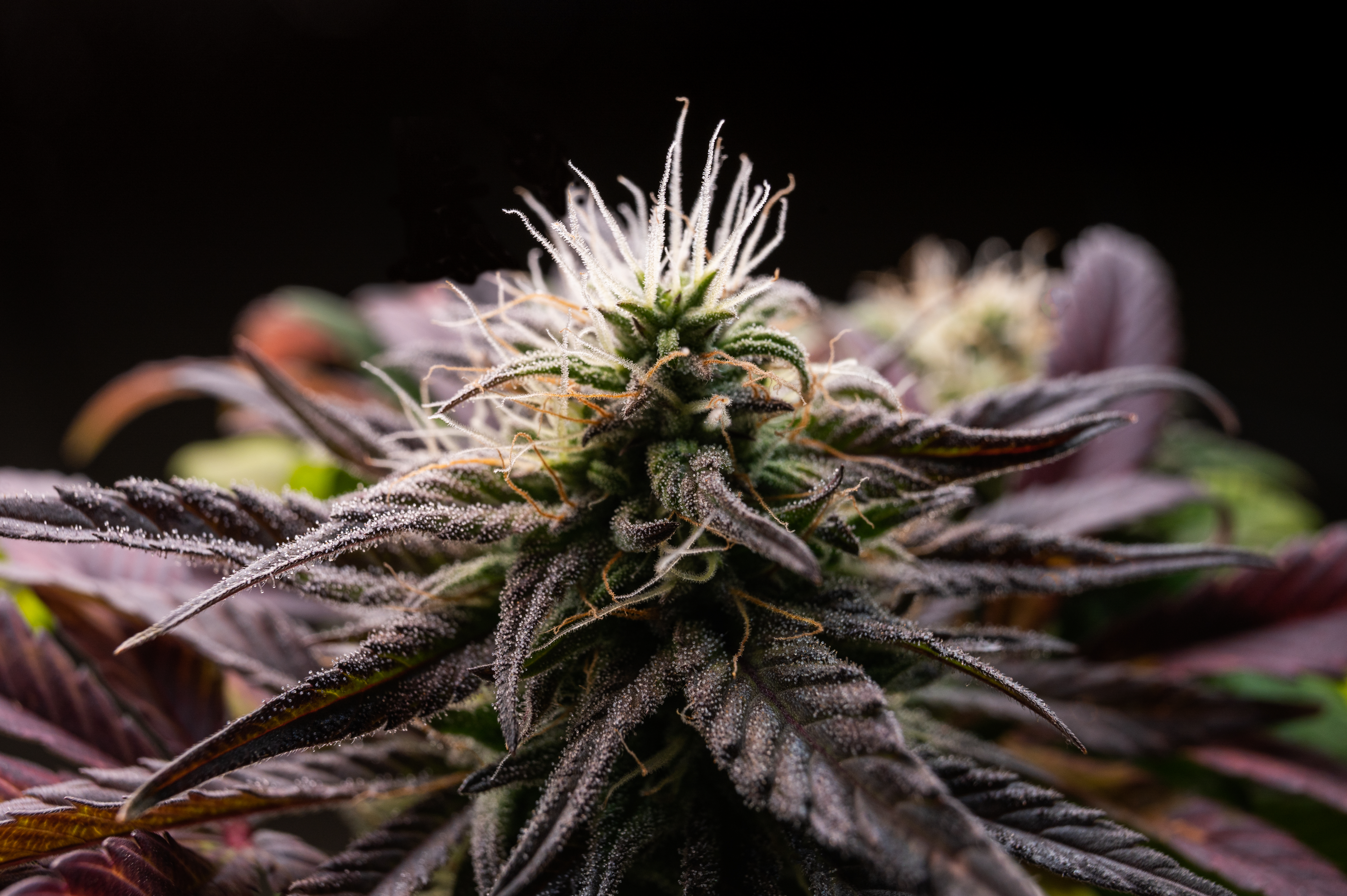


Purple stems in cannabis can cause concern, especially when the color appears without warning. A healthy cannabis plant often has green stems, so a change to purple, red, or dark brown may seem like a clear sign of trouble. However, stem color alone does not always mean that the plant is sick. Some cannabis plants naturally develop purple or reddish stems because of their genetics. Other plants may show the same color because of cold temperatures, strong light, nutrient problems, root stress, or damage.
The first step is to study the whole plant. Purple stems should never be judged as a single symptom. The leaves, roots, growth rate, temperature, watering routine, and feeding plan can all provide useful clues. A plant with purple stems may still be healthy when its leaves remain green, its branches stay strong, and new growth continues at a normal rate. A plant may have a problem when purple stems appear with yellow leaves, dark spots, slow growth, weak branches, curled leaves, or damaged roots.
Cannabis stems can change color in several ways. Some plants develop thin purple lines along the branches. Others show red or purple color on only one side of the stem. This may happen when that side receives stronger light. Some plants develop purple leaf stems, also called petioles, while the main stalk remains green. In more serious cases, the main stem and many branches may become dark purple while the plant shows poor growth. Each pattern can point to a different cause.
Natural plant pigments are one common reason for purple stems. These pigments are called anthocyanins. They can create red, blue, or purple shades in plant tissue. The amount of pigment depends partly on genetics. Some cannabis varieties are more likely to show purple stems, leaves, or flowers than others. Cooler temperatures may also make these colors easier to see. When the plant grows well and shows no other warning signs, the color may be a normal trait rather than a deficiency.
Phosphorus problems are another possible cause. Phosphorus is an important nutrient that supports root growth, energy transfer, and flower development. A plant that cannot absorb enough phosphorus may develop dark leaves, slow growth, weak stems, or purple coloring. However, adding more phosphorus is not always the correct solution. The growing medium may already contain enough of it. Incorrect pH, cold roots, excess fertilizer, or poor root health can prevent the plant from using the nutrient. This condition is often called nutrient lockout.
Temperature also plays an important role. Cold conditions can slow the movement of water and nutrients through the roots. The plant may struggle to take in phosphorus and other nutrients even when they are present in the soil or growing medium. Cold nights may also increase purple pigment in plants that carry the right genetic traits. A slight color change may be harmless, but strong cold stress can slow growth and weaken the plant.
Light stress may cause red or purple stems as well. A powerful grow light placed too close to the canopy can put pressure on the upper parts of the plant. The side of a stem facing the light may change color while the shaded side stays green. Other signs may include pale leaves, dry edges, curled leaf tips, or very short spaces between branches. Checking the position and strength of the light can help separate this problem from a nutrient issue.
Watering mistakes can affect stem color because healthy roots need both water and oxygen. Overwatering fills the spaces around the roots and reduces airflow. This can weaken nutrient uptake and create symptoms that look like a deficiency. Underwatering can also reduce nutrient movement when the root zone becomes too dry. Repeated changes between very wet and very dry conditions place extra stress on the plant.
Root damage is another factor that should not be ignored. Roots may suffer from poor drainage, compacted soil, small containers, extreme temperatures, salt buildup, or disease. A damaged root system cannot support healthy growth. The plant may develop purple stems, drooping leaves, slow growth, or several nutrient problems at the same time. Correcting the feeding plan will not fully solve the issue unless root health also improves.
Careful diagnosis is important because the wrong treatment can make the condition worse. Adding strong fertilizer to a plant with damaged roots may increase salt buildup. Changing pH too quickly may create new nutrient problems. Moving a stressed plant closer to a light may cause heat or light damage. A better method is to check one factor at a time and make small changes.
This guide explains the main causes of purple stems in cannabis and shows how to tell normal color from a possible plant health problem. It covers genetics, phosphorus deficiency, pH imbalance, cold stress, light exposure, watering habits, root damage, and nutrient imbalance. It also explains how the location of the color can provide useful clues.
The key point is that purple stems are a signal, not a final diagnosis. The color may be harmless, or it may show that the plant is under stress. Clear observation, accurate testing, and gradual correction can help protect the plant from unnecessary treatment. Healthy new growth is often the best sign that the cause has been found and corrected.
Are Purple Stems in Cannabis Normal?
Purple, red, or dark-colored stems can appear on cannabis plants for many reasons. Sometimes the color is a normal part of the plant’s genetics. Other times, it may be an early sign of stress, poor nutrient uptake, low temperature, or another growing problem. Stem color alone does not provide enough information to make a clear diagnosis. The condition of the leaves, roots, branches, and new growth must also be checked.
Some growers become concerned as soon as they notice a purple line on a stem or a red color on a leaf stalk. However, a healthy plant can have colorful stems and still grow at a normal rate. The main goal is to decide whether the color is a natural feature or part of a larger group of symptoms. Careful observation can help prevent unnecessary changes to fertilizer, watering, lighting, or pH.
Natural Stem Color in Healthy Plants
Some cannabis plants naturally produce purple, red, or reddish-brown stems. This color may come from genetics passed down from the parent plants. Certain cultivars are more likely to show dark colors in their stems, leaves, branches, or flowers. A plant with these genetic traits may develop colored stems even when the growing conditions are stable.
Natural pigments are responsible for many of these color changes. One group of pigments, known as anthocyanins, can create red, blue, and purple tones in plant tissue. The amount of visible color may depend on the cultivar, the age of the plant, and the growing environment. Some plants begin with green stems and develop darker shades as they mature. Other plants show purple or red coloring during the seedling or vegetative stage.
Genetic coloring often appears in a balanced pattern. Several branches may have a similar shade, or the color may form even lines along the stems. The plant may continue to produce healthy leaves, strong roots, and steady new growth. The leaves usually remain firm and properly shaped. There may be no spots, burnt tips, curling, or unusual fading.
A healthy plant with naturally purple stems should continue to grow at an expected rate. The distance between growth nodes should remain suitable for the cultivar and light level. New leaves should open normally. Branches should feel strong instead of soft, weak, or brittle. The plant should also respond well after watering.
Temperature can make genetic color more visible. Cool night temperatures may increase purple tones in plants that already carry the trait. This does not always mean the plant is damaged. However, very low temperatures can still create stress. The full growing environment should be reviewed before deciding that the color is harmless.
Light exposure may also affect pigment development. A stem that receives direct light may become redder or darker than a shaded section. This pattern can be normal when the rest of the plant looks healthy. Turning the plant or checking both sides of the stem can show whether the color is linked to light exposure.
The age of the stem may also matter. Young stems are often soft and green, while older stems can become darker, harder, or slightly woody. This natural change helps the plant support more leaves and flowers. A mature stem may not remain bright green throughout the entire life cycle.
When Purple Stems May Signal a Problem
Purple stems may require attention when they appear with other signs of poor health. Stem color becomes more important when the plant is growing slowly, losing leaves, developing spots, or showing weak new growth. A group of symptoms provides more useful information than color alone.
Slow growth is one common warning sign. A plant may stop gaining height, produce very small leaves, or take longer than expected to form new branches. The stem may become purple while the leaves turn unusually dark, dull, or damaged. This combination can be linked to nutrient problems, root stress, or cold conditions.
Leaf damage should be checked closely. Lower leaves may develop brown spots, dry patches, or dark edges. Some leaves may curl downward or become stiff. Yellowing may begin between the veins or spread from the tips. These signs can help separate a harmless genetic trait from a deficiency or environmental problem.
Weak branches can also suggest that the plant is under stress. Healthy stems should support the leaves without bending too easily. A weak stem may feel thin, soft, or fragile. Branches may droop even when the growing medium contains enough moisture. This can happen when roots are damaged or when the plant cannot take up enough nutrients.
Purple stems may also appear after a sudden change in the growing environment. A sharp drop in temperature, a strong increase in light intensity, or a major change in fertilizer strength can place stress on the plant. The color may develop quickly, especially on new growth or exposed branches.
Watering problems can create similar symptoms. Overwatered roots may not receive enough oxygen. This can reduce nutrient uptake and slow plant growth. Underwatered plants may also struggle to move water and nutrients through their tissues. Both conditions can lead to stress colors, drooping leaves, and weak development.
Incorrect pH is another possible cause. Nutrients may be present in the soil or growing solution but remain unavailable to the roots. This condition is often called nutrient lockout. Purple stems may appear when the plant has trouble taking up phosphorus or other important nutrients. Testing the root-zone pH can help confirm whether this is part of the problem.
The location of the color can provide useful clues. A single purple line on the side facing the light may suggest light exposure. Purple color across the entire plant may point toward genetics, temperature, or a wider root-zone problem. Color that appears only on older branches may be linked to age, while color on weak new growth may need faster attention.
New and old growth should be compared. A plant that is recovering may still have purple stems because old tissue does not always return to green. Healthy new leaves and stronger new branches are better signs of improvement. A plant that continues to decline after changes are made may need a more complete review of pH, roots, temperature, watering, and feeding.
It is important to avoid adding extra nutrients based only on purple stems. Too much fertilizer can burn the roots and make the original problem worse. Several major changes should not be made at the same time. Changing the light, fertilizer, pH, and watering schedule together makes it difficult to identify the real cause.
Purple stems in cannabis can be normal, especially when the plant has genetic traits that produce red or purple pigments. Healthy growth, strong branches, properly shaped leaves, and steady development usually suggest that the color is harmless. Light exposure, plant age, and cool temperatures may also make natural coloring more visible.
Purple stems may signal a problem when they appear with slow growth, leaf damage, weak branches, drooping, root trouble, or other signs of stress. Nutrient lockout, incorrect pH, cold conditions, watering mistakes, and excessive light can all play a role. The best approach is to inspect the whole plant and review the growing environment before making changes. Stem color should be treated as one clue rather than a complete diagnosis.
What Causes Purple Stems in Cannabis?
Purple stems in cannabis can appear for several reasons. Some causes are harmless, while others may point to stress or poor growing conditions. Stem color alone does not provide enough information to identify the exact problem. The entire plant must be checked, including the leaves, roots, growth rate, temperature, light level, and watering pattern.
A healthy cannabis plant may have purple, red, or dark lines on its stems because of genetics. Another plant may show the same color because it is cold, overwatered, underfed, or exposed to strong light. This is why growers should avoid making fast changes based only on color. Adding more nutrients without checking the cause can create new problems.
The location and timing of the color change can offer useful clues. Purple stems that appear early and remain stable may be genetic. A sudden color change that appears with slow growth, weak leaves, or spots may suggest stress. The main goal is to study the full pattern before choosing a treatment.
Genetics and Natural Pigments
Genetics is one of the most common harmless causes of purple stems. Cannabis plants inherit traits from their parent plants. These traits control plant size, leaf shape, flowering time, smell, and color. Some cultivars naturally produce red, purple, or dark-colored stems even when they are healthy.
The color often comes from natural plant pigments called anthocyanins. These pigments can create red, blue, and purple shades in different plant tissues. They may appear in the main stem, side branches, leaf stems, leaves, and flowers. Some plants produce more of these pigments than others.
A plant with genetic purple coloring may grow at a normal rate. Its leaves may remain healthy and green, and the branches may stay firm. The plant may also continue to develop new leaves and flowers without delay. When no other warning signs are present, the purple color may not require treatment.
Genetic color can also become stronger as the plant matures. A young plant may begin with green stems and develop purple lines later. Another plant may show purple color from the seedling stage. Both patterns may be normal when growth remains steady.
Temperature and light may make genetic color more visible. A plant that already has the ability to produce purple pigments may show deeper color during cool nights. Strong light may also increase color on the exposed side of the stem. This does not always mean that the plant has a deficiency.
The best way to judge genetic color is to compare it with the overall health of the plant. Healthy leaves, steady growth, good root development, and strong branches are positive signs. When purple stems appear without leaf damage or slow growth, genetics is a likely cause.
However, genetics should not be used as an excuse to ignore other symptoms. A plant can have natural purple stems and still develop a nutrient or root problem. The color may be normal, but yellow leaves, brown spots, or weak growth may still need attention. Each symptom should be examined separately.
Plant Stress and Environmental Conditions
Plant stress is another major cause of purple stems. Stress occurs when growing conditions move outside a healthy range. Cannabis plants react to stress in several ways. They may slow down, change color, droop, curl, or stop producing healthy new growth.
Cold temperatures can lead to purple stems. Cool air and cold root zones may slow plant activity. Roots may absorb water and nutrients more slowly. Phosphorus can become harder for the plant to use when the root zone is too cold. A plant under cold stress may develop purple stems, dark leaves, and slow growth.
Strong light can also affect stem color. When a grow light is too close, the upper parts of the plant may receive more energy than they can handle. The side of a stem facing the light may turn red or purple, while the shaded side stays green. Other signs of light stress may include pale leaves, dry edges, or upward curling.
Watering problems may cause similar changes. Overwatering fills the air spaces in the growing medium with water. Roots need oxygen to stay healthy, so waterlogged soil may reduce nutrient uptake. Purple stems may appear along with drooping leaves, slow growth, or heavy soil that stays wet for too long.
Underwatering can also stress the plant. Dry roots cannot move enough water and nutrients into the stems and leaves. The plant may wilt, and the growing medium may pull away from the sides of the container. Repeated cycles of severe dryness and heavy watering can weaken roots over time.
Physical damage may create purple or red coloring near the injured area. Bending, training, pruning, or accidental contact can place pressure on the stem. The plant may produce pigments around the damaged tissue while it repairs itself. Small color changes near a bend or cut may be normal, but soft, split, or rotting tissue needs closer attention.
Nutrient problems are another possible cause. Phosphorus deficiency is often linked with purple stems, but it usually causes other symptoms. Growth may slow, older leaves may darken, and spots may appear. Incorrect pH can also block phosphorus and other nutrients, even when they are present in the soil or nutrient solution.
Root problems may create many deficiency-like symptoms at the same time. Compacted soil, poor drainage, small containers, root disease, and extreme root-zone temperatures can reduce nutrient uptake. The plant may then show purple stems, yellow leaves, weak growth, or curling.
Several stress factors may happen together. A plant may be cold, overwatered, and growing in soil with the wrong pH. Treating only one issue may not solve the problem. A full review of the growing setup is often needed.
Purple stems in cannabis may come from genetics, natural pigments, or plant stress. Genetic purple coloring is usually harmless when the plant has healthy leaves, strong branches, and steady growth. Natural pigments may become more visible as the plant matures or when temperatures become cooler.
Stress-related purple stems often appear with other warning signs. Cold roots, strong light, watering mistakes, nutrient problems, poor pH, physical damage, and unhealthy roots may all affect stem color. A single purple stem should not lead to an immediate change in feeding.
Is Phosphorus Deficiency Responsible for Purple Stems?
Purple stems are often linked to phosphorus deficiency, but stem color alone cannot confirm the problem. Cannabis plants may develop purple, red, or dark stems for several reasons. Some plants show these colors because of genetics. Others change color because of cold temperatures, incorrect pH, root damage, strong light, or general stress.
A phosphorus problem becomes more likely when purple stems appear together with slow growth, dark leaves, damaged lower leaves, or weak flower development. The whole plant must be checked before any treatment is started. Adding extra phosphorus without a clear reason may create new nutrient problems and make the original issue harder to identify.
The Role of Phosphorus in Plant Growth
Phosphorus is one of the three main nutrients used by cannabis plants. It is shown as the letter P on fertilizer labels. The other two main nutrients are nitrogen, shown as N, and potassium, shown as K. These three nutrients support many important plant functions.
Phosphorus helps the plant move and store energy. Plants need energy to build roots, leaves, stems, and flowers. It also supports cell growth and helps the plant form new tissue. During early growth, phosphorus plays an important role in root development. A strong root system allows the plant to absorb water and nutrients from the growing medium.
Phosphorus is also important during flowering. Cannabis plants use more energy as they develop buds. A plant that cannot take in enough phosphorus may grow slowly or produce smaller flowers. Flower development may also take longer than expected.
A phosphorus shortage does not always mean that the growing medium contains too little phosphorus. The nutrient may already be present, but the roots may not be able to absorb it. This condition is often called nutrient lockout. Incorrect pH, cold root temperatures, excess fertilizer salts, poor drainage, and damaged roots may all limit phosphorus uptake.
This is why adding more fertilizer is not always the correct response. Extra phosphorus will not solve the problem when the roots cannot absorb nutrients. It may increase salt buildup and place more stress on the plant.
Common Signs of Phosphorus Deficiency
Purple or red stems may appear during phosphorus deficiency, but other symptoms usually develop as well. One of the first signs may be slow growth. The plant may stop gaining height, and new leaves may remain small. Branches may appear thin or weak because the plant does not have enough energy for normal development.
Leaves may become unusually dark green. Some may develop a dull, blue-green, or gray-green appearance. The leaves may feel firm or dry instead of soft and flexible. This dark color may be easy to miss because many growers expect a nutrient deficiency to cause yellow leaves.
Older and lower leaves are often affected first. The plant can move phosphorus from older tissue to younger growth when the nutrient supply is limited. As a result, lower leaves may develop dark spots, brown areas, or purple patches. The damage may begin near the leaf edges and spread toward the center.
Affected leaves may curl downward or become dry and brittle. Brown or black dead spots may appear as the problem gets worse. These damaged areas will not return to healthy tissue, even after the cause is corrected. Recovery should be judged by the condition of new leaves and stems.
The stems and leaf stalks may become red, purple, or dark. In some cases, the entire main stem changes color. In other cases, only the branches or the small stems that connect leaves to the plant are affected. The color may become stronger over time if the plant remains under stress.
Flowering plants may show poor bud development. Flowers may grow slowly, remain small, or take longer to mature. Branches may also become weak and may struggle to support the weight of developing flowers. Severe phosphorus stress can reduce the overall strength and health of the plant.
These symptoms may also appear during other problems. Cold temperatures can slow phosphorus uptake and cause purple coloring. Incorrect pH can block the nutrient even when enough is present. Root disease, overwatering, and strong fertilizer may create similar signs. For this reason, several conditions must be checked before phosphorus deficiency is confirmed.
Why Purple Stems Alone Are Not Enough for Diagnosis
Purple stems do not always mean that a cannabis plant needs more phosphorus. Many plants naturally produce purple or red pigments. This is often controlled by genetics. A healthy plant may have colorful stems while its leaves remain green and its growth stays fast and steady.
Natural color is more likely when the plant has no other signs of stress. The leaves should have a healthy shape and color. New growth should develop at a normal rate. The branches should feel strong, and the root zone should not have signs of damage.
Light exposure can also affect stem color. A stem may become red or purple only on the side facing a strong grow light. The shaded side may remain green. This one-sided pattern usually suggests a light response rather than a phosphorus deficiency.
Cold temperatures are another common cause. Cool air and cold growing media can reduce root activity. When roots become cold, they may absorb phosphorus more slowly. The plant may then show symptoms that look like a nutrient shortage, even when enough phosphorus is available.
The pH of the root zone must also be checked. When pH moves outside the suitable range, phosphorus may become difficult for the plant to absorb. A grower may continue adding fertilizer, but the plant may not improve because the real problem is nutrient availability.
Watering habits should be reviewed as well. Overwatered roots may receive too little oxygen. Underwatered roots may not move enough water and nutrients through the plant. Both conditions may lead to slow growth and stem discoloration.
The best diagnosis comes from checking several signs together. Purple stems, slow growth, dark lower leaves, damaged leaf tissue, and weak flower development may point toward phosphorus stress. Meter readings, temperature records, watering history, and root condition can provide more evidence.
Only one major change should be made at a time. Several treatments applied together can make it difficult to know what solved the problem. Sudden changes may also shock the plant.
Phosphorus deficiency can cause purple stems in cannabis, but stem color alone is not enough to confirm it. Phosphorus supports root growth, energy movement, strong stems, and flower development. A true deficiency often appears with slow growth, dark leaves, damaged lower foliage, weak branches, and poor bud development.
Genetics, cold conditions, incorrect pH, root stress, watering problems, and strong light can create similar purple or red colors. The full plant, root zone, and growing environment should be checked before extra phosphorus is added. Careful diagnosis helps prevent overfeeding and allows the real cause of the problem to be corrected.
How Does pH Cause Purple Stems?
The pH level around cannabis roots can affect how well the plant absorbs nutrients. A plant may receive enough fertilizer and still show signs of a deficiency when the pH is too high or too low. This problem is called nutrient lockout. Purple stems may appear when the roots cannot absorb enough phosphorus or other key nutrients.
Stem color alone does not prove that pH is the cause. Some cannabis plants naturally grow red or purple stems because of their genetics. However, pH problems become more likely when purple stems appear with slow growth, dark leaves, brown spots, yellowing, weak branches, or damaged lower leaves.
Checking the root zone can help show whether the plant has a true nutrient shortage or a nutrient uptake problem.
Nutrient Lockout in Soil and Growing Media
Nutrient lockout happens when nutrients are present in the growing medium but the roots cannot absorb them. The nutrients may be in the soil, coco coir, or nutrient solution, yet the plant acts as if they are missing. This often happens because the root-zone pH has moved outside a useful range.
Each nutrient is easier for roots to absorb within a certain pH range. When the pH becomes too acidic or too alkaline, some nutrients become less available. Phosphorus is one nutrient that may become difficult for the plant to use when the root-zone pH is incorrect.
Phosphorus helps with energy movement, root growth, stem strength, and flower production. When the plant cannot absorb enough phosphorus, growth may slow. Stems and leaf stalks may develop red, purple, or dark coloring. Older leaves may also become dull, dark, spotted, or damaged.
Incorrect pH may affect more than one nutrient at the same time. This is why pH problems often create mixed symptoms. A plant may show purple stems, yellow leaves, brown spots, and weak growth together. These symptoms may look like several separate deficiencies, even though the main cause is poor nutrient availability.
Soil, coco coir, and hydroponic systems behave in different ways. Soil can help reduce small pH changes because it contains organic matter and minerals that act as a buffer. Coco and hydroponic systems usually react faster to changes in water and nutrient solution. A pH mistake may become visible sooner in these systems.
The condition of the roots also matters. Damaged, cold, waterlogged, or unhealthy roots may struggle to absorb nutrients even when the pH reading appears acceptable. For this reason, pH should always be checked along with watering habits, root health, temperature, and fertilizer strength.
Adding more phosphorus is not always the right solution. If nutrient lockout is the real cause, extra fertilizer may remain unavailable. It may also increase salt buildup around the roots. This can make the problem worse instead of better.
Checking Root-Zone pH
Testing the water before it reaches the plant is useful, but it does not always show the true condition around the roots. The root-zone pH may be different from the pH of the fresh water or nutrient solution.
Several factors can change pH after watering. Fertilizer salts, old organic matter, microbes, root activity, and mineral buildup may all affect the growing medium. Water quality can also cause changes over time.
A digital pH meter is one of the most common tools for checking pH. The meter should be clean and properly calibrated. Calibration means checking the meter with special solutions that have known pH values. A meter that has not been calibrated may give false readings and lead to the wrong treatment.
Liquid test kits and pH strips can also provide basic information. However, they may be harder to read with dark nutrient solutions. Digital meters usually provide a more exact number when they are cared for correctly.
The pH of the water or nutrient mix should be tested after all nutrients and supplements have been added. Fertilizers can change the pH, so testing plain water before mixing may not provide a useful final reading.
Runoff water may also be tested. Runoff is the water that drains from the bottom of the container after watering. A large difference between the input pH and runoff pH may suggest that the root zone has become unbalanced. However, runoff results should be used with care because they can be affected by salt buildup and uneven watering.
Soil slurry testing is another method. A small sample of soil can be mixed with clean water and allowed to settle before testing. This may provide more direct information about the growing medium. The method should be performed in the same way each time so the results can be compared.
One unusual reading should not lead to a major correction. The meter may be dirty, the sample may be uneven, or the test may have been performed incorrectly. It is better to clean and calibrate the meter, test again, and compare several readings.
The full plant should also be inspected. Purple stems combined with slow growth and damaged leaves may point toward a root-zone problem. Purple stems on a fast-growing plant with healthy green leaves may be a normal genetic trait.
Correcting pH Safely
A pH problem should be corrected slowly. Sudden and extreme changes can shock the roots. Root stress may reduce water and nutrient uptake, which can create more symptoms.
The first step is to confirm that the pH is truly outside the useful range for the growing method. Soil usually performs well in a slightly acidic range, while coco and hydroponic systems often use a somewhat lower pH range. The exact target may depend on the growing medium, fertilizer program, and water source.
A pH adjustment product may be used to raise or lower the pH of water or nutrient solution. Only a small amount should be added at a time. The solution should be mixed well and tested again before it is given to the plant.
Strong household products should not be used without care. Some may create unstable changes or add unwanted materials to the root zone. Products made for plant nutrient solutions are usually easier to measure and control.
The strength of the fertilizer should also be reviewed. High fertilizer levels may lead to salt buildup, which can change the root environment and damage roots. Signs may include burnt leaf tips, very dark leaves, curling, slow growth, and poor water uptake.
Water quality can also affect pH control. Hard water may contain high levels of minerals that push pH upward. Very soft or filtered water may have little buffering strength, which can cause the pH to change quickly. Understanding the water source can make pH adjustment more consistent.
Watering practices should be corrected at the same time. Overwatering reduces oxygen around the roots and can make nutrient problems worse. Severe dryness can also limit nutrient movement. The growing medium should have good drainage and enough air space for healthy root activity.
After correction, the plant should be observed over several days. Old purple stems may not return to green. Damaged leaves may also remain damaged. Recovery is better judged by new growth. Healthy new leaves, stronger stems, and faster development suggest that the root zone is improving.
Several changes should not be made at once. Changing the pH, increasing nutrients, moving the lights, and changing the watering schedule on the same day can make the result difficult to understand. One careful correction at a time makes it easier to identify the true cause.
Incorrect pH can cause purple stems by limiting the plant’s ability to absorb phosphorus and other nutrients. This may happen even when enough fertilizer is already present in the growing medium. The result is nutrient lockout rather than a simple lack of nutrients.
Purple stems should be studied with other signs such as slow growth, dark leaves, spots, yellowing, and weak branches. Testing the water, nutrient solution, runoff, and root zone can help identify a pH problem. All meters should be clean and calibrated before results are trusted.
Corrections should be gradual. Proper pH, balanced fertilizer strength, healthy roots, good drainage, and stable watering practices work together. Improvement should be measured through healthy new growth rather than changes in old stems.
Can Cold Temperatures Turn Cannabis Stems Purple?
Cold temperatures can cause cannabis stems to turn purple, red, or dark in color. However, the color change does not always mean the plant is seriously damaged. Some plants develop purple stems because of genetics, while others show this color after exposure to cool air or a cold root zone. The best way to understand the cause is to check the plant’s growth, leaves, roots, and temperature conditions.
Cold stress can affect the entire plant. It may slow growth, reduce nutrient uptake, and make existing problems more visible. A plant that looks healthy except for purple stems may only be showing a natural color response. A plant with purple stems, damaged leaves, weak growth, and drooping may be dealing with a more serious temperature problem.
How Cold Affects Nutrient Uptake
Cannabis roots need a stable and suitable temperature to absorb water and nutrients. When the root zone becomes too cold, root activity slows down. The roots may still be surrounded by moisture and nutrients, but they may not be able to take them in at a normal rate.
Phosphorus uptake can become limited in cold growing conditions. Phosphorus supports energy transfer, root growth, stem development, and flower formation. When roots cannot absorb enough phosphorus, the plant may begin to show signs that look like a deficiency. These signs may include purple stems, dark leaves, slow growth, weak branches, and damaged lower leaves.
Cold-related nutrient problems are sometimes mistaken for a lack of fertilizer. This can lead to overfeeding. Adding more phosphorus may not solve the problem when the real cause is a cold root zone. Extra fertilizer may remain in the soil and create salt buildup. This can damage the roots and make nutrient uptake even more difficult.
The temperature of the growing medium is often more important than the temperature of the air. A room may feel warm enough, but plant containers can become cold when they sit on concrete, tile, or another cool surface. Cold floors pull heat away from the containers. The root zone may stay cold even during the day.
Slow growth is one of the first signs of cold root stress. The plant may drink less water because its roots are less active. The growing medium may remain wet for longer periods. This can reduce oxygen around the roots and increase the risk of root damage. Purple stems may then appear along with drooping leaves or delayed development.
Temperature-Related Pigment Changes
Cannabis plants contain natural pigments called anthocyanins. These pigments can create purple, red, blue, or dark colors in stems, leaves, and flowers. Some varieties produce more anthocyanins because of their genetics.
Cool temperatures can make these pigments more visible. A plant that has the right genetic traits may develop purple stems after several cool nights. This change may be harmless when the plant continues to grow well. The leaves may remain healthy, the branches may stay firm, and new growth may develop at a normal speed.
Temperature-related color often becomes stronger during the flowering stage. Night temperatures may fall, and the plant may naturally begin to show deeper colors. In this situation, purple stems do not always indicate a nutrient deficiency.
There is still an important difference between harmless color development and cold stress. Harmless purple coloring usually appears without serious damage. The plant remains strong and continues growing. Cold stress often causes other symptoms. These may include curled leaves, drooping, slow water use, weak stems, dark leaf tissue, or delayed flower growth.
The location of the color can also provide useful information. Purple coloring that appears evenly across healthy stems may be linked to genetics. A sudden color change after a drop in temperature may be linked to environmental stress. Purple stems combined with damaged older leaves may point to poor phosphorus uptake caused by cold roots.
Temperature changes should be reviewed over several days. One cool night may cause little harm, while repeated cold periods can place the plant under ongoing stress. Large changes between daytime and nighttime temperatures may also affect growth.
Managing Temperature Stress
Stable temperatures help cannabis plants absorb nutrients and grow at a steady rate. Sudden changes should be avoided when possible. The growing area should not become very warm during the day and very cold at night.
Containers should be protected from cold surfaces. Placing pots on plant stands, trays, wooden boards, or insulating mats can reduce heat loss. This simple step can help keep the root zone warmer, especially in basements, garages, and rooms with tile or concrete floors.
Airflow is also important. Fans should move air gently around the growing area, but they should not blow cold air directly onto the plants. A strong cold draft can cool the stems, leaves, and containers. Air from windows, vents, or doors may cause uneven temperatures in different parts of the room.
Heating may be needed when nighttime temperatures fall too low. Any heating system should warm the area evenly and safely. A heater should not point directly at the plants because dry, hot air can damage leaves. Temperature should be measured near the plant canopy and close to the containers. This provides a clearer picture of the conditions affecting both the leaves and roots.
Humidity should also be watched when temperatures change. Cold air can increase the risk of excess moisture around leaves and flowers. Poor airflow and high humidity may lead to mold or other plant health problems. Warm air, strong heating, and low humidity can create the opposite problem by drying plants too quickly.
Watering habits may need to change during cold periods. Plants often use less water when growth slows. Watering on the same schedule may leave the soil wet for too long. The growing medium should be checked before more water is added. Container weight, soil moisture, and leaf condition can help guide watering decisions.
Temperature corrections should be gradual. A cold plant should not be exposed to sudden high heat. Fast changes can create more stress. The goal is to return the plant to stable conditions and then watch the new growth.
Cold temperatures can turn cannabis stems purple by slowing nutrient uptake and making natural pigments more visible. A cold root zone may limit phosphorus absorption even when enough phosphorus is present in the soil. This can lead to purple stems, slow growth, and other deficiency-like symptoms.
Purple color may also be harmless when it comes from genetics and the plant remains healthy. The full plant should always be checked before making changes. Stable temperatures, insulated containers, gentle airflow, careful watering, and proper humidity can help prevent cold stress. Improvement should be judged by stronger new growth, healthier leaves, and normal water use rather than by the old stem color alone.
Can Light Stress Cause Purple or Red Stems?
Light is one of the most important parts of healthy cannabis growth. Plants use light to make energy, build leaves, and support strong stems. However, more light is not always better. When a grow light is too strong or too close to the plant, it may create stress. This stress can cause purple or red color to appear on stems, branches, or leaf stems.
Stem color caused by light stress does not always mean the plant has a nutrient deficiency. Light can affect plant pigments and change how the surface of a stem looks. A grower should study the position of the discoloration, the condition of the leaves, and the distance between the light and the canopy before changing the feeding program.
Excessive Light Intensity
Excessive light intensity happens when a plant receives more light than it can use. This problem is common in indoor gardens that use powerful LED or high-intensity grow lights. It may also happen when young plants are placed under strong lights too soon.
Purple or red stems may appear near the top of the plant because this area receives the strongest light. The color may be most visible on new branches, upper leaf stems, and the main stalk near the canopy. Lower stems may remain green because leaves above them provide shade.
Light stress often creates other signs besides stem color. The upper leaves may point upward at the edges. This shape is sometimes called “tacoing” because the leaf begins to fold like a taco shell. Leaves may also look dry, pale, yellow, or bleached. Severe stress may create light-colored patches that do not recover.
Some plants also stop growing taller when the light is too intense. The distance between leaf nodes may become very short, and the top growth may look crowded. A compact plant is not always unhealthy, but sudden changes in growth may show that the plant is under stress.
Canopy temperature is also important. A strong light can increase the temperature at the top of the plant, even when the room temperature seems normal. The upper leaves may lose water faster than the roots can replace it. This can cause curling, dryness, and slow growth.
Light stress is more likely when several signs appear together. Purple stems alone do not prove that the light is too strong. However, purple upper stems combined with bleached leaves, curled edges, and high canopy temperatures strongly suggest a light problem.
Light Exposure on One Side of the Stem
Light-related stem color may appear on only one side of the plant. The side facing the grow light may become red, pink, or purple, while the shaded side stays green. This pattern can help separate light exposure from a nutrient problem.
Plant pigments may become more visible when tissue receives strong light. These pigments help protect plant cells from stress. The color change may act like a natural shield against intense light. This is similar to the way some plants develop red or purple colors when exposed to strong sunlight.
To check for this pattern, examine the stem from several angles. If the bright color appears mainly on the side facing the lamp, light exposure may be the main cause. Rotate the plant slightly and check again after several days. New color may develop on the newly exposed side if the light remains strong.
A nutrient problem usually affects the plant in a wider pattern. For example, a phosphorus issue may cause dark leaves, slow growth, spots, or damage on older leaves. Light-related color is often limited to exposed surfaces and upper growth.
Leaf stems may show the same pattern. Petioles that face the light may become red or purple, while shaded petioles remain green. The upper branches may also have stronger color than lower branches.
Genetics can make this response more noticeable. Some cannabis plants naturally produce more red or purple pigment. Strong light may increase the visible color without causing serious damage. When the plant continues to grow well and the leaves stay healthy, the discoloration may not require treatment.
The location of the color provides useful information. A plant with purple stems throughout the entire canopy and lower growth may have a different problem. A plant with color only on the exposed side is more likely reacting to light.
Correcting Light Stress
Light stress should be corrected slowly. Sudden changes can create a new type of stress. Moving a plant from very strong light to weak light may reduce growth and make it harder to judge whether the correction worked.
The first step is to check the distance between the light and the canopy. Grow light makers often provide recommended hanging distances. These distances may change based on the age of the plant and the power setting of the lamp. Seedlings and young plants usually need less light than mature plants.
Raising the light can reduce intensity. Lowering the power setting may also help. One change should be made at a time. This makes it easier to see whether the plant improves.
The upper leaves should be checked each day. Healthy new growth should appear flatter, softer, and more evenly colored. Damaged leaves may not return to normal. The goal is to prevent new damage rather than repair old tissue.
Airflow can also reduce stress. Gentle air movement helps remove heat from the leaf surface. However, fans should not blow too strongly on the plant. Constant strong wind may cause dry leaves and weak growth.
Canopy temperature should be measured near the top leaves, not only at floor level. The area under the lamp may be warmer than the rest of the room. Good ventilation helps remove warm air and bring in fresh air.
Plants also need enough water to support healthy growth under strong light. More light can increase water use, but this does not mean the growing medium should stay wet all the time. Watering should match the plant’s needs and the drainage of the container.
Young plants should be introduced to strong light in stages. The light can begin at a lower setting or greater distance. Intensity can then be increased as the plant becomes larger and stronger. This process helps prevent shock.
Purple or red cannabis stems may develop when grow lights are too strong, too close, or focused on one side of the plant. Light stress often affects the upper stems and branches first. Other signs may include curled leaf edges, bleaching, dry leaves, high canopy temperatures, and slow growth.
Color that appears only on the side facing the light is often linked to direct exposure rather than a nutrient deficiency. Genetics may also make red or purple pigments easier to see.
Can Watering and Root Problems Cause Purple Stems?
Purple stems in cannabis can sometimes be linked to watering mistakes or root problems. These issues may not directly create the purple color, but they can reduce the plant’s ability to absorb nutrients. When roots are weak, damaged, or short of oxygen, the plant may show signs that look like a nutrient deficiency. Purple or red stems may appear along with slow growth, drooping leaves, dark leaves, or damaged lower foliage.
Water and roots work closely together. Roots need moisture to absorb nutrients, but they also need oxygen. Too much water can push oxygen out of the growing medium. Too little water can dry the roots and stop nutrient movement. Both conditions may stress the plant and affect stem color.
Purple stems alone do not prove that watering or root trouble is present. The entire plant should be checked before making changes. Leaf condition, soil moisture, container weight, drainage, and growth speed can provide useful clues.
Overwatering and Poor Drainage
Overwatering is one of the most common causes of root stress. It happens when the growing medium stays wet for too long. This problem may be caused by watering too often, using a container with poor drainage, or growing in soil that holds too much moisture.
Plant roots need oxygen to stay healthy. Small air spaces in the soil normally allow oxygen to reach the roots. When the soil becomes fully soaked, water fills these spaces. If the growing medium stays wet, the roots may struggle to breathe.
Low oxygen can reduce the plant’s ability to absorb phosphorus and other nutrients. The nutrients may still be present in the soil, but damaged or inactive roots cannot take them in well. This can produce symptoms that look like a nutrient deficiency, including purple stems, slow growth, dark leaves, and weak branches.
An overwatered cannabis plant often has drooping leaves. The leaves may look thick, firm, and heavy instead of dry and weak. The soil may stay wet for several days, and the container may feel heavy each time it is lifted. Growth may slow because the roots cannot support normal plant development.
Poor drainage makes overwatering more serious. Containers should have enough drainage holes to allow extra water to escape. The growing medium should also contain materials that create air space. Dense or compacted soil may stay wet even when the plant is not watered often.
Correcting overwatering usually requires allowing the growing medium to dry before watering again. The plant should not be left completely dry for a long period, but the top part of the soil should lose some moisture. Lifting the container is a simple way to judge when water is needed. A dry container feels much lighter than a freshly watered one.
Adding extra nutrients while the roots are waterlogged may make the problem worse. The first goal should be to restore healthy moisture levels and improve oxygen around the roots.
Underwatering and Dry Root Zones
Underwatering can also affect nutrient uptake. When the growing medium becomes too dry, roots cannot pull in enough water. Nutrients move into the plant through water, so very dry soil can slow or stop nutrient transport.
A severely underwatered cannabis plant may have limp, thin, or hanging leaves. The growing medium may pull away from the sides of the container. The pot may feel very light, and water may run quickly through dry soil without soaking it evenly.
Repeated periods of extreme dryness can damage small root tips. These fine roots are important because they absorb much of the plant’s water and nutrients. When they die or become damaged, the plant may take time to recover.
Purple stems may develop during long periods of water stress, especially when the plant already has another problem such as low temperatures, incorrect pH, or weak nutrition. Water stress can make existing deficiencies more visible.
Water should be added slowly when the root zone is very dry. Pouring a large amount of water at once may cause it to flow around the dry soil instead of soaking into it. Small amounts can be added in stages until the growing medium is evenly moist.
A steady watering routine is better than allowing the soil to move between extreme wetness and extreme dryness. Cannabis roots grow best when they receive enough moisture while still having access to air.
Root Damage and Root Disease
Roots may become damaged for several reasons. Small containers can limit root growth and cause the roots to circle around the inside of the pot. This condition is often called being root-bound. A root-bound plant may dry out quickly, grow slowly, and struggle to absorb nutrients.
Compacted soil can also restrict roots. Roots need open spaces so they can spread through the growing medium. Dense soil may block growth and hold too much water. This creates poor oxygen levels and may lead to weak roots.
Temperature can harm the root zone as well. Cold roots absorb phosphorus more slowly. This may cause purple stems or dark foliage, even when enough phosphorus is present. Very hot roots may also become stressed and lose their ability to take in water.
Root disease is another possible cause. Harmful fungi and other organisms can attack roots when the growing medium remains wet and low in oxygen. Diseased roots may become brown, soft, slimy, or weak. They may also produce an unpleasant smell.
Healthy roots are usually light in color and firm. The exact color can change depending on the growing medium and nutrients used, but roots should not appear rotten or slimy.
A plant with serious root damage may show several symptoms at the same time. Leaves may droop, yellow, curl, or develop dry areas. Growth may stop, and stems may become weak or discolored. These signs can look like several different nutrient problems because the roots are no longer working correctly.
The container size, drainage, root temperature, and soil structure should all be checked. Repotting may help when the plant has outgrown its container. Fresh, loose growing medium may also improve airflow and drainage. However, repotting should be done carefully because damaged plants can be sensitive to further stress.
Watering and root problems can contribute to purple stems by reducing nutrient uptake. Overwatering removes oxygen from the root zone, while underwatering limits water and nutrient movement. Poor drainage, compacted soil, small containers, cold roots, and root disease can also weaken the plant.
Can Nutrient Imbalances Cause Purple Stems?
Purple stems in cannabis may appear when the plant does not receive the right balance of nutrients. However, the color alone does not prove that a nutrient problem exists. Some cannabis plants naturally develop purple or red stems because of their genetics. Nutrient imbalance becomes more likely when purple stems appear together with slow growth, damaged leaves, weak branches, or other changes in plant health.
A nutrient imbalance can happen when the plant receives too little of one nutrient, too much of another, or a fertilizer mix that does not match its current stage of growth. It may also happen when salts collect around the roots or when the root-zone pH prevents the plant from taking in nutrients. Careful inspection is needed before changing the feeding plan.
Excess Fertilizer and Salt Buildup
Adding more fertilizer does not always make a cannabis plant grow faster. When the nutrient solution is too strong, unused minerals may collect in the soil or other growing media. This is often called salt buildup. High salt levels can make it harder for the roots to absorb water. They may also damage the small root tips that take in nutrients.
A plant affected by excess fertilizer may develop burnt leaf tips. The tips may first turn yellow and then become brown and dry. Leaves may also become very dark green, thick, or curved downward. Growth may slow even though the plant is receiving a large amount of fertilizer. Purple or red stems may appear because the damaged roots cannot take in phosphorus and other nutrients in a normal way.
Salt buildup may be more common when fertilizer is added during every watering without checking the plant’s needs. It can also happen when the growing medium dries too much between waterings. Water leaves the container through evaporation, but mineral salts stay behind. Over time, the concentration of these salts becomes stronger.
A grower should review the amount and frequency of fertilizer use before adding more nutrients. The strength of the nutrient solution may be checked with a suitable meter when one is available. Runoff readings may also offer clues, but they should not be used as the only source of information. The appearance of the plant, the feeding record, the water source, and the condition of the root zone should all be considered.
When excess fertilizer is suspected, the feeding strength should be reduced. Sudden and extreme changes may create more stress, so corrections should be made carefully. Fresh water with the correct pH may help lower the salt level in some growing systems. Good drainage is also important because extra water must be able to leave the container.
Calcium and Magnesium Problems
Calcium and magnesium are important for healthy cannabis growth. Calcium helps build strong plant tissue and supports new growth. Magnesium is a key part of chlorophyll, which allows leaves to use light for energy. Problems with these nutrients may appear at the same time as purple stems, especially when the root zone is unhealthy or the pH is outside the proper range.
Calcium problems often affect newer growth. Young leaves may appear twisted, uneven, or weak. Small brown spots may form on the leaves. New growth may look damaged even when older leaves still appear healthy. Stems may become weaker because the plant cannot build firm tissue at a normal rate.
Magnesium problems usually begin on older leaves. The areas between the leaf veins may turn pale or yellow while the veins remain green. This pattern may spread across the leaf. Rust-colored spots may develop as the problem becomes more serious. The plant may also grow slowly and show red or purple coloring on leaf stems.
These symptoms may be confused with phosphorus deficiency or other nutrient problems. For this reason, it is not helpful to treat purple stems with calcium, magnesium, or phosphorus without checking the rest of the plant. Adding extra supplements may make the nutrient balance worse.
Water quality may also affect calcium and magnesium levels. Some water sources naturally contain large amounts of minerals, while filtered or very soft water may contain very little. The growing medium also matters. Some soil mixes already contain calcium and magnesium, while other systems need a steady supply through the nutrient solution.
Incorrect pH can create symptoms that look like a direct deficiency. Calcium, magnesium, and phosphorus may be present around the roots but may not be available to the plant. Correcting the pH and improving root health may solve the problem without adding a large amount of extra fertilizer.
General Nutrient Imbalance
Cannabis plants need several major and minor nutrients. These nutrients work together. A problem may develop when one nutrient is supplied in a much larger amount than the others. Too much of one mineral may interfere with the plant’s ability to absorb another. This is sometimes called nutrient competition or nutrient lockout.
A common cause of imbalance is mixing several fertilizer products without a clear plan. One product may already contain calcium, magnesium, phosphorus, or nitrogen. Adding another product with the same ingredients may push the total amount too high. Labels should be read carefully so the full nutrient supply can be understood.
The plant’s growth stage must also be considered. Young plants usually need less fertilizer than large, mature plants. Nutrient needs may also change as the plant moves from early growth into flowering. A feeding program that worked during one stage may become too strong or unbalanced during another stage.
Purple stems should never be treated as a reason to add several supplements at once. Making many changes together makes it difficult to identify the true cause. It may also create new problems. A better method is to check the plant’s symptoms, watering routine, pH, temperature, light level, and fertilizer strength. The most likely problem can then be corrected one step at a time.
Healthy new growth is the best sign that the correction is working. Older stems may remain purple even after the plant recovers. Damaged leaves may also stay marked or discolored. The goal is not always to return old plant tissue to its former color. The goal is to restore steady growth and prevent the symptoms from spreading.
Nutrient imbalances can cause or worsen purple stems in cannabis, but stem color alone is not enough for a clear diagnosis. Excess fertilizer and salt buildup may damage roots and limit nutrient uptake. Calcium and magnesium problems may produce leaf spots, yellowing, twisted growth, and colored leaf stems. An uneven feeding program may also cause nutrients to compete with one another.
Do Purple Leaf Stems and Purple Main Stems Mean the Same Thing?
Purple coloring can appear on different parts of a cannabis plant. It may show on the leaf stems, side branches, or main stalk. These color changes do not always mean the same thing. The location, pattern, and spread of the purple color can give useful clues about the cause.
A grower should not judge the plant based on color alone. Other signs are also important. Leaf damage, slow growth, weak stems, cold conditions, strong light, and nutrient problems may all appear with purple coloring. Looking at the whole plant can help separate a natural trait from a growing problem.
Purple Petioles or Leaf Stems
A petiole is the small stalk that connects a leaf to a branch or main stem. It is often called a leaf stem. Petioles may turn red, pink, or purple even when the rest of the plant stays green.
Purple petioles can be a normal genetic trait. Some cannabis varieties naturally produce strong red or purple pigments. These colors may appear early in growth or become more visible as the plant matures. When the leaves look healthy and growth remains steady, colored petioles may not be a reason for concern.
Light exposure can also affect petiole color. Leaf stems near the top of the plant receive more direct light. This may cause stronger pigment production. A petiole may look purple on the side facing the light while the shaded side stays green. This pattern often points to light exposure instead of a serious nutrient issue.
Stress may also cause leaf stems to change color. Cold temperatures can slow root activity and make nutrients harder to absorb. Strong light can place pressure on the upper growth. Watering problems may also reduce nutrient movement through the plant. These conditions may lead to purple petioles, especially when other symptoms are present.
Leaf age is another factor. Older leaves may develop darker petioles before they fade or fall. This can happen as the plant moves nutrients away from old growth. A few purple petioles on older leaves may be less serious than purple coloring on many young leaves.
The leaves connected to the petioles should be checked closely. Yellowing, dark spots, dry edges, curling, or slow growth may point to a larger problem. If the leaves remain flat, green, and healthy, the purple color may be harmless.
Purple Branches and Main Stalks
Purple coloring on branches or the main stalk may have several possible causes. It can still be genetic, but a wider color change may require closer inspection.
Some cannabis plants naturally form purple lines or stripes along the main stem. These markings may stay in the same areas as the plant grows. They may also appear on branches that receive direct light. If the stem is firm, growth is strong, and the leaves look healthy, the color may be part of the plant’s normal pattern.
A main stem that turns purple across a large area may also show plant stress. Cold root zones are a common cause. Cold soil or growing media can reduce nutrient uptake. Phosphorus may become harder for the roots to absorb, even when it is present in the soil. The plant may then develop slow growth, dark leaves, weak branches, or damaged lower leaves.
Incorrect pH can create a similar problem. The roots may not be able to take in certain nutrients when the pH is too high or too low. This is called nutrient lockout. Purple stems may appear along with leaf spots, poor growth, or unusual leaf color.
Strong light can also affect branches and main stems. The top parts of the plant receive the most light and heat. A branch may become purple on its exposed side. If only the light-facing surface changes color, the cause may be environmental rather than a full nutrient deficiency.
Stem texture should also be checked. A healthy stem should feel firm and strong. A soft, weak, cracked, or damaged stem may suggest physical injury, disease, or poor root health. Color combined with weakness is more concerning than color alone.
The speed of the change also matters. A stem that slowly becomes purple over several weeks may be showing a normal genetic trait. A stem that changes quickly after a cold night, heavy feeding, or major pH shift may be reacting to stress.
Reading the Location of the Symptoms
The location of purple coloring can help narrow the possible cause. Purple color only on the upper growth may be linked to strong light, cool air near the canopy, or natural pigment. Purple color on lower stems may be connected to older growth, root-zone problems, or a nutrient issue.
New growth should be compared with older growth. Purple coloring that appears only on older leaf stems may not be serious. However, purple coloring that spreads into new growth may show that the plant is still under stress.
The grower should also check whether the color is even or one-sided. One-sided purple coloring often points to direct light exposure. An even color around the whole stem may be more likely to come from genetics, temperature, or nutrient uptake problems.
The number of affected areas is also important. One or two purple petioles may not mean much. Many purple leaf stems, branches, and main stalk sections may show a wider issue. The leaves, roots, watering pattern, temperature, and pH should all be checked before making changes.
Purple leaf stems and purple main stems do not always mean the same thing. Purple petioles may come from genetics, light exposure, leaf age, or mild stress. Purple branches and main stalks may also be natural, but they can point to cold temperatures, incorrect pH, poor nutrient uptake, or root problems.
The location and pattern of the color provide useful clues. Upper growth may react to light, while lower growth may show root or nutrient stress. One-sided color often suggests light exposure. Widespread purple coloring with weak growth or damaged leaves may require correction.
Stem color should always be studied with other plant symptoms. Healthy leaves, strong stems, steady growth, and normal roots often suggest that the purple color is harmless. Slow growth, leaf damage, weak branches, and spreading symptoms may show a problem that needs attention.
How to Diagnose and Fix Purple Stems in Cannabis
Purple stems can appear for many reasons. Sometimes the color comes from genetics and does not mean the plant is unhealthy. In other cases, purple stems may appear because of cold conditions, incorrect pH, poor watering, root stress, strong light, or a nutrient problem. Since several causes can produce a similar color, the best approach is to inspect the whole plant before making changes.
A grower should avoid adding extra fertilizer as soon as purple stems appear. Adding nutrients without checking the real cause may increase salt levels, damage the roots, or make nutrient uptake worse. A careful step-by-step check makes it easier to find the most likely problem and apply the correct solution.
Step 1: Check the Plant’s Genetics and Growth Pattern
The first step is to consider the plant’s genetics. Some cannabis varieties naturally develop red, purple, or dark-colored stems. This color may become stronger as the plant matures. It may also appear during cooler nights or periods of strong light.
Genetic coloring is more likely when the plant continues to grow at a normal rate. The leaves should look healthy, the branches should remain firm, and new growth should appear regularly. The plant should not show major signs of weakness, such as severe yellowing, dead spots, curled leaves, or delayed development.
Color may also appear only in certain areas. For example, the side of a stem facing the grow light may become purple while the shaded side remains green. This pattern often points to pigment development or light exposure rather than a serious nutrient shortage.
Reliable information about the variety may help. Some seed producers describe whether a cultivar often develops dark stems or purple leaves. However, plant care decisions should not be based on genetics alone. Even a variety known for purple coloring may still develop stress. Growth rate, leaf condition, and root health should also be checked.
Step 2: Inspect Leaves and New Growth
The leaves often provide more useful information than stem color. Purple stems without leaf damage may be harmless. Purple stems with slow growth, spots, yellowing, or curling may point to a plant health problem.
Start by checking the lower leaves. Some nutrient problems appear on older leaves first because the plant moves mobile nutrients toward new growth. A phosphorus problem, for example, may cause older leaves to become very dark, dull, damaged, or marked with brown areas. Lower leaves may also dry out or fall from the plant.
Next, check the newest leaves. New growth should be firm, evenly shaped, and free from unusual spots. Twisted, pale, weak, or damaged new leaves may suggest root-zone problems, pH imbalance, or poor nutrient availability.
The location of the symptoms matters. Damage near the top of the plant may be linked to strong light or heat. Problems across the entire plant may be connected to the roots, watering routine, or nutrient supply. Symptoms that begin near the bottom may be linked to age, root stress, or a mobile nutrient shortage.
It is helpful to record changes over several days. A simple written note or photograph can show whether the color is spreading. New damage is more important than old damage because damaged plant tissue may not return to its original color.
Step 3: Review the Growing Environment
Temperature should be checked during both the day and the night. Cold air can slow root activity and reduce nutrient uptake. Phosphorus may become harder for the plant to absorb when the root zone becomes too cold. This can create symptoms that look like a nutrient shortage even when phosphorus is present in the growing medium.
Containers placed directly on a cold floor may develop a colder root zone than expected. Raising the containers slightly or placing an insulating layer underneath them may help protect the roots.
Large temperature changes between day and night may also increase purple coloring. The color itself may not be harmful, but long periods of low temperature can slow growth and weaken the plant.
Light conditions should also be reviewed. A grow light that is too close may place stress on the upper stems and leaves. Other signs may include leaf edges curling upward, pale areas, dry patches, or slowed growth near the top of the plant. Adjusting the light height or intensity may help, but the change should be gradual.
Airflow and humidity should remain stable. Poor airflow may keep the root zone or growing medium wet for too long. Very dry air may increase water loss and stress. The goal is to create a stable environment rather than making sudden changes.
Step 4: Examine Watering and Roots
Watering mistakes are a common cause of plant stress. Overwatering does not always mean that too much water was added at one time. It may also mean that water was added too often and the root zone did not have time to dry.
Roots need both moisture and oxygen. When the growing medium stays soaked, air spaces fill with water. This can reduce oxygen around the roots and slow nutrient uptake. The plant may begin to droop, grow slowly, or show several deficiency-like symptoms.
Underwatering can also cause trouble. A very dry root zone limits the movement of water and nutrients through the plant. Repeated cycles of extreme dryness followed by heavy watering may place extra stress on the roots.
The container can provide useful clues. A heavy container often means that the growing medium still contains plenty of water. A light container may be ready for watering. The surface alone should not be used as the only guide because the lower part of the container may still be wet.
Drainage holes should remain open. The growing medium should not be packed too tightly. Roots may also become restricted when the container is too small. Root crowding can slow growth and reduce the plant’s ability to absorb water and nutrients.
Healthy roots are usually light in color and do not have a strong, unpleasant smell. Dark, slimy, or damaged roots may indicate serious root stress. Improving drainage, watering habits, airflow, and root-zone temperature may be more useful than adding extra fertilizer.
Step 5: Test pH and Nutrient Strength
Incorrect pH can prevent the roots from taking up nutrients. This condition is known as nutrient lockout. Nutrients may be present in the soil or solution, but the plant may not be able to use them properly.
A calibrated pH meter gives the most useful reading. The water or nutrient solution should be tested before it reaches the plant. Root-zone or runoff readings may also provide useful information, but one unusual result should be checked again before major changes are made.
The correct pH range depends on the growing method. Soil and soilless systems do not always use the same target range. The important point is to keep the root zone within a stable range that allows nutrients to remain available.
Nutrient strength should also be reviewed. A solution that is too strong may cause salt buildup and root damage. Signs may include burned leaf tips, very dark leaves, curling, or slow growth. A weak or incomplete feeding program may also cause poor growth, but more fertilizer should not be added until pH, watering, and root health have been checked.
Sudden pH changes should be avoided. A small correction followed by careful observation is safer than a large adjustment.
Step 6: Apply the Most Likely Correction
Once the checks are complete, the most likely cause can be corrected. Only one or two major changes should be made at a time. Changing the temperature, light, watering routine, pH, and fertilizer strength all at once can make it difficult to tell which action helped.
Cold stress may improve after the root zone and night temperature become more stable. Light stress may improve after the light is raised or reduced. Watering problems may improve when the growing medium is allowed to dry at a more suitable rate.
When pH is outside the proper range, it should be corrected gradually. When excessive fertilizer is suspected, the feeding routine should be reviewed before more nutrients are added. When a true phosphorus shortage is supported by leaf symptoms, slow growth, and correct pH, a balanced nutrient solution that contains phosphorus may help.
Recovery should be judged by new growth. Old stems may remain purple even after the original problem has been corrected. Damaged leaves may also stay marked. Healthy new leaves, stronger branches, and steady growth are better signs of recovery than a complete return to green stem color.
Purple stems should be diagnosed by looking at the entire plant. Genetics may cause normal purple coloring, while cold conditions, strong light, incorrect watering, root damage, pH problems, and nutrient imbalance may cause stress-related color changes. The leaves, roots, growing environment, and growth rate should all be checked before treatment begins.
Conclusion: Preventing and Managing Purple Cannabis Stems
Purple stems in cannabis can have many causes. Some are harmless, while others may point to stress or poor growing conditions. The most important step is to avoid treating stem color as a clear sign of one problem. Purple, red, or dark stems do not always mean that the plant has a phosphorus deficiency. Stem color must be studied together with leaf health, root condition, growth speed, temperature, watering habits, light levels, and nutrient use.
Genetics are one of the most common harmless causes of purple stems. Some cannabis varieties naturally produce more purple or red pigment than others. This color may appear on the main stalk, side branches, or leaf stems. A plant with natural purple coloring may still grow quickly and produce healthy green leaves. Its branches may remain strong, and new growth may continue without damage. When the plant looks healthy in every other way, the purple color may not need to be corrected.
Phosphorus problems can also cause purple stems, but other symptoms often appear at the same time. The plant may grow slowly, and older leaves may become dark, dull, spotted, or damaged. Flower development may also slow down. A lack of phosphorus in the root zone is not always the true cause. The nutrient may already be present, but the roots may not be able to absorb it. This condition is called nutrient lockout.
Incorrect pH is a common cause of nutrient lockout. When the root-zone pH is too high or too low, phosphorus and other nutrients may become harder for the plant to use. Adding more fertilizer may not solve the problem. It may make the root zone too salty and cause further damage. Testing the pH of the water, nutrient mix, and growing medium can help reveal whether the roots are in the correct range. Any pH adjustment should be made slowly because sudden changes can create more stress.
Cold conditions may also lead to purple stems. Cool air and cold growing media can slow root activity. When roots become too cold, they may absorb water and nutrients at a slower rate. This can create symptoms that look like a nutrient deficiency. Cool nights may also increase purple coloring in plants that already carry strong purple genetics. Containers should not remain on cold concrete or another cold surface. Stable temperatures around the leaves and roots help the plant continue normal growth.
Light stress is another factor to consider. Very strong grow lights may cause red or purple coloring on exposed stems. The side of a stem facing the light may show more color than the shaded side. Other signs of light stress may include curled leaf edges, pale upper leaves, dry patches, or bleaching. Raising the light or lowering its intensity may reduce the stress. Changes should be gradual so the plant has time to adjust.
Watering problems can also affect stem color. Overwatering fills the growing medium with too much water and reduces the oxygen available to the roots. Weak or oxygen-starved roots cannot absorb nutrients well. The plant may droop, grow slowly, or develop signs that look like several deficiencies. Underwatering can also limit nutrient movement. Very dry roots cannot take up enough water, and the plant may become weak. A steady watering routine allows the root zone to become partly dry without reaching a severe drought condition.
Root health should always be checked when purple stems appear with poor growth. Roots may suffer from compacted soil, poor drainage, small containers, high salt levels, root disease, or extreme temperatures. Healthy roots are usually firm and light in color. Damaged roots may appear brown, soft, or unhealthy. They may also produce an unpleasant smell. Nutrient changes will not work well until the root problem is corrected.
Nutrient imbalance is another possible cause. Too much fertilizer can be as harmful as too little. A strong nutrient mix may burn the roots and create salt buildup. The plant may develop dark leaves, burnt tips, curling, or slow growth. Several nutrient products should not be added without checking how they work together. A complete feeding program should provide balanced levels of major and minor nutrients. More phosphorus should only be added when the full symptom pattern supports that choice.
The location of the purple color may also give useful clues. Purple leaf stems may result from genetics, direct light, or mild stress. Purple coloring on the main stalk and many branches may suggest a wider issue, especially when leaves are also damaged. New growth should be compared with older growth. A problem that spreads into fresh leaves and stems may still be active. Color that remains only on older tissue may show that the plant has already started to recover.
A careful diagnosis should follow a clear order. First, the grower should consider whether the variety normally develops purple stems. Next, the leaves and new growth should be checked for spots, yellowing, curling, dark color, or slow development. The growing area should then be reviewed for temperature changes, light stress, poor airflow, or high humidity. Watering habits, drainage, and root condition should also be examined. Finally, pH and nutrient strength should be tested with properly calibrated tools.
Only one main correction should be made at a time when possible. Changing the light, temperature, watering routine, pH, and nutrient level all at once can make the real cause difficult to identify. Sudden changes may also place the plant under more stress. A gradual correction followed by careful observation gives clearer results.
Old stems may remain purple even after the cause has been corrected. Recovery should be judged by the condition of new growth. Healthy new leaves, stronger branches, better color, and steady development are signs that the plant is improving. Damaged leaves may not return to their original appearance, but the plant can still recover and continue growing.
Preventing purple stem problems depends on a stable growing environment. Cannabis plants need balanced nutrition, suitable root-zone pH, proper watering, healthy drainage, safe light levels, and steady temperatures. Regular checks help identify small problems before they become severe. Simple records of feeding, watering, temperature, and plant changes can also make diagnosis easier.
Purple stems should be treated as a clue rather than a final diagnosis. They may come from natural genetics, phosphorus trouble, pH imbalance, cold roots, light stress, watering mistakes, root damage, or excess fertilizer. The full condition of the plant must guide the response. Careful testing and gradual corrections can prevent unnecessary feeding and reduce the risk of further stress. When the cause is identified correctly, healthy new growth should become the clearest sign that the plant is back on track.
Research Citation
Bevan, L., Jones, M., & Zheng, Y. (2021). Optimisation of nitrogen, phosphorus, and potassium for soilless production of Cannabis sativa in the flowering stage using response surface analysis. Frontiers in Plant Science, 12, Article 764103. https://doi.org/10.3389/fpls.2021.764103
Kpai, P. Y., Hughes, B. R., Jones, M. A., & Zheng, Y. (2024). Mineral nutrition for Cannabis sativa in the vegetative stage: A response surface analysis of nitrogen, phosphorus, and potassium. Frontiers in Plant Science, 15, Article 1411533.
Massuela, D. C., Munz, S., Hartung, J., Nkebiwe, P. M., & Graeff-Hönninger, S. (2023). Cannabis Hunger Games: Nutrient stress induction in flowering stage—Impact of organic and mineral fertilizer levels on biomass, cannabidiol yield, and nutrient use efficiency. Frontiers in Plant Science, 14, Article 1233232. https://doi.org/10.3389/fpls.2023.1233232
Shiponi, S., & Bernstein, N. (2021). The highs and lows of P supply in medical cannabis: Effects on cannabinoids, the ionome, and morpho-physiology. Frontiers in Plant Science, 12, Article 657323. https://doi.org/10.3389/fpls.2021.657323
Pei, Z., Liu, H., Zhang, F., & Wang, S. (2024). For a colorful life: Recent advances in anthocyanin biosynthesis and regulation in plants. International Journal of Molecular Sciences, 25.
Pennsylvania State University, Department of Plant Science. (n.d.). Phosphorus deficiency. Retrieved July 20, 2026, from https://plantscience.psu.edu/research/labs/roots/methods/methods-info/nutritional-disorders-displayed/phosphorus-deficiency
Silva, G. (2016, June 22). Purple corn syndrome: What causes purple coloration of corn? Michigan State University Extension. https://www.canr.msu.edu/news/purple_corn_syndrome_what_causes_purple_coloration_of_corn
University of Florida Institute of Food and Agricultural Sciences. (n.d.). Fertilizer management for greenhouse vegetables: Florida greenhouse vegetable production handbook. https://ask.ifas.ufl.edu/publication/CV265
University of Minnesota Extension. (n.d.). Quick guide to fertilizing plants. https://extension.umn.edu/manage-soil-nutrients/quick-guide-fertilizing-plants
University of Minnesota Extension. (n.d.). Understanding phosphorus fertilizers. https://extension.umn.edu/phosphorus-and-potassium/understanding-phosphorus-fertilizers
Questions and Answers
Q1: What causes purple stems in cannabis plants?
Purple stems may result from genetics, cold temperatures, nutrient deficiencies, incorrect pH, strong light exposure, or general plant stress.
Q2: Are purple stems always a sign of nutrient deficiency?
No. Some cannabis strains naturally develop purple or red stems because of their genetics. A deficiency is more likely when purple stems appear with slow growth, leaf discoloration, or weak development.
Q3: Which nutrient deficiency can cause purple stems?
Phosphorus deficiency is commonly linked to purple or reddish stems. Magnesium deficiency and other nutrient problems may also contribute to stem discoloration.
Q4: What are the signs of phosphorus deficiency in cannabis?
Common signs include purple stems, dark or dull leaves, slow growth, weak roots, brown leaf spots, and older leaves that become dry or damaged.
Q5: Can low temperatures cause cannabis stems to turn purple?
Yes. Cold temperatures can slow nutrient uptake and increase purple pigmentation. The color may become more noticeable during cool nights or sudden temperature drops.
Q6: Can incorrect soil pH lead to purple stems?
Yes. An incorrect pH can prevent the roots from absorbing phosphorus and other nutrients, even when those nutrients are present in the growing medium.
Q7: How can purple stems caused by deficiency be corrected?
The growing medium pH should be checked first. Temperature, watering, root health, and nutrient levels should also be reviewed before applying a balanced nutrient solution.
Q8: Can too much light cause purple stems?
Yes. Strong light or light placed too close to the plant can create stress and cause exposed stems to develop red or purple coloring.
Q9: Should phosphorus be added immediately when stems turn purple?
No. Adding phosphorus without confirming the cause may create nutrient buildup or lockout. Other possible causes, such as genetics, cold conditions, and incorrect pH, should be checked first.
Q10: Will purple stems return to green after the problem is fixed?
New growth may develop normal green stems after the cause is corrected. Older stems may remain purple even when the plant has recovered.