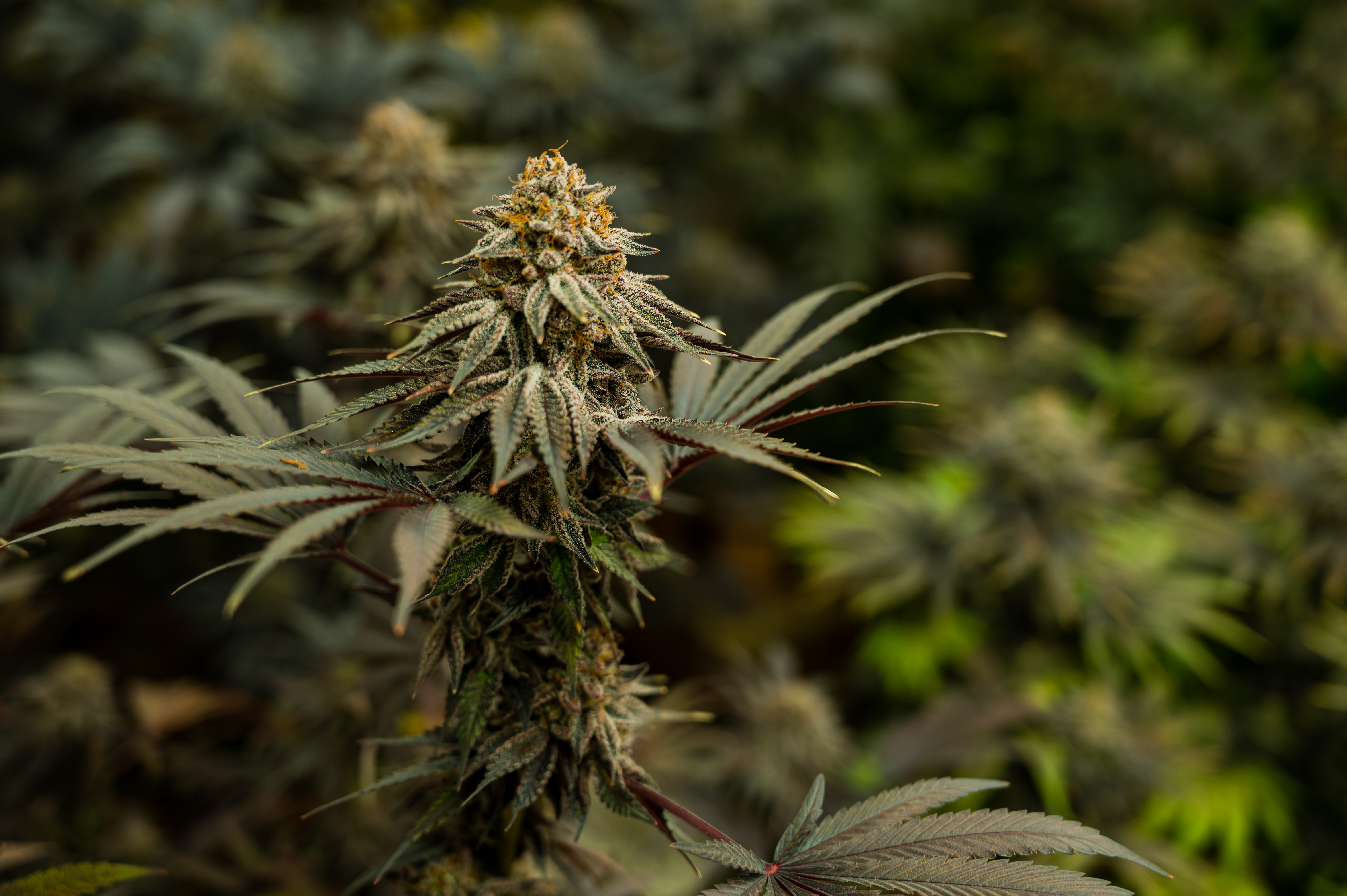


A sugar leaf is a small leaf that grows around the flowers of a cannabis plant. These leaves are usually found close to the buds and may even stick out from between the flowers. They are called sugar leaves because their surfaces often look as if they have been covered with tiny grains of sugar. This frosty look does not come from real sugar. It comes from small resin glands called trichomes.
Sugar leaves are one of several types of leaves found on a cannabis plant. They are much smaller than the large fan leaves that grow farther away from the flowers. Fan leaves usually have long stems and wide blades. Sugar leaves are shorter, narrower, and grow much closer to the developing buds. Because of this location, they are often covered with more trichomes than larger leaves.
Trichomes are very small structures that form on the surface of cannabis flowers and nearby leaves. They may look like tiny clear or white crystals when viewed with the naked eye. Under magnification, some trichomes look like small mushrooms with round heads. These glands are important because they contain many of the chemical compounds linked with cannabis.
Cannabinoids are one group of compounds found in cannabis trichomes. THC and CBD are two of the best-known cannabinoids, although the cannabis plant contains many others. Sugar leaves may contain these compounds because they can have a thick layer of trichomes. However, they usually contain fewer cannabinoids by weight than the flowers themselves. The amount can also differ between plants, strains, and individual leaves.
Trichomes can also contain terpenes. Terpenes are natural compounds that help create the smell and flavor of many plants, including cannabis. Different terpene combinations can produce scents that seem fruity, herbal, spicy, earthy, or citrus-like. Since sugar leaves grow close to the flower and may have many trichomes, they can contain some of the same aromatic compounds found in the buds.
For someone seeing a mature cannabis plant for the first time, sugar leaves can be easy to confuse with other plant parts. A flowering cannabis plant often has many layers of leaves, stems, and flowers packed together. Large fan leaves extend outward from the plant and collect light. Smaller sugar leaves grow much closer to the buds. Some are almost hidden inside the flower, while others extend a short distance from its surface.
The purpose of sugar leaves during plant growth is not limited to their trichomes. Like other green leaves, they contain chlorophyll and can perform photosynthesis. Photosynthesis is the process plants use to turn light into energy. Sugar leaves can therefore help support the plant while flowers are developing. Their position near the buds also makes them a normal part of cannabis flower structure.
Sugar leaves become especially easy to notice later in the flowering stage. As flowers develop, more trichomes may appear on the buds and nearby leaves. This can give the sugar leaves a shiny, sticky, or frosted appearance. Some plants develop very heavy trichome coverage, while others may have less. Genetics, growing conditions, plant health, and maturity can all affect how the leaves look.
At harvest time, sugar leaves become important for another reason. Growers often remove at least some of them while trimming cannabis flowers. Trimming is the process of removing extra leaf material from harvested buds. This can improve the appearance of the flower and reduce the amount of leafy plant material in the final product.
However, trimmed sugar leaves are not always treated as waste. Because they may contain trichomes, they can still hold useful cannabinoids and terpenes. In legal cannabis production, trichome-rich trim may be used as material for products such as concentrates, infused oils, pre-rolls, or other processed cannabis items. The exact use depends on the quality of the trim, local laws, and how much resin remains on the leaves.
Sugar leaves can also help people understand why different parts of a cannabis plant have different values. Large fan leaves may contain some cannabinoids, but they usually have far fewer visible trichomes than sugar leaves. Cannabis flowers normally have the highest concentration of resin glands. Sugar leaves fall somewhere between these two plant parts. They are not the same as buds, but they can contain more resin than larger leaves.
It is also important to understand that a frosty appearance does not provide an exact measure of potency. A sugar leaf with many visible trichomes may contain cannabinoids, but its THC or CBD level cannot be known just by looking at it. Laboratory testing is needed to measure cannabinoid content accurately. Color, stickiness, and visible crystals can provide clues about resin production, but they do not show an exact percentage.
Understanding sugar leaves makes it easier to understand cannabis plant anatomy as a whole. These small leaves are closely connected to flower growth, trichome production, harvesting, and cannabis processing. They may look like minor parts of the plant, but they play several useful roles during growth and after harvest.
The following sections explain why sugar leaves have their unusual name, how they differ from fan leaves, what trichomes they contain, and whether they contain THC. They also cover common questions about trimming, smoking, potency, and possible uses after harvest. By understanding what sugar leaves are and how they fit into the cannabis plant, readers can better understand why these small, frosty leaves receive so much attention.
Why Are They Called Sugar Leaves?
Sugar leaves are one of the most noticeable parts of a mature cannabis flower. They are small leaves that grow close to the buds and often stick out from between the flower clusters. As the plant moves through the flowering stage, these leaves may become covered with tiny, shiny structures. This coating can make the leaves look as if they were sprinkled with fine sugar. That frosted appearance is the main reason they are called sugar leaves.
The name can be confusing for people who are new to cannabis. Sugar leaves do not contain table sugar, and growers do not add any kind of sweet coating to them. The white or crystal-like surface comes from natural structures called trichomes. These trichomes are an important part of the cannabis plant because they produce and hold many of the compounds linked with the plant’s aroma, flavor, and effects.
Where the Name “Sugar Leaf” Comes From
The term “sugar leaf” is based almost completely on appearance. When the plant reaches the flowering stage, small leaves around the buds may develop a thick layer of trichomes. Under normal light, these trichomes can look white, shiny, or slightly cloudy. From a distance, the coating may look like grains of sugar.
This is especially easy to notice on cannabis plants that produce large amounts of resin. Some sugar leaves may look lightly dusted, while others can appear almost completely covered in crystals. The closer a leaf is to a mature flower, the more likely it is to have visible trichomes.
The name helps growers and consumers separate these small, resin-covered leaves from larger fan leaves. Fan leaves usually grow farther away from the flowers and do not have the same heavy coating. Sugar leaves are smaller and are closely connected to the buds.
The “Sugar” Is Actually Trichomes
The white coating on sugar leaves is made of trichomes, not sugar. Trichomes are very small structures that develop on the surface of cannabis flowers and nearby leaves. Many of them have a tiny head at the end of a thin stalk. These structures can be difficult to see clearly without magnification, but large groups of them create the frosted look that people notice.
Trichomes contain resin produced by the plant. This resin can include cannabinoids and aromatic compounds called terpenes. Cannabinoids include compounds such as THCA and CBDA, which can change when cannabis is heated or processed. Terpenes are linked with many of the strong scents found in cannabis.
Because sugar leaves grow so close to the flowers, they can collect much more trichome coverage than larger leaves on other parts of the plant. This is why they often feel sticky when touched. The sticky feeling comes from the resin on the surface.
Trichomes also serve natural functions for the plant. They may help protect flowers from certain insects and environmental stress. Their strong smell and sticky texture can make the flowering parts of the plant less attractive to some pests.
Why Sugar Leaves Become More Noticeable During Flowering
Sugar leaves are usually most noticeable during the flowering stage because this is when cannabis plants begin producing flowers and increasing resin production. Early in the plant’s life, most visible leaves are green fan leaves. These large leaves collect light and support photosynthesis.
As flowering continues, smaller leaves begin growing within and around the developing buds. These become the sugar leaves. Over time, trichomes may build up across their surfaces.
The change can become very clear during the later stages of flowering. A plant that once looked mostly green may begin to show white or sparkling areas around the flowers. In some cases, sugar leaves may appear almost silver because of the number of trichomes present.
The amount of visible resin does not develop at exactly the same rate on every plant. Genetics, growing conditions, plant health, and maturity can all influence how the leaves look.
Why Some Sugar Leaves Look Frostier Than Others
Not every cannabis plant produces sugar leaves with the same appearance. Some plants develop a thick layer of trichomes that is easy to see without magnification. Others may have a lighter coating.
Genetics play an important role. Certain cannabis varieties naturally produce more visible resin than others. This can make their flowers and sugar leaves appear much frostier.
Growing conditions can also influence the plant’s overall development. Light, temperature, nutrition, humidity, and plant health can affect flower growth and resin production. However, a frosty appearance by itself does not provide an exact measurement of strength or quality.
Even on the same plant, some sugar leaves may have more trichomes than others. Leaves that are deeply surrounded by flowers may look more heavily coated than leaves that extend farther away from the bud.
The color of the trichomes can also change as the flowers mature. They may appear clear at first and become cloudy or amber over time. These changes can affect how shiny or white the sugar leaves appear.
Frosty Leaves and Resin Production
The frosted appearance of sugar leaves is closely connected with resin production. Cannabis resin is concentrated inside certain types of trichomes. Because sugar leaves are located close to the flowers, they often receive much more resin coverage than ordinary leaves.
This is one reason sugar leaves are often treated differently from large fan leaves after harvest. A fan leaf with very few trichomes may have limited value for cannabinoid-rich products. A sugar leaf with heavy resin coverage may still contain useful plant compounds.
However, the number of visible crystals does not tell a person exactly how much THC, CBD, or other cannabinoids are present. A leaf can look very frosty without having the same cannabinoid concentration as the flower itself. Accurate potency can only be measured through proper laboratory testing.
This distinction is important because appearance can be misleading. The word “sugar” describes how the leaf looks, not how sweet it is or how strong it will be.
Sugar leaves get their name from the frosted coating that develops on their surfaces during cannabis flowering. The coating can look like tiny grains of sugar, but it is actually made of trichomes. These small structures produce and hold resin that may contain cannabinoids, terpenes, and other plant compounds.
Sugar leaves become more noticeable as flowers mature because resin production often increases during flowering. Some plants develop very heavily coated leaves, while others have fewer visible trichomes. Genetics, maturity, plant health, and growing conditions can all influence their appearance.
Sugar Leaves vs. Fan Leaves: What Is the Difference?
Cannabis plants have several types of leaves, but sugar leaves and fan leaves are two of the most noticeable. They may look similar at first, especially to someone who is new to cannabis plants. However, they have different sizes, locations, functions, and amounts of trichomes. Understanding these differences can make it easier to identify each type of leaf and understand its role on the plant.
Sugar leaves are small leaves that grow very close to cannabis flowers. In many cases, part of the leaf may appear to stick out from the flower itself. Fan leaves are much larger and grow along the branches and stems of the plant. They usually have the familiar finger-shaped appearance that many people connect with cannabis.
Both types of leaves help the plant during its life cycle, but they do not serve exactly the same purpose. They are also treated differently during harvest and trimming.
What Are Fan Leaves?
Fan leaves are the large leaves that grow from the branches of the cannabis plant. They are usually easy to recognize because they have several long, pointed sections called leaflets. Depending on the plant, a fan leaf may have five, seven, nine, or even more leaflets.
The main job of fan leaves is to support photosynthesis. Photosynthesis is the process plants use to turn light into energy. The large surface area of fan leaves allows them to collect a lot of light. This energy helps the plant grow stems, roots, leaves, and flowers.
Fan leaves also play a role in the movement and storage of water and nutrients. A healthy cannabis plant often has many large fan leaves during its growing stage. Their condition can sometimes provide clues about the overall health of the plant. For example, changes in leaf color or shape may show that the plant is under stress.
Fan leaves are usually found farther away from the flowers than sugar leaves. They often grow from the main branches and can extend outward from the plant. This location gives them better access to light.
Most fan leaves have very few visible trichomes compared with sugar leaves. Because of this, they usually contain lower levels of cannabinoids and aromatic compounds.
What Are Sugar Leaves?
Sugar leaves are smaller leaves that grow directly around cannabis flowers. Some may grow from inside a flower cluster, while others sit very close to the surface of the bud.
These leaves are called sugar leaves because they often look as if they have been covered with a thin layer of sugar. The shiny or white coating is not real sugar. It is made up of tiny structures called trichomes.
Sugar leaves often become easier to notice as the plant moves through the flowering stage. As the flowers develop, trichomes may appear on the nearby leaves. On some plants, the sugar leaves can become heavily covered in these small resin glands.
Because sugar leaves grow so close to the flowers, they often contain more trichomes than fan leaves. They may also contain cannabinoids and terpenes. However, the flower itself usually has a higher concentration of these compounds.
Sugar leaves are generally smaller, narrower, and less noticeable than fan leaves. In a mature cannabis flower, only the tips of some sugar leaves may be visible.
Differences in Size and Location
Size is one of the easiest ways to tell sugar leaves and fan leaves apart.
Fan leaves are usually large and wide. They can extend several inches away from the branches. Their wide shape allows them to capture more light for photosynthesis.
Sugar leaves are much smaller. They grow close to the flowers and may be partly hidden inside the bud. Instead of spreading far away from the plant, they stay close to the developing flower clusters.
Location is also important. A large leaf growing from a main branch is usually a fan leaf. A small leaf growing directly from a flower is more likely to be a sugar leaf.
This simple difference can help new growers and consumers tell the two types apart without needing special equipment.
Differences in Trichome Coverage
Trichome coverage is another major difference between fan leaves and sugar leaves.
Sugar leaves can have a thick coating of trichomes, especially near mature flowers. These trichomes may make the leaves look shiny, frosted, or sticky. Under close inspection, the trichomes can appear like tiny clear or cloudy glands.
Fan leaves normally have far fewer trichomes. Some fan leaves located near flowers may develop a small amount of resin, but they usually do not have the same dense coating seen on sugar leaves.
The amount of trichomes can vary between cannabis plants. Genetics, growing conditions, plant health, and flower development can all affect trichome production. Because of this, not every sugar leaf will look equally frosty.
Still, sugar leaves generally have much more resin than the larger fan leaves.
Different Roles During Plant Growth
Fan leaves and sugar leaves both support the cannabis plant, but they do so in different ways.
Fan leaves are very important for collecting light. Their large size makes them effective at photosynthesis. During the plant’s early and middle growth stages, these leaves help provide much of the energy the plant needs.
Sugar leaves also perform photosynthesis, but their smaller size means they collect less light than large fan leaves. Their position near the flowers makes them part of the plant’s flowering structure.
As flowers grow larger, sugar leaves may become surrounded by buds and resin. They continue to help the plant, but they are often more closely connected with the flower than with the plant’s overall leaf canopy.
This is one reason sugar leaves are usually discussed together with cannabis buds and harvest material.
What Happens to Fan Leaves and Sugar Leaves at Harvest?
Fan leaves and sugar leaves are usually handled differently after the cannabis plant is harvested.
Large fan leaves are often removed because they contain relatively few trichomes and can add extra plant material around the flowers. Removing them can also make the flowers easier to handle during drying and trimming.
Sugar leaves may also be trimmed away, but they are more likely to be saved because they can have a noticeable amount of resin. Trichome-covered sugar leaves are often included in what is called cannabis trim.
How closely sugar leaves are removed depends on the final goal. Some flowers are trimmed very closely so that most visible leaf material is removed. Other flowers may keep small sections of heavily frosted sugar leaves.
The main reason for this difference is trichome content. Fan leaves usually offer less resin, while sugar leaves can contain enough trichomes to make them useful for other cannabis products where legal.
How to Tell Sugar Leaves and Fan Leaves Apart
The easiest way to identify these leaves is to look at size, location, and surface appearance.
Fan leaves are large and usually grow from branches. They have long, clear leaflets and often extend away from the plant. Their surfaces usually look more like normal green leaves with little visible resin.
Sugar leaves are smaller and grow directly around the flowers. They may be partly hidden by the bud. Their surfaces often have a frosted appearance because of the trichomes.
It is also helpful to look at where the leaf connects to the plant. If it grows directly from a flower cluster, it is likely a sugar leaf. If it grows from a larger branch or stem away from the flower, it is probably a fan leaf.
Sugar leaves and fan leaves are both important parts of the cannabis plant, but they have clear differences. Fan leaves are large leaves that collect light and support photosynthesis throughout the plant. They usually grow from branches and have relatively few trichomes.
Sugar leaves are smaller and grow close to cannabis flowers. They often have a visible coating of trichomes, which can make them look shiny or covered with sugar. Because of this resin, sugar leaves usually contain more cannabinoids and terpenes than fan leaves, although cannabis flowers normally contain higher concentrations.
Do Sugar Leaves Have Trichomes?
Sugar leaves have trichomes, and this is one of the main features that makes them different from larger fan leaves. Trichomes are tiny structures that form on the surface of cannabis flowers and nearby leaves. They often look like a layer of frost, crystals, or fine sugar when viewed with the naked eye. This frosty appearance is also the reason these small leaves are called sugar leaves.
Sugar leaves usually grow very close to cannabis flowers. Because of this location, they often develop a thick coating of trichomes as the plant moves through the flowering stage. These trichomes contain many of the compounds that give cannabis its smell, flavor, and chemical properties. However, sugar leaves usually have fewer trichomes than the flowers themselves.
Understanding trichomes helps explain why sugar leaves are often saved after harvest instead of being thrown away.
What Are Cannabis Trichomes?
Trichomes are very small structures found on the surface of the cannabis plant. They are especially common on the flowers and on the small leaves that grow around them. Under magnification, many trichomes look like tiny stalks with rounded heads.
These structures are part of the plant’s natural defense system. They may help protect the plant from insects, harsh weather, and other environmental stress. The sticky surface can make the plant less attractive to some pests. Strong-smelling compounds stored in trichomes may also help protect the flowers.
For cannabis users and growers, trichomes are important for another reason. They contain many of the plant’s cannabinoids and aromatic compounds. These include compounds such as THC, CBD, and various terpenes. The amount and type of these compounds can vary depending on the cannabis variety, growing conditions, and maturity of the plant.
The trichomes on sugar leaves are one reason these leaves may still have value after the main flowers are harvested.
Where Do Trichomes Grow on Sugar Leaves?
Trichomes can grow on both sides of a sugar leaf, but they are often easy to see on the upper surface and along the edges. The leaves closest to the flower may have the heaviest coating.
Some sugar leaves can look almost completely covered in a white or shiny layer. Other leaves may only have visible trichomes near the base where they connect to the flower. The amount of coverage is not the same on every cannabis plant.
Several factors can affect how many trichomes appear on a sugar leaf. Genetics play a major role. Some cannabis varieties naturally produce more resin than others. Plant health and environmental conditions can also influence trichome production.
As flowering continues, the trichomes may become more noticeable. This is why mature cannabis flowers and their surrounding sugar leaves often look much more frosted than the same plant did earlier in its growth cycle.
Why Do Sugar Leaves Feel Sticky?
Sugar leaves may feel sticky because of the resin produced by glandular trichomes. This resin covers the surface of many trichome heads and contains cannabinoids, terpenes, and other plant compounds.
When a person touches a heavily coated sugar leaf, some of this resin may transfer to the fingers. The sticky feeling can be stronger when the plant is fresh. Dried sugar leaves can also feel slightly sticky if they still contain a large amount of resin.
The sticky surface does not mean that the leaves contain actual sugar. The word “sugar” only describes how the trichomes look when they cover the leaf.
Careful handling is often important after harvest because trichomes can break away from dry plant material. Rough handling may cause some of the resin-rich structures to fall off. This is one reason cannabis flowers and trim are often handled gently during processing and storage.
What Compounds Are Found in Sugar Leaf Trichomes?
The trichomes on sugar leaves may contain cannabinoids and terpenes. Cannabinoids are chemical compounds naturally produced by cannabis. THC and CBD are two of the best-known cannabinoids, although the plant can contain many others.
Fresh cannabis may contain cannabinoids in acidic forms. For example, much of the THC-related material in raw cannabis begins as THCA. Heat can change THCA into THC through a process called decarboxylation.
Trichomes also contain terpenes. Terpenes are aromatic compounds that help create the smell and flavor of different cannabis varieties. Some plants may smell earthy, citrus-like, fruity, spicy, or pine-like because of their terpene profile.
Sugar leaves can carry these compounds because they are covered in trichomes. However, the exact amount cannot be known just by looking at the leaves. Laboratory testing is needed to measure cannabinoid and terpene levels accurately.
Do Sugar Leaves Have as Many Trichomes as Cannabis Buds?
Sugar leaves can have many visible trichomes, but cannabis flowers usually have a higher concentration. The flowers are the main resin-producing part of the plant, especially around the structures that form the mature buds.
This means that a sugar leaf may look very frosty but still contain fewer cannabinoids by weight than the flower beside it. The leaf itself also contains more plant tissue. When comparing equal amounts of flower and sugar leaves, flower is usually more concentrated in resin.
There can still be major differences between plants. Some sugar leaves are heavily coated, while others have only a light dusting. Leaves that extend far away from the flower often have fewer trichomes than the small leaves buried deep inside the bud.
For this reason, not all cannabis trim has the same value. Trim with many frosty sugar leaves usually contains more resin than trim made mostly from large fan leaves.
Why Do Trichomes Make Sugar Leaves Useful?
Trichomes are the main reason sugar leaves are often kept after trimming. Even though the leaves are usually less potent than cannabis flowers, their resin can still contain useful cannabinoids and terpenes.
In legal cannabis production, trichome-rich trim may be used as raw material for certain extracts, concentrates, infused products, pre-rolls, or other processed products. This allows producers to make use of plant material that might otherwise be discarded.
The usefulness of sugar leaves depends on their quality. Leaves with heavy trichome coverage generally contain more resin than smooth leaves with very little visible frost. Proper storage also matters because heat, light, air, and moisture can affect the quality of cannabis compounds over time.
Sugar leaves should not be treated as being equal to flower simply because they look frosty. Their cannabinoid level can vary widely, and visual appearance alone cannot provide an accurate measure of strength.
Sugar leaves do have trichomes, which explains their frosted and sometimes sticky appearance. These tiny structures grow on the surface of the leaves and are especially common near cannabis flowers. Trichomes can contain cannabinoids such as THC-related compounds and CBD, along with terpenes that contribute to the plant’s smell and flavor.
Sugar leaves usually contain fewer trichomes than cannabis flowers, but they can still hold a useful amount of resin. The amount varies based on genetics, plant maturity, growing conditions, and the position of the leaf on the flower.
Do Sugar Leaves Contain THC and Other Cannabinoids?
Sugar leaves can contain THC and other cannabinoids, but the amount is usually lower than what is found in cannabis flowers. These small leaves grow very close to the buds, so they are often covered with resin glands called trichomes. Trichomes are important because they contain many of the chemical compounds linked to the effects, smell, and flavor of cannabis.
The exact cannabinoid level in sugar leaves can vary a lot. Some sugar leaves have a thick coating of trichomes, while others have much less. This means two leaves from different plants may not have the same strength, even if they look similar. Plant genetics, growing conditions, harvest timing, and the location of the leaf can all affect the amount of cannabinoids present.
Why Sugar Leaves Can Contain Cannabinoids
Cannabinoids are natural compounds made by the cannabis plant. Some of the best-known cannabinoids include THC, CBD, CBG, and CBC. These compounds are produced mainly in glandular trichomes. Since sugar leaves often grow inside or around the flower, they can develop many of these trichomes.
This is why sugar leaves are different from large fan leaves. Fan leaves usually have fewer visible trichomes and lower levels of cannabinoids. Sugar leaves, on the other hand, are much closer to the flower and often look shiny, sticky, or frosted.
The more trichomes a sugar leaf has, the more likely it is to contain a useful amount of cannabinoids. However, trichome coverage does not tell you the exact THC level. A leaf that looks very frosty may still have a different cannabinoid profile than another leaf that looks almost the same.
Sugar leaves should therefore be viewed as cannabinoid-containing plant material, but not as something that has a fixed or predictable potency.
How THC Levels in Sugar Leaves Compare With Cannabis Flower
Cannabis flower usually contains more cannabinoids by weight than sugar leaves. The flower is the main area where the plant produces large amounts of resin. Sugar leaves can also carry resin, but they contain more ordinary leaf tissue.
This extra plant material lowers the average concentration of cannabinoids. A gram of dried sugar leaves will often contain less THC than a gram of well-developed cannabis flower from the same plant.
The difference can be large in some cases. A lightly coated sugar leaf may contain only a small amount of resin. A sugar leaf that sits deep inside a mature flower may be much more heavily covered.
For this reason, growers and processors often separate flowers from trim. The flower may be kept as the main product, while trichome-rich sugar leaves may be saved for other purposes.
It is important not to assume that sugar leaves are weak in every case. Some can carry noticeable amounts of cannabinoids, especially when they come from resin-rich plants. Still, flower is usually the more concentrated part of the plant.
THCA and THC Are Not the Same Thing
One important point is that fresh or raw cannabis does not usually contain large amounts of active THC in the same form people often think about. Instead, the plant mainly produces THCA, or tetrahydrocannabinolic acid.
THCA and THC are closely related, but they are not the same compound. THCA is the acidic form that is commonly found in raw cannabis. When cannabis is exposed to enough heat over time, THCA can lose part of its chemical structure and become THC. This process is called decarboxylation.
This difference matters when talking about sugar leaves. A raw sugar leaf may contain a large share of its potential THC in the form of THCA. Heating can change some of that THCA into THC.
The same basic idea also applies to other cannabinoids. For example, raw cannabis may contain CBDA, which can change into CBD after decarboxylation.
Understanding this difference helps explain why laboratory reports often list several cannabinoids instead of giving only one THC number.
Sugar Leaves Can Contain More Than THC
THC is only one of many cannabinoids found in cannabis. Sugar leaves may also contain CBD, CBG, CBC, and other compounds, depending on the plant.
The exact mix depends heavily on genetics. A high-THC cannabis variety may produce sugar leaves with more THC-related compounds. A CBD-rich plant may produce sugar leaves with a different chemical profile.
Sugar leaves may also contain terpenes. Terpenes are aromatic compounds that contribute to the smell and flavor of cannabis. Like cannabinoids, many terpenes are linked to the plant’s resin glands.
This is one reason trichome-rich sugar leaves may have a strong smell even after they are removed from the flower. Their chemical makeup can include both cannabinoids and aromatic compounds.
However, these levels may decline during poor storage or rough handling. Heat, light, oxygen, and time can affect some cannabis compounds. Trichomes can also break off when dry plant material is handled too much.
Frosty Sugar Leaves Are Not Always High in THC
A common mistake is to judge cannabinoid strength only by appearance. A very frosty sugar leaf may look powerful, but appearance cannot show the exact amount of THC.
Trichomes contain many compounds, not only THC. Their appearance may also change with plant age, lighting, moisture, and genetics. Two plants can have very different THC levels even when both have heavy visible trichome coverage.
Color is not a reliable guide either. Some trichomes may appear clear, cloudy, or amber as the plant develops, but these visual changes cannot provide an exact THC percentage.
A microscope may help someone see trichome structure and maturity, but it still cannot provide a full cannabinoid measurement. Visual inspection is useful for observing plant features, not for proving potency.
Laboratory Testing Is Needed for Accurate Potency
The only reliable way to know the cannabinoid content of sugar leaves is through proper laboratory testing. Cannabis testing labs can measure compounds such as THCA, THC, CBDA, CBD, and other cannabinoids.
A lab result can show how much of each compound is present in a tested sample. This is much more accurate than guessing based on stickiness, smell, color, or frost.
Testing is especially important when cannabis is being used in regulated products. Potency labels need accurate measurements because cannabinoid levels can vary greatly between plants and batches.
Even leaves from the same plant may not be identical. One sugar leaf may have more trichomes than another. This means a test result applies to the sample that was tested and may not perfectly represent every piece of plant material.
For ordinary readers, the main point is simple: sugar leaves can contain THC and other cannabinoids, but their strength cannot be known just by looking at them.
Sugar leaves can contain THC, CBD, and other cannabinoids because they often have resin-rich trichomes on their surfaces. They usually contain fewer cannabinoids by weight than cannabis flower because they have more leaf tissue and less concentrated resin.
Fresh sugar leaves often contain THCA rather than large amounts of active THC. Heat can convert some THCA into THC through a process called decarboxylation. The same leaves may also contain other cannabinoids and terpenes, depending on the plant’s genetics.
Can You Smoke Sugar Leaves?
Dried sugar leaves can be smoked because they are part of the cannabis plant and may contain trichomes, cannabinoids, and terpenes. Sugar leaves grow close to the cannabis flower, so they often have a visible layer of sticky resin. This resin can contain compounds such as THC, CBD, and aromatic terpenes.
However, smoking sugar leaves is not the same as smoking cannabis flower. Flower usually contains a higher concentration of trichomes and cannabinoids. It also has less leafy plant material after it has been properly trimmed. Because of this, cannabis flower is usually more potent and may provide a cleaner smoking experience than sugar leaves.
The quality of sugar leaves can also vary. Some leaves are heavily covered with trichomes, while others have only a light coating. A sugar leaf with many visible trichomes may contain more cannabinoids than a leaf with very little resin. Still, appearance alone cannot tell a person the exact strength of the material. Laboratory testing is the only reliable way to measure cannabinoid levels.
How Sugar Leaves Compare With Cannabis Flower
Sugar leaves and cannabis flower are connected, but they are different parts of the plant. Cannabis flowers develop dense clusters that contain many glandular trichomes. These trichomes produce and hold much of the plant’s cannabinoids and terpenes.
Sugar leaves grow out from these flowers. Since they are so close to the buds, they can also become covered with trichomes. This is why they may look shiny, sticky, or covered in tiny crystals.
Even so, sugar leaves usually contain more green plant tissue and fewer trichomes by weight than the flower itself. This means a person would normally need more sugar leaf material to get the same amount of cannabinoids found in a smaller amount of flower.
Flower also tends to have a stronger aroma and flavor because it contains a higher concentration of terpenes. These compounds give cannabis many of its familiar scents, such as citrus, pine, fruit, spice, or earthy notes.
For these reasons, sugar leaves are usually seen as a secondary cannabis material rather than a direct replacement for flower.
Why Sugar Leaves May Taste Harsher
One of the main differences between smoking sugar leaves and smoking flower is the amount of leafy plant material involved. Leaves contain compounds such as chlorophyll and other natural plant substances. When burned, this material can create smoke that tastes more bitter, grassy, or harsh.
Well-trimmed cannabis flower contains less leaf material. This may help reduce some of the rough taste linked with burning leaves. Sugar leaves, by comparison, contain a greater amount of plant tissue in relation to their resin content.
The way the material is dried and stored can also affect the experience. Cannabis plant material that contains too much moisture may burn poorly. Material that becomes extremely dry may burn very quickly and produce hot smoke. Poor storage can also damage terpenes and change the smell or taste.
Smoke itself contains irritating particles and chemicals produced during combustion. This is true whether the material comes from cannabis flower, sugar leaves, or other burned plant matter. For that reason, smoking any plant material can irritate the throat and lungs.
Do Sugar Leaves Have the Same Potency as Buds?
Sugar leaves generally do not have the same potency as cannabis buds. They may contain cannabinoids because of the trichomes on their surfaces, but flower usually has a much higher concentration.
The exact difference depends on the plant. Genetics, growing conditions, maturity, trichome development, harvesting, and trimming can all affect the final cannabinoid content.
Some sugar leaves are covered with a thick layer of resin and may contain a noticeable amount of cannabinoids. Other leaves may have very few trichomes and much lower potency.
This is why it is difficult to predict how strong sugar leaves will be just by looking at them. A frosty appearance suggests the presence of trichomes, but it does not provide an exact THC or CBD level.
Another important point is that raw cannabis mainly contains cannabinoid acids, such as THCA. Heat changes THCA into THC through a process called decarboxylation. When cannabis is smoked, the heat causes this change very quickly.
Because sugar leaves can contain THCA, heating them may produce active THC. However, their lower concentration of trichomes usually means they are less potent than flower from the same plant.
Why Growers Often Remove Sugar Leaves
Many growers trim sugar leaves from cannabis buds after harvest. One reason is appearance. Closely trimmed flower often has a cleaner and more compact look.
Another reason is the amount of leafy material. Removing extra leaves can reduce some of the grassy taste that may come from burning plant tissue. This may help the natural aroma and flavor of the flower stand out more clearly.
Sugar leaves are not always removed completely. Some growers leave small sections of heavily frosted leaves attached to the flower. This is more common when the leaves are covered with visible trichomes and do not greatly affect the appearance of the bud.
How closely cannabis is trimmed often depends on the final use. Flower intended for sale as trimmed buds is usually cleaned more carefully than material intended for processing.
Why Sugar Leaves Are Often Used in Other Ways
Although sugar leaves can be smoked, they are often saved for other purposes because of their trichome content. During trimming, these leaves may become part of what is commonly called sugar trim.
Sugar trim may be used as plant material for legal cannabis products such as extracts, concentrates, infused oils, or other processed products. These uses can make better use of the cannabinoids and terpenes found on the leaves without treating them as waste.
The value of sugar leaves depends largely on how much resin they contain. Leaves with heavy trichome coverage are usually more useful for processing than large leaves with little or no visible resin.
This is also why sugar leaves should not automatically be viewed as useless. They may contain fewer cannabinoids than flower, but they can still hold valuable plant compounds.
Sugar leaves can be smoked, but they are usually different from cannabis flower in potency, flavor, and overall composition. Because sugar leaves contain more leafy plant tissue and fewer trichomes by weight, they may produce a harsher taste and are often less potent than trimmed buds.
Their trichomes can still contain cannabinoids and terpenes, especially when the leaves are heavily coated with resin. However, the exact strength of sugar leaves cannot be judged from appearance alone.
Do Sugar Leaves Get You High?
Sugar leaves can contain compounds that may produce intoxicating effects, but they are usually less potent than cannabis flowers. The amount of THC or other cannabinoids in a sugar leaf depends on the plant, the number of trichomes on the leaf, and how the plant material is prepared or consumed. This means there is no single answer that applies to every sugar leaf.
Sugar leaves grow very close to cannabis flowers. Because of this, they often develop a visible layer of trichomes. These trichomes can contain cannabinoids and terpenes. However, sugar leaves usually have fewer trichomes than the flower itself. For this reason, the effects of sugar leaves are often weaker than the effects of the same amount of cannabis flower.
It is also important to understand that fresh or raw cannabis does not contain large amounts of active THC in the same form found after heating. Much of the cannabinoid content in raw cannabis exists as THCA. Heat changes THCA into THC through a process called decarboxylation. This difference helps explain why eating a fresh sugar leaf is not the same as using heated cannabis material.
How Trichome Coverage Affects Sugar Leaf Potency
Trichomes are tiny resin glands that form on cannabis flowers and nearby leaves. They can look like small crystals, frost, or fine white hairs when viewed without magnification. Sugar leaves often have more visible trichomes than large fan leaves because they grow close to the developing flowers.
The number of trichomes on a sugar leaf can have a major effect on its cannabinoid content. A leaf with a heavy coating of resin may contain more cannabinoids than a leaf with only a few visible trichomes. However, even a very frosty sugar leaf will usually contain more plant tissue and less resin than a cannabis flower.
This is one reason sugar leaves should not automatically be treated as equal to flower. Two pieces of plant material may look similar in size, but their cannabinoid content can be very different. Cannabis flowers are made up of structures that usually hold a higher concentration of trichomes. Sugar leaves include more green leaf material, which lowers the average concentration of cannabinoids by weight.
The amount of resin can also differ between cannabis varieties. Some plants naturally produce very frosty sugar leaves, while others have less visible resin. Growing conditions, plant health, genetics, and maturity can also affect trichome production. Because so many factors are involved, appearance alone cannot give an exact measurement of potency.
Why Sugar Leaves Are Usually Less Potent Than Buds
Cannabis flowers are generally the most resin-rich part of the harvested plant. They are covered with glandular trichomes that contain cannabinoids and aromatic compounds. Sugar leaves can also carry these trichomes, but their concentration is usually lower.
A sugar leaf contains a larger amount of ordinary plant tissue compared with resin. This plant tissue does not contain the same concentration of cannabinoids as the trichome-rich surface areas. As a result, using the same weight of sugar leaves and flower will not usually produce the same amount of THC.
This difference is important when discussing whether sugar leaves can cause a high. They may contain enough cannabinoids to have an effect, especially if they are heavily coated in trichomes. However, the effects may be less predictable than those of tested cannabis flower or regulated cannabis products.
Some sugar leaves may have very little active cannabinoid content. Others may be heavily coated with resin. There is no simple way to tell the exact strength by looking at them. Laboratory testing is the most reliable way to measure cannabinoid levels.
The Difference Between THCA and THC
One of the most important ideas to understand is the difference between THCA and THC. Cannabis plants naturally produce large amounts of tetrahydrocannabinolic acid, or THCA. THCA is a cannabinoid found in fresh and unheated cannabis.
THCA is not considered intoxicating in the same way as THC. This means fresh cannabis leaves do not normally produce the same type of high associated with heated cannabis products. When cannabis is heated, THCA loses part of its chemical structure and changes into THC. This process is known as decarboxylation.
Heat can cause this change during smoking, vaping, cooking, or other forms of processing. Because of this, how sugar leaves are used can affect whether their cannabinoids produce noticeable intoxicating effects.
A fresh sugar leaf may contain trichomes and cannabinoid acids, but simply eating it raw is different from consuming material that has been heated. This is why statements such as “sugar leaves contain THC” can be too simple. Much of the cannabinoid content may initially exist as THCA rather than active THC.
The same basic process also applies to cannabis flower. Fresh cannabis buds contain large amounts of cannabinoid acids before they are heated or processed.
Why the Method of Consumption Matters
The way sugar leaves are consumed can change how their cannabinoids affect the body. Raw plant material, heated material, and processed cannabis products can all behave differently.
When cannabis material is exposed to enough heat, some THCA can convert into THC. This means heated sugar leaves may produce different effects than fresh leaves. However, the strength will still depend on the cannabinoid content of the specific plant material.
Sugar leaves are also sometimes included in cannabis trim that is later used in manufactured products. In these cases, the final product may have a very different cannabinoid concentration from the original leaves. Processing can separate or concentrate resin from the rest of the plant material.
This is another reason it is difficult to make general claims about how strong sugar leaves are. A single dried leaf, a batch of trim, and a processed extract are very different products. Their cannabinoid levels should not be assumed to be equal.
For regulated cannabis products, labels and laboratory test results can provide more useful information about cannabinoid content than the appearance of the original plant material.
Can You Tell How Strong Sugar Leaves Are by Looking at Them?
A very frosty sugar leaf may suggest that it contains a noticeable amount of resin, but visual inspection cannot show its exact THC level. Trichomes can be seen on the surface, but their presence does not reveal how much of each cannabinoid they contain.
Two sugar leaves may have a similar frosted appearance but different chemical profiles. One may contain more THCA, while another may have different proportions of cannabinoids and terpenes. Plant genetics can play an important role in these differences.
The age and condition of the material can also matter. Heat, light, air, and storage conditions can change cannabis compounds over time. This makes visual estimates even less reliable.
Accurate potency testing requires laboratory equipment. Cannabis laboratories can measure cannabinoids such as THCA, THC, CBD, and CBDA. Without this type of testing, any estimate of sugar leaf potency is only an approximation.
Sugar leaves can contain cannabinoids because they often have trichomes on their surfaces. When these trichomes contain THCA and the material is heated, some of that THCA can change into THC. This means sugar leaves may produce intoxicating effects under certain conditions.
However, sugar leaves are usually less potent than cannabis flowers because they contain more ordinary leaf tissue and generally have a lower concentration of trichomes. The strength can also vary widely between plants and individual leaves.
Fresh sugar leaves are different from heated cannabis because much of their cannabinoid content may exist as THCA rather than active THC. The method of consumption therefore plays an important role in the effects.
A frosty appearance can suggest that a sugar leaf contains resin, but it cannot show the exact amount of THC or other cannabinoids. Laboratory testing is the only reliable way to measure potency. Overall, sugar leaves may contain useful cannabinoids, but their effects are usually less consistent and less predictable than those of tested cannabis flower.
Should You Trim Sugar Leaves Off Cannabis Buds?
Trimming sugar leaves is a common step after cannabis plants are harvested. Sugar leaves are the small leaves that grow close to the flowers. Because they sit near the buds, they often have a visible layer of trichomes. These tiny resin glands can make the leaves look frosty or covered in crystals.
Growers often remove at least some sugar leaves because they can affect how the final cannabis flower looks, feels, dries, and burns. However, not every sugar leaf needs to be removed in exactly the same way. The amount of trimming often depends on the condition of the flower, how much resin is on the leaves, and how the finished cannabis will be used.
Why Growers Trim Sugar Leaves
One of the main reasons growers trim sugar leaves is to make cannabis buds look cleaner. A flower with many leaves sticking out can look less finished than a closely trimmed bud. Removing extra leaf material gives the flower a more compact and even appearance.
Trimming also helps separate the main flower from plant material that may not have the same level of cannabinoids and terpenes. Sugar leaves can contain useful compounds, but the flower itself usually has a much greater concentration of trichomes.
Another reason for trimming is texture. Large amounts of dried leaf material can make the outside of a bud feel rough or uneven. Removing the longer or less resin-covered leaves can make the finished flower easier to handle and prepare.
Sugar leaves are different from large fan leaves. Fan leaves are usually removed because they contain far fewer trichomes and can add a large amount of unwanted plant material. Sugar leaves, however, may be treated more carefully because some are heavily covered in resin.
How Sugar Leaves Can Affect Smoke Quality
Extra leaf material can change how dried cannabis burns. Leaves usually contain more plant tissue and chlorophyll compared with the dense flower. When large amounts of leafy material remain on the bud, the smoke may feel harsher to some users.
The flavor may also be less clean. Cannabis flowers contain many aromatic compounds called terpenes. These compounds help create the smell and flavor linked to different cannabis varieties. Too much dried leaf material can sometimes weaken or cover those flavors.
This does not mean that every small sugar leaf makes cannabis unusable. Some sugar leaves are very small and heavily coated with trichomes. These leaves may remain close to the flower without causing a major difference.
The amount of trimming often depends on the goal. Cannabis intended for a clean, polished appearance is usually trimmed more closely. Flower kept for personal use may be trimmed less closely, especially when the remaining sugar leaves have a large amount of visible resin.
Moisture and Airflow After Harvest
Trimming can also affect how moisture moves through harvested cannabis. Fresh cannabis contains a large amount of water. After harvest, this moisture needs to leave the plant material gradually.
Leaves can hold moisture around the flower. If a bud is surrounded by a large amount of wet plant material, air may move less freely around its surface. In some conditions, excess moisture can increase the risk of poor drying or mold.
At the same time, removing too much plant material too quickly may cause the outside of the flower to dry faster than the inside. This is why growers often pay attention to temperature, humidity, airflow, and the size of the buds during post-harvest handling.
Sugar leaves can therefore play a small role in how quickly cannabis dries. Leaving more leaves attached may slow the process, while removing more of them may allow the flower surface to dry more quickly.
The goal is not simply to make the flower dry as fast as possible. Proper drying is meant to reduce moisture in a controlled way while protecting the quality of the flower.
Why Some Sugar Leaves Are Left on the Bud
Not all sugar leaves are removed completely. Very small leaves may sit tightly against the flower and carry many visible trichomes. Removing them may not provide much benefit, especially if cutting them would disturb the surface of the bud.
Trichomes are fragile. They can break or fall off when cannabis is handled too roughly. Because sugar leaves can contain many trichomes, careful trimming helps protect the resin on both the leaves and the flower.
Some growers leave the tips of highly resinous sugar leaves attached. This can help preserve some of the trichome-rich material while still improving the overall shape of the bud.
The decision often depends on the appearance of each leaf. A long leaf with little visible resin may be removed more fully. A short leaf that is covered with trichomes may be trimmed closer to the bud or partly left in place.
This is one reason cannabis buds can look different even when they come from similar plants. Some are trimmed very closely, while others keep a slightly more natural shape.
Wet Trimming and Dry Trimming
Sugar leaves can be removed either before or after the harvested cannabis has dried. These two general approaches are often called wet trimming and dry trimming.
Wet trimming means removing leaves while the plant material is still fresh. Fresh sugar leaves are usually softer and easier to see because they stick out from the flower. This can make it easier to separate the leaves from the buds.
Dry trimming takes place after the plant has gone through the drying stage. During drying, sugar leaves may curl inward around the flowers. This can make them harder to reach, but some growers prefer this method because leaving more plant material in place may slow moisture loss.
Neither approach changes what sugar leaves are. The main difference is when the trimming takes place and how the leaves behave at that stage.
The choice can depend on the drying environment, the amount of harvested material, local climate, and the type of finished product being prepared.
Trimming Depends on the Intended Final Product
The way sugar leaves are handled can also depend on what will happen to the cannabis after harvest. Flower intended to be sold or stored as whole buds is often trimmed more carefully because appearance matters.
Cannabis that will be processed into another product may not need the same level of detailed trimming. Sugar leaves themselves may also be saved because they can contain trichomes and cannabinoids.
Instead of throwing them away, trichome-rich sugar leaves are often separated from larger fan leaves. This material is commonly called trim. Depending on local laws and how the material is processed, cannabis trim may be used in products such as extracts, infused products, or pre-rolls.
This makes sugar leaves more valuable than ordinary plant waste. Although they usually contain fewer desirable compounds than the flower, they can still hold enough resin to be useful.
For this reason, trimming is not only about removing unwanted material. It is also a way of separating different parts of the cannabis plant based on their quality and possible use.
Sugar leaves are commonly trimmed from cannabis buds because removing extra plant material can improve appearance, texture, airflow, and the quality of the finished flower. Too many leaves can make buds look less polished and may add harsher plant material when the flower is used.
However, sugar leaves are not the same as large fan leaves. Many sugar leaves carry visible trichomes, which means they can contain cannabinoids, terpenes, and resin. Small, heavily frosted leaves may sometimes be left partly attached to protect these trichomes.
Trimming can happen while cannabis is fresh or after it has dried. The method used depends on post-harvest conditions and the intended final product. In many cases, the removed sugar leaves are saved rather than discarded because their trichomes can still make them useful material.
When Should Sugar Leaves Be Trimmed?
Sugar leaves can be trimmed at different stages after a cannabis plant is harvested. The two main methods are wet trimming and dry trimming. Wet trimming means removing sugar leaves soon after harvest, before the flowers have fully dried. Dry trimming means leaving the leaves on during drying and removing them later.
There is no single trimming time that works best in every situation. The right choice can depend on the plant, the drying space, humidity, airflow, and the final product. Some growers want very clean-looking buds, while others leave more of the sugar leaves attached. Understanding the difference between these methods helps explain why trimming time matters.
Wet Trimming Before Drying
Wet trimming takes place shortly after harvest while the plant material is still fresh. At this stage, sugar leaves are usually soft and easy to see. They often stick out from the flower, which can make them easier to reach with trimming tools.
One reason some growers choose wet trimming is that fresh leaves are easier to remove before they dry and curl inward. Once sugar leaves become dry, they may fold closer to the flower. This can make them harder to reach without touching the bud.
Wet trimming can also remove extra plant material before the drying process begins. With fewer leaves around the flower, air may move more easily around the buds. This may help moisture leave the plant material more quickly.
However, faster drying is not always helpful. Cannabis flowers need controlled drying conditions. If they lose moisture too quickly, the outside of the flower may become dry before the inside has dried evenly. This is why temperature, humidity, and airflow remain important even when wet trimming is used.
Wet trimming may work better in places where humidity is high and slower drying could increase the risk of excess moisture. Still, growers must avoid using too much airflow or heat because both can cause flowers to dry too quickly.
Dry Trimming After the Flowers Have Dried
Dry trimming happens after cannabis flowers have spent time drying with some or all of their sugar leaves still attached. During this method, the harvested branches or flowers are dried first. The leaves are removed later.
Leaving sugar leaves on the flower can slow moisture loss. The leaves create an extra layer of plant material around the buds. This can be useful in dry environments where flowers might otherwise lose moisture too quickly.
A slower and more controlled drying period can help the plant material dry more evenly. However, this does not mean that slower drying is always better. If the drying area has too much humidity or poor airflow, moisture can remain trapped for too long. This may increase the chance of mold or other quality problems.
Dry sugar leaves also behave differently from fresh ones. After drying, they become brittle and may curl closer to the flower. This can make trimming more difficult in some cases. At the same time, dry leaves can sometimes break away more easily when handled carefully.
Because dry cannabis flowers are also more fragile, the trimming process must be gentle. Rough handling can damage the surface of the flower and remove some of the trichomes.
How Harvest Goals Affect Trimming Time
The best trimming time can also depend on what the harvested cannabis will be used for. Flower that is prepared for retail sale is often trimmed more closely because consumers may expect buds with a neat and clean appearance.
A close trim removes most visible sugar leaves from the outside of the flower. This can make the buds look more compact and can reduce the amount of leafy material that is smoked.
However, not every cannabis product needs the same level of trimming. Sugar leaves that have heavy trichome coverage may still contain useful cannabinoids and aromatic compounds. Because of this, growers and processors may save the removed leaves instead of throwing them away.
If the flower is being prepared for processing rather than direct sale, appearance may be less important. In these cases, trimming may be lighter or handled differently because the plant material may later be used for extracts or other products.
The final purpose of the harvest can therefore influence both when trimming happens and how much leaf material is removed.
Protecting Trichomes During Trimming
Careful handling is important during both wet and dry trimming because sugar leaves and flowers can contain many trichomes. Trichomes are the tiny resin glands that give cannabis its frosty appearance.
These structures can contain cannabinoids and terpenes. They are also delicate. Too much rubbing, squeezing, or rough movement can damage them.
Cold and dry plant material can make trichomes more brittle. This means dry trimming may require especially careful handling. Trichomes may break off if the flower is shaken, pressed, or handled too often.
During wet trimming, the plant material is softer, but the flower can still be damaged by rough trimming. Tools should be used carefully around the bud so that unnecessary cuts are avoided.
Good trimming is not only about removing leaves. It is also about keeping as much useful plant material intact as possible.
Why Appearance Can Affect Trimming Decisions
The appearance of cannabis flower often influences how closely sugar leaves are trimmed. Buds intended for retail markets are usually expected to look neat. Large pieces of leaf sticking out from the flower may make a bud look less finished.
Because of this, commercial growers may remove most visible sugar leaves. This is sometimes called a close trim. The result is a flower with fewer leaves and a more defined shape.
Other growers may use a lighter trim. Small sugar leaves with heavy trichome coverage may be left partly attached because they are closely connected to the flower and still contain resin.
The amount of trimming can therefore vary. A very close trim may improve appearance, while a lighter trim may preserve more trichome-covered plant material.
Neither approach changes the basic fact that sugar leaves are a natural part of the cannabis flower. The trimming decision mainly depends on the final use, appearance goals, and handling method.
Following Local Rules and Safe Practices
Cannabis cultivation and processing laws can vary widely between locations. Some places allow personal growing, while others allow only licensed commercial cultivation. In some regions, cannabis cultivation may still be illegal.
Anyone growing or processing cannabis should understand the rules that apply in their area. These rules may cover the number of plants allowed, where plants can be grown, how harvested cannabis can be stored, and whether cannabis products can be processed or sold.
Safe handling is also important after harvest. Trimming tools should be kept clean, and plant material should be checked for signs of mold, unusual odors, or other problems. Proper drying and storage conditions remain important no matter when the sugar leaves are removed.
Sugar leaves can be trimmed either before or after cannabis flowers are dried. Wet trimming removes the leaves while they are still fresh and can make them easier to reach. It may also allow flowers to dry faster because less leaf material remains around the buds. Dry trimming keeps the leaves attached during drying, which may slow moisture loss and can be useful in dry conditions.
What Can You Do With Sugar Leaves After Harvest?
Sugar leaves may look like a small part of the cannabis plant, but they can still have value after harvest. These leaves grow close to the flowers and often have a visible layer of trichomes. Trichomes are the tiny resin glands that contain many of the cannabinoids and terpenes found in cannabis. Because of this, growers and processors often save sugar leaves instead of throwing them away.
Sugar leaves are usually removed during trimming because most consumers prefer cannabis flower with less leafy material. However, trimmed sugar leaves can still contain useful compounds. The amount depends on the plant, the strain, and how much resin is present on the leaves. Some sugar leaves are heavily coated with trichomes, while others have only a light coating.
After trimming, sugar leaves are commonly grouped with other small pieces of plant material and called cannabis trim. Trim may contain sugar leaves, tiny flower pieces, loose trichomes, and other material removed from the buds. High-quality trim can be used in several types of cannabis products where legal.
Sugar Leaves as Part of Cannabis Trim
Cannabis trim is the material left after flower has been cleaned and shaped for sale or storage. Sugar leaves often make up an important part of this trim because they grow so close to the buds.
Not all trim is the same. Some trim contains many frosty sugar leaves and small pieces of flower. This type is often considered more useful because it may contain more cannabinoids and terpenes. Other trim may contain larger fan leaves and stems with very few trichomes.
For this reason, many growers separate high-quality sugar trim from lower-quality plant material. Sugar trim may be saved for further processing because it still contains resin. Large fan leaves, in comparison, usually have much less resin and fewer cannabinoids.
The quality of sugar trim can also depend on how carefully the plant was handled. Rough handling may knock trichomes off the leaves. Heat, light, moisture, and long storage periods can also reduce quality over time.
Using Sugar Leaves in Cannabis Extracts
One common use for sugar leaves is as material for cannabis extracts. Extracts are products made by separating certain compounds from the plant material.
Sugar leaves can be useful for this purpose because their trichomes contain cannabinoids and aromatic compounds. Even though the leaves are usually less potent than the flowers, a larger amount of trim can still provide useful plant material for processing.
Commercial cannabis producers may use trim when making certain extracts because it helps reduce waste. Instead of using only premium flower, processors can collect resin-rich material that would otherwise be discarded.
The final quality of an extract depends on several factors. These include the quality of the plant, the amount of resin on the leaves, how the material was stored, and the type of processing used. Sugar leaves with a thick layer of visible trichomes are usually more valuable for processing than leaves with little resin.
Consumers should remember that cannabis extraction may involve equipment, heat, pressure, or solvents. Some extraction methods can be dangerous if they are performed without proper training and safety controls. Commercial products should therefore come from regulated producers where cannabis is legal.
Sugar Leaves in Pre-Rolls
Sugar leaves may also be used in some pre-roll products. Pre-rolls are ready-made cannabis joints that contain ground cannabis material.
Some manufacturers use a mix of flower and trim in lower-cost pre-rolls. The exact contents can vary from one product to another. A pre-roll made mainly from quality flower will usually have a different taste, strength, and texture from one made with a large amount of leafy trim.
Sugar leaves contain more plant material and often less resin than the flower itself. Because of this, too much sugar leaf may create a harsher taste or smoke. It may also reduce the overall potency of the product.
This does not mean all trim-based pre-rolls are poor quality. High-quality sugar trim can still contain many trichomes. The main issue is that consumers cannot judge strength by appearance alone. Product labels and laboratory test results are more useful when comparing legal cannabis products.
Sugar Leaves for Infused Products
Sugar leaves may also be used as a source of cannabis compounds for infused products. An infused product is one in which cannabis compounds have been added to another material, such as oil, food, or a topical product.
The reason sugar leaves can be used is simple. They still contain trichomes, and those trichomes can contain cannabinoids such as THCA, THC, CBDA, and CBD, depending on the plant.
However, sugar leaves are usually less potent than flower. This means their cannabinoid content can be harder to predict without laboratory testing. Two batches of sugar trim may look similar but contain very different amounts of cannabinoids.
This is especially important with edible products. Accurate dosing matters because edible cannabis can have delayed and long-lasting effects. People should rely on regulated products with clear labels when possible and follow local cannabis laws.
Food safety also matters. Plant material that shows signs of mold, unusual odors, or contamination should not be used in food products. Proper storage and handling are important for any material that may later be processed into an infused product.
Why Trichome Coverage Matters
The value of sugar leaves is closely linked to trichome coverage. A sugar leaf covered with a thick layer of resin glands may contain more useful cannabis compounds than a leaf with very few visible trichomes.
This is one reason growers sometimes inspect sugar leaves after trimming instead of treating all trim as waste. Frosty material may be separated and saved, while larger leaves with little resin may be discarded or composted where allowed.
Still, appearance cannot give an exact measure of potency. A leaf may look very frosty but still contain different cannabinoid levels from another plant. Trichome density, plant genetics, growing conditions, maturity, and storage can all affect the final chemical profile.
Laboratory testing is the only reliable way to measure cannabinoid levels accurately.
Sugar Leaves Compared With Fan Leaves
Sugar leaves and fan leaves should not be treated as the same type of plant material. Fan leaves are the large leaves that extend away from the flowers. Their main job is to collect light and support photosynthesis while the plant is growing.
Sugar leaves are smaller and grow within or close to the flowers. Because they are located near resin-rich buds, they usually collect more trichomes.
This difference makes sugar leaves much more useful after harvest. Fan leaves may have some cannabinoids, but their levels are normally much lower. For that reason, processors generally place more value on sugar trim than on large fan leaves.
When people talk about saving cannabis trim for future processing, they are often referring mainly to trichome-covered sugar leaves and small flower pieces rather than large green fan leaves.
Reducing Cannabis Plant Waste
Saving sugar leaves can also help reduce waste from harvested cannabis plants. A large amount of plant material may be removed during trimming, and throwing all of it away can waste resin and other useful compounds.
By separating high-quality sugar trim, legal cannabis businesses may use more of the harvested plant. This material can be directed toward extracts, infused oils, pre-rolls, topicals, or other approved products.
However, not every sugar leaf needs to be saved. Material that is damaged, moldy, dirty, or poorly stored may not be suitable for further use. Quality and safety should always come before trying to reuse every part of the plant.
Local laws also matter. Cannabis cultivation, possession, processing, and product manufacturing are regulated differently depending on the location. Anyone handling cannabis trim should follow the rules that apply in their area.
Sugar leaves are more useful after harvest than their small size may suggest. Because they grow close to cannabis flowers, they often carry trichomes that contain cannabinoids and terpenes. This makes them different from large fan leaves, which usually contain much less resin.
After trimming, sugar leaves are often collected as cannabis trim. High-quality sugar trim may be used in legal commercial extracts, pre-rolls, infused products, oils, topicals, and other cannabis products. The most useful leaves are usually those with strong trichome coverage and good storage quality.
Sugar leaves are generally less potent than cannabis flower, so their strength should not be judged by appearance alone. Laboratory testing is needed for accurate cannabinoid measurements. Proper handling, storage, food safety, and local cannabis laws are also important.
Are Sugar Leaves Good for Edibles, Concentrates, and Other Cannabis Products?
Cannabis sugar leaves are often saved after trimming because they can still contain useful plant compounds. The small leaves that grow close to the flowers may have many trichomes on their surface. These trichomes can contain cannabinoids such as THC and CBD, along with terpenes that help create the plant’s aroma and flavor. Because of this, sugar leaves may have more value than large fan leaves, even though they are usually less potent than cannabis flower.
Many growers and processors consider sugar leaves part of cannabis trim. Trim can include small leaves, loose pieces of flower, and other plant material collected during harvesting. The quality of trim can vary a great deal. Sugar leaves that look frosty and sticky may contain more trichomes than leaves with little visible resin. This is why some types of trim are kept for further processing rather than thrown away.
Why Sugar Leaves Can Be Useful
The main reason sugar leaves are useful is their trichome content. Trichomes are tiny resin glands that form on cannabis flowers and nearby leaves. They can hold many of the same compounds found in the flower. However, cannabis buds usually have a higher concentration of these compounds than the leaves around them.
This means sugar leaves can have some value, but they should not be treated as equal to flower. Two batches of sugar leaves can also be very different. One plant may produce leaves covered with resin, while another may have much less. The strain, growing conditions, plant health, and harvest timing can all affect trichome levels.
It is also difficult to judge potency by sight alone. A very frosty leaf may look strong, but appearance does not provide an exact measure of THC, CBD, or other cannabinoids. Laboratory testing is the most reliable way to know the strength and chemical makeup of cannabis material.
Sugar Leaves and Edible Cannabis Products
Sugar leaves may be used as one source of cannabis material for edible products where cannabis use and processing are legal. Their value comes from the cannabinoids found in their trichomes. However, their lower and less predictable potency can make them harder to measure than tested cannabis flower or a regulated cannabis extract.
Raw cannabis also behaves differently from heated or processed cannabis. Fresh plant material often contains cannabinoid acids such as THCA rather than large amounts of active THC. This is one reason eating raw sugar leaves is not the same as consuming a prepared THC edible.
Commercial edible makers usually need careful testing and controlled processing so each serving contains a known amount of cannabinoids. This is important because edible cannabis can have delayed effects. A person may not feel the full effect right away, which can make accidental overconsumption more likely.
Food safety is another important issue. Plant material should be handled and stored in a way that limits mold, dirt, and other contamination. Cannabis products that are prepared for eating should follow the same basic food safety standards as other foods. In regulated markets, licensed producers may also have rules for testing, labeling, packaging, and serving sizes.
Sugar Leaves in Concentrates and Extracts
Sugar leaves are also commonly linked with concentrates because their trichomes contain resin. In legal commercial production, trichome-rich trim may be processed into different types of extracts or concentrates. The purpose is to separate or collect desirable compounds from the larger amount of plant material.
The quality of the starting material can affect the final product. Sugar leaves covered with trichomes may provide more useful resin than large fan leaves with almost no visible trichomes. At the same time, trim usually contains more leaf matter and less resin than cannabis flower. This can affect yield, flavor, purity, and overall product quality.
Commercial concentrate production may involve special equipment, controlled conditions, and regulated processes. Some extraction methods can also involve heat, pressure, solvents, or other hazards. For this reason, concentrate production is best understood as a regulated processing activity rather than a simple use for leftover leaves.
Other Products Made From Sugar Leaves
Sugar leaves may also become part of other cannabis products. Depending on local law and the type of processing used, trichome-rich trim can be used as raw material for oils, tinctures, topicals, pre-rolls, and other products.
Pre-rolls are one common example. Some manufacturers use ground flower, while others may include certain types of trim. Product quality can vary depending on the amount and quality of the plant material used. A pre-roll made mostly from high-quality flower may be different from one that contains a large amount of low-resin leaf material.
Sugar leaves may also be used in topical cannabis products. These include creams, balms, and lotions that are applied to the skin. In these products, cannabis compounds are usually added through a prepared extract rather than by placing whole leaves directly into the finished product.
Tinctures and oils are another category connected with cannabis trim. Licensed producers may use trichome-bearing plant material as part of a larger extraction and formulation process. As with other cannabis products, accurate testing is important because the strength of sugar leaves can vary widely.
Sugar Trim Compared With Cannabis Flower
Sugar trim and cannabis flower should not be seen as the same raw material. Flower normally has a higher concentration of trichomes and cannabinoids. It is also the part of the plant most commonly sold as a finished cannabis product.
Sugar trim contains more leaf tissue. Even when the leaves are frosty, the amount of resin per gram is usually lower than it is in a dense flower. This can make trim less valuable for direct use but still useful for products that are made from processed cannabis material.
One benefit of using sugar trim is waste reduction. Cannabis plants produce more than just finished buds. Saving resin-rich trim allows growers and processors to make use of material that might otherwise be discarded. This can improve efficiency and make better use of the harvested plant.
However, not all leaves are worth saving for the same purpose. Large fan leaves with few trichomes usually contain far less resin. Sugar leaves, by contrast, grow close to the flowers and are much more likely to have visible trichomes. This is why they are often separated from other plant waste during trimming.
Safety, Testing, and Legal Considerations
Cannabis laws can vary by country, state, province, and city. A product or processing method that is legal in one place may be restricted in another. People should follow local rules related to growing, possessing, processing, and using cannabis.
Testing is also important. Sugar leaves do not have a standard potency. One batch may contain much more THC or other cannabinoids than another. Without testing, it can be difficult to know how strong a product made from trim may be.
Storage also matters. Cannabis plant material can develop mold if it is kept in poor conditions. Moldy or contaminated sugar leaves should not be used in food, concentrates, or other products. Clean handling and proper storage help protect product quality and reduce avoidable health risks.
Sugar leaves can be useful for edibles, concentrates, oils, tinctures, topicals, pre-rolls, and other cannabis products where these activities are legal. Their value comes mainly from the trichomes that develop on the leaf surface close to the flowers. These trichomes may contain cannabinoids and terpenes, although sugar leaves are usually less potent than cannabis buds.
The quality of sugar leaves can vary, so appearance alone cannot show their exact strength. Trichome-rich trim may be worth saving, while leaves with little resin have less value for cannabis products. Commercial producers often use testing and controlled processing to create products with more consistent strength and quality. When sugar leaves are handled safely and used within local laws, they can help reduce waste and make better use of the cannabis plant.
Conclusion: Understanding the Value of Cannabis Sugar Leaves
Sugar leaves are a normal and useful part of the cannabis plant. They are the small leaves that grow close to the flowers, or buds. Unlike the large fan leaves, sugar leaves often have a thick coating of trichomes. These tiny resin glands can make the leaves look as if they have been covered with sugar. This frosty look is the main reason they are called sugar leaves. The coating is not real sugar. It is made up of trichomes that can contain cannabinoids, terpenes, and other plant compounds.
Understanding the difference between sugar leaves and fan leaves is important. Fan leaves are usually much larger. They grow farther away from the flowers and help the plant collect light for photosynthesis. Sugar leaves are smaller and grow inside or very close to the buds. They often have more visible trichomes because they are located near the flower. This makes them more valuable after harvest than large fan leaves in many cases.
The trichomes on sugar leaves are one of their most important features. Trichomes are small structures found on the surface of cannabis flowers and nearby leaves. They produce and store many of the compounds that people connect with cannabis. These include cannabinoids such as THC and CBD, as well as terpenes that help give the plant its smell and flavor. Sugar leaves usually have fewer trichomes than the flower itself, but some can still be very resinous.
Because sugar leaves have trichomes, they can contain THC and other cannabinoids. However, they are usually not as potent as cannabis buds. The exact amount can vary widely. Some sugar leaves may be heavily coated in resin, while others may have much less. The strain, growing conditions, plant health, and harvest stage can all affect how much resin appears on the leaves. This is why it is not possible to know the strength of sugar leaves just by looking at them. Laboratory testing is the best way to measure cannabinoid levels.
Sugar leaves can technically be consumed in some of the same ways as cannabis flower, but they are not always the best choice for direct use. For example, dried sugar leaves may be smoked, but the smoke can be harsher because the leaves contain more plant material and less resin than buds. They may also have a stronger leafy taste. For this reason, many growers trim most sugar leaves away from finished cannabis flowers.
Trimming also improves the look and feel of the final product. Well-trimmed buds usually have less extra leaf material around them. This can make the flower look cleaner and more appealing. Removing some leaves may also help create a more even product. However, growers do not always remove every part of every sugar leaf. If a leaf is very small and heavily coated in trichomes, part of it may remain attached to the bud.
The time when sugar leaves are trimmed can also vary. Some growers trim the leaves shortly after harvest, while the plant is still fresh. Others wait until the flowers have dried. Both methods are used in cannabis production. The best choice can depend on the drying process, humidity, plant structure, and the type of final product being made. In either case, careful handling is important because trichomes can be damaged or lost if the plant material is handled too roughly.
One of the biggest benefits of sugar leaves is that they do not always have to be thrown away after trimming. Trichome-rich leaves can be collected as part of cannabis trim. This material may still contain useful cannabinoids and terpenes. Because of this, sugar leaves are often used in other cannabis products where legal.
For example, sugar leaf trim may be used as raw material for extracts and concentrates. It may also be used in some pre-roll products. In some cases, it can be processed for infused oils, tinctures, topicals, or edible products. The final quality of these products depends on the quality of the trim, the amount of resin present, and how the material is processed. Sugar leaves with a strong trichome coating are usually more useful than large leaves with little visible resin.
Using sugar leaves can also help reduce waste. Instead of throwing away all the trimmed plant material, growers and producers may find other legal uses for it. This makes better use of the plant and can increase the value of a harvest. At the same time, sugar leaves should not be treated as equal to premium flower. Cannabis buds usually have a higher concentration of trichomes and are generally more potent by weight.
It is also important to remember that cannabis laws are different from place to place. Rules may cover growing, processing, possession, and the production of infused products. Anyone handling cannabis sugar leaves should follow the laws that apply in their area. Proper storage and handling also matter. Plant material that is too wet or stored under poor conditions can develop mold or lose quality.
In simple terms, a sugar leaf is much more than an extra leaf growing around a cannabis bud. It is a small, trichome-covered part of the plant that can contain useful cannabinoids and terpenes. Sugar leaves help explain why cannabis flowers can look frosty and sticky during flowering. They are different from fan leaves because of their size, location, and higher level of resin.
Although many sugar leaves are trimmed from finished buds, they can still have value. They may be used in extracts, infused products, pre-rolls, and other legal cannabis products. Their usefulness depends mainly on how much resin they contain and how they are handled after harvest. By understanding what sugar leaves are, how they differ from other leaves, and why their trichomes matter, readers can better understand the structure of the cannabis plant and the role these small leaves play before and after harvest.
Research Citation
Lorensen, M. D. B. B., Hayat, S. Y., Wellner, N., Bjarnholt, N., & Janfelt, C. (2023). Leaves of Cannabis sativa and their trichomes studied by DESI and MALDI mass spectrometry imaging for their contents of cannabinoids and flavonoids. Phytochemical Analysis, 34(3), 269–279. https://doi.org/10.1002/pca.3202
Tanney, C. A. S., Backer, R., Geitmann, A., & Smith, D. L. (2021). Cannabis glandular trichomes: A cellular metabolite factory. Frontiers in Plant Science, 12, 721986. https://doi.org/10.3389/fpls.2021.721986
Livingston, S. J., Quilichini, T. D., Booth, J. K., Wong, D. C. J., Rensing, K. H., Laflamme-Yonkman, J., Castellarin, S. D., Bohlmann, J., Page, J. E., & Samuels, A. L. (2020). Cannabis glandular trichomes alter morphology and metabolite content during flower maturation. The Plant Journal, 101(1), 37–56. https://doi.org/10.1111/tpj.14516
Gülck, T., & Møller, B. L. (2020). Phytocannabinoids: Origins and biosynthesis. Trends in Plant Science, 25(10), 985–1004. https://doi.org/10.1016/j.tplants.2020.05.005
Happyana, N., Agnolet, S., Muntendam, R., Van Dam, A., Schneider, B., & Kayser, O. (2013). Analysis of cannabinoids in laser-microdissected trichomes of medicinal Cannabis sativa using LCMS and cryogenic NMR. Phytochemistry, 87, 51–59. https://doi.org/10.1016/j.phytochem.2012.11.001
Spitzer-Rimon, B., Duchin, S., Bernstein, N., & Kamenetsky, R. (2019). Architecture and florogenesis in female Cannabis sativa plants. Frontiers in Plant Science, 10, 350. https://doi.org/10.3389/fpls.2019.00350
Hancock, J., Livingston, S. J., & Samuels, L. (2024). Building a biofactory: Constructing glandular trichomes in Cannabis sativa. Current Opinion in Plant Biology, 80, 102549. https://doi.org/10.1016/j.pbi.2024.102549
Ghosh, D., Chaudhary, N., Shanker, K., Kumar, B., & Kumar, N. (2023). Monoecious Cannabis sativa L. discloses the organ-specific variation in glandular trichomes, cannabinoids content and antioxidant potential. Journal of Applied Research on Medicinal and Aromatic Plants, 35, 100476. https://doi.org/10.1016/j.jarmap.2023.100476
Turner, J. C., Hemphill, J. K., & Mahlberg, P. G. (1978). Quantitative determination of cannabinoids in individual glandular trichomes of Cannabis sativa L. (Cannabaceae). American Journal of Botany, 65(10), 1103–1106. https://doi.org/10.1002/j.1537-2197.1978.tb06177.x
Melzer, R., McCabe, P. F., & Schilling, S. (2022). Evolution, genetics and biochemistry of plant cannabinoid synthesis: A challenge for biotechnology in the years ahead. Current Opinion in Biotechnology, 75, 102684. https://doi.org/10.1016/j.copbio.2022.102684
Questions and Answers
Q1: What is a sugar leaf on cannabis?
A sugar leaf is a small leaf that grows directly from a cannabis flower or bud. It is called a sugar leaf because its surface is often covered with shiny trichomes that can look like tiny sugar crystals.
Q2: Why are cannabis sugar leaves covered in trichomes?
Sugar leaves grow close to cannabis flowers, where many trichomes develop. These trichomes contain cannabinoids, terpenes, and other plant compounds that contribute to the plant’s aroma, flavor, and effects.
Q3: What is the difference between sugar leaves and fan leaves?
Sugar leaves are small leaves that grow around cannabis buds and usually contain many trichomes. Fan leaves are much larger leaves that extend from the branches and generally contain fewer trichomes.
Q4: Can you smoke sugar leaves?
Yes, dried sugar leaves can be smoked because they may contain cannabinoids and trichomes. However, they usually contain more plant material and chlorophyll than trimmed cannabis flower, which can make the smoke harsher.
Q5: Do sugar leaves contain THC?
Sugar leaves can contain THC, especially when they are heavily coated with trichomes. Their THC concentration is generally lower than that of mature cannabis flowers because buds usually have a greater concentration of resin-producing trichomes.
Q6: What can you do with cannabis sugar leaves?
Sugar leaves are often saved after trimming and used for cannabis extracts, infused oils, butter, concentrates, or other processed cannabis products because they can still contain useful cannabinoids and terpenes.
Q7: Should sugar leaves be removed from cannabis buds?
Sugar leaves are commonly trimmed from dried cannabis buds to improve appearance, texture, and smoking quality. Some growers leave small amounts of heavily coated sugar leaves on the flower because they still contain resin.
Q8: Are sugar leaves considered cannabis trim?
Yes, sugar leaves that are removed during trimming are usually considered part of cannabis trim. High-quality trim can contain significant amounts of trichomes and may be saved for further processing.
Q9: Are sugar leaves as potent as cannabis buds?
Sugar leaves are generally less potent than cannabis buds. Although they may contain many trichomes, flowers normally have a higher concentration of cannabinoids and resin-producing structures.
Q10: How can you identify a sugar leaf?
Sugar leaves are small, narrow leaves that extend from or surround cannabis flowers. They are usually easy to recognize because they sit close to the buds and often have a visible coating of sticky or sparkling trichomes.