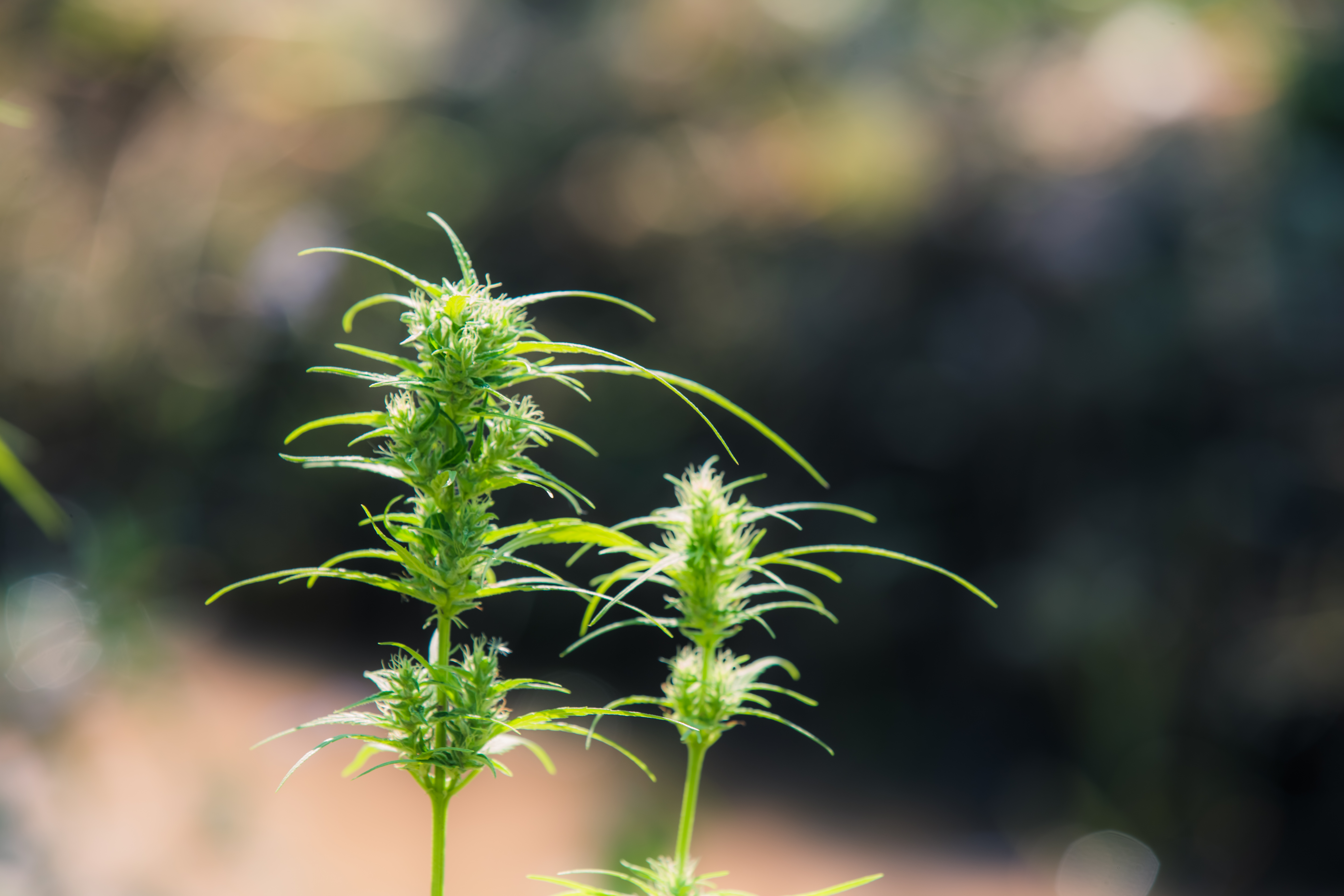


Knowing when male cannabis plants release pollen is an important part of understanding the cannabis flowering cycle. Cannabis is a flowering plant that can produce separate male and female plants. Male plants make pollen, while female plants produce flowers that can receive that pollen. When pollen from a male plant reaches a receptive female flower, fertilization can occur. The female plant can then begin producing seeds. This basic process is part of the natural reproduction of cannabis.
One common point of confusion is the difference between seeing that a cannabis plant is male and seeing a male plant that is ready to release pollen. These events do not happen at the same time. A plant can show signs that it is male before its flowers are mature enough to produce and release pollen. Small male pre-flowers may appear first. Later, these structures develop into clusters of male flowers. Inside the flowers are anthers, which contain the pollen. The flowers must reach maturity and open before large amounts of pollen can escape into the air.
Research on Cannabis sativa has shown that male flower structures can begin developing when plants are still fairly young. In one study, clusters of male flowers appeared around four weeks of age. Mature flowers were observed during weeks four to six, when their anthers opened and released large amounts of pollen. However, these numbers should not be treated as an exact schedule for every cannabis plant. Genetics, plant age, light conditions, and the growing environment can all affect when flowering starts and when pollen is released.
For this reason, the answer to the question “When do male plants release pollen?” is more complex than naming a single week. Some male plants mature earlier than others. Outdoor plants also respond to seasonal changes in daylight, while indoor plants may flower after changes to their light schedule. Different cannabis varieties can also have different flowering times. A plant that develops quickly may release pollen sooner than a slower-growing plant.
Male cannabis plants also tend to begin flowering before female plants. This gives pollen time to become available when female flowers are ready to receive it. Recent research on cannabis flowering has found that male flowering often begins earlier than female flowering, although the exact gap depends on the plant’s genetics and growing conditions.
The first stage to watch for is the development of pre-flowers. These are small reproductive structures that form around the nodes, which are the areas where branches meet the main stem. On male plants, these early structures develop into male flowers. At first, they are small and closed. They may look like tiny round or oval shapes. At this point, the plant may be clearly identified as male, but it may not be releasing pollen yet.
As flowering continues, the male flowers become larger and form more noticeable clusters. The flower structures mature until they are ready to open. When a mature male flower opens, its anthers become exposed. The anthers then split along a natural opening and release pollen grains. This process is called dehiscence. In simple terms, it means that the mature pollen-producing part of the flower opens and allows pollen to escape. Researchers often use the first opening of male flowers and the beginning of pollen dispersal as a clear sign that male flowering has reached the pollen-release stage.
Pollen release does not usually happen from every flower on the plant at the same moment. A male cannabis plant can have many flowers at different stages of development. Some may still be closed, while others are opening and releasing pollen. Because of this, pollen shedding can continue over a period of time. Research observations have found male cannabis plants releasing pollen over a period of about two to four weeks in some conditions. Another study found that anthers on the same plant did not all open at once, showing that pollen release can happen in stages.
Understanding this timeline is useful because cannabis pollen is light and can move through the air. Cannabis is mainly wind-pollinated, which means pollen does not need an insect to carry it from one flower to another. Once mature male flowers open, air movement can pick up pollen grains and carry them away from the plant. This makes the point of pollen release an important stage in the reproductive cycle.
It is also important to understand that seeing pollen sacs does not always mean pollen has already been released. Closed, developing male flowers can remain on the plant for some time before they mature. As they get closer to pollen release, their shape and position may change. The flowers eventually open, exposing the pollen-producing anthers. Fine yellow or pale pollen may then appear on nearby leaves or other surfaces. In research observations, large amounts of pollen from mature male plants could be seen collecting on leaves below the flowers.
The complete male flowering timeline therefore includes several separate stages. First, the plant reaches enough maturity to begin showing its sex. Next, male pre-flowers appear. These structures develop into larger clusters of male flowers. The flowers continue to mature until they open. Finally, the anthers release pollen, and pollen shedding may continue as more flowers mature.
The sections that follow will explain each part of this process in greater detail. They will cover what cannabis pollen is, when male flowers usually mature, what pollen sacs look like, how to recognize a plant that is close to releasing pollen, how long pollen shedding can last, and how pollen moves from male plants to female flowers. Understanding these stages makes it easier to see why there is no single exact day when every male cannabis plant begins releasing pollen.
What Is Cannabis Pollen and Why Do Male Plants Produce It?
Cannabis pollen is a key part of the plant’s natural reproduction process. Male cannabis plants produce pollen so they can fertilize female flowers. Once fertilization takes place, the female plant can begin making seeds. This is how cannabis plants reproduce and pass their genetic traits to the next generation.
Pollen is very small and light. A single grain is hard to see without magnification. When many grains collect in one place, pollen may look like a fine yellow, pale cream, or light tan powder. Because cannabis is mainly pollinated by wind, its pollen is made to move easily through the air.
Understanding what cannabis pollen is can make the flowering process easier to follow. It also helps explain why male plants develop flowers that look very different from female flowers. Male flowers are designed to produce and release pollen, while female flowers are designed to receive pollen and develop seeds after fertilization.
What Cannabis Pollen Is
Cannabis pollen contains the male reproductive cells of the plant. Its main job is to carry genetic material from a male flower to a female flower. If a pollen grain reaches a female flower at the right stage of development, fertilization may take place.
Pollen grains are produced in large numbers because most of them will never reach a female flower. Outdoors, pollen may be carried away by wind, fall to the ground, stick to other surfaces, or become damaged by moisture and weather. Producing a large amount of pollen increases the chance that at least some grains will reach receptive female flowers.
Cannabis does not depend on insects such as bees to move most of its pollen. Instead, it mainly uses wind. This is known as wind pollination. Male flowers release lightweight pollen into the surrounding air. Air movement can then carry the grains away from the plant.
This explains why cannabis pollen is so fine and easy to spread. It does not need to be heavy or sticky enough to stay attached to an insect. Its structure allows it to travel through moving air.
Pollen should not be confused with dust, plant debris, or resin. Cannabis resin is mostly produced on female flowers in structures called trichomes. Trichomes can appear shiny, sticky, or crystal-like. Pollen, by comparison, is dry and powdery.
The timing of pollen production is also important. A male plant does not produce mature pollen as soon as it begins growing. It must first reach reproductive maturity. The plant forms male flowers, and the pollen inside those flowers develops over time. Only when the flowers mature and open can the pollen be released.
Where Pollen Develops
Pollen develops inside the male flowers of a cannabis plant. These flowers usually appear in groups along the branches and near the points where branches meet the main stem. These areas are known as nodes.
Early in development, male flowers may look like small round or oval structures. They are often called pollen sacs, although the full male flower is more complex than a simple sac. As the plant continues through flowering, these structures grow larger and form loose clusters.
Inside each male flower are structures called anthers. The anthers are the parts that produce and hold pollen. As the flower matures, the anthers become ready to release their pollen grains.
Before maturity, the flowers remain closed. At this stage, pollen is still contained within the flower. A person may clearly see male flower clusters without any pollen being released yet.
As the flower reaches maturity, its outer parts begin to open. The anthers become exposed, and pollen can begin to fall or become airborne. This is the point when a male plant starts to release pollen into the surrounding area.
Not every male flower opens at the same time. Some may mature earlier, while others are still developing. Because of this, one male plant may release pollen over several days or even several weeks.
The position of the flowers also helps pollen spread. Male cannabis flower clusters are often more open and less dense than female flowers. This structure allows air to move around them more easily. When the flowers open, even a small movement of air can help carry pollen away.
Outdoor wind can spread pollen naturally. Indoors, fans, ventilation systems, movement around the plants, and other sources of airflow can also move pollen from one location to another.
What Happens When Pollen Reaches a Female Flower
Female cannabis flowers have structures that are designed to catch pollen. One of the most noticeable parts is the stigma. Stigmas are often seen as thin, hair-like strands growing from female flowers.
When pollen lands on a receptive stigma, the reproductive process can begin. The pollen grain absorbs moisture and starts to germinate. It then forms a microscopic tube that grows down through the female flower tissue.
This pollen tube allows the male reproductive cells to travel toward the female reproductive cells inside the flower. If the process is successful, fertilization occurs.
After fertilization, the plant begins putting more energy into seed development. Seeds form inside the fertilized female flowers and continue to mature as the plant moves through the rest of its life cycle.
This process is important because each seed contains genetic material from both parent plants. Half of the seed’s genetic information comes from the pollen-producing plant, while the other half comes from the female plant.
Pollination does not mean that mature seeds appear right away. Fertilization begins a process that takes time. At first, there may be few obvious signs that a flower has been pollinated. As seed development continues, the changes become easier to see.
A single male plant can produce a very large amount of pollen. Because the grains are so small and light, one plant may potentially pollinate many female flowers if they are flowering nearby.
This is also why the timing of pollen release is an important part of the cannabis flowering timeline. Male flowers must mature at a time when female flowers are able to receive pollen. In natural populations, the flowering periods of male and female plants often overlap enough for reproduction to take place.
Why Male Plants Produce Pollen
Male cannabis plants produce pollen for one main reason: reproduction. Without pollen, a male plant cannot pass its genetic material to seeds.
The male plant does not produce seeds on its own. Instead, it creates pollen that can fertilize female flowers. This division between male and female reproductive roles is a common feature of cannabis.
Male plants often begin showing reproductive development earlier than female plants. This can give their flowers time to mature and begin releasing pollen as female flowers become receptive.
The large number of pollen grains produced also improves the chance of successful reproduction. Wind pollination is not very precise. A pollen grain may move in almost any direction, and many grains never reach a female plant. Producing more pollen helps make up for this loss.
Genetics also plays an important role. When pollen fertilizes a female flower, the resulting seeds contain a mix of traits from both parent plants. These traits may affect growth, plant shape, flowering time, chemical production, disease resistance, and many other features.
In this way, pollen does more than simply start seed production. It helps create genetic variation within future generations of cannabis plants.
Cannabis pollen is the fine powder that carries male reproductive cells. It is produced inside the male flowers, especially in structures known as anthers. As male flowers mature, they open and allow the pollen to move into the surrounding air.
Cannabis mainly depends on wind to spread pollen. For this reason, its pollen grains are small, light, and produced in very large numbers. When a pollen grain reaches a receptive female flower, it can germinate and begin the fertilization process. Successful fertilization leads to seed formation.
Male plants produce pollen because it allows them to pass their genetic information to the next generation. Understanding how pollen forms, where it develops, and what happens after it reaches a female flower provides a clear foundation for understanding when male cannabis plants begin releasing pollen during flowering.
When Do Male Cannabis Plants Release Pollen?
Male cannabis plants release pollen after their male flowers have fully developed and reached maturity. This does not happen as soon as the plant can be identified as male. First, small male pre-flowers appear. These structures grow into clusters of male flowers. Inside these flowers, the plant develops anthers that contain pollen. Once the flowers are mature, they open and the anthers release the fine pollen grains into the air.
The exact time when this happens can vary from one plant to another. Genetics, plant age, light conditions, temperature, and other environmental factors can all affect the flowering timeline. Because of these differences, there is no single day or week when every male cannabis plant will begin releasing pollen.
The General Pollen-Release Timeline
Male cannabis plants go through several stages before they release pollen. The first stage is the appearance of male pre-flowers. These small structures often form where branches meet the main stem. At this point, the plant may be clearly male, but it is usually not releasing pollen yet.
As flowering continues, the male flowers become larger and more noticeable. They often form clusters. The individual flowers remain closed while their reproductive parts continue to develop. During this period, pollen is forming inside the anthers.
When a male flower reaches maturity, it begins to open. The flower parts separate, and the stamens and anthers become exposed. The anthers then open along a natural seam and release their pollen. This opening process is known as dehiscence.
Research on genetically male cannabis plants has shown that male flower clusters may become visible when plants are still fairly young. In one study, male flowers developed around four weeks of age, and mature flowers released large amounts of pollen during the following weeks. However, this does not mean that every cannabis plant follows the same schedule. The timing in a research setting may be different from the timing seen in other varieties or environments.
It is also important to understand that pollen release is not a single event. A male plant can have many flowers at different stages of development. Some may already be open while others are still closed. This means pollen can be released over a period of several days or longer.
Why There Is No Exact Universal Day
Cannabis plants do not all begin flowering or releasing pollen at exactly the same time. Genetics are one of the main reasons for this difference. Some varieties mature faster than others. Even plants grown from the same group of seeds can show small differences in growth and flowering time.
Plant maturity also matters. A plant must reach a certain level of development before it can produce mature reproductive flowers. A plant that shows early signs of being male is not always ready to shed pollen. Its pollen sacs still need time to mature.
Light conditions can also affect flowering. Cannabis is sensitive to changes in the length of the light and dark periods. Seasonal changes influence flowering outdoors, while controlled environments can produce different flowering schedules. Because of this, counting only the total age of a plant may not give an accurate estimate of when pollen release will begin.
Temperature and general growing conditions can also change the speed of flower development. Plants under different environmental conditions may not reach reproductive maturity at the same rate.
For this reason, visual signs of flower maturity are often more useful for understanding pollen development than relying on one fixed date. A plant with small, tightly closed male flowers is at a different stage from a plant with open flowers and exposed anthers.
What Research Shows About Male Pollen Release
Scientific studies help explain how pollen release happens in male cannabis flowers. Researchers often use the term “anthesis” to describe the period when a flower is open and functioning in reproduction. In male cannabis plants, the start of flowering can be marked by the first flowers that open and begin releasing pollen.
One study followed the development of male cannabis flowers and recorded the start of pollen release when the first male flower opened and dispersed pollen. Researchers continued observing the plants until all male flowers had opened and the plants were no longer producing or releasing pollen. This shows that pollen release happens over a flowering period rather than on one exact day.
Male flowers on the same plant also do not always open at the same time. Research has found that cannabis anthers can mature at different times. In one experiment, researchers collected pollen several times over a seven-day period because different flowers were releasing pollen on different days. By a later collection point, pollen production had fallen enough that further collection was no longer useful in that particular experiment.
This uneven flower development explains why a male plant may continue shedding pollen after the first open flower appears. Some flowers may already have released their pollen, while others are only beginning to open.
Research also shows what happens inside each flower. As an anther matures, a natural groove develops along its surface. When the anther is ready, this groove opens and allows the pollen grains inside to escape. Studies using microscopes have clearly observed this process in cannabis flowers.
Once released, the pollen is very light and can become airborne. Cannabis is mainly a wind-pollinated plant, so its pollen is designed to move through the air and reach receptive female flowers. This is why the opening of mature male flowers is an important stage in the cannabis reproductive cycle.
Male cannabis plants release pollen when their male flowers have matured, opened, and exposed their pollen-producing anthers. Pollen is not usually released when the first male pre-flowers appear. The plant must first develop mature flower clusters, and the anthers inside those flowers must become ready to open.
There is no exact week that applies to every plant. Genetics, plant maturity, environmental conditions, and flowering patterns can all change the timing. Research also shows that flowers on the same male plant may open at different times. Because of this, pollen release can continue over several days or longer instead of happening all at once.
How Long After Flowering Starts Do Male Plants Release Pollen?
Male cannabis plants do not usually release pollen as soon as the flowering stage begins. There is a period of development between the first signs of male flowers and the point when mature flowers open and release pollen. This period can vary from plant to plant. Genetics, plant age, light exposure, temperature, and growing conditions can all affect the timing.
In many cases, male plants begin forming clear pollen sacs during the early part of flowering. These sacs must grow and mature before they can open. Because of this, growers may see male flowers for several days or even weeks before pollen is released. It is important to understand this difference because seeing a pollen sac does not always mean that pollen is already spreading.
There is no single day or week that applies to every cannabis plant. Some males develop quickly, while others take longer. It is more useful to understand the stages of flower development and the signs that show when pollen release is getting close.
Early Flowering Changes
When a mature cannabis plant enters the flowering stage, its growth pattern begins to change. Instead of focusing mainly on producing new leaves and stems, the plant starts putting more energy into reproduction. On a male plant, this means the development of male flowers.
The first male flowers often appear near the nodes. A node is the place where a branch connects to the main stem. Small, round structures may begin to form in these areas. At first, they can look like tiny balls or small oval shapes. These structures later develop into pollen-producing flowers.
During early flowering, these male flowers are still immature. They usually remain closed and attached closely to the plant. At this stage, pollen is normally still contained inside the developing flowers.
As flowering continues, more male flowers can appear. They may form groups or clusters along the branches. The clusters often become larger as the plant develops. The individual flowers also become more noticeable.
Male plants often show their reproductive structures before female plants fully develop their flowers. This does not mean that every male plant follows the same timeline. Some plants mature faster because of genetics, while others may develop more slowly because of temperature, stress, or light conditions.
This early stage is mainly about flower formation. Pollen production is taking place inside the flowers, but the pollen is not yet ready to spread.
From Pollen Sacs to Open Flowers
The next stage begins as the male flowers grow larger and become more mature. The small pollen sacs that appeared during early flowering start to change in shape and position.
Immature pollen sacs often look firm and tightly closed. As they mature, they may become fuller and begin to hang slightly away from the stem. The flower clusters may also become looser as individual flowers prepare to open.
Inside the developing flowers, pollen grains are forming. These grains contain the male reproductive material needed to fertilize a female cannabis flower. The pollen must finish developing before it can be released.
Once the male flower reaches maturity, its outer parts begin to open. Small structures inside the flower, called anthers, become exposed. These anthers contain the mature pollen.
When the flower opens fully, pollen can begin to fall or become airborne. The pollen often looks like a fine, pale yellow or cream-colored powder. Air movement can carry these tiny particles away from the male plant.
Pollen release may not happen from every flower at the same time. One group of flowers may open while another group is still developing. Because of this, a male plant may release pollen over several days or even longer.
This gradual process is one reason why it is difficult to give an exact number of days between the beginning of flowering and the first release of pollen. A plant may already have visible male flowers while many of them are still too immature to open.
Environmental conditions can also affect how quickly flowers mature. Warm conditions may speed plant development in some cases, while cooler conditions can slow it down. Plant health and genetics also play major roles.
Why Counting Flowering Weeks Can Be Confusing
People often describe cannabis development by saying that a plant is in “week one,” “week two,” or “week three” of flowering. While this can be useful, it can also cause confusion.
One reason is that people do not always define the first day of flowering in the same way.
For indoor plants, some growers may start counting the flowering period when the light schedule is changed. Others may wait until they can actually see flowers forming. These two methods can produce different flowering dates for the same plant.
Outdoor plants are even harder to measure by exact flowering weeks. Outdoor cannabis responds to natural changes in daylight. The plant may slowly shift from vegetative growth into reproductive growth instead of changing all at once.
Plant age also affects the timeline. A mature plant may respond to flowering conditions faster than a younger plant. If two plants are placed under the same conditions, they may not develop flowers at exactly the same speed.
Different cannabis varieties can also have different flowering patterns. Some male plants may develop and open their flowers quickly. Others may spend more time producing closed pollen sacs before the first flowers open.
For these reasons, counting the number of days after flowering starts should only be used as a general guide.
Visual signs often give better information about when pollen release is close. Closed, small pollen sacs usually suggest that the flowers are still immature. Larger sacs that begin hanging downward show that the flowers are becoming more developed. Once the outer parts of the male flower begin to separate and the anthers become visible, pollen release may be near or already beginning.
This is why understanding flower maturity is more useful than relying only on a calendar. The plant itself provides several clues about its reproductive stage.
Male cannabis plants normally need time to develop mature flowers before they can release pollen. Early in flowering, small male flowers and pollen sacs begin to appear, but they usually remain closed. As flowering continues, the sacs grow larger, the flowers mature, and the structures inside them finish producing pollen.
Pollen release starts when mature male flowers open and expose their pollen-bearing anthers. This may happen after the plant has already shown male flowers for some time. Not every flower opens at once, so pollen release can happen gradually.
The exact timing cannot be measured by one fixed flowering week because genetics, plant maturity, light, temperature, and growing conditions all affect development. Indoor and outdoor plants may also be counted differently when people describe flowering weeks.
What Do Male Pollen Sacs Look Like Before They Open?
Knowing what male pollen sacs look like before they open can help you understand the early stages of cannabis flowering. Male plants do not release pollen as soon as their sex becomes visible. The pollen sacs must first develop, grow, and reach maturity. During this time, their shape and position change in ways that can be seen with careful observation.
Male flowers usually appear at the nodes of the plant. A node is the place where a branch or leaf meets the main stem. At first, male pre-flowers may be very small and easy to miss. As flowering continues, these structures become larger and form groups. Once they mature, the sacs begin to open and release pollen.
The exact timing can vary from one plant to another. Genetics, plant age, light exposure, and growing conditions can all affect how fast male flowers develop. For this reason, it is useful to focus on the appearance of the flowers instead of relying only on the number of days or weeks.
Early Male Pre-Flowers
Male pre-flowers are among the first clear signs that a cannabis plant is developing male reproductive parts. They usually appear near the nodes, often where small branches grow from the main stem.
At first, these pre-flowers are tiny. They may look like small round or oval shapes attached to a short stem. Some people describe them as looking like tiny balls. They are usually smooth and closed at this stage.
The early structures may appear alone before larger clusters form. Because they are so small, it can be difficult to identify them when they first develop. A close view may be needed to see their shape clearly.
One of the main differences between male and female pre-flowers is the presence of thin hair-like structures. Female flowers usually develop fine white or pale hairs called stigmas. These hairs extend from the female flower and are designed to catch pollen.
Male pre-flowers do not produce these hairs. Instead, they develop rounded sacs that stay closed while pollen forms inside them. The lack of visible stigmas is one of the main signs that a developing flower may be male.
However, it is important not to make a decision based on one tiny structure if it is still immature. Very young pre-flowers can be difficult to identify with certainty. As the plant develops, the differences between male and female flowers become much easier to see.
Male pre-flowers may appear several weeks after germination, but the exact timing depends on the plant. Some plants show their sex earlier than others. Mature plants may also show pre-flowers before a full flowering period begins.
Developing Pollen-Sac Clusters
As the male plant moves further into flowering, the small pollen sacs begin to increase in number. Instead of seeing only one or two structures at a node, you may notice groups of rounded sacs forming together.
These groups are known as male flower clusters. They often develop along branches and near the upper parts of the plant. The clusters become more obvious as the flowering stage continues.
Each individual pollen sac is part of a male flower. As the flowers grow, they may begin to hang slightly away from the stem. This gives the cluster a loose or drooping appearance.
Before maturity, the sacs remain closed. The surface may look smooth, and the flower may appear round or slightly oval. Depending on the plant, the sacs can also look somewhat pointed at the end.
The clusters often become larger over time because new flowers continue to develop. This means one part of the plant may contain flowers at several stages of maturity. Some may still be small and tightly closed, while others are larger and closer to opening.
This is an important detail when understanding pollen release. A male plant usually does not have every flower open at exactly the same time. Instead, different flowers mature at different rates. This can cause pollen release to continue over several days or longer.
As more clusters form, the male plant becomes easier to identify. The large number of rounded structures is very different from the appearance of female flowers, which produce stigmas and later develop thicker flower clusters.
Mature Versus Immature Pollen Sacs
The appearance of pollen sacs changes as they move from an immature stage to a mature stage. Understanding these differences can help explain when a male plant is getting closer to pollen release.
Immature pollen sacs are usually small, firm, and tightly closed. They often sit close to the branch or stem when they first appear. Their outer surface is smooth, and there are no visible openings.
As the flowers mature, the sacs usually become larger. They may hang farther away from the plant and become more clearly separated from nearby flowers. The flower clusters may also begin to look less compact.
A mature male flower may show visible lines or sections where the outer parts of the flower will eventually separate. These sections are sometimes easier to notice shortly before the flower opens.
When the flower reaches full maturity, the outer structure begins to split open. Inside are the pollen-producing parts called anthers. These structures hold and release the fine pollen grains.
Before this happens, however, a closed sac does not usually release large amounts of pollen. This is why seeing pollen sacs on a plant does not mean the plant has already spread pollen.
The difference between a mature closed flower and an open flower can be important. A mature but unopened flower may appear swollen and may hang downward. An open flower has clearly separated sections, often creating a small star-like shape. The pollen-producing structures can then become exposed.
Color may also change slightly as the flowers mature. Younger sacs are often green, while mature flowers may become lighter or develop yellowish tones. However, color alone is not a reliable way to determine whether a flower is ready to release pollen. Shape, size, and whether the flower is opening are more useful signs.
Environmental conditions can also affect how quickly this process happens. Warm temperatures, plant health, light cycles, and genetics can all influence flower development. This means two male plants grown under similar conditions may not open their pollen sacs on the same day.
Male cannabis pollen sacs change in clear stages before they open. Early male pre-flowers usually appear as small, smooth, rounded structures at the nodes of the plant. Unlike female flowers, they do not produce visible white stigmas.
As flowering continues, the pollen sacs grow larger and begin forming clusters. The flowers may hang away from the stem as they mature. Immature sacs remain small and tightly closed, while mature sacs become larger, looser, and closer to opening.
How Can You Tell When a Male Plant Is About to Release Pollen?
Knowing when a male cannabis plant is close to releasing pollen is important for understanding the flowering cycle. Male plants do not release pollen as soon as the first pollen sacs appear. The sacs must grow, mature, and open before pollen can spread. This process happens over several stages, and each stage has visible signs.
The timing can vary from one plant to another. Genetics, temperature, light, plant health, and growing conditions can all affect how quickly male flowers mature. Because of this, growers and researchers often pay more attention to the appearance of the flowers than to the exact number of days since flowering began.
A male plant that is close to releasing pollen usually shows clear changes in its flower clusters. The sacs become larger, the flowers begin to hang more freely, and the outer parts of the flowers start to separate. Once the flowers open, the pollen-producing structures inside become exposed. At that point, pollen release may begin very soon.
Changes in Mature Male Flowers
The first male flowers usually appear at the nodes, which are the areas where branches meet the main stem. Early male pre-flowers often look like small, round balls. At this stage, they are still immature and are not ready to release pollen.
As flowering continues, these small structures grow larger and begin forming clusters. A single cluster can contain many individual male flowers. At first, the sacs often remain tight and close together. They may point upward or sit close to the branch.
As the flowers mature, their shape starts to change. The sacs become fuller and may begin to hang downward from short stems. This hanging appearance is one of the clearest signs that the male flowers are moving closer to maturity.
The color may also change slightly. Young male flowers are often green, similar to the rest of the plant. As they mature, they may become lighter green or take on a pale yellow-green shade. However, color alone should not be used to judge maturity because cannabis varieties can look different from one another.
The number of flowers also increases as the male plant continues through the flowering stage. Larger clusters may form at several nodes and along the upper branches. Since each flower does not mature at exactly the same time, one part of the plant may be closer to releasing pollen than another.
This is why a male plant may release pollen over several days or even longer rather than all at once.
What Happens Immediately Before Pollen Release
A mature male cannabis flower goes through several changes just before pollen is released. The outer flower parts begin to open. The closed sac that once looked like a smooth ball starts separating into small sections.
Inside the male flower are structures called anthers. Anthers are the parts of the flower that contain and release pollen. As the flower opens, the anthers become visible and are exposed to the surrounding air.
This opening process is an important sign that pollen release is close.
Once the anthers mature, they split open and allow pollen grains to escape. This process is sometimes called dehiscence. In simple terms, dehiscence means that the pollen-producing part of the flower opens naturally when it is mature.
The pollen itself is very fine and light. It may look like pale yellow, cream-colored, or light green dust. Because cannabis is mainly wind-pollinated, the pollen is designed to move through the air. Even small movements around a mature male plant can cause pollen to leave the flowers.
Air movement from wind, fans, or ventilation systems can help spread the pollen. A mature male flower may also release visible pollen if the plant or branch is disturbed.
However, shaking or touching the plant is not needed to confirm that it is mature. The opening of the flowers and exposure of the anthers are already strong signs that pollen production has reached an advanced stage.
Temperature and humidity can also affect pollen release. Dry conditions often make it easier for pollen to become airborne. High humidity may cause pollen grains to absorb moisture, which can reduce how easily they move through the air.
Signs Pollen Has Already Been Released
One of the easiest signs that pollen release has already started is the presence of open male flowers. Instead of looking like closed round sacs, mature flowers appear split open. Their outer parts spread apart, making the inside of the flower more visible.
The anthers may also look more exposed after the flower opens. Some flowers may appear partly empty or dried after releasing much of their pollen.
Fine powder around the plant can be another sign. Pollen may collect on nearby leaves, branches, containers, or other surfaces. It can sometimes be seen as a light dust when enough pollen is present.
Pollen can also become airborne without being easy to see. Individual cannabis pollen grains are extremely small. A room or outdoor area may contain pollen even if no obvious cloud of powder is visible.
Another important point is that male flowers on the same plant can be at different stages. Some flowers may still be closed while others have already opened and released pollen. This means that seeing a few unopened pollen sacs does not prove that the plant has not started releasing pollen.
For example, older flowers near the lower or middle sections of the plant may open first, while newer flowers near the tips are still developing. As flowering continues, more flowers may mature and release pollen.
Because of this staggered development, pollen release is best understood as an ongoing stage rather than a single event.
A male cannabis plant gives several visible signs before it begins releasing pollen. Early pollen sacs are small and tightly closed, while mature flowers become larger and often hang downward in clusters. As the flowers reach full maturity, their outer parts begin to separate and the pollen-producing anthers become exposed.
Pollen release begins when the mature anthers open and allow the fine pollen grains inside to escape. Open flowers, exposed anthers, pale powder on nearby surfaces, and older empty-looking flowers can all show that pollen release has already started.
How Long Does a Male Cannabis Plant Release Pollen?
Male cannabis plants do not release all their pollen at one time. Pollen release usually happens over a period of days or weeks as different flowers on the plant mature. Some pollen sacs open earlier, while others stay closed until they are ready. Because of this, a male plant may continue to release pollen even after the first open flowers appear.
The exact length of the pollen-shedding period can vary from one plant to another. Genetics, plant size, temperature, humidity, air movement, and growing conditions can all affect how long pollen is released. A healthy male plant with many flower clusters may release pollen for a longer period than a smaller plant with fewer flowers.
Understanding this process is important because pollen production is not a single event. It is part of the normal flowering cycle of the male cannabis plant.
Pollen Release Is a Process, Not a Single Event
One common mistake is thinking that a male cannabis plant releases all its pollen as soon as the first pollen sac opens. In reality, male flowers usually mature at different times.
A male plant can have hundreds or even thousands of small flowers. These flowers grow in clusters, often near the branches and upper parts of the plant. Some flowers may be fully mature while others are still developing.
When a mature male flower opens, the anthers inside become exposed. The anthers hold the pollen. Once they open, pollen can fall or become carried by moving air.
At the same time, other flowers on the same plant may still be closed. These flowers can continue to mature over the following days. This means the plant can release fresh pollen again and again as more flowers open.
The process may look gradual. At first, only a few flowers may open. Later, many flower clusters may open at the same time. After the main period of pollen release, the number of new flowers opening usually begins to decline.
Because flower development is not perfectly even, pollen release may continue after some older flowers have already dried or fallen away.
This staggered flowering pattern helps explain why a single male plant can remain a source of pollen for a long period.
Typical Pollen-Shedding Period
In many cases, a male cannabis plant may release pollen for about two to four weeks. However, this is only a general range. Some plants may release pollen for a shorter period, while others may continue longer.
The length of the pollen-shedding period depends partly on how quickly the flowers develop. A plant that produces many flower clusters over several weeks may have a longer pollen period.
During the early part of flowering, the male plant forms and enlarges its pollen sacs. Once these structures mature, the flowers begin to open. The plant may then enter a period when pollen release is heavy.
The middle part of this period often produces the greatest amount of pollen. Many flowers may open within a short time, especially under stable growing conditions.
Later, the plant may continue to release smaller amounts of pollen as the remaining flowers mature. The total amount usually falls as fewer unopened flowers remain.
It is important to separate the total flowering period from the active pollen-release period. A male plant can begin forming flowers before it starts releasing pollen. It may also remain alive after most pollen has already been shed.
Plant age alone does not provide an exact answer. Two male plants of the same age may release pollen at different times because their genetics and environments are different.
Watching the flowers is often more useful than counting days. Closed sacs show that pollen is still developing. Open flowers with exposed anthers show that pollen release is taking place.
Genetics Can Affect How Long Pollen Is Released
Genetics play a major role in the flowering behavior of cannabis plants. Different varieties can grow, mature, and flower at different speeds.
Some male plants begin flowering early and complete the process quickly. Others may continue to produce new flower clusters for a longer time.
The number of flowers can also vary greatly. A male plant with many branches and large clusters may release pollen over a wider period because all of its flowers are unlikely to mature at exactly the same time.
Genetics also influence plant height, branching, flowering speed, and response to light. All of these features can affect the timing of pollen production.
This is one reason why it is difficult to give one exact number of days for every male cannabis plant.
Plant Size and Number of Male Flowers
The size of a male plant can affect how much pollen it produces and how long pollen release continues.
A larger plant normally has more branches and more flowering sites. This allows it to produce more male flowers. With more flowers developing at different times, the plant may continue shedding pollen for a longer period.
A smaller male plant may have fewer flower clusters. If most of those flowers mature at the same time, the main pollen-release period may be shorter.
Plant health also matters. A strong plant with good access to light and nutrients may continue to support flower development. A weak or damaged plant may stop producing new flowers sooner.
However, size does not always predict the exact length of pollen release. A small plant may still produce a large amount of pollen if its flowers mature successfully.
Temperature and Pollen Release
Temperature can influence how quickly male flowers mature and open.
Warm conditions can support faster plant growth and flower development when temperatures stay within a healthy range. Flowers may mature and open more steadily under stable conditions.
Very high temperatures can place stress on the plant. Extreme heat can affect flower development and may reduce pollen quality. It can also cause parts of the plant to dry faster.
Cool temperatures may slow plant growth. When growth slows, flower development may also take longer. This can stretch the flowering process over a longer period in some cases.
Sudden changes in temperature can also affect how evenly flowers mature. Stable conditions usually support a more predictable flowering cycle.
Because temperature affects plant development, it can change both the start and duration of pollen release.
Humidity and Pollen Shedding
Humidity can also affect pollen behavior.
Dry air often allows pollen to separate and move more easily. Cannabis pollen is light, so dry conditions can help it become airborne once the male flowers open.
High humidity can cause pollen grains to absorb moisture. Damp pollen may clump together and may not travel as easily through the air.
Humidity can also affect the opening of flowers and the condition of the plant. Very wet conditions may slow pollen movement, while dry conditions may support wider dispersal.
Outdoor humidity often changes during the day. Morning air may be more humid, while afternoon conditions can be warmer and drier. These changes can affect how pollen moves after it is released.
The male plant may still produce pollen in humid conditions, but the way that pollen spreads may be different.
Air Movement and Wind
Air movement plays a major role in cannabis pollination because cannabis is mainly wind-pollinated.
Once male flowers open, moving air can carry pollen away from the plant. Indoors, fans and ventilation systems can move pollen through a space. Outdoors, natural wind can carry pollen much farther.
Strong air movement does not necessarily make the plant produce pollen faster. Instead, it helps remove pollen from open flowers and spread it through the air.
When pollen is carried away, fresh pollen from other open flowers can continue to be released. This can make it seem as though the plant is producing pollen continuously.
Calm conditions may allow more pollen to collect on leaves, branches, or nearby surfaces. Windy conditions can move the pollen away quickly.
For this reason, the amount of visible pollen around a plant does not always show how much pollen the plant has produced.
Outdoor Weather Conditions
Outdoor male cannabis plants are affected by changing weather.
Rain can temporarily reduce pollen movement because moisture can make pollen heavier. Wet flowers may also release pollen less easily until they dry.
After rain ends and the plant dries, pollen release may continue if mature flowers are still present.
Wind can increase pollen dispersal, while calm weather can reduce how far pollen travels. Hot, dry weather may allow pollen to move more freely, while cool and damp weather can slow the process.
Day length also affects flowering. Outdoor cannabis plants respond to seasonal changes in light. As days become shorter, flowering behavior changes. Genetics determine how strongly each plant responds.
Because outdoor conditions change from day to day, pollen release may not happen at the same rate throughout the entire flowering period.
Male cannabis plants usually release pollen over a period of time rather than all at once. Different flowers mature on different days, which allows fresh pollen to be released as more pollen sacs open.
In many cases, pollen shedding may continue for about two to four weeks, although the exact period can be shorter or longer. Genetics, plant size, flower number, temperature, humidity, air movement, and outdoor weather all influence the timing.
The main pollen-release period often begins after mature male flowers open and expose their anthers. Pollen production may be strongest when many flower clusters are opening at the same time. It usually decreases as fewer unopened flowers remain.
Do Male Cannabis Plants Flower Before Female Plants?
Male cannabis plants often begin showing clear signs of flowering before female plants. This does not mean every male plant will always flower first, but it is a common pattern. The timing can change based on genetics, plant age, light exposure, temperature, and other growing conditions.
Understanding this difference is useful because male and female cannabis plants play different roles in reproduction. Male plants produce pollen, while female plants develop flowers that can receive that pollen. For successful reproduction, their flowering periods need to overlap at least for some time.
Male plants may seem to develop faster because their flower structures become easy to notice early. Female flowers can take more time to become obvious, especially when the plants are still moving from vegetative growth into full flowering.
Male and Female Flowering Timelines
Male and female cannabis plants can begin reproductive growth at similar stages, but males often show visible flowers sooner. In many cases, male plants begin forming noticeable pollen sacs before female plants develop larger flower clusters.
Early male flowers usually appear at the nodes, where branches meet the main stem. At first, these structures may look like small round balls. As the plant continues to flower, more of these small sacs appear in clusters. They grow larger as they mature.
Female plants also develop early flowers at the nodes. However, female flowers usually have small hair-like structures called stigmas. These are often white when they first appear. The stigmas are part of the flower’s reproductive system and help capture pollen from male plants.
The difference in timing can be only a few days in some plants. In other cases, male flowering may appear noticeably earlier. Cannabis plants do not all follow the exact same schedule.
Genetics play a major role. Some varieties mature faster than others. Two plants grown under the same conditions may still begin flowering at different times because of their genetic traits.
Plant age also matters. A mature plant is more prepared to enter the reproductive stage than a very young one. If plants reach maturity at different rates, their flowering timelines may also be different.
Light conditions can also affect flowering. Photoperiod cannabis plants usually begin flowering when the daily period of darkness becomes longer. Outdoors, this often happens as the days become shorter later in the growing season. Indoors, changes to the light schedule can trigger flowering.
When Female Plants Become Receptive
Female cannabis flowers become receptive to pollen as their stigmas develop. Stigmas are the thin, hair-like parts that extend from the female flowers. Their main role is to catch pollen.
When pollen lands on a receptive stigma, the reproductive process can begin. The pollen grain can grow a pollen tube that moves toward the ovule inside the female flower. If fertilization is successful, the plant can begin producing seeds.
This is one reason male plants often begin flowering slightly earlier. By the time female flowers become fully receptive, male plants may already have mature flowers that are close to releasing pollen.
However, the male plant still needs time to develop mature pollen. Seeing early pollen sacs does not mean pollen is already being released. The sacs must grow, mature, and open before pollen can spread.
The timing of female receptivity can also vary. Some female plants develop visible stigmas soon after flowering begins, while others take longer. Temperature, plant health, genetics, and light conditions can affect how quickly flowers develop.
For natural reproduction to take place, male pollen release and female flower receptivity need to overlap. If pollen is released while female flowers are receptive, wind can carry pollen grains from male plants to nearby females.
Cannabis is mainly a wind-pollinated plant. This means pollen does not depend on insects to move between flowers. Air movement can carry the lightweight pollen grains from one plant to another.
Why Male Plants Can Seem Much Further Along
Male cannabis plants can sometimes look like they are far ahead of female plants during early flowering. Much of this difference is caused by the way male flowers develop.
Male plants produce groups of pollen sacs that can quickly become large and easy to see. These clusters may form at several nodes and continue spreading along the branches. As the sacs mature, they may hang slightly downward and become more noticeable.
Female flowers develop in a different way. Their early structures are often smaller and may appear less dramatic. The first visible signs may only be a few stigmas growing from the nodes. Larger flower clusters develop later as flowering continues.
Because male pollen sacs can grow quickly, a male plant may appear more advanced even if the male and female plants began reproductive development around the same time.
The structure of the flowers also creates this visual difference. Male flowers are designed to produce and release pollen into the air. They grow in loose clusters that allow pollen to spread easily once the flowers open.
Female flowers are designed to catch pollen. Their stigmas extend outward so they can trap airborne pollen grains. Their flower structures become denser as they continue to develop.
Environmental conditions can make the timing gap larger or smaller. Warm temperatures may speed plant development, while cold or stressful conditions may slow it. Poor lighting, nutrient problems, or other stress can also affect how fast a plant enters flowering.
Genetics remain one of the strongest factors. Some cannabis varieties naturally show sex and begin flowering earlier than others. Even plants from the same group of seeds can develop at slightly different rates.
Male cannabis plants often show visible flowering signs before female plants, but the timing is not the same for every plant. Males usually begin forming obvious pollen sacs early in the flowering stage, while female plants develop stigmas and flower clusters that become more noticeable over time.
Female plants become receptive when their stigmas are developed enough to catch pollen. Male pollen sacs must still mature and open before pollen can be released. This creates an important overlap between male pollen production and female flower receptivity.
Male plants can also appear further along because their pollen sacs grow in clear clusters that are easy to see. Female flowers often begin with smaller structures and develop more gradually.
Can Male Plants Release Pollen Before the Flowering Stage?
Male cannabis plants can sometimes show signs of their sex before full flowering begins, but this does not usually mean they are already releasing pollen. It is important to understand the difference between seeing early male flowers and seeing mature flowers that are ready to shed pollen.
Cannabis plants go through several stages of growth. During the vegetative stage, the plant focuses mainly on producing stems, branches, roots, and leaves. As the plant becomes mature, it may begin to form small reproductive structures called pre-flowers. These pre-flowers can appear before the plant enters full flowering.
A male plant may therefore be identified while it still seems to be in the vegetative stage. However, the pollen sacs usually need more time to grow and mature before they can open. Pollen release normally happens after the plant has moved further into reproductive growth.
Pre-Flowers Versus Mature Male Flowers
Pre-flowers are the first small structures that show whether a cannabis plant is male or female. They often form near the nodes, which are the points where branches meet the main stem. Male pre-flowers usually appear as small, round or oval structures.
At first, these structures are very small. They may look like tiny balls attached to the plant. These early pollen sacs are not yet ready to release pollen. They must grow, mature, and develop into full male flowers before pollen can be released.
This difference is important because some people assume that any visible pollen sac means pollen is already spreading. That is usually not the case. A young, closed pollen sac contains developing reproductive material, but the pollen remains inside the flower.
As the male plant moves deeper into its reproductive stage, the sacs become larger and more noticeable. They may begin forming groups or clusters. Mature male flowers often hang slightly downward as they develop. Eventually, the outer parts of the flower open and expose the structures that release pollen.
A closed pollen sac and an open male flower are therefore two different stages. Seeing the first signs of male flowers means the plant is becoming sexually mature. It does not always mean that pollen is already present in the air.
When Male Pre-Flowers Can Appear
The timing of male pre-flower development can vary from plant to plant. Genetics, plant age, growing conditions, and light exposure can all affect when the first signs appear.
Some cannabis plants may show pre-flowers several weeks after germination. A mature plant can sometimes reveal whether it is male before full flowering begins. This is especially common once the plant has developed several nodes and has reached a certain level of maturity.
In outdoor plants, changes in daylight can help trigger stronger reproductive development. As the days become shorter, plants that depend on seasonal light changes begin moving from vegetative growth toward flowering.
Indoor plants may also show pre-flowers before a major change in the light cycle. A plant does not suddenly become sexually mature on the first day that flowering conditions begin. It may already have reached biological maturity during the later part of vegetative growth.
Because of this, the terms “vegetative stage” and “flowering stage” are not always separated by a perfect line. A plant can still be producing strong vegetative growth while also showing a few early reproductive structures.
However, a few male pre-flowers are very different from a plant covered with mature male flowers. Early pre-flowers are mainly a sign that the plant has reached sexual maturity. Full pollen production comes later.
When Pollen Actually Becomes Available
For pollen to spread, male flowers must reach the correct stage of maturity. The pollen develops inside the reproductive structures of the flower. It remains contained there while the flower is still closed.
As the male flower matures, its shape changes. The flower becomes larger, and the outer sections begin to separate. When the flower opens, the pollen-producing structures inside become exposed. This is when pollen can begin to leave the plant.
Pollen is light and fine. Once released, it can be moved by air. Cannabis is naturally adapted for wind pollination, which means the plant does not depend on insects to carry pollen from male flowers to female flowers.
This is why the opening of male flowers is such an important part of the reproductive timeline. The plant may have visible pollen sacs for days before those sacs are mature enough to open. During that period, pollen is still developing inside them.
There is also variation within the same plant. Not every male flower develops at exactly the same speed. Some flowers may still be closed while others have already opened. As a result, pollen release can begin gradually rather than happening all at once.
A male plant may therefore move through several stages at the same time. New pollen sacs may still be forming near some branches, older sacs may be growing larger, and fully mature flowers may already be open elsewhere on the plant.
This gradual pattern explains why pollen release can continue for an extended period once flowering is underway. It also shows why simply counting the number of days since a plant first showed male characteristics may not accurately predict when pollen will be released.
Does Seeing Male Flowers Mean Pollen Has Already Spread?
Not necessarily. Small, closed male flowers are usually still developing. The key difference is whether the flowers have opened.
A closed pollen sac keeps the developing pollen inside. As the flower approaches maturity, it may become larger and begin to hang away from the stem. When the flower opens, pollen can escape.
The presence of open male flowers is therefore a stronger sign of pollen release than the presence of small, immature sacs.
Environmental conditions can also affect how pollen moves once it is released. Air movement can carry pollen away from the male flower. In outdoor conditions, wind plays a major role. Indoors, fans and other sources of moving air can spread light pollen particles through the surrounding space.
The timing of pollen release should therefore be understood as a biological process rather than a single date on a calendar. The important stages are the appearance of pre-flowers, the growth of pollen sacs, the opening of mature male flowers, and the release of pollen.
Male cannabis plants can show pre-flowers before they enter full flowering, but early male flowers usually do not release pollen right away. Pre-flowers are mainly a sign that the plant has reached sexual maturity.
During this early stage, the pollen sacs are still small and closed. They must grow and develop into mature male flowers before pollen can escape. As flowering progresses, the sacs become larger, male flowers open, and pollen-producing structures become exposed.
The exact timing varies because genetics, plant maturity, light, and environmental conditions can affect development. Some plants show male characteristics earlier than others, and different flowers on the same plant may mature at different times.
How Far Can Cannabis Pollen Travel and How Easily Does It Spread?
Cannabis pollen can travel much farther than many people expect. Male cannabis plants do not depend on insects to carry pollen from one flower to another. Instead, cannabis is mainly a wind-pollinated plant. This means that air movement can lift pollen away from a male flower and carry it toward other plants.
The distance pollen travels is not the same in every situation. Some pollen falls to the ground close to the male plant. Other pollen grains may remain in the air and travel much farther. Wind speed, wind direction, weather, plant height, and the amount of pollen in the air can all affect how far it moves.
Research on hemp, which is the same plant species as cannabis, shows that pollen levels usually drop as distance from the source increases. However, small amounts may still travel for several kilometers under the right conditions. Modern pollen-dispersal models have also shown that a small share of pollen can move tens of kilometers from its source during certain weather conditions.
Cannabis Is a Wind-Pollinated Plant
Cannabis has a natural reproductive system that depends heavily on moving air. Male flowers produce very small and light pollen grains. When mature male flowers open, the pollen becomes exposed to the surrounding air. Even a light breeze can move these grains away from the plant.
Cannabis pollen has physical features that help it move through the air. Scientific research describes the pollen as relatively small and light, which makes wind transport easier. Airflow after a male flower opens can quickly carry pollen away from its original location.
The process does not mean that every pollen grain will travel a long distance. In fact, much of the pollen usually settles closer to the source. Pollen may land on leaves, soil, buildings, or other surfaces. It can also become trapped by moisture or fall when air movement slows.
Still, a male cannabis plant can produce a very large amount of pollen. One male flower may produce hundreds of thousands of pollen grains, and a mature plant can have many flowers. Because so much pollen may be released, even a small percentage that travels farther can represent a large number of individual grains.
Wind direction is also important. Research has found much greater pollen movement downwind from cannabis fields than upwind. This makes sense because moving air pushes pollen in the same direction as the wind.
Indoor Versus Outdoor Pollen Movement
Pollen behaves differently indoors than it does outdoors, but it can spread in both settings.
Outdoors, wind is the main force that carries pollen. A gentle breeze may move pollen around a nearby area, while stronger or more complex air movement may carry some grains much farther. Weather can also create rising and falling air currents. These currents may keep very small particles in the air for longer periods.
Studies of hemp fields have detected pollen hundreds of meters away from known sources. Other research and computer models suggest that smaller amounts can travel several kilometers or even farther when weather conditions allow it. One study found measurable pollen deposition as far as 400 meters from a source field, even though the amount had fallen greatly compared with levels near the plants.
Distance alone therefore does not provide a perfect answer to the question, “How far can cannabis pollen travel?” Most pollen tends to settle closer to the source, while a smaller amount forms a long-distance “tail.” This means fewer and fewer grains are found as distance increases, but the number does not always fall to zero right away.
Indoors, there is no natural outdoor wind, but air still moves. Fans, ventilation systems, heating and cooling systems, open doors, and people moving through a room can disturb the air. Since cannabis pollen is light, this indoor airflow can move it from its original location.
The total distance is usually more limited by walls and enclosed spaces. However, pollen does not need to travel kilometers to reach another plant in the same building or room. Once pollen becomes airborne, normal air circulation may move it across the available space.
Scientific work on cannabis pollen collection has noted how easily airflow can move pollen after the male flower opens. This is one reason controlled pollen studies must carefully manage air movement.
Why a Small Amount of Pollen Can Matter
The large amount of pollen made by male cannabis plants helps explain why even low pollen levels may still result in pollination.
A mature male plant may have hundreds of flowers. Each flower can contain many pollen grains. Estimates cited in cannabis research suggest that a single male flower may produce as many as 350,000 grains. A large male plant may therefore release millions of pollen grains during its flowering period.
Not every grain will reach a female flower. Many grains fall to the ground or land on surfaces where they cannot take part in reproduction. Others may lose their ability to function before reaching a receptive flower.
However, because the starting number can be so large, only a small fraction needs to move away from the male plant for pollen to remain present at a distance.
For example, research from cannabis fields shows that pollen density can fall sharply within the first few hundred meters. One field study found that pollen density at 100 meters was less than 1 percent of the level found inside the source field. Even so, this does not mean that no pollen was present. It means the concentration was much lower.
This difference is important when reading claims about pollen distance. Finding cannabis pollen several kilometers away does not mean that the same amount of pollen exists there as beside a flowering male plant. Pollen concentration normally becomes lower as distance increases.
Weather also changes the pattern. Wind direction, wind strength, turbulence, and rising warm air can all affect how long pollen stays airborne. Modern modeling studies have found that most simulated pollen settles relatively close to its source, while much smaller amounts can travel much farther.
This is why there is no single distance that applies to every male cannabis plant. A calm day, a windy day, an enclosed room, and an open field can produce very different patterns of pollen movement.
Cannabis pollen spreads mainly through the air because cannabis is a wind-pollinated plant. When mature male flowers open, their light pollen grains can be lifted and carried away by moving air. Much of the pollen usually settles close to the male plant, but some grains can travel much farther.
Outdoors, wind speed, direction, weather, and local air currents influence how far pollen moves. Studies have measured cannabis pollen hundreds of meters from its source, while other research shows that smaller amounts may move several kilometers or more under favorable conditions. Indoors, fans, ventilation, doors, and other sources of airflow can also spread pollen through an enclosed space.
What Happens After a Male Plant Releases Pollen?
When a male cannabis plant releases pollen, the next stage of plant reproduction begins. Pollen is a fine powder that contains the male reproductive cells of the plant. Once it leaves the male flowers, it can travel through the air and land on nearby female flowers. If the pollen reaches a female flower at the right stage of development, fertilization may occur.
This process is important because it leads to seed production. A female cannabis plant that is not pollinated will usually continue to produce flowers without developing mature seeds. Once pollination takes place, however, the plant begins using more of its energy for reproduction and seed development.
Understanding what happens after pollen is released can help explain the full cannabis flowering timeline. Pollen release is not the end of the reproductive process. It is the beginning of several biological changes that take place inside the female flower.
How Pollination Occurs
Pollination begins when a pollen grain reaches the reproductive surface of a female cannabis flower. Female flowers have small hair-like structures called stigmas. These are often visible as thin strands extending from the flower.
The stigmas help collect pollen from the air. When pollen lands on a receptive stigma, the pollen grain can begin to germinate. In this case, germination does not mean that a new plant begins growing right away. Instead, the pollen grain produces a tiny tube that grows down through the female flower.
This pollen tube carries the male reproductive cells toward the female reproductive tissue. When the male and female cells join, fertilization takes place. After fertilization, the plant can begin developing a seed.
Not every grain of pollen that lands on a plant will result in successful fertilization. The pollen must still be able to function, and the female flower must be at a stage when it can receive pollen. Temperature, moisture, pollen age, and flower maturity can all affect the process.
Cannabis depends mainly on wind for natural pollination. Male plants do not need insects to move pollen from one plant to another. When mature male flowers open, pollen can become airborne and move with normal air currents.
What Happens After Fertilization
Once fertilization occurs, the female flower begins to change. The plant starts directing resources toward developing seeds inside the pollinated flowers.
These changes are not always visible right away. Pollination can happen before a grower or observer sees any clear signs that seeds are developing. The first important changes take place inside the reproductive tissues of the flower.
Over time, the fertilized ovule develops into a seed. The seed forms a protective outer layer while the young plant embryo develops inside it. As the seed continues to mature, it usually becomes larger, harder, and darker.
The surrounding female flower may also change as this process continues. Some stigmas can begin to darken or shrink after pollination. However, stigma color alone does not prove that pollination has happened. Stigmas may also change as flowers age or respond to environmental conditions.
Seed development takes time. A flower does not produce a mature seed immediately after pollen touches it. The plant must continue growing and supporting the developing seed through later stages of flowering.
How Quickly Pollination Affects Female Flowers
Pollen contact and visible seed development happen at different times. Pollen may begin the fertilization process soon after reaching a receptive female flower, but the results may not be obvious for days or weeks.
This difference is important when trying to understand whether a female plant has been pollinated. A plant may look almost unchanged soon after pollen exposure. Inside the flower, however, reproductive development may already have started.
As seeds form, the plant changes how it uses energy and nutrients. Instead of placing all of its resources into continued flower development, it must also support seed growth.
The timing can vary from one plant to another. Genetics, plant health, environmental conditions, and the stage of flowering can all influence how quickly visible changes appear.
Female flowers that are already mature enough to receive pollen may begin the reproductive process quickly. Flowers that are very young may not respond in the same way because their reproductive structures may not yet be fully developed.
Can One Male Plant Pollinate Multiple Female Plants?
One mature male cannabis plant can produce a large amount of pollen. It does not release only a few pollen grains at a time. A healthy male plant may develop many flower clusters, and each cluster can contain several pollen-producing flowers.
Because cannabis pollen is light, it can spread beyond the plant where it was produced. Indoors, fans and ventilation systems may move pollen around a growing area. Outdoors, natural wind can carry pollen away from the male plant.
This means one male plant may potentially pollinate several female plants if they are flowering at the same time and are within reach of the pollen.
Pollen release can also continue for more than one day. Male flowers do not always open at exactly the same time. Some flowers may release pollen while others are still developing. This can create a longer period during which pollen is present in the surrounding environment.
The actual level of pollination depends on many factors. Wind direction, distance, airflow, pollen survival, plant position, and the flowering stage of female plants all play a role.
A female plant may also receive pollen from more than one male if several males are flowering nearby. This is common in natural populations where many cannabis plants grow in the same area.
What About Pollen From Hermaphroditic Flowers?
Pollen does not always come from a plant that is fully male. Cannabis can sometimes develop both male and female reproductive structures on the same plant.
These plants are often described as hermaphroditic or intersex. In some cases, a plant that mainly produces female flowers may also develop pollen-producing structures.
These structures can release pollen that may reach other female flowers. They may also pollinate flowers on the same plant. This process is known as self-pollination when pollen fertilizes female reproductive tissue on the plant that produced it.
Pollen-producing structures on a mostly female plant may look different from the larger clusters seen on a typical male plant. Some may appear as small male flowers, while others may develop exposed anthers within female flower areas.
The presence of pollen does not therefore prove that a fully male cannabis plant is nearby. Pollen may come from a male plant, an intersex plant, or pollen-producing flowers that developed on a female plant.
The basic biological process is still similar. Once viable pollen reaches a receptive stigma, fertilization may occur and seeds can begin to form.
After a male cannabis plant releases pollen, the pollen can travel through the air and reach female flowers. If a viable pollen grain lands on a receptive stigma, it can germinate and form a pollen tube. This allows male reproductive cells to reach the female reproductive tissue, leading to fertilization.
After fertilization, the female plant begins developing seeds. These changes start inside the flower before they become easy to see from the outside. Over time, the seeds become larger and more mature as the plant continues through flowering.
A single male plant may pollinate several female plants because it can produce large amounts of lightweight pollen over an extended period. Pollen can also come from cannabis plants that develop both male and female reproductive structures.
Conclusion: Understanding the Male Cannabis Pollen Timeline
Understanding when male cannabis plants release pollen is easier when you look at the full flowering timeline instead of focusing on one exact day or week. Male plants do not begin releasing pollen as soon as they show their sex. Before pollen can spread, the plant must go through several stages of growth. These stages include the appearance of early male pre-flowers, the formation of pollen sacs, the growth and maturity of those sacs, and finally the opening of mature male flowers. Pollen is released only after these reproductive structures have developed enough to open.
One of the most important points to remember is that seeing pollen sacs does not always mean pollen is already being released. Small male pre-flowers can appear at the nodes of a plant before the sacs are mature. At first, these structures may look like small round or oval balls. As flowering continues, more pollen sacs develop and often form clusters. The sacs become larger as the male flowers mature. During this stage, they may remain tightly closed for some time. This gives a clear difference between a male plant that is simply showing its sex and a male plant that is close to releasing pollen.
The actual release of pollen begins when mature male flowers start to open. Inside these flowers are structures called anthers. The anthers produce and hold the pollen. When the flower reaches maturity, the outer parts open and expose the anthers. The anthers can then release fine pollen grains into the surrounding air. Because cannabis is mainly a wind-pollinated plant, the pollen can move through air currents rather than depending on insects to carry it from one flower to another.
There is no single week when every male cannabis plant will release pollen. Many growers and researchers describe the process in terms of weeks of flowering, but these numbers should be treated as general guides. Genetics can cause one plant to mature faster than another. Plant age can also make a difference. A mature plant may move through early flowering more quickly than a younger plant. Light cycles, temperature, humidity, and other growing conditions can also affect the speed of flower development.
For this reason, visual signs are often more useful than the calendar alone. Closed, firm pollen sacs are generally less mature than flowers that are hanging down and beginning to separate. As the male flowers get closer to releasing pollen, the sacs may become more developed and the flower structure begins to open. Once the anthers are visible and the flower has opened, pollen release may already be starting. Fine yellow, cream, or pale powder on nearby leaves or surfaces can also suggest that pollen has been shed.
Pollen release usually does not happen all at once. A male cannabis plant may have many flowers at different stages of development. Some flowers may already be open while others are still closed. As a result, the plant can continue releasing pollen over a period of days or even several weeks. The total amount of time depends on the plant’s genetics, size, health, and growing environment. A large male plant with many flower clusters may have a longer pollen-producing period than a smaller plant with fewer flowers.
Air movement also plays an important part in pollen dispersal. Once pollen leaves the anthers, it is light enough to move through the air. Indoors, fans and ventilation systems can move pollen around a growing space. Outdoors, wind can carry it away from the male plant. The exact distance depends on wind speed, weather, landscape, and other conditions. This is why pollen may reach female cannabis plants that are not located directly beside the male plant.
The timing of male and female flowering is closely connected to cannabis reproduction. Male plants often develop visible reproductive flowers earlier than female plants. This timing can help make sure pollen is available when female flowers become receptive. Female cannabis flowers produce stigmas, which are the thin hair-like structures that can catch pollen. When a pollen grain lands on a receptive stigma, it can begin the fertilization process.
After successful pollination, the female plant begins using more of its reproductive energy to produce seeds. This does not happen instantly. Pollen contact is only the beginning of the process. Fertilization takes place inside the flower, and seeds develop over time. Because one mature male plant can produce a large amount of pollen, a single male may pollinate several nearby female plants when environmental conditions allow the pollen to spread.
It is also important to understand that pollen does not always come from a plant that is fully male. Cannabis plants can sometimes develop both male and female reproductive structures. When pollen-producing flowers or anthers are present, they may also release pollen once they mature. For this reason, the presence of pollen-producing structures should be examined carefully rather than assuming every pollen source comes from a genetically male plant.
Overall, the male cannabis pollen timeline follows a clear biological pattern. Male pre-flowers appear first, pollen sacs form and enlarge, the flowers mature, and then the flowers open and expose their anthers. Once this happens, pollen can be released and carried through the air. The process can continue as additional flowers mature over the following days or weeks.
The main lesson is that there is no exact universal date for pollen release. Flowering timelines vary from plant to plant, and environmental conditions can change the speed of development. Watching the plant’s physical changes provides a more accurate picture than relying only on the number of days since flowering began. By understanding the difference between early male flowers, mature pollen sacs, open anthers, and active pollen shedding, readers can better understand how cannabis plants move through their reproductive cycle. This full timeline also makes it easier to understand how male flowering, pollen movement, female pollination, fertilization, and seed production are connected.
Research Citations
Choudhary, N., Siddiqui, M. B., Bi, S., & Khatoon, S. (2014). Effect of seasonality and time after anthesis on the viability and longevity of Cannabis sativa pollen. Palynology, 38(2), 235–241. https://doi.org/10.1080/01916122.2014.892906
Flajšman, M., Slapnik, M., & Murovec, J. (2021). Production of feminized seeds of high CBD Cannabis sativa L. by manipulation of sex expression and its application to breeding. Frontiers in Plant Science, 12, 718092. https://doi.org/10.3389/fpls.2021.718092
Petit, J., Salentijn, E. M. J., Paulo, M.-J., Denneboom, C., & Trindade, L. M. (2020). Genetic architecture of flowering time and sex determination in hemp (Cannabis sativa L.): A genome-wide association study. Frontiers in Plant Science, 11, 569958. https://doi.org/10.3389/fpls.2020.569958
Punja, Z. K., & Holmes, J. E. (2020). Hermaphroditism in marijuana (Cannabis sativa L.) inflorescences: Impact on floral morphology, seed formation, progeny sex ratios, and genetic variation. Frontiers in Plant Science, 11, 718. https://doi.org/10.3389/fpls.2020.00718
Rafiq, H., Hartung, J., Burgel, L., Röll, G., & Graeff-Hönninger, S. (2021). Potential of impedance flow cytometry to assess the viability and quantity of Cannabis sativa L. pollen. Plants, 10(12), 2739. https://doi.org/10.3390/plants10122739
Ram, H. Y. M., & Sett, R. (1982). Induction of fertile male flowers in genetically female Cannabis sativa plants by silver nitrate and silver thiosulphate anionic complex. Theoretical and Applied Genetics, 62(4), 369–375. https://doi.org/10.1007/BF00275107
Wizenberg, S. B., Weis, A. E., & Campbell, L. G. (2020). Comparing methods for controlled capture and quantification of pollen in Cannabis sativa. Applications in Plant Sciences, 8(9), e11389. https://doi.org/10.1002/aps3.11389
Wizenberg, S. B., Dang, M., & Campbell, L. G. (2022). Methods for characterizing pollen fitness in Cannabis sativa L. PLOS ONE, 17(7), e0270799. https://doi.org/10.1371/journal.pone.0270799
Wizenberg, S. B., Muir-Guarnaccia, J., & Campbell, L. G. (2023). Cosexuality reduces pollen production and fitness in Cannabis sativa L. Plants, 12(21), 3731. https://doi.org/10.3390/plants12213731
Zhang, M., Anderson, S. L., Brym, Z. T., & Pearson, B. J. (2021). Photoperiodic flowering response of essential oil, grain, and fiber hemp (Cannabis sativa L.) cultivars. Frontiers in Plant Science, 12, 694153. https://doi.org/10.3389/fpls.2021.694153
Questions and Answers
Q1: When do male cannabis plants release pollen?
Male cannabis plants usually begin releasing pollen about 2 to 4 weeks after flowering starts, once the pollen sacs mature and open.
Q2: How can you tell when a male plant is about to release pollen?
The pollen sacs become swollen, hang downward, and begin to split open when they are mature.
Q3: What week of flowering do male plants usually release pollen?
Many male cannabis plants begin releasing pollen during weeks 2 to 4 of flowering, although genetics and growing conditions can affect the timing.
Q4: Do male cannabis plants flower before female plants?
Male plants often show mature flowers slightly earlier than female plants, which allows pollen to be available when female flowers become receptive.
Q5: How long does a male cannabis plant release pollen?
A male plant may release pollen over several days or weeks because its pollen sacs do not all open at the same time.
Q6: What do cannabis pollen sacs look like before they open?
Before opening, pollen sacs look like small round or oval pods that grow in clusters near the plant’s nodes and branches.
Q7: Can male plants release pollen before the sacs fully open?
Most pollen is released when mature pollen sacs split open, although movement or damage to nearly mature sacs may sometimes release small amounts.
Q8: What causes male cannabis plants to start producing pollen?
Flowering is mainly triggered by plant maturity, genetics, and changes in the light cycle, while temperature and other environmental conditions can influence development speed.
Q9: How far can cannabis pollen travel?
Cannabis pollen is very light and can be carried by air over considerable distances, especially outdoors in dry and windy conditions.
Q10: How long is cannabis pollen viable after it is released?
Pollen viability varies with temperature, moisture, and storage conditions. Fresh pollen generally loses viability more quickly when exposed to heat and humidity.