


Key Lime Pie
$29.00
Dense dessert scented flowers that smell like lime custard, cookie dough and minty chocolate.
- Free Shipping
- Ships within 24 hours
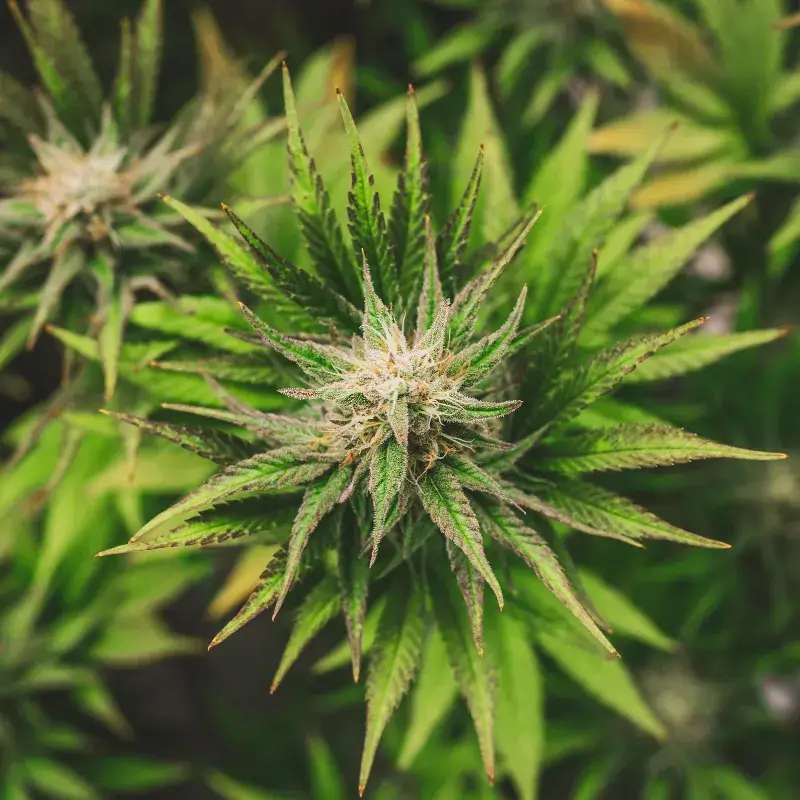
Key Lime Pie has a bakery vibe that feels oddly specific: lime zest and sweet citrus up front, creamy pastry and cookie dough in the middle, then mint and earthy chocolate underneath, with a faint diesel edge that keeps it from feeling purely dessert-sweet. It is a Girl Scout Cookies phenotype (OG Kush x Durban Poison lineage), and it leans strongly Indica at 25% Sativa and 75% Indica with CBD on the low side.
Sessions often start with a light lift that can feel playful and creative, then settle into a relaxed, steady rhythm that stays comfortable. This one is more about aroma identity than chasing massive numbers, which is reflected in the yield range. Flowering runs 9 to 10 weeks, and it benefits from a patient finish if you want the lime and mint to stay crisp rather than blending into generic sweetness.
Height sits at 90 to 180 cm indoors and 90 to 180 cm outdoors, so it can be kept compact or allowed to stretch depending on your setup. Indoor yield typically lands around 300 to 350 gr/m², with outdoor yield around 350 to 400 gr/plant. October harvest timing fits the longer flowering window and makes it a true fall finisher outside. A steady dry helps preserve that key-lime brightness, while cure tends to bring the cookie and chocolate layer forward, giving the jar a richer, more complete feel. Key Lime Pie earns its spot by smelling like something you can name instantly, not just “sweet.”
| Genetic Background: | Phenotype of Girl Scout Cookies (OG Kush x Durban Poison lineage) |
|---|---|
| THC: | |
| CBD: | Low |
| Sativa: | 25% |
| Indica: | 75% |
| Flavor: | Lime pie, sweet, citrus, creamy, cookie dough, earthy chocolate, mint |
| Effect: | Relaxing, uplifting, creative |
| Breeder Location: | United States |
| Yield indoor: | 300-350 gr/m² |
|---|---|
| Yield outdoor: | 350-400 gr/plant |
| Flowering time: | 9-10 weeks |
| Height indoor: | 90-180 cm |
| Height outdoor: | 90-180 cm |
| Harvest Month: | October |
Key Lime Pie is typically chosen for its dessert-leaning citrus profile and a modern, boutique-style finish that can feel especially “clean” when dried and cured with patience. It often shines when you keep the environment steady and avoid stressing it late in flower.
Most growers experience it as a medium-build plant that can fill space quickly sideways once you start training. It is usually not a towering “ceiling chaser,” but it can still take over a tent if you let veg run long without shaping.
The aroma often builds gradually, then becomes noticeably sharper and more dessert-like as flowers mature. In many rooms it gets loud enough that filtration and limiting tent-open time make a real difference.
Many phenotypes develop nicely stacked, well-formed flowers that can tighten up late. When tops are packed closely together, airflow and humidity management become more important than trying to push extra feeding.
Yes, it is often picked specifically for that lime-dessert direction, especially when the dry is slow and the cure is not rushed. If you dry too fast, the brighter notes can fade and the profile can feel flatter.
Many growers notice the profile improves meaningfully after the first couple of weeks, then continues refining as moisture equalizes. The difference is usually obvious compared with flower that is rushed to “ready.”
Yes, we offer a germination guarantee, and you can review the policy HERE.
Yes, all of our seeds are third-party tested to support genetic stability, and you can read the Certificate of Analysis in the product page.
With an even canopy and good light coverage, it can produce a satisfying harvest. Yield is usually driven more by canopy management and stable conditions than by trying to push extreme late-flower intensity.
Some phenotypes can carry a fair amount of leaf mass, which is why selective cleanup and airflow planning can matter. A crowded middle is often the first place problems start in late flower.
It can work in small tents if you manage plant count and keep training early and steady. In larger spaces you simply have more room to spread and keep tops spaced out, which can make the run feel easier.
It can, especially if you have strong sun and a finishing season that is not persistently damp. If your late season is humid, you’ll want to prioritize airflow and spacing so flowers do not stay wet.
Many growers look for a noticeable flower swell, fewer fresh white pistils, and an aroma that stops changing dramatically day to day. After that, confirm maturity the way you normally do so you are not guessing by calendar alone.
Protect it with process. A slower dry in stable conditions and a patient cure usually keep the brighter notes clearer, while rushed drying often mutes the most delicate top notes.
It often comes across more citrus-forward and “zesty” rather than purely creamy or sugary. When finished well, the profile can feel layered, with sweetness supported by a sharper lime edge.
Feminized seeds are bred to produce flower-only plants under normal conditions, which simplifies planning and makes your canopy build more predictable.
Yes, flowering is controlled by changing the light schedule, so you decide when the plant transitions based on your space and canopy goals.
Yes. Stable light, temperature, and watering reduce avoidable stress and help the plant finish more consistently, especially late in flower.
Yes, you can clone in veg once the plant is healthy and growing steadily. Cloning is useful if you find a specific phenotype that performs best in your setup.
They are, because you can plan your canopy without budgeting for male removal. That predictability helps you use your space efficiently.
| Spend | Get |
| $ 45 | 1 Free Seed |
| $ 100 | 2 Free Seeds |
| $ 150 | 3 Free Seeds |
| $ 200 | 4 Free Seeds |
| $ 250 | 5 Free Seeds |
| $ 300 | 6 Free Seeds |
| $ 350 | 7 Free Seeds |

